

Go Tell It on the Mountain
The first novel and the last are the same church, twenty-six years apart, with the judgement taken out.
Read our take
A gospel singer is dead in a London basement, and his brother spends six hundred pages telling you who he was.
James Baldwin's sixth and last novel, published by Dial Press in 1979. Arthur Montana, a celebrated gospel singer, is found dead in the basement of a London pub at thirty-nine. His older brother Hall narrates the book from two years afterwards, working back through Arthur's childhood in Harlem, the quartet he sang in as a boy, his love for another singer called Crunch, and the decades of touring that followed. It is the longest thing Baldwin wrote and the most forgiving.
Baldwin was fifty-five when Just Above My Head appeared, and had been living at Saint-Paul-de-Vence for most of the decade. He had not published a novel in five years, and he would not publish another. Whether he intended it as a last book is not documented, but it reads like a summation: the Harlem church of his first novel, the desire between men of his second, the civil rights years of the middle books, all gathered into one family's history.
The scope is deliberately unmanageable. The novel moves through Korea, Africa, Birmingham, New York and Paris, and across roughly thirty years, and it takes in the quartet's tours of the segregated South, the movement, money, fame, incest, and the ordinary business of two brothers keeping in touch. Nothing in it is compressed.
It was reviewed respectfully rather than warmly, and it has never had the readership of the shorter books. Scholars have since read it as Baldwin's fullest treatment of homosexuality — the one book where love between men is neither a crisis nor a secret, but simply part of a life that also contains a career, a family, and a faith.
Hall Montana opens the novel two years after his younger brother's death. Arthur — famous enough to be called the Emperor of Soul — was found in the basement of a pub in London at thirty-nine. Hall has a wife, two children, and no satisfactory account of what happened, and the book is his attempt to assemble one.
He goes back to Harlem in the 1950s, where Arthur sang treble in a boys' gospel quartet called the Trumpets of Zion with Peanut, Red and Crunch. The quartet toured the South, which for four Black teenagers in that decade meant a particular kind of danger, and it was on those tours that Arthur and Crunch became lovers. Julia, a child evangelist who preaches to adult congregations and is being sexually abused by her father, is the other centre of the early book; her brother Jimmy will later become Arthur's partner for the rest of his life.
Crunch is drafted to Korea and comes back changed. Arthur's solo career grows into international fame, and the touring years take him across America, to Paris, and eventually to London. Hall marries, settles, and watches most of this from a distance, which is the novel's real subject: what an ordinary brother can and cannot know about an extraordinary one.
The novel circles back to the death it began with, and does not solve it. Arthur died alone in the basement of a London pub after a bad night and a long argument, and Hall is left with the same facts he started with. What has changed is that he can now place them.
Jimmy, who was with Arthur for years, gives Hall his own account near the end, and it is the closest thing the book offers to consolation: Arthur was loved, and knew it, and the manner of his death does not cancel the fact. The last movement returns to Hall's own house and his own children, and to the singing that has run under the whole novel.
The quartet's singing places Arthur's gift within a shared history. Christopher Z. Hobson reads the novel's gospel tradition as a language of communal hope whose promises remain open to doubt. In the passages he cites, Hall imagines Arthur as a vessel, while Jimmy describes the singer as answering a song that carries the sound of multitudes. These images challenge the idea of music as an individual's possession. Read in this wider context, the church gathering is more than an audience for talent: its hopes and experience help make the voice possible.
Jimmy matters not only as someone Arthur loved, but as someone Hall must listen to. In the passage quoted by José Esteban Muñoz, Hall imagines yielding the account of his brother to Jimmy through the musical figures of a piano solo and a bridge. The hesitation matters: a brother's intimacy does not give him exclusive authority over a life. Making room for the lover's voice changes the act of remembrance. The piano in this symbolic illustration can therefore suggest a narrative relationship as well as a musical one, without documenting a particular encounter.
The early novels punish desire and the late essays are exhausted. This one lets a gay man have a career, a family who love him, and a long relationship, and treats none of it as a problem to be solved.
Four Harlem teenagers touring the segregated South in a car, singing in churches for money. It is the best sustained writing about music in Baldwin, and the danger is never stated more loudly than it needs to be.
The Harlem church of the first novel, the desire of the second, the movement of the middle books. If you have read the others, this is where they converge.
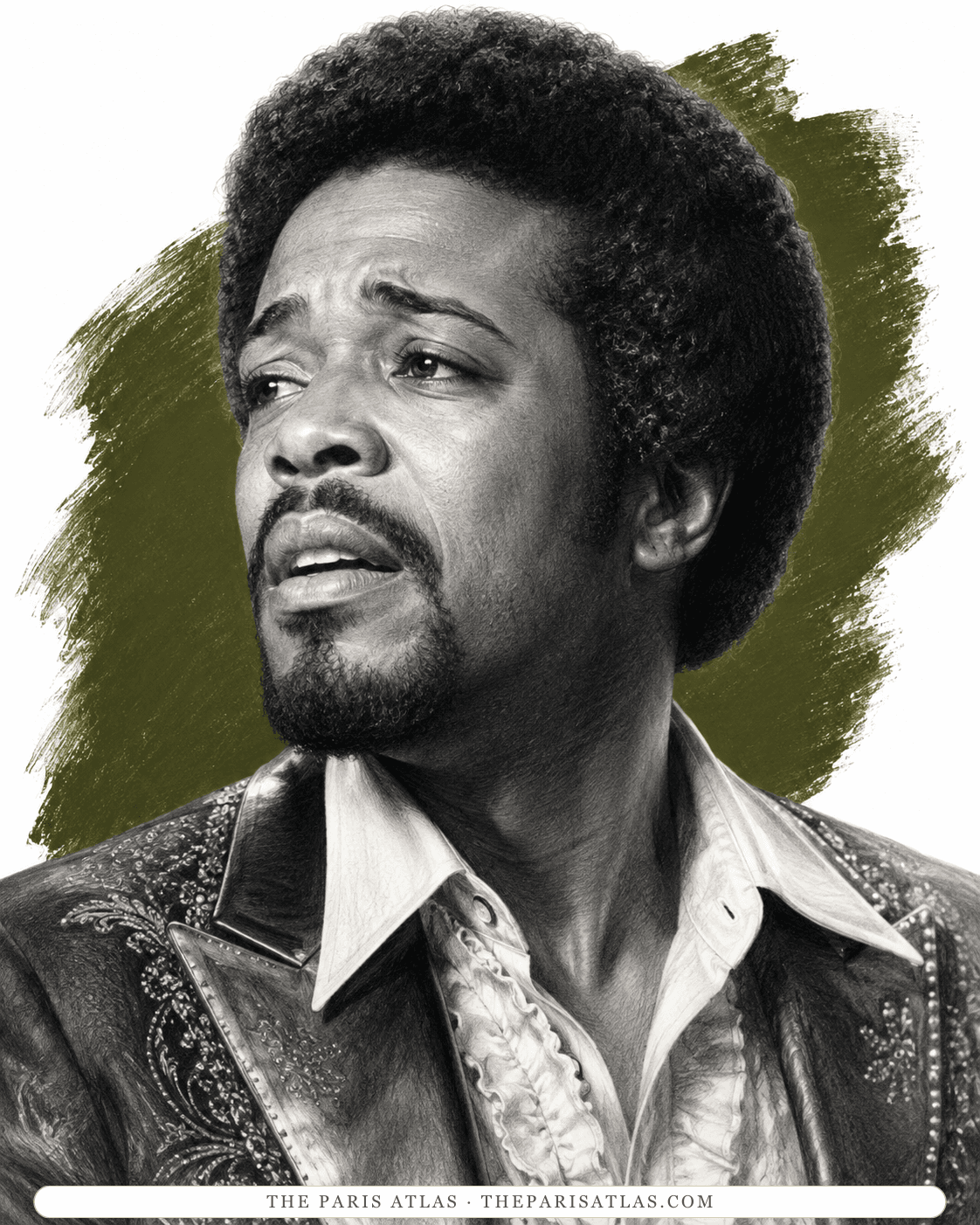
A gospel singer famous enough to be called the Emperor of Soul, dead in a London pub basement at thirty-nine before the first page.

Arthur's older brother and the narrator. Married, in his forties, and assembling an account of a life he mostly watched from a distance.

Jason Hogan, a fellow member of the Trumpets of Zion and Arthur's first love. Drafted to Korea, and not the same afterwards.

A child evangelist preaching to adult congregations, and being abused at home by her father. The novel's other centre in its first half.

Julia's younger brother, a neighbour of the Montanas, and later Arthur's partner for the rest of his life.

One of the four boys in the Trumpets of Zion. He is murdered in the South.

The fourth of the quartet. He ends up addicted.

Hall's wife, and the household he narrates from — with their children Tony and Odessa.
1979
Dial Press publishes the novel, Baldwin's sixth and last.
1979
John Romano reviews it in The New York Times in September.
2000
Delta issues the trade paperback that is now the standard edition.


The first novel and the last are the same church, twenty-six years apart, with the judgement taken out.
Read our take
The other novel about love between men, and the one this book is answering.
Read our take
The other late novel narrated in retrospect by a man taking stock, and the other pair of brothers.
Read our takeArthur Montana, a fictional gospel singer, is found dead in a London pub basement at thirty-nine. His brother Hall narrates the novel two years later, going back through Arthur's Harlem childhood, the boys' gospel quartet he sang in, his love for a fellow singer called Crunch, and the decades of touring and fame that followed.
Yes. It was published in 1979, eight years before his death in 1987. He continued writing essays, poems and The Evidence of Things Not Seen, but published no further fiction.
About 597 pages, which makes it the longest book Baldwin wrote — nearly four times the length of Giovanni's Room.
No. It is long, it moves across thirty years and five countries, and it rewards knowing the earlier books. Start with Giovanni's Room or If Beale Street Could Talk, or with the essays.
Very differently. Giovanni's Room, from 1956, is about a man destroyed by refusing what he wants. Here love between men is part of an ordinary life that also contains a career, a family and a faith, and the novel does not present it as a crisis.
Explore authors with a similar voice, perspective, and influence.

The doctor of the Paris slums who wrote the century's blackest, funniest novel — and changed the sound of French prose.
View author
The Brooklyn dropout who arrived in Paris broke at thirty-eight and wrote the exuberant, banned books that ended American censorship.
View author
Author of The Sun Also Rises and A Moveable Feast; his pared-down style, developed in 1920s Paris, became the most imitated in American prose.
View authorThe sources below include the primary text, editions, scholarship, archival materials, and other records that informed this page. They document Just Above My Head, its publication, and its place in literary history.


The primary text represented by this page, used for descriptions of the work’s contents and for any quoted passages shown here.
Critical account and quoted primary passages, pp. 67–71; public HTML transcription.
Hall's primary passage and its critical framing, pp. 20–21; not a complete-novel reading.

Used to place Just Above My Head within James Baldwin's published work and verify its bibliographic context.
Used for independent biographical, archival, or historical context surrounding James Baldwin's career and the period in which Just Above My Head appeared.
Used to cross-check authorship, chronology, and the work's place in James Baldwin's wider catalogue.
Used to verify James Baldwin's bibliography and place Just Above My Head within the broader chronology of James Baldwin's career.
The primary text is the baseline reference for every book page. Additional references document publication history, interpretation, and historical context where that evidence is available.
 Explore more resources