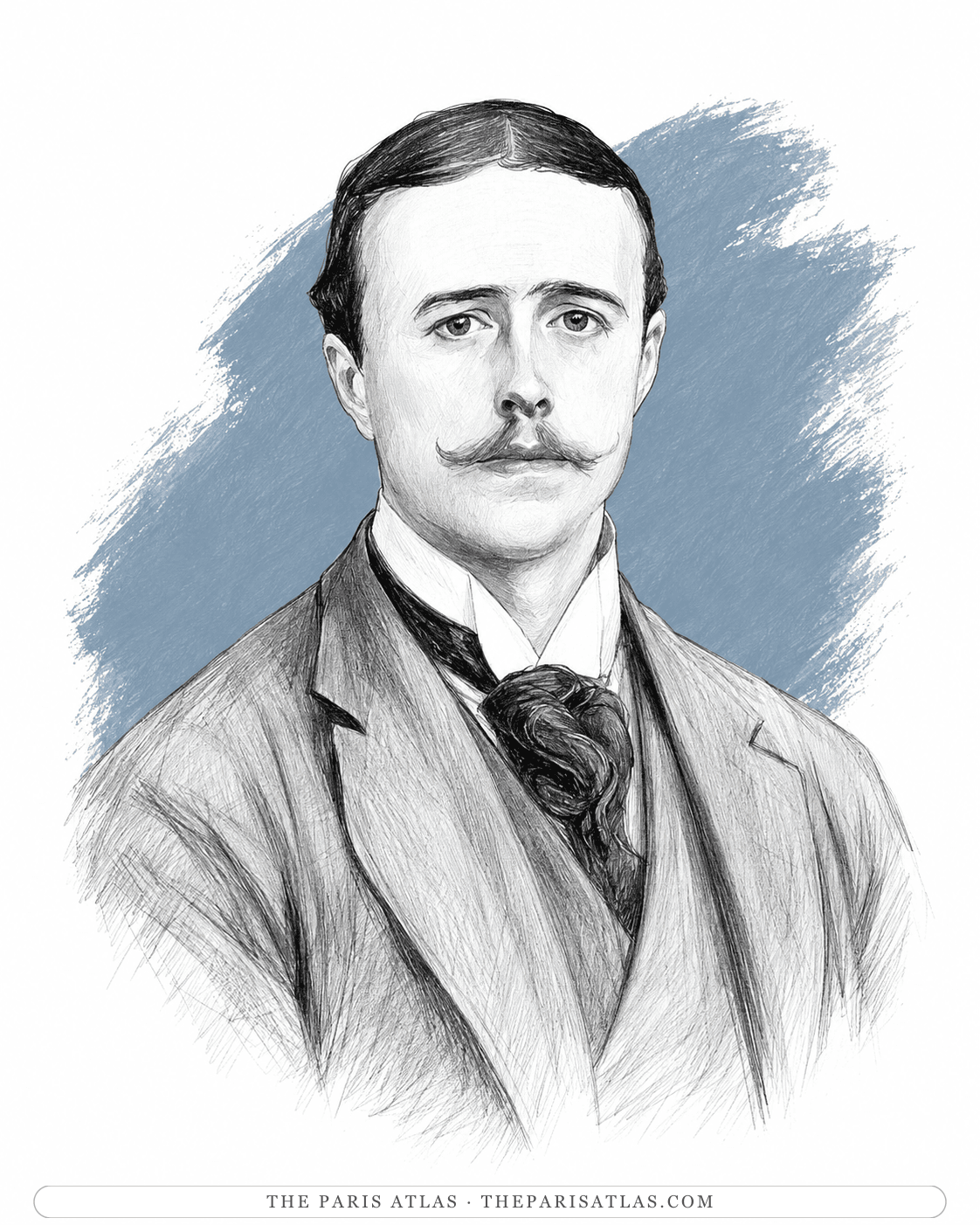
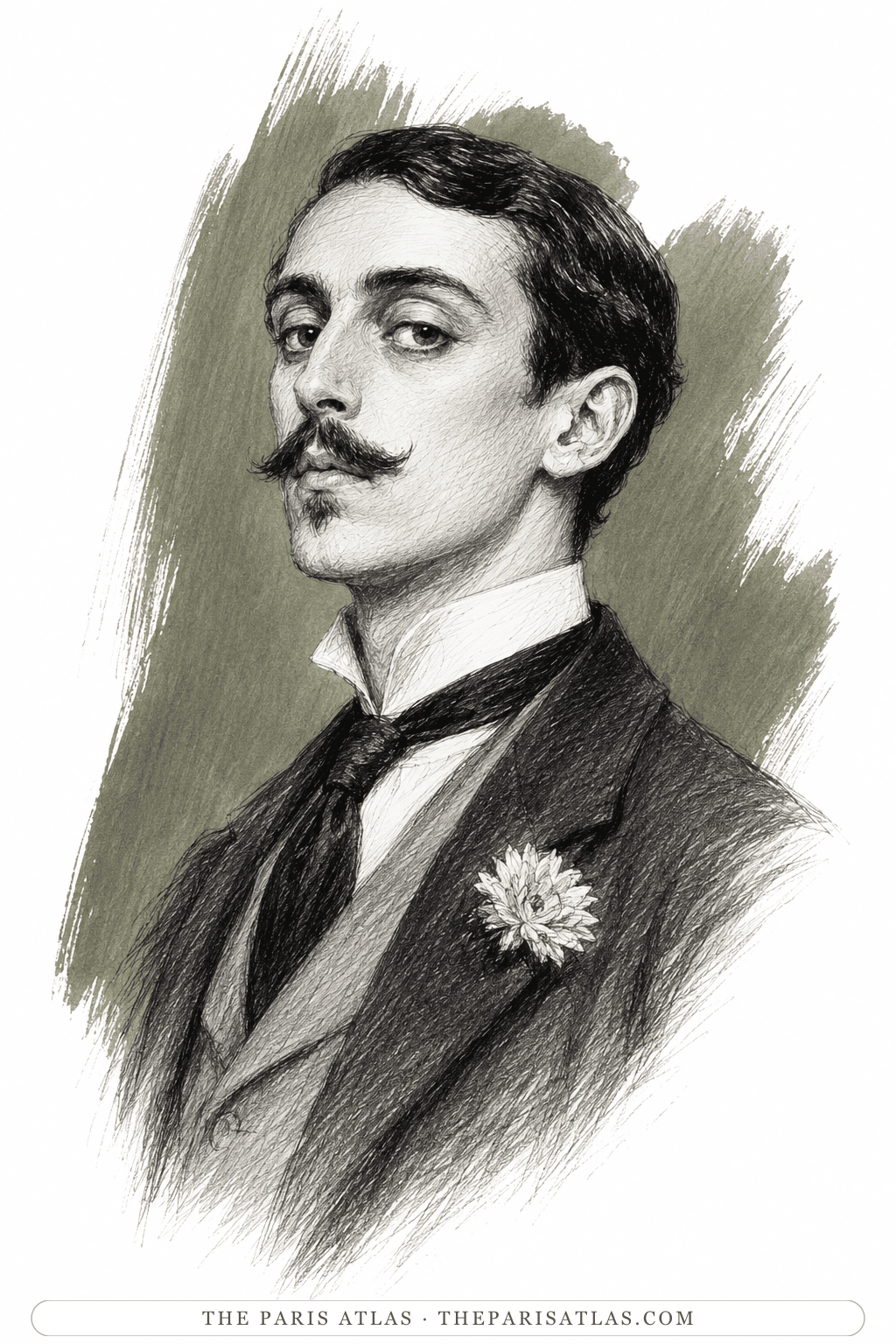
Jacques-Émile Blanche
- Painter
Met · 1892
Blanche painted the twenty-one-year-old Proust in 1892 — pale, orchid at the lapel — and the portrait hung at the official Salon of 1893. It remains the image of the young Proust, now in the Musée d'Orsay.
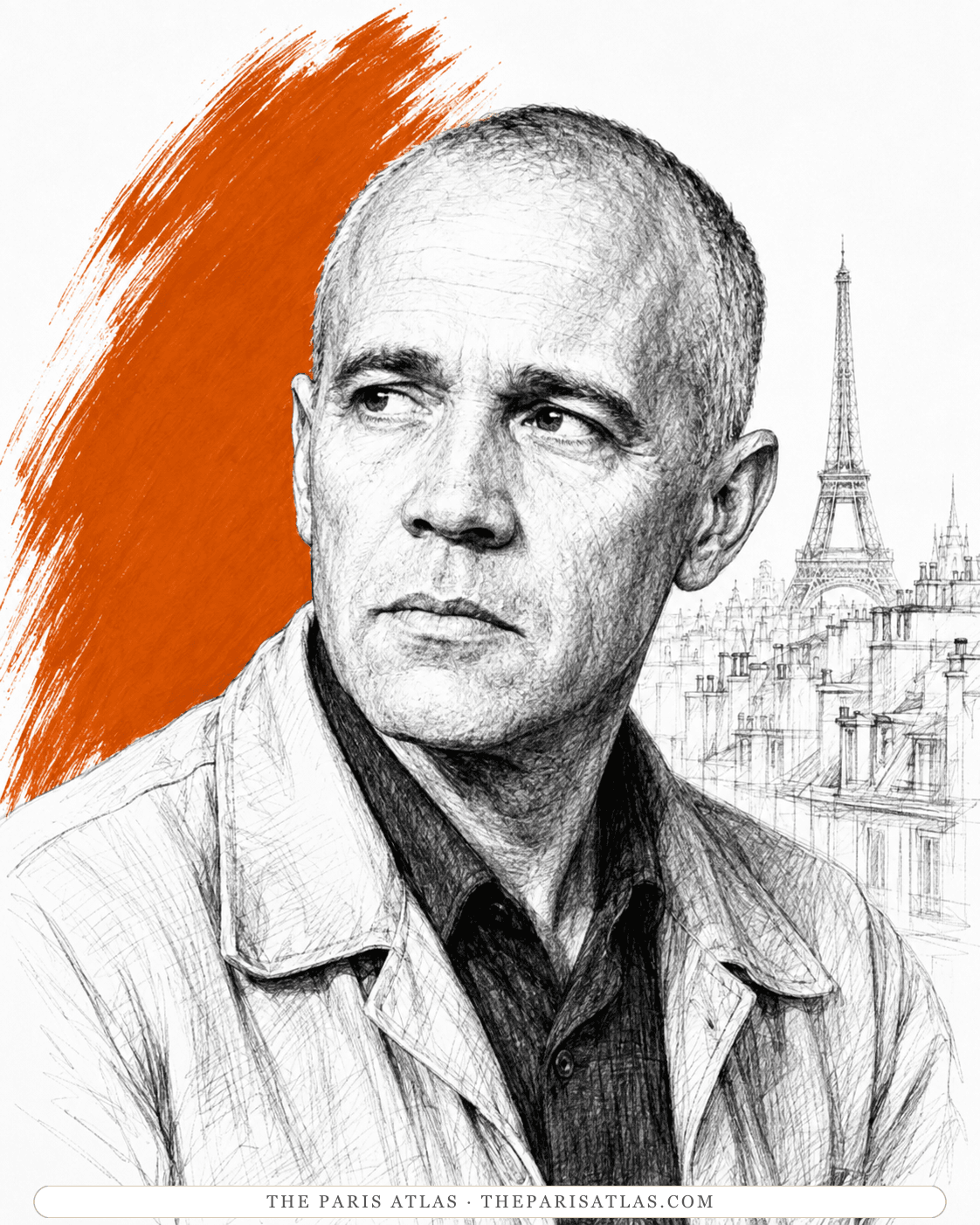
French novelist of the seven-volume In Search of Lost Time, written at night in a cork-lined room — the book that made memory itself the story.
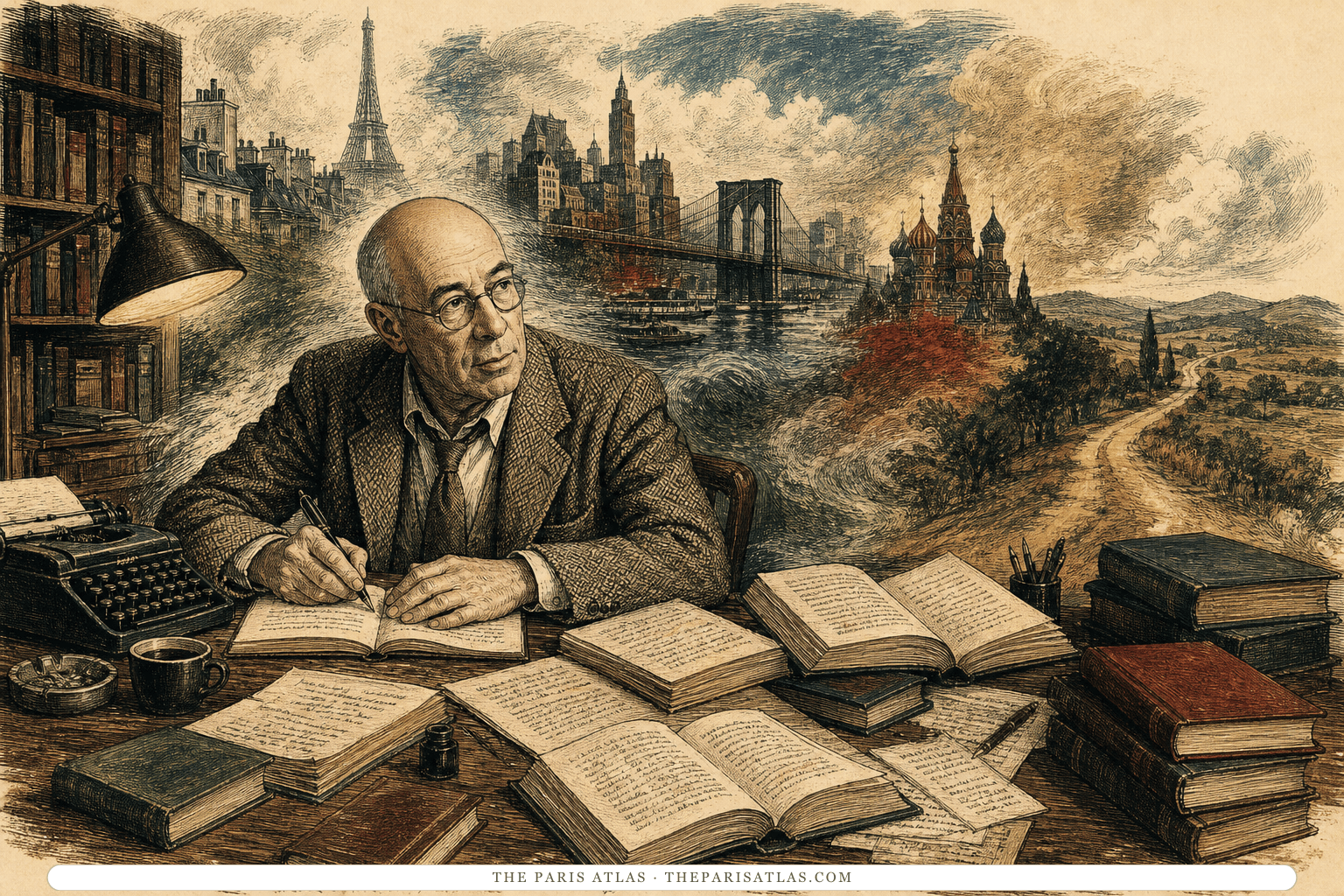
Marcel Proust wrote one novel that changed what novels can do. À la recherche du temps perdu — In Search of Lost Time, seven volumes published between 1913 and 1927 — builds its drama not from adventures but from the movements of consciousness itself: remembering a childhood room, waiting for a letter, entering a drawing room, recognizing how completely time has altered a familiar face. Its great question is whether anything lost to time, death, or forgetfulness can be recovered, and its answer is art.
The caricature — a delicate recluse in bed thinking about madeleines — misses most of him. Proust was a sharp comic observer who moved through the most exclusive salons of Belle Époque Paris, an early and public partisan in the Dreyfus Affair, a gay man writing about desire in a hostile age, an enormous correspondent, and a craftsman who dismantled and rebuilt his book until the day he died.
Proust was born on 10 July 1871 in Auteuil, on the western edge of Paris, the elder son of Adrien Proust, a prominent physician, and Jeanne Weil, who came from a cultivated Jewish family and became the central figure of his emotional life. One of the novel's earliest scenes — a child waiting desperately for his mother to come upstairs and kiss him goodnight — is fiction, but it distills the mixture of love, dependence, and fear of abandonment that runs through everything he wrote.
Childhood holidays were spent at relatives' homes in Illiers, southwest of Paris, which became the principal model for Combray, the village of the novel's opening. The debt was eventually repaid in the strangest way a town has honored a writer: Illiers legally added his invented name to its own and became Illiers-Combray. The family house survives as the Maison de Tante Léonie, a Proust museum.
From childhood he suffered severe asthma, and his health narrowed his life by degrees. Sensitive to smoke, dust, noise, scent, and weather, he eventually worked in a bedroom lined with cork against the sound of the city. Illness sharpened his subject as much as it constrained him; few novelists have written better about sleep, waking, and the way a body alters time. The Musée Carnavalet preserves his bed, his overcoat, and a surviving piece of the cork.
Before he was a great novelist he was taken for a charming social climber — elegant, flattering, apparently more interested in parties than in work. Madeleine Lemaire's salon was his door: at her table in April 1893 he met the poet and aesthete Robert de Montesquiou, who opened aristocratic Paris to him, and among her guests he encountered the Countess Élisabeth Greffulhe, one of the models for the Duchesse de Guermantes. The society that had looked poetic from outside turned out, once entered, to be as foolish and insecure as anywhere else — a collapse of illusion that became one of the novel's great comic engines.
Jacques-Émile Blanche painted him at twenty-one — pale, black-clad, an orchid at the lapel — and the portrait hung at the Salon of 1893. It is the image of Proust the socialite, and it hides the position that made the novelist: he wanted admission everywhere and belonged nowhere entirely. His Jewish ancestry, his sexuality, his illness, and his vocation all kept him partly outside the rooms he charmed his way into, watching how power performed itself.
When the Dreyfus Affair split France over the false treason conviction of a Jewish officer, Proust took the Dreyfusard side early and publicly — he attended Émile Zola's trial in February 1898 and helped gather signatures — while much of the aristocratic world he cultivated stood fiercely on the other side. The affair runs through the novel as a fault line: characters reveal themselves by the position they take, and social alliances thought permanent are rearranged in a season.
His first book, Les Plaisirs et les Jours (1896), was a collection of stories and sketches with illustrations by Madeleine Lemaire — desire, regret, and the sadness under beautiful surfaces, already his subjects. Through the late 1890s he worked at an autobiographical novel, Jean Santeuil, and abandoned it; published only after his death, it holds early versions of nearly everything that came later.
The decisive apprenticeship was John Ruskin. With his mother and the artist Marie Nordlinger helping with the English, Proust translated The Bible of Amiens (1904) and Sesame and Lilies (1906), learning from Ruskin how to look at paintings and cathedrals — and then arguing with him. The argument became Contre Sainte-Beuve, the unfinished essay whose central claim underwrites the novel: the self that lives in society is not the self that makes the work.[1]
Proust never married; his deepest attachments were to men, in an age when that could not be said aloud. The composer Reynaldo Hahn, met at Madeleine Lemaire's in May 1894, was the first great love — a romance that settled into the most durable friendship of his life, and a private line into music, the art he thought reached past language.
Lucien Daudet, painter and son of the novelist Alphonse Daudet, was another intimate of those years. When the critic Jean Lorrain printed insinuations about the two men in 1897, Proust challenged him to a pistol duel; shots were exchanged and no one was hurt. The episode complicates the legend of the invalid — when honor was at stake, the delicate Proust was entirely willing to stand in a field and be shot at.
Alfred Agostinelli entered his life as a chauffeur on the Cabourg summers from 1907 and later lived in the apartment as his secretary. Proust's attachment to him was consuming; Agostinelli left, and in 1914 died when the aircraft he was piloting crashed into the Mediterranean. The possessiveness, jealousy, and grief of that story went into Albertine, the beloved and captive of the later volumes — a composite, like every major character, rather than a portrait with the name changed.
Two women anchored the ends of his life. His mother's death in 1905 broke it in half and pushed him toward the book. Céleste Albaret, who came to work for him in 1913, became housekeeper, confidante, and the manager of his nocturnal world — she delivered the presentation copies of Swann's Way, and her memories remain the best account of how the last years actually ran.[1]
The novel took shape around 1907 to 1909, and he did not write it front to back: the opening and the conclusion were worked at roughly the same time, with everything between growing to meet them. When a passage needed to expand, he pasted strips of paper into the notebooks — the famous paperoles, some unfolding like accordions. The result reads less like a line than a web: an image planted in the first volume may not give up its meaning for three thousand pages.[2]
The sealed room was never sealed socially. From the apartment at 102 boulevard Haussmann — his great-uncle's flat, subleased in 1906, where most of the novel was written — he ran an enormous correspondence, questioning friends, servants, and specialists about medicine, dress, military tactics, and the etiquette of dinner parties. The letters were part of the method: the recluse was one of the best-informed men in Paris.[3]
Publishers turned Swann's Way down — among them the Nouvelle Revue Française, on the advice of a committee that included André Gide — and Proust finally paid Bernard Grasset to print it in November 1913, still rewriting on the proofs. Gide's recantation is one of publishing's famous apologies: the NRF reversed itself and took over the novel.[1]
In December 1919 the second volume, À l'ombre des jeunes filles en fleurs, won the Prix Goncourt over a war novel most critics expected to win, and Proust was suddenly, at forty-eight, established. He spent what remained of his health enlarging the unpublished volumes, and died of pneumonia on 18 November 1922. His brother Robert saw the last three volumes through the press; the novel's ending had been written years before its middle.[1]
Painting is not decoration in Proust; it is how his people see. He revered Vermeer — he traveled to The Hague in 1902 to stand in front of the View of Delft — and in the novel the dying writer Bergotte leaves his sickbed to look once more at its little patch of yellow wall, and measures his whole life against it. Faces are read through Botticelli and Giotto; the paintings teach the characters, and the reader, how to look.
Music got the deeper tribute: an invented composer. The Vinteuil Sonata and its 'little phrase' bind themselves to Swann's love for Odette, holding the happiness first and the pain after — the same work the madeleine does, emotional time carried inside a sensation. Scholars have heard Saint-Saëns, Fauré, Franck, and Wagner in Vinteuil; the point is that Proust made an imaginary piece of music real enough that readers have hunted for it ever since.[4]
Underneath, the novel's convictions are few and firm. Deliberate memory retrieves facts; involuntary memory — the taste, the smell, the uneven paving stone — retrieves worlds. Lovers love an invention assembled from absence and fear, and jealousy is the interpretive frenzy that invention breeds. Time alters everything, which is the tragedy; art can recover the pattern hidden in what it altered, which is the answer. In earlier drafts, it is worth knowing, the madeleine was a piece of toast.
Proust's afterlife has a geography. Illiers-Combray keeps the Maison de Tante Léonie; the Musée Carnavalet keeps the cork-lined bedroom's furniture; and in Père Lachaise cemetery the black granite slab engraved 1871–1922 collects pebbles and flowers from readers who finished all seven volumes, or mean to. The word 'Proustian' — for the moment a sensation unlocks a vanished world — has outgrown literature entirely, which is roughly what he predicted art could do.[5][3]
Born 10 July in Auteuil, on the western edge of Paris, elder son of Dr. Adrien Proust and Jeanne Weil.
Photographed by Paul Nadar at fifteen; childhood holidays in Illiers are already the material of Combray.
Meets Robert de Montesquiou at Madeleine Lemaire's; Jacques-Émile Blanche's portrait of him hangs at the Salon.
Meets Reynaldo Hahn at Lemaire's in May — first love, lifelong friend. That winter Hahn introduces him to the Daudets.
Publishes Les Plaisirs et les Jours, with illustrations by Madeleine Lemaire.
Fights a pistol duel with the critic Jean Lorrain over insinuations about Lucien Daudet. No one is hurt.
Attends Zola's trial during the Dreyfus Affair, having taken the Dreyfusard side early.
Abandons Jean Santeuil and turns to translating John Ruskin.
Sees Vermeer's View of Delft in The Hague — the painting Bergotte will die in front of, in fiction.
His mother dies. The loss breaks his life in half and pushes him toward the novel.
Subleases his great-uncle's apartment at 102 boulevard Haussmann, where most of In Search of Lost Time is written.
First of the summers at Cabourg's Grand-Hôtel — the model for Balbec — driven by the chauffeur Alfred Agostinelli.
The novel is under way, built from both ends at once, expanding on pasted paper strips.
Swann's Way appears in November, at his own expense, from Bernard Grasset. Céleste Albaret enters his service.
Agostinelli dies when the aircraft he is piloting crashes into the Mediterranean. His absence becomes Albertine's.
À l'ombre des jeunes filles en fleurs wins the Prix Goncourt, 10 December.
Dies of pneumonia on 18 November, at fifty-one, the novel's ending long since written.
Time Regained closes the novel, seen through the press by his brother Robert.
For a long time I used to go to bed early.Longtemps, je me suis couché de bonne heure.
And suddenly the memory returns. The taste was that of the little crumb of madeleine which on Sunday mornings at Combray (because on those mornings I did not go out before church-time), when I went to say good day to her in her bedroom, my aunt Léonie used to give me, dipping it first in her own cup of real or of lime-flower tea.Et tout d'un coup le souvenir m'est apparu. Ce goût c'était celui du petit morceau de madeleine que le dimanche matin à Combray (parce que ce jour-là je ne sortais pas avant l'heure de la messe), quand j'allais lui dire bonjour dans sa chambre, ma tante Léonie m'offrait après l'avoir trempé dans son infusion de thé ou de tilleul.
To think that I have wasted years of my life, that I have longed for death, that the greatest love that I have ever known has been for a woman who did not please me, who was not in my style!Dire que j'ai gâché des années de ma vie, que j'ai voulu mourir, que j'ai eu mon plus grand amour, pour une femme qui ne me plaisait pas, qui n'était pas mon genre !
Met · 1892
Blanche painted the twenty-one-year-old Proust in 1892 — pale, orchid at the lapel — and the portrait hung at the official Salon of 1893. It remains the image of the young Proust, now in the Musée d'Orsay.
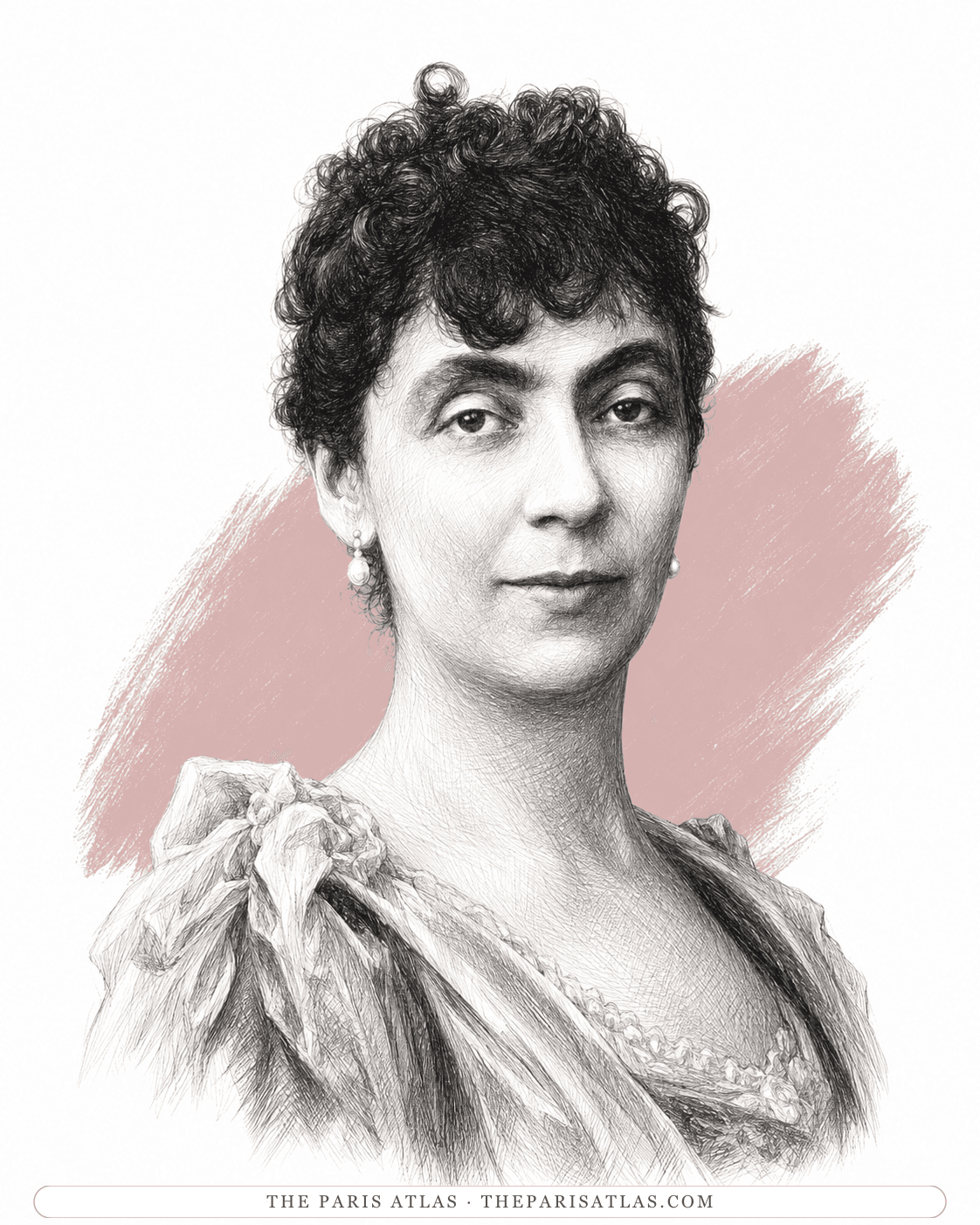
Met · 1893
Her salon was Proust's door into artistic Paris: the April 1893 dinner where he met Robert de Montesquiou and the May 1894 party where he met Reynaldo Hahn were both hers. She illustrated his first book, Pleasures and Days.
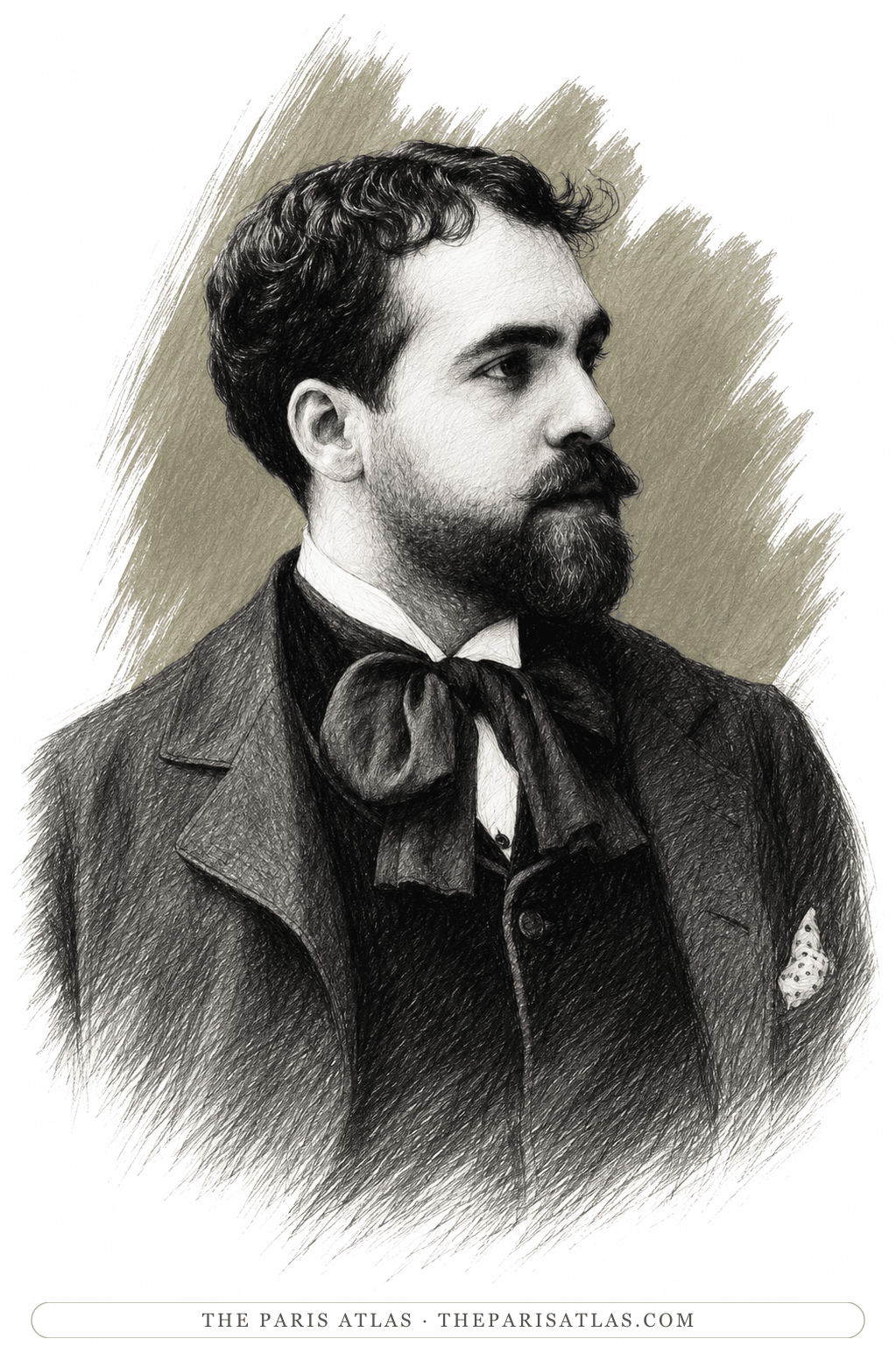
Met · 1894
Met 22 May 1894 at a party at Madeleine Lemaire's. The romance became a lifelong friendship, and Hahn's music stayed close to Proust's thinking about what art can carry; it was Hahn who introduced Proust to the Daudet family that winter.
Met · 1893
Met 13 April 1893 at a dinner given by Madeleine Lemaire. The poet-aesthete opened aristocratic doors the young Proust could not; his manner and milieu fed the novel's composite characters.
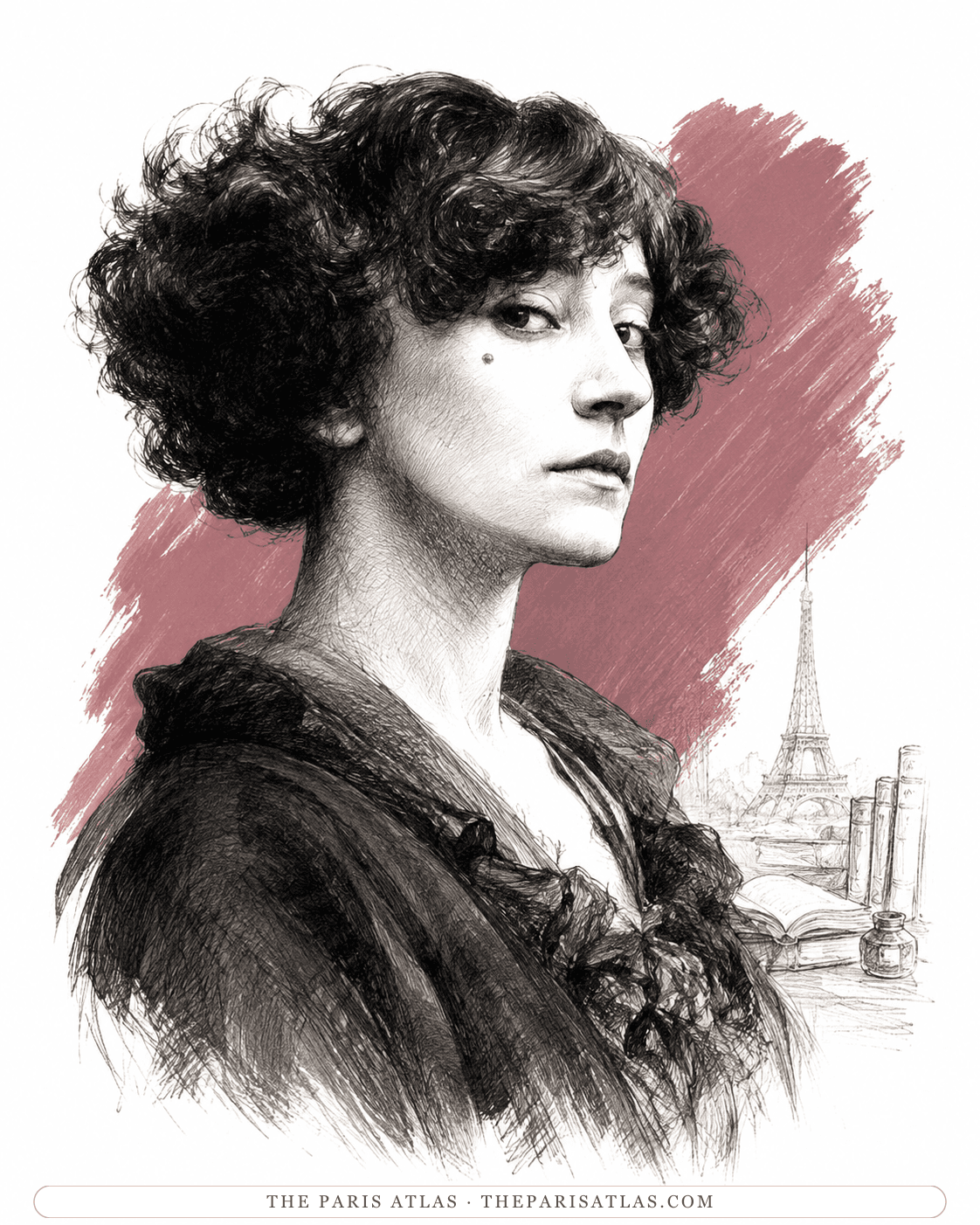
Met · 1895
By Colette's own account they first met in the 1890s at the salon of Madame Arman de Caillavet. They exchanged admiring letters around 1919: reading Colette's Mitsou, Proust wrote that he had wept for the first time in a long while. Colette left a first-hand portrait of Proust from both the salon years and a later meeting.
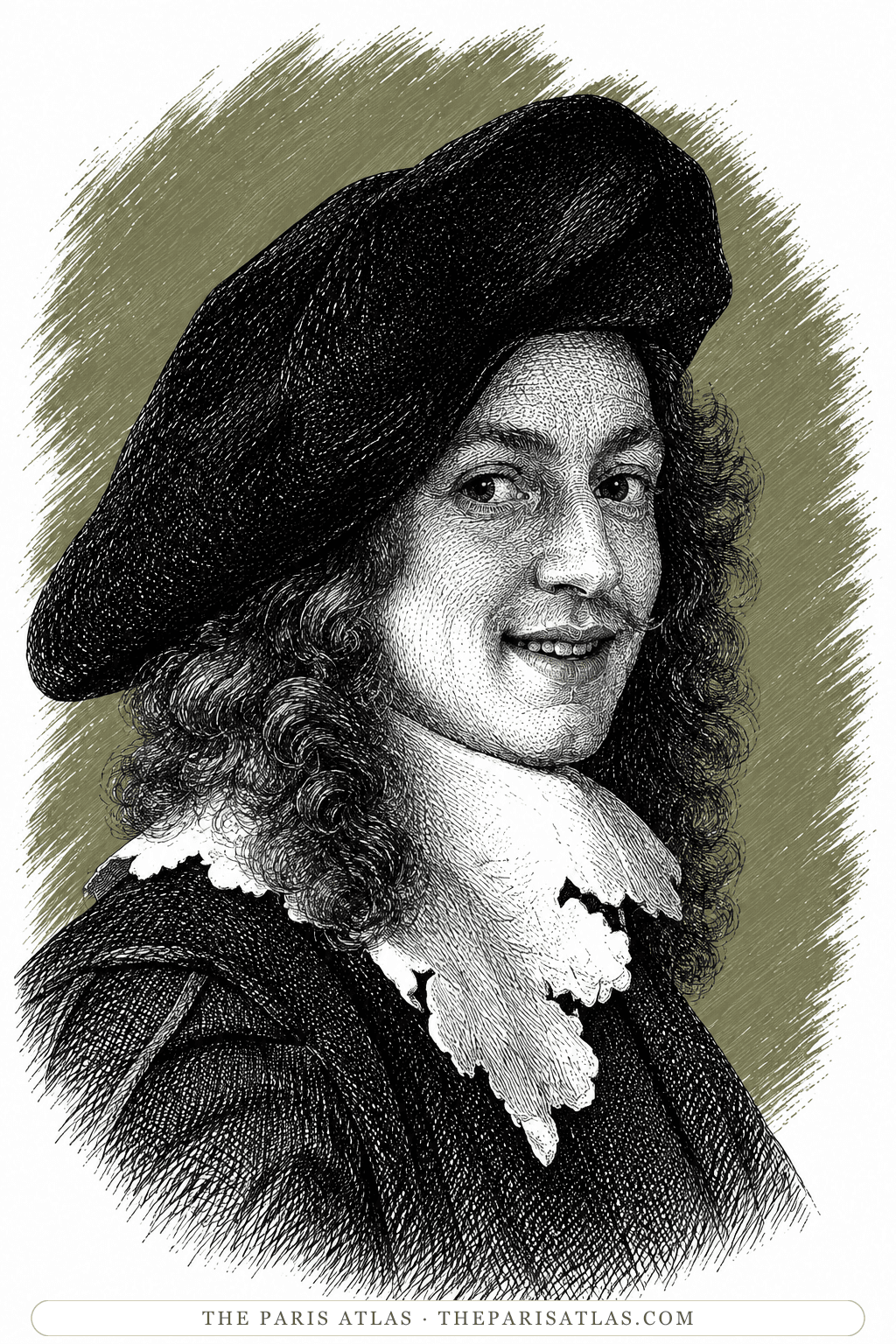
Marcel Proust saw Vermeer's View of Delft at the Mauritshuis in The Hague on 18 October 1902 and liked it more than any other painting he saw in Holland. In a letter of May 1921 to the critic Jean-Louis Vaudoyer he called it the most beautiful painting in the world, and between 18 and 24 May 1921 he left his bed to see it again at the Dutch exhibition in the Jeu de Paume in Paris. He then added the scene in which the novelist Bergotte dies in front of the painting to La Prisonnière, the volume published in 1923 after Proust's death.
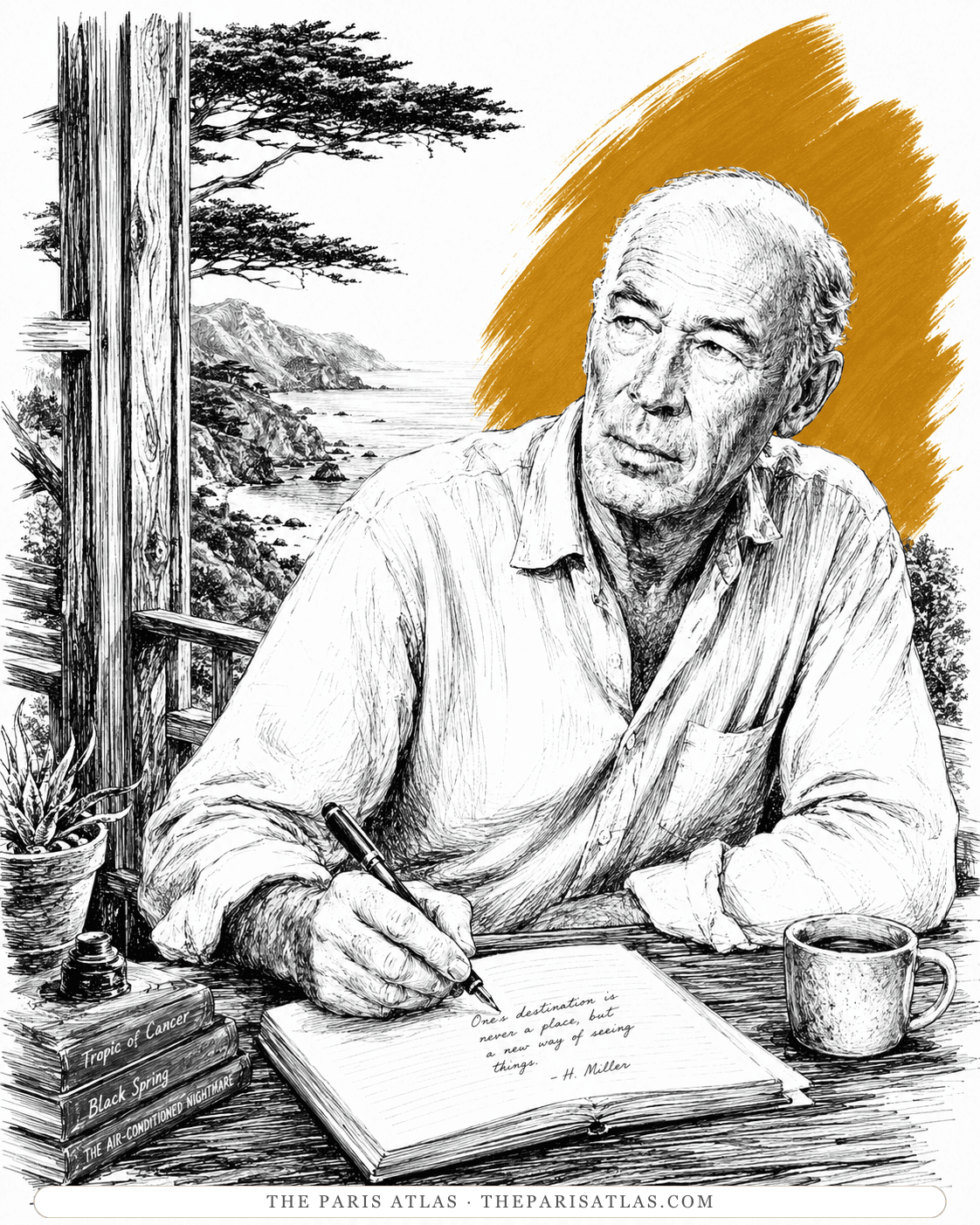
Proust is one of the six writers Masuga's study reads Miller through, and Miller's own accounts of his reading return to Proust's demonstration that memory can carry an entire book.
Edmund White's research identifies Proust as Genet's most important literary influence from the late 1930s onward.
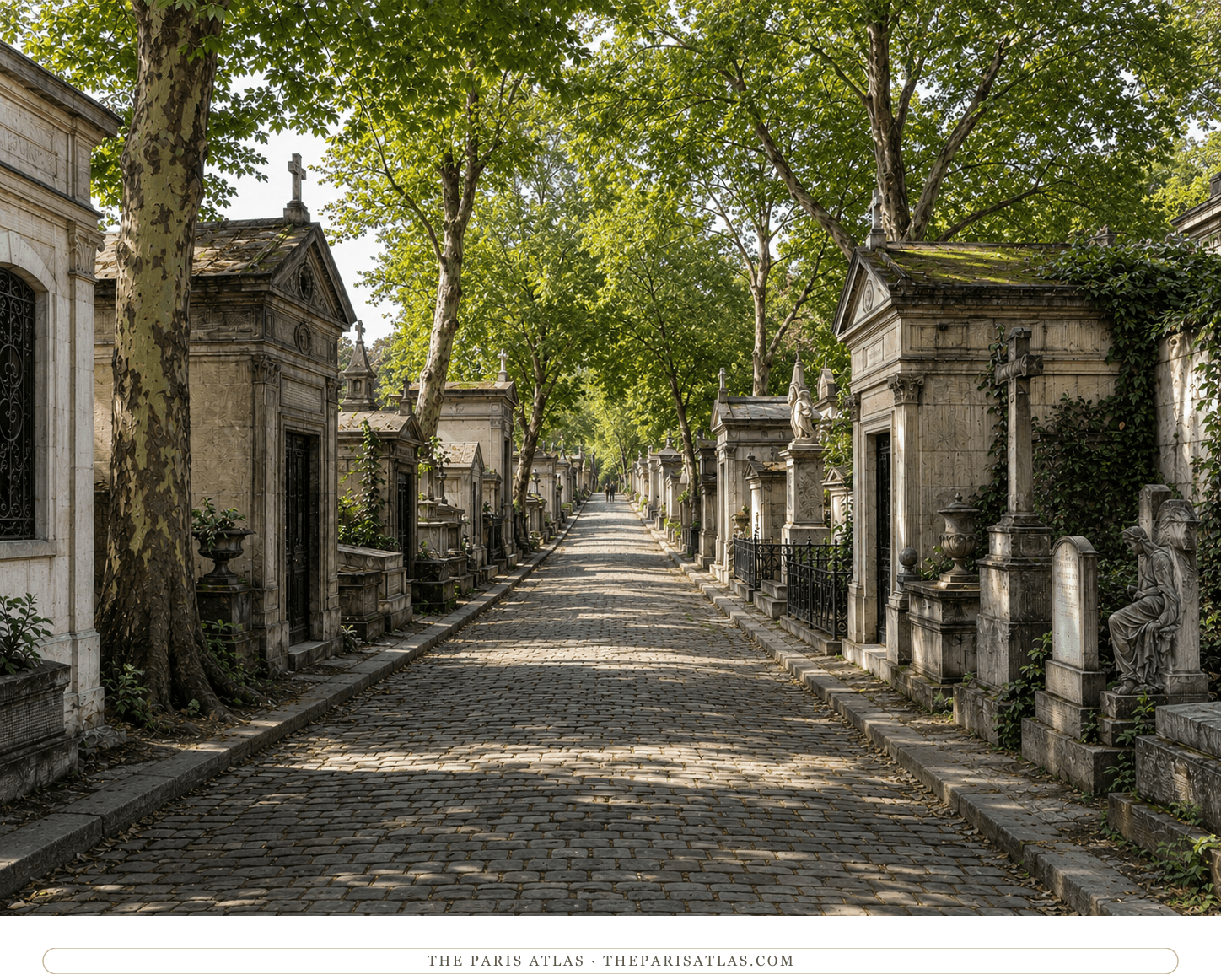
Proust was buried at Père-Lachaise in division 85 after his death on 18 November 1922.
Visit the place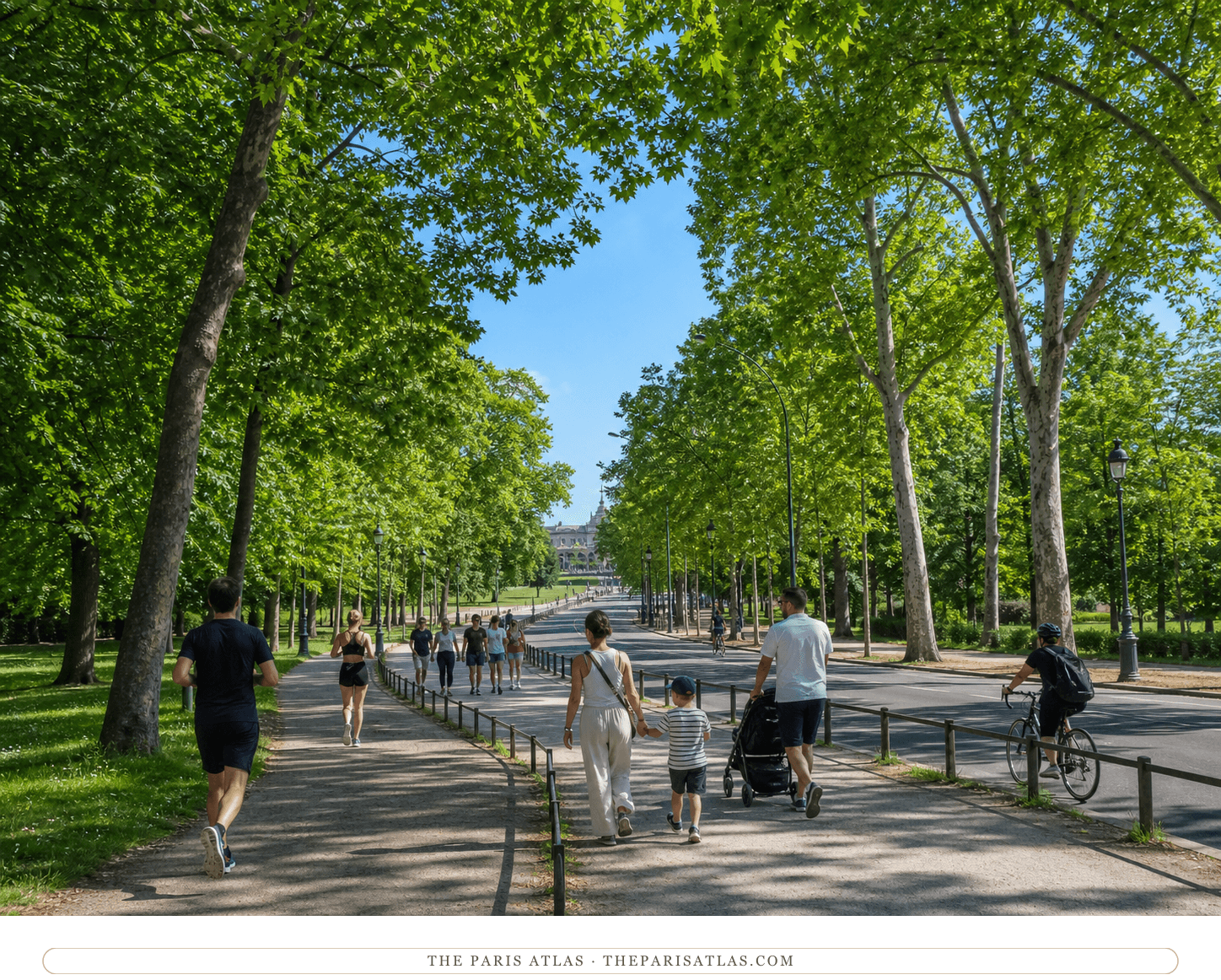
Proust frequented the Allée des Acacias — the fashionable promenade the city identifies with today's avenue de Longchamp — and made it one of the central social arenas of In Search of Lost Time. The Bois carries a second association: returning from an outing here aged nine, he suffered the asthma attack that began his lifelong illness.
Visit the place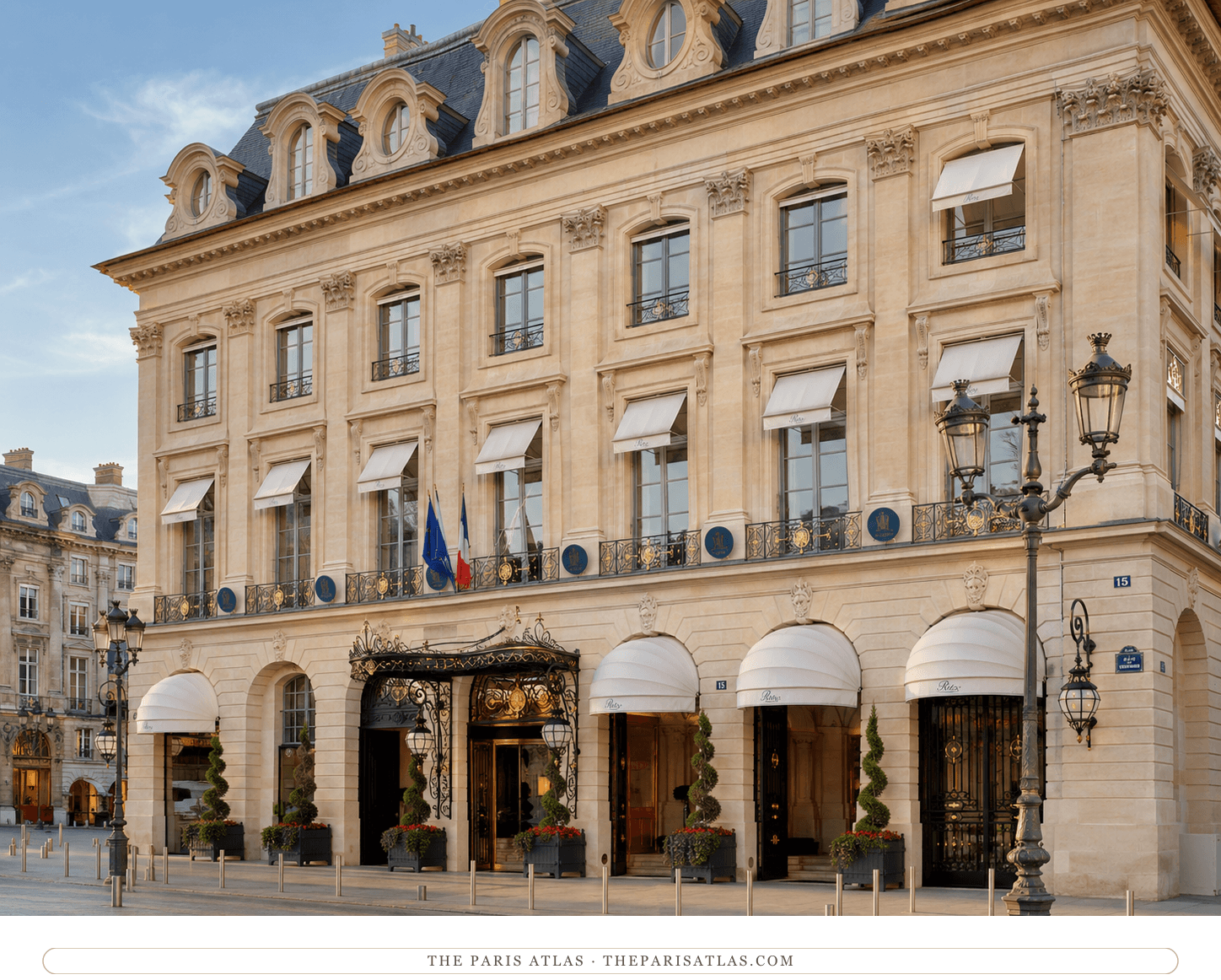
The Ritz became Proust's dining room in his later years — a place he used habitually enough that its staff, and the observation it afforded him of the society he was writing about, belong to the book as much as to his life.
Visit the place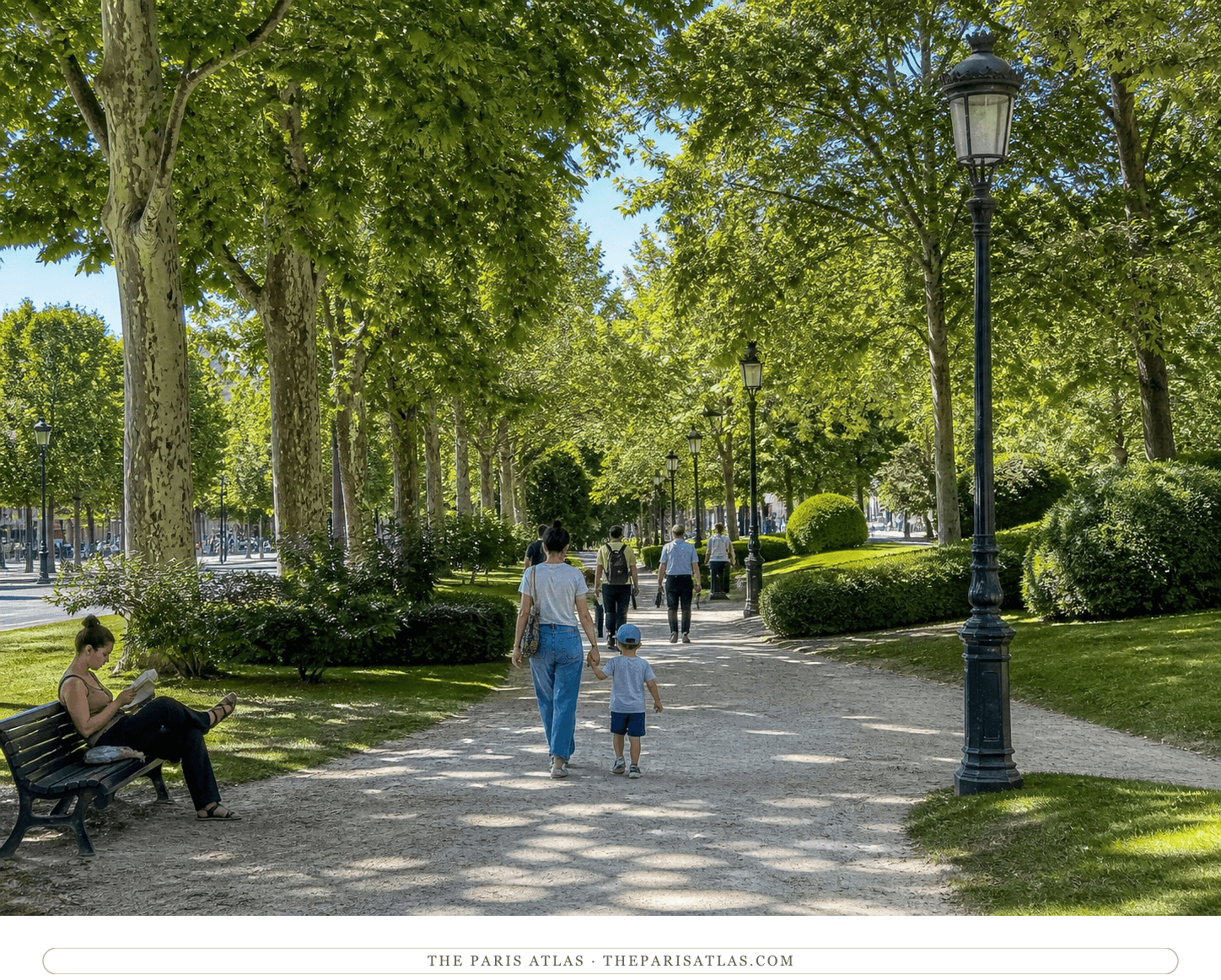
Proust played in these gardens as a boy and met Marie de Bénardaky here in July 1886, aged fifteen — his first love, and the accepted principal source for Gilberte Swann. The novel keeps the setting: the narrator meets Gilberte in the same gardens. A path here is now officially the Allée Marcel-Proust.
Visit the place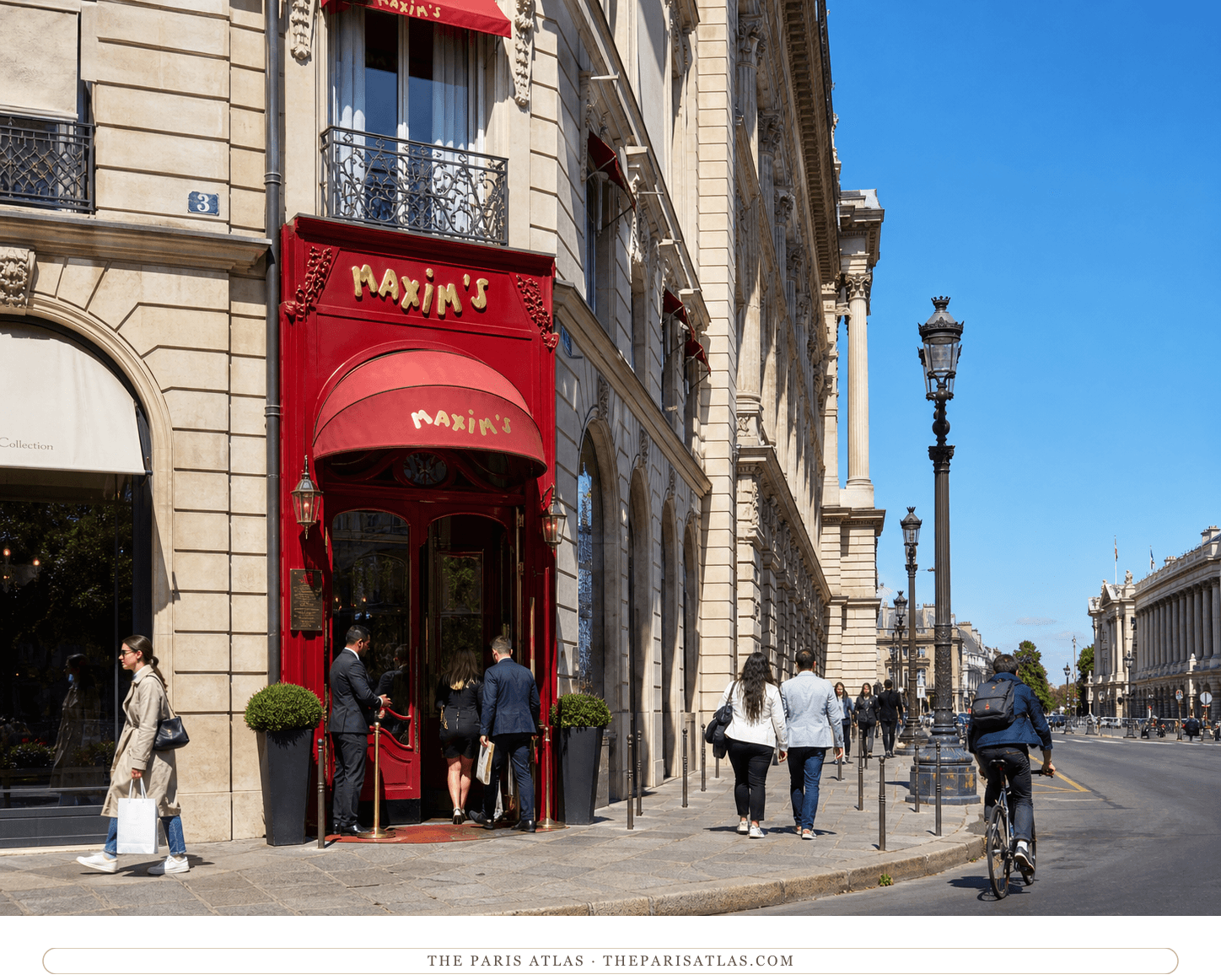
The City of Paris names Maxim's among the places Proust went out to with friends. It belongs to his sociable years rather than the later reclusive ones, when the Ritz became his headquarters instead.
Visit the place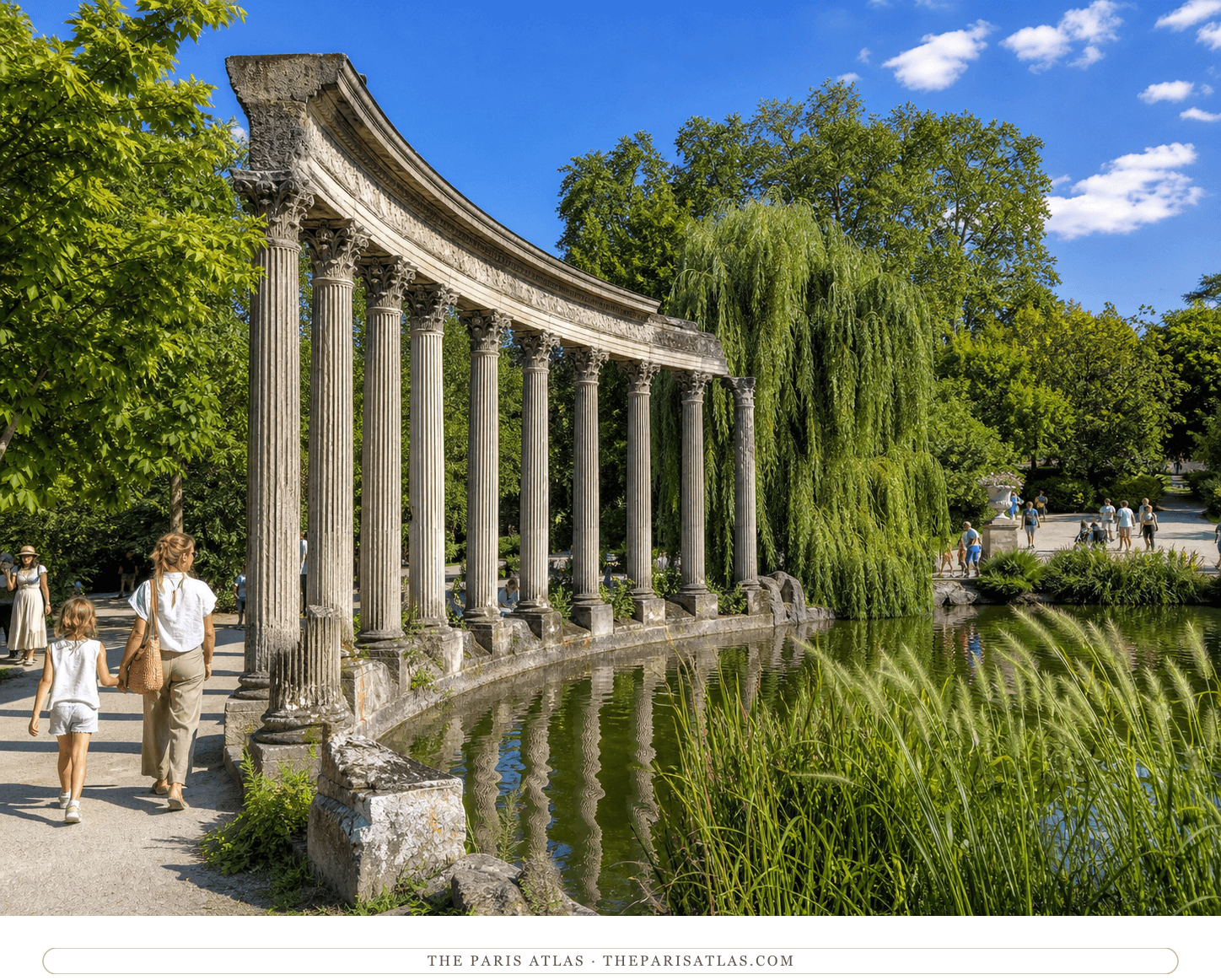
The young Proust was brought here regularly — the city records Thursday afternoons — while the family lived a few streets away on the boulevard Malesherbes. The meeting with Marie de Bénardaky belongs to the Champs-Élysées gardens, not this park.
Visit the place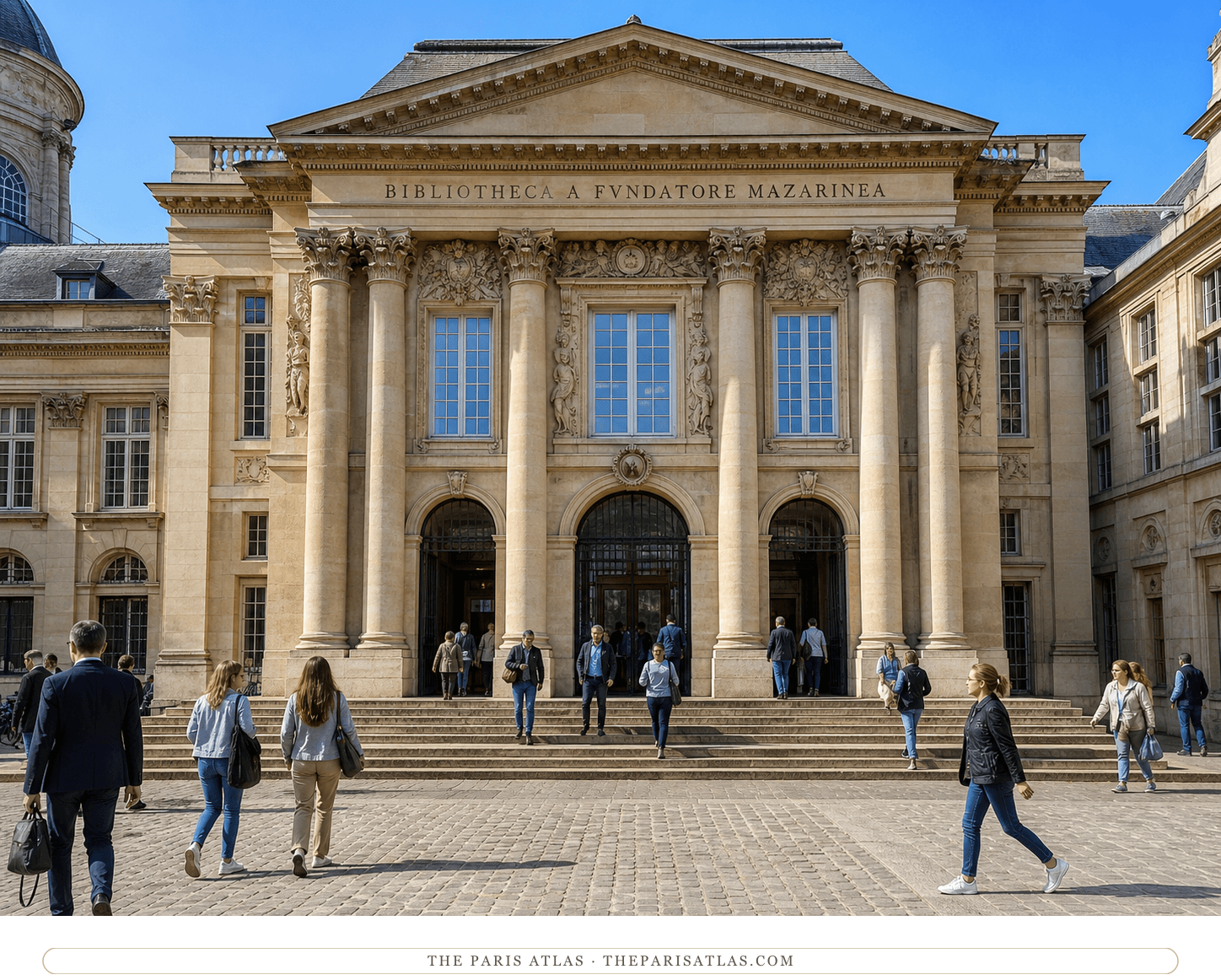
Appointed an unpaid attaché in 1895, aged twenty-four. The City of Paris's own record is candid that he appeared only rarely, taking continuous leave until the post lapsed — a nominal profession rather than work, and the thing that marks him as free not to have one.
Visit the place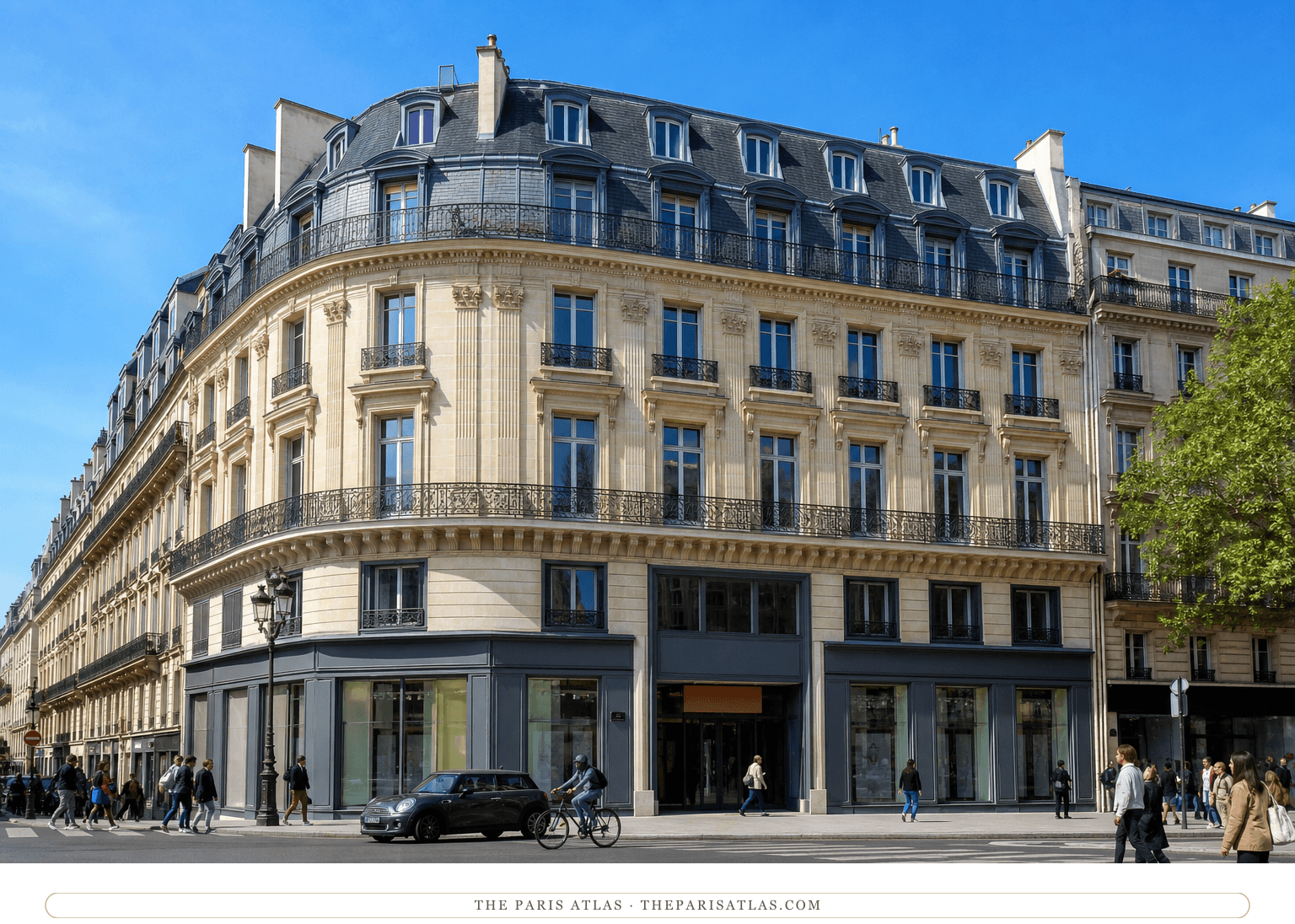
Proust moved in on 27 December 1906, after both his parents had died, and stayed thirteen years. He had the bedroom walls lined with cork against the noise of the boulevard, inverted his hours to write at night, and produced most of In Search of Lost Time in that room. The room's contents are now reassembled at the Musée Carnavalet.
Visit the place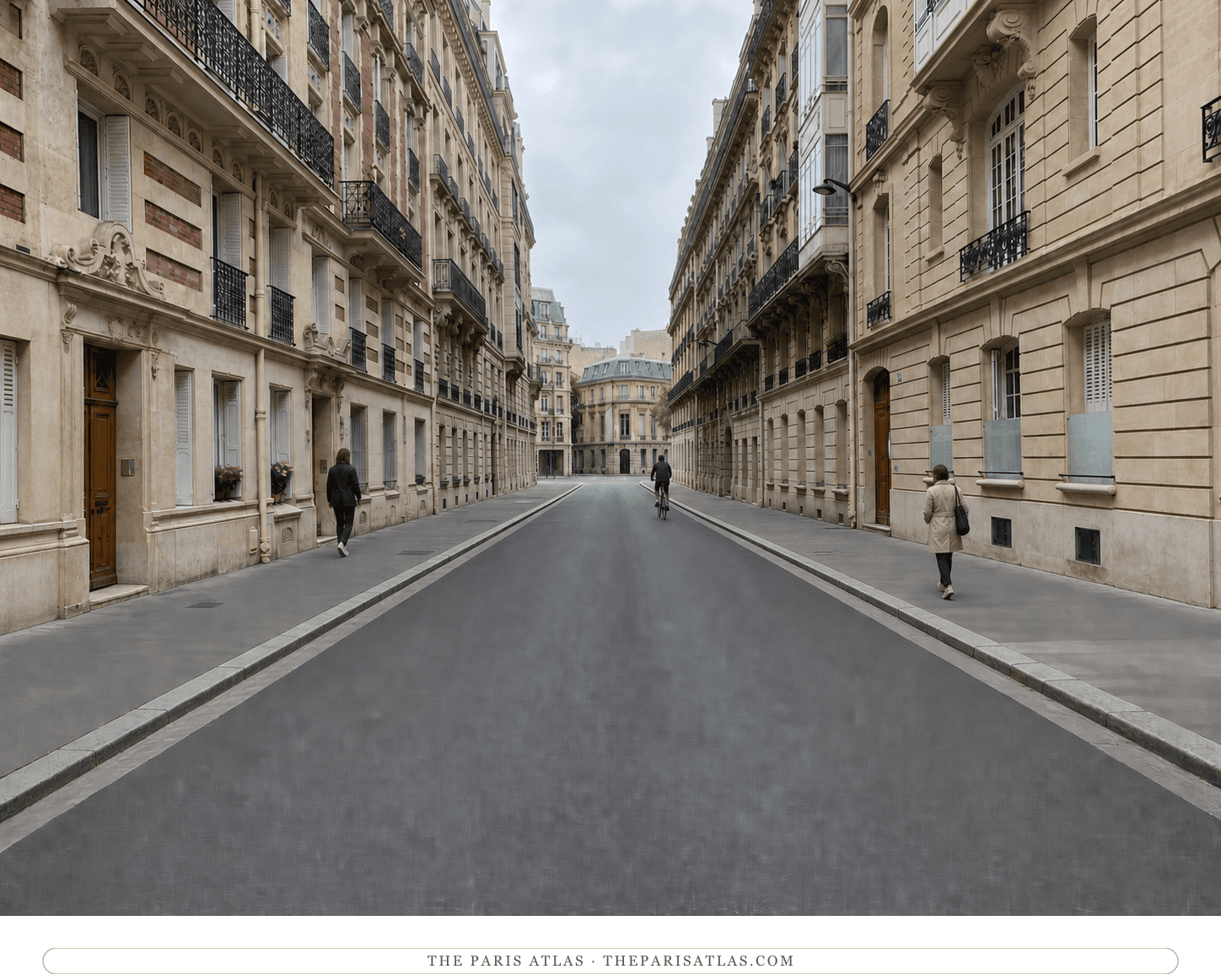
Proust's last address, taken in 1919 when the boulevard Haussmann building was sold. He called it an ignoble hovel, corrected the later volumes of his novel here as his health failed, and died in the flat on 18 November 1922.
Visit the place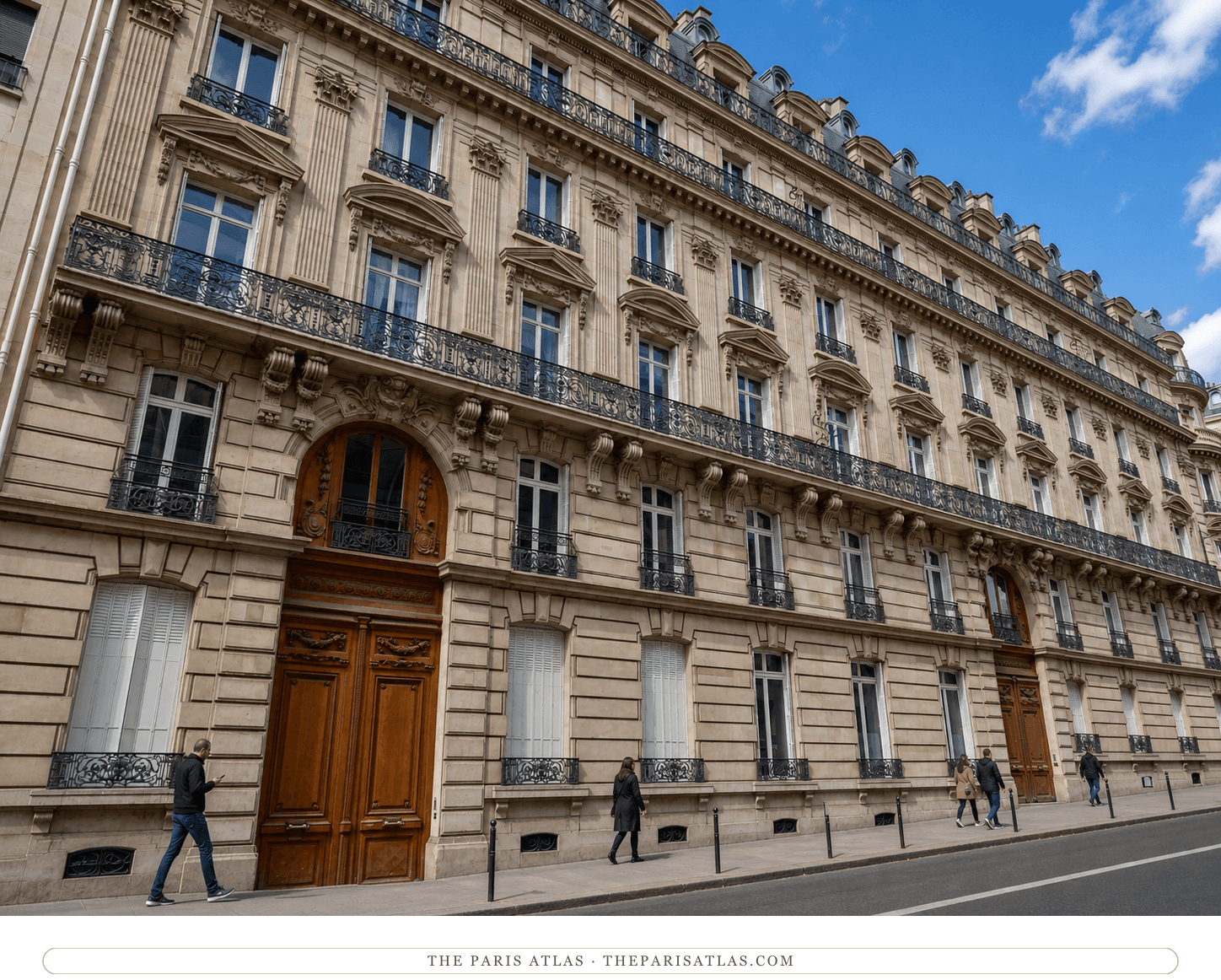
The family's address after twenty-seven years on the boulevard Malesherbes, and Proust's most socially active period — receiving writers, artists and journalists, and giving dinners. Both his parents died while he lived here. A City of Paris plaque installed in 2022 records the 1900-1906 dates.
Visit the place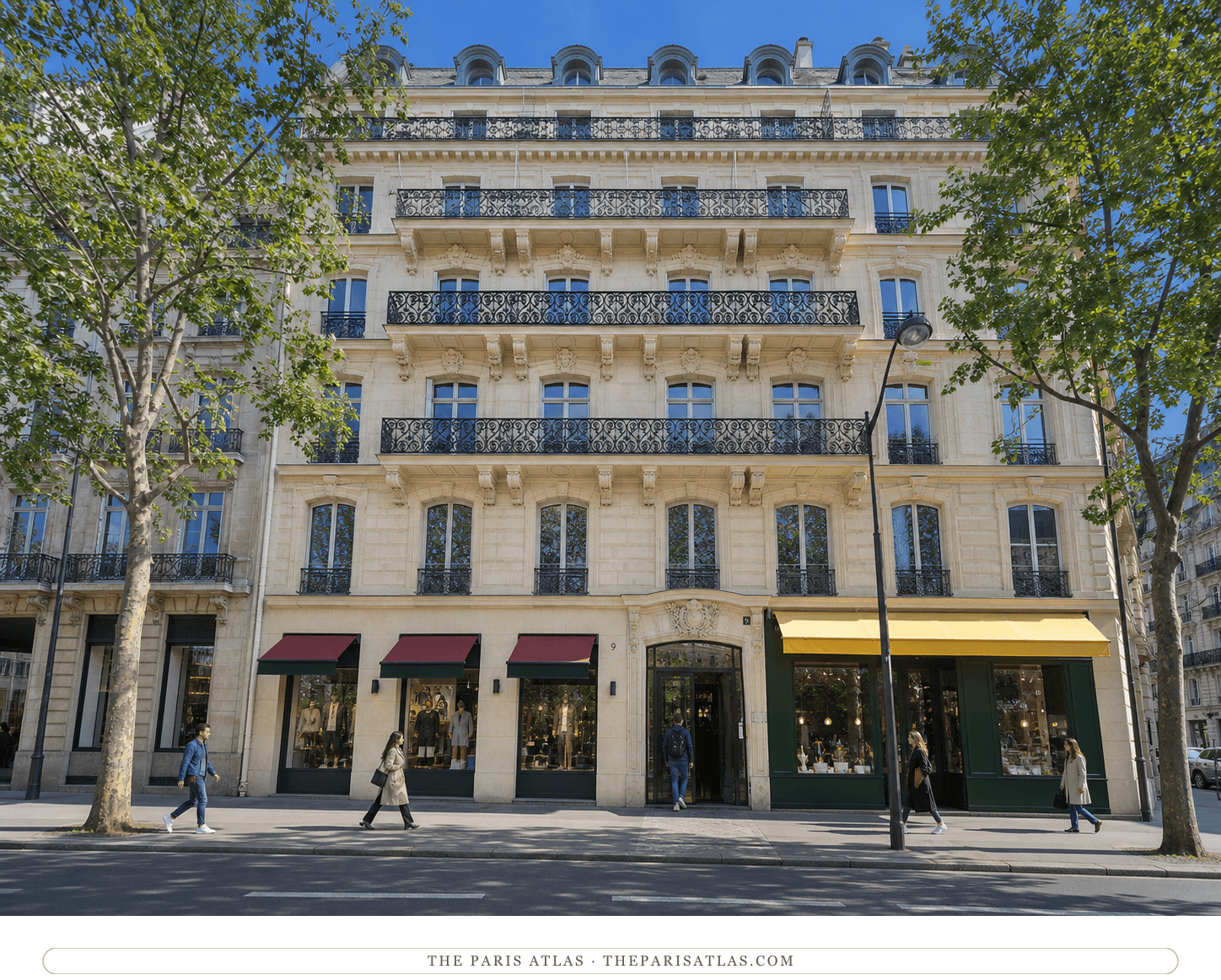
The Proust family flat, occupied for twenty-seven years — Marcel's childhood, his years at the Lycée Condorcet, the onset of his asthma and his entry into the salons of the eighth arrondissement. The family left for 45 rue de Courcelles in 1900.
Visit the place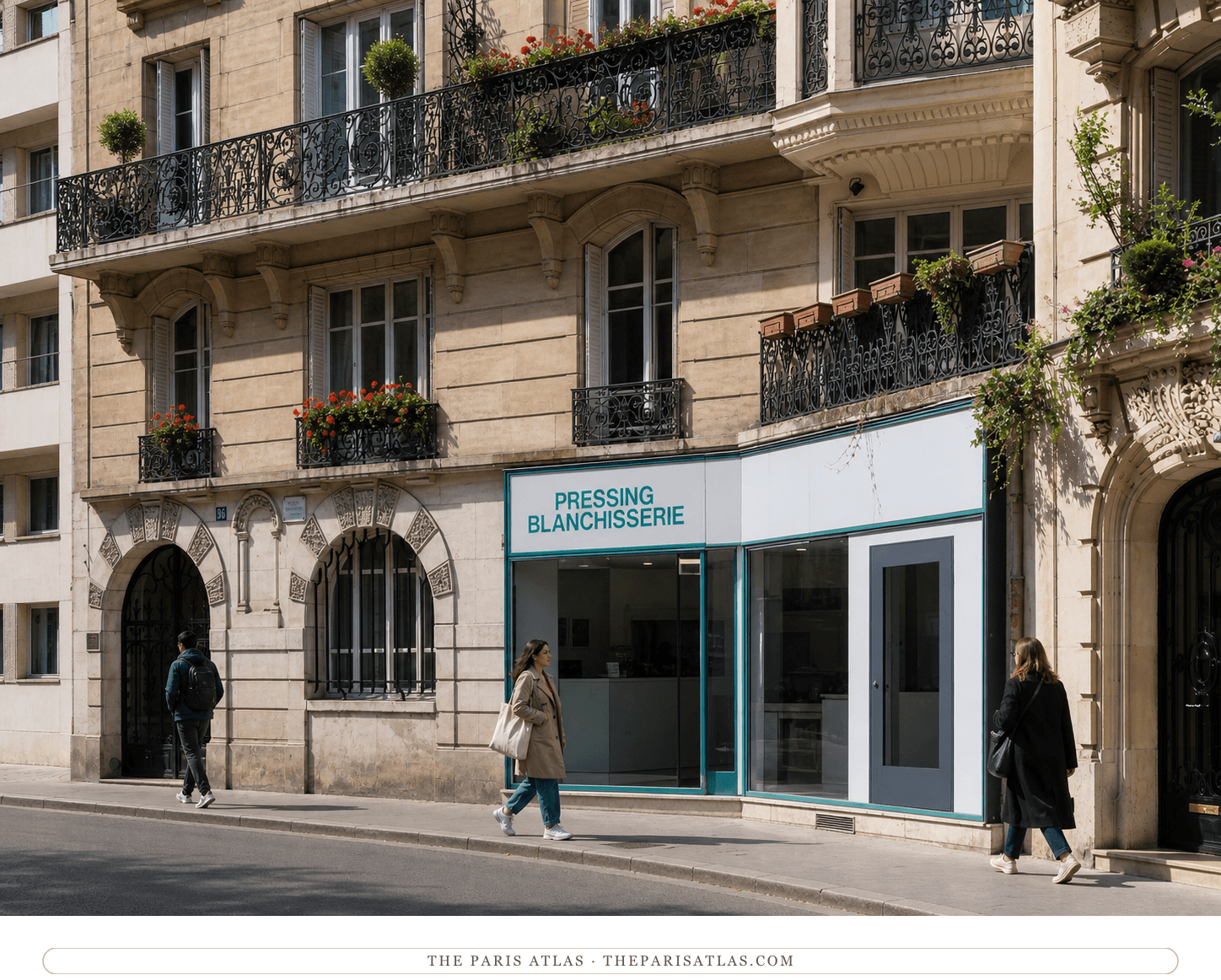
Proust was born here on 10 July 1871, in his mother's family's house in Auteuil — then a recently absorbed village on the western edge of Paris, where the family had been during the war, the siege and the Commune. They moved to 9 boulevard Malesherbes soon after.
Visit the place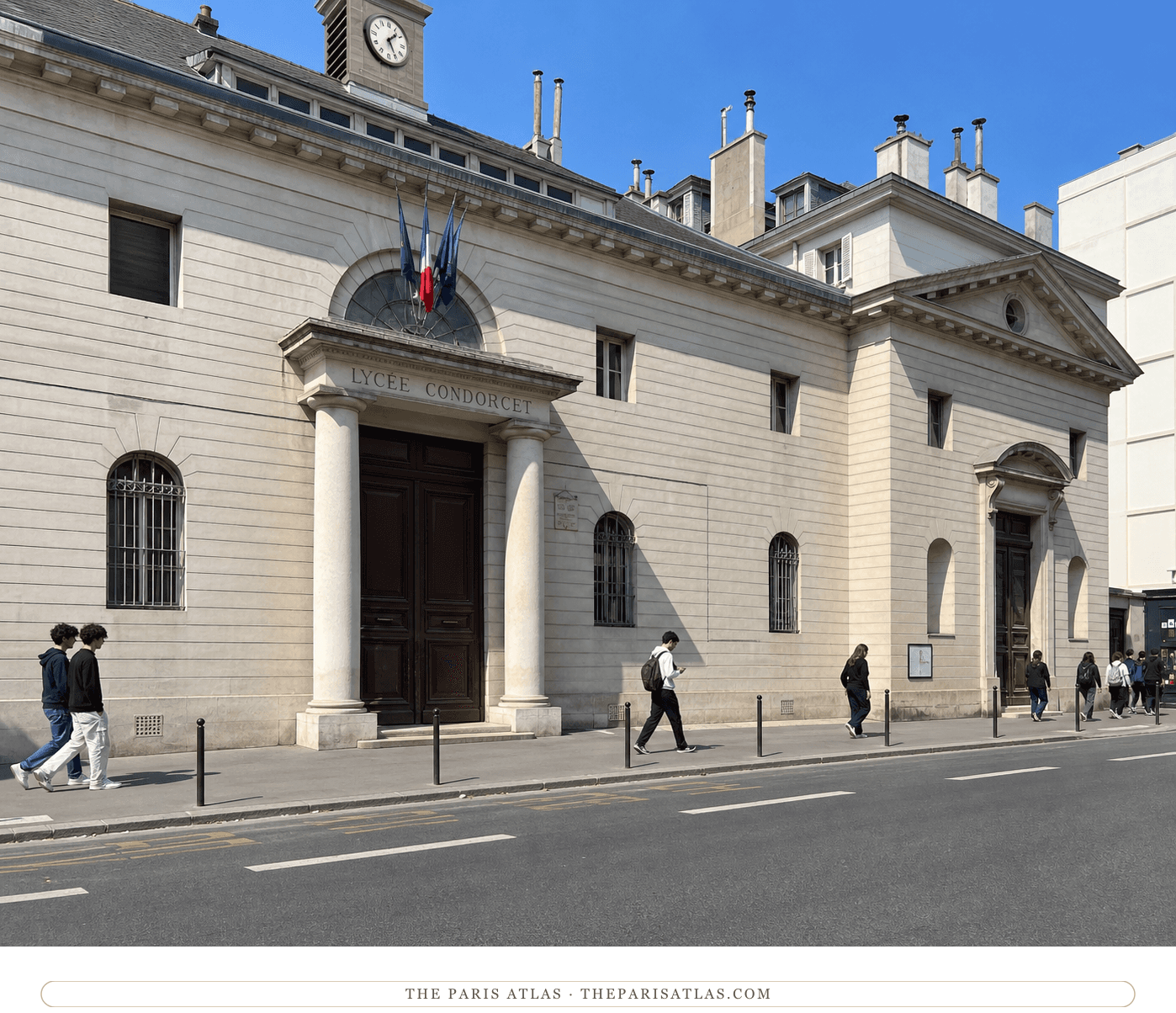
Proust attended the Lycée Condorcet, a few streets from the family flat on the boulevard Malesherbes, with his schooling interrupted by the asthma that had begun at nine. His first writings were produced there, in small magazines made with schoolfriends — and his classmates came from the families whose world he would spend thirty years anatomising.
Visit the placeA narrator moves from childhood into Parisian society, through love, jealousy, art, and loss, until he discovers his vocation — and the book ends where the writing of it begins. Beneath the social panorama it is a demonstration that the past survives inside us, reachable through sensation and recoverable through art.
He shares much with his author, but the novel is not memoir. Events are rearranged, people combined, genders changed, and years compressed. Proust built the book from his life; he did not transcribe it.
Its taste, dipped in tea, involuntarily restores the narrator's childhood world of Combray — the novel's central discovery that sensation can hold what memory cannot. In earlier drafts it was toast; the madeleine came through revision.
With Swann's Way — its opening section, 'Combray,' introduces everything. Readers who want a self-contained story can start with 'Swann in Love,' the middle section of the same volume.
That was C. K. Scott Moncrieff's original English title, borrowed from a Shakespeare sonnet. Later translators preferred the literal In Search of Lost Time, and individual volume titles vary between editions as well.
No — it was a fashionable parlor game he answered as a young man. His answers became famous enough that the game took his name.
Less than the legend says. He withdrew to write, slept by day, and worked at night in the cork-lined room — but he kept up an enormous correspondence, received visitors at his bed, and pumped a network of friends and specialists for the details the novel needed.
Influenced
Proust is one of the six writers Masuga's study reads Miller through, and Miller's own accounts of his reading return to Proust's demonstration that memory can carry an entire book.
Met · 1892
Blanche painted the twenty-one-year-old Proust in 1892 — pale, orchid at the lapel — and the portrait hung at the official Salon of 1893. It remains the image of the young Proust, now in the Musée d'Orsay.
Met · 1893
Her salon was Proust's door into artistic Paris: the April 1893 dinner where he met Robert de Montesquiou and the May 1894 party where he met Reynaldo Hahn were both hers. She illustrated his first book, Pleasures and Days.
Met · 1894
Met 22 May 1894 at a party at Madeleine Lemaire's. The romance became a lifelong friendship, and Hahn's music stayed close to Proust's thinking about what art can carry; it was Hahn who introduced Proust to the Daudet family that winter.
Met · 1893
Met 13 April 1893 at a dinner given by Madeleine Lemaire. The poet-aesthete opened aristocratic doors the young Proust could not; his manner and milieu fed the novel's composite characters.
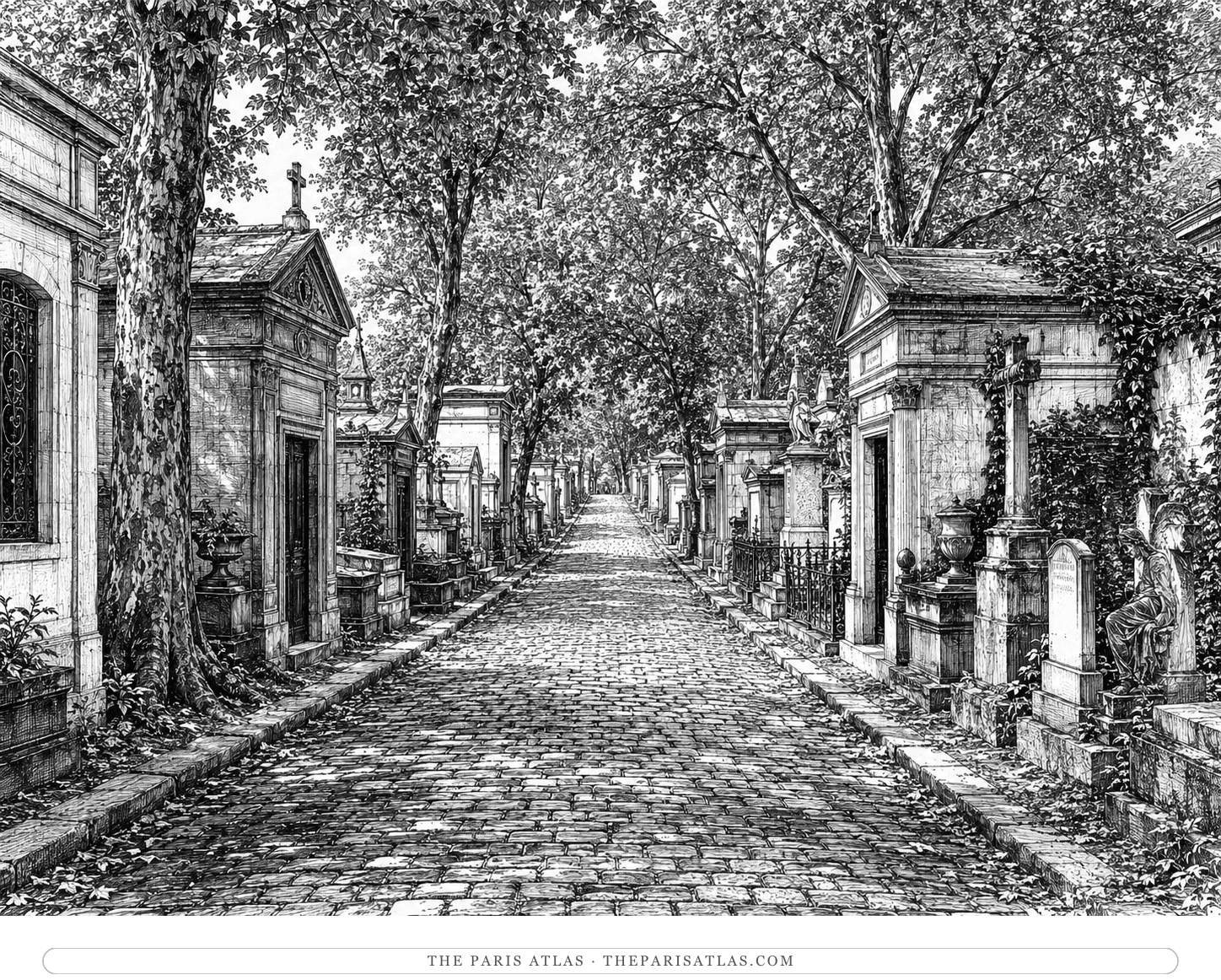
Buried at · 1922
Proust was buried at Père-Lachaise in division 85 after his death on 18 November 1922.
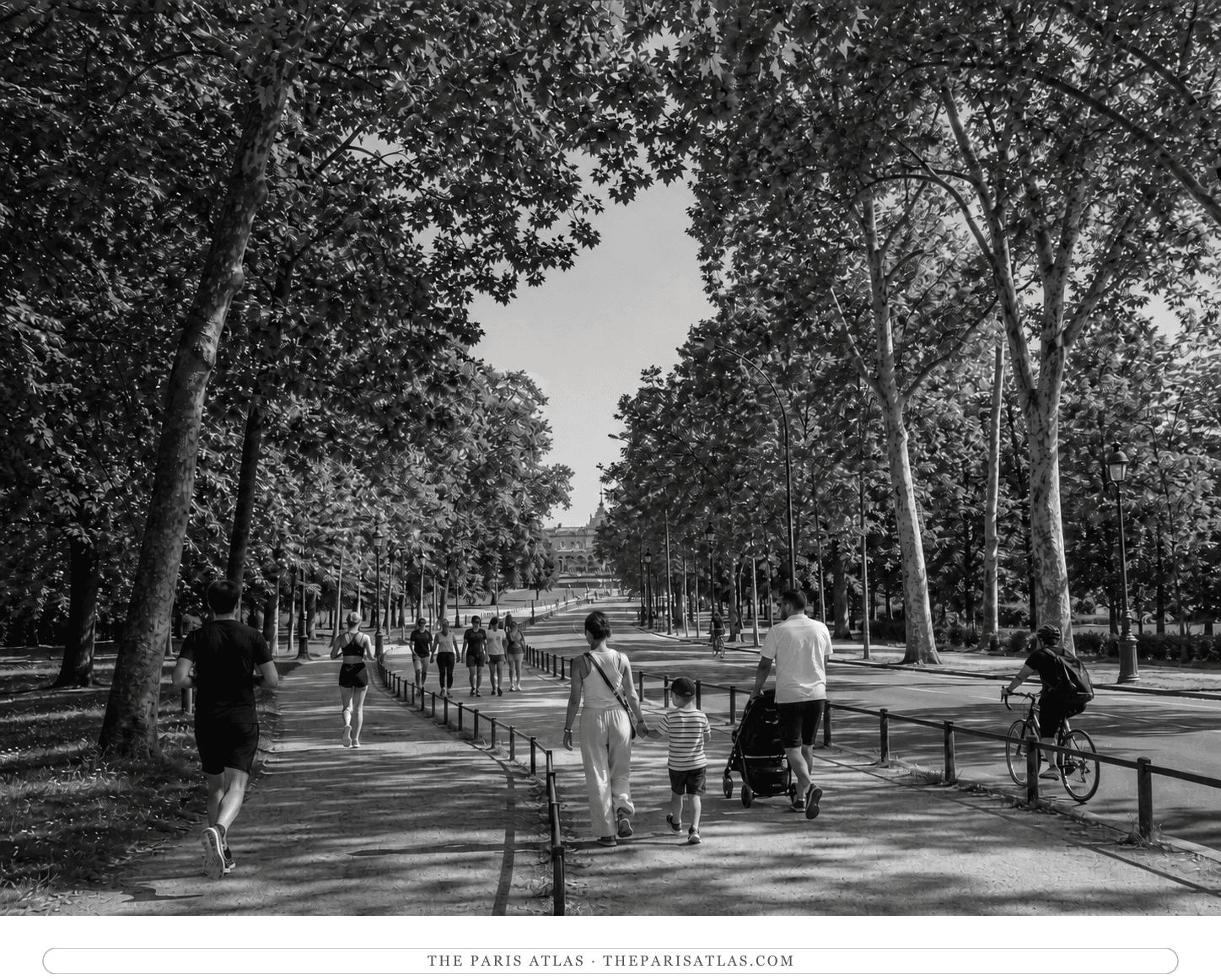
Frequented
Proust frequented the Allée des Acacias — the fashionable promenade the city identifies with today's avenue de Longchamp — and made it one of the central social arenas of In Search of Lost Time. The Bois carries a second association: returning from an outing here aged nine, he suffered the asthma attack that began his lifelong illness.
Frequented
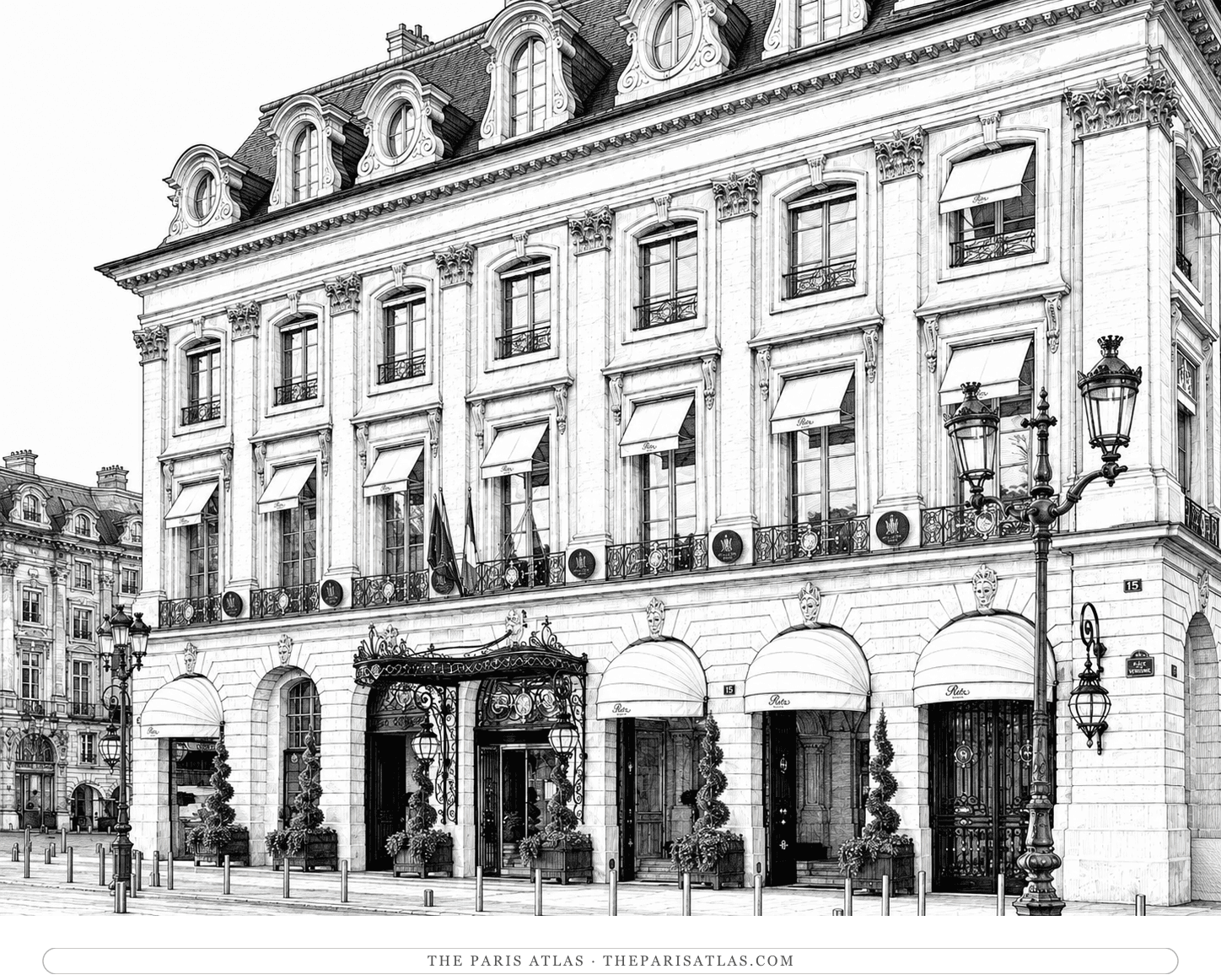
The Ritz became Proust's dining room in his later years — a place he used habitually enough that its staff, and the observation it afforded him of the society he was writing about, belong to the book as much as to his life.
Frequented · 1886
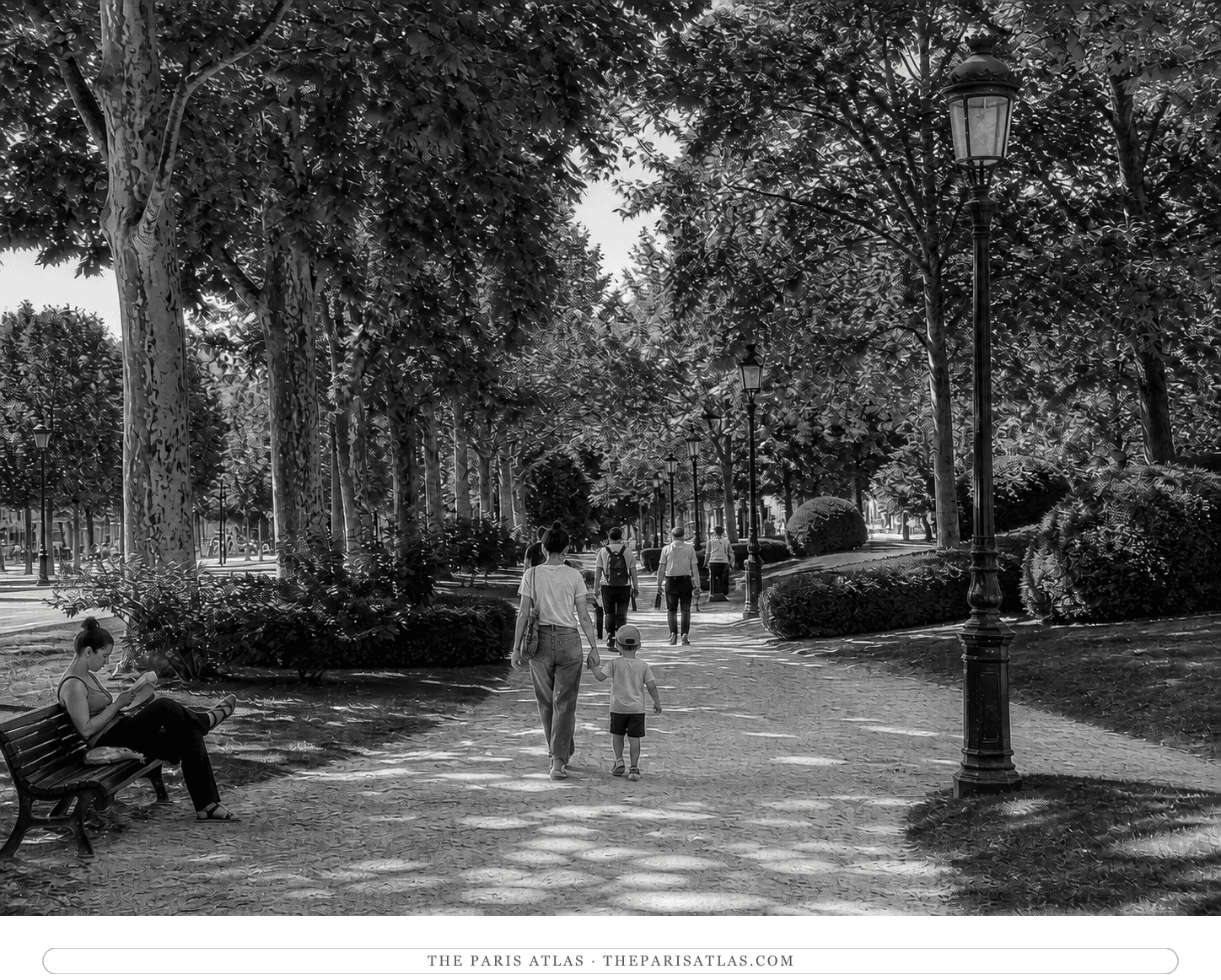
Proust played in these gardens as a boy and met Marie de Bénardaky here in July 1886, aged fifteen — his first love, and the accepted principal source for Gilberte Swann. The novel keeps the setting: the narrator meets Gilberte in the same gardens. A path here is now officially the Allée Marcel-Proust.
Frequented
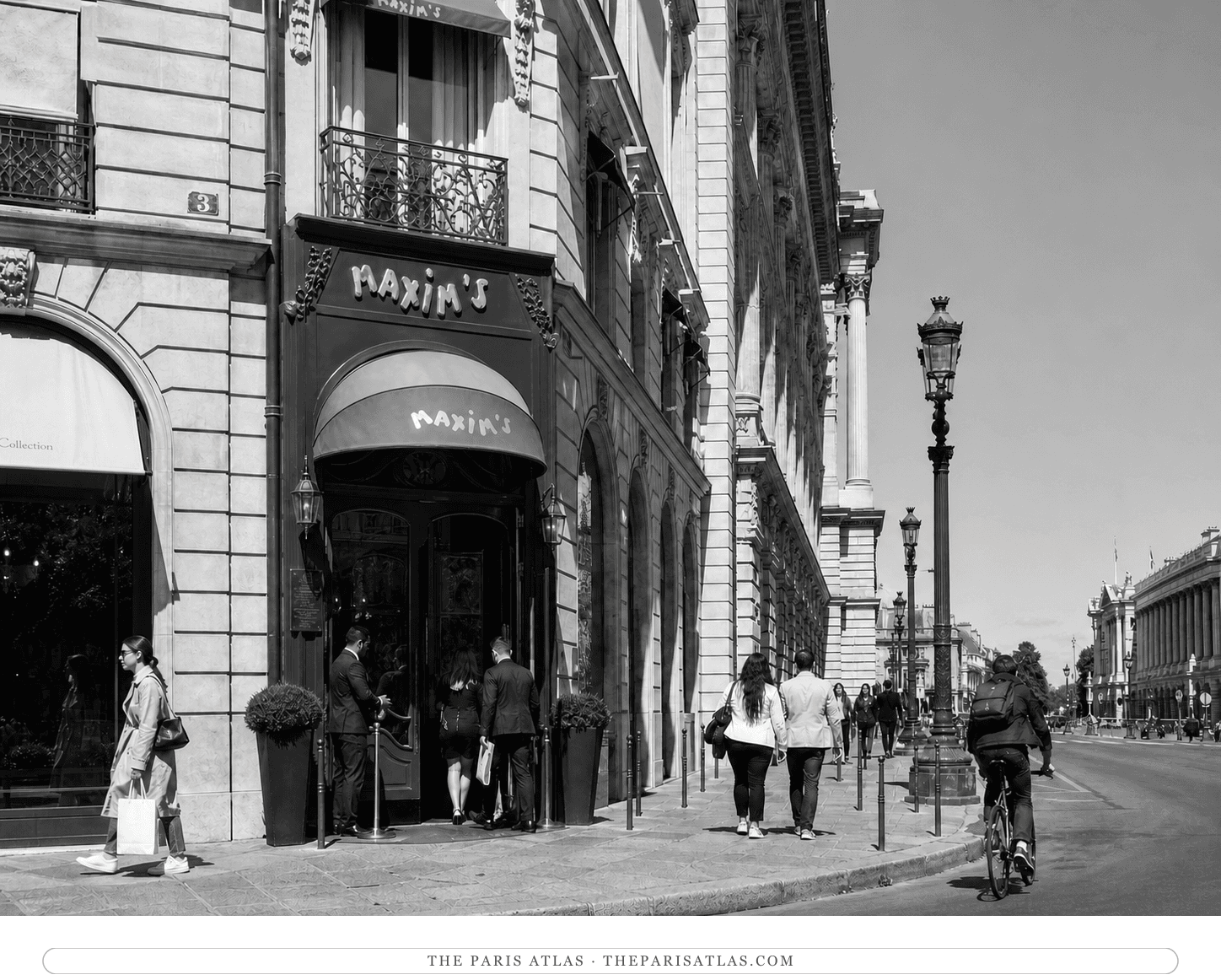
The City of Paris names Maxim's among the places Proust went out to with friends. It belongs to his sociable years rather than the later reclusive ones, when the Ritz became his headquarters instead.
Frequented
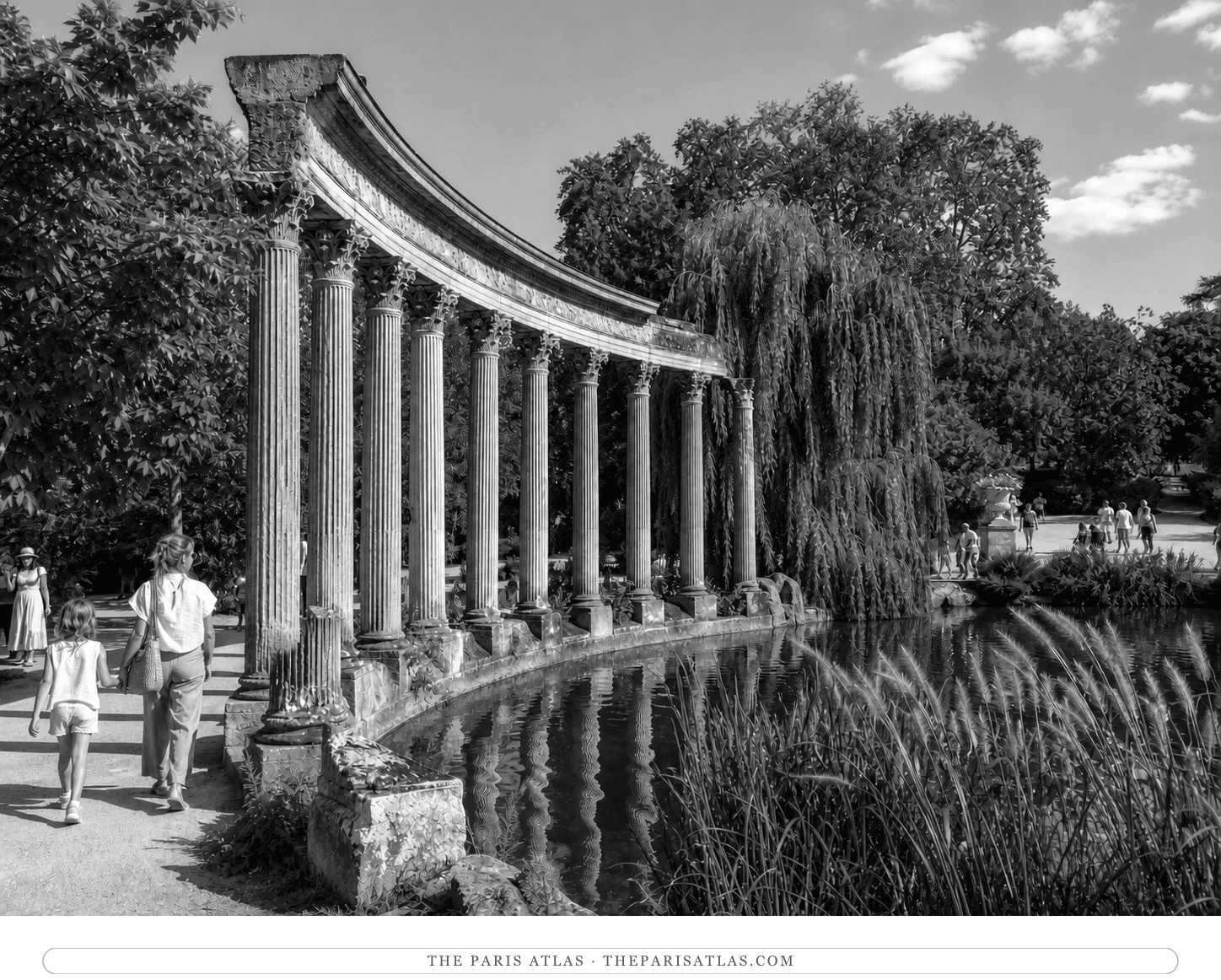
The young Proust was brought here regularly — the city records Thursday afternoons — while the family lived a few streets away on the boulevard Malesherbes. The meeting with Marie de Bénardaky belongs to the Champs-Élysées gardens, not this park.
Lived at · 1906–1919
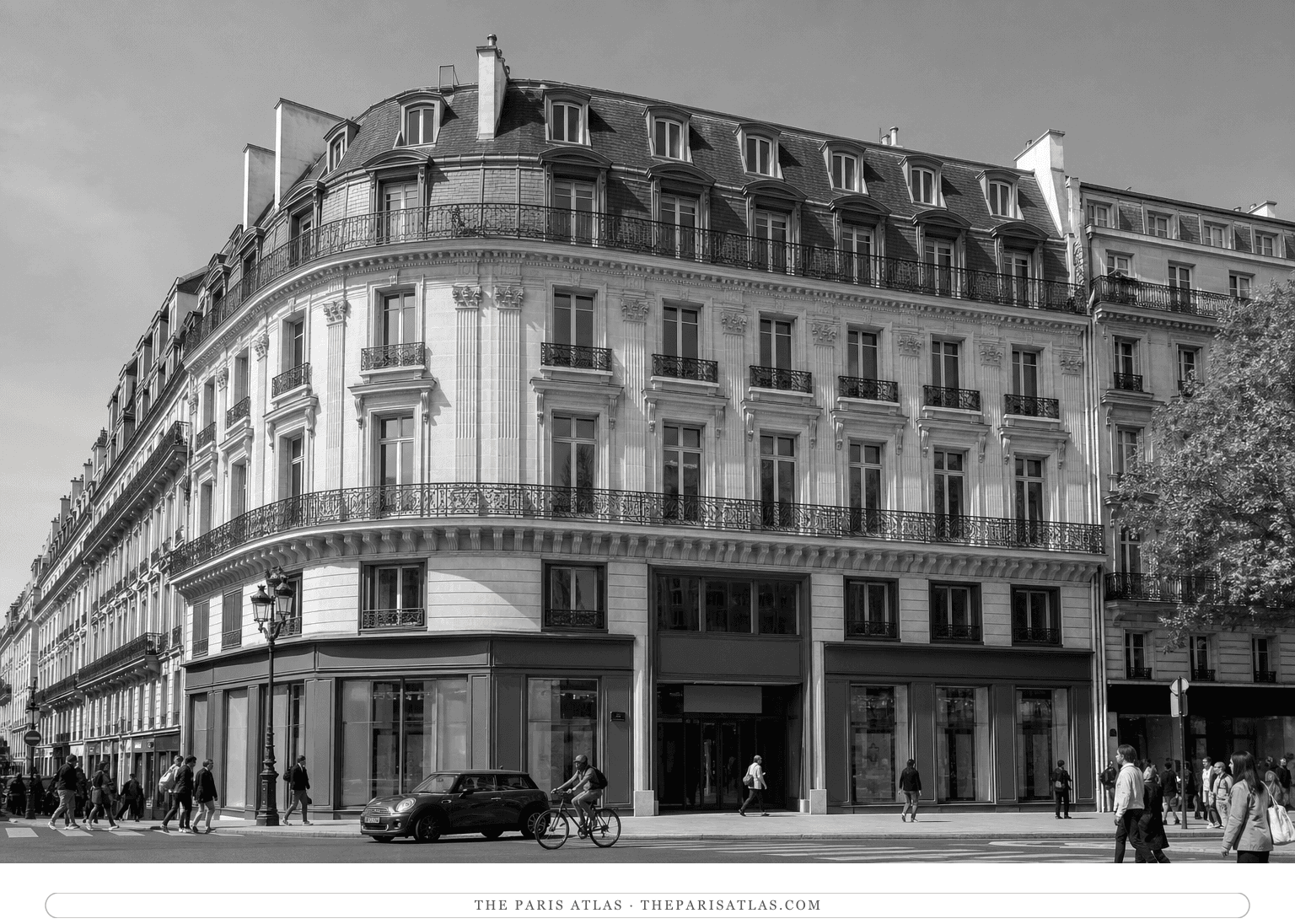
Proust moved in on 27 December 1906, after both his parents had died, and stayed thirteen years. He had the bedroom walls lined with cork against the noise of the boulevard, inverted his hours to write at night, and produced most of In Search of Lost Time in that room. The room's contents are now reassembled at the Musée Carnavalet.
Lived at · 1919–1922
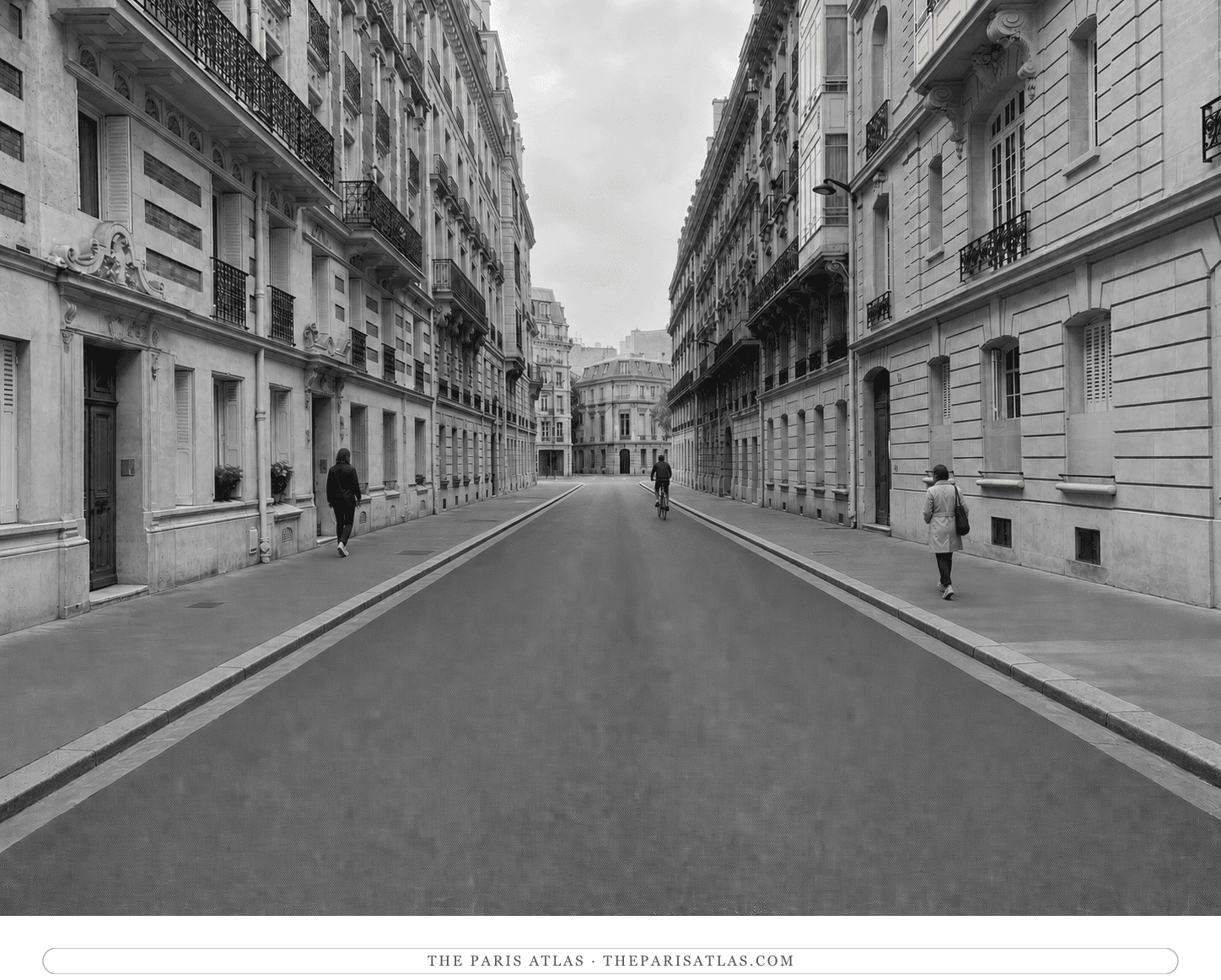
Proust's last address, taken in 1919 when the boulevard Haussmann building was sold. He called it an ignoble hovel, corrected the later volumes of his novel here as his health failed, and died in the flat on 18 November 1922.
Lived at · 1900–1906
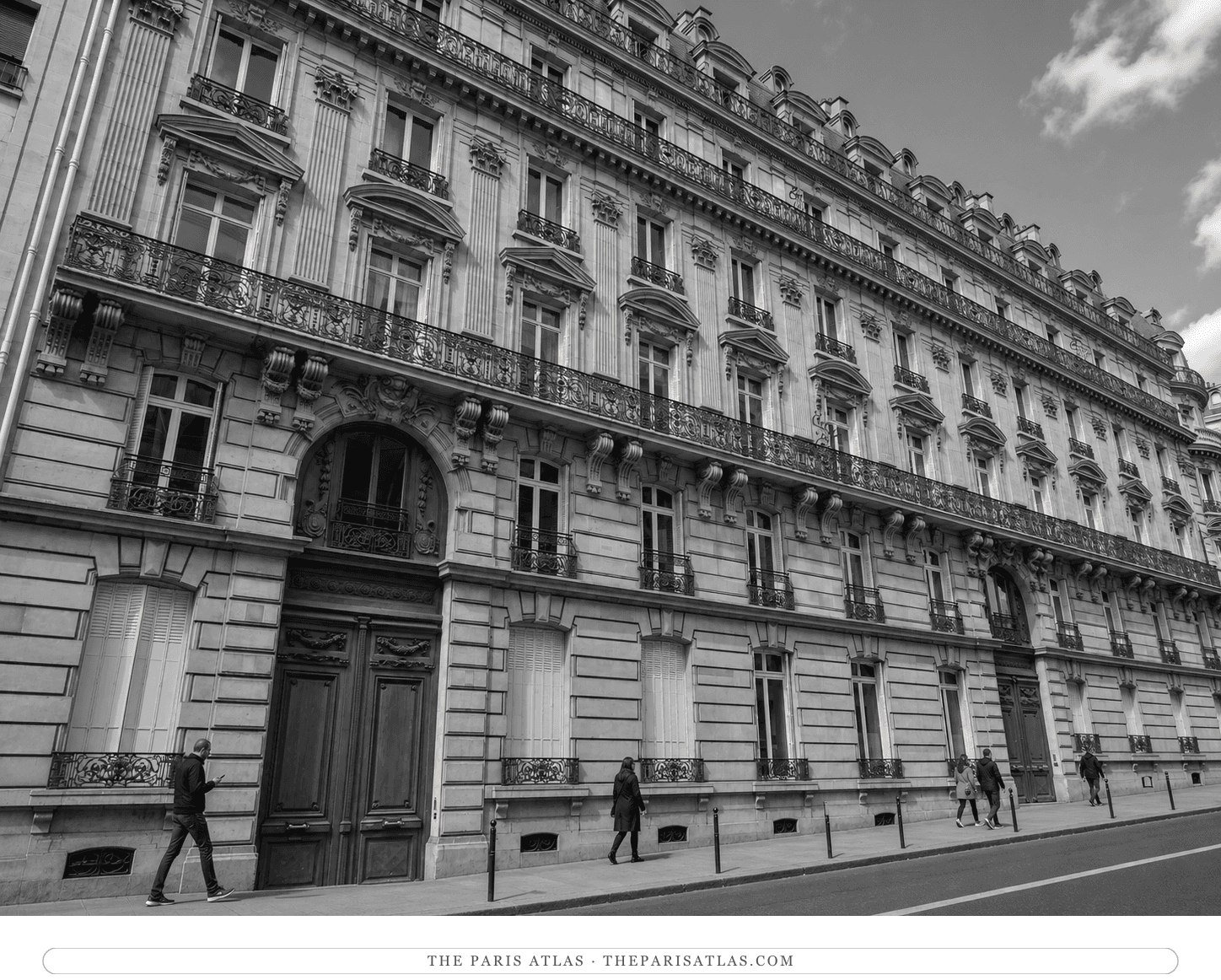
The family's address after twenty-seven years on the boulevard Malesherbes, and Proust's most socially active period — receiving writers, artists and journalists, and giving dinners. Both his parents died while he lived here. A City of Paris plaque installed in 2022 records the 1900-1906 dates.
Lived at
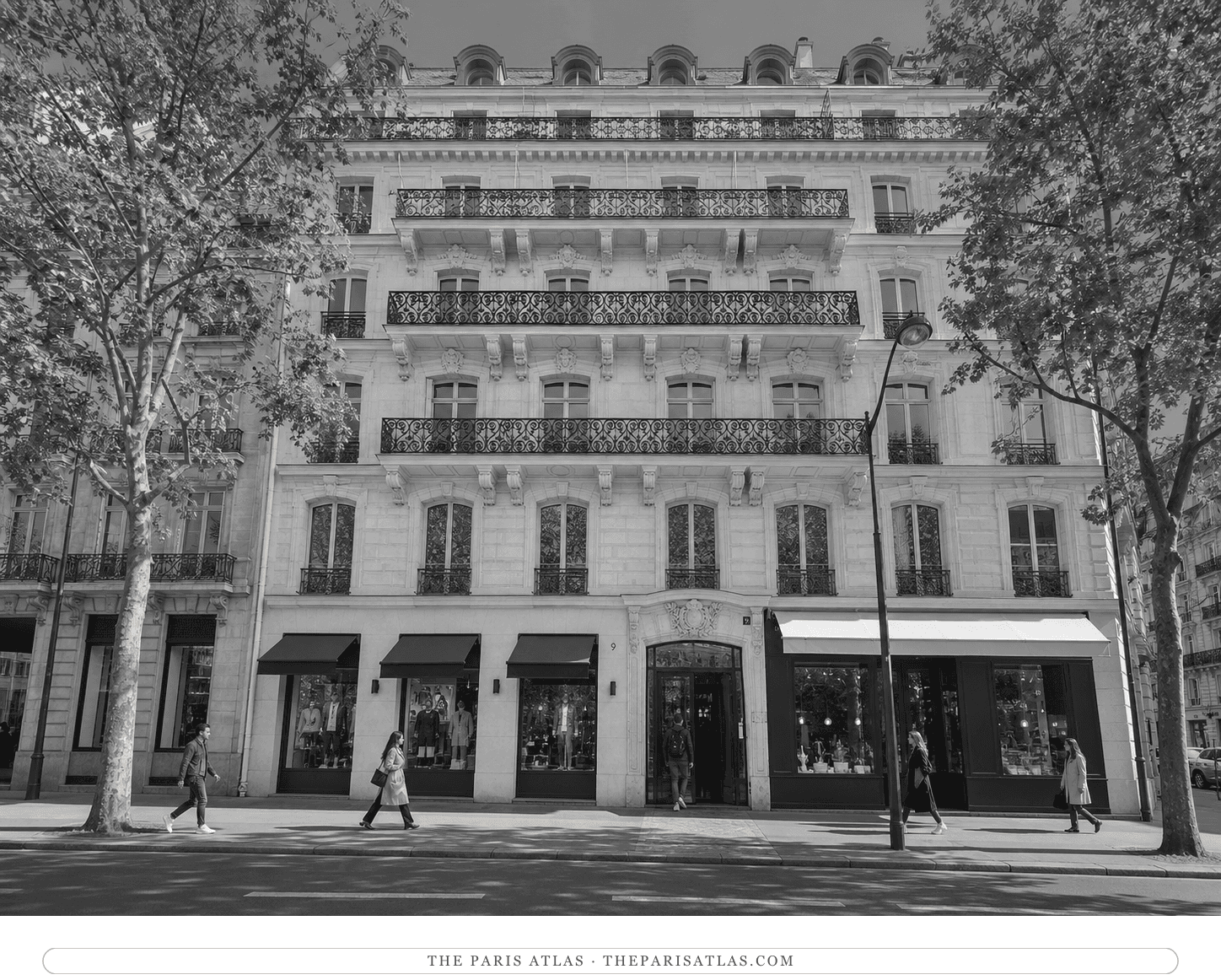
The Proust family flat, occupied for twenty-seven years — Marcel's childhood, his years at the Lycée Condorcet, the onset of his asthma and his entry into the salons of the eighth arrondissement. The family left for 45 rue de Courcelles in 1900.
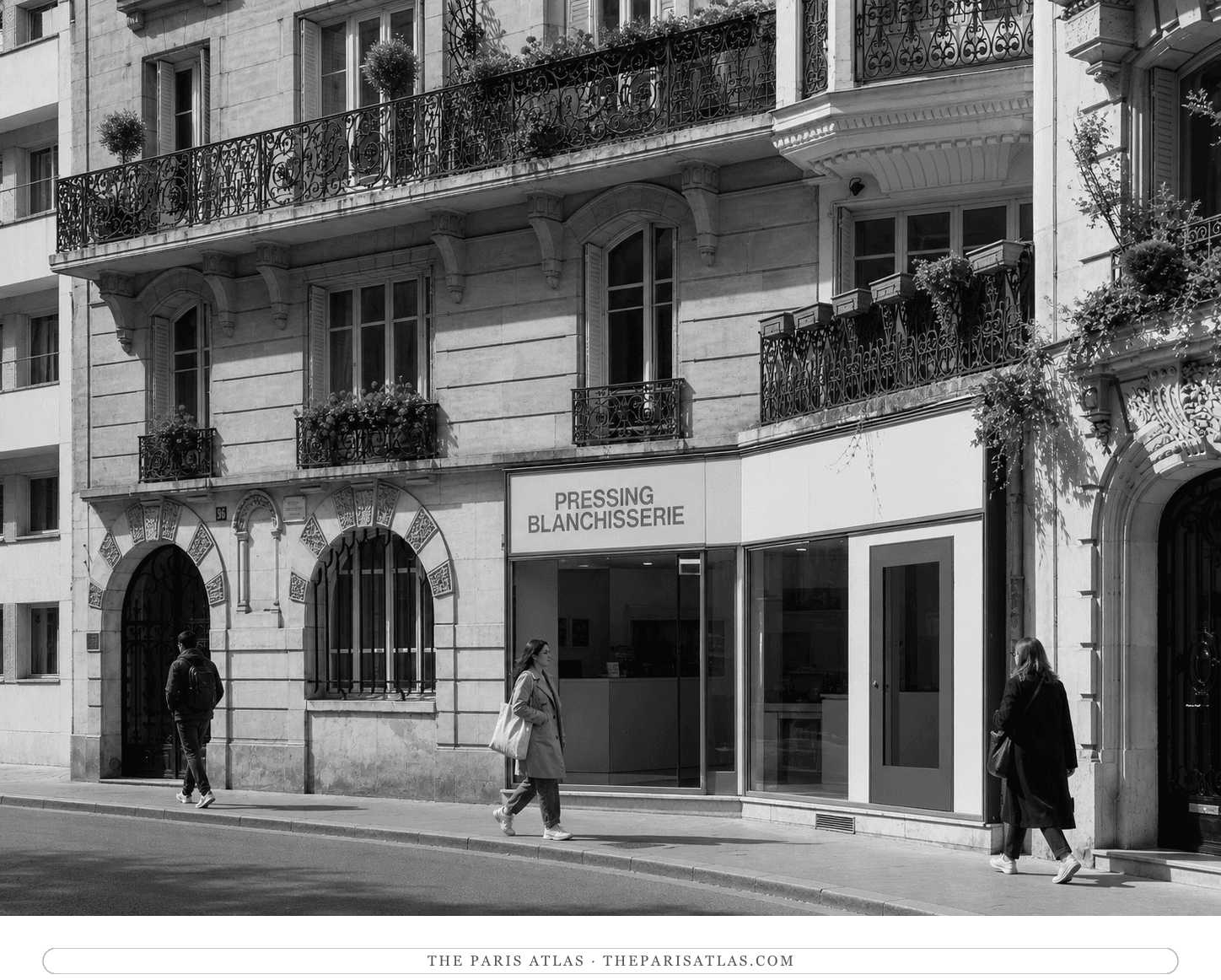
Lived at · 1871
Proust was born here on 10 July 1871, in his mother's family's house in Auteuil — then a recently absorbed village on the western edge of Paris, where the family had been during the war, the siege and the Commune. They moved to 9 boulevard Malesherbes soon after.
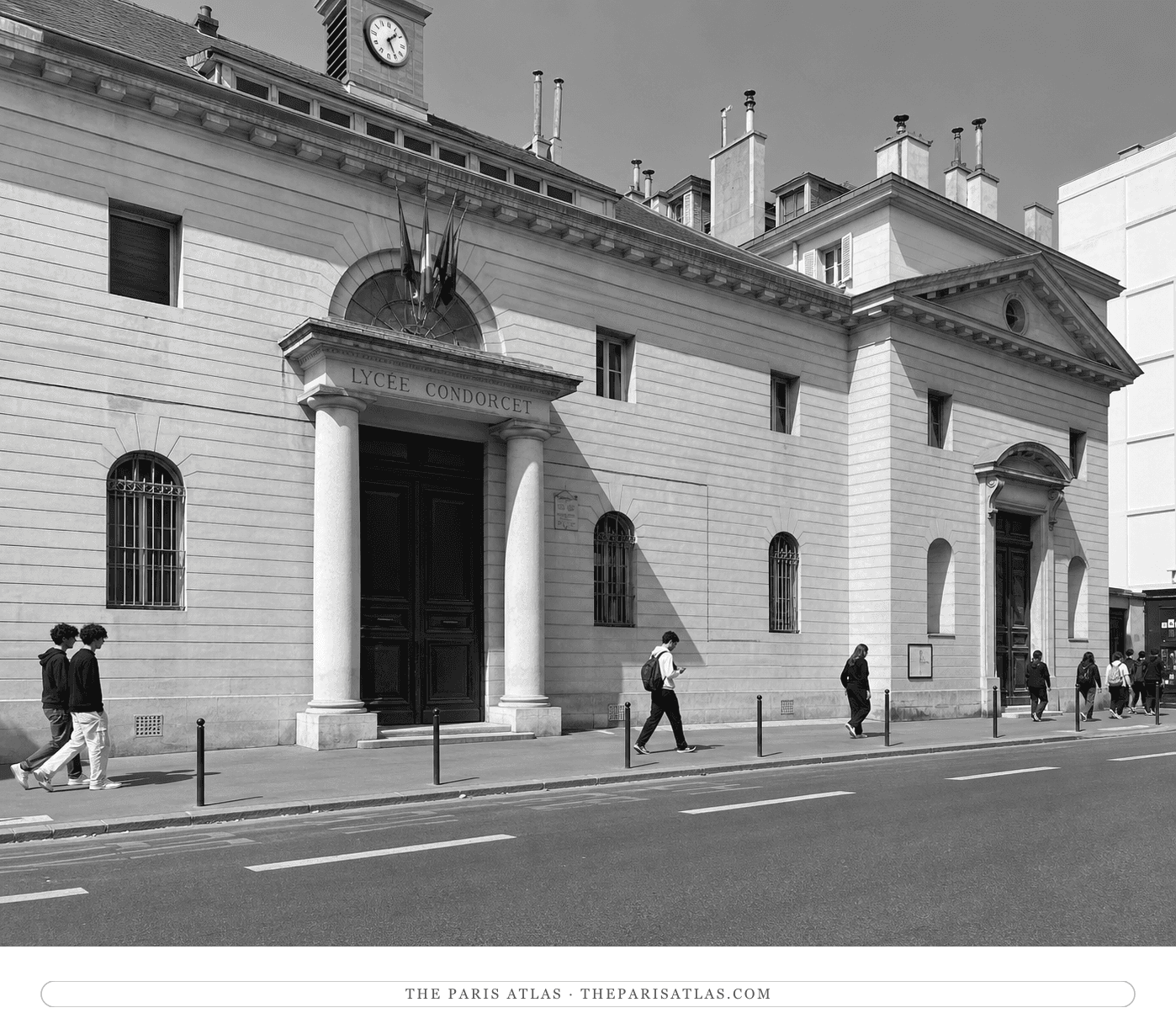
Studied at
Proust attended the Lycée Condorcet, a few streets from the family flat on the boulevard Malesherbes, with his schooling interrupted by the asthma that had begun at nine. His first writings were produced there, in small magazines made with schoolfriends — and his classmates came from the families whose world he would spend thirty years anatomising.
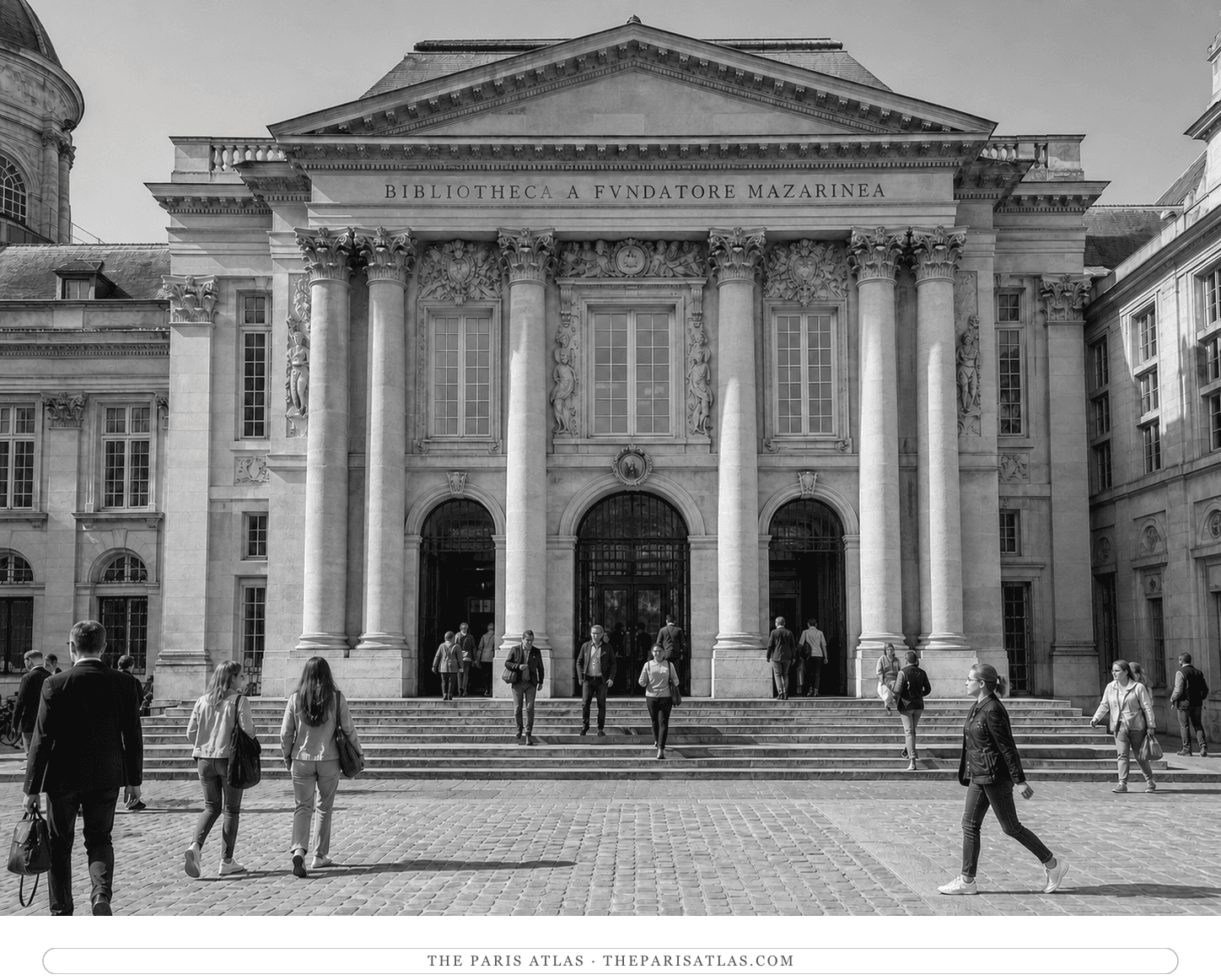
Worked at · 1895
Appointed an unpaid attaché in 1895, aged twenty-four. The City of Paris's own record is candid that he appeared only rarely, taking continuous leave until the post lapsed — a nominal profession rather than work, and the thing that marks him as free not to have one.
Influenced · 1938
Edmund White's research identifies Proust as Genet's most important literary influence from the late 1930s onward.
Met · 1895
By Colette's own account they first met in the 1890s at the salon of Madame Arman de Caillavet. They exchanged admiring letters around 1919: reading Colette's Mitsou, Proust wrote that he had wept for the first time in a long while. Colette left a first-hand portrait of Proust from both the salon years and a later meeting.
Influenced by · 1902–1921
Marcel Proust saw Vermeer's View of Delft at the Mauritshuis in The Hague on 18 October 1902 and liked it more than any other painting he saw in Holland. In a letter of May 1921 to the critic Jean-Louis Vaudoyer he called it the most beautiful painting in the world, and between 18 and 24 May 1921 he left his bed to see it again at the Dutch exhibition in the Jeu de Paume in Paris. He then added the scene in which the novelist Bergotte dies in front of the painting to La Prisonnière, the volume published in 1923 after Proust's death.
The sources below include biographies, scholarly essays, interviews, and primary materials that informed this page. They reflect both the historical record and ongoing critical conversations about Marcel Proust and their work.

Web source consulted for documented facts and historical context presented on the Marcel Proust page.
Web source consulted for documented facts and historical context presented on the Marcel Proust page.
Web source consulted for documented facts and historical context presented on the Marcel Proust page.
Web source consulted for documented facts and historical context presented on the Marcel Proust page.

Published analysis and historical context used in preparing the Marcel Proust page.
First-person evidence and historical context used in preparing the Marcel Proust page.
Published analysis and historical context used in preparing the Marcel Proust page.
Published analysis and historical context used in preparing the Marcel Proust page.
Official record used to verify names, dates, institutional details, or other factual information on this page.
These references anchor the page in the documented record and in the scholarly conversations around Marcel Proust. Every claim on this page traces back to one or more of the works listed here.
 Explore more resources