The Paris AtlasCharting the artists, works, and places worth returning to.

Park · Monceau (8th) · 8e arrondissement

Parc Monceau

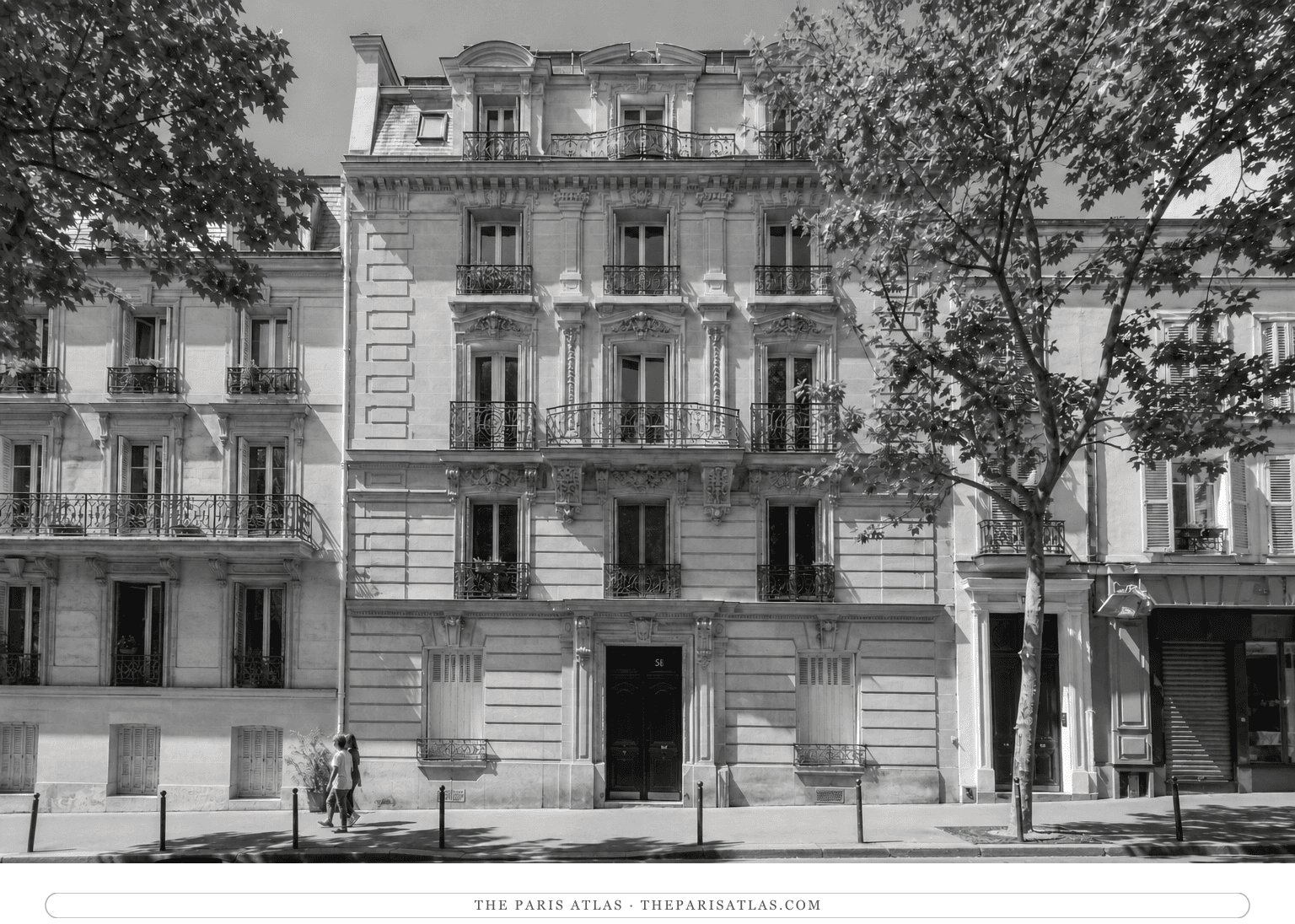
The buildingStill standing
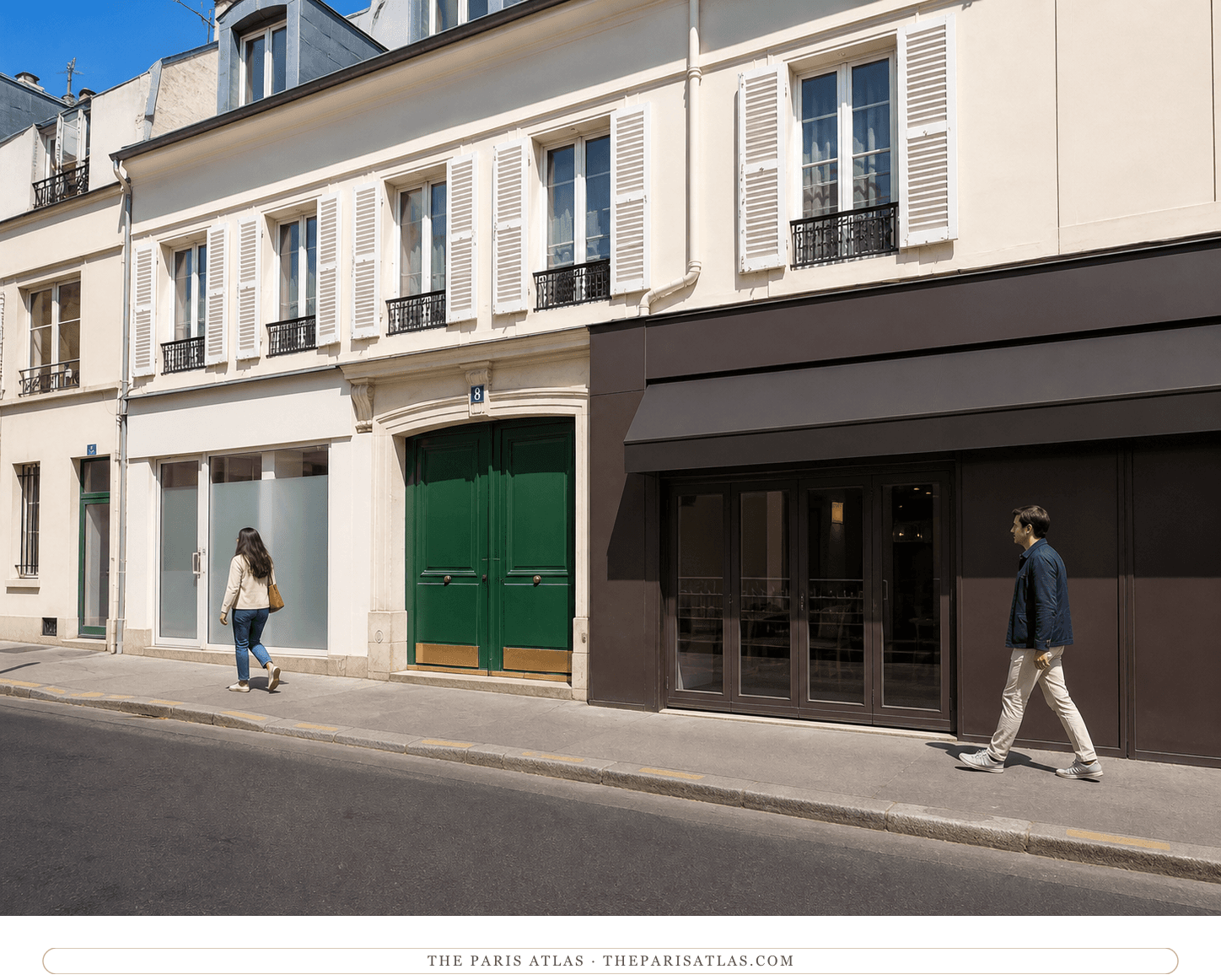
Getting inWalk straight in
What's there nowStill the same

A public park, free to enter.

An unusually theatrical park in the 8th arrondissement, full of deliberate follies — a colonnade round a pond, a pyramid, fake ruins — laid out in the 1770s as a private garden and opened to the public in 1861. It is where the young Marcel Proust played, and where he met his first love in July 1886.

Address
35 boulevard de Courcelles, 75008 Paris
Years
Laid out as a folly garden from 1778; public park since 1861

The place, briefly

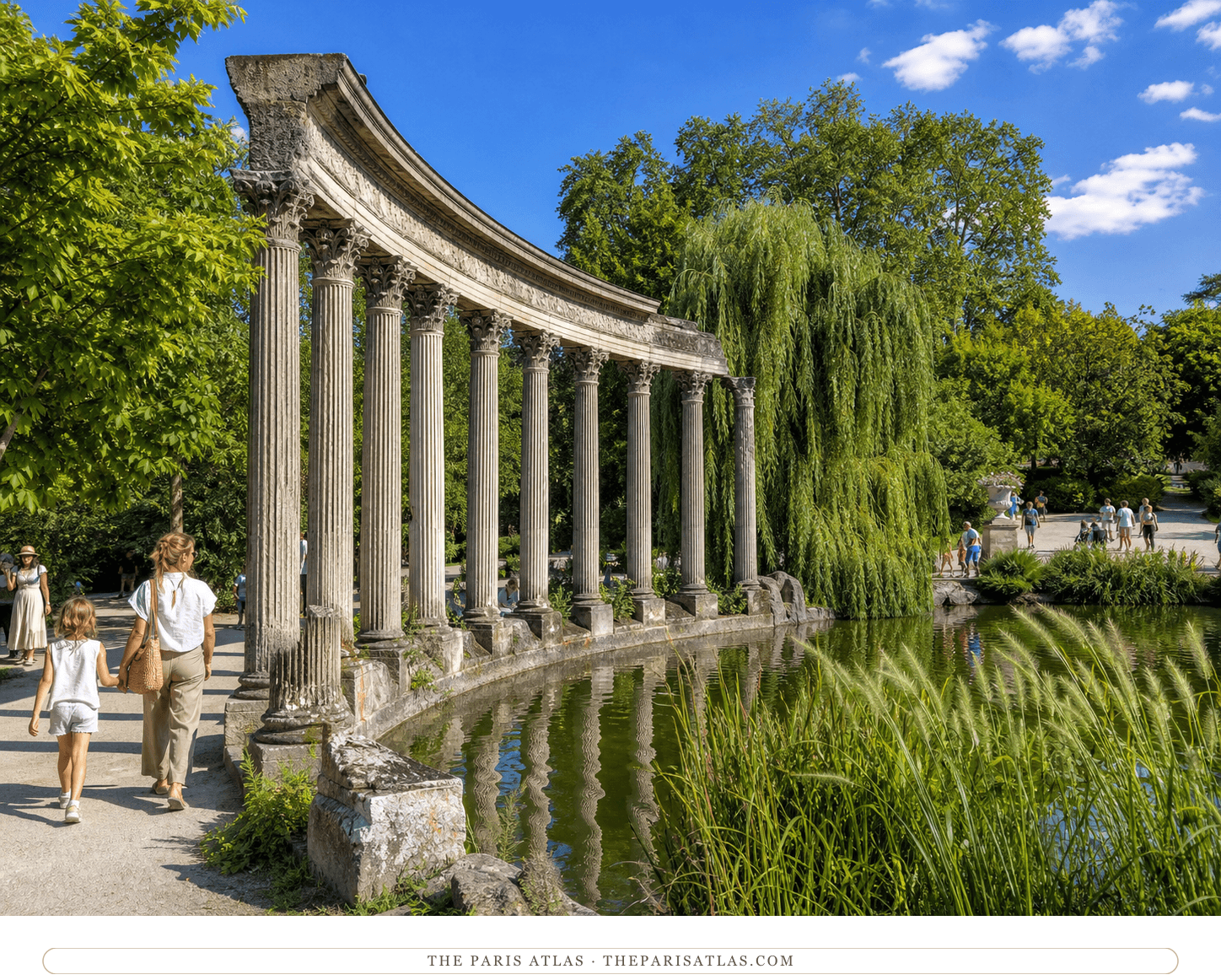
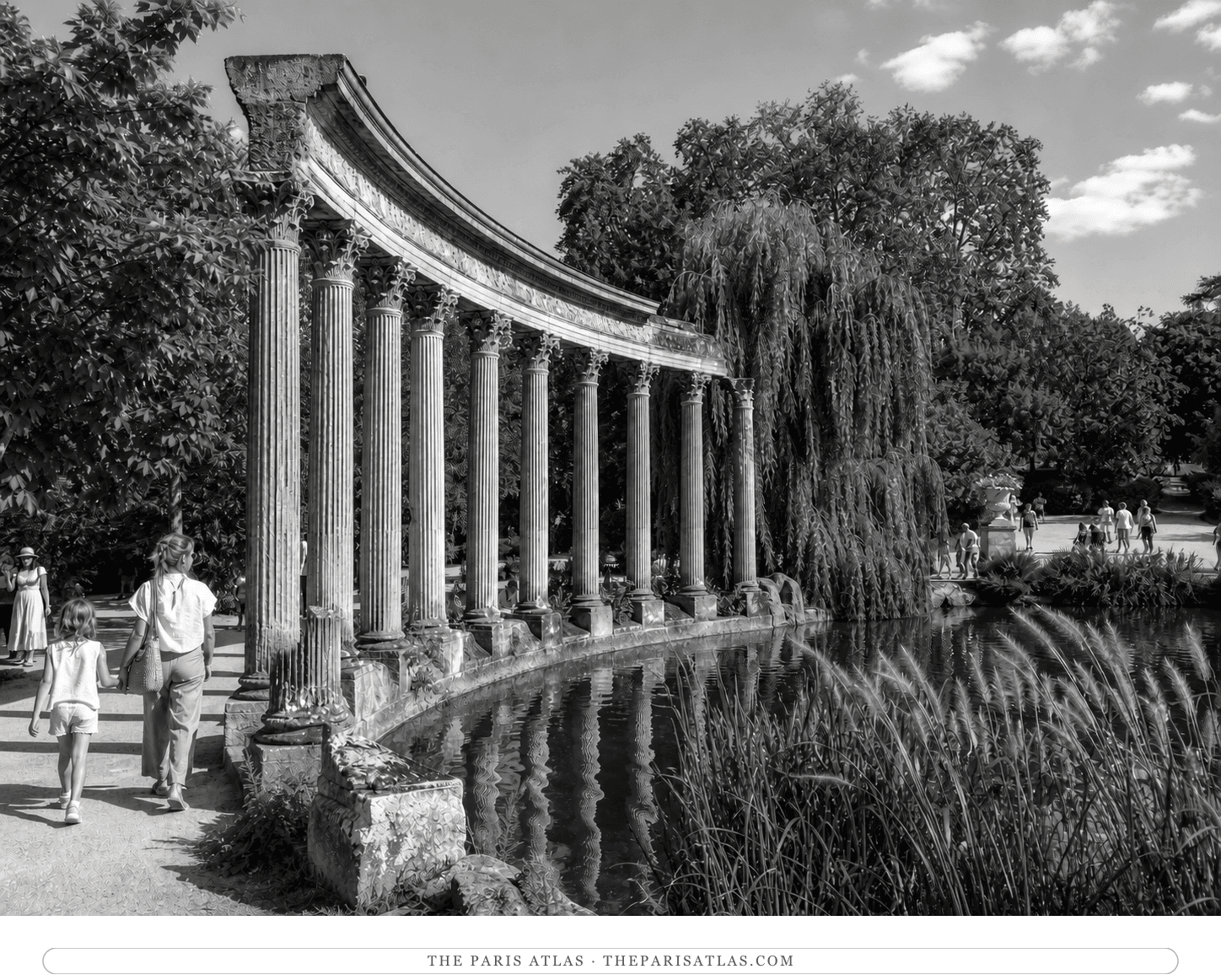
Parc Monceau does not look like the rest of Paris's parks, and that is on purpose. It began in 1778 as a private pleasure garden for the Duke of Chartres, designed as a jardin anglais scattered with follies: a colonnade curving round a water basin, a small pyramid, a set of columns arranged to look like a ruin. The idea was a garden that felt like a walk through several imaginary places at once. It became a public park in 1861 under Haussmann's rebuilding.

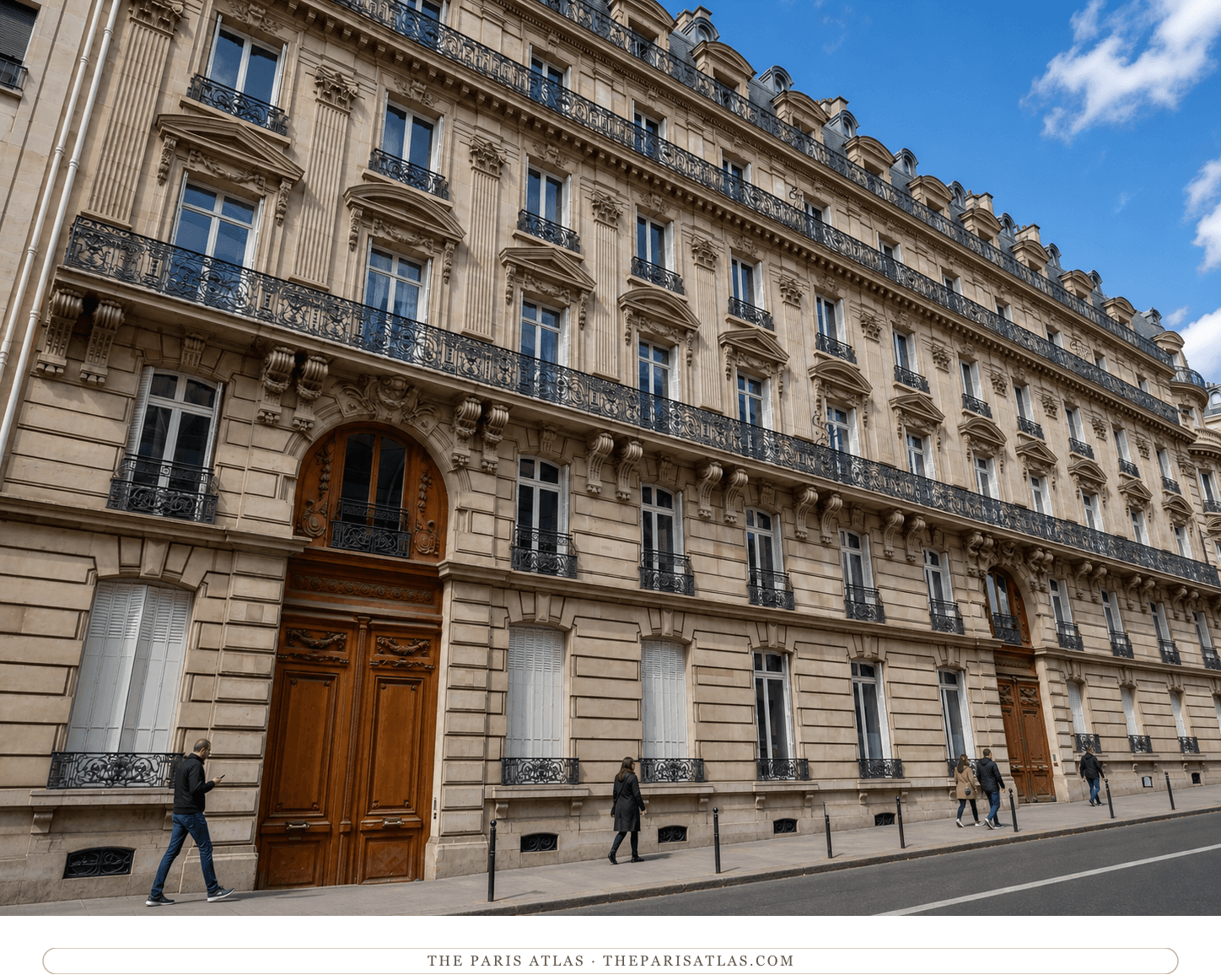
The eighth arrondissement around it filled with the wealthy, and their children were brought here. Marcel Proust grew up a few streets away at 9 boulevard Malesherbes, and the Parc Monceau and the Champs-Élysées were where he played.

The city's record of his childhood pairs this park with the Champs-Élysées gardens, and it is worth keeping the two distinct: the Parc Monceau is where he was brought regularly — Thursday afternoons, while the family lived nearby — while the meeting with Marie de Bénardaky in July 1886, his first love, belongs to the Champs-Élysées gardens a little to the south.

That regularity is the reason the park earns a page. The novel's treatment of childhood — the standing appointments, the games, the enormous significance attached to small encounters in a public garden — is written by someone for whom a weekly afternoon in a folly garden was the shape of the week.

The park is unchanged in its essentials. The colonnade, the pond, the pyramid and the fake ruins are still there, and it is still full of children.

Key facts

Created
1778, as a private folly garden for the Duke of Chartres
Public since
1861
What is in it
A curved colonnade round a pond, a pyramid, and deliberate fake ruins
Proust
Brought here regularly as a child — Thursday afternoons, while the family lived nearby
Not here
He met Marie de Bénardaky in the Champs-Élysées gardens, not this park
Admission
Free

Timeline

  1. 1778

    Laid out as a private jardin anglais with follies for the Duke of Chartres.

  2. 1861

    Opens as a public park under Haussmann's rebuilding of the city.

  3. 1880s

    The young Proust spends Thursday afternoons in the park while his family lives nearby on the boulevard Malesherbes.

On the map

Questions before you go

What is Parc Monceau?

A public park in the 8th arrondissement, laid out in 1778 as a private folly garden for the Duke of Chartres and opened to the public in 1861. It is full of deliberate architectural set-pieces — a curved colonnade round a pond, a pyramid, fake ruins — which is what makes it look unlike other Paris parks.

What is the Proust connection?

He grew up a few streets away on the boulevard Malesherbes and was brought here regularly as a child — the city's record specifies Thursday afternoons. His meeting with Marie de Bénardaky, his first love, took place in the Champs-Élysées gardens rather than here, and the two are often run together.

Is Parc Monceau worth visiting?

Yes, and it takes half an hour. It is smaller and stranger than the Luxembourg or the Tuileries, and the follies make it worth a slow walk. It sits at the centre of Proust's childhood geography, a short walk from the boulevard Malesherbes and the boulevard Haussmann.

Writers who knew this place

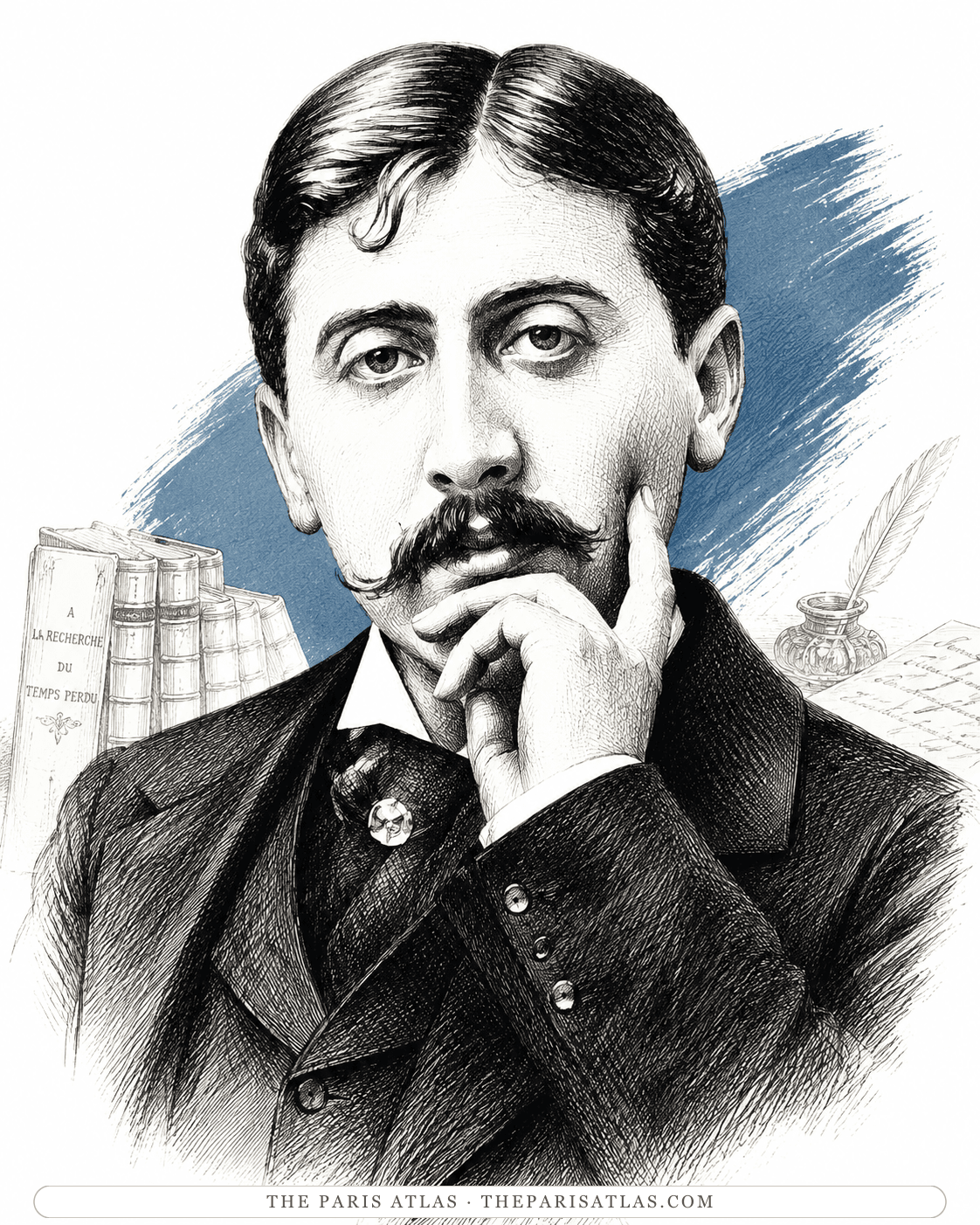
Illustrated portrait of Marcel Proust

Marcel Proust

French · French novelist of the seven-volume In Search of Lost Time, written at night in a cork-lined room — the book that made memory itself the story.

Frequented by

The young Proust was brought here regularly — the city records Thursday afternoons — while the family lived a few streets away on the boulevard Malesherbes. The meeting with Marie de Bénardaky belongs to the Champs-Élysées gardens, not this park.
Balade du côté de chez Proust

Within walking distance

The Friday Letter

Paris, one address at a time.

The cafés, studios, and walk-up flats where the work was made — one story from the map in every letter.

One email a week. No spam, no selling your address. Unsubscribe anytime.