The place, briefly
The Bois de Boulogne is enormous — a former royal hunting forest on the western edge of the city, landscaped into a public park under Napoleon III as part of the same programme that produced the Parc Monceau and Parc Montsouris.[1]
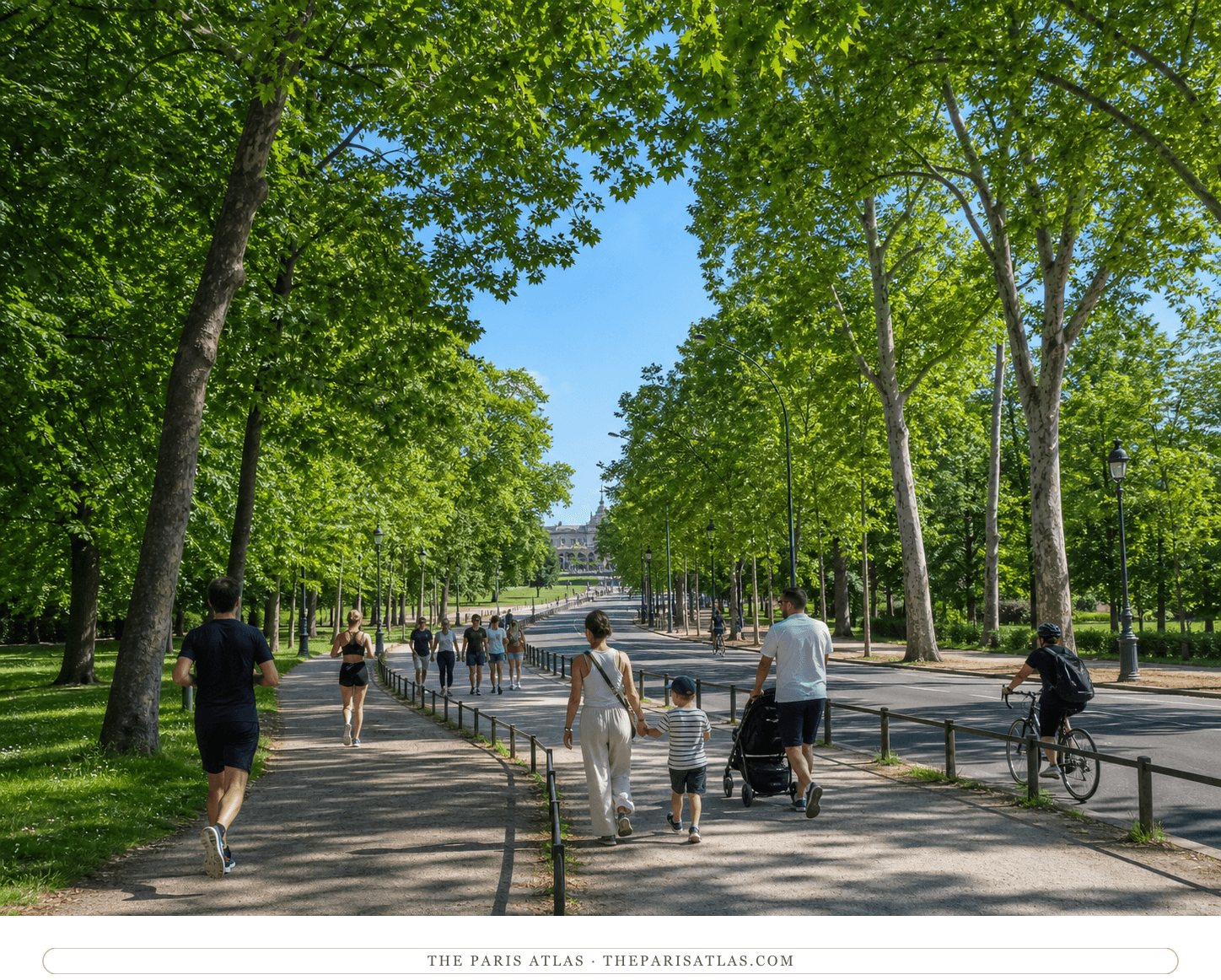
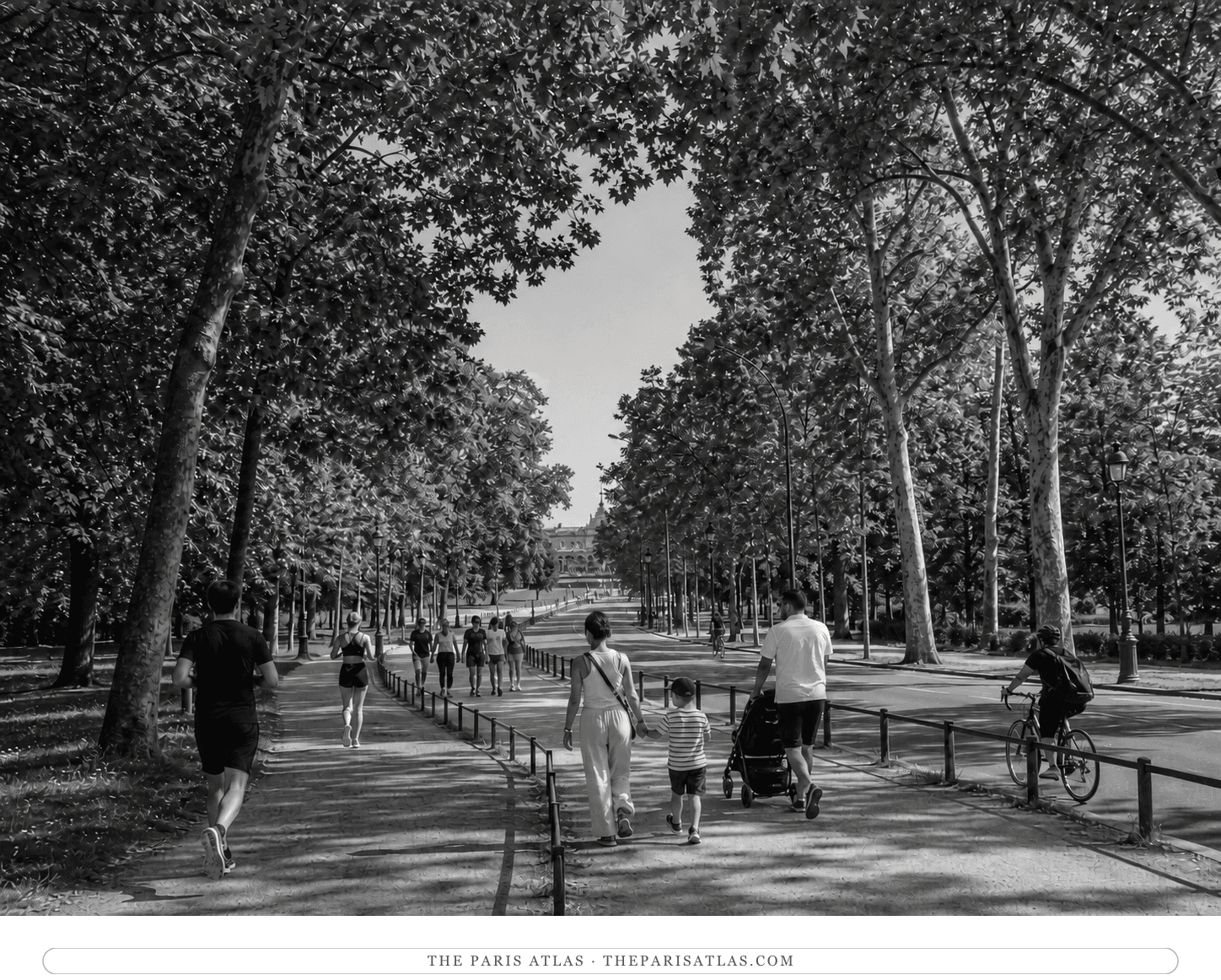
In the late nineteenth century one stretch of it mattered more than the rest. The Allée des Acacias, which the city identifies with the present-day avenue de Longchamp, was where fashionable Paris went to be looked at: carriages at a walking pace, an unwritten timetable, and a precise understanding of who could be greeted by whom.
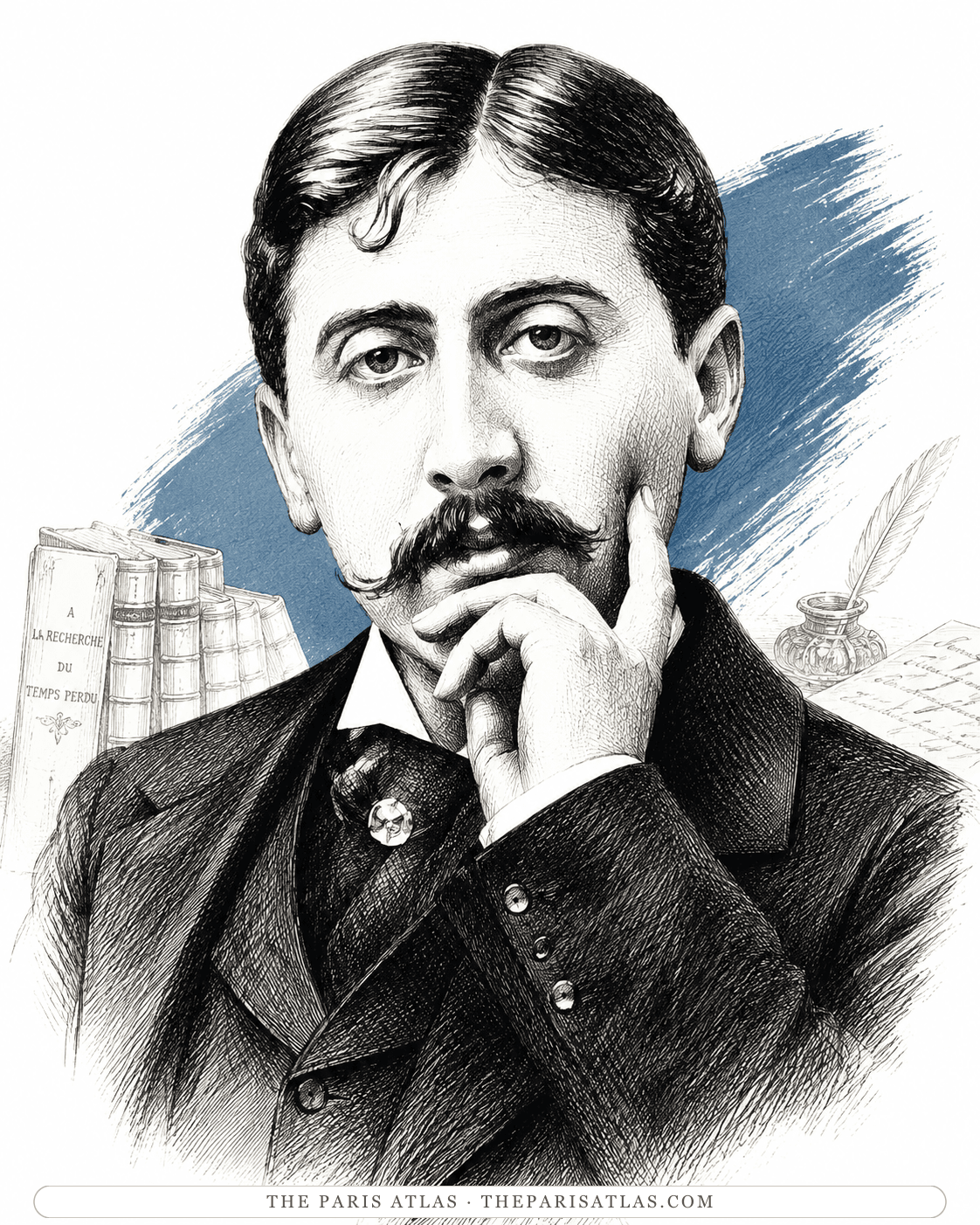
Marcel Proust frequented it, and turned it into one of the central social arenas of In Search of Lost Time. The promenade suits his purposes exactly, because it is a place whose entire function is display and observation — people arranged in public in order to be assessed, which is the novel's subject rendered as a physical space.[2]
The Bois carries a second, heavier association for him, and it is not social. Returning from an outing here at the age of nine, Proust suffered the severe asthma attack that marked the beginning of his lifelong illness. Everything that follows — the inverted hours, the cork-lined room, the decades largely spent indoors — proceeds from a condition that announced itself on the way back from this park.[3]
That double meaning is why it belongs on his map twice over: the arena where his society displayed itself, and the place his body first stopped him.
It is free, open, and far too large to do in one go. The avenue de Longchamp is the stretch to walk if you are here for Proust.[1]


 View source