The Paris AtlasCharting the artists, works, and places worth returning to.
  • Painter
· Mexican · 1907–1954

Frida Kahlo

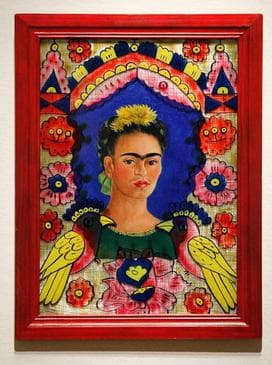
Mexican painter of self-portraits made from her own injured body, who came to Paris once, in the spring of 1939, for an exhibition organized by the French poet André Breton — and spent most of the visit ill, broke and writing home about how much she disliked the Surrealists, the artists of the movement Breton had founded on dreams and the unconscious. She sold one picture there. The French state bought it, and it is in the Centre Pompidou today.

Details

Lived
1907–1954
Born
6 July 1907
Birthplace
Coyoacán, Mexico City
Died
13 July 1954 · aged 47
Place of death
Coyoacán, Mexico City
Nationality
Mexican
Profession
Painter
Major works
The Two Fridas, The Broken Column, The Frame, Henry Ford Hospital
Married
Diego Rivera · 1929–1939, 1940–1954
Roles
Painter

About Frida Kahlo

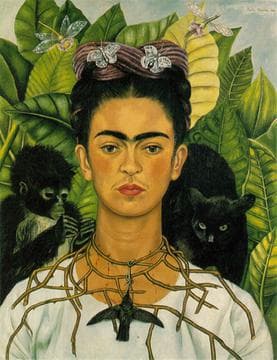
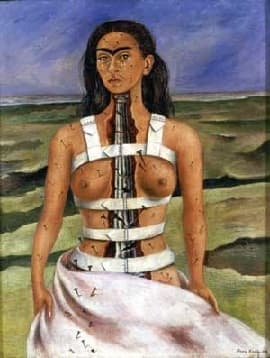
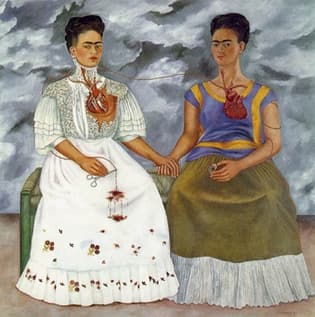
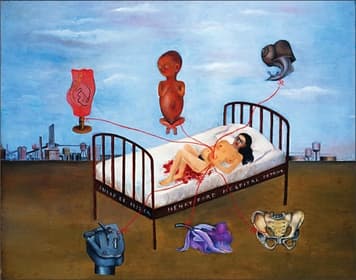
Frida Kahlo painted herself, over and over, in pictures small enough to hold: her spine as a shattered column, her body on a hospital bed, herself doubled into two figures, each wearing the dress of one of her two halves. A streetcar crushed the bus she was riding in when she was eighteen, and she began to paint during the months she spent immobilized afterwards. She married the muralist Diego Rivera in 1929, divorced him in 1939, married him again in 1940, and lived most of her life in the cobalt-blue house in Coyoacán, Mexico City, where she had been born.

Paris took six weeks of that life, in early 1939, and she hated a good deal of it. André Breton — the French poet who had invented Surrealism and declared Kahlo one of its own — had promised her an exhibition and then failed to arrange it; she arrived to find her paintings still in customs, fell ill, and was taken in by the French artist Marcel Duchamp and his partner Mary Reynolds. The show opened on 10 March 1939 and she sold exactly one painting, The Frame. The buyer was the French state, and the picture is still in Paris: a self-portrait the size of a postcard, in the Centre Pompidou.

The handrail and the paintbox

Magdalena Carmen Frida Kahlo Calderón was born on 6 July 1907 in Coyoacán, then a village on the southern edge of Mexico City, in the house her father had built three years earlier — the Casa Azul, or Blue House, named for the colour of its walls. Her father, Guillermo Kahlo, was a German-born photographer who made the official photographic record of Mexico's historic monuments; Frida retouched prints in his laboratory and went with him on shoots in case his epilepsy struck. Polio at six left her right leg thinner and shorter than the left.

On 17 September 1925, when she was eighteen, a streetcar hit the bus she was travelling in. A metal handrail went through her hip. Her pelvis was broken, her spine fractured in three places, her collarbone and two ribs broken, her right shoulder dislocated, and her right leg — the polio leg — broken in eleven places. She spent months flat on her back. Her father gave her his box of paints, her mother had a carpenter build an easel that would work above a bed, and the painting began there. Operations, corsets and long convalescences ran through the rest of her life; she owned about twenty-five different corsets.

Diego, and the Blue House

She met Diego Rivera — already a famous painter, and back in Mexico after eleven years in Paris, most of them spent as a Cubist, painting the world broken into geometric facets — through the Italian photographer Tina Modotti, and married him on 21 August 1929. He was forty-three and she was twenty-two. Her mother called the wedding a marriage between an elephant and a dove. They lived at the Blue House, at Rivera's studio in San Ángel, and for three years in Detroit, San Francisco and New York while he painted murals. Three pregnancies, in 1930, 1932 and 1934, ended in miscarriage.

Both were Communists. From 1937 to 1939 the couple gave the exiled Russian revolutionary Leon Trotsky and his wife Natalia asylum in the Blue House, which put Kahlo at the centre of the international left-wing circles then passing through Mexico City. One of the visitors was André Breton, the French poet who had launched Surrealism in the 1920s. Breton wrote the text for her first solo exhibition, at the Julien Levy Gallery in New York in 1938, and in it declared her a Surrealist. She spent the rest of her life saying she was not.

Paris, spring 1939

In January 1939 Breton and the Surrealists invited her to Paris to show eighteen small paintings in a group exhibition called Mexique — French for Mexico. What she found on arrival was that almost nothing had been done: her pictures were held up in customs, no gallery was confirmed, and she got sick and was hospitalized. Marcel Duchamp — the artist who had already abandoned painting for chess and readymades (ordinary manufactured objects he exhibited as art), and who lived in Paris with the American bookbinder Mary Reynolds — took over the arrangements and took her into their home.

She wrote to Nickolas Muray, the Hungarian-American photographer who was her lover in New York, on 16 and 27 February. Both letters survive in the Smithsonian's Archives of American Art, and between them they cover an illness and a hospital stay, the mess the exhibition was in, her money troubles, and her contempt for the French art world and for Breton in particular. Duchamp was the exception.

the only one of the artists and painters here who has his feet on the ground and his brain in the right place

Frida Kahlo on Marcel Duchamp, letter from Paris, 1939

Mexique opened on 10 March 1939 at the galerie Renou et Colle and ran to the 25th. Breton had assembled it as a portrait of a country rather than of a painter: eighteenth- and nineteenth-century Mexican painting, pre-Columbian sculpture, votive folk paintings — small pictures made as offerings of thanks to the saints — photographs by Manuel Álvarez Bravo, and Kahlo's eighteen pictures. At the opening she was congratulated by the Spanish painter Pablo Picasso and by Wassily Kandinsky, the Russian abstract painter then living out in Neuilly, on the western edge of Paris; Kandinsky described her in a letter of 17 March as 'there in person, in Mexican dress — very charming'. She left for New York when the show closed and never returned to Paris.

The one picture France bought

The Frame, the one picture that found a buyer, is a self-portrait painted in 1938 in oil on a sheet of aluminium about the size of a postcard — 28.5 by 20.7 centimetres — set behind glass that Mexican artisans from Juquila had hand-painted with birds and flowers, so that the frame is part of the picture rather than a fitting around it. The French state bought it in 1939 and assigned it that same year to the Musée du Jeu de Paume, then the national museum for contemporary foreign art. Its inventory number still begins JP, for Jeu de Paume.

Her own museum in Coyoacán states it more simply: the Louvre, it says, acquired one of her self-portraits. Both statements describe the same purchase — the French state's acquisition of 1939, recorded at the Jeu de Paume. The painting later passed to the Musée national d'art moderne, France's national museum of modern art, and belongs today to that museum inside the Centre Pompidou — not, in fact, the Louvre.

Not a Surrealist

Surrealism, as Breton defined it, sought the images thrown up by dreams and the unconscious. Kahlo's pictures — a miscarriage in a Detroit hospital, her own spine as a cracked pillar, her face doubled in two costumes — looked to him like exactly that. She refused the reading for the rest of her life, and put it plainly to a reporter from Time in 1953: 'They thought I was a surrealist, but I wasn't. I never painted dreams. I painted my own reality.' Her museum in Coyoacán states the same position.

She kept books about Surrealism on the shelf beside her bed all the same, and went on showing in Surrealist exhibitions when it suited her — the International Surrealist Exhibition in Mexico City in 1940 among them. The label opened doors in Europe, and she used them without ever accepting it.

Last years

She divorced Rivera in 1939, months after Paris, and remarried him in San Francisco on 8 December 1940. She taught at La Esmeralda, the national painting school, from 1943, until the students had to come to the Blue House because she could no longer travel to them. She spent most of 1950 in hospital after a bungled spinal graft became infected. In 1953 her right leg was amputated below the knee.

The only solo exhibition she had in Mexico during her life opened that same year, at Lola Álvarez Bravo's gallery in Mexico City. Her doctors forbade her to attend, so she came by ambulance and was carried in on her hospital bed, which was installed in the middle of the gallery. She died at the Blue House on 13 July 1954, aged forty-seven. The house is now the Museo Frida Kahlo, and holds her paintings, her corsets, her clothes and her diary.

Life events

  1. 1907

    Born on 6 July in Coyoacán, Mexico City, in the Blue House her father had built in 1904.

    Gerardo Ochoa Sandy, Biography of Frida Kahlo (official museum biography, PDF)

  2. 1925

    On 17 September a streetcar hits her bus. A handrail goes through her hip; her pelvis, spine, collarbone, ribs and right leg are broken. She begins to paint in bed.

    Gerardo Ochoa Sandy, Biography of Frida Kahlo (official museum biography, PDF)

  3. 1929

    Marries Diego Rivera on 21 August at the Coyoacán town hall.

    Frida — dated life chronology

  4. 1937

    She and Rivera give Leon Trotsky and his wife asylum in the Blue House; the arrangement lasts until 1939 and brings André Breton to her door in 1938.

    Gerardo Ochoa Sandy, Biography of Frida Kahlo (official museum biography, PDF)

  5. 1938

    First solo exhibition, at the Julien Levy Gallery in New York, with a catalogue text by Breton calling her a Surrealist — a description she rejected.

    Gerardo Ochoa Sandy, Biography of Frida Kahlo (official museum biography, PDF)

  6. 1939

    Invited to Paris in January by Breton and the Surrealists to show eighteen paintings. She arrives to find nothing arranged, falls ill, and stays with Marcel Duchamp and Mary Reynolds.

    Focus on… The Frame by Frida Kahlo; Didier Schulmann, Frida Kahlo in Paris — curated account of the 1939 stay, with dated letters

  7. 1939

    Writes to Nickolas Muray on 16 and 27 February about her hospitalization, the exhibition's chaos and her contempt for the Paris art world.

    Frida Kahlo, Paris, letter to Nickolas Muray, New York, 16 February 1939 — Nickolas Muray papers (1939)

  8. 1939

    Mexique opens at the galerie Renou et Colle on 10 March and closes on the 25th — her eighteen pictures among pre-Columbian sculpture, votive paintings and photographs by Manuel Álvarez Bravo. Picasso and Kandinsky congratulate her at the opening.

    Mexique, galerie Renou et Colle, 1939 — exhibition dossier and Breton's preface (1939); Didier Schulmann, Frida Kahlo in Paris — curated account of the 1939 stay, with dated letters

  9. 1939

    The French state buys The Frame, the only work she sells in Paris, and assigns it on 22 May to the Musée du Jeu de Paume. It is in the Centre Pompidou today.

    Frida Kahlo, The Frame (Le cadre), 1938 — collection record (1938); Didier Schulmann, Frida Kahlo in Paris — curated account of the 1939 stay, with dated letters

  10. 1939

    Divorces Rivera at the end of the year.

    Gerardo Ochoa Sandy, Biography of Frida Kahlo (official museum biography, PDF)

  11. 1940

    Remarries Rivera in San Francisco on 8 December.

    Frida — dated life chronology

  12. 1950

    Spends nearly the whole year in hospital after an infected spinal graft.

    Gerardo Ochoa Sandy, Biography of Frida Kahlo (official museum biography, PDF)

  13. 1953

    Her right leg is amputated below the knee. Her only solo exhibition in Mexico opens the same year at Lola Álvarez Bravo's gallery; she attends by ambulance, in her bed.

    Gerardo Ochoa Sandy, Biography of Frida Kahlo (official museum biography, PDF)

  14. 1954

    Dies at the Blue House on 13 July, aged 47. The house is now the Museo Frida Kahlo.

    Gerardo Ochoa Sandy, Biography of Frida Kahlo (official museum biography, PDF)

People they knew

Documented connections — every one carries its source.

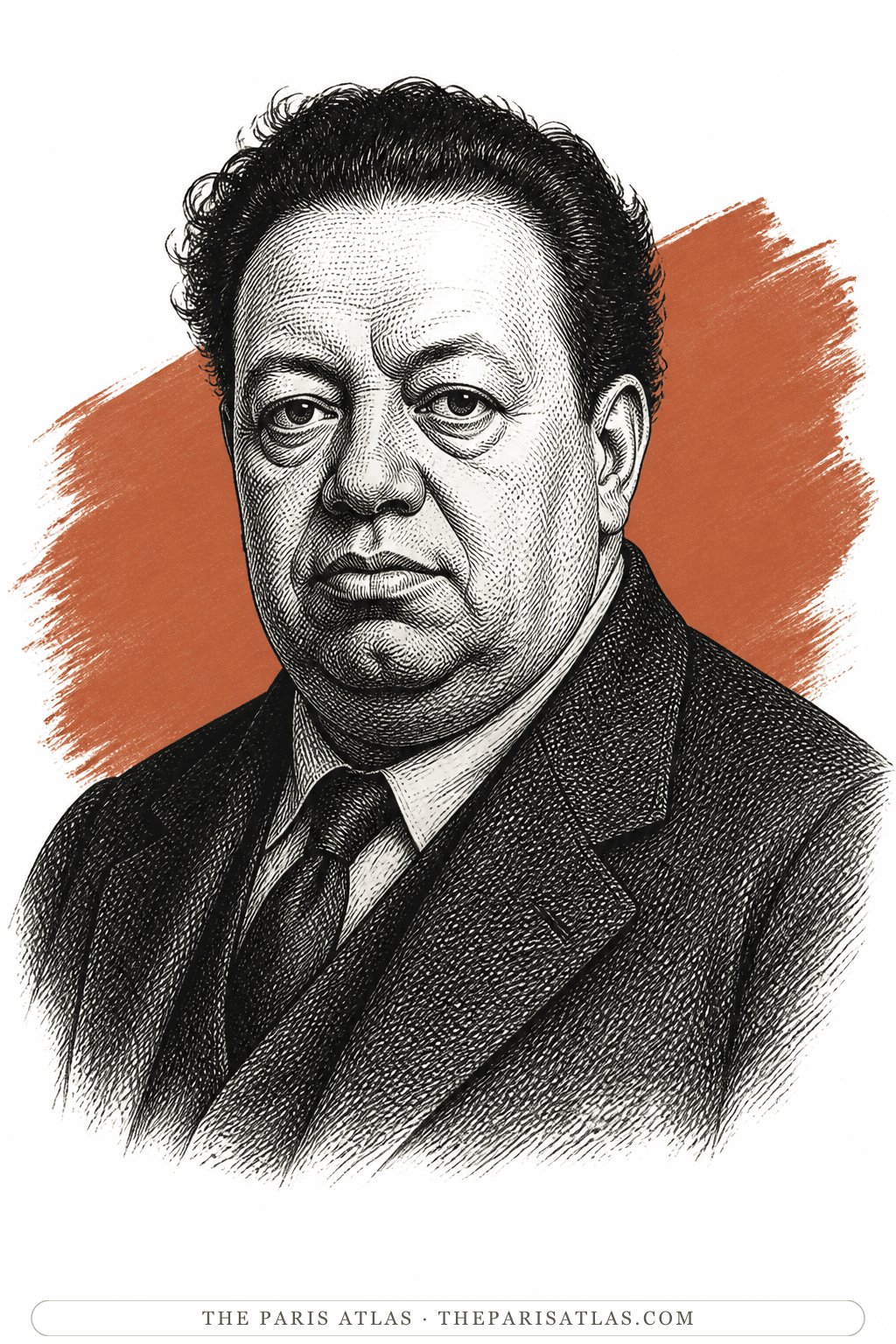
Illustrated portrait of Diego Rivera

Diego Rivera

  • Painter

Married to · 1929–1954

Married at the Coyoacan town hall on 21 August 1929, divorced in 1939 after infidelities on both sides, and remarried in San Francisco on 8 December 1940. They stayed married until her death in 1954. Kahlo's mother called it a marriage between an elephant and a dove.

Frida — dated life chronology; Gerardo Ochoa Sandy, Biography of Frida Kahlo (official museum biography, PDF)

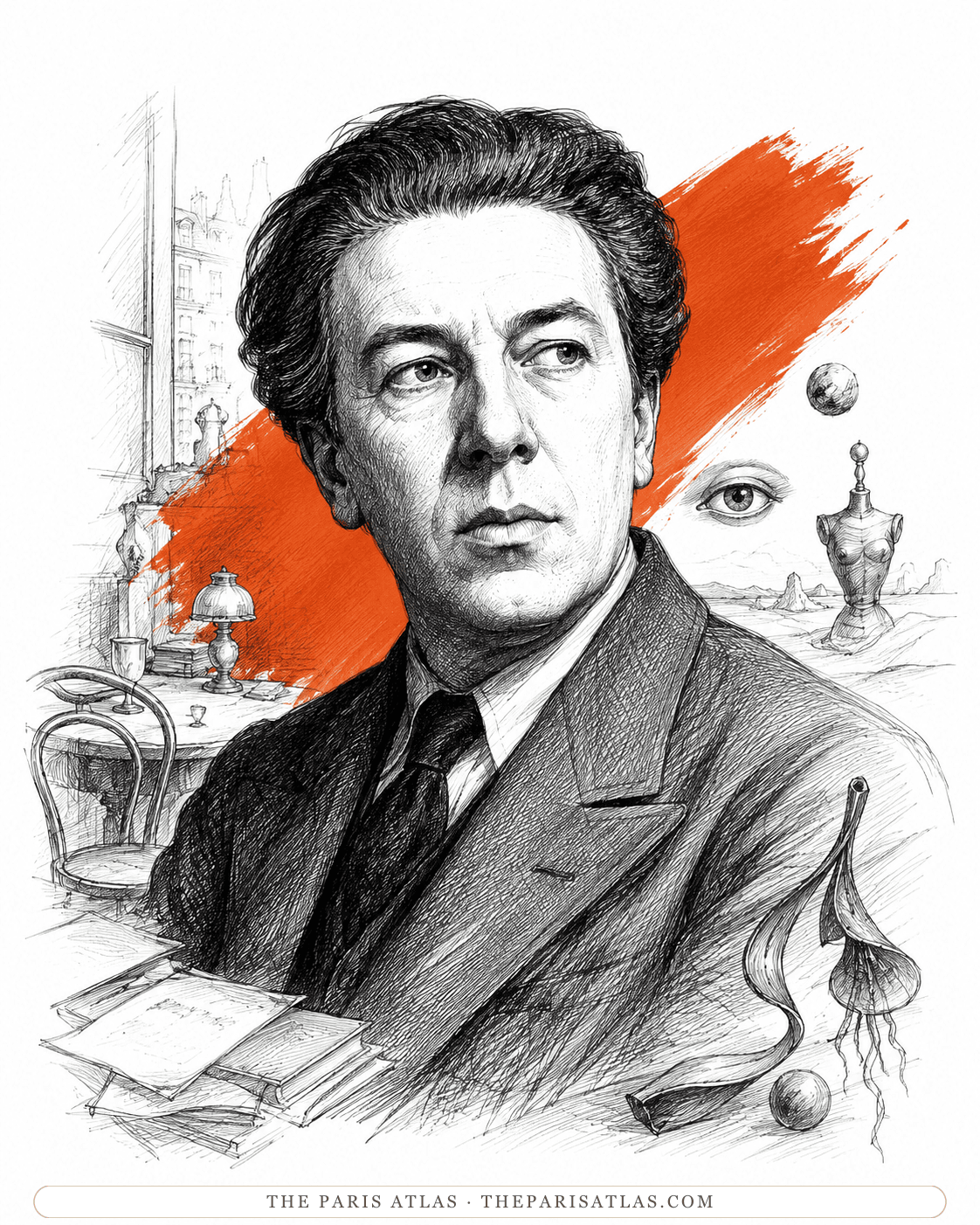
Illustrated portrait of André Breton

André Breton

  • Author
  • Poet
  • Critic
  • +1

Met · 1938–1939

Breton met Kahlo in Mexico in 1938, wrote the text for her first solo exhibition at the Julien Levy Gallery in New York that year calling her a Surrealist, and organised the Mexique exhibition at the galerie Renou et Colle in March 1939 that brought her to Paris. She rejected the label, and her February 1939 letters from Paris record her anger at how little he had arranged.

Gerardo Ochoa Sandy, Biography of Frida Kahlo (official museum biography, PDF); Mexique, galerie Renou et Colle, 1939 — exhibition dossier and Breton's preface (1939); Frida Kahlo, Paris, letter to Nickolas Muray, New York, 16 February 1939 — Nickolas Muray papers (1939)

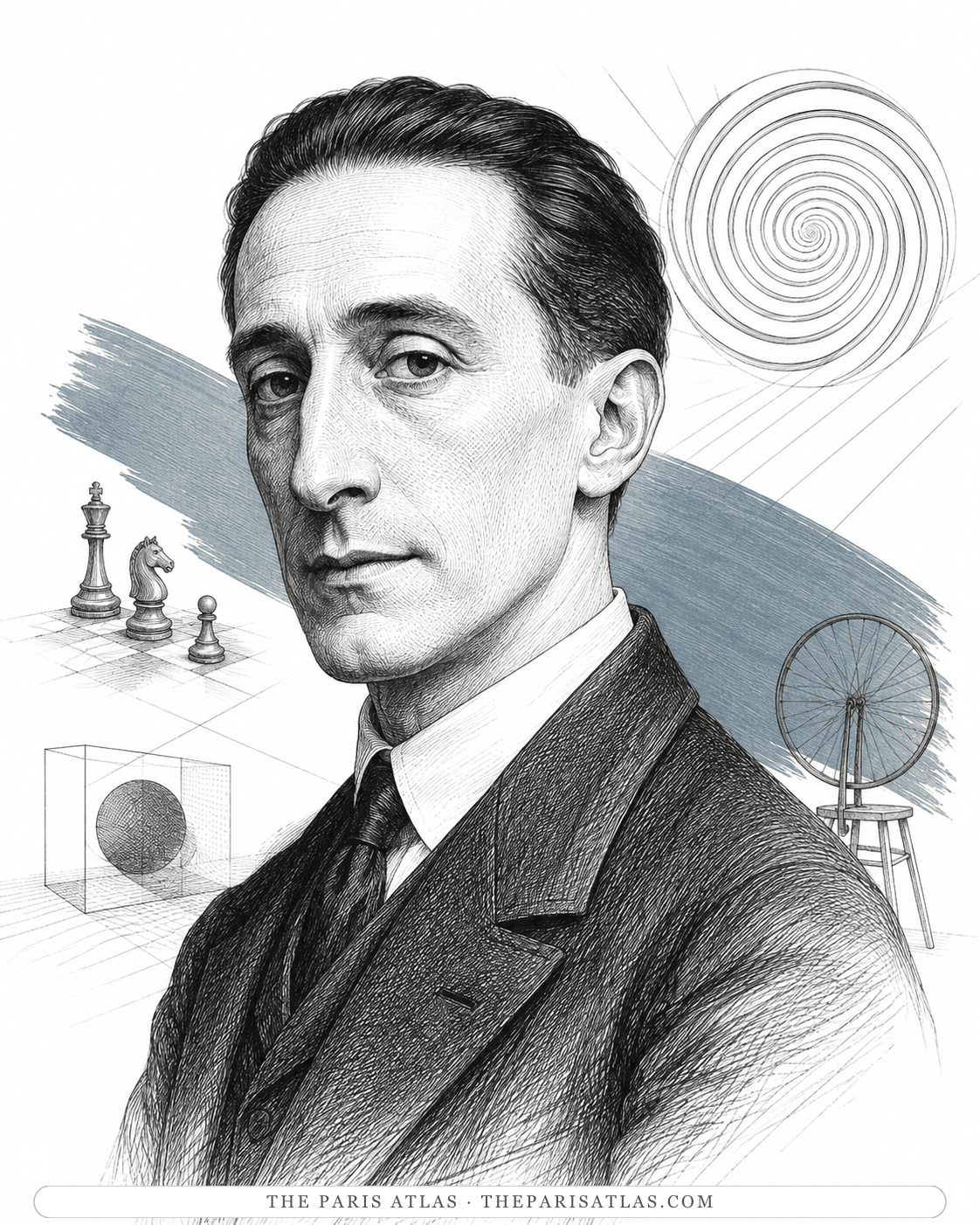
Illustrated portrait of Marcel Duchamp

Marcel Duchamp

  • Painter
  • Sculptor
  • Filmmaker

Met · 1939

In Paris in 1939 Duchamp took over the practical organisation of the Mexique exhibition after Breton left it undone, and Kahlo stayed at the home he shared with Mary Reynolds while she was ill. She called him the only one of the artists there with his feet on the ground and his brain in the right place.

Didier Schulmann, Frida Kahlo in Paris — curated account of the 1939 stay, with dated letters; Frida Kahlo, Paris, letter to Nickolas Muray, New York, 16 February 1939 — Nickolas Muray papers (1939)

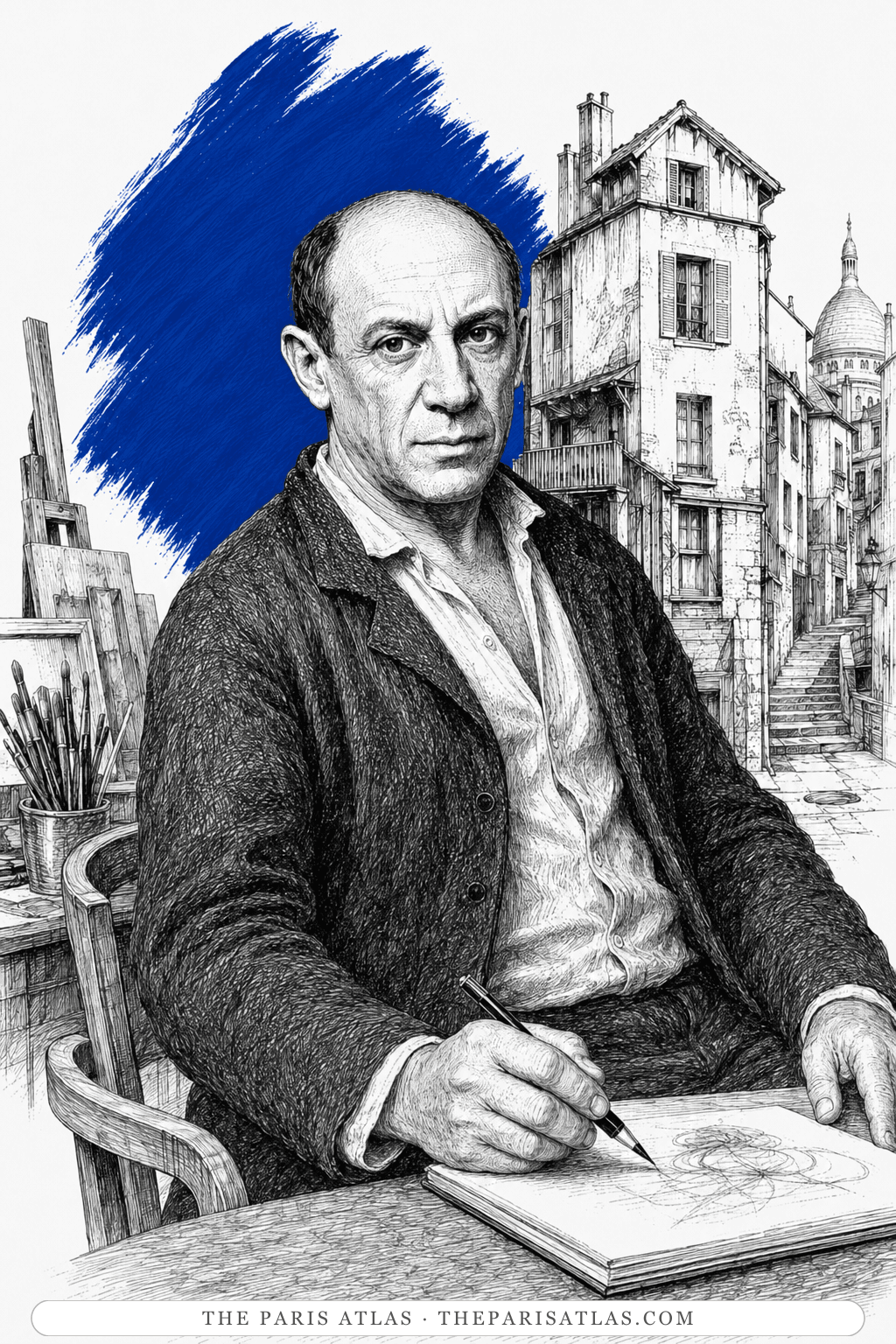
Illustrated portrait of Pablo Picasso

Pablo Picasso

  • Painter
  • Sculptor

Met · 1939

Picasso was among the artists who congratulated Kahlo at the opening of the Mexique exhibition in Paris on 10 March 1939. Her own museum lists him among the European artists whose regard her work won.

Didier Schulmann, Frida Kahlo in Paris — curated account of the 1939 stay, with dated letters; Gerardo Ochoa Sandy, Biography of Frida Kahlo (official museum biography, PDF)

Wassily Kandinsky

  • Painter
  • Author
  • Educator

Met · 1939

Kandinsky, then living at Neuilly-sur-Seine, was among the artists who congratulated Kahlo at the opening of the Mexique exhibition on 10 March 1939. He described her in a letter of 17 March as there in person, in Mexican dress, very charming.

Didier Schulmann, Frida Kahlo in Paris — curated account of the 1939 stay, with dated letters

Movements

The artistic and literary currents this life ran through.

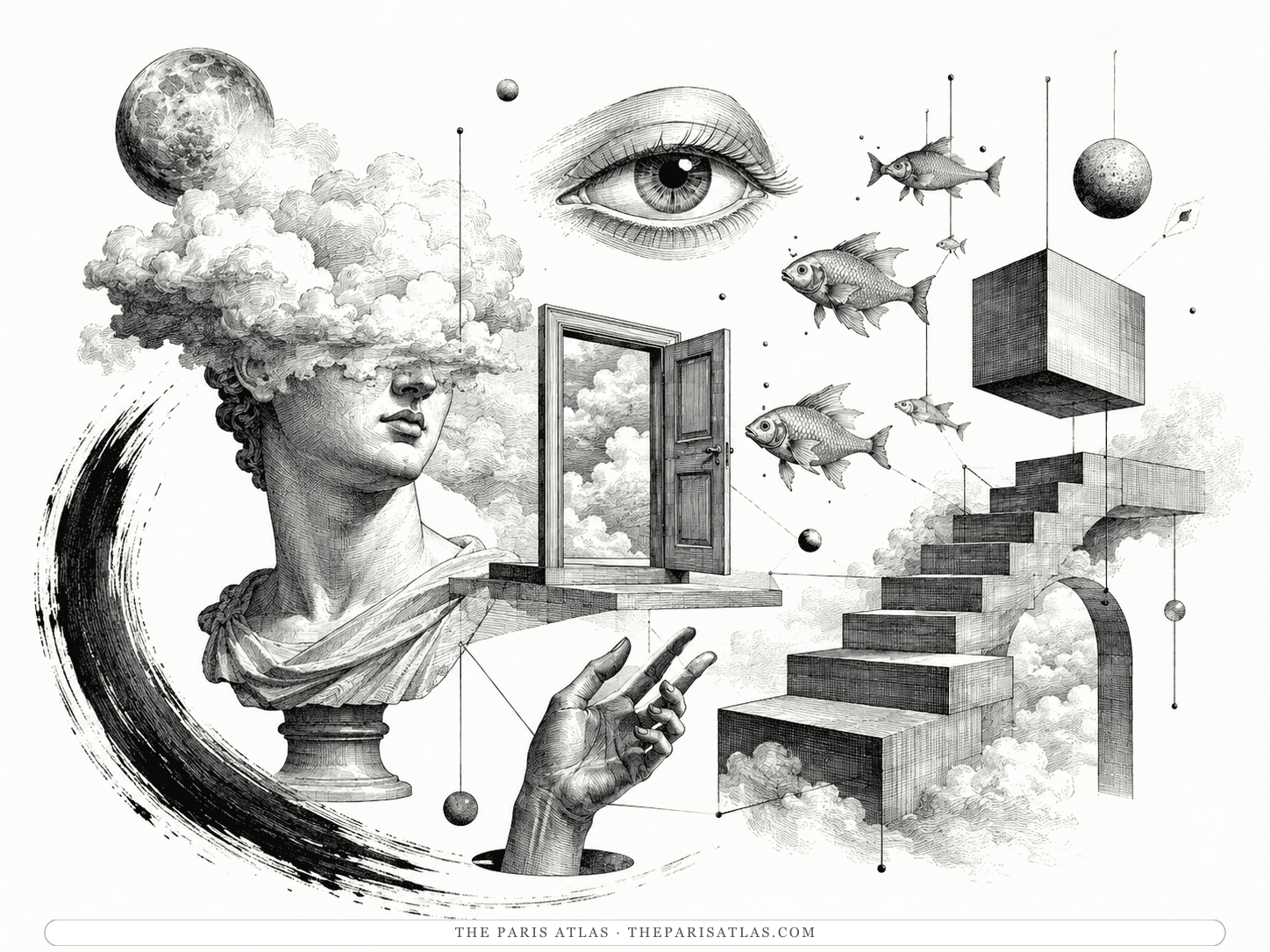
Pen-and-ink dream collage — a classical bust with clouds for eyes, a floating eye, a door opening onto sky, fish swimming through air, and an impossible staircase

Art & literary movement · 1924–1966

Surrealism

Breton declared her a Surrealist in his text for her 1938 New York exhibition and brought her work to Paris on that basis in 1939, and she showed in Surrealist exhibitions including the International Surrealist Exhibition in Mexico City in 1940. She rejected the description all her life: 'They thought I was a surrealist, but I wasn't. I never painted dreams. I painted my own reality' (Time, 1953). The association is real; the membership is contested by the artist herself.

Gerardo Ochoa Sandy, Biography of Frida Kahlo (official museum biography, PDF); Art: Mexican Autobiography (1953)

Questions about Frida Kahlo

Did Frida Kahlo ever live in Paris?

No. She visited once, for about six weeks in the early spring of 1939, for the exhibition Mexique at the galerie Renou et Colle. She was ill for part of it, stayed at the home of Marcel Duchamp and Mary Reynolds, and left for New York when the show closed on 25 March. She never went back to France.

Which Frida Kahlo painting is in Paris?

The Frame (Le cadre), painted in 1938 — a small self-portrait in oil on aluminium, 28.5 by 20.7 centimetres, behind a sheet of glass hand-painted with birds and flowers by Mexican artisans from Juquila. The French state bought it out of her 1939 exhibition, the only picture she sold there. It belongs to the Musée national d'art moderne at the Centre Pompidou.

Did the Louvre buy a Frida Kahlo?

Her museum in Mexico City says the Louvre acquired one of her self-portraits, and the acquisition it refers to is real: the French state bought The Frame in 1939. The museum records show the painting assigned that year to the Musée du Jeu de Paume, the state's museum of contemporary foreign art, whose inventory prefix it still carries. It later passed to the Musée national d'art moderne and hangs today in the Centre Pompidou, not the Louvre.

Was Frida Kahlo a Surrealist?

André Breton, who founded Surrealism, said she was, and it was Breton who brought her work to Paris in 1939. Kahlo rejected the label. 'They thought I was a surrealist, but I wasn't,' she told Time in 1953. 'I never painted dreams. I painted my own reality.' She still exhibited in Surrealist shows when it suited her, including the International Surrealist Exhibition in Mexico City in 1940.

Why did Frida Kahlo dislike the Surrealists?

Chiefly because of how they treated her in Paris. Breton had invited her for an exhibition and then arranged almost nothing — her paintings sat in customs, the venue was unsettled, and she fell ill and was hospitalized while it was sorted out. Her February 1939 letters to the photographer Nickolas Muray, now in the Smithsonian's Archives of American Art, record what the archive summary calls her intense disdain for the French art world, and for Breton in particular. Marcel Duchamp, who took over the practical work and gave her a bed, was the exception she praised.

What happened to Frida Kahlo in the bus accident?

On 17 September 1925 a streetcar struck the bus she was riding in Mexico City. A metal handrail pierced her hip and pelvis; she also broke her spine in three places, her collarbone, two ribs and her right leg, and dislocated her right shoulder. She was eighteen. She began painting during the immobilized months that followed, on an easel her mother had built to work over a bed, and spent the rest of her life among operations, corsets and convalescences.

How many times did Frida Kahlo marry Diego Rivera?

Twice. They married on 21 August 1929, divorced in 1939 after years of infidelities on both sides, and remarried in San Francisco on 8 December 1940. They stayed married until her death in 1954.

Where did Frida Kahlo live and die?

In the Casa Azul, the Blue House at Coyoacán in Mexico City, which her father built and where she was born on 6 July 1907. She lived there for most of her life, with periods at Rivera's studio in San Ángel and in Detroit, San Francisco and New York, and died there on 13 July 1954 at forty-seven. It opened afterwards as the Museo Frida Kahlo and holds her paintings, corsets, clothes and diary.

Sourced claims

Every connection the graph holds for Frida, with the evidence behind it.

Associated with · 1938

Surrealism

Breton declared her a Surrealist in his text for her 1938 New York exhibition and brought her work to Paris on that basis in 1939, and she showed in Surrealist exhibitions including the International Surrealist Exhibition in Mexico City in 1940. She rejected the description all her life: 'They thought I was a surrealist, but I wasn't. I never painted dreams. I painted my own reality' (Time, 1953). The association is real; the membership is contested by the artist herself.

Gerardo Ochoa Sandy, Biography of Frida Kahlo (official museum biography, PDF); Art: Mexican Autobiography (1953)

Married to · 1929–1954

Diego Rivera

Married at the Coyoacan town hall on 21 August 1929, divorced in 1939 after infidelities on both sides, and remarried in San Francisco on 8 December 1940. They stayed married until her death in 1954. Kahlo's mother called it a marriage between an elephant and a dove.

Frida — dated life chronology; Gerardo Ochoa Sandy, Biography of Frida Kahlo (official museum biography, PDF)

Met · 1938–1939

André Breton

Breton met Kahlo in Mexico in 1938, wrote the text for her first solo exhibition at the Julien Levy Gallery in New York that year calling her a Surrealist, and organised the Mexique exhibition at the galerie Renou et Colle in March 1939 that brought her to Paris. She rejected the label, and her February 1939 letters from Paris record her anger at how little he had arranged.

Gerardo Ochoa Sandy, Biography of Frida Kahlo (official museum biography, PDF); Mexique, galerie Renou et Colle, 1939 — exhibition dossier and Breton's preface (1939); Frida Kahlo, Paris, letter to Nickolas Muray, New York, 16 February 1939 — Nickolas Muray papers (1939)

Met · 1939

Marcel Duchamp

In Paris in 1939 Duchamp took over the practical organisation of the Mexique exhibition after Breton left it undone, and Kahlo stayed at the home he shared with Mary Reynolds while she was ill. She called him the only one of the artists there with his feet on the ground and his brain in the right place.

Didier Schulmann, Frida Kahlo in Paris — curated account of the 1939 stay, with dated letters; Frida Kahlo, Paris, letter to Nickolas Muray, New York, 16 February 1939 — Nickolas Muray papers (1939)

Met · 1939

Pablo Picasso

Picasso was among the artists who congratulated Kahlo at the opening of the Mexique exhibition in Paris on 10 March 1939. Her own museum lists him among the European artists whose regard her work won.

Didier Schulmann, Frida Kahlo in Paris — curated account of the 1939 stay, with dated letters; Gerardo Ochoa Sandy, Biography of Frida Kahlo (official museum biography, PDF)

Met · 1939

Wassily Kandinsky

Kandinsky, then living at Neuilly-sur-Seine, was among the artists who congratulated Kahlo at the opening of the Mexique exhibition on 10 March 1939. He described her in a letter of 17 March as there in person, in Mexican dress, very charming.

Didier Schulmann, Frida Kahlo in Paris — curated account of the 1939 stay, with dated letters

References

References

The sources below include biographies, scholarly essays, interviews, and primary materials that informed this page. They reflect both the historical record and ongoing critical conversations about Frida Kahlo and their work.

  1. 1Biography of Frida Kahlo (official museum biography, PDF)

    Museo Frida Kahlo

    The official biography published by her house-museum — the life dates, the accident, the marriages, the exhibitions.

    View source
  2. 2Frida — dated life chronology

    Museo Frida Kahlo

    The museum's dated chronology, including the 1939 French state purchase.

    View source
  3. 3Frida Kahlo in Paris — curated account of the 1939 stay, with dated letters

    Centre Pompidou, on Google Arts & Culture

    Centre Pompidou curator Didier Schulmann's account of the 1939 Paris stay, quoting her letters and Kandinsky's.

    View source
  4. 4Frida Kahlo, The Frame (Le cadre), 1938 — collection record

    Centre Pompidou, Musée national d'art moderne, 1938

    The museum record for The Frame: medium, dimensions, and the 1939 state purchase.

    View source
  1. 5Focus on… The Frame by Frida Kahlo

    Centre Pompidou
    View source
  2. 6Mexique, galerie Renou et Colle, 1939 — exhibition dossier and Breton's preface

    Association Atelier André Breton, 1939
    View source
  3. 7Frida Kahlo, Paris, letter to Nickolas Muray, New York, 16 February 1939 — Nickolas Muray papers

    Archives of American Art, Smithsonian Institution, 1939
    View source
  4. 8Art: Mexican Autobiography

    Time, 1953
    View source
i
Why these sources are here

These references anchor the page in the documented record and in the scholarly conversations around Frida Kahlo. Every claim on this page traces back to one or more of the works listed here.

Explore more resources