The Paris AtlasCharting the artists, works, and places worth returning to.
  • Painter
· Mexican · 1886–1957

Diego Rivera

Mexican muralist who spent eleven years in Montparnasse first — 1909 to 1920, most of them as a serious Cubist. Modigliani painted his portrait, the 1917 'affaire Rivera' ended his Cubism in a public quarrel, and Italian frescoes sent him home to invent Mexican muralism.

In images

Details

Lived
1886–1957
Born
1886
Birthplace
Guanajuato, Mexico
Died
1957
Place of death
Mexico City
Nationality
Mexican
Married
Angelina Beloff · 1911–1921Guadalupe Marín · 1922–1928Frida Kahlo · 1929–1939, 1940–1954Emma Hurtado · 1955–1957
Roles
Painter

About Diego Rivera

Diego Rivera is filed under Mexico — the murals, the politics, Frida Kahlo — and the filing loses his first career. From 1909 to 1920 Rivera was a Montparnasse painter, and from 1913 one of the more serious Cubists in Paris: dense, inventive canvases that hung beside the movement's founders, painted at addresses including 26 rue du Départ, the building where Piet Mondrian also worked. Amedeo Modigliani, a friend and neighbour, painted his portrait in 1914.

The Paris career ended in a fistfight of words — the 1917 'affaire Rivera', a public break with the critic Pierre Reverdy that took him out of the Cubist circle — and in a discovery: a 1920–21 trip through Italy's fresco cycles showed him what wall painting could do. He sailed home in 1921, and the Mexican mural renaissance followed. The eleven Paris years are the training the murals stand on.

Guanajuato to Montparnasse

Rivera was born on 8 December 1886 in Guanajuato, Mexico, began drawing at three — after the death of his twin brother — and entered Mexico City's San Carlos Academy at ten. A government scholarship took him to Madrid in 1907, and by 1909 he was in Paris, where nearly every ambitious painter of his generation was heading. He settled in Montparnasse with the Russian painter Angelina Beloff, his common-law wife through the whole Paris period; their infant son died in the war winter of 1918.

Modigliani's 1914 portrait of Rivera — one Montparnasse neighbour painting another. (Amedeo Modigliani (Kunstsammlung Nordrhein-Westfalen), via Wikimedia Commons · Public domain)

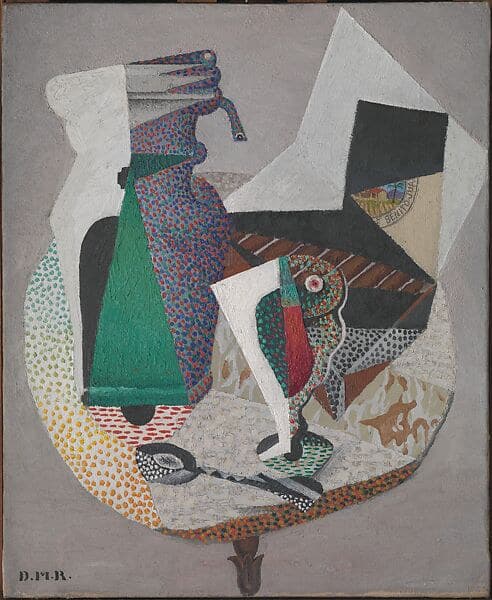
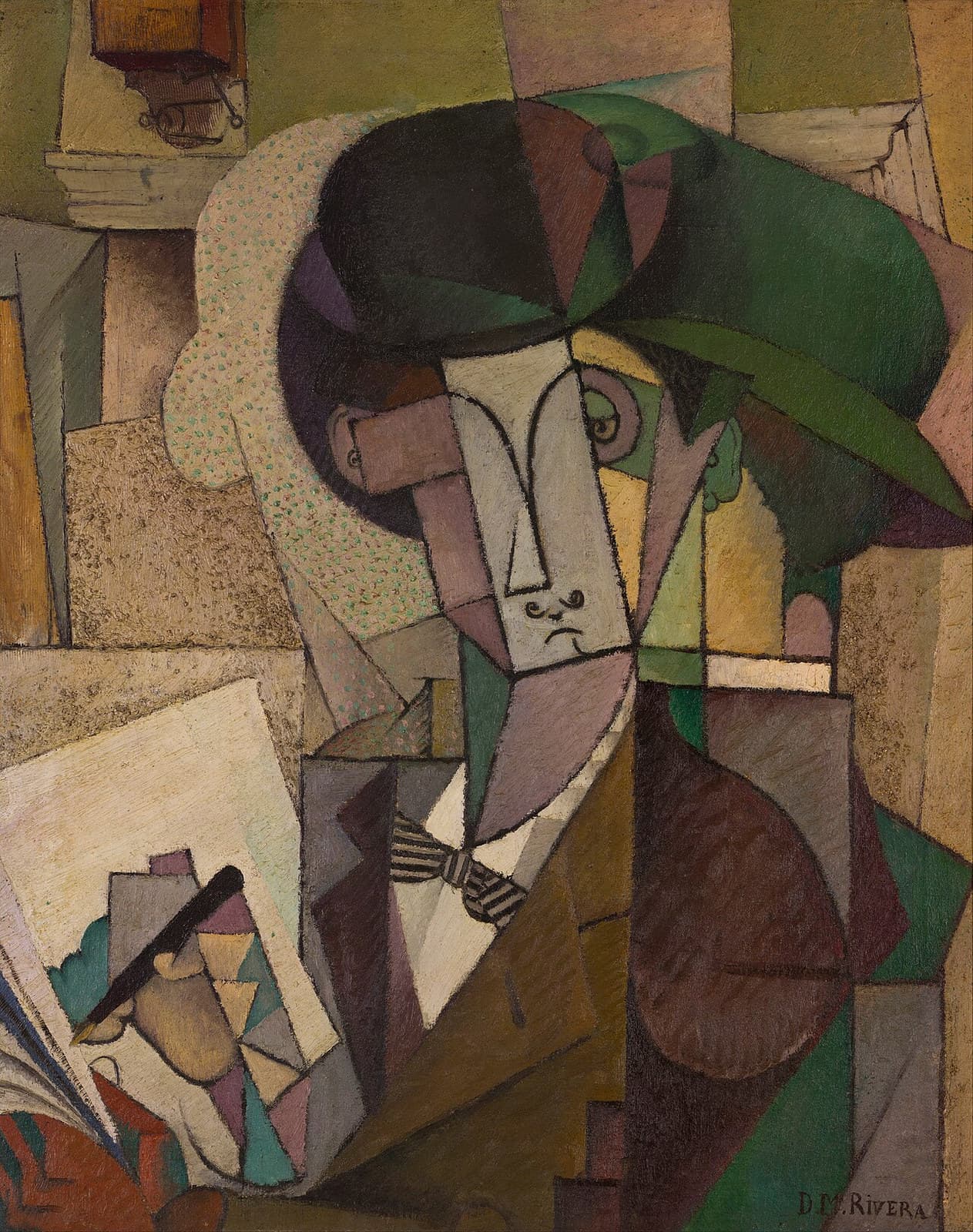
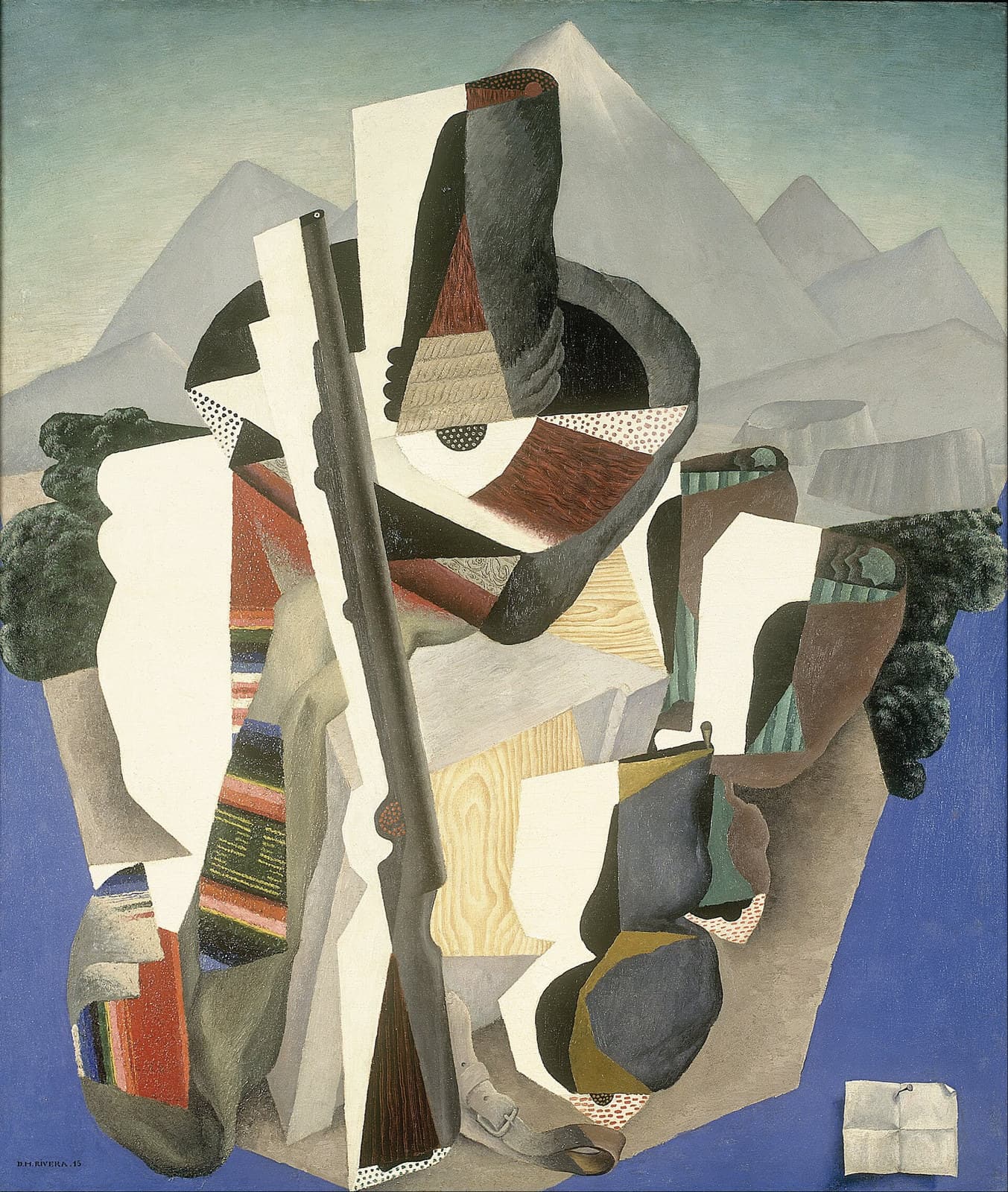
His circle was the émigré Montparnasse of the 1910s: Amedeo Modigliani, who painted him twice in 1914, loose dark strokes around a heavy, amused face; Chaïm Soutine; the poets and dealers of the Café de la Rotonde, the quarter's artists' café. From 1913 he painted Cubist canvases in earnest — the Zapatista Landscape of 1915, with its rifle and sarape (the striped Mexican shawl), smuggles Mexico into the movement's grammar — and showed them with the Cubists' dealers.

The affaire Rivera

In 1917 the Cubist chapter ended loudly. At a dinner, after a scornful review, Rivera struck the critic Pierre Reverdy — the 'affaire Rivera' in the art press — and the quarrel, entangled with a wider dispute about who owned Cubist doctrine, cut him off from the circle. He turned to Cézanne, to Ingres, and to doubts about easel painting itself: pictures for dealers and collectors had begun to feel, to a painter of his politics, like a private language for the rich.

The answer came from the past. In 1920–21, funded by the Mexican embassy, Rivera travelled Italy filling notebooks with Giotto, Masaccio and the Byzantine mosaics — hundreds of drawings of what painting looks like when it belongs to a wall and a public. In 1921 he sailed for Mexico, leaving Beloff in Paris, and put the lesson to work for the revolutionary government's education ministry.

The murals, briefly

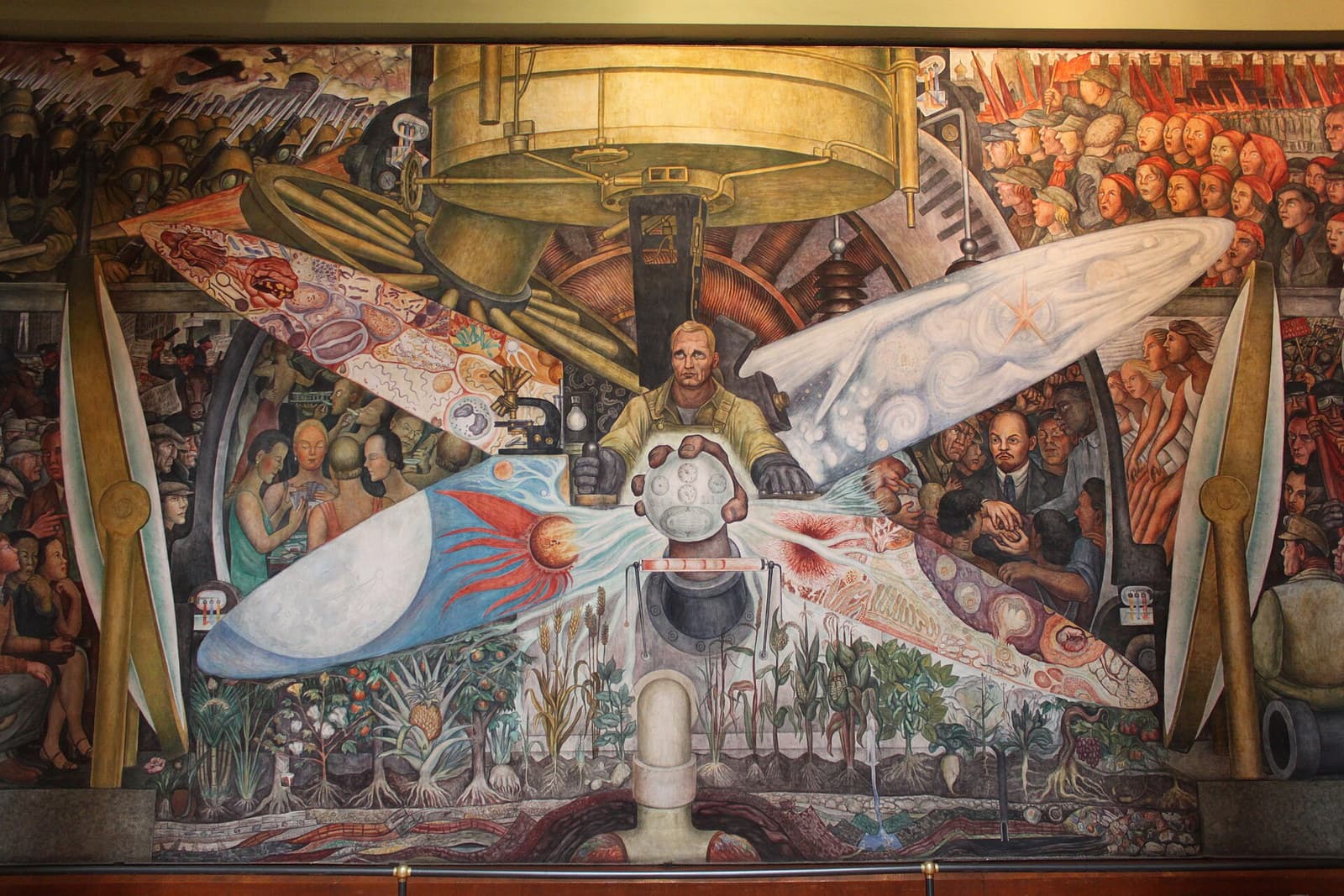
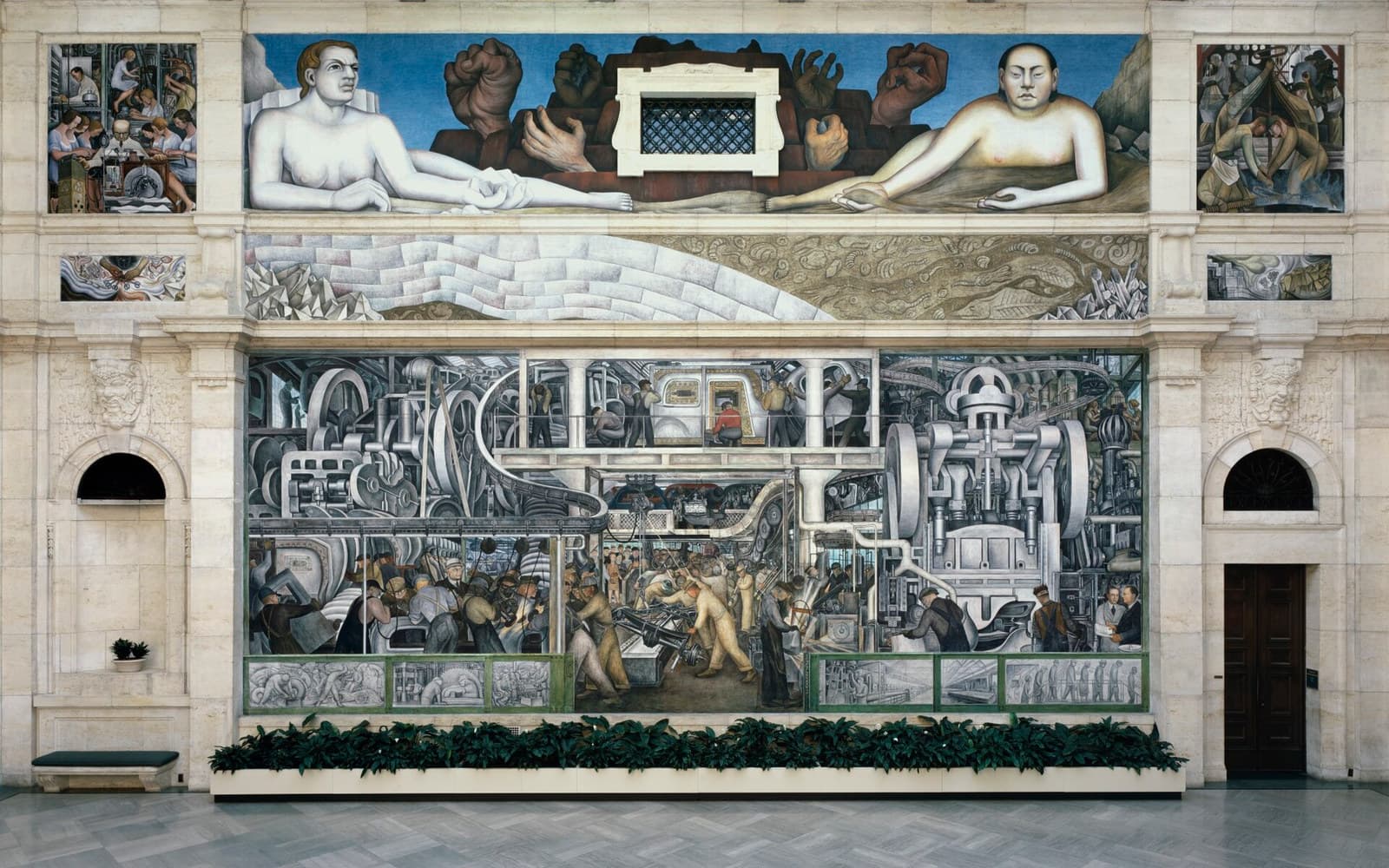
What followed belongs to Mexican and American walls rather than to Paris, and it is the career the world knows: the hundreds of fresco panels of the Ministry of Public Education in Mexico City and the chapel of the agricultural school at Chapingo, the Detroit Industry cycle of 1932–33, and Man at the Crossroads at Rockefeller Center, destroyed in 1934 for its portrait of Lenin and repainted in Mexico City as Man, Controller of the Universe. He married Frida Kahlo in 1929 — divorced 1939, remarried 1940 — and the two became the century's most scrutinized artist couple.

Rivera died in Mexico City on 24 November 1957, at seventy. The Paris canvases — the Cubist decade the murals eclipsed — hang today in Mexico City's Museo Nacional de Arte, in MoMA, and in the museum at Guanajuato built in the house where he was born.

Life events

  1. 1886

    Born on 8 December in Guanajuato, Mexico.

    Diego Rivera — Wikipedia

  2. 1907

    A government scholarship sends him to Madrid; Paris follows in 1909.

    Diego Rivera — Wikipedia

  3. 1911

    Settles in Montparnasse with the Russian painter Angelina Beloff, his companion for the whole Paris period.

    Diego Rivera — Wikipedia

  4. 1913

    Turns fully to Cubism; the Paris canvases begin.

    Diego Rivera — Wikipedia

  5. 1914

    Modigliani paints his portrait.

    Amedeo Modigliani, Portrait of Diego Rivera, 1914 (Kunstsammlung Nordrhein-Westfalen, Düsseldorf) — one Montparnasse neighbour painting another. (Amedeo Modigliani (Kunstsammlung Nordrhein-Westfalen), via Wikimedia Commons)

    Diego Rivera — Wikipedia

  6. 1917

    The 'affaire Rivera': a public quarrel with the critic Pierre Reverdy ends his place in the Cubist circle.

    Diego Rivera — Wikipedia

  7. 1920

    Travels Italy for months drawing Giotto, Masaccio and the mosaics — the fresco education the murals stand on.

    Diego Rivera — Wikipedia

  8. 1921

    Sails for Mexico, leaving Paris and Beloff; the mural commissions begin the next year.

    Diego Rivera — Wikipedia

  9. 1929

    Marries Frida Kahlo — divorced in 1939, remarried in 1940.

    Diego Rivera — Wikipedia

  10. 1933

    Man at the Crossroads at Rockefeller Center is halted over its Lenin portrait and destroyed the next year; he repaints it in Mexico City.

    Diego Rivera — Wikipedia

  11. 1957

    Dies in Mexico City on 24 November, aged seventy.

    Diego Rivera — Wikipedia

People they knew

Documented connections — every one carries its source.

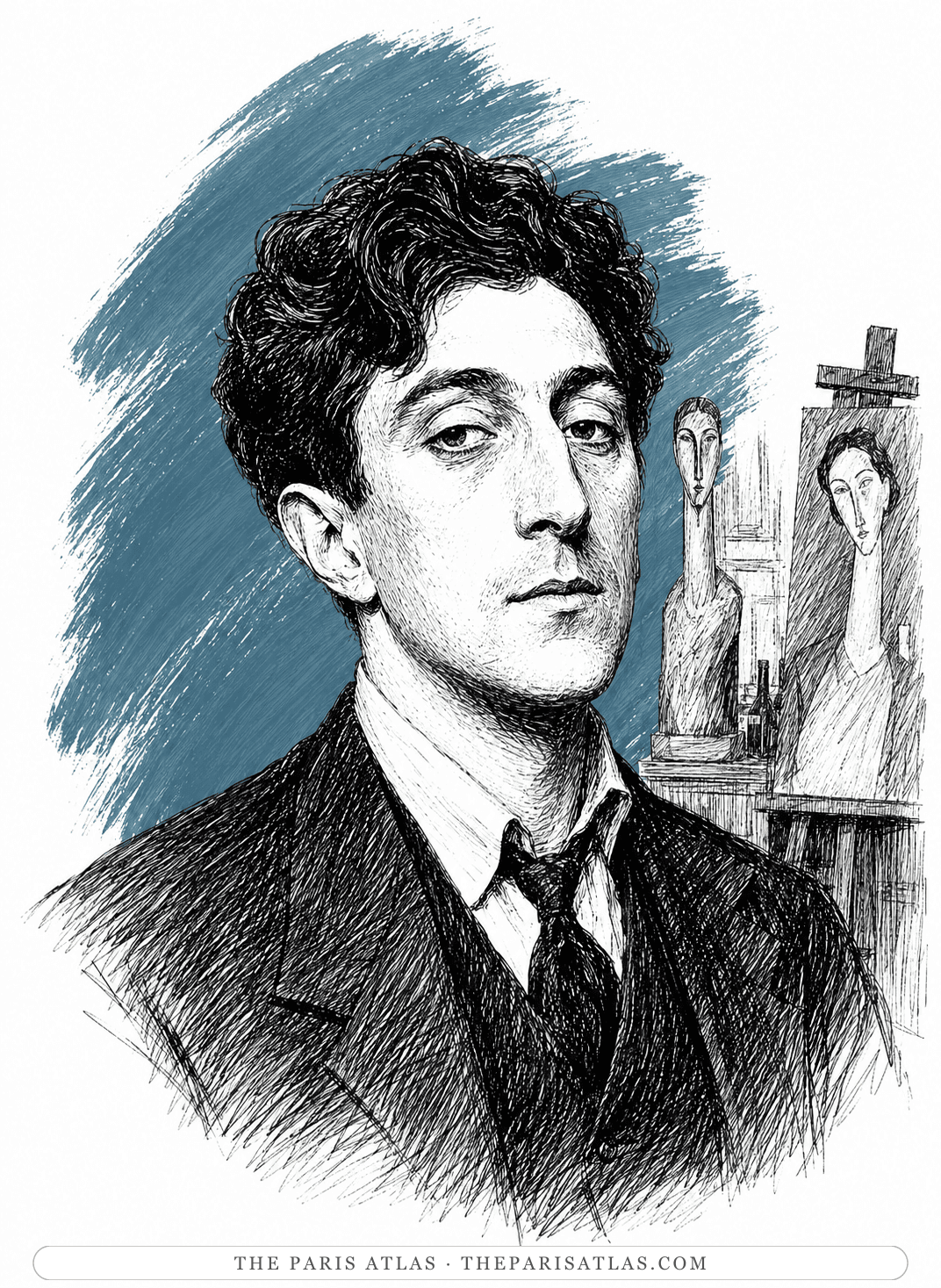
Illustrated portrait of Amedeo Modigliani

Amedeo Modigliani

  • Painter
  • Sculptor

Sat for a portrait by · 1914

Modigliani painted Rivera at least twice in 1914, Montparnasse neighbours in the emigre circle of the 1910s; the Dusseldorf canvas sketches the heavy, amused face in loose dark strokes on ochre.

Diego Rivera — Wikipedia

Movements

The artistic and literary currents this life ran through.

Sunlight through a railing breaking into diagonal planes of shadow across bare concrete

Art movement · 1907–1914

Cubism

Roughly two hundred Cubist canvases painted in Montparnasse between 1913 and 1917, Zapatista Landscape the best known. The association ended with the affaire Rivera, the public 1917 quarrel with the critic Pierre Reverdy.

Diego Rivera — Wikipedia

Questions about Diego Rivera

Did Diego Rivera live in Paris?

For about eleven years — from 1909 to 1920, longer than many of the French painters he showed beside. He lived in Montparnasse with the Russian painter Angelina Beloff, painted seriously as a Cubist from 1913, was portrayed by his friend Amedeo Modigliani in 1914, and left for Mexico in 1921 after a fresco-study trip through Italy. The murals came after; Paris was the training.

Was Diego Rivera a Cubist?

From 1913 to 1917, and a serious one — roughly two hundred Cubist canvases, shown with the movement's dealers in Paris. Zapatista Landscape (1915), with a rifle and sarape worked into the Cubist grammar, is the most famous. The chapter ended in 1917 with the 'affaire Rivera', a public quarrel with the critic Pierre Reverdy, after which he turned to Cézanne, then to the Italian fresco tradition, then home.

What was the affaire Rivera?

The 1917 scandal that ended Rivera's Cubist career. After the critic Pierre Reverdy mocked his work and his circle's theorizing, Rivera struck him at a dinner; the ensuing feud — tangled with a wider fight over who spoke for Cubist doctrine — froze him out of the movement's galleries and journals. Within four years he had left easel painting, Paris and Europe altogether.

How were Diego Rivera and Frida Kahlo connected to Paris?

Rivera's Paris was over before Frida Kahlo entered his life — his eleven Montparnasse years ended in 1920 and they married in Mexico in 1929. Kahlo's own Paris moment came in 1939, when André Breton's circle exhibited her there; she disliked the city and the Surrealists in about equal measure and said so in her letters.

Where can you see Rivera's Cubist paintings?

Mexico City's Museo Nacional de Arte and the Museo Casa Diego Rivera in Guanajuato hold major groups; Zapatista Landscape is in Mexico City. In the US, MoMA's Young Man with a Fountain Pen and other canvases surface in Cubism displays. The murals stay on their walls — the Ministry of Public Education and the Palacio Nacional in Mexico City, and Detroit Industry at the Detroit Institute of Arts.

Sourced claims

Every connection the graph holds for Diego, with the evidence behind it.

Associated with · 1913–1917

Cubism

Roughly two hundred Cubist canvases painted in Montparnasse between 1913 and 1917, Zapatista Landscape the best known. The association ended with the affaire Rivera, the public 1917 quarrel with the critic Pierre Reverdy.

Diego Rivera — Wikipedia

Sat for a portrait by · 1914

Amedeo Modigliani

Modigliani painted Rivera at least twice in 1914, Montparnasse neighbours in the emigre circle of the 1910s; the Dusseldorf canvas sketches the heavy, amused face in loose dark strokes on ochre.

Diego Rivera — Wikipedia

References

References

The sources below include biographies, scholarly essays, interviews, and primary materials that informed this page. They reflect both the historical record and ongoing critical conversations about Diego Rivera and his work.

  1. 1Diego Rivera — Wikipedia

    Wikipedia
    View source
    i
    Why these sources are here

    These references anchor the page in the documented record and in the scholarly conversations around Diego Rivera. Every claim on this page traces back to one or more of the works listed here.

    Explore more resources