Zapatista Landscape
by Diego Rivera
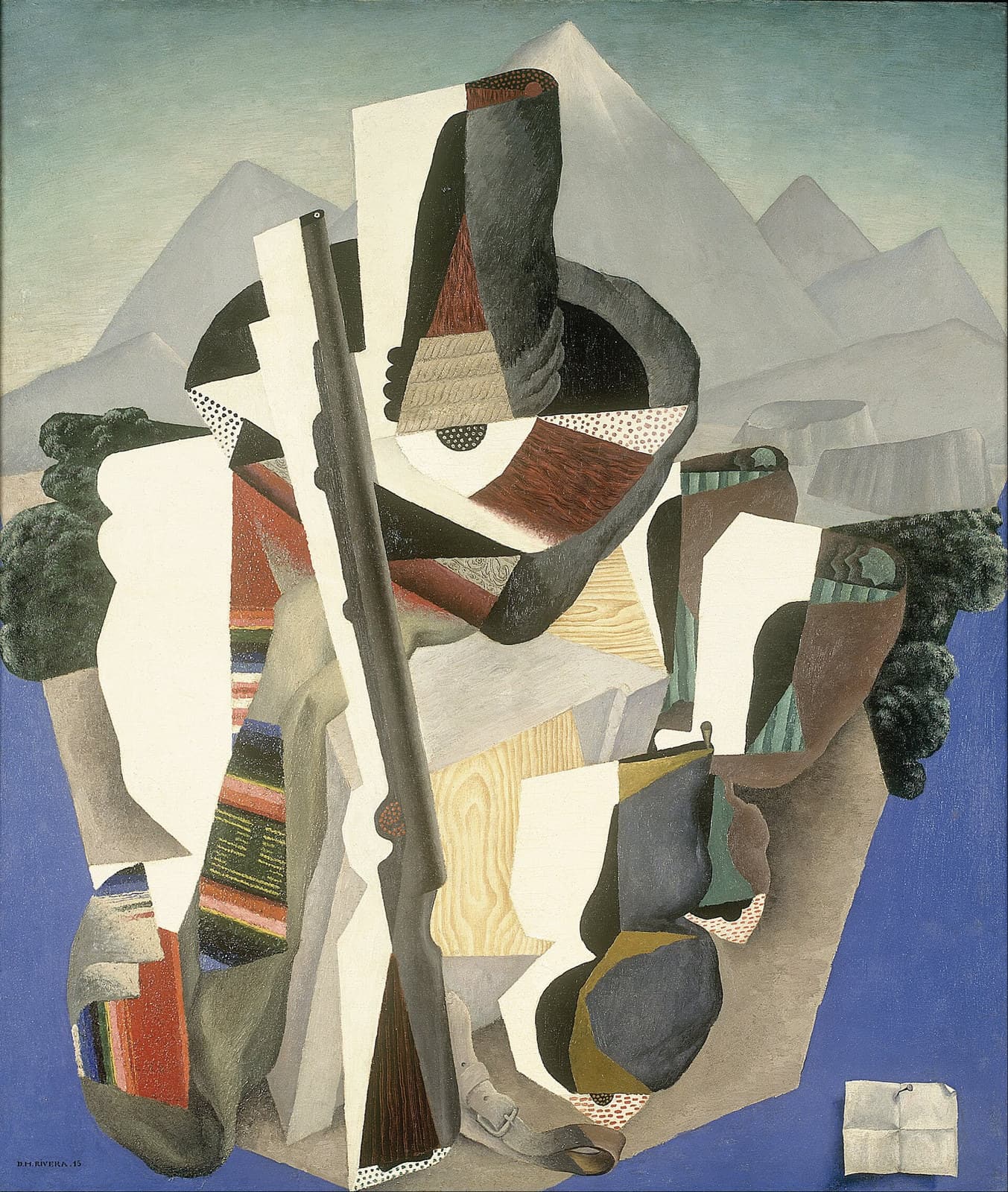
A rifle stands upright through the middle of the canvas. Around it are a striped sarape, a wide-brimmed hat, a panel of painted wood grain and a sheet of folded paper, all built out of flat overlapping planes against grey mountains and a field of cobalt blue. Diego Rivera painted it in Paris in 1915, while the revolution it refers to was being fought four thousand miles away. The Museo Nacional de Arte in Mexico City owns it, and calls it Paisaje zapatista — El guerrillero.
- 1915
- Oil on canvas
- Museo Nacional de Arte, INBALMexico City, Mexico
About Diego Rivera
What the painting shows
The rifle is the spine. It runs almost the full height of the canvas, muzzle at the top and butt at the bottom, and it is the one object drawn straight through rather than cut into planes. Everything else is assembled around it.
A striped sarape falls diagonally at the left, its wool painted stripe by stripe in red, pink, cream, black, blue, green and yellow. A wide dark brim curves across the upper centre above a black crown with a red-brown band. A panel at the lower centre is painted to look like sawn softwood, grain and knot included, which is a trick from Cubist still life rather than a description of anything in Morelos.
Behind all of it, flat grey triangles stand for mountains under a sky that fades from green-blue to near white. Flat cobalt blue fills both edges and the bottom, with no shading in it at all. At the lower right, clear of everything else, a sheet of white paper is painted as if pinned to the blue, folded in four with one corner lifting.
The canvas measures 145 by 125 centimetres, about fifty-seven by forty-nine inches. Diego Rivera signed and dated it at the lower left in small dark capitals, D.M.RIVERA .15.
Painted four thousand miles from the war it is about
Zapatismo was the agrarian movement led by Emiliano Zapata in the southern state of Morelos, whose peasant army fought for the return of village land through the Mexican Revolution. Diego Rivera was not there. He had been in Europe since 1907 on a state scholarship, and in 1915 he was living in Montparnasse.
The Museo Nacional de Arte describes the picture as the most important contribution Diego Rivera made to Cubism, and as an attempt to reconcile the formal, universal language of the Cubist avant-garde with clearly Mexican concerns.
The National Gallery of Art in Washington puts the same point the other way round. Of the nearly two hundred Cubist works Diego Rivera produced, it records, he would not duplicate the overt nationalism of Zapatista Landscape.
His politics were explicit and stayed that way. He joined the Mexican Communist Party in 1922, was expelled in 1929, sheltered Leon Trotsky in 1937, and was readmitted in 1954. The painting of 1915 is the first point at which that politics is visible in the work.
A second painting on the back
The Museo Nacional de Arte catalogues the object as double-sided, and titles it accordingly: Paisaje zapatista, 1915 on the front, La mujer del pozo, 1913 on the reverse. Its date field reads 1913 y 1915.
Reusing a canvas was not unusual for Diego Rivera in these years. The Café Terrace of the same year, at The Metropolitan Museum of Art, also carries an earlier composition on its back, upside down.
The museum publishes no accession number for the object. Its credit line reads Museo Nacional de Arte, INBAL, Acervo Constitutivo, 1982 — the founding holdings the museum opened with.
Apollinaire, Reverdy and the end of the Cubism
The Museo Nacional de Arte records that Diego Rivera took part in the debates of the Paris avant-garde, and shared its hardships and the exile the war caused. He held an intense dialogue with the poet Guillaume Apollinaire, and quarrelled with the critic Pierre Reverdy.
Pierre Reverdy had published an article called Sur le cubisme in the first issue of his magazine Nord-Sud on 15 March 1917. The quarrel that followed is known in the Paris art press as the affaire Rivera, and the atlas has not yet found an institutional source for its date, its venue or its trigger.
The National Gallery of Art records only the outcome: by 1918 Diego Rivera had left Montparnasse and abandoned Cubism altogether.
He turned on the whole period later. The Museo Nacional de Arte quotes a reading in which he came to describe the forms of avant-garde painting as infectious diseases, germs that had attacked a body weakened by the privations of the First World War.
Why no large reproduction is shown
Diego Rivera died on 24 November 1957, and Mexico protects an author's work for the life of the author plus a hundred years, so the painting is in copyright there until 2057. The trust that administers his estate and the Artists Rights Society both assert that copyright.
Wikimedia Commons does host a reproduction, tagged public domain, and holds around a hundred further Rivera files under similar tags. Those tags depend on a publication date before 1918 that no museum documents for any of these canvases, so the atlas does not rely on them.
A reduced reproduction is shown here under fair use, for commentary, and excluded from commercial reuse. The four-factor rationale and the archived rights probes are kept beside the image file.
Close reading
Reading the work, detail by detail
Nothing in the picture is a body, and every part of it is equipment. Follow the rifle down the centre, the sombrero brim above it, the striped sarape at the left, then the wood grain, the mountains and the sheet of folded paper pinned to the blue at the lower right.
1.The rifle runs the whole height
A single rifle is painted end to end, muzzle at the top and butt at the bottom, and it is the only object in the picture drawn straight through without being cut into planes. Everything else is built around it.
2.The brim of a sombrero
The dark mass at the top is a hat seen from below and from the side at once. The crown is black with a red-brown band, the brim rolls over at the right, and the underside is painted a lighter grey than the top.
3.The sarape, stripe by stripe
The striped band at the left is a sarape, the Mexican blanket worn over one shoulder. Rivera painted the weave rather than the drape: the stripes stay flat and parallel, and the flecks inside them read as the wool.
4.Painted wood grain, not wood
The yellow panel is painted to look like a plank of softwood, grain lines and knot included. It is a trick from Cubist still life, where a stencilled or imitated surface stands in for the real material.
5.Grey peaks behind everything
Behind the assembled gear, a row of plain grey triangles stands for mountains, with a flat-topped ridge at the right. The sky above them fades from green-blue at the top to near white at the horizon.
6.A folded sheet on the blue
At the lower right, clear of everything else, a sheet of paper is painted as if pinned flat to the blue. It has been folded in four and one corner has lifted. Nothing is written on it.
7.Signed on the blue, lower left
Diego Rivera signed the canvas at the lower left in small dark capitals, D.M.RIVERA, and dated it .15. He used the initials of both family names, Diego María Rivera, as he did on the other Paris canvases.
8.The blue that holds it together
A flat cobalt blue runs down both edges and across the bottom, with no modelling in it at all. It is the one area of the canvas that describes nothing, and it keeps the assembled gear floating clear of the landscape.
Timeline
1907
Diego Rivera leaves Mexico for Europe on a state scholarship, and studies in Madrid.
1909
Moves to Paris and settles in Montparnasse.
1913
Paints La mujer del pozo, the composition that is now on the reverse of this canvas, and takes up Cubism seriously.
1915
Paints Paisaje zapatista in Paris, while the Mexican Revolution is being fought without him.
1917
Pierre Reverdy publishes Sur le cubisme in the first issue of Nord-Sud on 15 March. The quarrel between the two men follows.
1918
By this year, per the National Gallery of Art, Diego Rivera has left Montparnasse and abandoned Cubism altogether.
1982
Recorded in the founding holdings of the Museo Nacional de Arte in Mexico City, under the credit line Acervo Constitutivo.
2004
Discussed in The Cubist Paintings of Diego Rivera: Memory, Politics, Place at the National Gallery of Art in Washington.
Where to see it
Museo Nacional de Arte, INBAL
Mexico City, Mexico
A public viewing address has not yet been confirmed for this holding.
Catalogued as a double-sided canvas, Paisaje zapatista, 1915 on the front and La mujer del pozo, 1913 on the reverse, with the date given as 1913 and 1915. The museum publishes no accession number and no display status.
Frequently asked questions
Where is Diego Rivera's Zapatista Landscape?
The Museo Nacional de Arte in Mexico City, an INBAL museum, which catalogues it as Paisaje zapatista, 1915 (front) and La mujer del pozo, 1913 (reverse). The museum publishes no accession number and no gallery, so check with it before travelling.
What does Zapatista Landscape show?
A rifle standing upright through the centre, a striped sarape at the left, a wide-brimmed hat above, a panel of painted wood grain, and a folded sheet of paper on flat blue at the lower right, all against grey mountains. The Museo Nacional de Arte's record itemises none of these; the list is what is visible on the canvas.
Was Diego Rivera in Mexico during the revolution?
No. He left for Europe on a state scholarship in 1907 and lived in Paris from 1909, returning to Mexico in 1921. Zapatista Landscape was painted in Montparnasse in 1915, while the fighting it refers to was going on in Mexico without him.
Why is Zapatista Landscape important?
The Museo Nacional de Arte calls it the most important contribution Diego Rivera made to Cubism, and an attempt to reconcile the universal formal language of the avant-garde with clearly Mexican concerns. The National Gallery of Art records that he never repeated its overt nationalism in the rest of his Cubist output.
Is there a painting on the back of Zapatista Landscape?
Yes. The Museo Nacional de Arte catalogues the canvas as double-sided, with La mujer del pozo of 1913 on the reverse, and dates the object 1913 and 1915. The Café Terrace of 1915, at The Metropolitan Museum of Art, carries an earlier painting on its back too.
How big is Zapatista Landscape?
145 by 125 centimetres unframed, about fifty-seven by forty-nine inches — oil on canvas, in portrait format. Diego Rivera signed and dated it at the lower left, D.M.RIVERA .15.
More by Diego Rivera
If you like Diego Rivera
Explore painters from the same movements and circles.
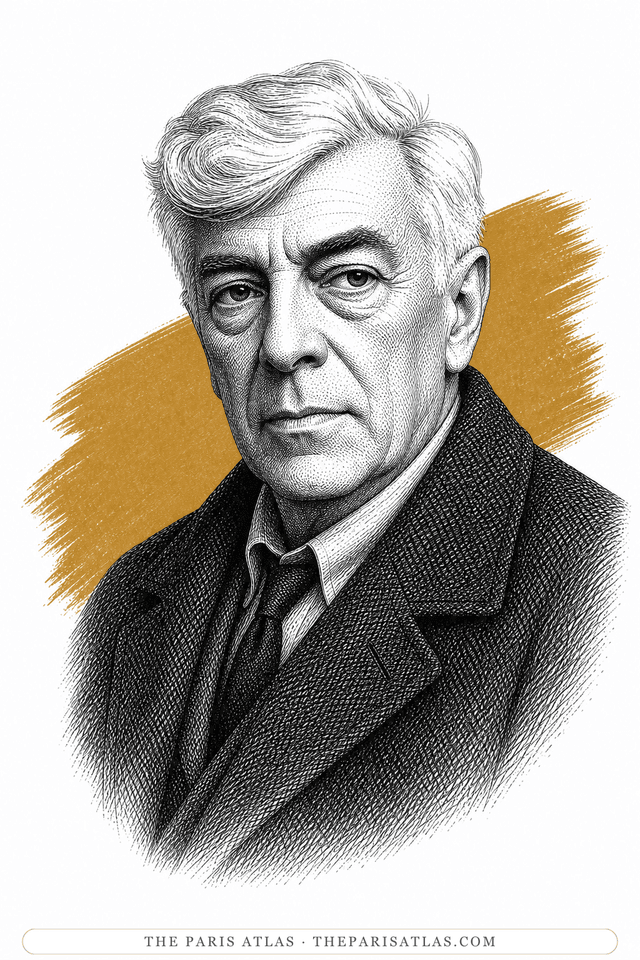
Georges Braque
The Le Havre house-painter's son who invented Cubism in Montmartre with the Spanish painter Pablo Picasso between 1908 and 1914 — the quieter half of the most consequential partnership in modern art — and who invented papier collé, the pasted-paper picture, in September 1912. He was given a French state funeral in 1963.
View artist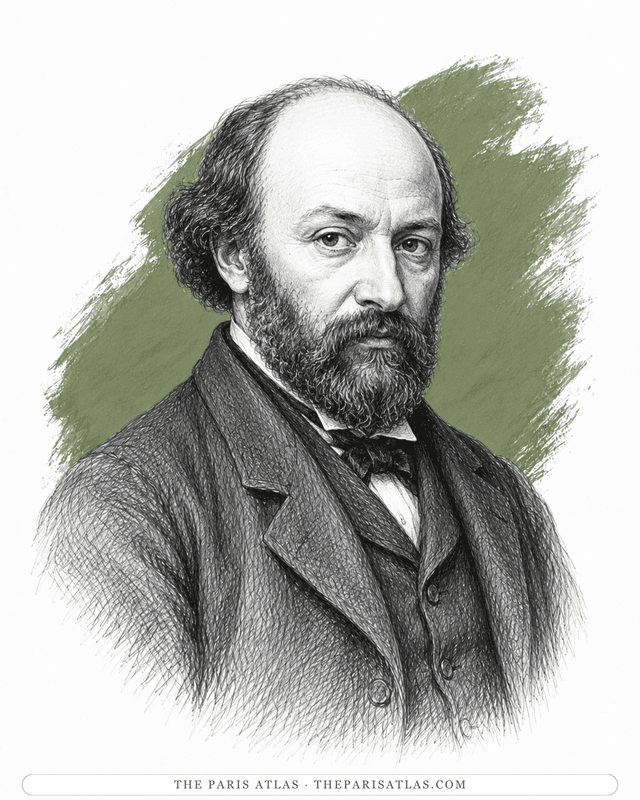
Paul Cézanne
Painter between Impressionism and everything after — shown in the independents' exhibitions, emulated by the Cubists, and present at the Orangerie through 15 works in the Walter-Guillaume collection.
View artist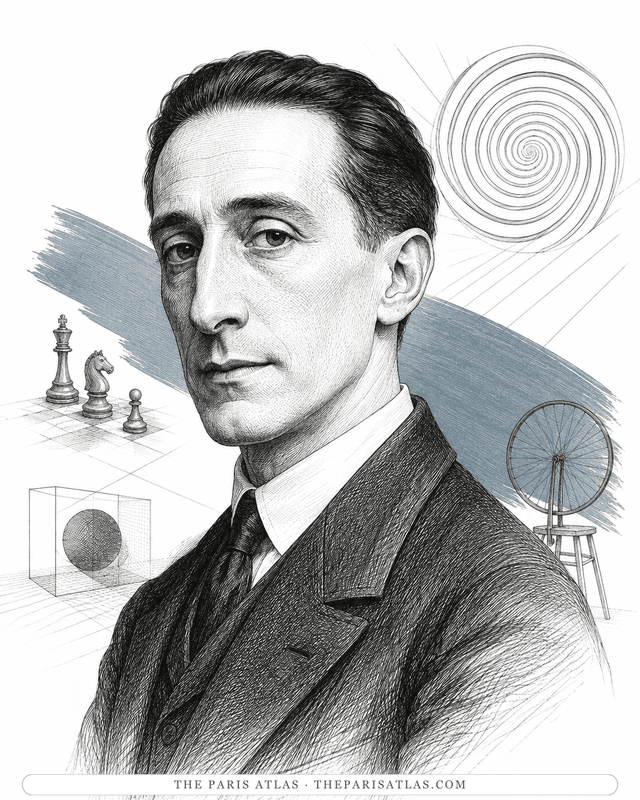
Marcel Duchamp
The century's quietest revolutionary — readymades, the abandonment of painting, chess on a Paris rooftop in Entr'acte, and one anemic film of spinning puns signed Rrose Sélavy.
View artist
References
The sources below include collection records, catalogues, scholarly research, and primary materials that informed this page. They document Zapatista Landscape, its making, and its place in cultural history.


1Paisaje zapatista, 1915 (anverso) / La mujer del pozo, 1913 (reverso) — collection record
WebsiteMuseo Nacional de Arte, INBAL, Mexico CityUsed forWeb source consulted for documented facts and historical context presented on the Zapatista Landscape page.
2The Cubist Paintings of Diego Rivera: Memory, Politics, Place — exhibition site
WebsiteNational Gallery of Art, Washington, 2004Used forWeb source consulted for documented facts and historical context presented on the Zapatista Landscape page.

3Diego Rivera: The Cubist Years
Exhibition cataloguePhoenix Art Museum, 1984Used forCatalogue scholarship used to verify attribution, provenance, chronology, and interpretive context for Zapatista Landscape.
4The Fabulous Life of Diego Rivera
BiographyStein and Day, 1963Used forBiographical evidence used to verify chronology, relationships, and historical context connected to Zapatista Landscape.
5Mexique 1900–1950: Diego Rivera and the Paris avant-garde
Exhibition catalogueGrand Palais / Réunion des musées nationaux, 2016Used forCatalogue scholarship used to verify attribution, provenance, chronology, and interpretive context for Zapatista Landscape.
These references provide the documented foundation for this work's history and interpretation. Claim-level citations remain attached to the specific claims they support.
 Explore more resources