Detroit Industry Murals
by Diego Rivera
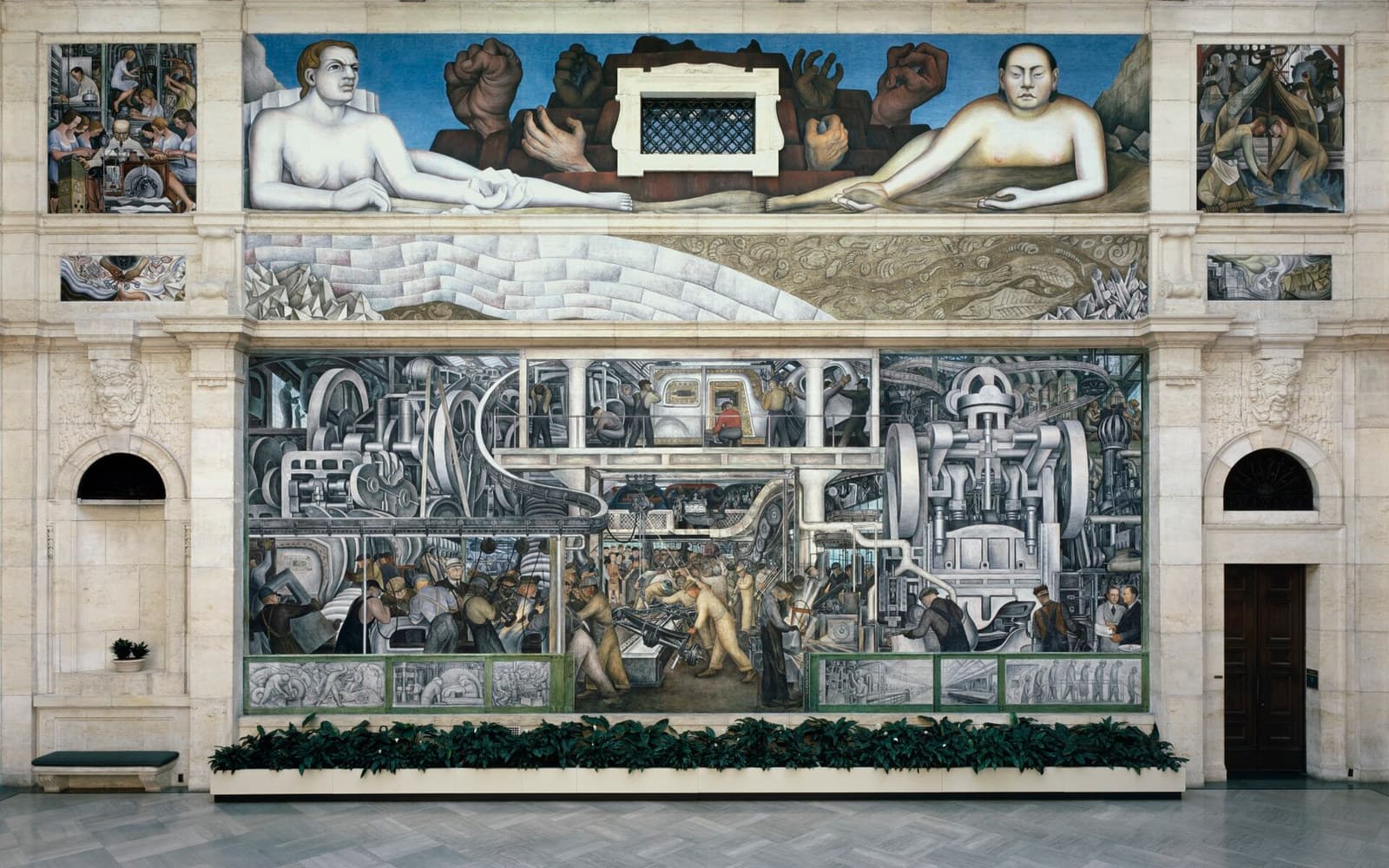
Twenty-seven fresco panels covering all four walls of a courtyard at the Detroit Institute of Arts, painted by Diego Rivera between 25 July 1932 and 13 March 1933. They show the Ford Motor Company: the engine and body production lines, the raw materials under the ground, the chemistry that industry also makes, and the men and women who did the work. They are painted into the walls of the building and cannot be lent, moved or sold.
- 1932–1933
- Frescoes — a cycle of twenty-seven panels on four walls
- Detroit Institute of ArtsDetroit, United States
About Diego Rivera
These are walls, not pictures
The Detroit Industry murals are frescoes: pigment laid into wet plaster on the walls of Rivera Court, on the second floor of the museum's central wing. They are part of the building.
That has practical consequences. The cycle cannot travel to an exhibition, cannot be sold, and cannot be hung anywhere else. Seeing it means going to Detroit and standing in the courtyard, where the four walls surround the visitor at once.
The Detroit Institute of Arts counts twenty-seven panels. They range from narrow strips above the cornice to centre panels 13.72 metres wide, and the lower centre panel is 5.40 metres high.
What the four walls show
The two long walls, north and south, carry the production lines. The north wall shows engine manufacture; the south wall shows the body. Both are crowded with workers in overalls, conveyors overhead, presses drawn like engineering elevations, and furnace light behind.
Above each production floor runs a band of geology: limestone strata, fossil beds, faceted crystals, coal seams and iron ore. Above that, reclining nude figures hold the raw materials in their hands, one pair on each long wall, with a real window of the courtyard built into the middle of the composition.
Narrow flanking panels carry other kinds of manufacture. One on the south wall shows a laboratory bench with women in pale workwear packing product and a man in a white coat among them. The Detroit Institute of Arts describes the north wall's upper corners as scenes of a baby being vaccinated and the manufacture of poison gases, contrasting the beneficial and harmful results of industry.
A strip of monochrome grey panels runs along the base of each wall, behind a green steel rail: a factory shed, machinery, and a file of men walking with their tools. Colour stops where the working day begins and ends.
How the commission grew
Diego Rivera and William Valentiner, then director of the Detroit Institute of Arts, met in 1931 while Diego Rivera was painting murals in San Francisco. On 27 April 1931 the museum commissioned him to paint two walls of its garden court. It suggested the development of industry in Detroit as the subject and left the creative control to him.
The fee was ten thousand dollars, well below his rate of a hundred dollars a square yard. When Edsel Ford saw the preliminary drawings he was enthusiastic enough to raise it to twenty thousand eight hundred and eighty-nine.
A few days later Diego Rivera came back with a plan to paint all four walls instead of two, with no increase in the fee. The Detroit Institute of Arts works out what that left him: twenty-seven dollars and fifty-two cents a square yard. He had seven assistants who prepared the walls, and did all of the painting himself.
Diego Rivera and Frida Kahlo arrived in Detroit by train on 21 April 1932 and were met at the station by William Valentiner and other prominent Detroiters. He spent May and June sketching at the Ford River Rouge plant and other industrial sites, signed the contract on 10 June, and began painting on 25 July.
Frida Kahlo was there too
Frida Kahlo spent the eleven months in Detroit with Diego Rivera. The Detroit Institute of Arts puts what happened plainly: at the same time, and largely unnoticed, she developed her now-celebrated artistic identity.
On 4 July 1932 she lost a pregnancy at Henry Ford Hospital. The painting she made of it carries the hospital's name and is one of the works that established her reputation.
She did not like the city. The museum quotes a letter of hers: no me hallo, as the kitchen maids would say, but I have to pluck up my courage and stay because I cannot leave Diego. It sums the two of them up in five words — he romanticized Detroit, she rejected it.
The couple stayed at the Wardell Apartment Hotel, now the Park Shelton. When they learned it did not admit Jewish guests, Diego Rivera told the management to change the policy or the two of them would leave. The policy changed.
The unveiling, and what followed
Diego Rivera finished on 13 March 1933. The murals were unveiled to the public on 17 March, and the Detroit Institute of Arts records that they drew praise and some criticism. He and Frida Kahlo left for New York the next day.
The museum does not publish a fuller account of the objections, and the atlas has not found one in its own words. The one panel-specific claim it does publish is a different matter. There has been speculation that the baby in the Vaccination panel was modelled on the kidnapped and murdered child of the aviator Charles Lindbergh and his wife Anne Morrow Lindbergh. That was the biggest news story while Diego Rivera was painting, and he never confirmed or denied it.
The Detroit Institute of Arts records that he considered Detroit Industry the best work of his career, and calls it the finest example of Mexican mural art in the United States. In April 2014 the cycle was named a National Historic Landmark.
The month after the unveiling, Nelson Rockefeller commissioned him to paint the lobby of the RCA Building in New York. That mural was destroyed in February 1934 over the portrait of Lenin in it.
The rights position is unusual
The Detroit Institute of Arts prints a rights line on its own object records. The Artists Rights Society represents the Bank of Mexico on Diego Rivera's and Frida Kahlo's work with a few exceptions, it says, and its murals are one of those exceptions. They are in the public domain when published in the United States.
That is the owning museum's position and it is recorded here as such. It covers publication in the United States only. Mexico protects an author's work for the life of the author plus a hundred years, and Diego Rivera died on 24 November 1957, so the cycle is in copyright there until 2057.
The atlas publishes internationally, so the reduced reproduction here stays in the conservative lane: shown under fair use for commentary and excluded from commercial reuse. The museum's statement is preserved beside the image file in case that call is revisited.
Close reading
Reading the work, detail by detail
The reproduction is a photograph of the south wall inside Rivera Court, taken square on, and it includes the museum's own stonework, doorway and planting. That is the point: the fresco is part of the building. The views below read down the wall from the figures at the top to the grisaille strip at the floor.
1.Two figures along the top
The top register of the south wall carries two reclining nudes facing inward, one pale-skinned and one with East Asian features. Each holds a raw material in the hands: folded white matter at the left, and cupped open palms at the right.
2.A real window inside the fresco
At the centre of the top register there is an actual window of the museum court, stone surround and iron lattice included. Rivera painted rock ledges up to its frame so the architecture becomes part of the picture.
3.Hands coming out of the rock
Large hands push out of the brown rock between the two figures: a clenched fist, an open palm, and one closing round a lump of pale stone. They are painted at a different scale from the bodies beside them.
4.A band of rock and fossils
A narrow band under the top register shows the ground the industry runs on. A pale limestone stratum sweeps in from the left and ends in faceted crystals; at the right an ochre seam is packed with shells and elongated fossil forms.
5.The press on the right
The right half of the main panel is taken up by one machine, drawn like an engineering elevation: two flywheels, a column of pistons and rods, a heavy base. The workers around it are painted at a third its height.
6.Two men in suits at the right edge
At the lower right, two men in suits and ties stand at a counter with papers. They are the only figures on the wall not dressed for the shop floor. The Detroit Institute of Arts does not name them on the object record.
7.The narrow panel at the left
Flanking the main field, a tall panel shows a laboratory bench: women in pale blue workwear packing small objects, a bespectacled man in a white coat at the centre, and a chemist at apparatus behind. It is one of the twenty-seven panels of the cycle.
8.Grey panels along the floor
A strip of monochrome panels runs along the base of the wall behind a green rail: a factory shed, machinery, and a file of men walking. They are painted in grisaille, so the colour stops where the working day begins and ends.
Timeline
1931
Diego Rivera and William Valentiner, director of the Detroit Institute of Arts, meet while Diego Rivera is painting murals in San Francisco.
1931
On 27 April the museum commissions two walls of its garden court, suggests the development of industry in Detroit as the subject, and leaves creative control to the artist.
1932
Diego Rivera and Frida Kahlo arrive in Detroit by train on 21 April and are met at the station.
1932
He sketches at the Ford River Rouge plant and other industrial sites through May and June, and signs the contract on 10 June.
1932
Frida Kahlo loses a pregnancy at Henry Ford Hospital on 4 July.
1932
Painting begins on 25 July. The north wall carries a signature dated 29 November.
1933
Completed on 13 March and unveiled to the public on 17 March. The two leave for New York on 18 March.
1933
The cycle enters the museum's collection as the gift of Edsel B. Ford, accession 33.10.
1934
Diego Rivera's Rockefeller Center mural in New York is destroyed in February over its portrait of Lenin.
2014
Named a National Historic Landmark in April.
Where to see it
Detroit Institute of Arts
Detroit, United States
A public viewing address has not yet been confirmed for this holding.
Rivera Court, level two of the central wing. The frescoes are painted into the walls and cannot be lent or moved, so they are on permanent view when the courtyard is open.
Frequently asked questions
Where are the Detroit Industry Murals?
On all four walls of Rivera Court at the Detroit Institute of Arts, on level two of the central wing. They are frescoes painted into the walls of the building, so they cannot be lent or moved; the courtyard is the only place to see them.
How many panels are in the Detroit Industry Murals?
Twenty-seven, on four walls. The largest are the centre panels of the north and south walls, 13.72 metres wide, with a lower centre panel 5.40 metres high. The museum's own fact sheet gives a different figure for the largest panels, so the object records are what is used here.
How long did Diego Rivera take to paint the Detroit Industry Murals?
The painted inscription on the south wall gives the dates: between 25 July 1932 and 13 March 1933, a little under eight months. The Detroit Institute of Arts describes the whole Detroit stay as eleven months, from the April 1932 arrival to the March 1933 completion.
How much was Diego Rivera paid for the Detroit Industry Murals?
Ten thousand dollars for two walls at first, raised by Edsel Ford to twenty thousand eight hundred and eighty-nine after he saw the drawings. Diego Rivera then offered to paint all four walls for the same money, which the Detroit Institute of Arts calculates at twenty-seven dollars and fifty-two cents a square yard.
Was Frida Kahlo in Detroit with Diego Rivera?
Yes, for the whole eleven months. She lost a pregnancy at Henry Ford Hospital on 4 July 1932 and painted the picture that carries the hospital's name. The Detroit Institute of Arts records that she developed her now-celebrated artistic identity there, largely unnoticed at the time, and that she disliked the city.
Were the Detroit Industry Murals controversial?
The Detroit Institute of Arts records that the unveiling on 17 March 1933 drew praise and some criticism, and publishes no fuller account of the objections. Its one panel-specific note is that the baby in the Vaccination panel has been said to be modelled on the kidnapped Lindbergh child, which Diego Rivera never confirmed or denied.
Are the Detroit Industry Murals in the public domain?
The Detroit Institute of Arts states that they are, when published in the United States, and that they are an exception to the Artists Rights Society's representation of the Bank of Mexico on Diego Rivera's work. That covers the United States only; Mexico's term runs to 2057. The atlas keeps its reproduction in the fair-use lane and out of commercial reuse.
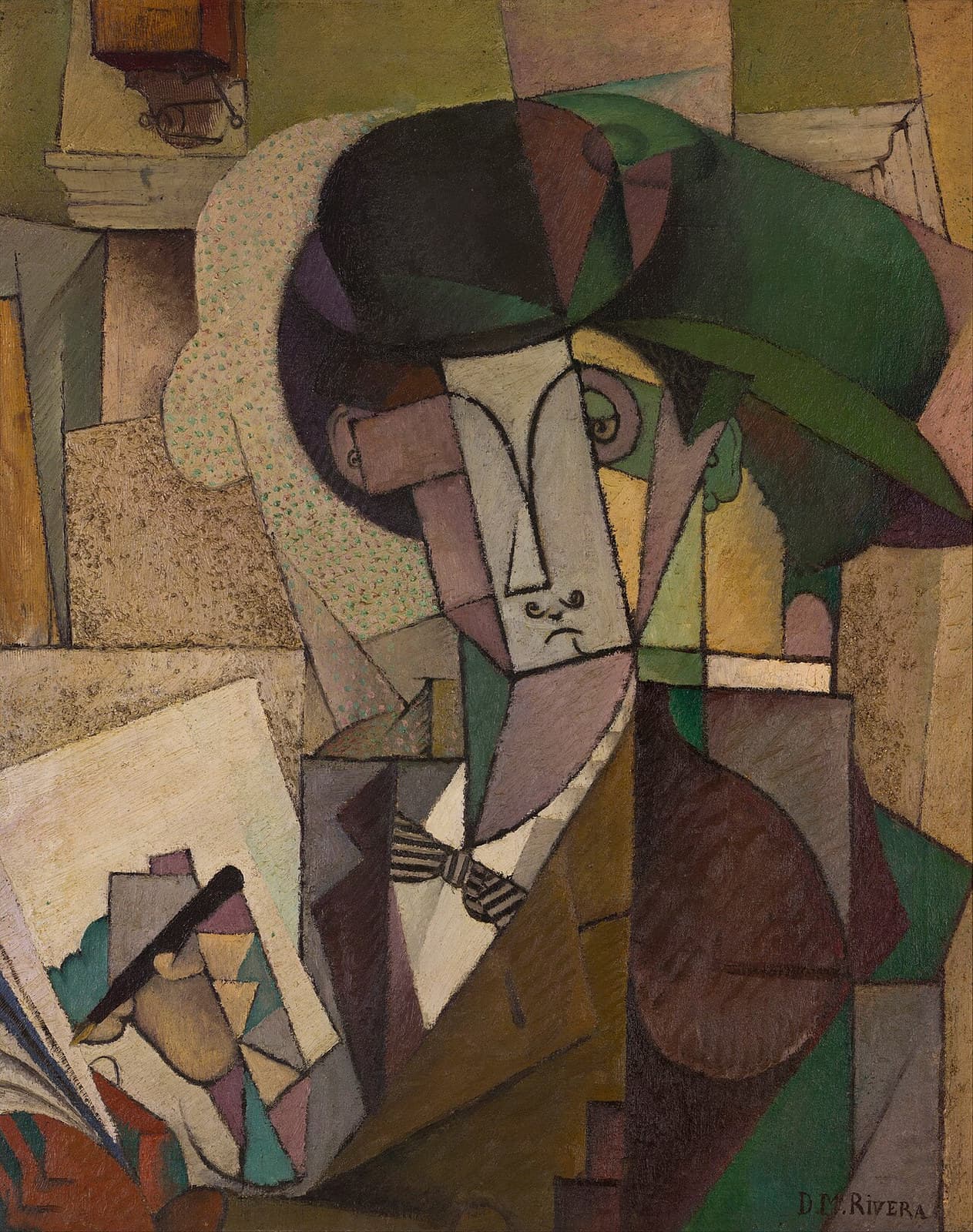
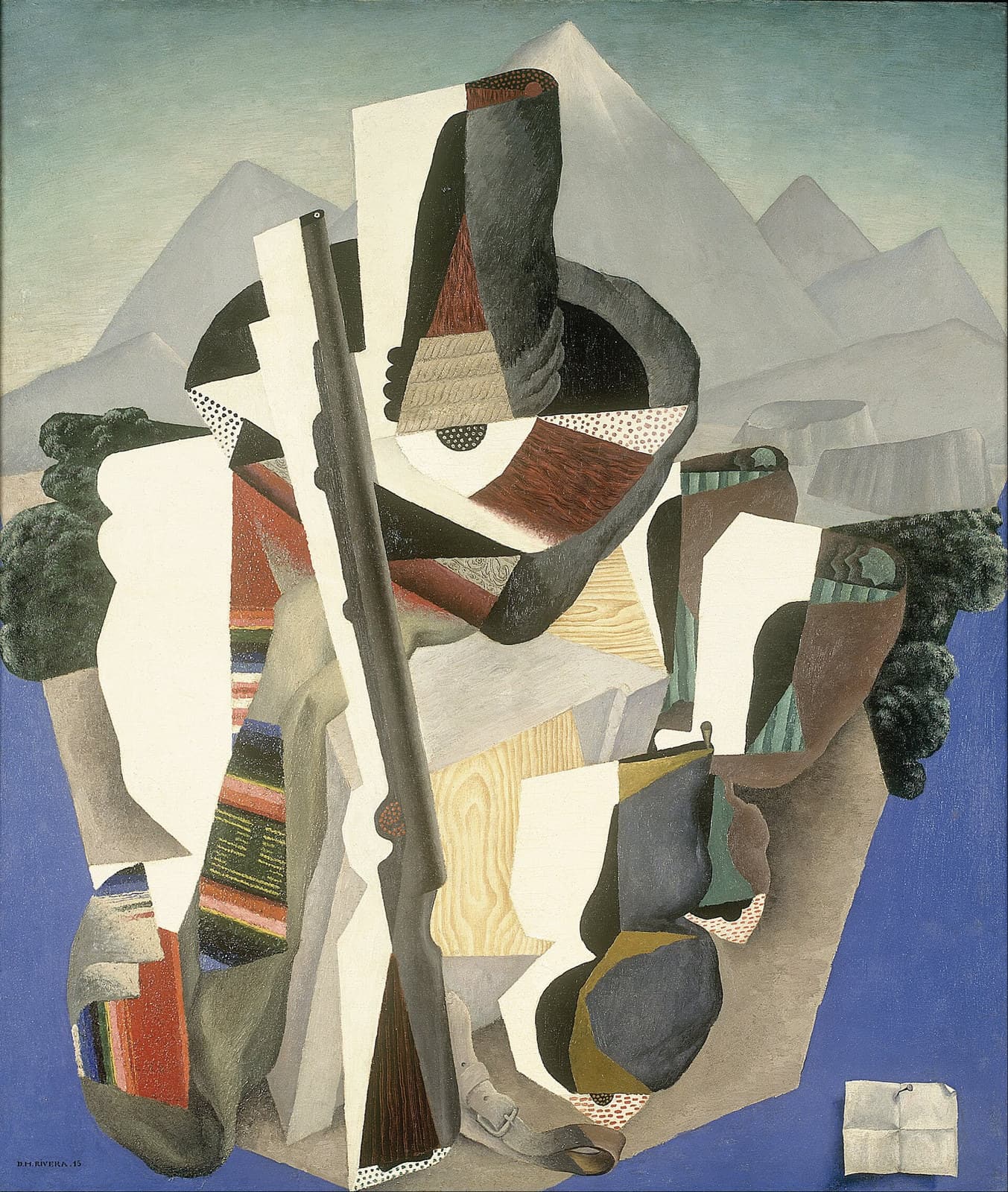
More by Diego Rivera
If you like Diego Rivera
Explore painters from the same movements and circles.

Georges Braque
The Le Havre house-painter's son who invented Cubism in Montmartre with the Spanish painter Pablo Picasso between 1908 and 1914 — the quieter half of the most consequential partnership in modern art — and who invented papier collé, the pasted-paper picture, in September 1912. He was given a French state funeral in 1963.
View artist
Paul Cézanne
Painter between Impressionism and everything after — shown in the independents' exhibitions, emulated by the Cubists, and present at the Orangerie through 15 works in the Walter-Guillaume collection.
View artist
Marcel Duchamp
The century's quietest revolutionary — readymades, the abandonment of painting, chess on a Paris rooftop in Entr'acte, and one anemic film of spinning puns signed Rrose Sélavy.
View artist
References
The sources below include collection records, catalogues, scholarly research, and primary materials that informed this page. They document Detroit Industry Murals, its making, and its place in cultural history.


1Detroit Industry Murals
WebsiteDetroit Institute of ArtsUsed forWeb source consulted for documented facts and historical context presented on the Detroit Industry Murals page.
2Detroit Industry, South Wall — collection record, 33.10.S
WebsiteDetroit Institute of ArtsUsed forWeb source consulted for documented facts and historical context presented on the Detroit Industry Murals page.
3Detroit Industry, North Wall — collection record, 33.10.N
WebsiteDetroit Institute of ArtsUsed forWeb source consulted for documented facts and historical context presented on the Detroit Industry Murals page.

4Rivera Court Fact Sheet
Official recordDetroit Institute of Arts, 2024Used forOfficial record used to verify names, dates, institutional details, or other factual information on this page.
5The Fabulous Life of Diego Rivera
BiographyStein and Day, 1963Used forBiographical evidence used to verify chronology, relationships, and historical context connected to Detroit Industry Murals.
These references provide the documented foundation for this work's history and interpretation. Claim-level citations remain attached to the specific claims they support.
 Explore more resources