The Two Fridas
by Frida Kahlo
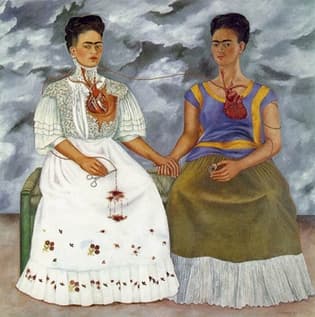
Two figures of Frida Kahlo, the same size, sit side by side against a clouded sky. One wears a European dress, the other a Tehuana costume, and both have an opened chest with the heart exposed. A single blood vessel runs from one heart to the other, and the figure on the left has closed a surgical clamp on it. She painted the picture in 1939, the year she travelled to Paris and the year her marriage to Diego Rivera ended.
- 1939
- Oil on cotton canvas
- Museo de Arte ModernoMexico City, Mexico
About Frida Kahlo
What the painting shows
The two figures sit on the same bench, holding hands at the centre of the canvas. The one on the left wears a white dress with a high lace collar reaching the chin, a bodice covered in dense lace pattern, and puffed sleeves worked in fine horizontal pleats. The one on the right wears a periwinkle blouse with broad yellow-gold bands at the neck and sleeves, over a long skirt finished with a wide white pleated flounce. Neither figure wears a headdress.
Both chests are open. The chest on the left is torn to a ragged hole edged with tan lining, and the heart inside has been cut apart so that pale tubes and severed vessels show. The heart on the right is intact, dark red and recognisably heart-shaped, with vessels rising from the top. A single thin vessel leaves one throat, crosses the open sky at shoulder height, and enters the other.
The figure in the white dress holds a pair of ringed surgical forceps in her lap, its jaws closed on the vessel descending from her own chest. Past the clamp the vessel is cut, and blood has fallen onto the white skirt in two clusters of blots joined by thin vertical trails. Behind both figures the sky is worked in grey and white cloud. The canvas is square, 173.5 centimetres on each side, and the support is a medium-weave cotton.
Which figure is which
The Instituto Nacional de Bellas Artes y Literatura, which runs the museum that owns the painting, sets out the two sides in its own words. The figure on the left is the Frida dressed in white. The figure on the right is the Frida dressed as a Tehuana, a woman of the Isthmus of Tehuantepec in Oaxaca, whose costume Frida Kahlo wore for most of her adult life.
The museum's account describes the hearts as exposed and connected to one another, and states that the first figure has cut her artery, staining her white skirt. Marilyn Stokstad and Michael Watt Cothren, in their survey Art History, identify the instrument in that hand as a surgical clamp. They read the small oval object in the Tehuana figure's other hand as a miniature portrait of Diego Rivera as a child. At the resolution the reproduction is served, the image inside the miniature cannot be made out.
The museum's English text calls the instrument a pair of scissors. The object painted has two finger loops and a locking shaft, which is a haemostat, and the art-historical literature describes it as a clamp.
The white skirt was painted lavender
The dress on the left is not the colour Frida Kahlo painted. A 2025 study of the canvas by Pablo Aguilar-Rodríguez, Sandra Zetina, Adrián Mejía-González and Nuria Esturau-Escofet, published in the journal ACS Omega, found that she painted a purple skirt and that a colour photograph taken in 1939 records it. The zinc white she used has degraded into zinc soaps and zinc lactate, and the skirt now reads as white with purple traces in it.
The museum reached the same conclusion from its own records. When it hung the picture in 2019 it painted the gallery wall on the left-hand side lavender, and said in its announcement that the skirt had originally been that colour. The contrast between a white European dress and a coloured Mexican one is therefore sharper now than it was on the easel.
The bulletin also calls the Tehuana figure's skirt green. In the reproduction available it reads olive to brown, which may be the reproduction or may be further change in the paint.
Painted in the year of Paris and the divorce
Frida Kahlo painted the canvas in 1939. In the early spring of that year she spent about six weeks in Paris for Mexique, the group exhibition André Breton had invited her to join, and she divorced Diego Rivera at the end of it. The museum describes the picture as a poetic account of that break, painted during the divorce proceedings.
The same account ties the painting to the journey. It calls the Paris trip a decisive episode in her working life and the origin of the double self-portrait, which separates the Frida whom Diego Rivera valued from the Frida he left. Hayden Herrera, in her study of the paintings, connects the doubling to an imaginary childhood friend Frida Kahlo described in her diary, a reading the museum's bulletin also draws from the diary.
It was first shown in January 1940 at the Exposición Internacional del Surrealismo, held at the Galería de Arte Mexicano in Mexico City.
How it reached the Museo de Arte Moderno
The Museo de Arte Moderno states that the Instituto Nacional de Bellas Artes bought the painting directly from Frida Kahlo in 1947, and transferred it to the museum on 28 December 1966. Andrea Kettenmann gives the same two dates in her study of the painter. The 2025 technical study instead dates the purchase to 1948, as part of the group of works that formed the museum's founding collection.
The museum publishes no object number for the canvas, and its per-work catalogue page is no longer online. Dimensions vary between accounts as well: the 2025 study, which examined the canvas directly, gives 173.5 by 173.5 centimetres, while Margaret A. Lindauer records 173.5 by 173 centimetres.
Close reading
Reading the work, detail by detail
Two figures of the same size sit side by side against a clouded sky, dressed differently and joined twice over: by their clasped hands and by a single blood vessel. Frida Kahlo painted it in 1939, the year she travelled to Paris and the year her marriage to Diego Rivera ended. The close views follow the vessel from one chest to the other.
1.The heart on the left is cut open
The white bodice is torn open in a ragged hole edged with tan lining. The heart inside has been cut apart, and pale tubes and severed vessels are visible where the wall is missing. Red and white are worked together across the exposed surface.
2.The heart on the right is whole
The opening in the purple blouse shows a heart that is intact. It is dark red, glossy, and recognisably heart-shaped, with vessels rising from the top. Nothing has been cut into it.
3.One vessel crosses the gap between them
A single thin vessel leaves one throat, crosses the open sky at shoulder height, and enters the other. It passes well above their joined hands. Both figures carry a small red wound at the base of the throat where it emerges.
4.A surgical clamp closes the vein
The figure in the white dress holds a pair of ringed surgical forceps in her lap. Its jaws are closed on the vessel running down from her own chest. The two finger loops and the shaft are drawn clearly against the white cloth.
5.The cut end bleeds onto the skirt
Past the clamp the vessel is cut, and blood falls onto the white skirt in two clusters of blots joined by thin vertical trails. Two separate drops have landed lower down. The blots are roughly the size and shape of the flowers embroidered near the hem.
6.The hands are clasped at the centre
Their inner hands are clasped at the centre of the canvas, resting on the olive skirt. The grip is quiet and the fingers are relaxed. It is the only place the two bodies touch.
7.A small oval miniature in the other hand
The free hand of the figure on the right holds a small oval object between thumb and forefinger. It has a dark rim and a pale centre. At the size this reproduction is served, the image inside it cannot be made out.
8.Lace, pleats and a high collar on the left
The dress on the left has a high lace collar reaching the chin and a bodice covered in dense lace pattern. The sleeve is puffed and worked in fine horizontal pleats with lace bands between them. The whole garment is white on white.
9.Purple and gold on the right
The blouse on the right is periwinkle purple with broad yellow-gold bands at the neckline and sleeve edges, and another down the side. Below it the skirt is olive green. No headdress is worn.
10.Two hems finish the picture differently
The white skirt ends in vertical pleats with small red and orange flowers embroidered across them. The olive skirt ends in a broad white pleated flounce. Both hems stop above a bare pinkish-brown floor.
Timeline
1939
Frida Kahlo spends about six weeks in Paris for the exhibition Mexique, and divorces Diego Rivera at the end of the year.
1939
Paints Las dos Fridas on a square cotton canvas 173.5 centimetres on each side, with the left-hand figure's skirt in purple.
1940
First shown in January at the Exposición Internacional del Surrealismo, Galería de Arte Mexicano, Mexico City.
1947
Bought by the Instituto Nacional de Bellas Artes directly from Frida Kahlo, according to the Museo de Arte Moderno and to Andrea Kettenmann. A 2025 technical study dates the purchase to 1948.
1966
Transferred to the Museo de Arte Moderno on 28 December.
2019
Shown for the painting's eightieth anniversary with the gallery wall painted lavender, the colour the museum records the white skirt originally was.
2025
A study in ACS Omega identifies degraded zinc white as the cause of the colour change, and cites a 1939 colour photograph showing the purple skirt.
Where to see it
Museo de Arte Moderno
Mexico City, Mexico
A public viewing address has not yet been confirmed for this holding.
Held in the museum's collection displays. The museum publishes no per-object catalogue record, so check with it before travelling to see the canvas.
Frequently asked questions
Where is The Two Fridas?
The Museo de Arte Moderno in Mexico City, in the Bosque de Chapultepec. The museum belongs to the Instituto Nacional de Bellas Artes y Literatura, which bought the painting from Frida Kahlo in 1947 and transferred it to the museum in 1966. The museum publishes no object number for it.
Which Frida is which in The Two Fridas?
The Instituto Nacional de Bellas Artes y Literatura states that the figure on the left is dressed in white, in a European style. The figure on the right is dressed as a Tehuana, a woman of the Isthmus of Tehuantepec in Oaxaca. The heart of the figure on the left has been cut open; the heart on the right is whole.
What is the vein in The Two Fridas?
A single blood vessel that runs from one figure's heart, arcs across the sky at shoulder height, and enters the other's. The figure in the white dress has closed a pair of ringed surgical forceps on the length of it that descends into her lap. Past the clamp the vessel is cut and bleeding onto her skirt.
Why did Frida Kahlo paint The Two Fridas?
She painted it in 1939, during her divorce from Diego Rivera. The Museo de Arte Moderno describes it as a poetic account of that break and traces its origin to her trip to Paris earlier the same year, separating the Frida whom Diego Rivera valued from the Frida he left. Hayden Herrera also connects the doubling to an imaginary childhood friend described in Frida Kahlo's diary.
How big is The Two Fridas?
173.5 centimetres square, about five feet eight inches on each side, which makes it one of her largest paintings. A 2025 technical study that examined the canvas gives those figures and notes that the square format matches the width of the roll of cotton the support was cut from.
Was the white dress in The Two Fridas always white?
No. A 2025 study published in ACS Omega found that Frida Kahlo painted the skirt purple, and that a colour photograph from 1939 records it that way. The zinc white she used has since degraded, leaving the skirt white with purple traces. The Museo de Arte Moderno reached the same conclusion and painted its gallery wall lavender to show it.
More by Frida Kahlo
If you like Frida Kahlo
Explore painters from the same movements and circles.
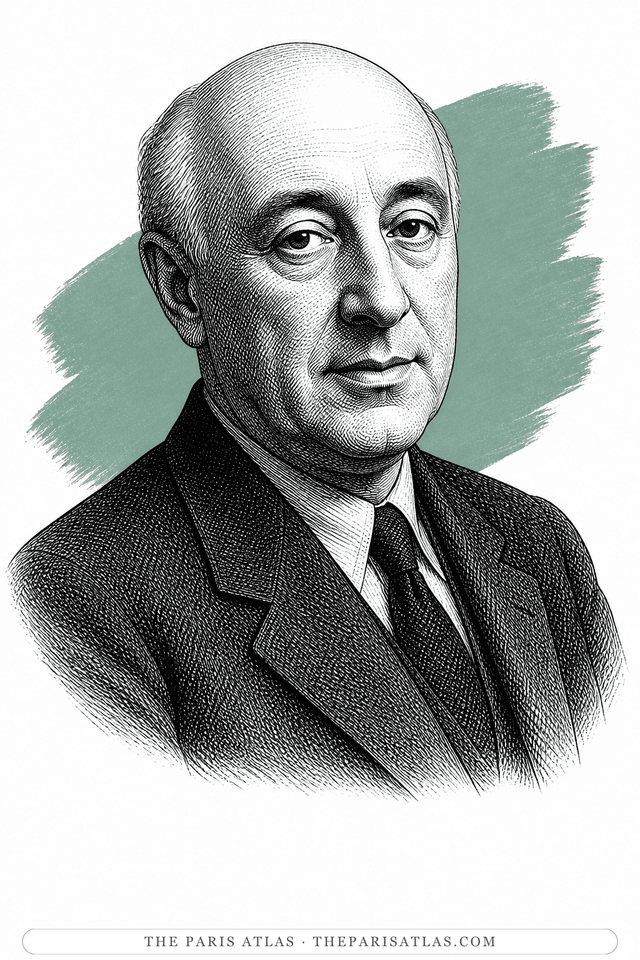
Jean Arp
Strasbourg-born sculptor and poet — Hans in German, Jean in French, both all his life — who co-founded Dada at the Cabaret Voltaire in 1916, composed collages by dropping torn paper 'according to the laws of chance', and settled at Meudon outside Paris in a house his wife Sophie Taeuber-Arp designed.
View artist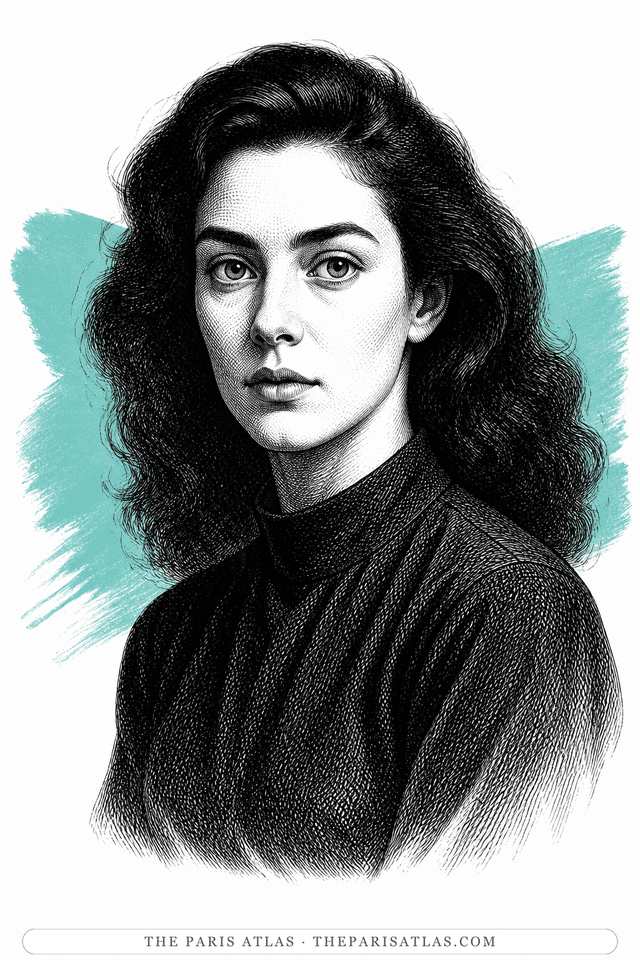
Leonora Carrington
English painter and writer who fled a debutante's future for Surrealist Paris at twenty, survived the war's wreckage of that life — internment for her lover Max Ernst, an asylum in Spain for her — and rebuilt herself in Mexico into one of the century's great painters of the uncanny.
View artist
Henri Cartier-Bresson
French photographer who turned a pocket-sized 35mm camera into an instrument of split-second composition — the idea the world knows as 'the decisive moment'. He trained as a painter, was taken prisoner in 1940 and escaped on his third try, photographed the Liberation of Paris in August 1944, co-founded the photographer-owned agency Magnum Photos in 1947, gave up reporting for drawing in the 1970s, and left Paris a foundation in the Marais that deliberately hangs no permanent display of his own pictures.
View artist
References
The sources below include collection records, catalogues, scholarly research, and primary materials that informed this page. They document The Two Fridas, its making, and its place in cultural history.

1The Two Fridas (1939) — the museum's account of the picture and its acquisition
WebsiteMuseo de Arte Moderno, Mexico City, on Google Arts & CultureUsed forWeb source consulted for documented facts and historical context presented on the The Two Fridas page.

2Boletín 1615, 18 October 2019: Las dos Fridas at eighty — the costume on each side, and the skirt that was originally lavender
Official recordInstituto Nacional de Bellas Artes y Literatura, Secretaría de Cultura de México, 2019Used forOfficial record used to verify names, dates, institutional details, or other factual information on this page.
3Characterization by Spectroscopic and Microscopic Techniques of Degraded Zinc White Pigment in Las Dos Fridas
PeriodicalACS Omega 10(16), 16309, 2025Used forContemporary reporting or criticism used to document the historical reception and context of The Two Fridas.

4Art History
NonfictionPearson, 2011Used forPublished analysis and historical context used in preparing the The Two Fridas page.
5Frida Kahlo 1907–1954: Pain and Passion
BiographyTaschen, 2003Used forBiographical evidence used to verify chronology, relationships, and historical context connected to The Two Fridas.
6Frida Kahlo: The Paintings
NonfictionHarperCollins, 1991Used forPublished analysis and historical context used in preparing the The Two Fridas page.
7Devouring Frida: The Art History and Popular Celebrity of Frida Kahlo
NonfictionWesleyan University Press, 1999Used forPublished analysis and historical context used in preparing the The Two Fridas page.
8Kahlo, The Two Fridas (Las dos Fridas)
EssaysSmarthistoryUsed forPublished analysis and historical context used in preparing the The Two Fridas page.
9Frida Kahlo in Paris — curated account of the 1939 stay, with dated letters
WebsiteCentre Pompidou, on Google Arts & CultureUsed forWeb source consulted for documented facts and historical context presented on the The Two Fridas page.
These references provide the documented foundation for this work's history and interpretation. Claim-level citations remain attached to the specific claims they support.
 Explore more resources