The Paris AtlasCharting the artists, works, and places worth returning to.
  • Painter
· Spanish · 1908–1963

Remedios Varo

Spanish painter who spent the late 1930s in Paris inside the Surrealist circle around the poet André Breton — the movement that made art out of dreams and the unconscious — living with the poet Benjamin Péret, then escaped occupied France for Mexico City. There, in her forties, in a country she had not chosen, she painted the meticulous, half-scientific dreamworlds she is known for, beside her closest friend, the English painter Leonora Carrington.

Details

Lived
1908–1963
Born
1908
Birthplace
Anglès, Girona, Spain
Died
1963
Place of death
Mexico City
Nationality
Spanish
Profession
Painter
Partner
Benjamin Péret · from 1936
Roles
Painter

About Remedios Varo

Remedios Varo did her formative living in Paris and her real work an ocean away, in Mexico City. Born in Catalonia in 1908 and trained at Spain's most conservative art academy, she left Spain with the Surrealist poet Benjamin Péret as the civil war spread, and spent the late 1930s in Paris inside the circle around André Breton — showing in the movement's international exhibitions in Paris, London and Tokyo while she was still in her twenties.

Then the German occupation ended that life, and Varo and Péret got out to Mexico City. She was thirty-three, a refugee, and for years she drew advertisements for a pharmaceutical company to earn a living. Only in her mid-forties, with her circumstances finally steady, did she paint full time — and produced, in under a decade, the pictures everyone now knows: solitary heart-faced figures in towers, machines that run on music, girls embroidering a cloth that pours out of a tower window and becomes the world. She made roughly four hundred works and died in 1963 at fifty-four, with Leonora Carrington — the English painter who had escaped the same war by a different route — as her closest friend and collaborator.

A Catalan childhood and an academy in Madrid

Varo was born in 1908 at Anglès, a small town in the province of Girona in Catalonia, in north-eastern Spain, to a Catholic mother and an agnostic engineer father. Her own account of the household is the key to the paintings: a hydraulic engineer's drawing board on one side, a devout mother's religion on the other, and a daughter who took both seriously and never chose. She trained at the Real Academia de Bellas Artes de San Fernando in Madrid — the Royal Academy of Fine Arts of San Fernando, Spain's official art school, which the teenage Pablo Picasso had briefly attended, and by the 1920s a byword for strict traditional drawing.

In the mid-1930s she moved to Barcelona and joined the Logicofobistas, a short-lived group of Catalan Surrealists whose invented name means, roughly, those who fear logic. It was a small avant-garde — a circle of artists working deliberately ahead of, and against, established taste — in a city about to be at the centre of a war. The Spanish Civil War broke out in July 1936, when army officers under General Francisco Franco rose against the elected Republican government; it ended in 1939 with Franco's victory and a dictatorship that lasted until 1975. Within months of the first shots her life in Spain was over.

Paris: Péret, Breton, and four years in the group

The war brought Benjamin Péret to Barcelona. Péret was a French poet, one of the founding members of Surrealism and André Breton's closest ally in it, and he had come to Spain to fight on the side of the Republic, the elected government the officers had risen against. Varo left Spain with him, and the two settled in Paris in the late 1930s — the Gallery Wendi Norris, which represents her estate, dates the flight to 1936, the year the war began.

Surrealism, for a reader meeting the word for the first time, was a movement founded in Paris in 1924 by the poet André Breton, on the proposition that the truest images come from the unconscious rather than from observation — from dreams, chance encounters, automatic writing and drawing, the mind left to run without supervision. By the late 1930s Breton's group was the most argued-about thing in Paris art, held together by Breton himself, who also expelled members periodically when they displeased him. Varo arrived inside it, as Péret's partner and as a painter in her own right.

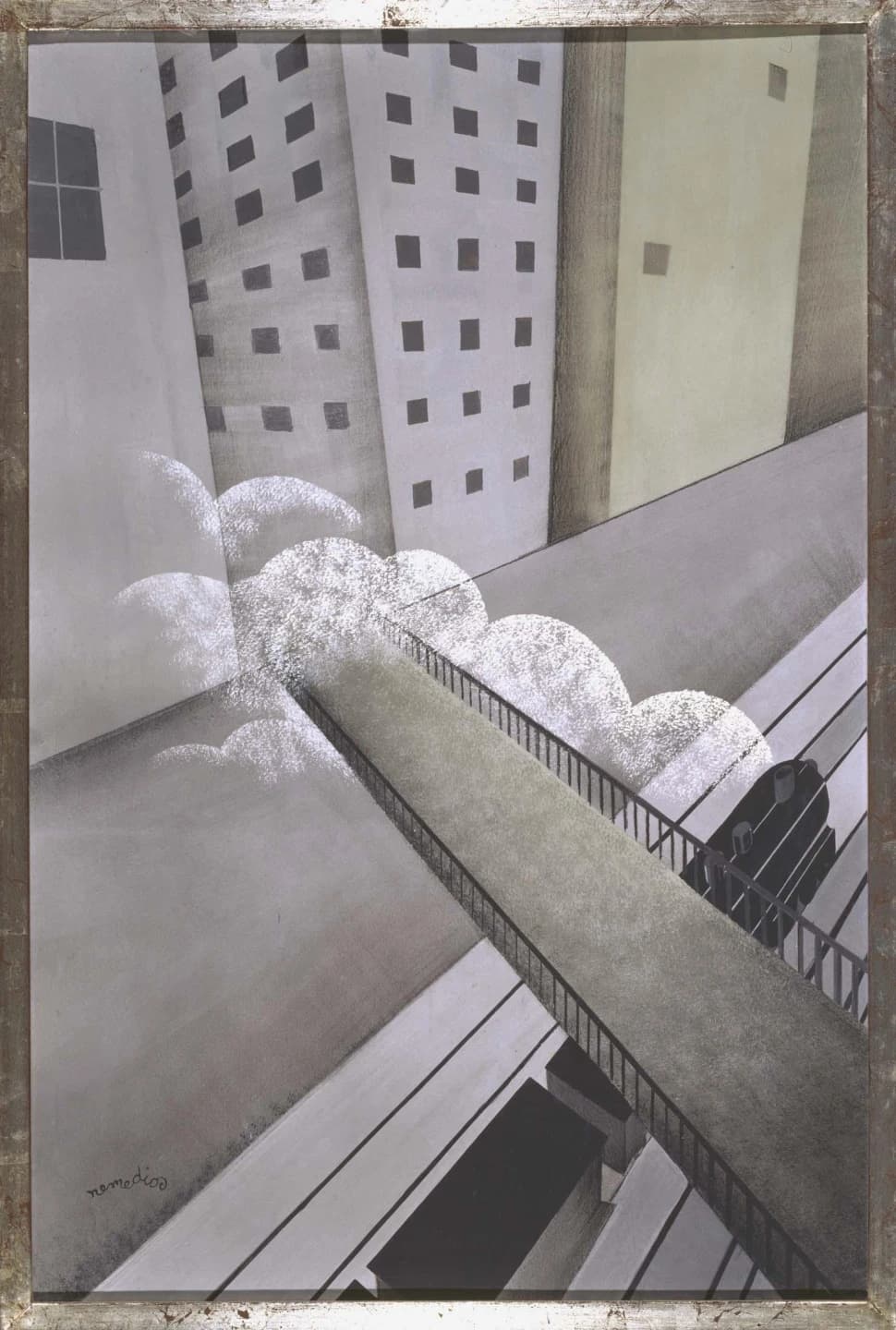
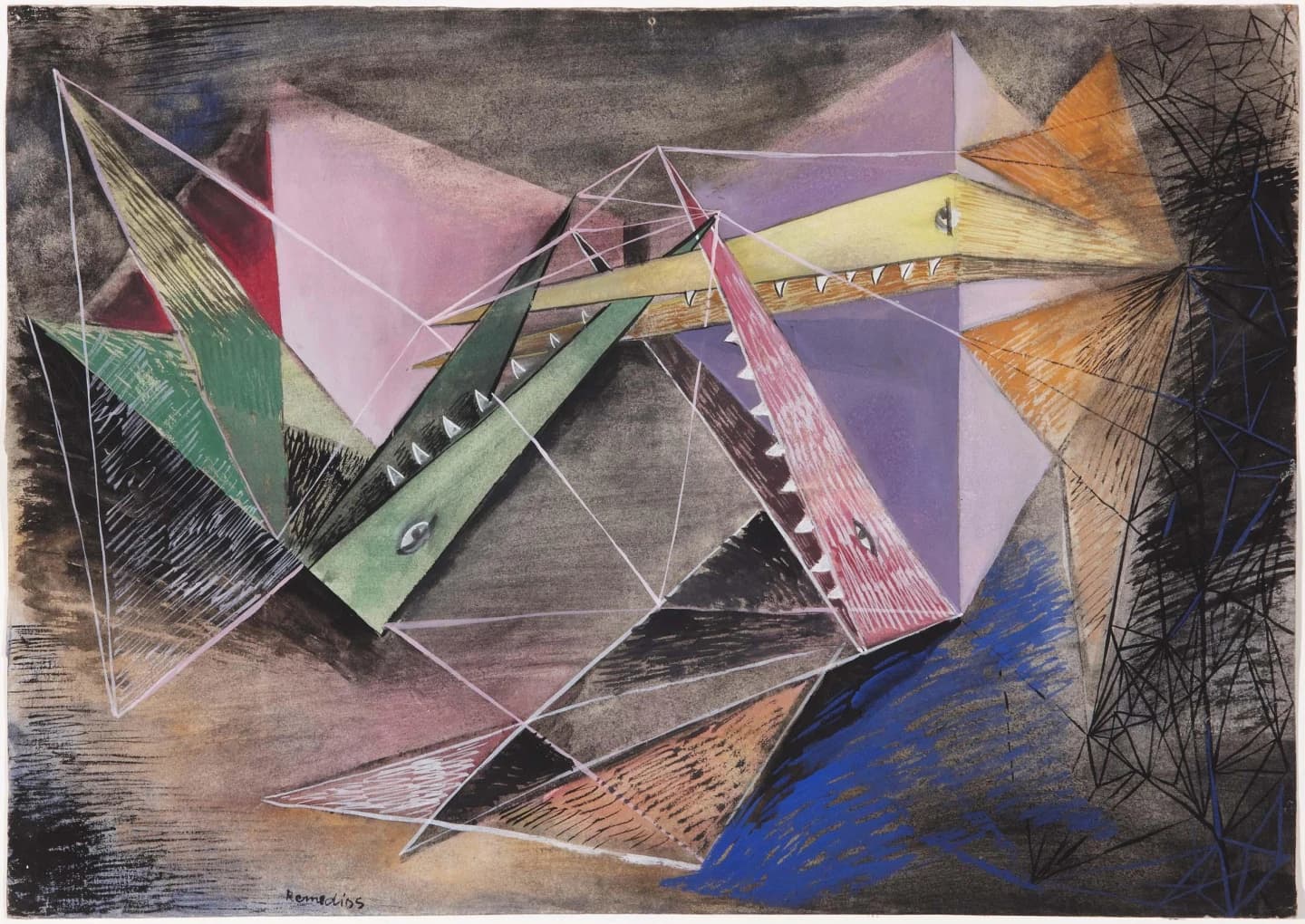
She was in her late twenties, and the Paris years put her work in front of the world for the first time. She showed in the international Surrealist exhibitions that the group mounted between 1936 and 1938 — in Paris, in London, in Tokyo — the travelling shows through which Breton exported the movement. The paintings and collages that survive from these years are not yet the Varo of the famous pictures; they are experiments with the group's methods. Four of them are in the Museo Nacional Centro de Arte Reina Sofía in Madrid today, Spain's national museum of modern art, including one with the French title La Faim — The Hunger — which belongs unmistakably to the hungry years it was painted in.

1940: the occupation, and the way out

The German army entered Paris in June 1940, and the Surrealists — foreign, left-wing, and in several cases Jewish — were among the most exposed people in the city. Péret, a communist and a former volunteer in Spain, was in immediate danger; Varo was a Spanish republican exile with no country to be sent back to, since Franco now governed Spain and returning would have meant prison. They escaped occupied France and crossed the Atlantic to Mexico City — the one capital that had opened its doors to refugees of the Spanish Republic, under its president Lázaro Cárdenas, and the city where a large part of the scattered Surrealist group washed up.

Leonora Carrington came out of the same collapse by another road. The English painter had been living in France with the German artist Max Ernst; when he was interned she fled to Spain, suffered a breakdown, was confined in a psychiatric clinic in Santander, got herself to Lisbon and married the Mexican diplomat Renato Leduc so that she could leave Europe. She reached Mexico within a year of Varo. The two women, who had known each other only slightly in Paris, became inseparable in exile: closest friends and collaborators, cooking, writing plays and joke recipes together, working a few streets apart for the next twenty years. It is one of the great working friendships in twentieth-century art, and it happened because a war scattered a Paris group across an ocean.

Mexico City: twenty years, and eight of them painting

The first Mexican decade was work for money. From 1942 to 1949 Varo drew advertising and illustration for Casa Bayer, the Mexican arm of the German pharmaceutical firm Bayer — precise, decorative little images of feverish patients and insects, made to sell medicine, and unmistakably by the same hand that would later paint alchemists. She also decorated furniture, restored ceramics and painted commissions. The Paris avant-gardist spent her thirties as a commercial artist.

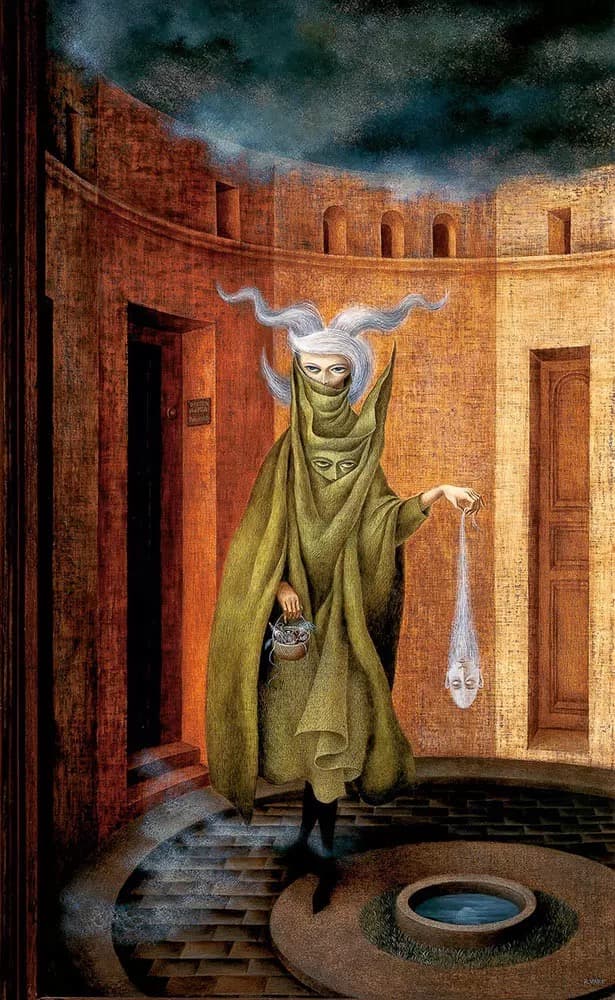
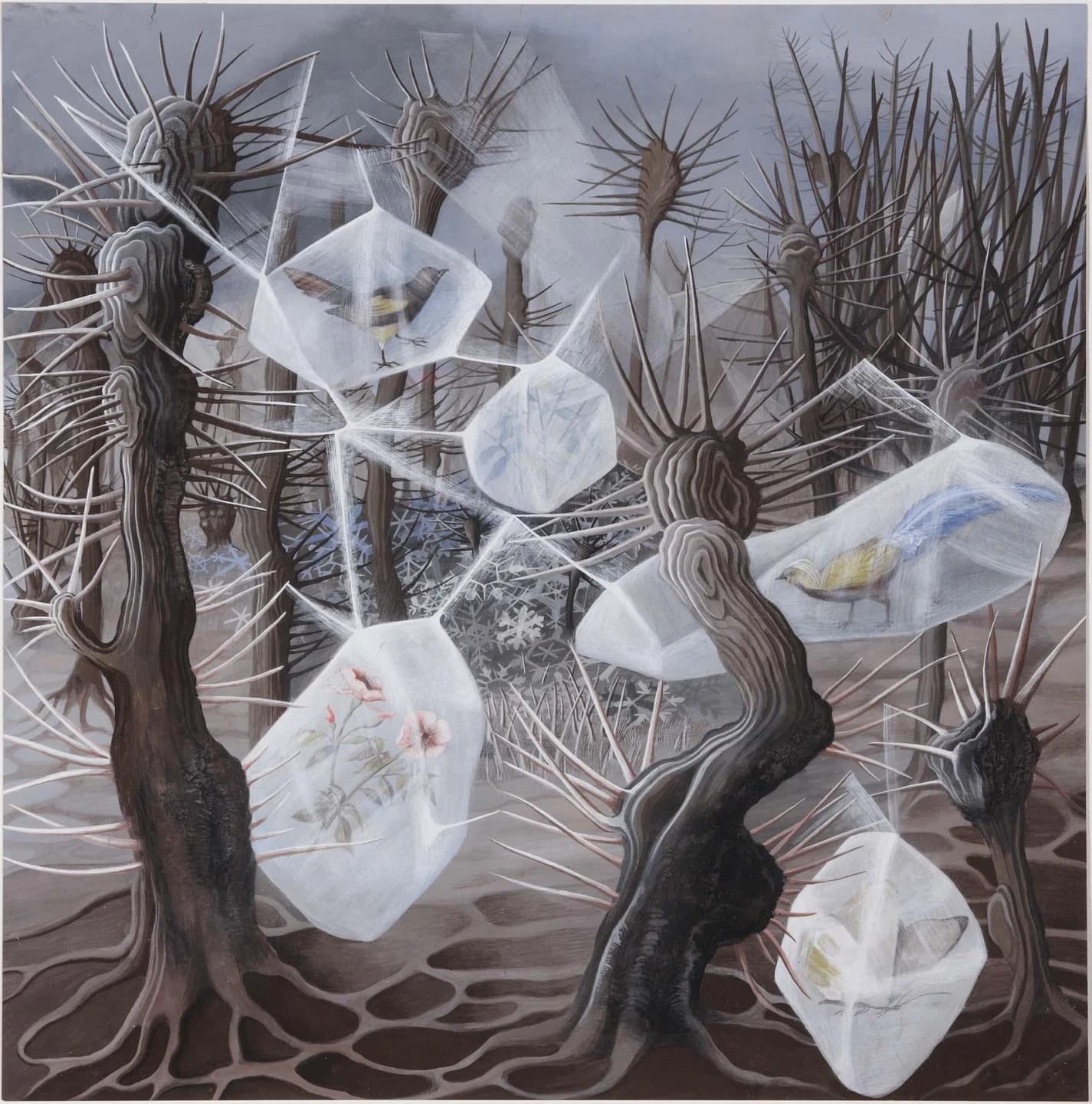
From the mid-1950s her circumstances steadied and she painted full time, and everything she is known for arrives in a rush: figures with heart-shaped faces and enormous eyes, travelling in vehicles that are part boat and part bird; towers, laboratories, spinning wheels and celestial machinery; a technique of thin translucent glazes of paint laid on masonite, a smooth pressed-board panel, so fine that it reads like the jewel-like Flemish panel paintings of the fifteenth century — applied to subjects out of alchemy, the old pursuit of transforming base matter into gold, along with mysticism and physics. A solo exhibition in Mexico City in 1956 made her, quite suddenly, one of the most admired painters in the country — a Spanish refugee who had become a Mexican artist.

Still Life Reviving

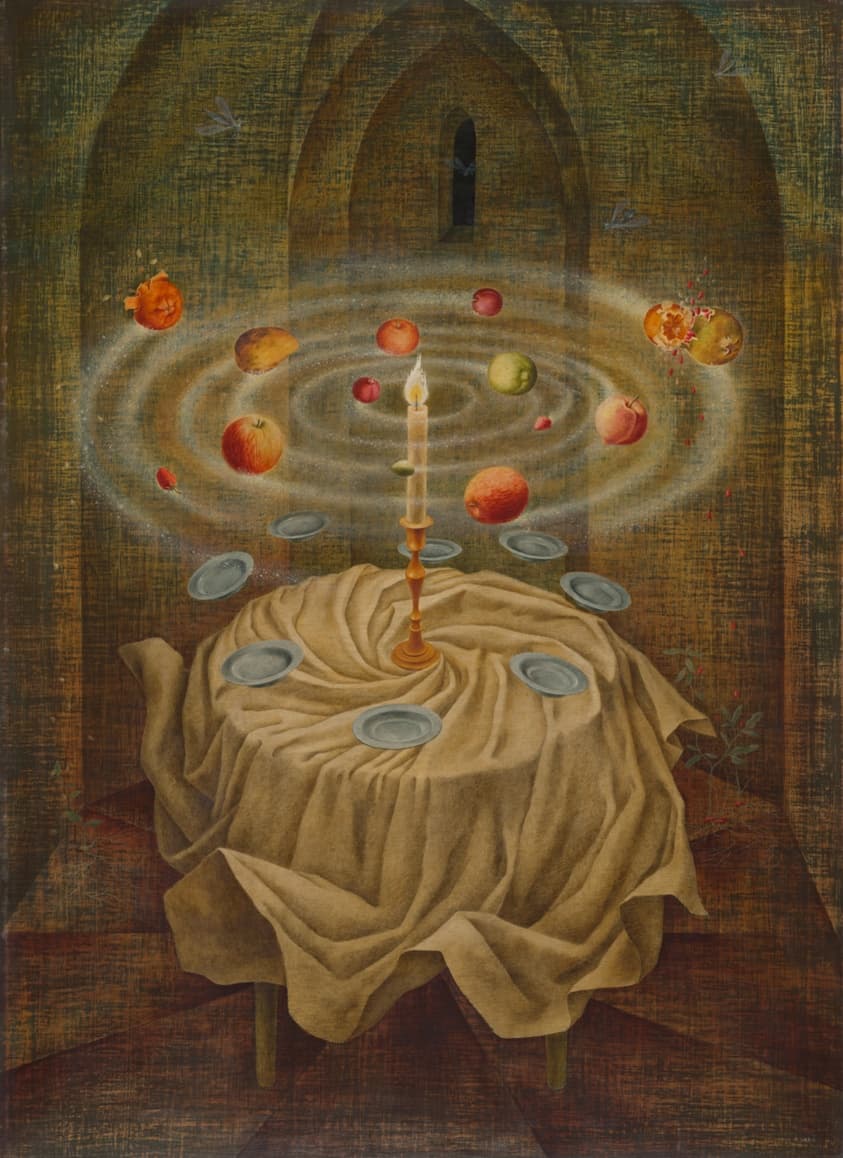
Her last painting, finished in 1963, is called Naturaleza muerta resucitando — Still Life Reviving. A table levitates in a Gothic tower; fruits orbit above it like planets and split open into seedlings; the tablecloth twists into a vortex. The Spanish for a still life is naturaleza muerta, literally dead nature, so the title says plainly what the picture does: the deadest of painting's genres, brought back to life by orbital mechanics. Varo died suddenly of a heart attack in Mexico City that same year, aged fifty-four, having made about four hundred works in a career that had really only begun eight years earlier.

Her reputation has grown steadily since — she is among the most loved painters in Mexico, and the Art Institute of Chicago gave her a full survey, Remedios Varo: Science Fictions, in 2023, more than twenty paintings shown with sketches and papers from her archive. The Art Institute bought Still Life Reviving the following year. Her earliest surviving work stayed in Europe, in Madrid; the work she is known for stayed in the country she had reached as a refugee.

Life events

  1. 1908

    Born at Anglès in Girona, Catalonia, to a Catholic mother and an engineer father.

    Remedios Varo — collection record, Museo Nacional Centro de Arte Reina Sofía; Remedios Varo — Gallery Wendi Norris (biography and chronology)

  2. 1930s

    Graduates from the Real Academia de Bellas Artes de San Fernando in Madrid, Spain's official art academy.

    Remedios Varo — Gallery Wendi Norris (biography and chronology)

  3. 1935–1936

    Moves to Barcelona and joins the Logicofobistas, a short-lived group of Catalan Surrealists.

    Remedios Varo — Gallery Wendi Norris (biography and chronology)

  4. 1936–1937

    The Spanish Civil War breaks out; she leaves Spain with the Surrealist poet Benjamin Péret and settles in Paris.

    Remedios Varo — Gallery Wendi Norris (biography and chronology)

  5. 1936–1938

    Shows in the international Surrealist exhibitions the group mounts in Paris, London and Tokyo, and in the Museum of Modern Art's Fantastic Art, Dada, Surrealism in New York.

    Remedios Varo — Gallery Wendi Norris (biography and chronology)

  6. 1940–1941

    With France under German occupation, Varo and Péret escape and cross the Atlantic to Mexico City.

    Remedios Varo — Gallery Wendi Norris (biography and chronology); Janet A. Kaplan, Unexpected Journeys: The Art and Life of Remedios Varo (1988)

  7. 1942–1949

    Earns her living drawing pharmaceutical advertising and illustration for Casa Bayer in Mexico City.

    Remedios Varo — Gallery Wendi Norris (biography and chronology)

  8. 1940s

    Becomes the closest friend and collaborator of Leonora Carrington, who has reached Mexico out of the same wreck of Surrealist Paris.

    Remedios Varo — Gallery Wendi Norris (biography and chronology)

  9. 1955

    Her circumstances steady and she begins to paint full time; the mature work — towers, machines, heart-faced travellers — dates from here.

    Remedios Varo — Gallery Wendi Norris (biography and chronology)

  10. 1956

    First major solo exhibition in Mexico City makes her reputation almost overnight.

    Remedios Varo — Gallery Wendi Norris (biography and chronology)

  11. 1963

    Dies in Mexico City at fifty-four, leaving about four hundred works. Her last painting is Still Life Reviving.

    Remedios Varo — collection record, Museo Nacional Centro de Arte Reina Sofía; Remedios Varo — Gallery Wendi Norris (biography and chronology); Remedios Varo: Science Fictions (2023) — Art Institute of Chicago exhibition and collection records, public API

  12. 2023

    The Art Institute of Chicago mounts Remedios Varo: Science Fictions, over twenty paintings with sketches and archive material.

    Remedios Varo: Science Fictions (2023) — Art Institute of Chicago exhibition and collection records, public API

People they knew

Documented connections — every one carries its source.

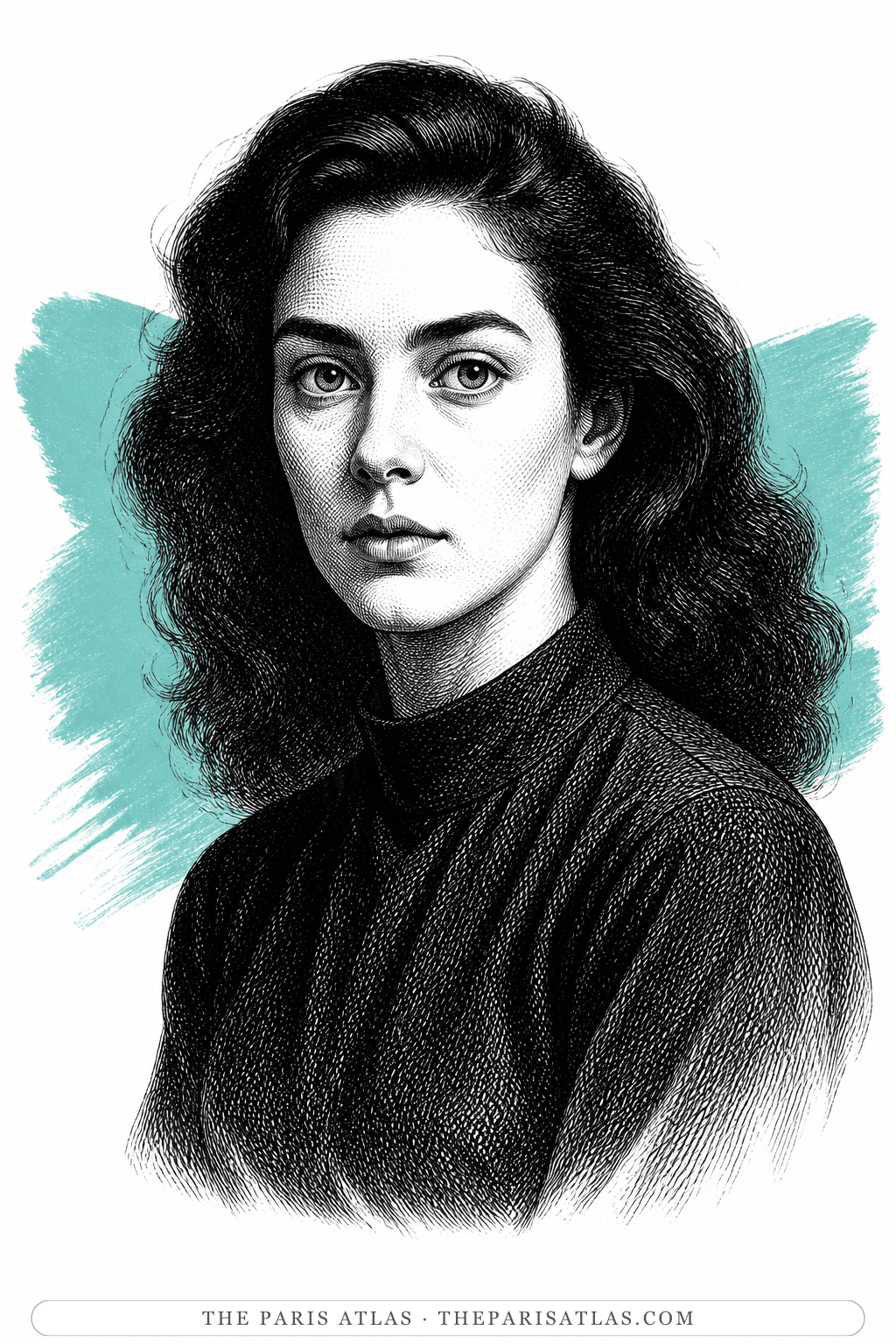
Illustrated portrait of Leonora Carrington

Leonora Carrington

  • Painter
  • Author

Collaborated with · 1942–1963

The gallery that represents Varo's estate calls Carrington her closest friend and collaborator. Both had been in Surrealist Paris in the late 1930s and both were driven out by the war to Mexico City, where the friendship became the central working relationship of each woman's life for twenty years — shared kitchens, joke recipes, plays written together, and two bodies of painting in constant conversation. It ended with Varo's death in 1963; Carrington outlived her by forty-eight years.

Remedios Varo — Gallery Wendi Norris (biography and chronology); Janet A. Kaplan, Unexpected Journeys: The Art and Life of Remedios Varo (1988)

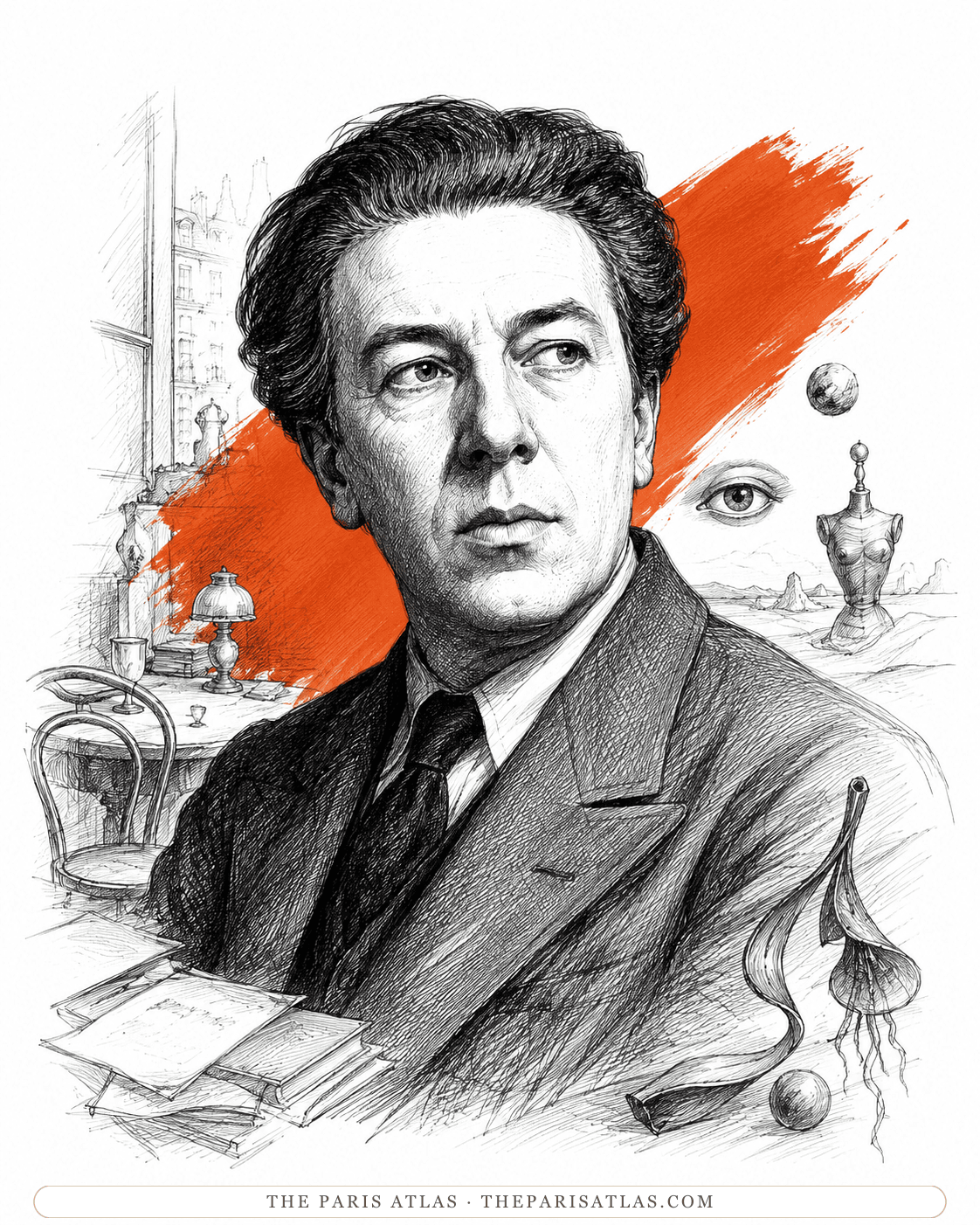
Illustrated portrait of André Breton

André Breton

  • Author
  • Poet
  • Critic
  • +1

Met · 1937

Varo reached Paris with Benjamin Peret, a founding member of Surrealism and Breton's closest ally in it, and worked inside the Paris group in the late 1930s, exhibiting in the international Surrealist exhibitions Breton's circle organised. A personal acquaintance follows almost inescapably from that position, but the sources consulted describe her membership of the circle rather than a documented meeting, so the edge is recorded as probable and inferred.

Remedios Varo — Gallery Wendi Norris (biography and chronology); Janet A. Kaplan, Unexpected Journeys: The Art and Life of Remedios Varo (1988)

Movements

The artistic and literary currents this life ran through.

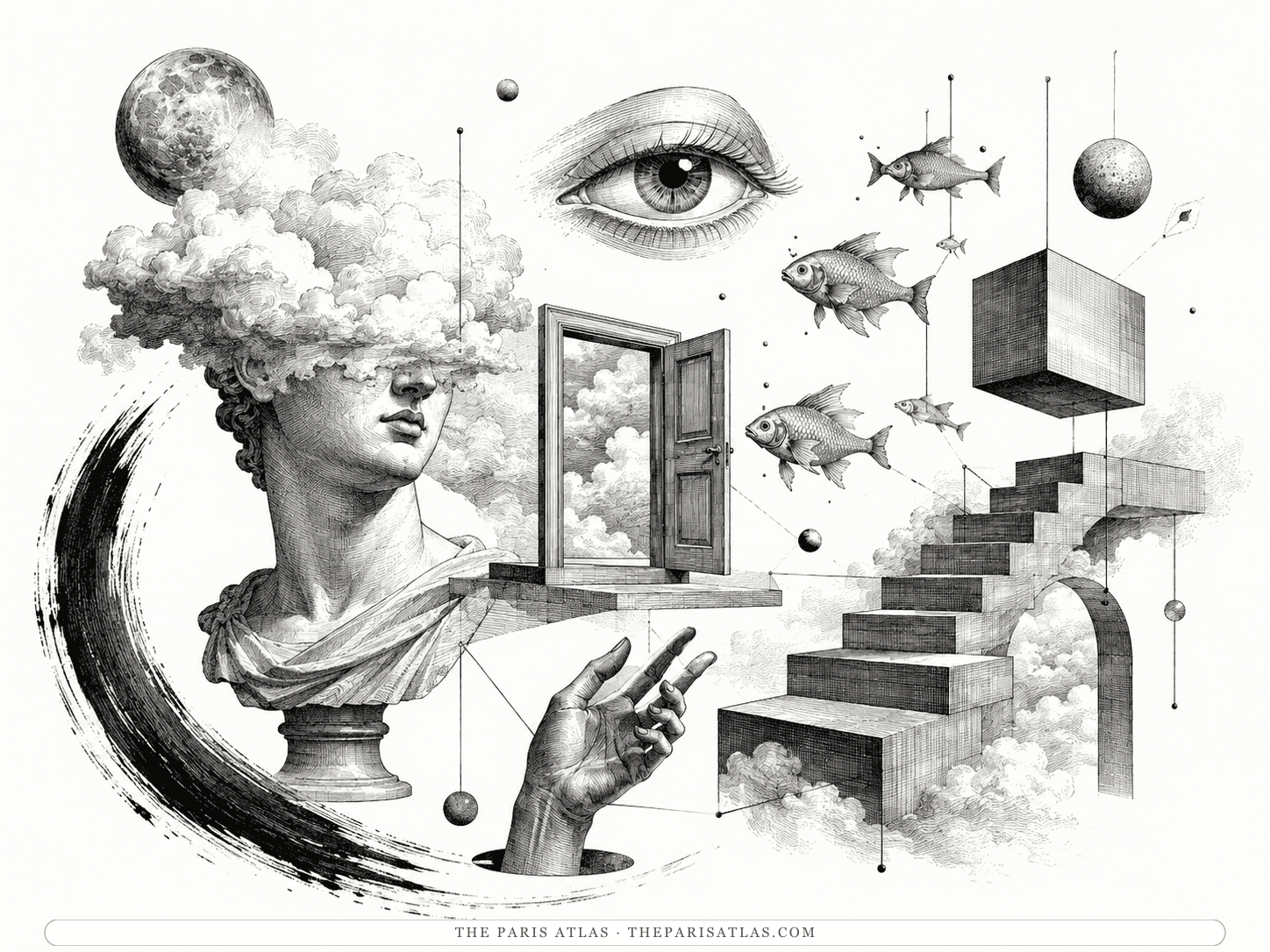
Pen-and-ink dream collage — a classical bust with clouds for eyes, a floating eye, a door opening onto sky, fish swimming through air, and an impossible staircase

Art & literary movement · 1924–1966

Surrealism

Varo joined the movement twice over: first in Barcelona with the Logicofobistas, then in Paris in the late 1930s as the partner of Benjamin Peret, one of Surrealism's founding members, showing in the international Surrealist exhibitions the group sent to Paris, London and Tokyo between 1936 and 1938. No end year: the mature Mexican paintings of 1955 to 1963 apply the movement's dream logic with a precision the Paris group never asked for, and the Reina Sofia still files her among the Surrealists.

Remedios Varo — Gallery Wendi Norris (biography and chronology); Remedios Varo — collection record, Museo Nacional Centro de Arte Reina Sofía

Questions about Remedios Varo

Who was Remedios Varo?

A Spanish painter, born in Catalonia in 1908, who joined the Surrealist circle in Paris in the late 1930s with the poet Benjamin Péret, escaped the German occupation of France for Mexico City, and there painted the meticulous dreamworlds she is famous for — solitary figures in towers, machines that run on music, alchemical laboratories. She died in Mexico City in 1963, aged fifty-four.

What did Remedios Varo do in Paris?

She lived inside the Surrealist group. Having left Spain with Benjamin Péret — a French poet who was one of Surrealism's founders and André Breton's closest ally — she spent the late 1930s in Paris among Breton's circle and showed in the international Surrealist exhibitions the group sent to Paris, London and Tokyo between 1936 and 1938. It was her apprenticeship in the movement's methods; the paintings she is now known for came fifteen years later, in Mexico.

What is Surrealism, in plain terms?

A movement founded in Paris in 1924 by the poet André Breton, which held that the truest images come from the unconscious rather than from observing the world — so its writers and painters worked from dreams, chance, and automatic techniques that let the hand run without supervision. It was a group as much as a style: Breton recruited members, issued manifestos and expelled people. Varo joined it in Paris in the 1930s and kept using its methods for the rest of her life, long after the group had scattered.

Why did Remedios Varo move to Mexico?

She had nowhere else to go. As a Spanish republican exile she could not return to Franco's Spain, and when Germany occupied France in 1940 her position in Paris — a foreign exile living with a communist poet — became untenable. She and Péret escaped and crossed to Mexico, which had opened its doors to refugees of the Spanish Republic. She spent the remaining twenty-odd years of her life there and made all her best-known work in Mexico City.

Were Remedios Varo and Leonora Carrington friends?

They were each other's closest friend for twenty years. Both had been in Surrealist Paris in the late 1930s, both were driven out by the war, and both landed in Mexico City in the early 1940s, where the friendship became the central relationship of each woman's working life — shared cooking and shared jokes, plays and stories written together, and two bodies of painting that talk to each other constantly without ever looking alike.

What is Remedios Varo's most famous painting?

Bordando el manto terrestre (Embroidering the Earth's Mantle, 1961) is the most reproduced — girls in a tower embroidering a cloth that spills out of the windows and becomes the world. Her final painting, Still Life Reviving (1963), in which a table levitates and orbiting fruits split open into seedlings, is at the Art Institute of Chicago. Four early works from her European years are in the Museo Nacional Centro de Arte Reina Sofía in Madrid, Spain's national museum of modern art, and the largest holdings are in Mexico City.

Was Remedios Varo a Surrealist?

Yes, and she stayed one after the label stopped mattering. She joined the movement in Paris in the 1930s, exhibited in its international shows, and lived with one of its founders. But the paintings that made her famous were made in Mexico in the late 1950s, decades after the Paris group had broken up, and they add something the movement had not much wanted: exactness. She painted her dreams with the technique of a fifteenth-century Flemish master and the seriousness of an engineer's daughter.

Sourced claims

Every connection the graph holds for Remedios, with the evidence behind it.

Associated with · 1936

Surrealism

Varo joined the movement twice over: first in Barcelona with the Logicofobistas, then in Paris in the late 1930s as the partner of Benjamin Peret, one of Surrealism's founding members, showing in the international Surrealist exhibitions the group sent to Paris, London and Tokyo between 1936 and 1938. No end year: the mature Mexican paintings of 1955 to 1963 apply the movement's dream logic with a precision the Paris group never asked for, and the Reina Sofia still files her among the Surrealists.

Remedios Varo — Gallery Wendi Norris (biography and chronology); Remedios Varo — collection record, Museo Nacional Centro de Arte Reina Sofía

Collaborated with · 1942–1963

Leonora Carrington

The gallery that represents Varo's estate calls Carrington her closest friend and collaborator. Both had been in Surrealist Paris in the late 1930s and both were driven out by the war to Mexico City, where the friendship became the central working relationship of each woman's life for twenty years — shared kitchens, joke recipes, plays written together, and two bodies of painting in constant conversation. It ended with Varo's death in 1963; Carrington outlived her by forty-eight years.

Remedios Varo — Gallery Wendi Norris (biography and chronology); Janet A. Kaplan, Unexpected Journeys: The Art and Life of Remedios Varo (1988)

Met · 1937

André Breton

Varo reached Paris with Benjamin Peret, a founding member of Surrealism and Breton's closest ally in it, and worked inside the Paris group in the late 1930s, exhibiting in the international Surrealist exhibitions Breton's circle organised. A personal acquaintance follows almost inescapably from that position, but the sources consulted describe her membership of the circle rather than a documented meeting, so the edge is recorded as probable and inferred.

Remedios Varo — Gallery Wendi Norris (biography and chronology); Janet A. Kaplan, Unexpected Journeys: The Art and Life of Remedios Varo (1988)

References

References

The sources below include biographies, scholarly essays, interviews, and primary materials that informed this page. They reflect both the historical record and ongoing critical conversations about Remedios Varo and their work.

  1. 1Remedios Varo — Gallery Wendi Norris (biography and chronology)

    Gallery Wendi Norris, San Francisco

    Biography and chronology from the gallery that represents her estate: Anglès, San Fernando, the Logicofobistas, Péret, the Paris exhibitions, Mexico, Casa Bayer, the 1956 solo show.

    View source
  2. 2Remedios Varo — collection record, Museo Nacional Centro de Arte Reina Sofía

    Museo Nacional Centro de Arte Reina Sofía, Madrid

    Collection record for the four early works held in Madrid, and the museum's birth and death data.

    View source
  1. 3Remedios Varo: Science Fictions (2023) — Art Institute of Chicago exhibition and collection records, public API

    Art Institute of Chicago

    Art Institute of Chicago records for the 2023 survey exhibition and for Still Life Reviving, her final painting.

    View source
  2. 4Unexpected Journeys: The Art and Life of Remedios Varo

    Abbeville Press, 1988

    The standard biography, listed here as further reading; the fullest account of the Paris years and the escape.

i
Why these sources are here

These references anchor the page in the documented record and in the scholarly conversations around Remedios Varo. Every claim on this page traces back to one or more of the works listed here.

Explore more resources