Woman Leaving the Psychoanalyst
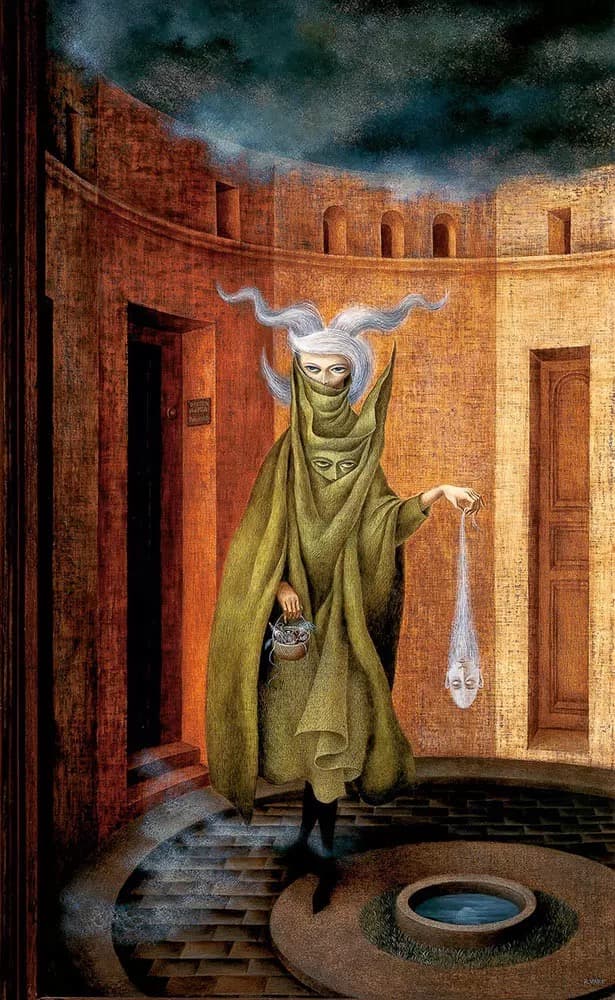
A woman in a heavy olive cloak crosses a circular courtyard, holding a man's head by a thread over the mouth of a well. Remedios Varo painted it in 1960, five years into the only stretch of her life when she painted full time. It belongs to the Museo de Arte Moderno in Mexico City, which holds it through the donation of her work by Walter Gruen and Ana Alexandra Varsoviano.
- 1960
- Óleo sobre tela — oil on canvas
- Museo de Arte ModernoMexico City, Mexico
About Remedios Varo
What the painting shows
A woman walks out of a doorway into a round courtyard walled in ochre masonry, with a row of shallow arched niches along the top and a grey sky above. She is wrapped from head to foot in a stiff olive-green cloak. Her white hair rises from her head in three curling sweeps, and her face is visible only from the eyes up; the cloth covers her from the bridge of the nose down.
A second face looks out of the cloak at her chest — the same heavy-lidded eyes, the same covered lower face. Her right hand comes out of the cloak holding a small round-bellied basket by a wire handle, with pale objects inside it and fine grey threads spilling out below.
Her left hand is extended, fingers down, and from it hangs a long tapering white veil. At the bottom of the veil is a man's head, upside down, pale as smoke, its eyes shut and a small pointed beard at what is now its top. She is holding it out over a low circular wellhead set in the paving, ringed by a band of short dark grass, with flat blue-grey water inside. The floor is laid in fine bricks that run in curved courses around the well.
What the museum reads in it
The Museo de Arte Moderno describes the scene as a dream of diffuse light. A woman has just come out of a psychoanalytic consulting room. She is frozen in a stealthy and elegant movement, about to drop the ghostly head of a man into the well. The museum calls the contents of the basket psychological waste, and lists them as symbolic objects: a clock, a pair of spectacles, a bottle of elixir, a key.
The museum reads the mask at her neck as a version of her other self. And it reads the plaque beside the consulting-room door: the lettering says Doctor FJA, and the museum takes the three letters as the initials of the surnames of Sigmund Freud, Carl Gustav Jung and Alfred Adler. The plaque is painted at a few millimetres across, and the lettering cannot be read at the resolution the museum publishes.
The museum's full title for the picture adds a parenthesis: Podría ser Juliana — it could be Juliana.
1960
Remedios Varo painted it in 1960. She had reached Mexico City in 1941 as a refugee twice over, from Franco's Spain and then from occupied France, and had spent the 1940s drawing pharmaceutical advertising for Casa Bayer. She began painting full time in about 1955, and a solo exhibition in Mexico City in 1956 made her reputation quickly. She had three years to live when she made this.
Leonora Carrington, the English painter, got out of the same war by another road. The two were close friends in Mexico for the rest of Remedios Varo's life. In 1957 the photographer Kati Horna took her portrait in a mask that Leonora Carrington had made for her. The Louisiana Museum of Modern Art shows that photograph in its 2026 retrospective, credited to the Horna archive in Mexico City.
The legacy at the Museo de Arte Moderno
The museum's relationship with Remedios Varo began in 1971, when it gave her the first solo exhibition she had there, eight years after her death. Walter Gruen and Ana Alexandra Varsoviano afterwards placed the largest holding of her work, oils and drawings together, in the museum's care. The Art Institute of Chicago's provenance for another painting gives Walter Gruen's dates as 1914 to 2008 and records that her work passed to him on her death.
On 26 December 2001 the Mexican state declared the thirty-eight works of that legacy a Monumento Artístico — a designation under heritage law, applied to bind the objects themselves. One more painting was added afterwards, bringing the legacy to thirty-nine. The museum's featured-works page dates the donation of this painting to 2002. In 2018 her personal archive followed: more than a thousand items, including sketches, preparatory drawings, letters, photographs, objects and her own library.
The museum names her as an exceptional case among the artists whose work it holds under that designation. The others it lists are Diego Rivera, José Clemente Orozco, David Alfaro Siqueiros, Gerardo Murillo, Saturnino Herrán, Frida Kahlo and María Izquierdo, all of them Mexican. Remedios Varo reached the country at thirty-three, as a refugee.
What the museum does not publish
The Museo de Arte Moderno runs no online collection catalogue. Of the thirty-nine works by Remedios Varo in its care it publishes exactly one in detail — this painting, on its featured-works page, with the artist, title, date and technique and nothing else.
No accession number and no dimensions are published for it, and none is invented here. Nor are they published for any of the others, so the works most often named as the museum's in the secondary literature cannot be checked against the institution at all.
Close reading
Reading the work, detail by detail
Remedios Varo painted a woman crossing a round courtyard with a man's head on a thread and a basket of small objects. The Museo de Arte Moderno in Mexico City publishes the picture and its own reading of it. The close views work through what she is carrying.
1.The hair rises in three sweeps
White hair leaves the head in three separate curling sweeps, two rising like horns and a third falling at the left. Below them the face shows only from the bridge of the nose up: a high forehead, level brows and heavy-lidded eyes turned down and to her right. The olive cloth covers everything beneath.
2.A second face on the cloak
At chest height a second face looks out of the cloak itself, green rather than pale, with the same heavy-lidded eyes and the same covered lower half. It is worked into the fall of the cloth rather than hung on it. The Museo de Arte Moderno reads it as a version of her other self.
3.The basket and its threads
The right hand comes out of a slit in the cloak and holds a small round-bellied basket by a thin wire handle, gripped between finger and thumb. Inside, four or five pale objects lie tangled together, too small to name at the resolution the museum publishes. Fine grey threads spill over the rim and hang below. The museum lists the contents as a clock, spectacles, a bottle of elixir and a key.
4.The other hand lets out a veil
The left hand comes clear of the cloak and is held out with the fingers pointing down and slightly curled. From between them a long white veil tapers away downward, narrow at the hand and widening as it falls. Nothing ties it to the fingers.
5.A man's head at the end of the veil
The veil ends in a man's head, hanging inverted. The eyes are shut, the brows and cheekbones modelled in grey, and a small pointed beard sits at what is now the top. The head is as pale and as translucent as the veil, and the ochre wall reads through it.
6.The wellhead in the paving
The well is a low circular kerb of the same ochre masonry as the walls, rising a few courses above the floor. A band of short dark green grass rings it on the outside. The water inside is a flat blue-grey disc with one small pale form breaking the surface. The brick paving runs in curved courses around it.
7.The plaque beside the door
A small dark plaque is fixed to the jamb to the right of the black doorway, carrying three short lines of lettering. A round door knob sits below and to its left. The lettering is painted at a few millimetres across and cannot be read at the resolution the museum publishes; the museum's own notice gives it as Doctor FJA.
8.The courtyard wall curves away
The wall bends away from the viewer, and a row of shallow arched niches runs along its top, each one narrowing as the curve turns. The whole surface carries a fine crackle, painted rather than a condition of the paint. Above it the sky is flat grey.
Timeline
1941
Remedios Varo and Benjamin Péret reach Mexico City after escaping occupied France.
1955
She begins to paint full time, after thirteen years of commercial work.
1957
Kati Horna photographs her in a mask designed by Leonora Carrington.
1960
Paints Mujer saliendo del psicoanalista in oil on canvas.
1963
She dies in Mexico City at fifty-four.
1971
The Museo de Arte Moderno gives her the first solo exhibition she has at that museum.
2001
On 26 December the thirty-eight works of the Gruen and Varsoviano legacy are declared a Monumento Artístico under Mexican heritage law.
2002
The museum's featured-works page dates the donation of this painting to this year. A further painting later brings the legacy to thirty-nine.
2018
Her personal archive enters the museum — more than a thousand items, including her library.
Where to see it
Museo de Arte Moderno
Mexico City, Mexico
A public viewing address has not yet been confirmed for this holding.
The museum publishes no accession number, no dimensions and no permanent gallery location for the painting, and runs no online collection catalogue. Check with the museum before travelling.
Frequently asked questions
Where is Mujer saliendo del psicoanalista?
At the Museo de Arte Moderno in Mexico City. The museum holds it through the donation of Remedios Varo's work by Walter Gruen and Ana Alexandra Varsoviano, which its featured-works page dates to 2002. The museum publishes no accession number for it.
What is the woman dropping down the well?
A man's head, upside down and pale as smoke, with its eyes shut and a small pointed beard. It hangs from a long tapering white veil held in her left hand. The Museo de Arte Moderno describes her as about to deposit the ghostly head of a man into the well.
What is in the basket?
The Museo de Arte Moderno calls the contents psychological waste and lists them as a clock, a pair of spectacles, a bottle of elixir and a key. In the painting they read as small pale objects tangled together, with fine grey threads spilling out below the basket.
What does the doorplate say?
Doctor FJA, according to the Museo de Arte Moderno, which takes the three letters as the initials of the surnames of Sigmund Freud, Carl Gustav Jung and Alfred Adler. The plaque is painted at a few millimetres across and the lettering cannot be read at the resolution the museum publishes.
How many Remedios Varo works does the Museo de Arte Moderno have?
Thirty-nine. Thirty-eight were declared a Monumento Artístico under Mexican heritage law on 26 December 2001, and one more painting was added afterwards. Her personal archive, of more than a thousand items, followed in 2018. The museum publishes a catalogue entry for only one of the works.
What is a Monumento Artístico?
A designation under Mexican heritage law, applied here to the objects themselves rather than to reproductions of them. It sits over and above copyright, which in Mexico runs for the author's life plus a hundred years and so protects Remedios Varo's work until 2063.
Why is a Spanish painter treated as a Mexican artist?
Because she made almost all of her work in Mexico and the Mexican state has designated it. The Museo de Arte Moderno names her an exceptional case among the artists whose work it holds under that designation, the rest of whom were born in Mexico. She reached the country as a refugee in 1941 and stayed for the rest of her life.
More by Remedios Varo
If you like Remedios Varo
Explore painters from the same movements and circles.
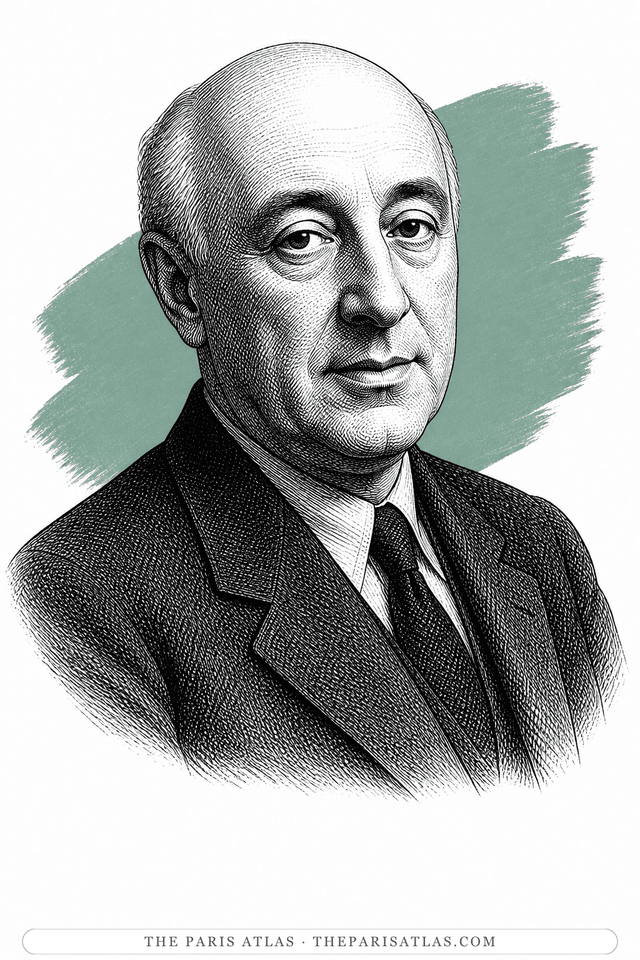
Jean Arp
Strasbourg-born sculptor and poet — Hans in German, Jean in French, both all his life — who co-founded Dada at the Cabaret Voltaire in 1916, composed collages by dropping torn paper 'according to the laws of chance', and settled at Meudon outside Paris in a house his wife Sophie Taeuber-Arp designed.
View artist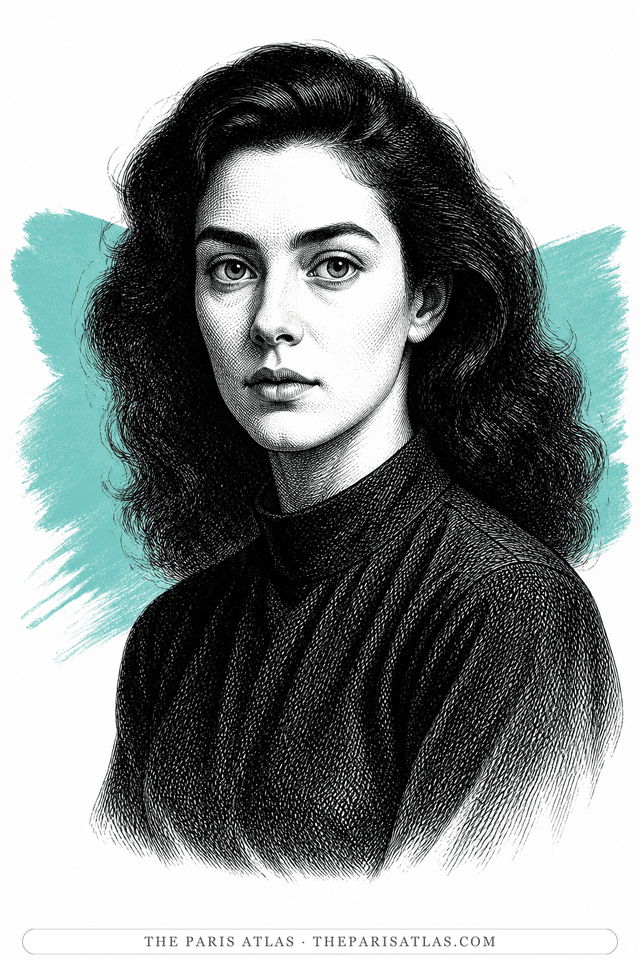
Leonora Carrington
English painter and writer who fled a debutante's future for Surrealist Paris at twenty, survived the war's wreckage of that life — internment for her lover Max Ernst, an asylum in Spain for her — and rebuilt herself in Mexico into one of the century's great painters of the uncanny.
View artist
Henri Cartier-Bresson
French photographer who turned a pocket-sized 35mm camera into an instrument of split-second composition — the idea the world knows as 'the decisive moment'. He trained as a painter, was taken prisoner in 1940 and escaped on his third try, photographed the Liberation of Paris in August 1944, co-founded the photographer-owned agency Magnum Photos in 1947, gave up reporting for drawing in the 1970s, and left Paris a foundation in the Marais that deliberately hangs no permanent display of his own pictures.
View artist
References
The sources below include collection records, catalogues, scholarly research, and primary materials that informed this page. They document Woman Leaving the Psychoanalyst, its making, and its place in cultural history.


1Obras destacadas — featured works of the collection, Museo de Arte Moderno
WebsiteMuseo de Arte Moderno, Mexico CityUsed forThe museum's own entry for the painting: title, date, technique, its reading of the basket, the mask and the doorplate, and the date of the donation.
2Colecciones: Acervo Remedios Varo — the Gruen and Varsoviano legacy, Museo de Arte Moderno
WebsiteMuseo de Arte Moderno, Mexico CityUsed forThe museum's collection page: the 1971 solo exhibition, the Gruen and Varsoviano legacy, the Monumento Artístico declaration of 26 December 2001, the thirty-nine works and the 2018 archive.
3Remedios Varo: A Retrospective, 18 September 2026 – 10 January 2027 — exhibition record, Louisiana Museum of Modern Art
WebsiteLouisiana Museum of Modern Art, HumlebækUsed forKati Horna's 1957 photograph of Remedios Varo in a mask designed by Leonora Carrington, shown in the 2026 retrospective and credited to the Horna archive.
4Remedios Varo — Gallery Wendi Norris (biography and chronology)
WebsiteGallery Wendi Norris, San FranciscoUsed forChronology for the Casa Bayer years, the move to full-time painting and the 1956 solo exhibition.
5Still Life Reviving (Naturaleza muerta resucitando), 1963 — collection record, Art Institute of Chicago
WebsiteArt Institute of ChicagoUsed forProvenance for her last painting, giving Walter Gruen's dates and recording that her work passed to him on her death.
These references provide the documented foundation for this work's history and interpretation. Claim-level citations remain attached to the specific claims they support.
 Explore more resources