An artistic and literary revolt that challenged accepted ideas about art, language, and modern society through absurdity, found objects, chance, and performance.
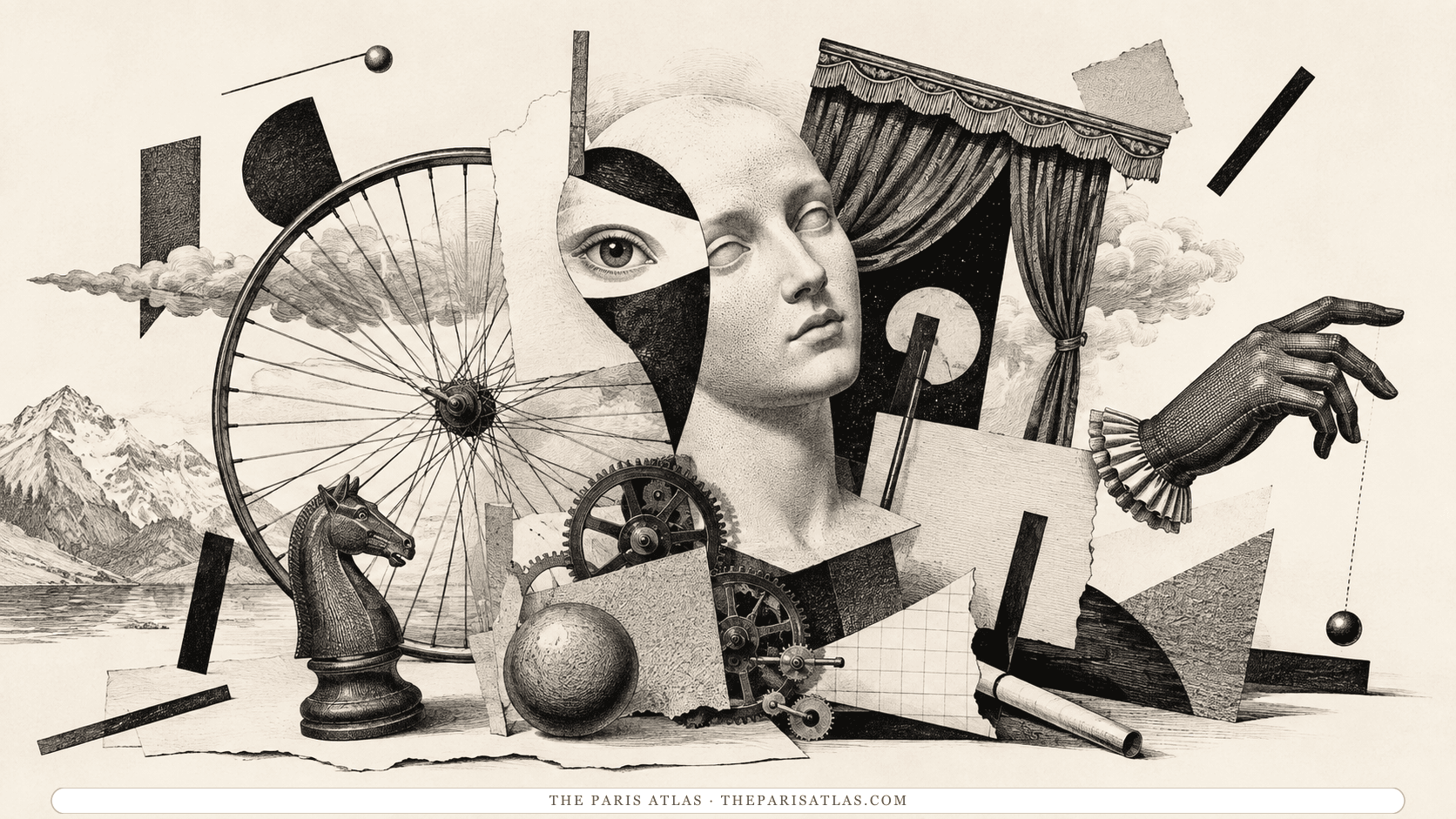
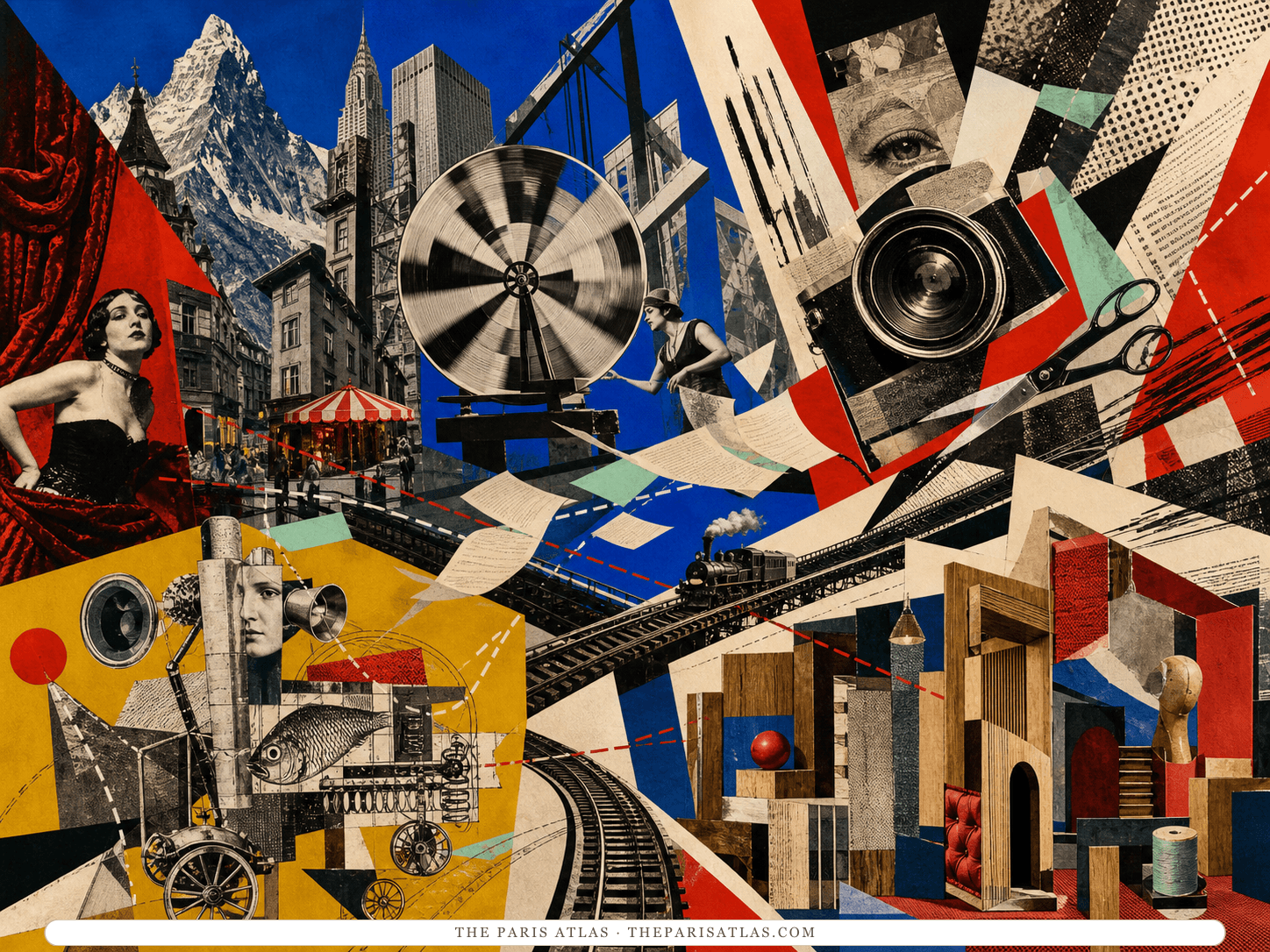
Editorial illustrationChance, machinery, theatre and the ordinary object tipped off balance — Dada's anti-art vocabulary assembled as a single impossible stage.
What was Dada?
Dada, also called Dadaism, was an international artistic and literary movement that emerged during the First World War. Its participants questioned the values of a society that claimed to represent civilization and progress while conducting a devastating industrial war. Working across poetry, performance, painting, photography, sculpture, and printed publications, they challenged not only what art should look like but also how it should be made, who could make it, and why particular objects were accepted as art. The movement took shape in Zurich in 1916, while related experiments were developing independently in New York. It subsequently became associated with important groups in Berlin, Cologne, Hanover, and Paris.[1]
Unlike movements defined by a recognizable painting style, Dada had no single visual language. A carefully arranged abstract collage, a poem made from invented sounds, a political photomontage, and a manufactured object presented as sculpture could all belong to its activities. What connected these different forms was a willingness to challenge established artistic conventions and to experiment with materials and experiences that traditional fine art often excluded. Dada was therefore both a movement that produced artworks and a sustained argument about what art could be.[2]
Why Dada emerged during the First World War
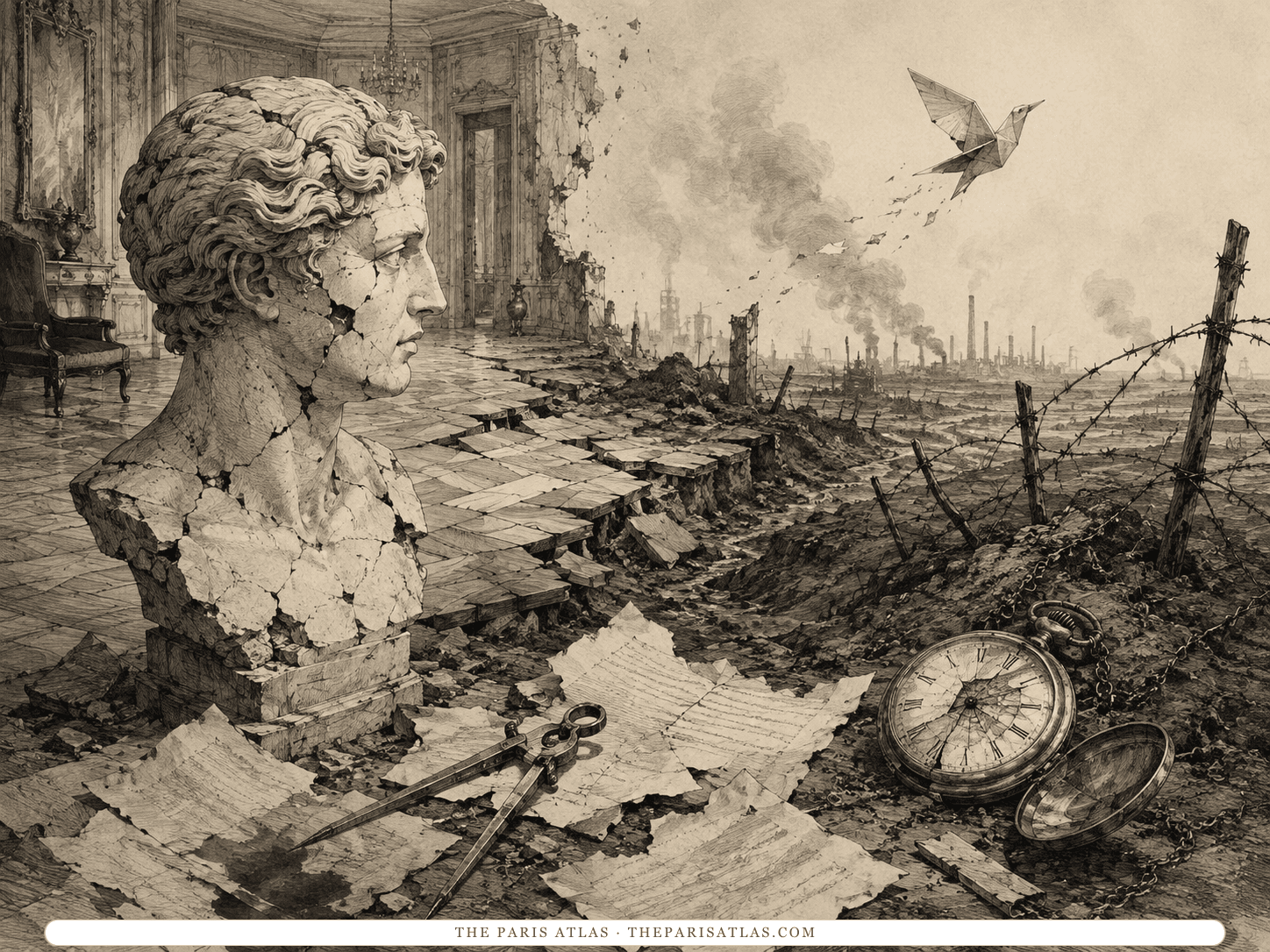
Editorial illustrationThe promise of reason and progress fractures into industrial war — the crisis to which Dada answered with refusal, absurdity, and disorder.
The First World War was central to Dada’s emergence, particularly in Europe. For many of its participants, the conflict exposed a disturbing contradiction: societies that celebrated education, technological achievement, and national culture were also capable of organized mass destruction. Dadaists questioned the authority of the political leaders, institutions, and cultural traditions that had supported the war. Their use of absurdity was not simply an escape from serious events. It could also be a response to a world whose official explanations no longer seemed credible. Humor, disorder, and deliberately unreasonable behavior became ways of resisting the language of patriotic certainty and respectable authority.[3]
Dada nevertheless did not emerge without artistic precedents. Its participants drew on experiments already underway in Cubism, Futurism, Expressionism, cabaret, and modern poetry. The early Zurich programs included work by artists and writers associated with several of these tendencies. What developed was not an immediate rejection of everything that had come before, but a setting in which existing experiments could be combined, exaggerated, and redirected. The mixture of readings, music, images, and theatrical actions also weakened the conventional boundaries separating the arts.[2]
Zurich and the Cabaret Voltaire
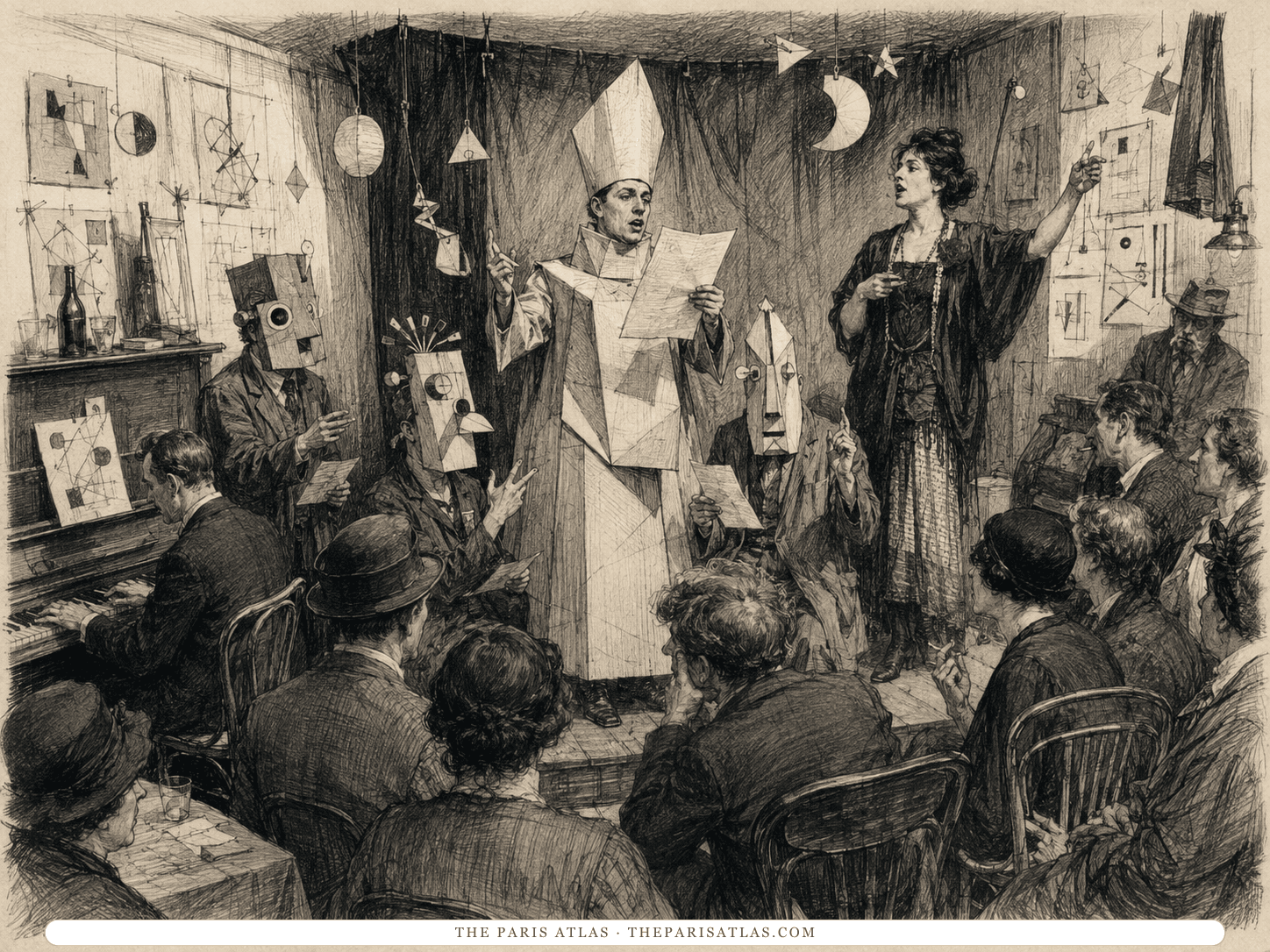
Editorial illustrationAt the Cabaret Voltaire, sound poetry, masks, music, costume, and simultaneous voices turned a cramped room into Dada's first laboratory.
Dada’s best-known founding event was the opening of the Cabaret Voltaire on 5 February 1916, at Spiegelgasse 1 in Zurich. Its founders were the German writer and performer Hugo Ball and the poet, singer, and performer Emmy Hennings. Neutral Switzerland had become a refuge for people displaced by the war, and the cabaret brought together an unusually international circle. Those associated with its early activities included the Romanian poet Tristan Tzara, the Romanian artist Marcel Janco, the Alsatian artist Hans Arp, also known as Jean Arp, and the German writer Richard Huelsenbeck. The opening provides a useful starting date, although Dada’s identity and program developed through the activities that followed.[4]
Hennings was essential to the cabaret’s existence and should not be treated simply as Ball’s companion. An experienced performer, she helped sustain its nightly programs through songs, poetry, and stage appearances. She also produced small collections of her poems for sale at the venue. Her writing did not always resemble the sound experiments most closely associated with Dada, which is a reminder that the cabaret accommodated different kinds of work rather than enforcing a single definition of acceptable experimentation.[5]
One innovation was the simultaneous poem, in which several speakers performed different texts at the same time. In L’amiral cherche une maison à louer—usually translated as The Admiral Seeks a House to Rent—different languages competed for the listener’s attention. Rather than delivering one clearly ordered message, the performance made language into overlapping sound. Such works challenged the expectation that a poem should offer a single intelligible voice, and they made the act of listening as important as the printed text.[6]
Ball also developed poems built from invented syllables, while Janco’s masks helped transform performers into unfamiliar figures. These activities placed the voice, costume, gesture, and physical presence of the performer at the center of the work. The original Cabaret Voltaire lasted only about five months, but the collaborations it generated continued through publications, performances, and exhibitions. Its significance lay less in the longevity of the venue than in the experimental community formed around it.[7]
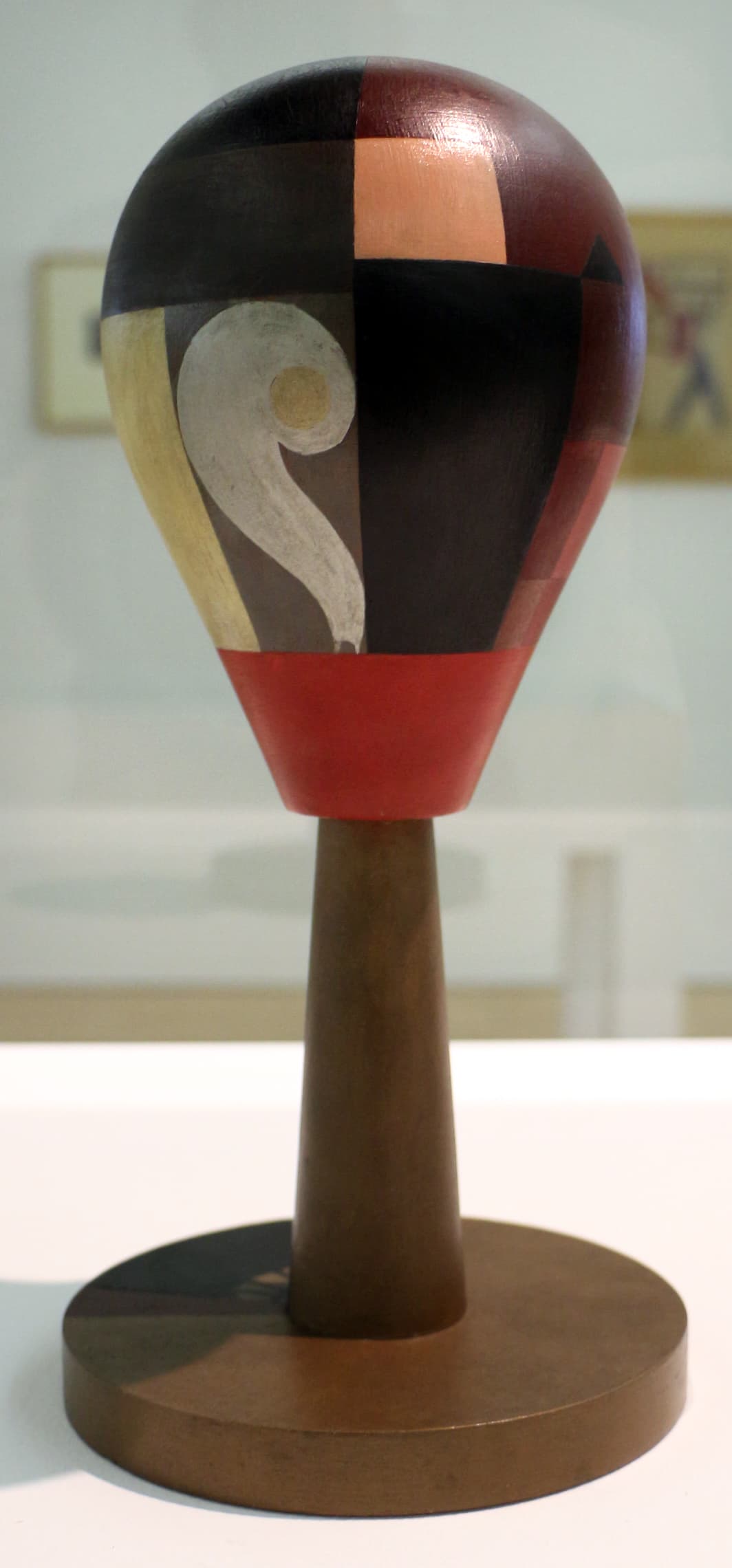
Sophie Taeuber-Arp brought another important approach to Zurich Dada through dance, textiles, design, and abstraction. Her work demonstrates why Dada should not be reduced to visual chaos or destruction. In Dada Head of 1920, a turned wooden form becomes a head through precisely arranged shapes, colors, and lettering. Such objects challenged the hierarchy that placed painting and sculpture above decorative or applied arts, while showing that carefully constructed form could be as unconventional as deliberate disorder.[8]
What does the word “Dada” mean?
The origin of the name is disputed. In French, dada can mean a hobbyhorse; in Romanian, da means “yes,” making the repeated sound suggest “yes, yes.” The word also resembles an infant’s early speech. These associations suited a movement interested in language that was playful, unstable, or resistant to a single authoritative interpretation. Accounts of how the name was selected differ, including stories involving a chance discovery in a dictionary. Participants did not leave behind one uncontested account that can safely be treated as definitive.[9]
The uncertainty was itself useful. In his 1916 manifesto, Hugo Ball played with the word’s different meanings across languages rather than supplying a fixed explanation. The name could function as a slogan, a sound, or a provocation without announcing a conventional artistic program. It was memorable precisely because it did not tell an audience what kind of painting, poetry, or politics to expect.[10]
What did Dadaists mean by “anti-art”?
Dada is frequently described as anti-art, but this does not mean that its participants simply stopped making things or believed that creative work was worthless. The term refers to their attacks on established definitions of art: the expectation that an artwork should be beautiful, demonstrate exceptional craftsmanship, express the personality of an individual genius, or receive approval from recognized cultural authorities. An ordinary manufactured object, an intentionally abrasive performance, or a work assembled from discarded material could challenge those assumptions more directly than a conventional painting.[11]
There was an unavoidable contradiction in making art that rejected art, and Dadaists often embraced it. They issued manifestos while disputing the authority of manifestos, organized public events while mocking their audiences, and created carefully designed publications that attacked cultural respectability. Tzara’s 1918 manifesto made rejection and contradiction central to its argument. Dada’s refusal to offer one consistent doctrine was not merely a failure of organization; for many participants, resistance to a settled doctrine was part of the point.[11]
How Dada artists changed the making of art
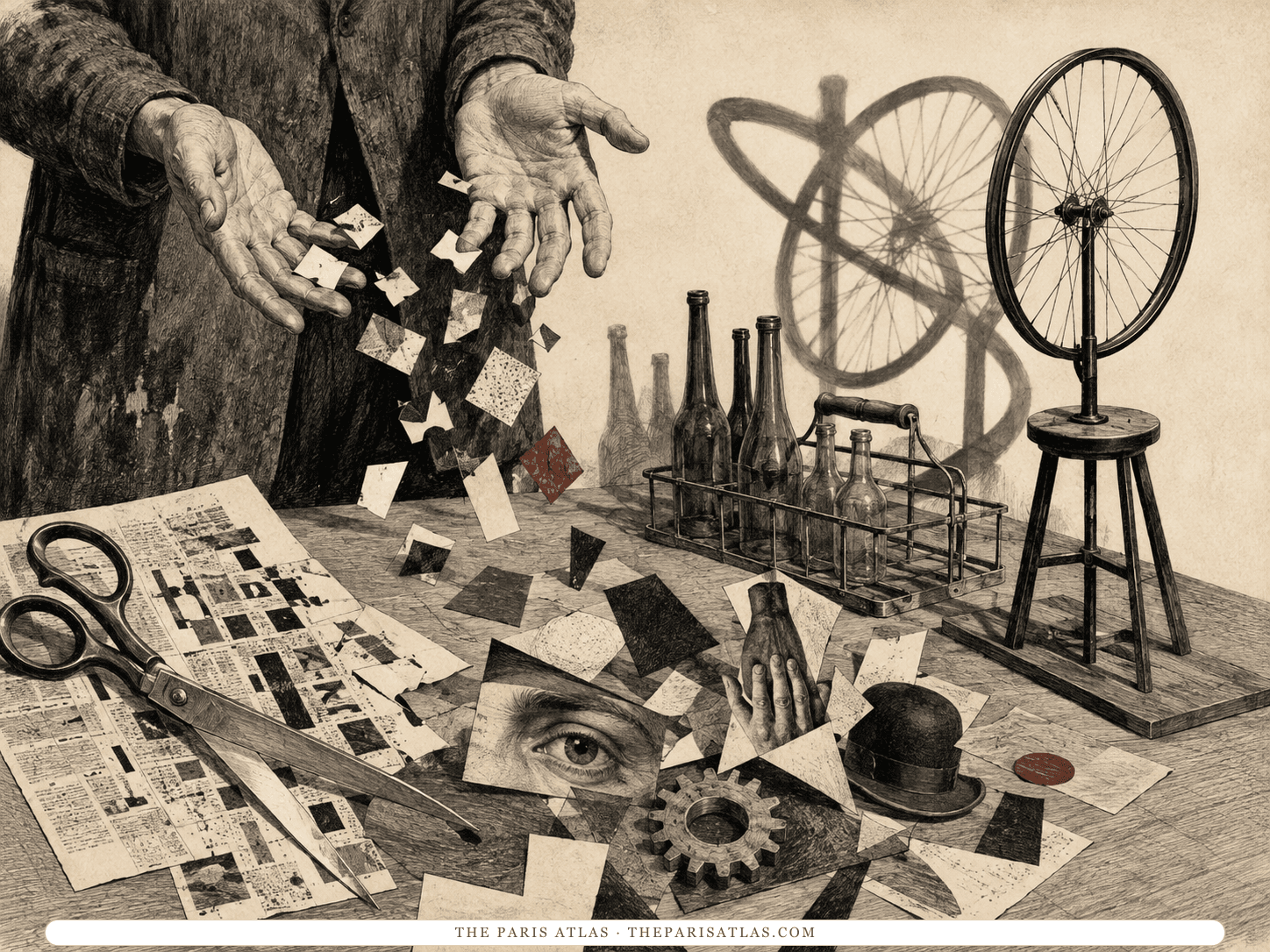
Editorial illustrationCutting, dropping, selecting, and reframing moved artistic invention from the handmade object to the choice, procedure, and collision.
Readymades: choosing an object instead of making one
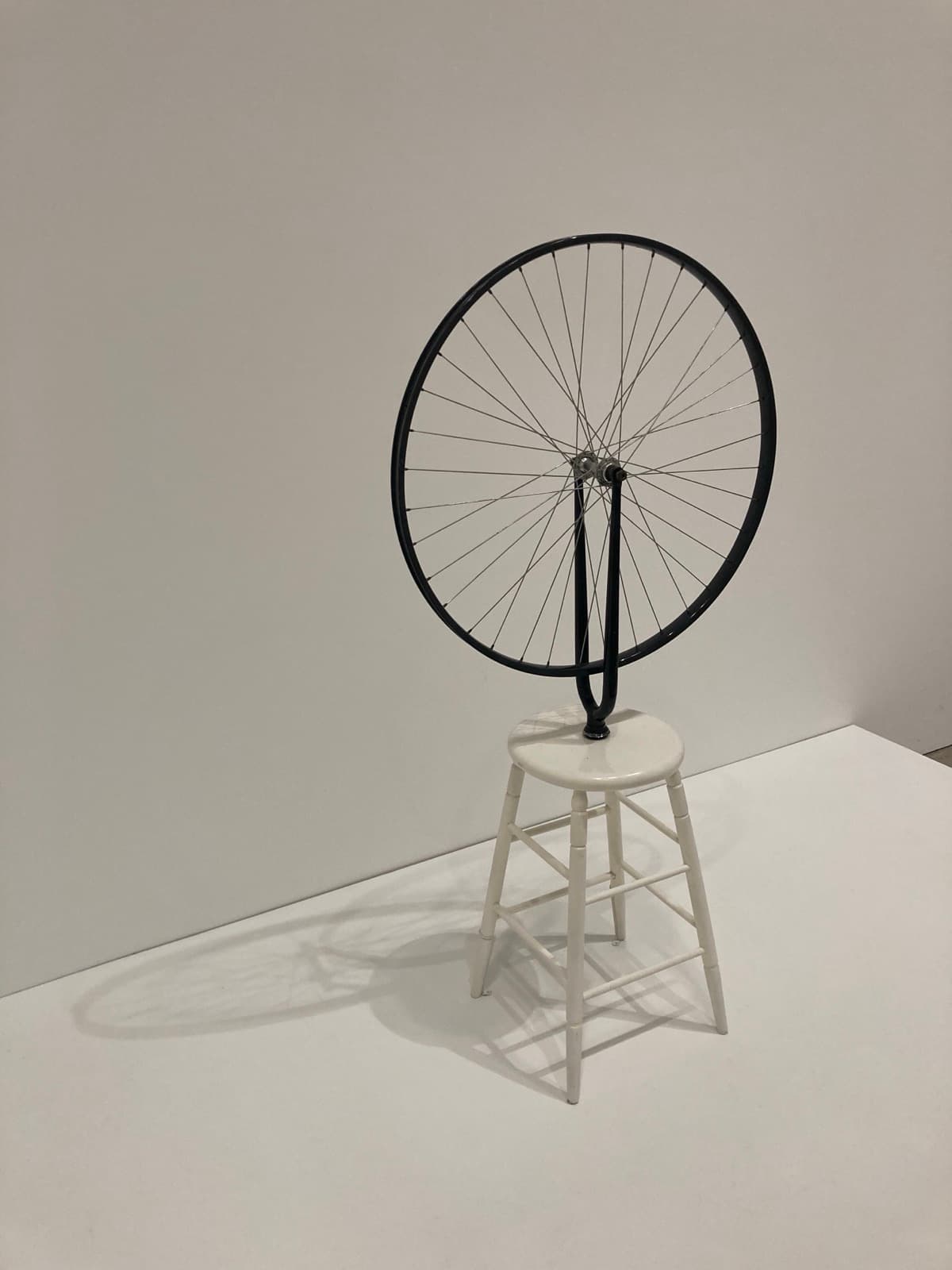
Marcel Duchamp’s readymades challenged the assumption that an artist had to fabricate an artwork by hand. His experiments began before the Zurich movement. In Paris in 1913, he mounted a bicycle wheel on a stool, producing the first version of Bicycle Wheel. He later used the term “readymade” for ordinary manufactured objects selected and repositioned as art. These works shifted attention away from traditional craftsmanship toward selection, context, naming, and the viewer’s expectations. The original Bicycle Wheel no longer survives; familiar museum examples include later versions.[12]
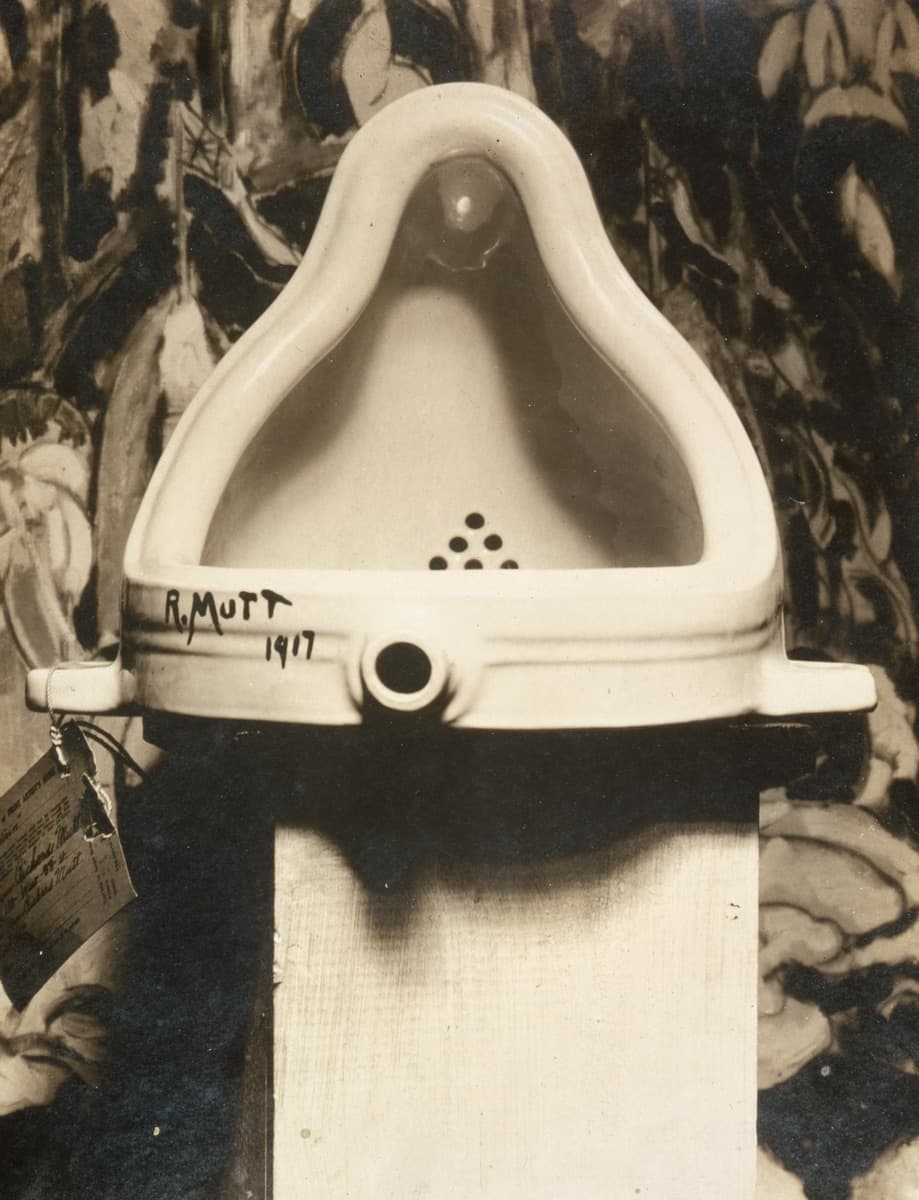
The most famous example is Fountain of 1917: a manufactured urinal submitted under the name “R. Mutt” to the Society of Independent Artists exhibition in New York. Although the exhibition advertised a policy without a selection jury, the object was not displayed. Its rejection exposed the limits of the society’s apparent openness and prompted a defense in the journal The Blind Man. The argument was that artistic significance could lie in choosing an object and giving it a new context rather than manufacturing it. Alfred Stieglitz’s photograph helped preserve the work’s appearance after the original disappeared. Fountain consequently became both an object and a debate about who had the authority to decide what counted as art.[13]
Collage and photomontage: rearranging existing images
Collage brings separate materials together on a surface, while photomontage specifically combines photographic images or fragments of them. Dadaists used these processes to break apart the apparently coherent world presented by newspapers, advertising, and illustrated magazines. Faces could be attached to mechanical bodies, unrelated scales brought together, and familiar images placed in situations that changed their meaning. The resulting work could be comic, disturbing, politically confrontational, or all three at once.[14]
Dada did not invent collage or the combination of photographs. Photographic composites had existed in the nineteenth century, and collage was already important to Cubism. What Dadaists did was develop these methods into particularly forceful instruments of cultural and political criticism. By rearranging images taken from the mass media, they could challenge the messages those same media circulated. A photograph’s apparent authority became something to manipulate rather than simply accept.[14]
Chance: reducing the artist’s control
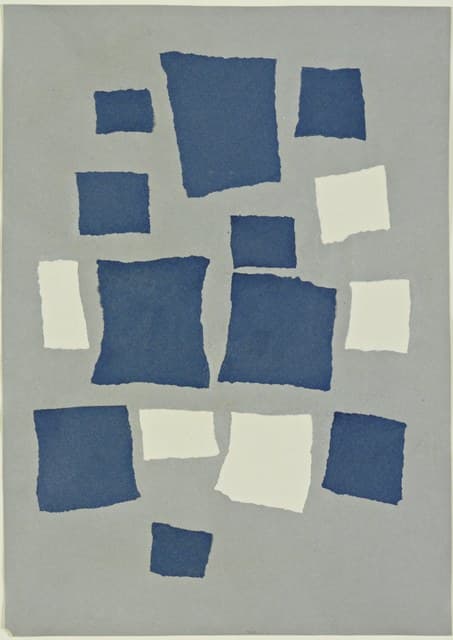
Chance offered another way to question artistic authority. In Arp’s Untitled (Collage with Squares Arranged according to the Laws of Chance), dated 1916–17, torn paper fragments appear against a plain ground. Arp described allowing pieces to fall and using their positions as the basis of a composition. This challenged the idea that every element of a successful artwork must result from the artist’s deliberate judgment. The process should not, however, be understood as entirely uncontrolled. MoMA’s curators have noted evidence that elements in some of Arp’s collages were repositioned. Chance and conscious arrangement could operate together rather than excluding one another.[15]
Tzara proposed a comparable experiment in his instructions for making a Dadaist poem: cut the words from a newspaper article, place them in a bag, and draw them out to establish their new order. The procedure treated an existing piece of public language as raw material and replaced conventional composition with a repeatable operation. It was also a joke about literary originality, since the supposed author could produce an unprecedented poem without inventing its words or choosing their sequence.[16]
An international movement with different local identities
Editorial illustrationZurich, New York, Berlin, Cologne, and Hanover shared a restless vocabulary while giving it sharply different local forms.
New York: objects, machines, and artistic authority
The activities associated with New York Dada developed partly independently of Zurich. Duchamp and Francis Picabia were central figures, alongside Man Ray, and their circle explored mechanical imagery, wordplay, unconventional objects, and challenges to artistic taste. Compared with the overt political agitation of Berlin Dada, much New York work approached modern life through irony and the unsettling relationship between people, machines, and manufactured commodities. Its independence matters: the movement’s history was not simply a sequence in which Zurich invented a program that other cities copied.[17]
Women also participated in this network as artists, writers, and editors. Beatrice Wood worked on The Blind Man, the publication that helped establish the debate surrounding Fountain. Elsa von Freytag-Loringhoven developed poetry, found-object assemblages, and an unconventional public presence in which clothing and everyday materials became means of artistic expression. Her work extended experimentation beyond the gallery object into the body and the activities of daily life. These contributions complicate accounts of New York Dada that focus exclusively on Duchamp’s readymades.[18]
Berlin: political satire and the mass media
Berlin Dada developed a particularly confrontational political character. Artists including George Grosz, John Heartfield, Raoul Hausmann, Hannah Höch, and Johannes Baader attacked militarism, nationalist rhetoric, and established social authority. Their work drew heavily on the imagery and language of contemporary public life. Photomontage was especially useful because it allowed photographs, headlines, advertisements, and political symbols to be reorganized into attacks on the society that produced them.[19]
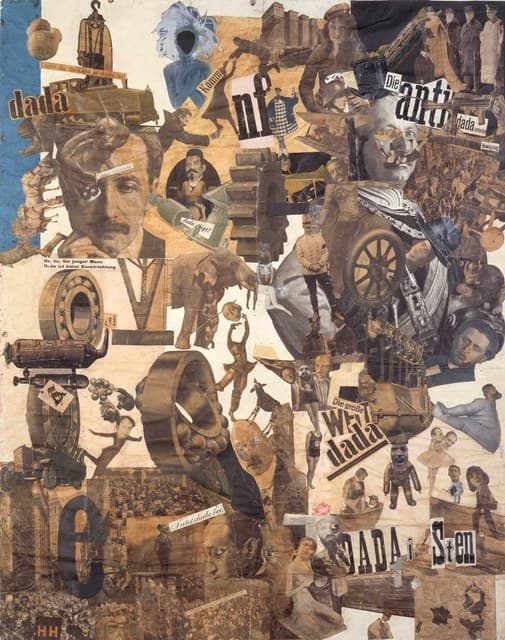
Höch’s Cut with the Kitchen Knife Dada through the Last Weimar Beer-Belly Cultural Epoch of Germany, dated 1919–20, is one of the movement’s defining works. Its crowded arrangement of photographs and printed fragments brings public figures, machinery, bodies, and popular culture into unstable relationships. Höch also examined gender roles and the changing position of women. Her experience exposed a contradiction within the movement: a group that presented itself as radically opposed to convention could still marginalize a woman working among its central participants. Her art and career therefore challenge any easy assumption that Dada’s rejection of authority automatically eliminated inequalities within the group itself.[20]
The First International Dada Fair, held in Berlin in 1920, brought this confrontational approach into an exhibition setting. Approximately 180 works by 31 participants were assembled at Otto Burchard’s gallery. The installation mixed different media with slogans and deliberately provocative displays, turning the exhibition itself into part of Dada’s argument. Rather than offering an orderly presentation of masterpieces, it confronted visitors with an environment that challenged the conventions of the art trade and the authority of the exhibition space.[21]
Cologne: Max Ernst and unexpected combinations
In Cologne, Max Ernst, Johannes Theodor Baargeld, and Arp formed a Dada group in 1919. Ernst developed collage by bringing together illustrations removed from their original settings, including images taken from instructional and commercial publications. A picture intended to explain something clearly could become unfamiliar when combined with a different kind of image. The resulting encounters suggested bodies, machines, and spaces that appeared internally convincing but could not exist according to ordinary logic.[22]
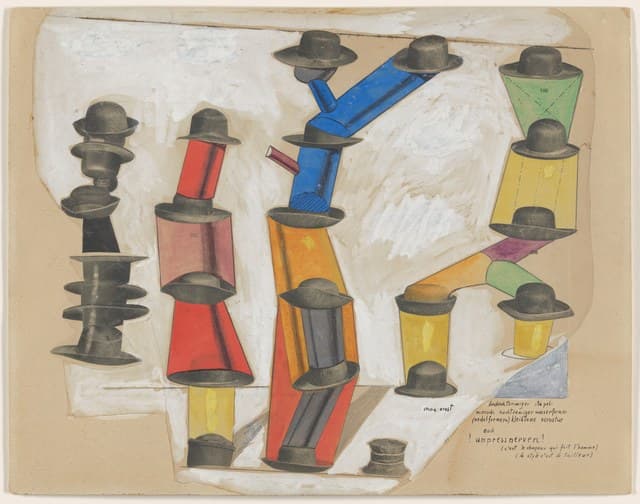
In The Hat Makes the Man of 1920, Ernst used printed images of hats, adding drawing and paint to create strange upright formations. Familiar commercial material became something resembling a collection of figures or mechanical constructions. The work illustrates an important possibility within Dada collage: found images could do more than deliver a satirical message. They could generate new, ambiguous worlds whose relationships the viewer could not fully explain.[23]
Hanover: Kurt Schwitters and Merz
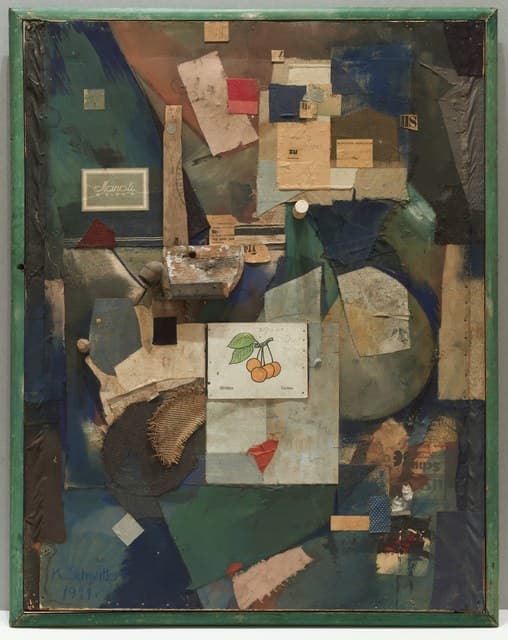
Kurt Schwitters developed a closely related but independent practice in Hanover under the name Merz, derived from a fragment of the word Kommerz. His materials included discarded paper, printed labels, packaging, fabric, and other remnants of everyday life. In Merz Picture 32 A. The Cherry Picture of 1921, such fragments become parts of a constructed composition. Calling this simply “art made from rubbish” misses the care involved: selection, arrangement, texture, color, and the physical relationship between materials remained essential. What changed was the range of things that could enter an artwork.[24]
Schwitters later expanded this approach into the Merzbau, a growing construction inside his Hanover home. Developed from the 1920s until his departure from Germany in 1937, it transformed domestic space into an elaborate environment. The original was destroyed during the Second World War, but its importance extends beyond the history of collage. It demonstrated how an artwork could become a place that surrounded its visitors rather than an object they viewed from outside.[25]
How publications connected the movement
Dada’s international character depended on print as well as travel. Magazines circulated poems, manifestos, reproductions, announcements, and arguments between people who did not necessarily live in the same city or agree on a common program. Tzara’s journal Dada was particularly important. Its third issue, published in December 1918, opened with his major manifesto and used experimental typography, changing orientations, and close interactions between words and images. The publication attracted considerable attention among the young writers who would become associated with Paris Dada. The design of the page was itself part of the experiment, not merely a neutral container for its ideas.[26]
Tzara’s proposed anthology Dadaglobe, developed in 1920–21, shows the scale of these connections. He solicited contributions from around fifty participants for a publication intended to bring the international movement together. Although the project was not completed at the time, its surviving material demonstrates that Dada operated through extensive exchanges between artists and writers. The movement was more accurately a network of overlapping collaborations than an organization directed from one permanent headquarters.[27]
Dada in Paris: collaboration, performance, and disagreement
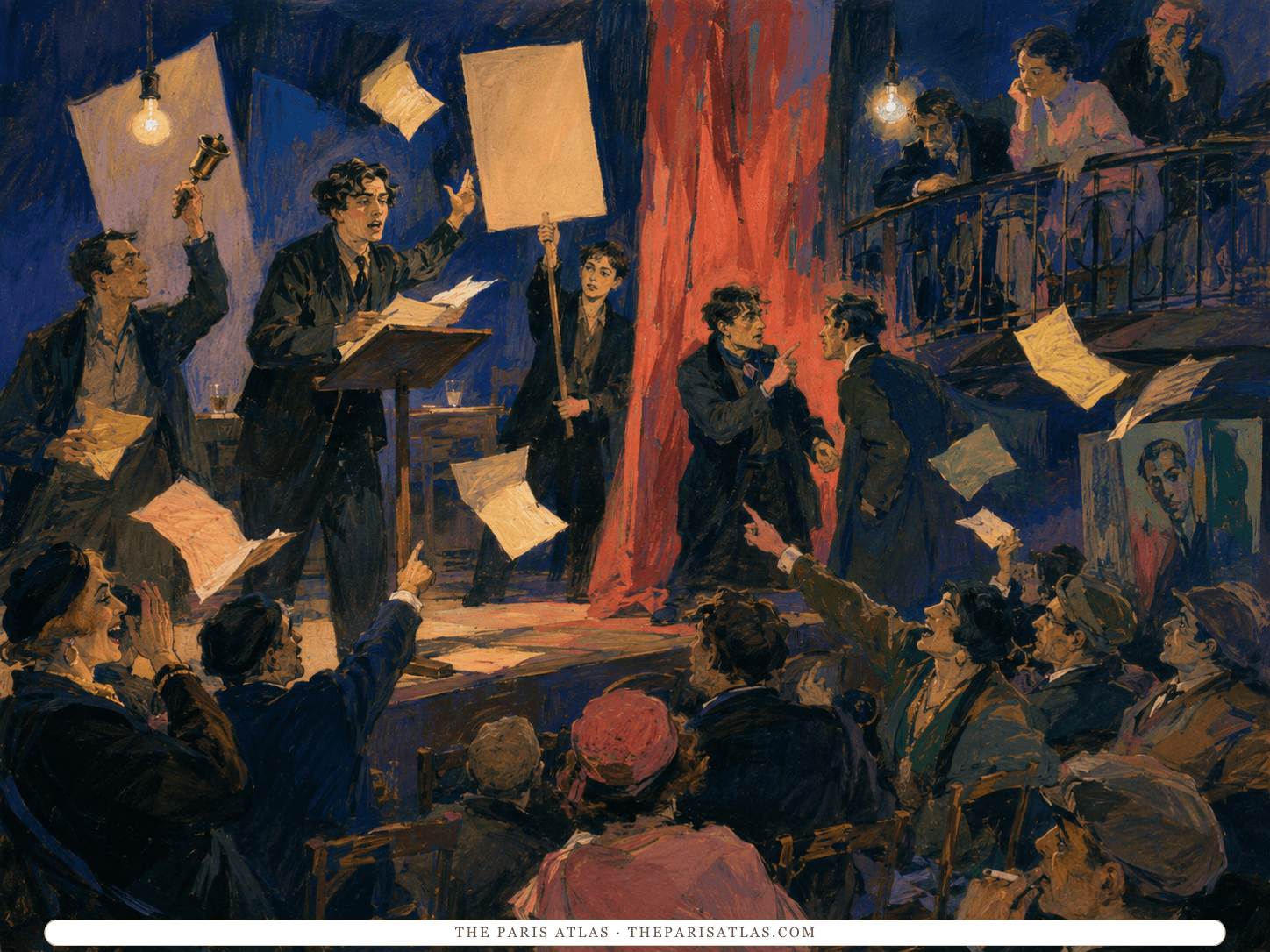
Editorial illustrationParis Dada made collaboration into public spectacle — and turned its disputes over purpose and authority into part of the performance.
Tzara arrived in Paris in January 1920, joining writers who already knew his work through publications and correspondence. Among them were André Breton, Louis Aragon, and Philippe Soupault, associated with the journal Littérature. Their encounter gave Paris Dada a new public intensity, but it was not the beginning of their contact with the movement. Readings, performances, manifestos, and deliberately antagonistic events made Dada a conspicuous presence in the city’s literary and artistic life. These activities also brought together people whose ideas about the purpose of revolt would soon prove difficult to reconcile.[28]
Paris Dada was not exclusively literary. In May 1921, an exhibition of Ernst’s work at the Au Sans Pareil bookshop, organized at Breton’s invitation, introduced an important body of his Cologne experiments to Paris. His collages offered a way to produce unexpected associations visually, helping connect Dada’s disruption of ordinary meanings with possibilities later developed in Surrealism.[22]
The mock trial of Maurice Barrès, held on 13 May 1921, made the movement’s internal differences especially visible. Barrès, a writer admired in his earlier career who had become associated with nationalism, was symbolically prosecuted for a betrayal of intellectual responsibility. Breton took the role of presiding judge. Yet the event raised an awkward question: could a movement that rejected conventional authority legitimately establish a tribunal and deliver moral judgments? Tzara’s participation resisted the seriousness of the proceeding. What might have appeared to be another public provocation exposed a substantive disagreement about whether Dada should develop a positive ethical position or continue to undermine the grounds of judgment itself.[29]
Further disputes followed Breton’s proposed congress on the “modern spirit” in 1922. His attempts to assess and organize contemporary tendencies conflicted with Tzara’s resistance to that kind of cultural authority. In July 1923, the Cœur à barbe evening became the setting for a violent confrontation involving Breton’s faction. These conflicts marked the breakdown of the Paris alliance. They should not be reduced to an argument between a serious organizer and an irresponsible provocateur: the disagreement concerned whether an artistic revolt could adopt a constructive program without becoming another institution that demanded obedience.[30]
Dada and Surrealism: related, but not the same movement
Surrealism emerged from a setting in which Dada had been important, but the two movements were not interchangeable. In his 1924 Manifesto of Surrealism, Breton presented a more explicit program centered on the workings of thought beyond ordinary rational control. Automatic writing, dreams, and the unconscious became major areas of investigation. Where Dada had frequently challenged established meanings through contradiction, satire, and disruption, Surrealism sought ways to explore forms of experience that conventional reason excluded. This is a difference of emphasis rather than an absolute division: chance and unexpected associations mattered to both.[31]
Several artists and writers participated in both movements, and Ernst’s work provides an especially important connection between them. Nevertheless, it is misleading to describe Surrealism as Dada simply acquiring discipline, or to suggest that Breton gathered all Dadaists into a new organization. The relationship involved continuities, disagreements, and competing accounts of what the earlier movement had meant. Dada also retained a significance independent of its contribution to Surrealism.[32]
Nor did experimental work associated with Dada abruptly stop when Surrealism was formally announced. René Clair’s film Entr’acte, made for the Paris production of the ballet Relâche in December 1924, brought together a scenario by Picabia and music by Erik Satie. Its disconnected actions, visual jokes, manipulated motion, and extraordinary funeral sequence resist conventional storytelling. Duchamp and Man Ray appear playing chess. The film shows how Dada’s collaborations and methods could continue even after the most visible Paris group had fractured.[33]
When did Dada end?
The dates c. 1916–1924 provide a useful conventional framework, not the lifespan of a formally constituted organization. Dada groups developed and dispersed at different times, and individual artists continued using related methods long afterward. By 1924, many of the movement’s principal groups had dissolved or changed direction. That does not establish a single official ending, nor does it mean that every artist abandoned Dada’s concerns in that year. It is more accurate to speak of the dispersal of its original networks than of one universally recognized final event.[34]
Dada’s influence on later art
Dada’s legacy extended well beyond the artists who had participated in its original groups. In the 1950s, the term Neo-Dada was applied to work by artists such as Robert Rauschenberg and Jasper Johns, whose use of familiar objects, everyday imagery, and unconventional materials challenged established distinctions between art and ordinary life. The term acknowledged affinities with the earlier movement without implying that these artists were simply reproducing its program.[35]
Dada also provided an important precedent for Fluxus, whose participants explored performance, humor, participation, and the relationship between art and everyday activity. The connection was not limited to a taste for absurdity. It involved questioning whether art needed to take the form of a durable, valuable object and whether the artist should remain separate from the audience. An action, an instruction, or a modest event could become a means of rethinking artistic experience.[36]
For conceptual art, Duchamp’s shift from making an object to selecting and reframing one was particularly consequential. Joseph Kosuth’s One and Three Chairs of 1965, which brings together a chair, a photograph of that chair, and a dictionary definition, develops related questions about objects, representations, language, and meaning. The important inheritance was not a particular appearance. It was the possibility that an artwork could operate primarily as an inquiry into the conditions under which something is understood as art.[37]
Dada’s importance therefore cannot be measured only by its scandals or by the number of later movements associated with it. Its lasting achievement was to make previously settled assumptions available for examination: that artists must make their objects by hand, that artistic materials must be distinguished from ordinary things, that a poem must communicate through conventional language, or that an artwork must provide a stable meaning. Its participants did not agree on the answers, but their experiments expanded the questions that art could ask.[38]
Major Works of Dada
Paintings and objects from the movement, each with the collection that holds it today. Pictures appear where the rights allow.
The 1913 original is lost. Versions are also held by the Museum of Modern Art in New York and Centre Pompidou in Paris.
A bicycle wheel with no tyre, mounted upside down on a painted wooden stool. Marcel Duchamp put the two together in his Paris studio in 1913 for his own amusement, years before he had a word for what he had done. The original is lost, and every example in a museum today is a later version.
The readymade is the idea Dada carried furthest, and this was the first object to use it.
The original is lost; later authorized versions survive, including a 1950 version in Philadelphia. Displays change, so check the holding museum's own record before making a special visit.
A mass-produced porcelain urinal, turned on its back, signed “R. Mutt 1917,” and submitted to an open New York exhibition that refused to show it. The lost original survives through Alfred Stieglitz's photograph and later replicas authorized by Duchamp.
Marcel Duchamp, Fountain, 1917; Tate replica 1964. Original lost; authorized replicas in Tate, the San Francisco Museum of Modern Art, the Centre Pompidou and other collections. Image: public domain.
The museum's collection record gave no gallery when it was checked in September 2026. Check before travelling.
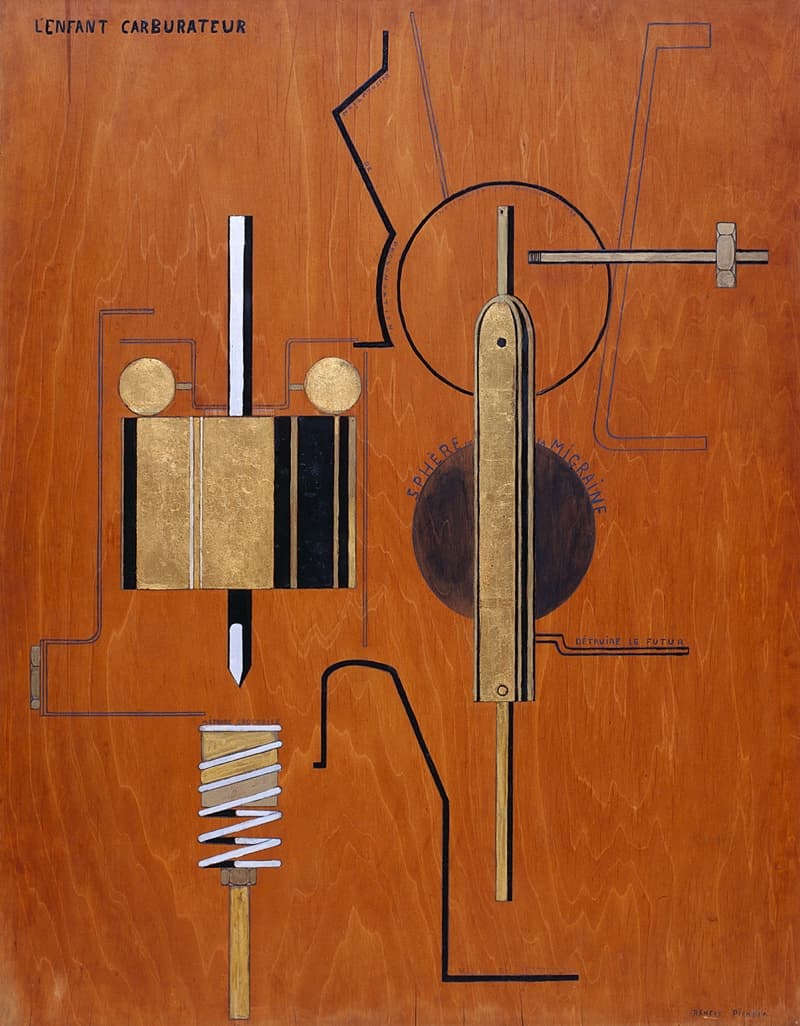
A carburettor drawn like an engineer's diagram, in gold leaf, black and white on a bare orange-brown plywood board. Francis Picabia labelled its parts with nonsense phrases such as Sphere of Migraine and Destroy the Future, and called the picture The Child Carburetor. He made it in 1919, and it belongs to the Solomon R. Guggenheim Museum in New York.
On loan to the Philadelphia Museum of Art for its Marcel Duchamp exhibition, 10 October 2026 to 31 January 2027, according to the Centre Pompidou's page. Check before a visit.
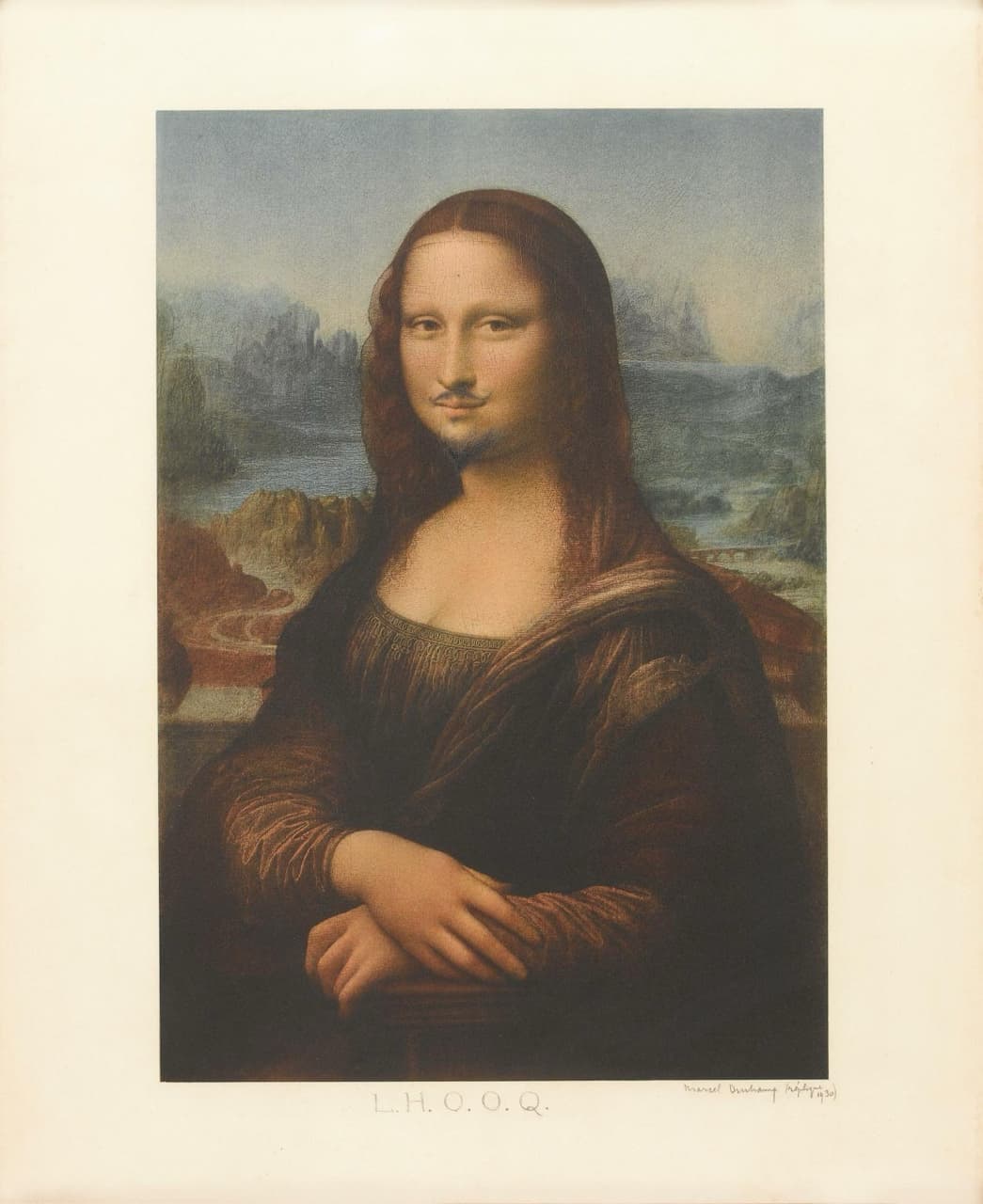
The Mona Lisa with a pencilled moustache and a small beard, and five capital letters that make a crude sexual pun when read aloud in French. Marcel Duchamp made the first version in Paris in 1919. He made this larger replica in 1930 for the poet Louis Aragon. The Centre Pompidou holds it on deposit from the French Communist Party.
On display at Tate Modern in In the Studio: International Surrealism in September 2026. Displays change, so check Tate's page before a visit.
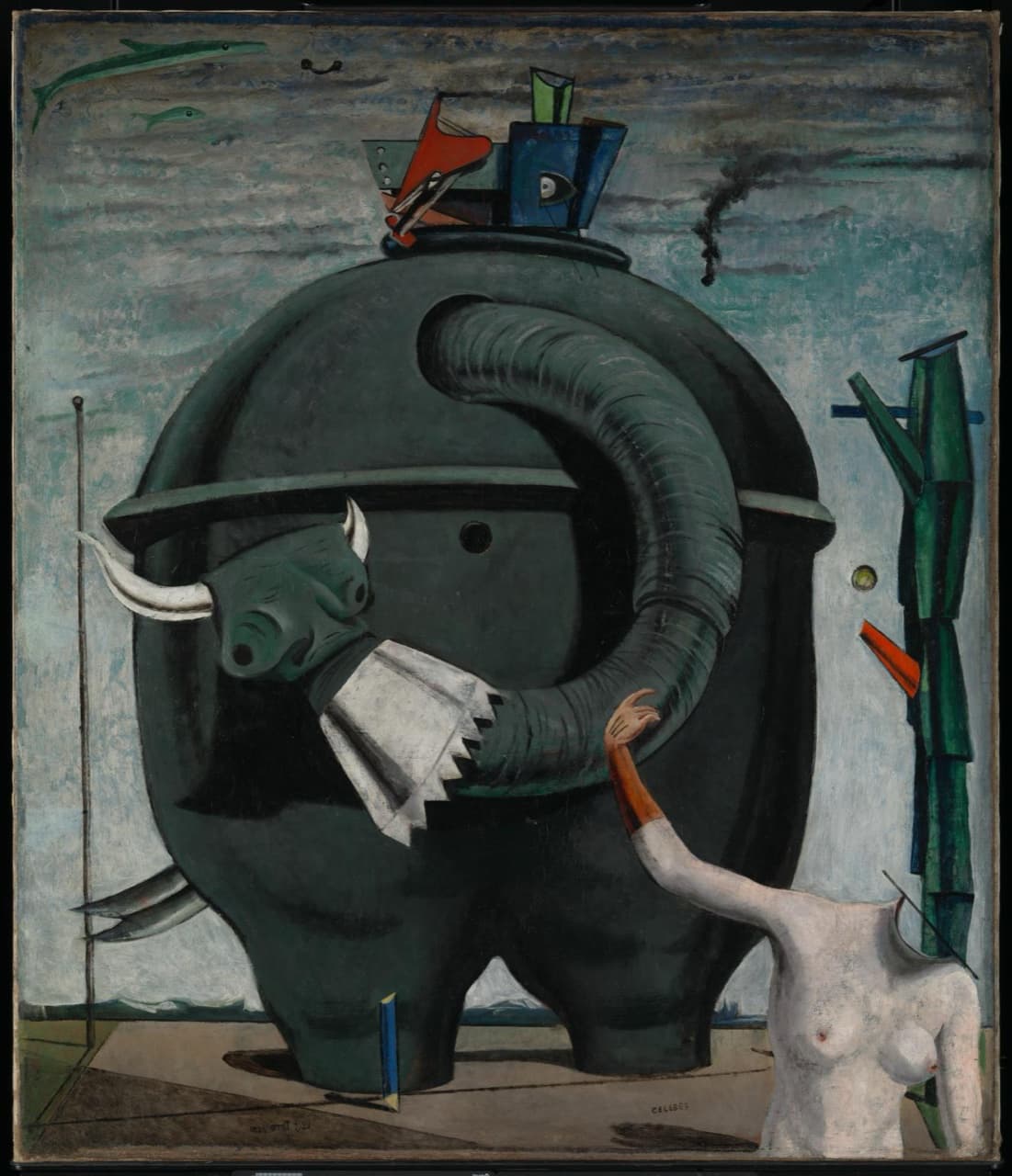
A huge round creature with a bull's head and a hose for a trunk stands on a bare floor, while fish swim in the sky and a headless woman beckons from the corner. Max Ernst painted it in Cologne in 1921, and it was his first large painting. The body began as a photograph of a clay corn-bin from the southern Sudan. The poet Paul Éluard bought it soon after it was finished. Tate has owned it since 1975.
The Centre Pompidou closed in September 2025 for a renovation running to 2030. Check the museum's record for loans before travelling.
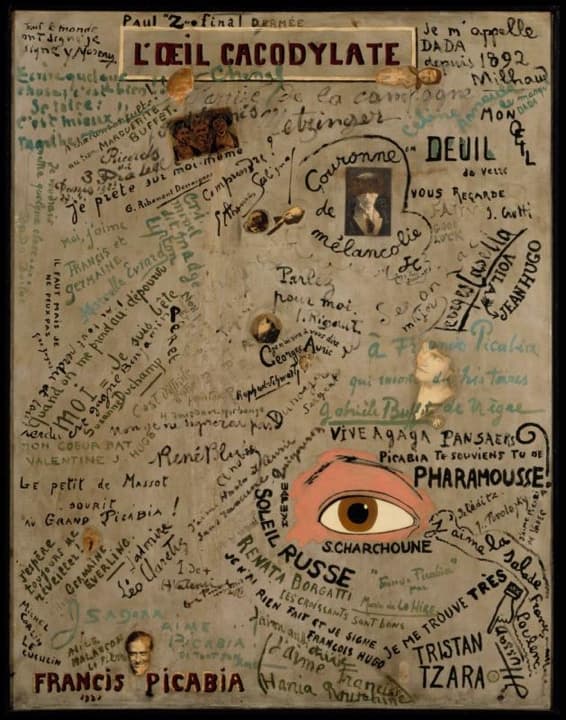
L'Œil cacodylate, The Cacodylic Eye, is a big grey canvas covered with handwriting: names, jokes and dedications by about fifty of Francis Picabia's friends, with a few pasted photographs and one painted eye. Francis Picabia painted the eye and the title in 1921, while he was ill with an eye infection, and invited his visitors to write the rest. The canvas hung over the bar of Le Bœuf sur le Toit and now belongs to the Centre Pompidou.
Tate's record listed the painting as not on display when it was checked in September 2026.
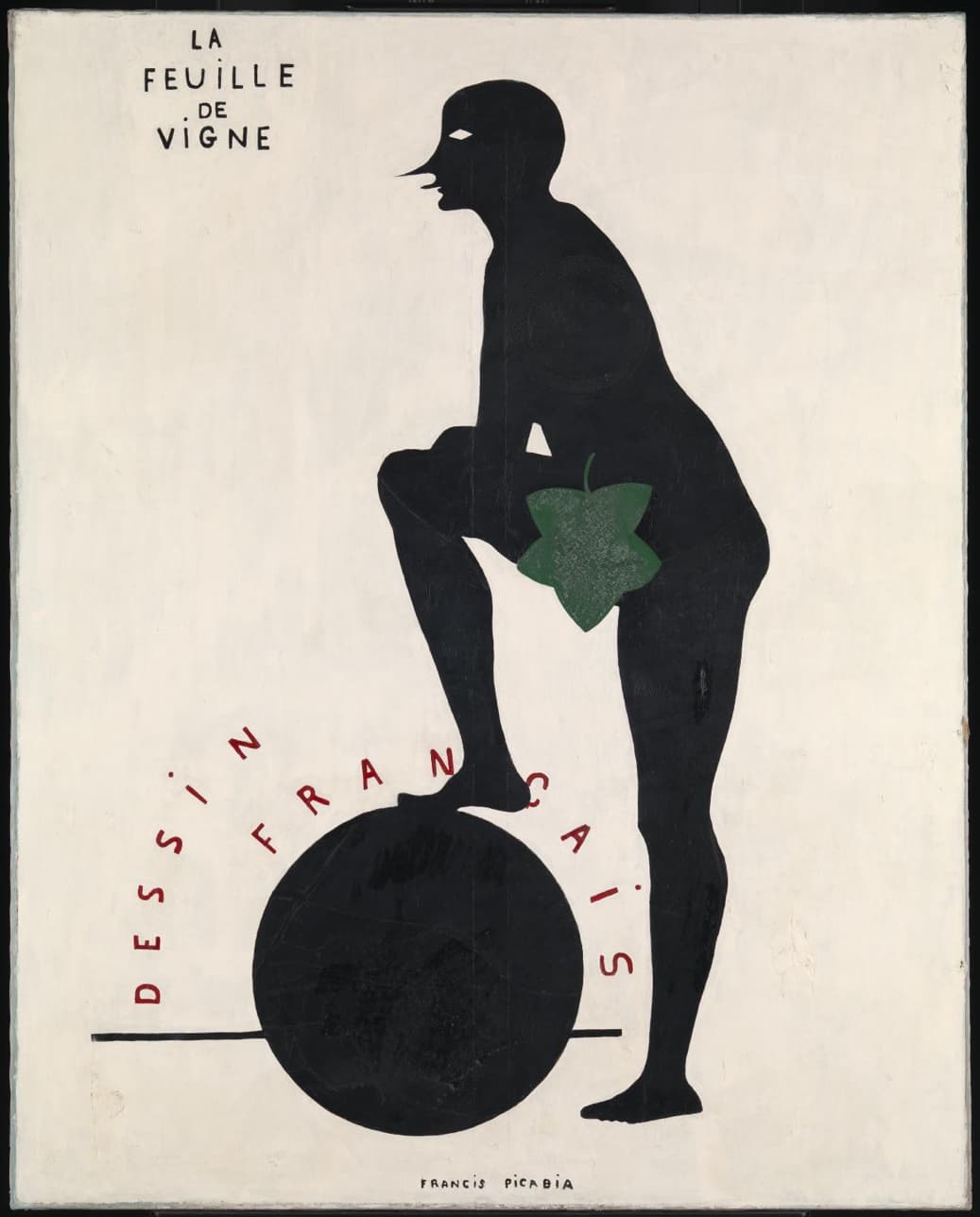
A black silhouette of a naked man with a pointed masked face stands with one foot on a black ball. A single green leaf covers his groin, and red letters round the ball spell DESSIN FRANÇAIS, French drawing. Francis Picabia painted the picture in 1922 over a machine painting that had caused a scandal in Paris the year before. The Fig-Leaf belongs to Tate in London.
The timeline includes Dada’s immediate precursors and follows its principal centres through 1924. Its history unfolds through overlapping groups, publications, and collaborations rather than the rise and fall of a single organisation.
1913
A precursor: Duchamp’s Bicycle Wheel
In Paris, Marcel Duchamp mounts a bicycle wheel on a stool, creating the first version of Bicycle Wheel. The experiment predates Dada’s emergence in Zurich but anticipates the readymade: an ordinary manufactured object reconsidered through an artist’s selection and intervention. The original is later lost; familiar museum examples include subsequent versions.
1915
A parallel circle develops in New York
Duchamp moves to New York and befriends Man Ray, while Francis Picabia develops provocative images based on machines and mechanical parts. Their experiments challenge traditional ideas about craftsmanship, representation, and artistic originality. The activities later associated with New York Dada develop alongside, rather than simply as an extension of, the Zurich movement.
5 February 1916
The Cabaret Voltaire opens in Zurich
Hugo Ball and Emmy Hennings open the Cabaret Voltaire at Spiegelgasse 1 in neutral Switzerland. The venue brings together an international circle that includes Tristan Tzara, Marcel Janco, Hans Arp, and Richard Huelsenbeck. Poetry, music, masks, and performance become means of questioning the cultural values associated with the First World War. Its opening is conventionally treated as Dada’s founding event.
14 July 1916
Dada presents a public manifesto
At the Zunfthaus zur Waag in Zurich, Ball reads his Dada manifesto during an evening of experimental performances. The event takes Dada beyond the original cabaret and gives its name a more explicit public identity. Ball’s manifesto is an early statement of the movement, distinct from the influential manifesto Tzara will publish in 1918.
Early 1917
Exhibitions extend Zurich Dada
A Dada exhibition opens at Galerie Corray in January. The artists subsequently take over the venue as Galerie Dada, continuing their activities after the Cabaret Voltaire’s closure. Painting, textiles, and constructed objects appear together, including work involving Arp and Sophie Taeuber-Arp. These exhibitions demonstrate that Dada’s experiments encompass visual and applied arts as well as poetry and performance.
April 1917
Fountain challenges the definition of art
Duchamp submits a manufactured urinal, signed “R. Mutt” and titled Fountain, to the Society of Independent Artists exhibition in New York. Despite its advertised no-jury policy, the society refuses to display it. The following month, The Blind Man publishes Alfred Stieglitz’s photograph and a defense of the work, making its rejection a public debate about who can define art.
July 1917
Tzara launches the journal Dada
The first issue of Dada appears in Zurich under Tzara’s direction. The journal circulates poetry, images, and ideas beyond the city, helping connect artists and writers who do not share a permanent headquarters. Printed publications and correspondence become essential to the movement’s international growth.
1918
Berlin Dada develops a political identity
Following Huelsenbeck’s return to Berlin in 1917, Dada develops a confrontational local form associated with George Grosz, John Heartfield, Raoul Hausmann, and Hannah Höch. The artists use satire, photographic fragments, sound poetry, and assembled objects to attack militarism and established authority. Berlin becomes a major centre of Dada’s engagement with politics and the mass media.
December 1918
Tzara publishes his major Dada manifesto
The third issue of Dada opens with Tzara’s Manifeste Dada 1918. Its rejection of inherited values and embrace of contradiction give the movement one of its most influential statements. Experimental typography and the interaction of words and images make the journal itself an artistic experiment. The issue attracts particular attention among the young Parisian avant-garde.
1919
Cologne becomes another Dada centre
Max Ernst, Johannes Theodor Baargeld, and Arp form a Dada group in Cologne. Ernst develops collages that remove printed illustrations from their original settings and combine them into unfamiliar images. These experiments challenge ordinary visual logic and establish an important connection between Dada collage and the work Ernst later develops within Surrealism.
1919
Schwitters brings Merz into public view
Working in Hanover, Kurt Schwitters develops Merz, his term for an artistic practice using found and discarded materials. He publicly exhibits Merz works at the Der Sturm gallery in Berlin in 1919. Paper scraps and everyday remnants become materials for new compositions, while the Merz name eventually extends across his poetry, publications, design, and constructed environments.
January 1920
Tzara arrives in Paris
Tzara joins the Paris circle around Littérature, including André Breton, Louis Aragon, and Philippe Soupault. On 23 January, a public matinée combines poetry, paintings, music, and deliberately disruptive performance. Existing contacts through journals and letters become a more concentrated collaboration, beginning a succession of events that makes Dada conspicuous in Parisian cultural life.
July 1920
Berlin hosts the First International Dada Fair
The First International Dada Fair opens to the public on 1 July at Otto Burchard’s gallery. Approximately 180 exhibits by 31 participants bring together photomontages, posters, and assembled objects in a deliberately confrontational installation. The fair becomes Berlin Dada’s largest public manifestation, turning the exhibition itself into an attack on conventional ideas about art and cultural authority.
1920–1921
Dadaglobe attempts to unite the international network
Tzara solicits contributions for Dadaglobe, an ambitious anthology intended to bring the movement’s dispersed participants together in print. The planned publication gathers material from an international network but is abandoned before completion. Its surviving contributions show the extent of Dada’s connections beyond any single city or artistic medium.
14 April 1921
Dada stages an excursion in Paris
Members of the Paris group gather in the garden of Saint-Julien-le-Pauvre for an unconventional public visit. A printed announcement presents it as the first of a series of Dada excursions. The event takes their activity beyond theatres and exhibition rooms, making a gathering in the city, rather than a conventional artwork, the focus.
May 1921
Max Ernst’s collages reach a Paris audience
An exhibition at the Au Sans Pareil bookshop presents Ernst’s experiments from his Cologne Dada period, at Breton’s invitation. The works introduce unexpected combinations of existing images to the Paris circle. The exhibition becomes an important connection between Dada’s international groups and between Ernst’s collage practice and emerging Surrealist interests.
13 May 1921
The Barrès trial exposes a division
Paris Dada stages a mock trial of the writer Maurice Barrès, with Breton presiding. The proceedings question Barrès’s turn towards nationalism but also expose disagreement within the group. Breton treats the event as a serious inquiry into intellectual responsibility; Tzara resists the authority implied by Dada setting itself up as a moral tribunal.
1922
Breton and Tzara clash over Dada’s direction
Breton’s proposed congress to discuss and define the “modern spirit” brings disagreements with Tzara into the open. At stake is whether the avant-garde should establish a constructive programme or continue challenging the authority of programmes themselves. Public accusations deepen the split, but Dada activity does not simply cease in 1922.
1923
Schwitters launches the Merz journal
Schwitters establishes Merz as a publication for experimental typography, poetry, and visual art. His collaborations connect figures associated with Dada to other modernist networks. The journal’s emergence provides a reminder that the increasingly bitter arguments in Paris do not represent the whole history of Dada or bring all related experimentation to an end.
6 July 1923
The Cœur à barbe evening ends in confrontation
Tzara’s Soirée du Cœur à barbe at the Théâtre Michel in Paris is disrupted by clashes involving Breton and other members of the avant-garde. Stage interruptions escalate into physical violence and police intervention. The confrontation marks a decisive breakdown in the Paris alliance, rather than an official dissolution of Dada everywhere.
15 October 1924
Breton publishes the Manifesto of Surrealism
Breton’s manifesto gives Surrealism a more explicit programme centred on automatic expression, dreams, and the unconscious. Several former Dada participants become associated with the new movement, but the transition is neither unanimous nor simply a change of name. Surrealism develops from some of Dada’s experiments while also departing from them.
René Clair’s Entr’acte is presented with the Paris production of the ballet Relâche. Working from a scenario by Picabia and with music by Erik Satie, the film brings together comic, disjointed images and appearances by figures including Duchamp and Man Ray. Its production shows that Dada-associated collaborations and methods remain active even as the original groups disperse.
Dada: frequently asked questions
What was the Dada movement?
An anti-art movement born in Zurich in 1916, in the middle of the First World War, that answered the collapse of European civilization with deliberate nonsense: noise poems, chance collages, ordinary objects declared art. It spread to Berlin, Cologne, New York and Paris before dissolving into Surrealism by 1924.
Where did Dada start?
At the Cabaret Voltaire in Zurich, opened by Hugo Ball and Emmy Hennings on 5 February 1916. Zurich was neutral territory, and the cabaret's performers — Tristan Tzara, Jean Arp and Marcel Janco among them — were mostly refugees from the war.
What does 'Dada' mean?
Nothing, by design. It is a nursery word — French baby-talk for a hobby-horse — and the founders spread contradictory stories about how it was chosen, because a movement against meaning wanted a name without one.
How did Dada come to Paris?
Tristan Tzara arrived from Zurich in January 1920, invited by the young writers of the review Littérature: André Breton, Louis Aragon and Philippe Soupault. Paris Dada then ran two years of staged scandals before Breton broke with Tzara and turned the group toward what became Surrealism in 1924.
What is the difference between Dada and Surrealism?
Dada was demolition: anti-art, anti-sense, anti-programme. Surrealism, founded by André Breton in 1924 largely from Dada's Paris veterans, kept the revolt but gave it a doctrine — the systematic exploration of dreams and the unconscious. Dada refused meaning; Surrealism went hunting for a deeper one.
References
References
The sources below include histories, manifestos, scholarly research, and primary materials that informed this page. They document Dada, its development, and the artists and works associated with it.
Documents the movement’s six major centers and its varied output, including collage, assemblage, photography, film, printed publications, and sound poetry.
4↑Hugo Ball, Cabaret Voltaire. Recueil littéraire et artistique, 1916
Website
Kunsthaus Zürich
Used for
Digitized publication and commentary documenting early Cabaret Voltaire activities, their connections to other avant-garde movements, and experiments with simultaneous poetry.
Glossary definition supporting the explanation of anti-art as a challenge to accepted definitions of art rather than simply the absence of artistic production.
Defines photomontage and traces its development from earlier photographic composites to Dada’s use of photographic fragments for artistic and political criticism.
Explains Duchamp’s readymades, his involvement in New York Dada, his relationships with Picabia and Man Ray, and his challenge to traditional artistic practice.
Collection record identifying the journal’s editors, including Beatrice Wood, and Alfred Stieglitz’s photographic contribution. Supports the discussion of Wood’s editorial role.
21↑Rebellion and Anti-art: Catalogue for the First International Dada Fair
Website
Berlinische Galerie
Used for
Archival account of the 1920 Berlin exhibition, its catalogue design, its approximately 180 exhibits and 31 participants, and its confrontational approach to art.
Collection entry for Ernst’s combination of printed hat images, drawing, and paint, used to explain how Dada collage transformed familiar commercial material.
25↑In Search of Lost Art: Kurt Schwitters’s Merzbau
Website
Museum of Modern Art
Used for
Describes the evolving construction inside Schwitters’s Hanover home, its destruction during the Second World War, and attempts to reconstruct its appearance.
Scholarly review discussing Paris Dada’s publications, performances, internal disputes, and relationship to Surrealism. This link leads to the review, not the complete book.
33↑The Museum of Modern Art — Entr'acte (collection record)
Website
Used for
Collection entry documenting the film’s creation for Relâche, Picabia’s scenario, Satie’s score, and the participation of artists including Duchamp and Man Ray.
Exhibition overview exploring connections between Dada and Fluxus, particularly their treatment of everyday life, participation, and the boundaries of art.
Collection commentary explaining the relationship between an object, its photograph, and its definition, with an explicit connection to Duchamp’s Bicycle Wheel.
Detailed exhibition overview comparing Dada’s regional forms, including Berlin’s political photomontage, New York’s readymades, and Schwitters’s Merz practice in Hanover.
Research entry covering the founders’ backgrounds, their move to Zurich, the establishment of the Cabaret Voltaire, and its interdisciplinary performances.
Analyzes the relationship between Dada and Surrealism, including the Breton–Tzara disputes, the proposed 1922 congress, and the 1923 Cœur à barbe confrontation.
These references provide the documented foundation for this movement's history and interpretation. Claim-level citations remain attached to the specific claims they support.




 View source