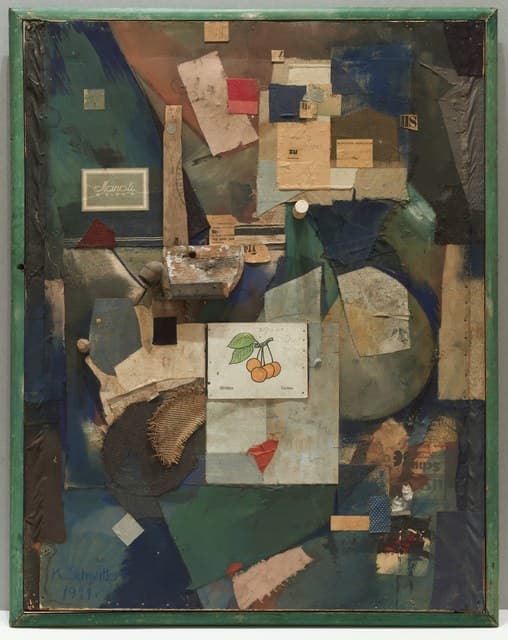
Merz Picture 32 A. The Cherry Picture
Discarded paper, fabric, wood, and other fragments are assembled into a carefully arranged composition.
- 1921
- Cut-and-pasted colored and printed paper, cloth, wood, metal, cork, oil, pencil, and ink on board
About Kurt Schwitters
Scraps collected in Hanover
Schwitters built the work from paper, cloth, wood, metal, cork, oil paint, pencil, and ink. MoMA records that he gathered scraps and objects from the streets of Hanover, then fixed them to a painted board with glue and nails.
The surface holds commercial labels, newspaper, candy wrappers, fabric, an image of kittens, two corks, and a broken pipe. Materials ordinarily treated as rubbish become the vocabulary of a large, durable picture.
The card at the center
A vocabulary card printed with orange cherries and the German and French words for the fruit sits near the center. Above it Schwitters penciled “Ich liebe dir!”—deliberately or playfully faulty German for “I love you.”
MoMA connects the phrase with Schwitters's poem To Anna Blume, which had made him known in 1919. The personal-sounding message enters a field assembled from public print and street debris.
What Merz means here
Merz was Schwitters's invented name for his collage and assemblage practice, partly taken from a fragment of the German word Kommerz. It gave a single term to works made by connecting unlike remnants.
The materials may be miscellaneous, but their arrangement is not careless. A perpendicular grid disciplines the upper layer, while older blue and green paint remains visible beneath it. The work shifts the picture from an optical window toward a tactile surface where matter accumulates.
Close reading
Reading the work, detail by detail
Schwitters compresses scraps of print, cloth, wood, paper, and paint into a shallow box whose worn materials retain traces of other lives. The close views move from the cherry emblem to peripheral debris, showing how the collage builds order without erasing damage or difference.
1.The cherry card supplies a fragile center
A clean white square with two cherries interrupts the surrounding field of battered fragments. Its simple emblem offers a momentary center, but it remains just another found paper laid over earlier layers.
2.Printed scraps form an improvised archive
Rectangles of print and handwriting overlap without yielding a continuous message. Their varied aging makes time visible as a set of stains, tears, and partial erasures.
3.A small label holds its ground in the dark
A tiny pale label sits inside its own rectangular border, surrounded by deep green and brown. The framing promises legibility while the modest scale makes the fragment feel private and resistant.
4.Crumpled material pushes the surface outward
Creased papers project and cast small shadows instead of lying flat. Their physical buckling makes the picture a shallow construction, not simply an image assembled on one plane.
5.Coarse textures interrupt the paper field
A bristling woven scrap meets smooth paper, dark paint, and frayed edges. The clash is tactile as well as visual, preserving the stubborn material character of what was discarded.
6.The green frame is another salvaged layer
Scuffed green wood encloses fragments that press directly against its edge. Rather than tidying the collage, the battered boundary joins its economy of reuse and makes containment look provisional.
Where to see it
Museum of Modern Art, New York
11 West 53 Street, New York, NY 10019, United States
Displays and loans can change. Check whether this work is on view before making a special trip.
Plan your visit on the museum’s official website (opens in a new tab)Frequently asked questions
What is Merz Picture 32 A made from?
Paper, cloth, wood, metal, cork, oil, pencil, and ink on board, with scavenged fragments pasted or nailed onto a painted surface.
Why is it called The Cherry Picture?
A vocabulary card showing orange cherries occupies the center of the composition and gives the work its familiar subtitle.
What does Merz mean?
It was Schwitters's name for his collage and assemblage practice, partly derived from a cut fragment of the German word Kommerz, meaning commerce.
Is the arrangement random?
No. Although Schwitters scavenged the components, MoMA emphasizes that he carefully composed them; a perpendicular grid orders part of the surface.
Where is The Cherry Picture?
It belongs to the Museum of Modern Art in New York, object 27.1954. Check MoMA's official page for current display information.
If you like Kurt Schwitters
Explore artists from the same movements and circles.
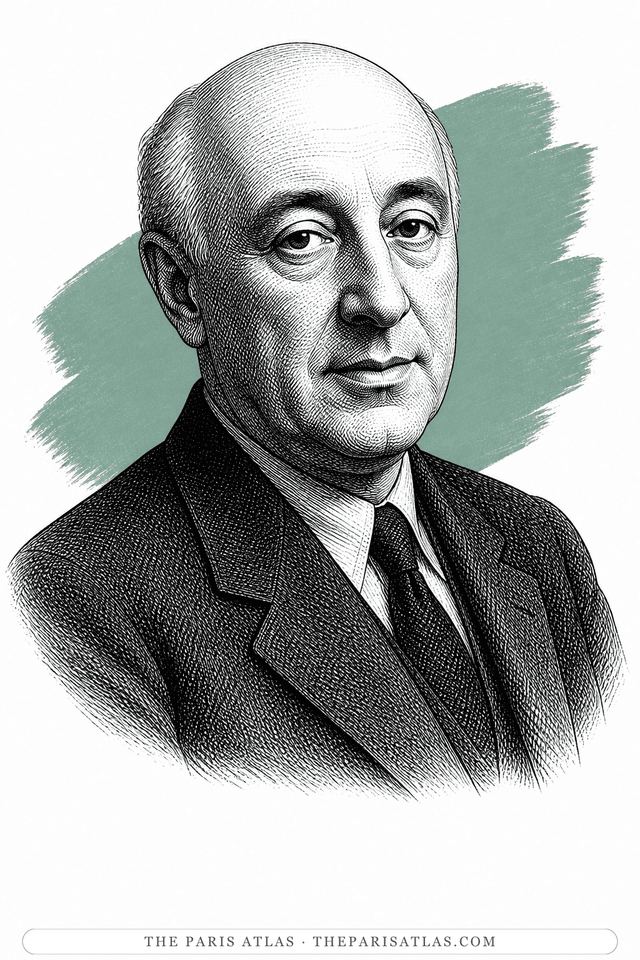
Jean Arp
Strasbourg-born sculptor and poet — Hans in German, Jean in French, both all his life — who co-founded Dada at the Cabaret Voltaire in 1916, composed collages by dropping torn paper 'according to the laws of chance', and settled at Meudon outside Paris in a house his wife Sophie Taeuber-Arp designed.
View artist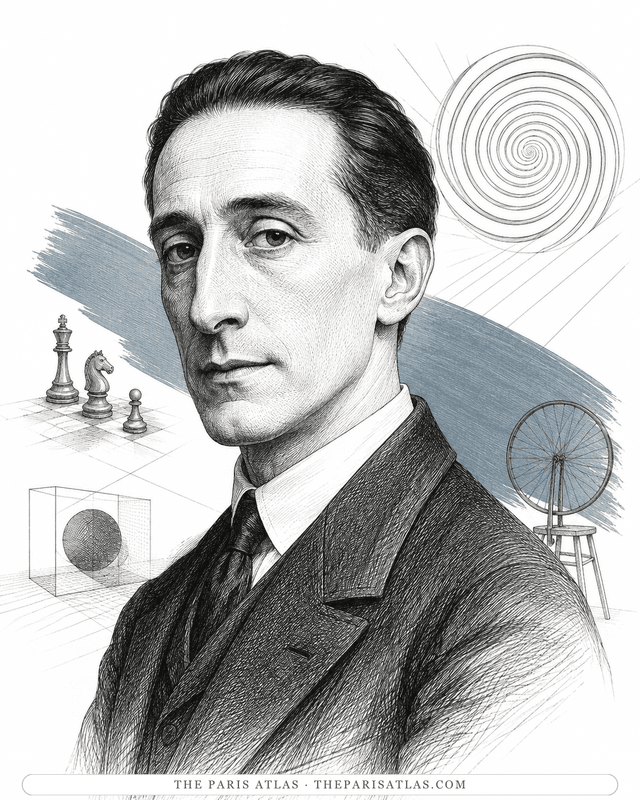
Marcel Duchamp
The century's quietest revolutionary — readymades, the abandonment of painting, chess on a Paris rooftop in Entr'acte, and one anemic film of spinning puns signed Rrose Sélavy.
View artist
Sophie Taeuber-Arp
Swiss artist, designer, and dancer whose geometric abstraction, textiles, performances, and turned-wood Dada heads erased the hierarchy between fine art and applied art.
View artist
References
The sources below include collection records, catalogues, scholarly research, and primary materials that informed this page. They document Merz Picture 32 A. The Cherry Picture, its making, and its place in cultural history.


1Kurt Schwitters, Merz Picture 32 A. The Cherry Picture
WebsiteMuseum of Modern ArtUsed forOfficial collection record for the date, materials, dimensions, credit line, found components, cherry card, and Merz construction method.
2In Search of Lost Art: Kurt Schwitters’s Merzbau
WebsiteMuseum of Modern ArtUsed forMoMA context for Schwitters's wider Merz practice and its expansion from collage into an environment.

3Kurt Schwitters
Official recordMuseum of Modern ArtUsed forOfficial record used to verify names, dates, institutional details, or other factual information on this page.
4Finding Aid: Kurt Schwitters Archives
Official recordSprengel Museum HannoverUsed forOfficial record used to verify names, dates, institutional details, or other factual information on this page.
These references provide the documented foundation for this work's history and interpretation. Claim-level citations remain attached to the specific claims they support.
 Explore more resources