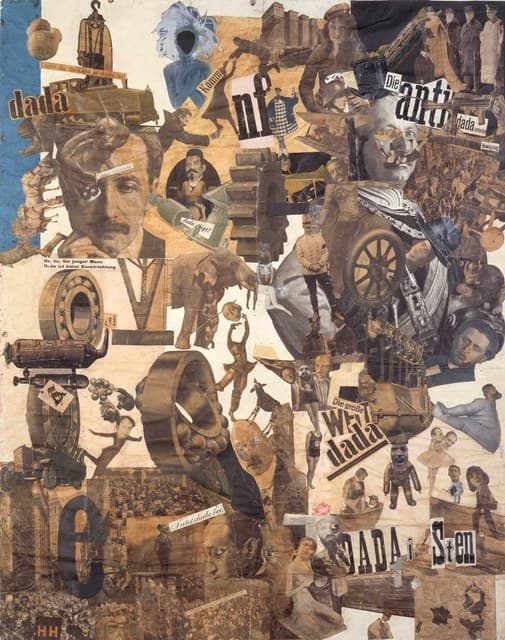
Cut with the Kitchen Knife
by Hannah Höch
A photomontage combining politicians, performers, machinery, and printed words into a satire of Weimar society.
- 1919
- Paper on cardboard, collage
About Hannah Höch
A crowded public world cut apart
Höch assembled photographs and printed matter from illustrated newspapers and other periodicals across a sheet of cardboard. Politicians, military figures, scientists, entertainers, athletes, machinery, and lettering collide at a scale large enough to read like a wall of public information.
The German Historical Institute identifies faces including Wilhelm II, Paul von Hindenburg, Friedrich Ebert, Albert Einstein, and Höch herself. The work does not preserve the authority of those source images: cutting and recombination make every public identity unstable.
Politics mixed with performance
The Staatliche Museen zu Berlin reads the upper half as a collision between technical progress and militarized politics. In the lower area, Dada appears as a mass movement intent on cutting through accepted authority.
Höch repeatedly swaps expected gendered bodies and heads: the museum points to Hindenburg as a belly dancer and George Grosz as a ballerina. Photomontage becomes a way to expose political and social roles as constructed images rather than natural facts.
From Berlin Dada to the Nationalgalerie
The museum's catalogue dates the collage to 1919 and records its appearance at the First International Dada Fair in Berlin in 1920. It remained with Höch until 1961, when Galerie Meta Nierendorf acquired it; the Nationalgalerie bought it that same year.
Its survival matters because the source material was deliberately current and disposable. Newspaper scraps became a durable record of how Berlin Dada looked at the first years of the Weimar Republic.
Close reading
Reading the work, detail by detail
Höch makes Weimar public life readable as collision: faces, machines, headlines, bodies, and type interrupt one another across the sheet. The close views follow six local constellations whose conflicting scales prevent any single authority from mastering the whole.
1.The word dada enters like a headline
The word arrives in heavy type beside a railcar and mechanical parts, operating at the scale of public news. It names the collage while behaving like one more severed object within it.
2.A face is invaded by instruments and print
A monumental head is interrupted by a pasted eye, hand, and hard-edged devices. Höch turns political portraiture into an unstable assembly whose authority can literally be cut apart.
3.A dancer and wheel share the same momentum
The circular wheel organizes a knot of machinery while a human figure cuts across its edge. Mechanical rotation and bodily motion become visually exchangeable, both absorbed into the collage's restless tempo.
4.World dada is assembled from unequal voices
Different type sizes force the phrase to stutter across a crowded patch of heads and bodies. Language no longer explains the image; it competes for space within the same political noise.
5.A giant letter stands over a compressed crowd
The oversized character occupies more pictorial force than the tiny crowd packed beneath it. Scale exposes how slogans and institutions can dwarf the people they claim to represent.
6.The collage ends in a broken declaration
Widely spaced capitals stretch across the bottom beside performers and a small map. The phrase acts less like a conclusion than a final interruption, binding movement, geography, and typography into a deliberately unstable alliance.
Where to see it
Neue Nationalgalerie, Staatliche Museen zu Berlin
Potsdamer Straße 50, 10785 Berlin, Germany
Displays and loans can change. Check whether this work is on view before making a special trip.
Plan your visit on the museum’s official website (opens in a new tab)Frequently asked questions
What is the full title of Cut with the Kitchen Knife?
The museum's English translation is Cut with the Kitchen Knife Dada through the Last Weimar Beer-Belly Cultural Epoch in Germany. The page uses the familiar shortened title.
What technique did Hannah Höch use?
Photomontage: she cut photographs and printed material from newspapers and periodicals, rearranged them, and pasted them onto cardboard.
Who appears in the collage?
Its many faces include political and military leaders, performers, athletes, scientists, Dada artists, and Höch herself. The museum identifies figures such as Wilhelm II, Hindenburg, Ebert, Einstein, and Grosz.
When was Cut with the Kitchen Knife made?
The Neue Nationalgalerie dates it to 1919. It was shown at Berlin's First International Dada Fair in 1920.
Where is Cut with the Kitchen Knife?
It belongs to the Neue Nationalgalerie, Staatliche Museen zu Berlin, as inventory NG 57/61. Its display status may change, so check the official object record before visiting.
If you like Hannah Höch
Explore artists from the same movements and circles.
Man Ray
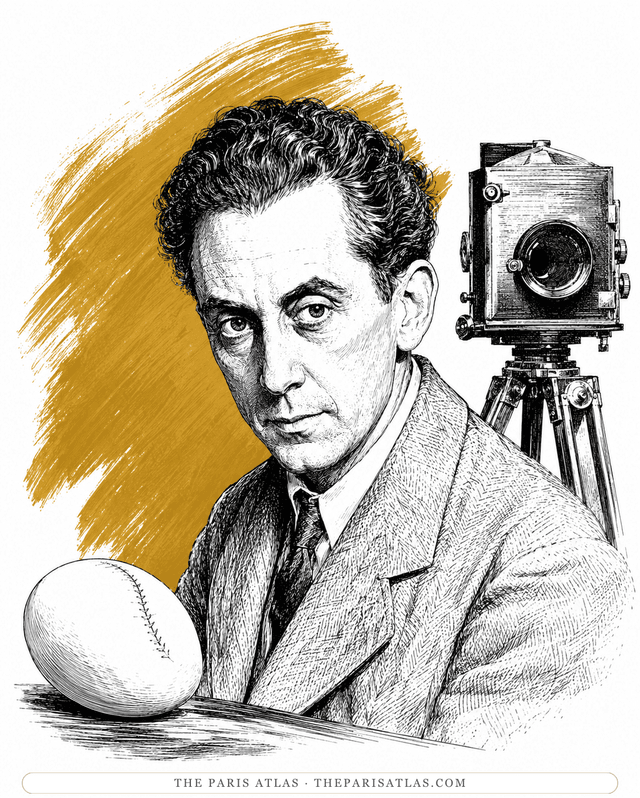
Montparnasse's American eye — portraitist of the whole expatriate quarter, inventor of the rayograph, and maker of films (Emak-Bakia, L'Étoile de mer) that treated the camera as another darkroom.
View artist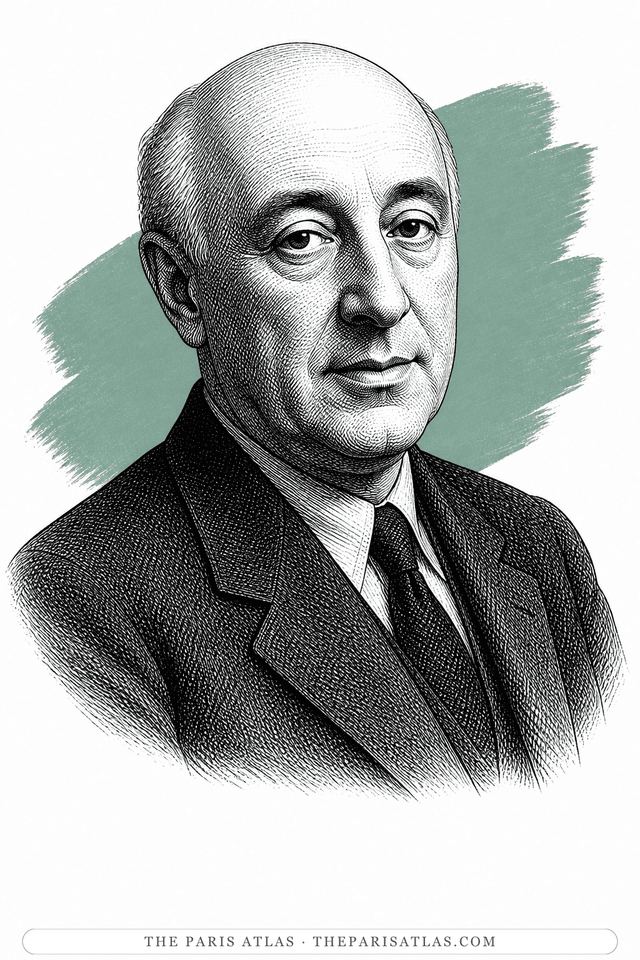
Jean Arp
Strasbourg-born sculptor and poet — Hans in German, Jean in French, both all his life — who co-founded Dada at the Cabaret Voltaire in 1916, composed collages by dropping torn paper 'according to the laws of chance', and settled at Meudon outside Paris in a house his wife Sophie Taeuber-Arp designed.
View artist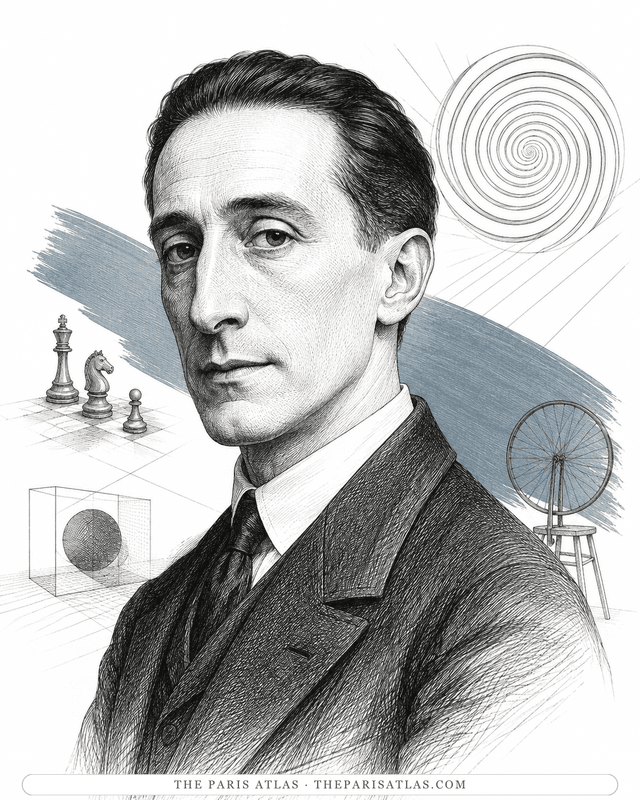
Marcel Duchamp
The century's quietest revolutionary — readymades, the abandonment of painting, chess on a Paris rooftop in Entr'acte, and one anemic film of spinning puns signed Rrose Sélavy.
View artist
References
The sources below include collection records, catalogues, scholarly research, and primary materials that informed this page. They document Cut with the Kitchen Knife, its making, and its place in cultural history.


1Schnitt mit dem Küchenmesser Dada durch die letzte Weimarer Bierbauch-Kulturepoche Deutschlands
Official recordStaatliche Museen zu BerlinUsed forOfficial collection record for the title, date, materials, dimensions, provenance, figures, and exhibition history.

2Hannah Höch, Cut with the Dada Kitchen Knife through the Last Weimar Beer-Belly Cultural Epoch in Germany (1919)
WebsiteGerman History in Documents and ImagesUsed forGerman Historical Institute contextual account identifying source periodicals and figures in the photomontage.
3Hannah Höch
WebsiteNational Museum of Women in the ArtsUsed forWeb source consulted for documented facts and historical context presented on the Cut with the Kitchen Knife page.
4Hannah Höch
Official recordMuseum of Modern ArtUsed forOfficial record used to verify names, dates, institutional details, or other factual information on this page.
These references provide the documented foundation for this work's history and interpretation. Claim-level citations remain attached to the specific claims they support.
 Explore more resources