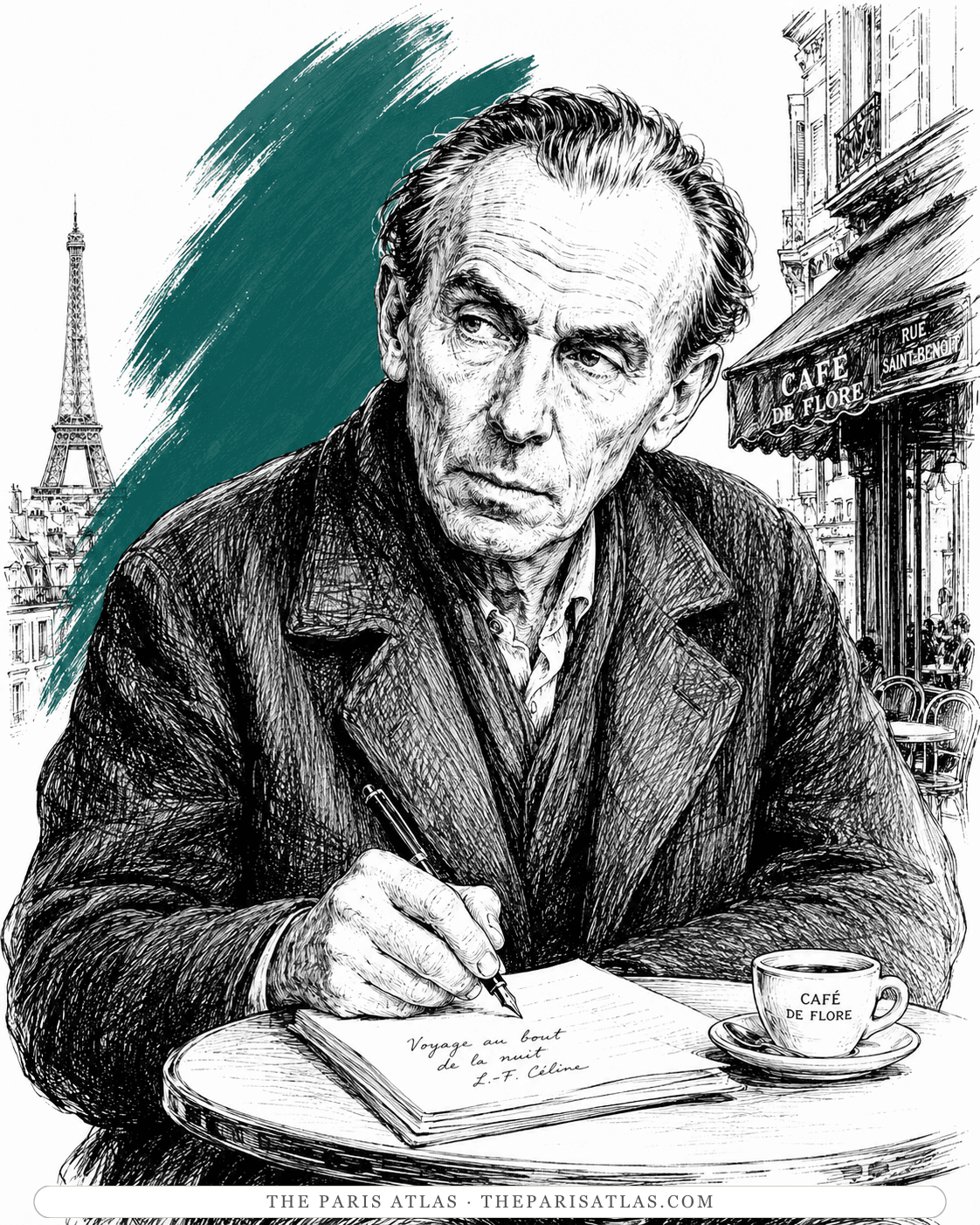
Robert Desnos was Surrealism's natural wonder: in the movement's early 'sleeping fits' he could drop into trance and produce poems on demand, and Breton crowned him its prophet — before the inevitable excommunication, after which Desnos simply kept writing, better than most of the faithful. The thirties made him a public voice in the most literal way: radio work that carried his poems and slogans into ordinary French homes, alongside journalism that put him, pen-first, against the fascist drift of the decade — including public collision with Céline over the political pamphlets of the late thirties.
The war made the commitments literal. Desnos joined the Resistance, working under cover of his newspaper job until his arrest in February 1944; deported through the camps, he died of typhus at Terezín on June 8, 1945 — weeks after the liberation, with the war in Europe already over. The poems survived everything, including the legend of a last one found on him; his standing has only risen since: the Surrealist who proved that the movement's love of freedom could be spent on something.


 View source