Painting · Fauvism
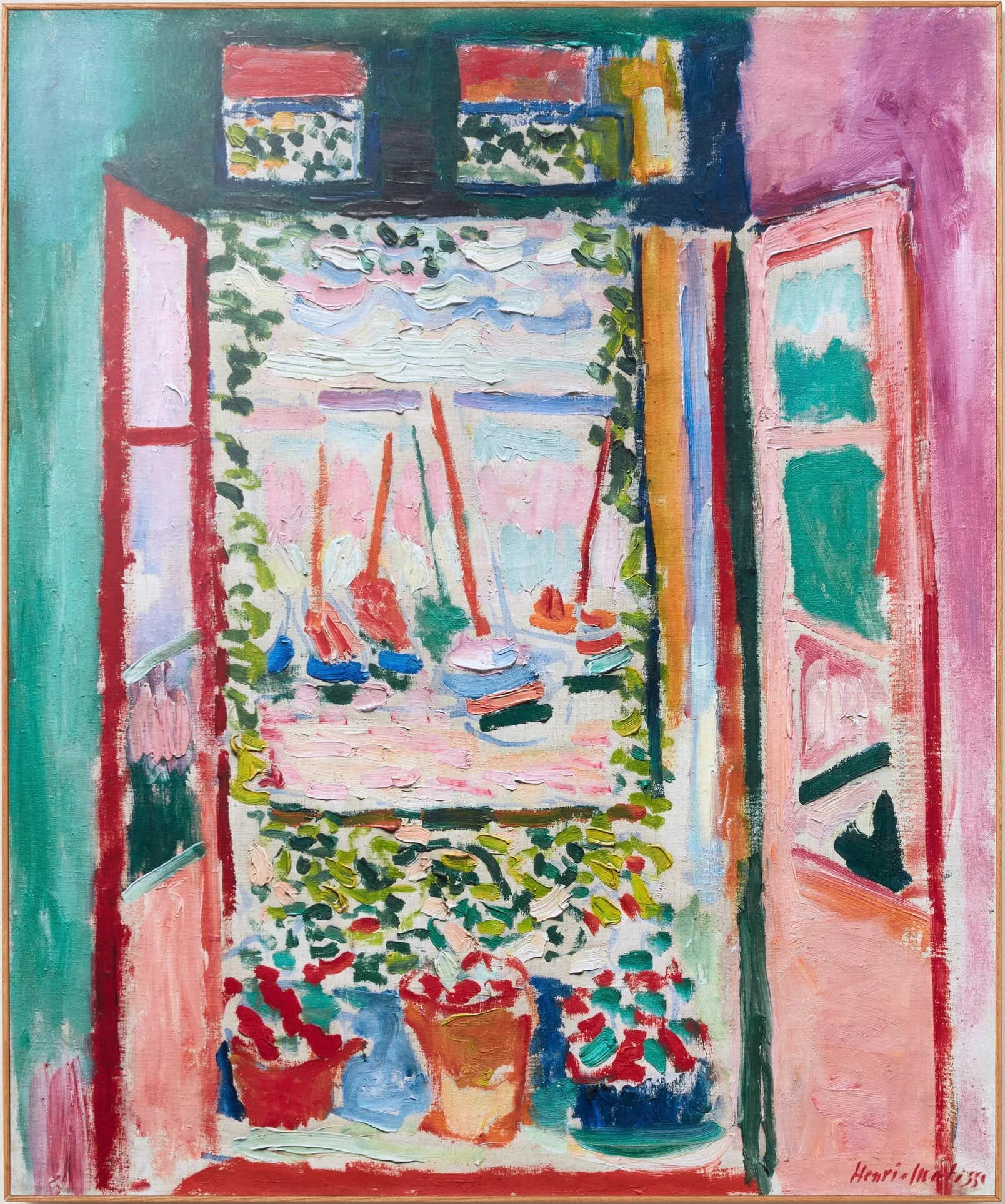
Open Window, Collioure
A harbour seen through an open window, painted with contrasting colours and loose brushstrokes.
A movement in modern painting that used intense colour, simplified forms, and expressive brushwork to move beyond the imitation of appearances.
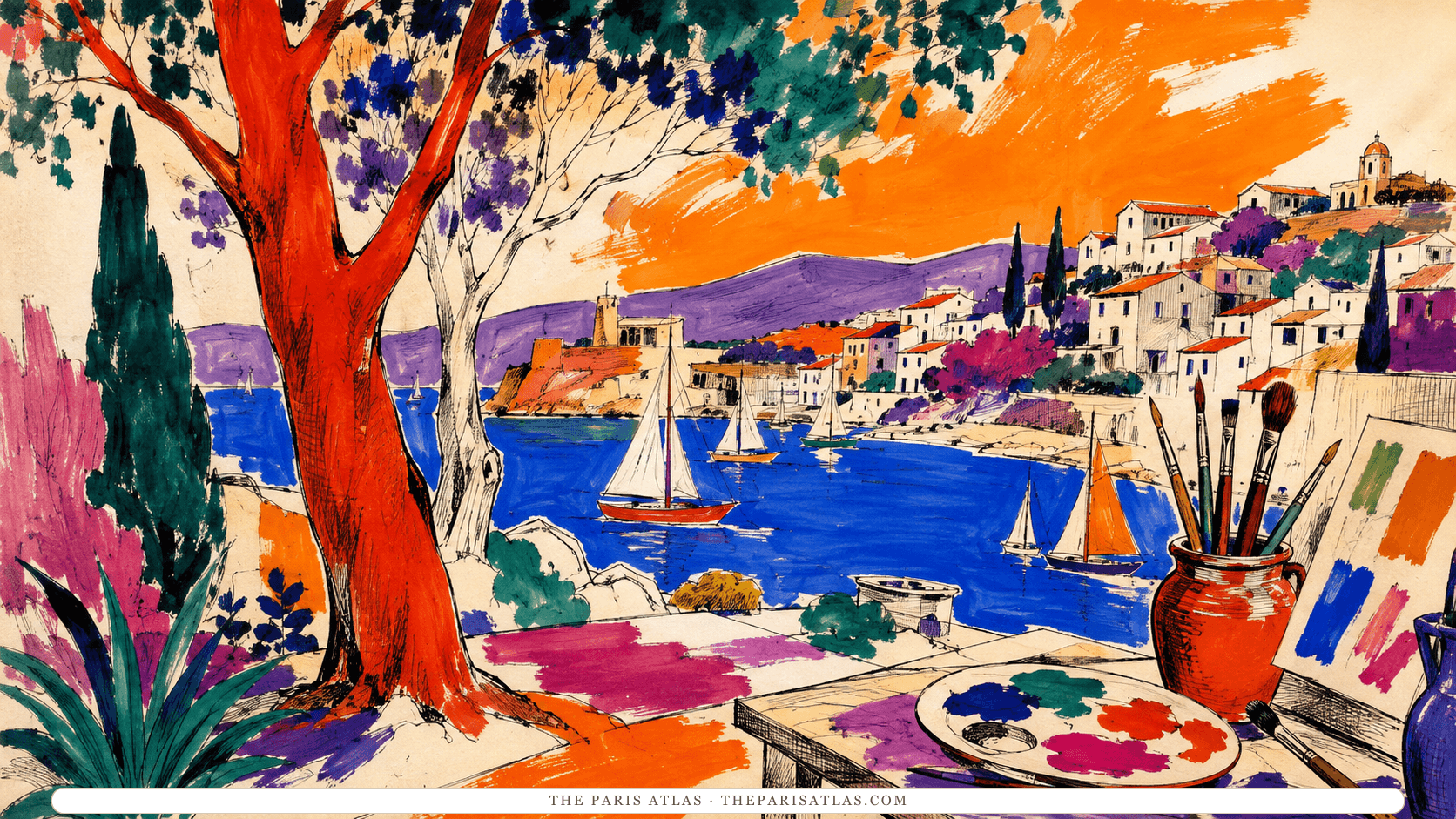
Fauvism was an early twentieth-century movement in painting associated above all with Henri Matisse, André Derain, and Maurice de Vlaminck. Its artists used vivid, often non-naturalistic colours and conspicuous brushwork to reinterpret familiar subjects, including landscapes, portraits, and still lifes. A face did not have to be painted in flesh tones, nor a landscape organised around the colours observed in nature. Colour could instead establish the picture’s structure and expressive character.[1]
The movement became publicly identified at the Salon d’Automne in Paris in 1905, although its development began earlier. It was not an organisation with a formal membership or a binding manifesto. Artists worked together, exhibited alongside one another, and pursued related experiments without agreeing on a single method. The name therefore describes a loose artistic network as well as a recognisable approach to painting.[2]
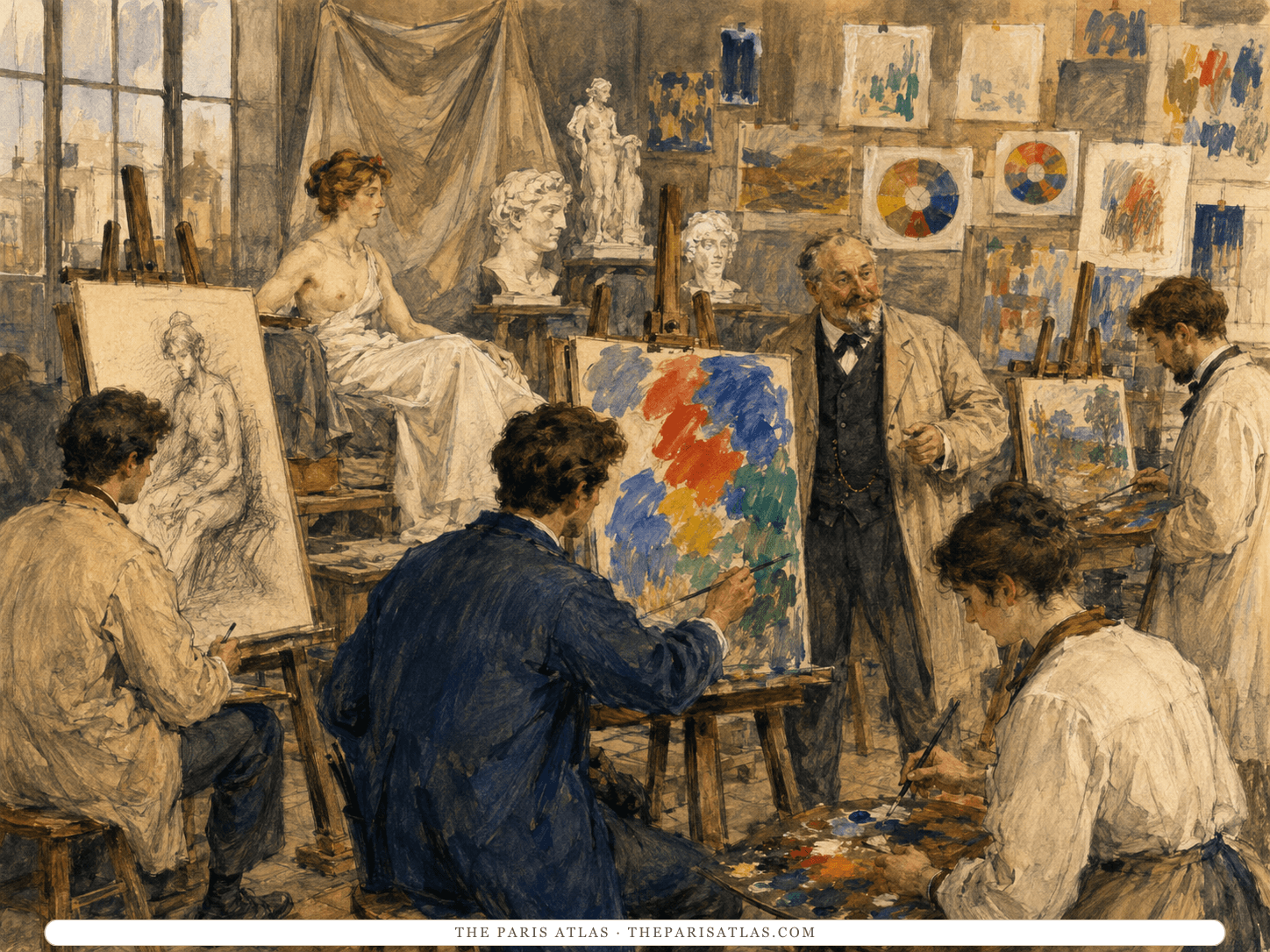
Several relationships important to Fauvism developed in the Paris studio of Gustave Moreau. A professor at the École des Beaux-Arts from 1892 until his death in 1898, Moreau taught Matisse, Albert Marquet, Charles Camoin, and Georges Rouault, among many others. Although his own paintings belonged to a different artistic world, he encouraged students to develop individual personalities rather than reproduce his style. His teaching combined respect for older art with an openness that helped younger painters pursue independent directions.[3]
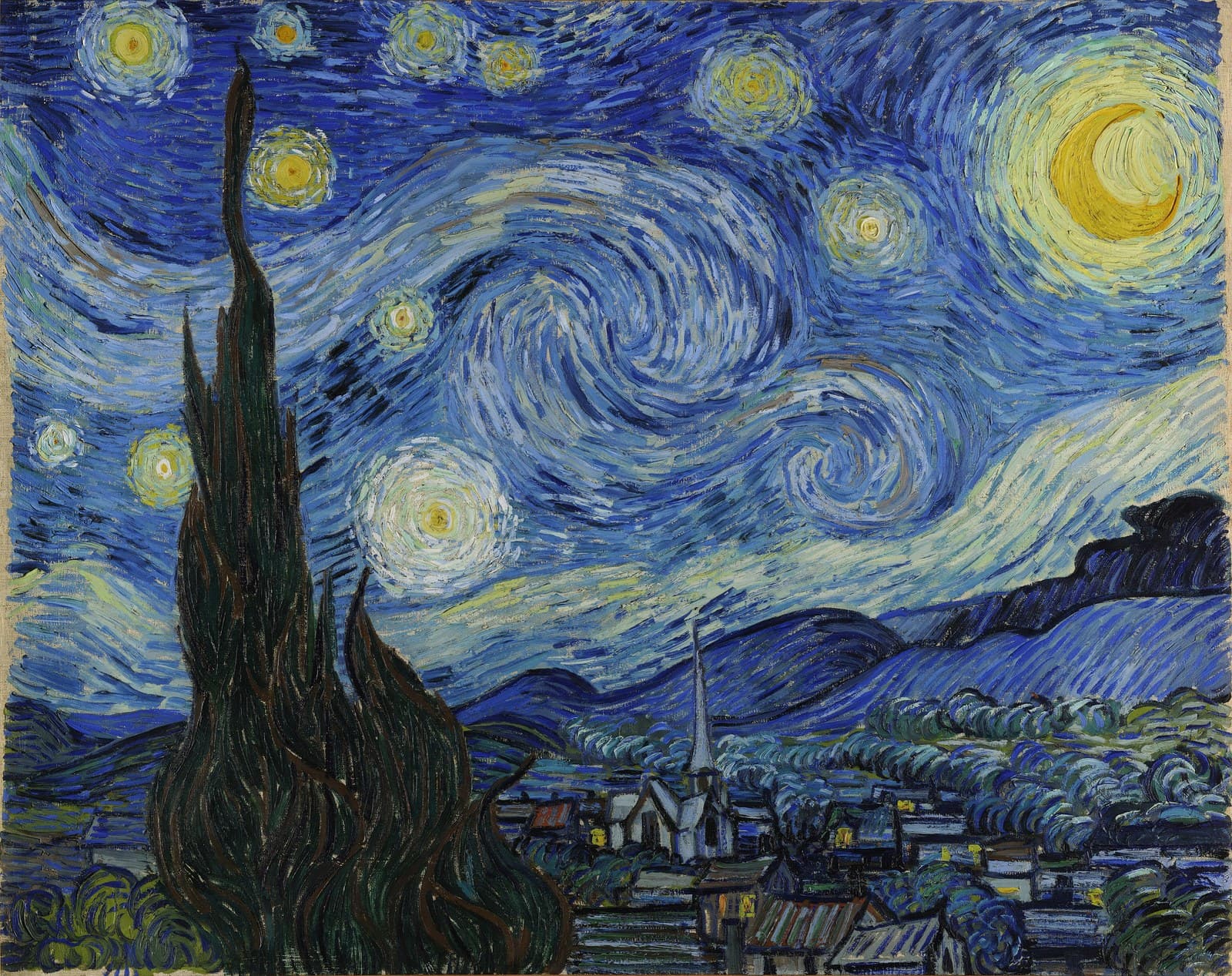
The future Fauves also learned from the generation now described as Post-Impressionist. Vincent van Gogh’s emphatic brushwork, Paul Gauguin’s departures from naturalistic colour, and Paul Cézanne’s construction of form offered different alternatives to conventional representation. Georges Seurat, Paul Signac, and Henri-Edmond Cross provided another important precedent through their experiments with separate touches of colour. Fauvism developed through the adaptation of these approaches, not through a complete rejection of nineteenth-century painting.[4]
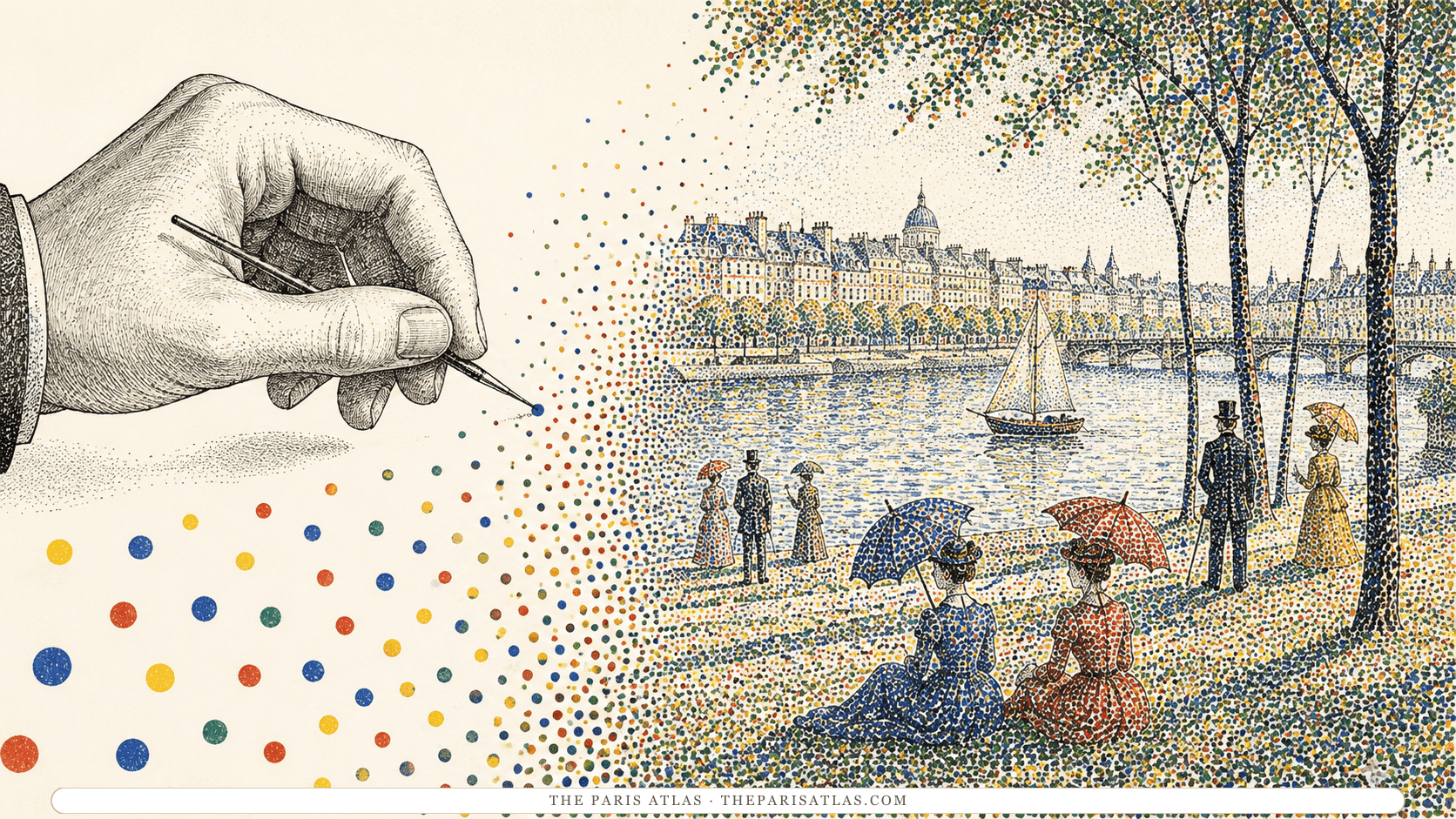
A decisive stage in Matisse’s development came in the summer of 1904, when he visited Signac in Saint-Tropez and encountered the work of Cross, who lived nearby. Their Neo-Impressionist methods encouraged him to place distinct touches of contrasting colour beside one another. Rather than mixing every transition on the palette, a painter could allow neighbouring colours to interact in the viewer’s perception.[5]
Matisse explored that approach in Luxe, calme et volupté, completed later in 1904. Its bathers and coastal setting are assembled from separate patches of colour, giving the surface a mosaic-like appearance. The painting is an important bridge between Neo-Impressionism and Fauvism: intense colour and a constructed pastoral scene were already central, but Matisse had not yet arrived at the freer combinations of brushwork associated with the following summer.[6]
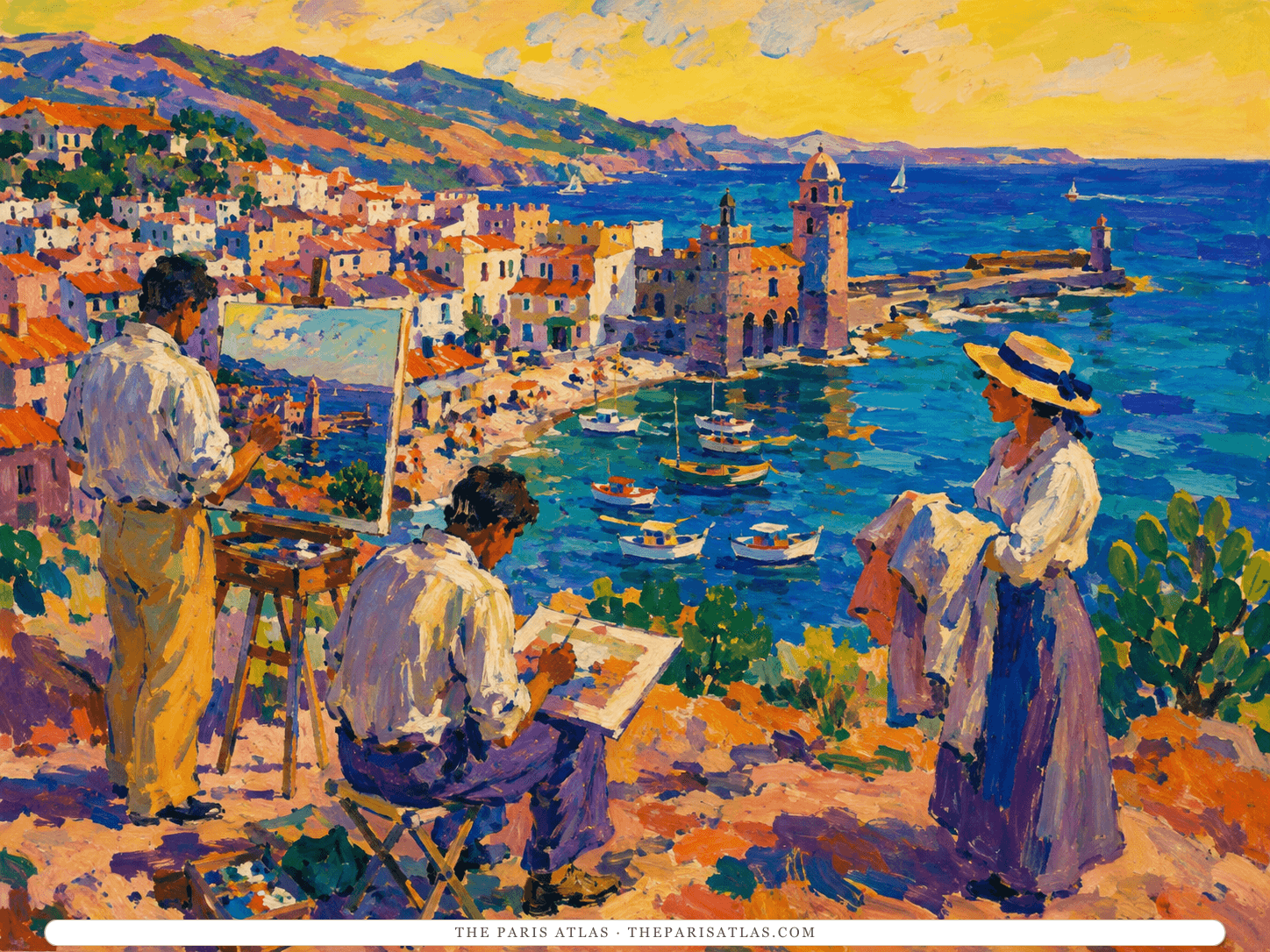
In the summer of 1905, Matisse invited Derain to join him in Collioure, a fishing town on the Mediterranean near the Spanish border. Over several weeks, they painted the harbour, boats, surrounding hills, and people around them. Their collaboration encouraged a departure from the obligation to reproduce observed colours. They sought equivalents for the experience of light through contrasts and intensities that could exceed those of the actual scene.[7]
The work was not confined to two painters standing before the same landscape. Amélie Matisse posed for both artists, making an important contribution where professional models were difficult to find. Matisse also worked in watercolour and drawing, gathering material that could be developed later in his Paris studio. The summer involved experiments across different media rather than the discovery of one formula that every painting then followed.[8]
Derain’s Fishing Boats, Collioure of 1905 demonstrates both the shared interests and the differences between the artists. He looks down over a busy shoreline, using the curve of the beach and overlapping sails to guide the eye into the distance. Strong colour is combined with emphatic outlines and varied brushwork. The painting retains a clearly organised recession into space, showing that Fauvism did not require the complete elimination of perspective.[9]
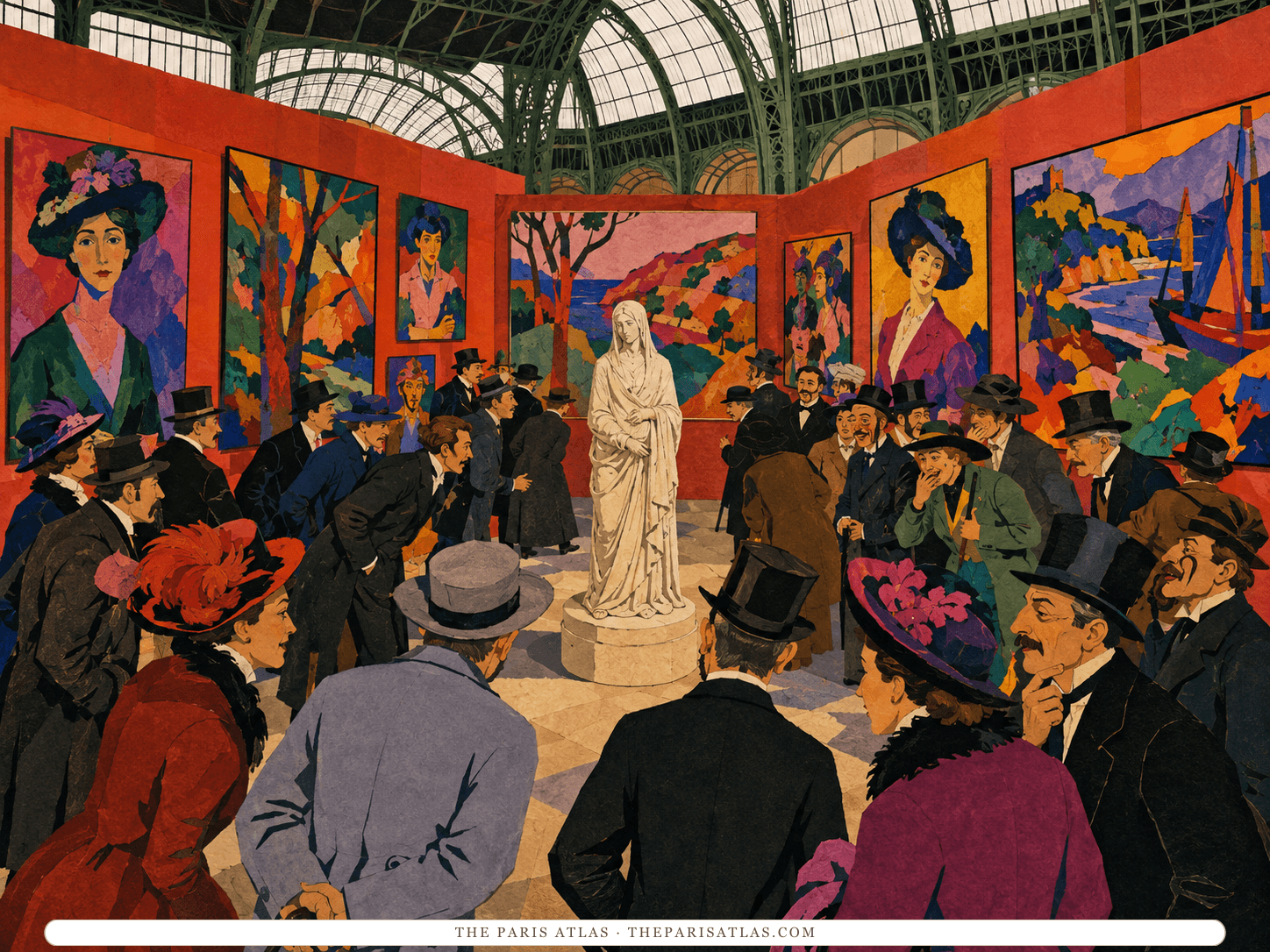
Fauvism acquired its name through the reception of paintings exhibited at the Salon d’Automne in October 1905, held at the Grand Palais in Paris. Gallery VII brought together works whose colours and handling appeared unusually forceful to many visitors. The exhibition made experiments developed through smaller circles of friendship and collaboration visible as a broader challenge to established taste.[2]
The critic Louis Vauxcelles compared traditionally modelled sculptures by Albert Marque with the surrounding paintings, writing “Donatello chez les fauves”—“Donatello among the wild beasts.” The contrast supplied the label les Fauves, from which Fauvism developed. Marque, the sculptor involved in the comparison, should not be confused with Albert Marquet, the painter associated with Matisse’s circle. The name came from criticism rather than from a founding declaration issued by the artists.[2]
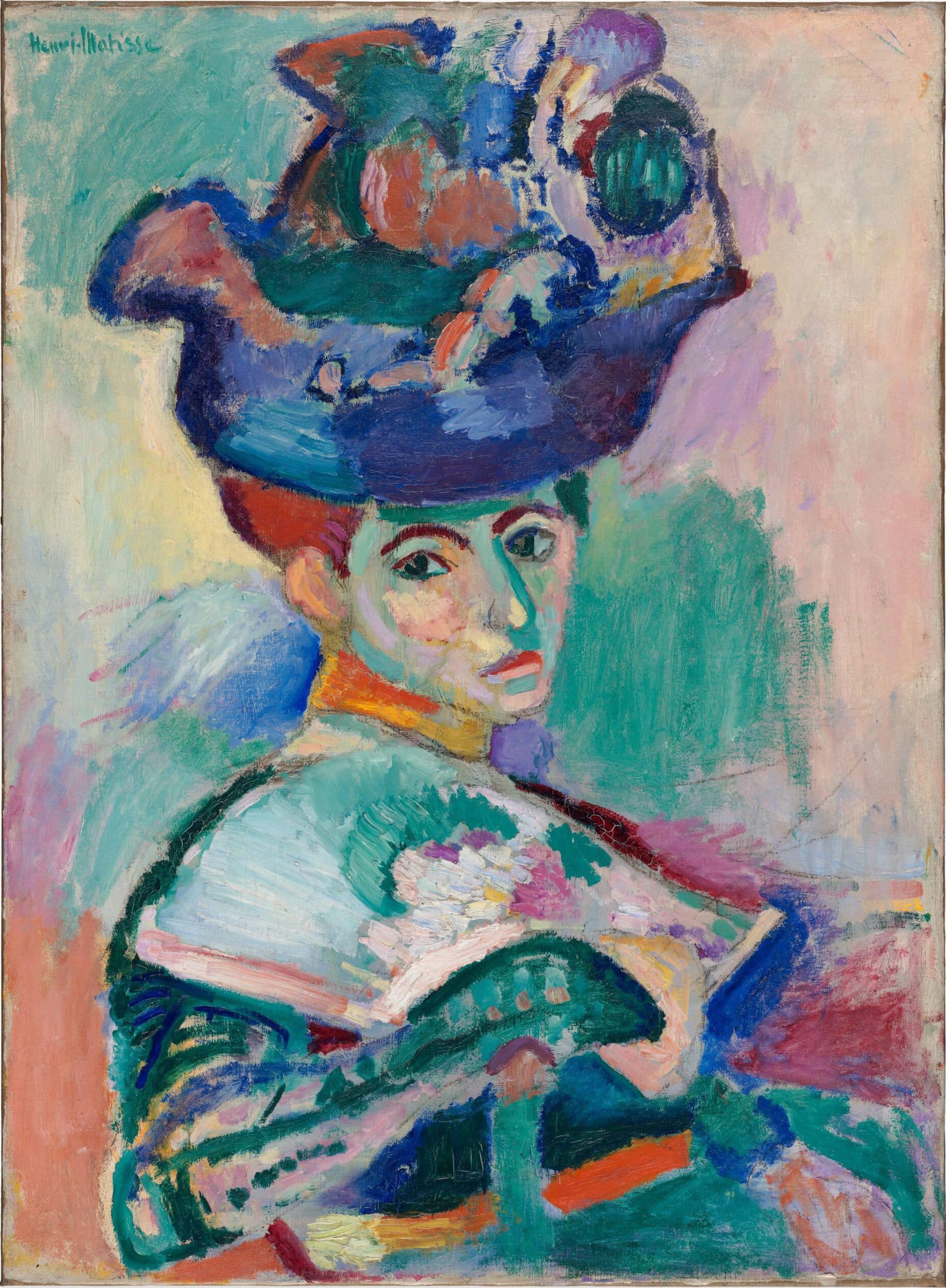
Matisse’s Woman with a Hat became one of the exhibition’s most discussed works. It portrays Amélie Matisse, but its green, mauve, yellow, and other contrasting passages refuse the smooth modelling and plausible skin tones expected in a conventional portrait. Its visibly worked surface also challenged ideas about how a finished painting should look. The subject remained recognisable; what had changed was the relationship between likeness, colour, and the marks on the canvas.[10]
The Fauves’ departure from naturalistic colour did not make their choices meaningless. In Matisse’s Portrait of Madame Matisse. The Green Line of 1905, a green band divides the face while strong contrasts distinguish adjoining areas. The portrait is constructed through relationships between colours rather than through gradual shading alone. Its reduced detail gives those relationships greater prominence. Reading the green as a literal description of skin misses its pictorial function; treating it as a simple code for a particular emotion is equally limiting.[1]
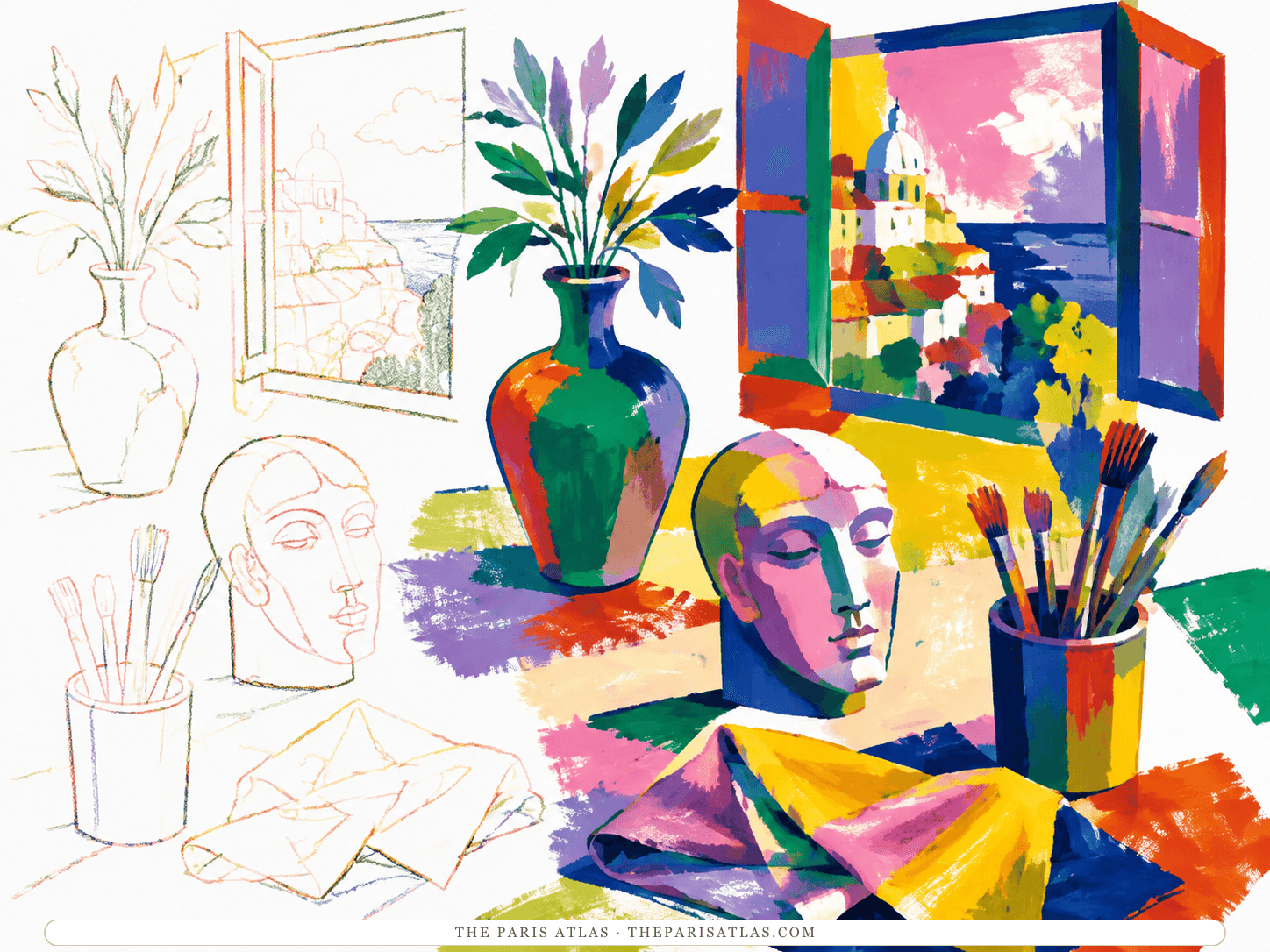
In Open Window, Collioure of 1905, Matisse places the harbour within the rectangular frame of an open window. Broad areas around the opening contrast with smaller, broken touches describing boats, water, and sky. Unexpected pinks and oranges convey the brightness of the scene without providing a straightforward record of its colours. The window still establishes a view from an interior into the distance, but the relationships across the painted surface are just as important as that illusion of depth. The eye moves between recognising a harbour and noticing how the coloured marks fit together.[11]
A Fauvist painting might contain small separate touches, broad patches, strong outlines, or comparatively thin areas of paint. Derain’s Fishing Boats, Collioure, for example, combines broken brushwork with flatter passages rather than applying one consistent system across the entire canvas. Such differences matter: Fauvism cannot be defined simply as thick paint squeezed straight from a tube. The way a mark relates to neighbouring marks, an outline, or an area of colour is part of the composition.[12]
An important strand of Fauvism developed around Chatou, west of Paris, where Derain and Vlaminck shared a studio from 1900. Their working relationship therefore preceded the Collioure summer. Vlaminck’s The Seine at Chatou of 1906 transforms a familiar riverside setting through heightened colour and insistent brushwork. Landscapes around the Seine offered an alternative to the Mediterranean scenes most closely associated with Fauvism’s emergence. The movement grew from several local relationships, not from a single group that first assembled in southern France.[13]
The northern coast provided another important setting. In 1906, Marquet joined Raoul Dufy in Normandy, where ports, beaches, flags, and waterfront buildings became subjects for closely related paintings. Their views of Le Havre, Fécamp, and Trouville show how Fauvist experiments could engage with holiday destinations and modern coastal life as well as small Mediterranean towns. Marquet’s increasing simplification also demonstrates that a painter could participate in the movement without maintaining its most aggressively saturated colours.[14]
Othon Friesz, Dufy, and Georges Braque had connections through Le Havre’s artistic community before their involvement with Fauvism. These friendships helped extend the movement beyond the Matisse–Derain partnership. The Le Havre context is particularly important for understanding Braque: before developing Cubism, he participated in a network of artists experimenting with heightened colour and landscape painting.[15]
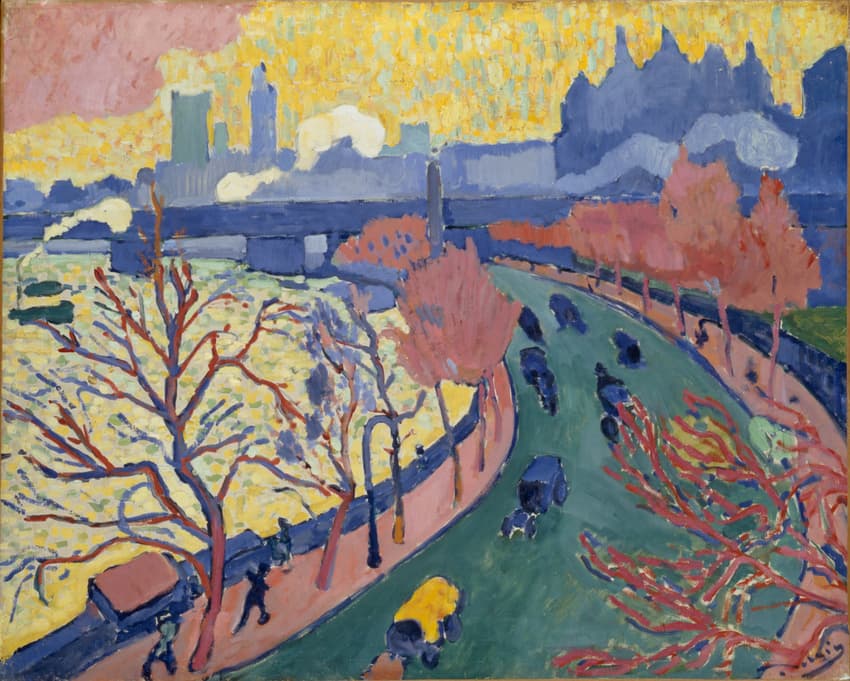
At the encouragement of the dealer Ambroise Vollard, Derain painted London in 1906. His views of the Thames, bridges, and embankments applied Fauvist colour to a major industrial and commercial city. In Pont de Charing Cross, broad colour areas coexist with separate touches in the water and sky. Distortions of scale and perspective help organise an animated urban view rather than reproduce it neutrally. These paintings broaden the geographical story of Fauvism and show that its methods were not dependent on Mediterranean sunlight.[16]
Kees van Dongen brought a different emphasis through portraits and subjects drawn from urban entertainment. His Modjesko, Soprano Singer of 1908 portrays a music-hall performer in an image shaped by brilliant colour and theatrical presentation. Such work complicates the idea that Fauvism was primarily a movement of outdoor landscape painters. The altered appearance of a performer’s face, costume, and stage persona offered another setting in which naturalistic description could give way to heightened visual effect.[17]
Other painters associated with the movement included Henri Manguin, Charles Camoin, Jean Puy, Louis Valtat, and Georges Rouault. Their presence reinforces the distinction between Fauvism’s central partnerships and its wider circle: artists could share exhibitions and particular experiments without making identical work or maintaining those interests for the same length of time.
Émilie Charmy also worked within this experimental environment. Associated with the Fauves, she used intense colour and emphatic paint handling in works such as Seated Figure, Corsica. The painting gives a familiar subject an intensity that depends on the painted surface as much as on what it represents. Her work extends the account of Fauvism beyond the small group of artists most frequently identified with its emergence.[18]
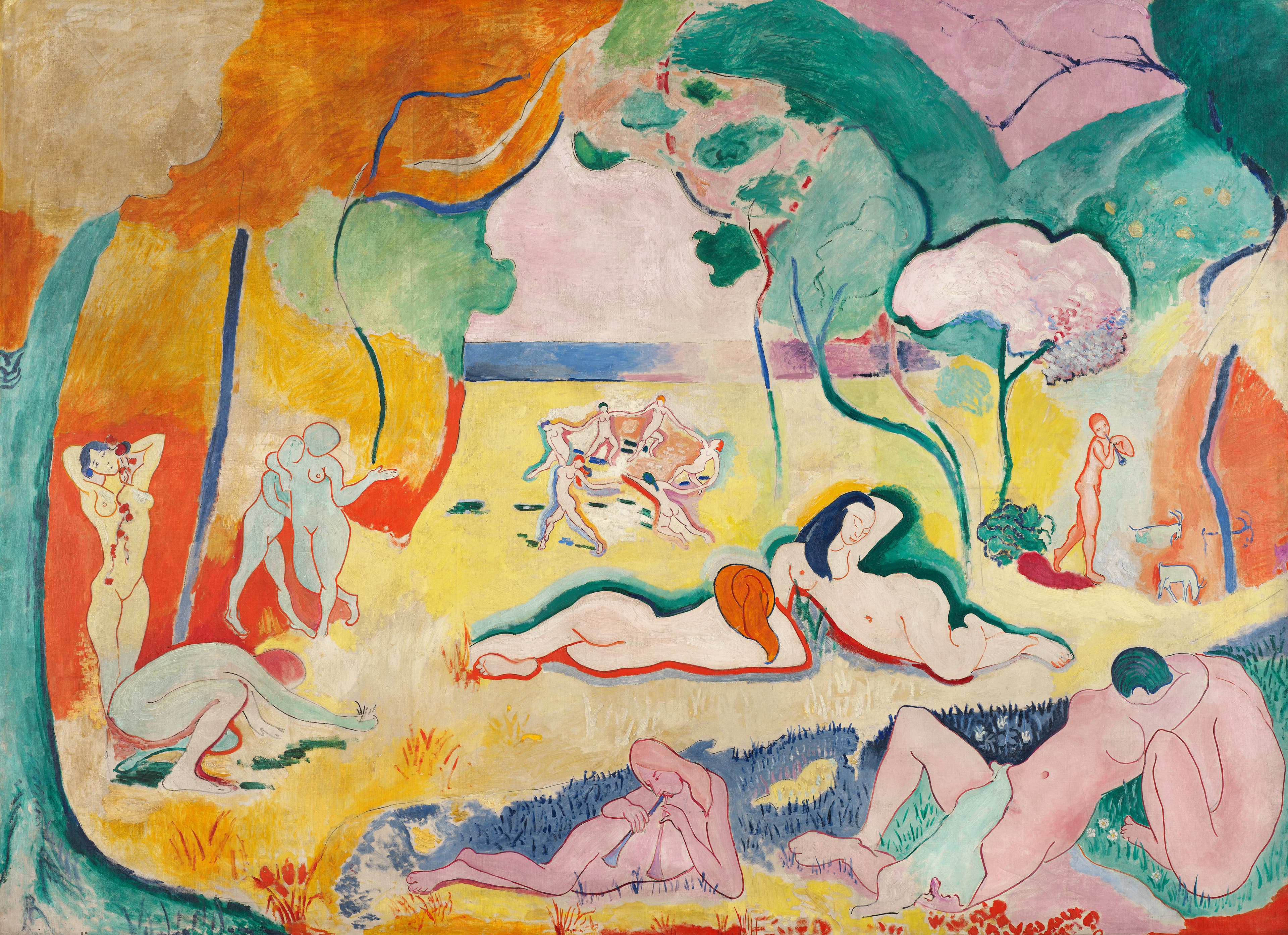
Matisse’s Le Bonheur de vivre, usually called The Joy of Life, was painted in 1905–1906. Its large pastoral composition brings together nude figures reclining, embracing, playing music, and dancing in a landscape. The subject belongs to a long tradition of imagined scenes of human happiness, but Matisse reorganises it through strong colour, simplified bodies, and unexpected changes of scale. The figures and surrounding space do not obey a consistently naturalistic system.[19]
The painting demonstrates why Fauvism cannot be understood only as a spontaneous response to a place. This is a deliberately constructed image rather than a record of one observed gathering. Its contours and colour areas establish connections across the whole canvas, while the distant dancers introduce a rhythm echoed elsewhere in the composition. Fauvist experimentation could sustain an ambitious studio painting as well as a rapidly handled view of a harbour.[19]
The 1905 scandal was important, but criticism alone did not establish the artists’ careers. Berthe Weill, who opened her gallery at 25 rue Victor-Massé in 1901, promoted young artists associated with Fauvism before the movement received its famous label. Her exhibitions created opportunities for work that did not yet enjoy broad acceptance. Through a sustained commitment to younger painters, she helped connect studio experiments with an audience and a market. Fauvism’s public identity developed through these smaller commercial galleries as well as through the large Paris salons.[20]
Collectors provided another form of support. Leo and Gertrude Stein bought Woman with a Hat directly from the 1905 Salon and displayed it in their apartment at 27 rue de Fleurus. A painting criticised in a public exhibition could acquire a different status in a private collection, where artists and visitors encountered it repeatedly. The Steins’ purchase was therefore important both materially and as an endorsement of Matisse’s unconventional work.[21]
Fauvism did not end through a single quarrel, exhibition, or official announcement. Its commonly given closing date of about 1908 describes a period when the painters’ paths increasingly diverged. Because they had not formed a unified organisation, there was no institution to dissolve. The term is most useful for a concentrated phase of experimentation rather than as a label for everything these artists subsequently produced.
For Braque, Cézanne offered an important route towards a more concentrated investigation of structure. Road near L’Estaque, painted in 1908, has a restricted palette, compressed space, and angular forms. MoMA’s interpretation connects these features to the impact of Cézanne’s 1907 memorial exhibition. Braque’s subsequent collaboration with Picasso helped develop Cubism, but his trajectory should not be mistaken for a destination shared by every Fauvist painter.[22]
Derain likewise reconsidered the relationship between colour, form, and artistic tradition. His close exchanges with Matisse and Vlaminck were followed by important connections with Braque and Picasso, while his interests extended beyond painting to other media. He was not merely a follower who abandoned Matisse’s discoveries. His changing work reflects an independent investigation whose Fauvist phase was one part of a longer and less easily classified career.[23]
Matisse continued to develop the relationship between colour, line, and decoration in paintings such as Dance and Music, made in 1909–1910, and The Red Studio of 1911. Much later, cut paper became a major medium for his experiments. These developments carried forward questions important to Fauvism without simply prolonging the manner of 1905. His career changed repeatedly, and it is misleading to classify all of his later work as Fauvist.[5]
Matisse’s 1908 essay “Notes of a Painter” helps explain why the name “wild beasts” can be misleading when taken too literally. He understood expression as something created by an entire composition, including the placement of figures, the spaces around them, and their proportions. It did not depend only on a dramatic facial expression or an emphatic gesture. He also described revising relationships within a painting as it developed.[24]
This account offers a useful corrective to the idea that Fauvist painting was simply uncontrolled emotion. A colour might depart radically from appearances yet still be selected for its relationship to the rest of the picture. Freedom from naturalistic description did not remove the need for judgment, adjustment, and organisation. Matisse’s essay was his own statement rather than a manifesto binding the whole Fauvist circle.[24]
Fauvism and German Expressionism shared an interest in heightened colour and departures from conventional representation, but Expressionism did not simply begin as a response to the 1905 Paris exhibition. The artists’ group Brücke was founded in Dresden on 7 June 1905, before the autumn Salon that gave the Fauves their name. The chronology matters: these were overlapping developments within European modern art, not a simple sequence in which Paris invented expressive colour and Germany subsequently adopted it.
There were nevertheless direct connections. Van Dongen briefly joined Brücke in 1908, providing a concrete example of contact between the Parisian and German circles. Such exchanges help explain similarities without erasing the different histories and concerns of the artists involved. “Fauvism” and “Expressionism” are useful distinctions, but they do not describe completely sealed artistic worlds.[25]
Fauvism’s longer influence was also transmitted through the later development of its participants. Richard Diebenkorn, for example, studied Matisse’s work over decades, finding possibilities in its colour, space, and organisation that informed both his figurative paintings and abstractions. This was not the straightforward imitation of a short-lived French style. It shows how questions made especially visible during Fauvism could continue to generate different kinds of painting long after the original group had dispersed.[26]
Painting · Fauvism
A harbour seen through an open window, painted with contrasting colours and loose brushstrokes.
Painting · Fauvism
Nude figures rest, dance, and make music in a brightly coloured, deliberately simplified landscape.
Painting · Fauvism
A portrait of Amélie Matisse using bold, non-naturalistic colours and conspicuous brushwork.
Painting · Fauvism
A London riverside view transformed through intense colour, flattened forms, and altered perspective.
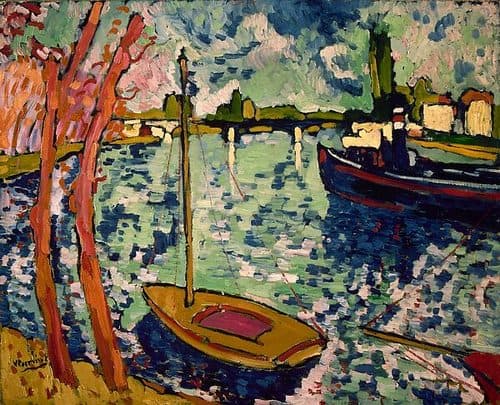
Painting · Fauvism
A riverside landscape painted with forceful brushwork and vivid reds, blues, and greens.
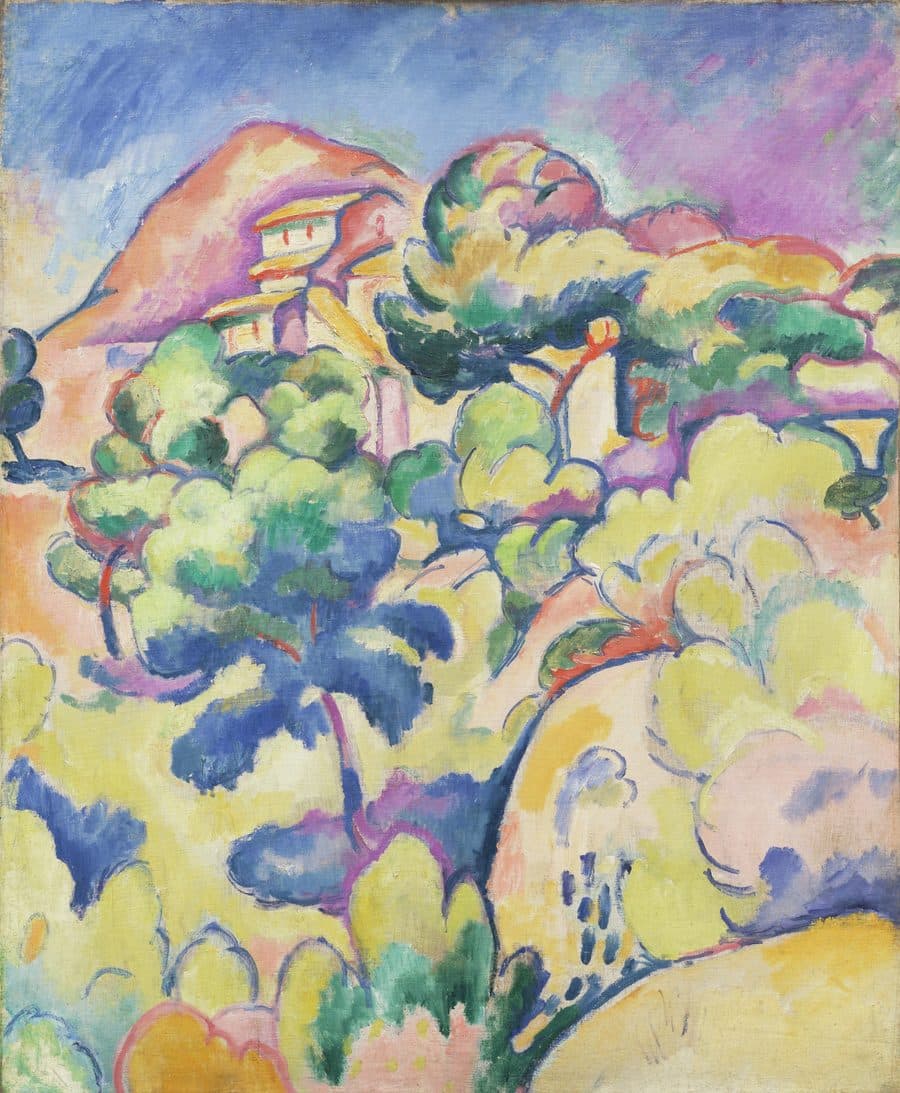
Painting · Fauvism
A southern French landscape with bold outlines, flattened space, and intense colour, painted before Braque developed Cubism.
1892–1898
Gustave Moreau teaches at the École des Beaux-Arts, encouraging pupils including Matisse and Marquet to develop independent approaches.
1900
Derain and Vlaminck share a studio at Chatou, establishing an important relationship in Fauvism’s early history.
1904
Matisse visits Saint-Tropez and develops Luxe, calme et volupté, an important precursor to his Fauvist paintings.
Summer 1905
Matisse and Derain work together in Collioure, experimenting with colour, light, and varied handling of paint.
October 1905
The Salon d’Automne at the Grand Palais brings the painters to wider attention; Vauxcelles’s comparison supplies the name “Fauves.”
1906
Derain paints London, while Marquet and Dufy work in Normandy, extending the movement’s geographical range.
1907–1908
Cézanne’s example becomes increasingly important to Braque’s movement towards Cubism.
1908
Matisse publishes “Notes of a Painter,” setting out his own understanding of colour, expression, and composition.
Fauvism had no formal founder. Matisse was its central figure, while Derain and Vlaminck were crucial to its development. The movement emerged through overlapping collaborations rather than the establishment of a single school or organisation.
Its most recognisable characteristics are intense, often non-naturalistic colour and forceful brushwork. These are tendencies, not compulsory rules: different painters combined strong colours with varying degrees of simplification, outlining, and spatial depth.
Fauvist paintings generally retain recognisable subjects. Their colours and forms may be altered, but a portrait remains a portrait and a harbour remains identifiable. A work such as Open Window, Collioure gives unusual independence to colour without abandoning representation.
Fauvism is especially associated with heightened colour, while early Cubism increasingly investigated the construction of forms and space through geometric simplification and fragmentation. Braque’s transition illustrates the connection, but the movements are not interchangeable and did not involve identical groups of artists.
The sources below include histories, manifestos, scholarly research, and primary materials that informed this page. They document Fauvism, its development, and the artists and works associated with it.

Documents Moreau’s teaching, his encouragement of individual artistic personalities, and his pupils, including Matisse, Marquet, Camoin, and Rouault.
Overview of the movement’s principal artists, artistic precedents, defining characteristics, and relationship to Cubism and Expressionism.
Collection record dating the painting to autumn–winter 1904 and documenting its production following Matisse’s summer in Saint-Tropez.
Detailed account of the Collioure collaboration, experiments in colour and brushwork, and Amélie Matisse’s contribution as a model.
Places the Fauves within a wider network of artists, dealers, exhibitions, and modern urban culture rather than treating them as a formally organised group.
Collection commentary illustrating Derain’s elevated viewpoint, diagonal recession, varied paint application, and differences from Matisse during their collaboration.
Explains Vauxcelles’s “wild beasts” comparison, identifies sculptor Albert Marque, and traces the painting’s purchase by Leo and Gertrude Stein.
Curatorial audio transcript explaining the painting’s unexpected colours, contrasting brushwork, and relationship between the interior and harbour view.
Museum-authored interpretation, hosted by Google Arts & Culture, explaining the portrait’s radical simplification and strong colour contrasts.
Documents Vlaminck’s shared studio with Derain from 1900 and the Seine landscapes associated with their work around Chatou.
Explains Marquet’s collaboration with Dufy in Normandy in 1906 and their paintings of ports, beaches, and modern coastal life.
Places Friesz within the Le Havre circle, including his connections to Dufy and Braque and the development of Fauvism beyond Paris.
Discusses Derain’s London paintings, Ambroise Vollard’s encouragement, and the combination of flat colour with separate brushstrokes.
Collection commentary on Van Dongen’s theatrical subject matter and his connection to the German Expressionist group Brücke in 1908.
Collection entry identifying Charmy’s association with the Fauves and her use of bright colour and emphatic brushwork.
Documents Weill’s gallery at 25 rue Victor-Massé and her early support for Fauvist artists before and after the 1905 Salon scandal.
Collection record and curatorial commentary on the portrait’s sitter, unconventional colour, visible brushwork, and reception in 1905.
Explains Cézanne’s influence and the restricted palette, compressed space, and geometric forms associated with Braque’s transition towards Cubism.
Presents Derain as an independent experimenter, covering his relationships with Matisse, Vlaminck, Braque, and Picasso and his changing artistic interests.
Establishes that Brücke was founded in Dresden on 7 June 1905, before the Paris exhibition that gave the Fauves their name.
Documents Richard Diebenkorn’s sustained engagement with Matisse and connections in their treatment of colour, space, subjects, and painting technique.
These references provide the documented foundation for this movement's history and interpretation. Claim-level citations remain attached to the specific claims they support.
 Explore more resources