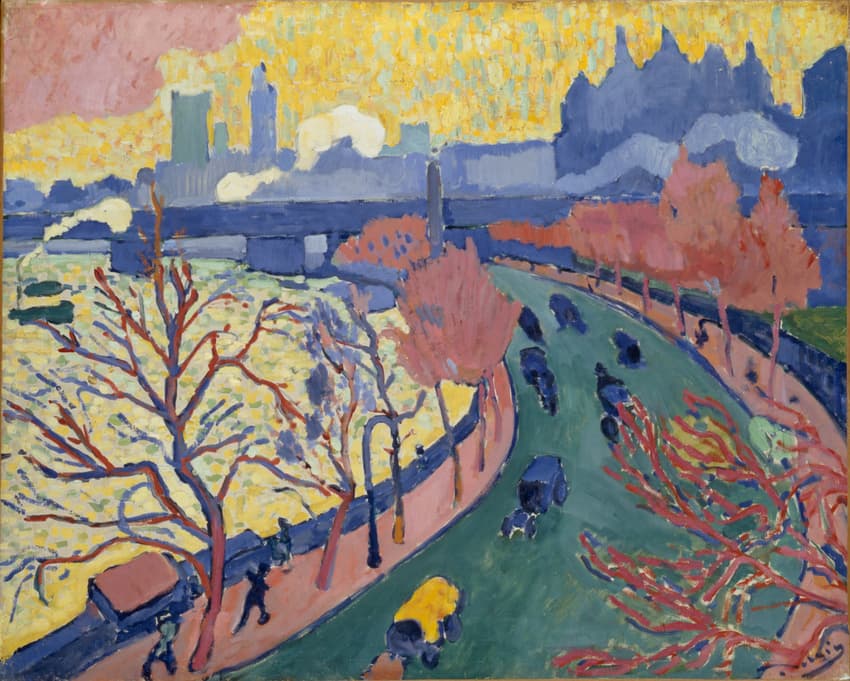
Charing Cross Bridge
by André Derain
A London riverside view transformed through intense colour, flattened forms, and altered perspective.
- c. 1906
- Oil on canvas
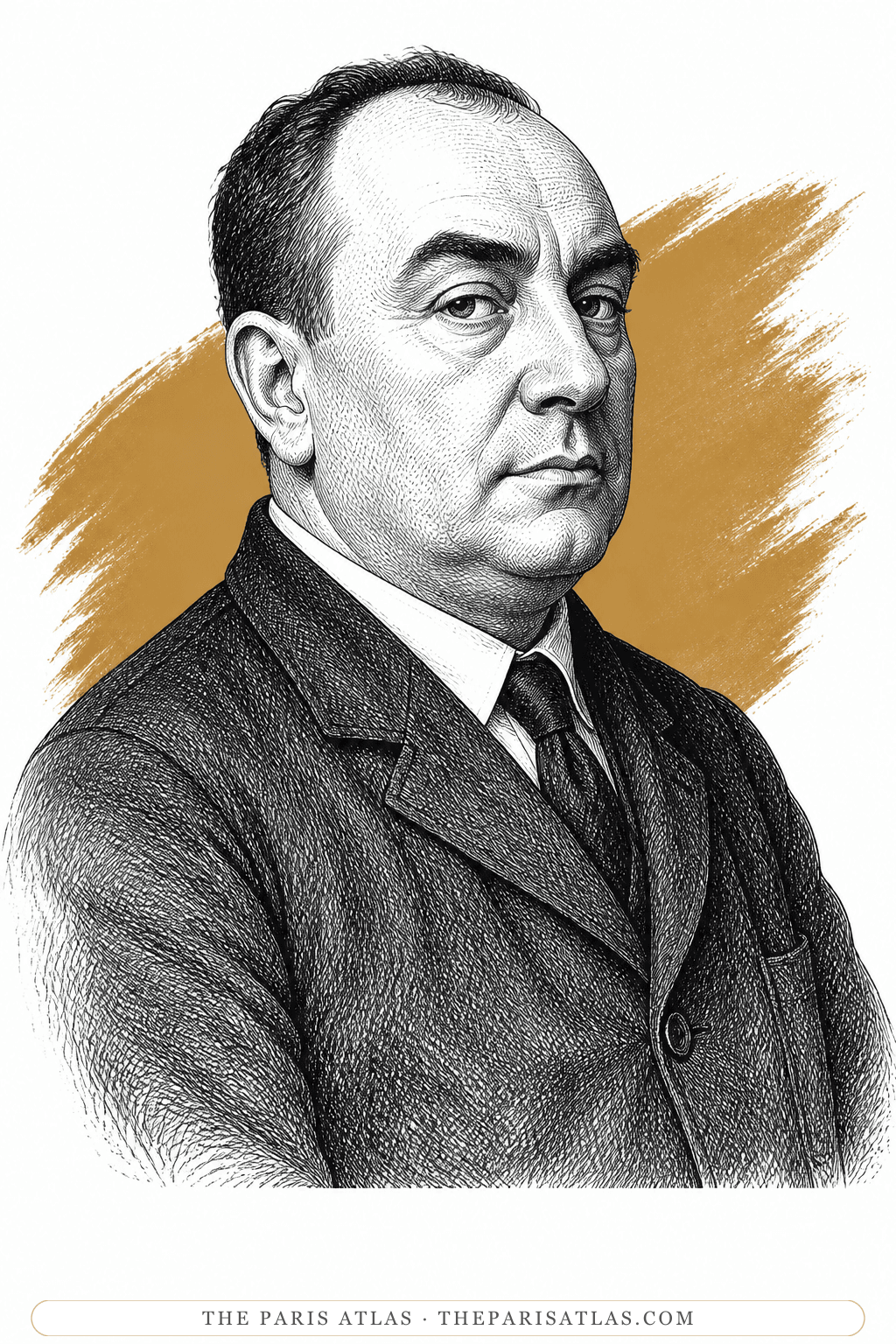
About André Derain
London without local colour
Encouraged by the dealer Ambroise Vollard, Derain travelled twice to London and produced about thirty paintings there. In Charing Cross Bridge, the street and buildings become broad flat areas of colour while the sky and water break into smaller, fragmented touches.
Vehicles are distorted so that their silhouettes echo the curve of the Victoria Embankment. The altered forms and perspective turn the riverside view into an expressive sensation of movement rather than a neutral record of London.
Colour as emotional transcription
The Musée d’Orsay describes Fauvism not as a structured movement but as an agreement among young painters that pure colour could express an emotional experience of the world instead of imitating visible reality.
Charing Cross Bridge carries that principle into an urban landscape. Its intense colour, flattened buildings, fragmented water, and distorted traffic make it one of Derain’s most accomplished Fauvist compositions.
Close reading
Reading the work, detail by detail
Derain looks across London from above and lets colour reorganise the traffic, river, bridge, and distant skyline. The six details show how repeated curves and complementary hues turn a particular city view into a mobile construction.
1.The sky burns against a blue skyline
Short yellow strokes flicker behind a continuous blue silhouette. The complementary contrast makes the horizon vibrate and denies the distance the atmospheric softness expected of a city view.
2.The bridge is a compressed blue bar
The bridge runs almost flat across the canvas, its piers barely separating river from skyline. It behaves as a structural stripe before it reads as engineering, locking the upper half into place.
3.The green road pulls the eye around the bend
A green wedge widens toward the foreground while coral trees repeat along its edge. The curve converts recession into a strong surface shape and carries the eye through the traffic like a current.
4.Dark cabs punctuate the invented green
The vehicles register as compact blue-black marks rather than meticulously described carriages. Spaced down the road, they measure its depth while retaining the blunt force of paint dabs.
5.The river is assembled from broken colour
Cream and blue marks jostle across the water without blending into reflections. The river therefore feels bright and unstable, an active field equal in energy to the road beside it.
6.A red tree draws directly over the river
The tree's coral trunk divides into blue-edged branches that spread over the water. It flattens near and far together, replacing natural depth with a calligraphic screen.
Where to see it
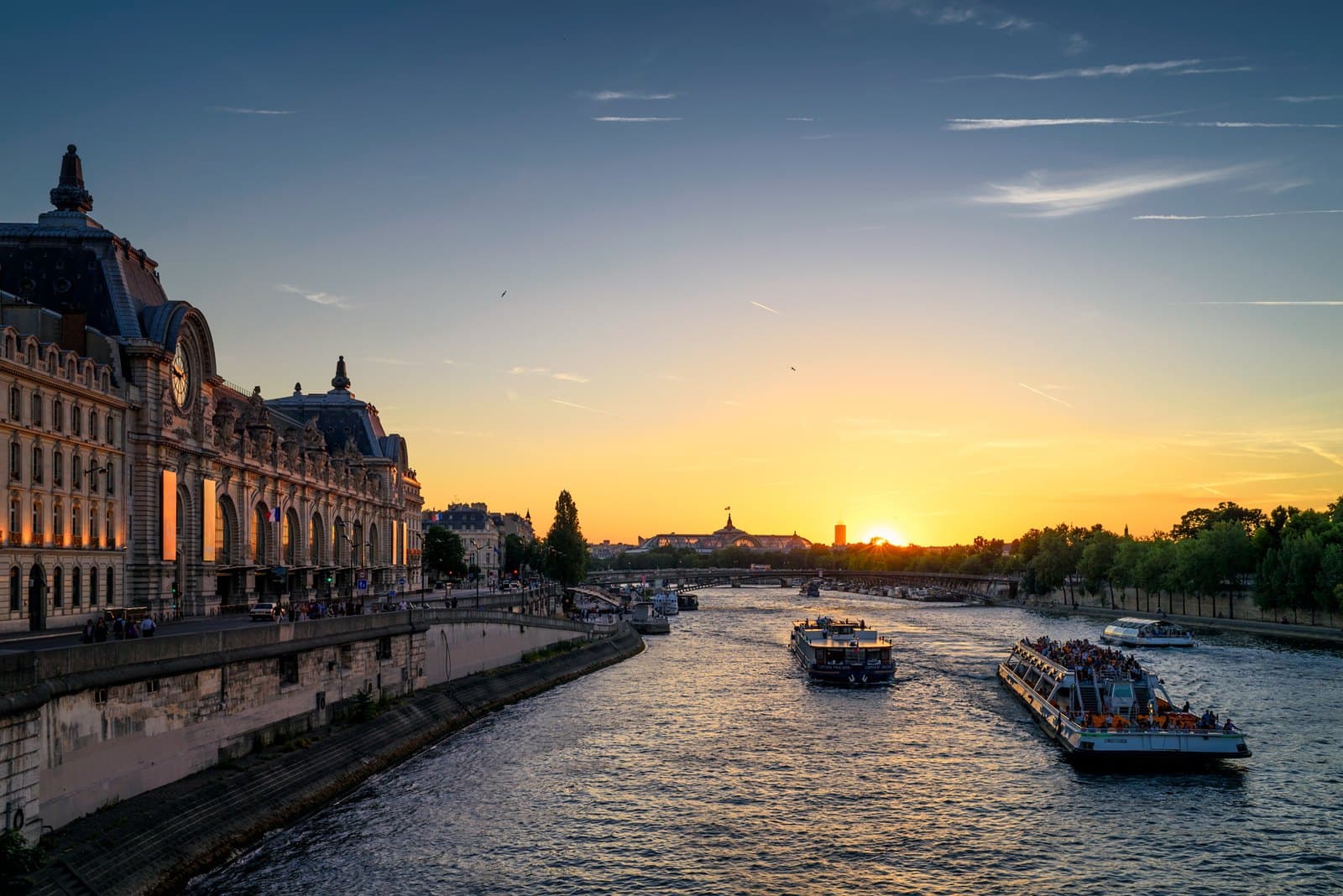
Musée d’Orsay, Paris
Esplanade Valéry Giscard d’Estaing, 75007 Paris, France
Displays and loans can change. Check whether this work is on view before making a special trip.
Plan your visitFrequently asked questions
When did Derain paint Charing Cross Bridge?
The Musée d’Orsay dates this version to about 1906.
Why did Derain paint London?
The dealer Ambroise Vollard encouraged him to visit London; Derain made two trips and produced about thirty paintings of the city.
What makes Charing Cross Bridge Fauvist?
Derain uses intense, non-naturalistic colour, broad flat tones, fragmented marks, and distorted forms to translate the scene emotionally rather than reproduce it literally.
How large is Charing Cross Bridge?
The oil-on-canvas painting measures 81 by 100.6 centimetres.
Where is Charing Cross Bridge?
This version belongs to the Musée d’Orsay in Paris. Max and Rosy Kaganovitch donated it to the French state in 1973, and it was assigned to the Musée d’Orsay in 1986.
More by André Derain
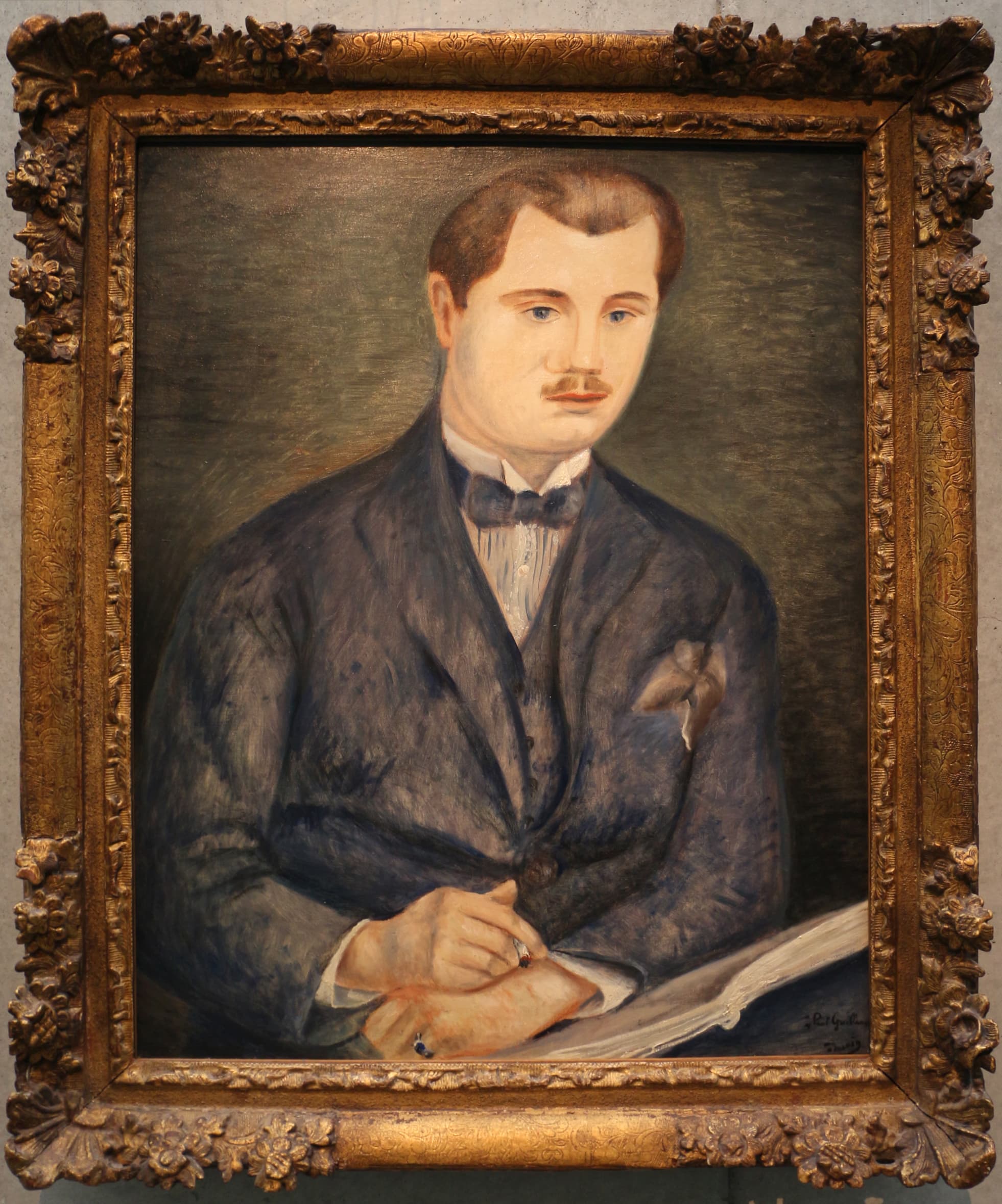
If you like André Derain
Explore painters from the same movements and circles.
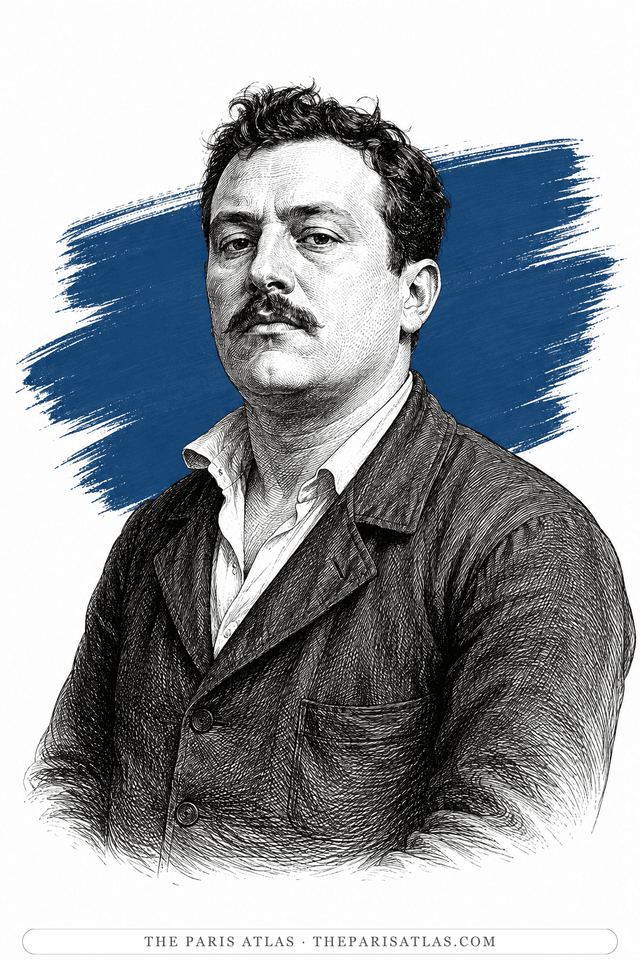
Maurice de Vlaminck
Self-taught French painter whose intense colour and forceful brushwork around Chatou made him one of Fauvism’s central figures.
View artist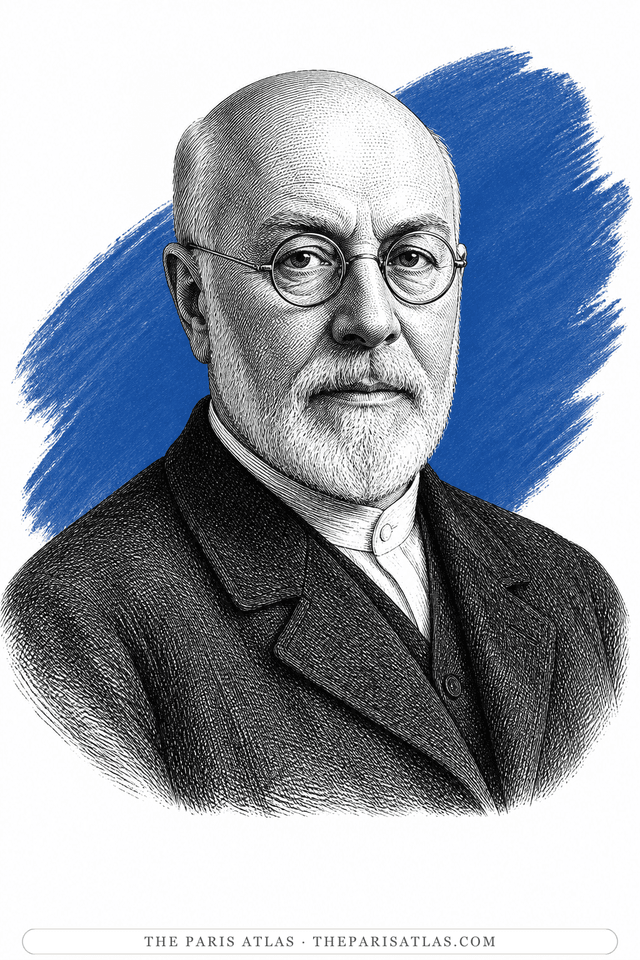
Henri Matisse
French painter whose room at the Paris Salon d'Automne of 1905 earned the name Fauvism — 'wild beasts' — from a critic's joke. He worked from 19 quai Saint-Michel, was bought early by Gertrude and Leo Stein, and began a forty-year rivalry with Pablo Picasso at the Steins' salon.
View artist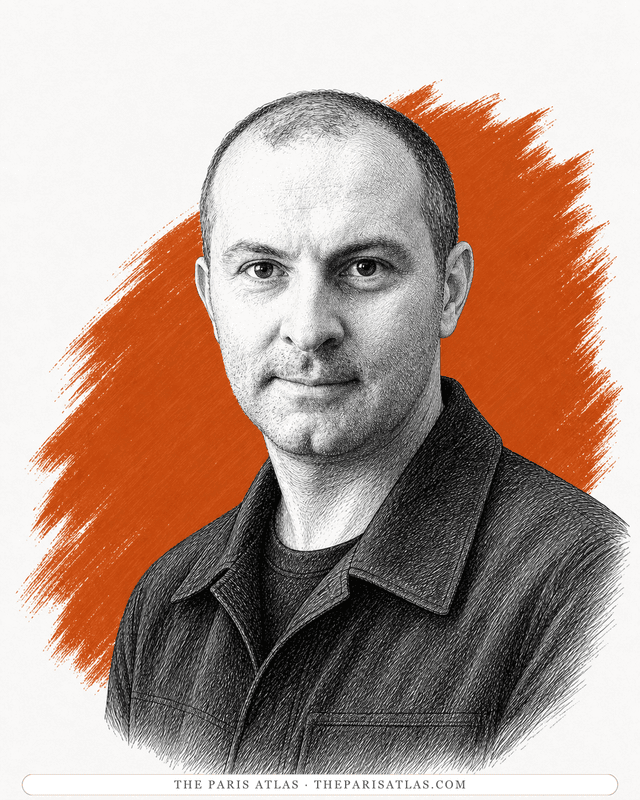
Arman
French-American artist, lifelong friend of Yves Klein, and a founder of New Realism.
View artist
References
The sources below include collection records, catalogues, scholarly research, and primary materials that informed this page. They document Charing Cross Bridge, its making, and its place in cultural history.


1André Derain, Pont de Charing Cross
WebsiteMusée d’OrsayUsed forWeb source consulted for documented facts and historical context presented on the Charing Cross Bridge page.
2André Derain 1904–1914: The Radical Decade
WebsiteCentre PompidouUsed forWeb source consulted for documented facts and historical context presented on the Charing Cross Bridge page.
3André Derain — Artist and Collection Record
WebsiteThe Museum of Modern ArtUsed forWeb source consulted for documented facts and historical context presented on the Charing Cross Bridge page.
4Fauvism
WebsiteThe Metropolitan Museum of ArtUsed forWeb source consulted for documented facts and historical context presented on the Charing Cross Bridge page.
These references provide the documented foundation for this work's history and interpretation. Claim-level citations remain attached to the specific claims they support.
 Explore more resources