Depicts
Paul Guillaume
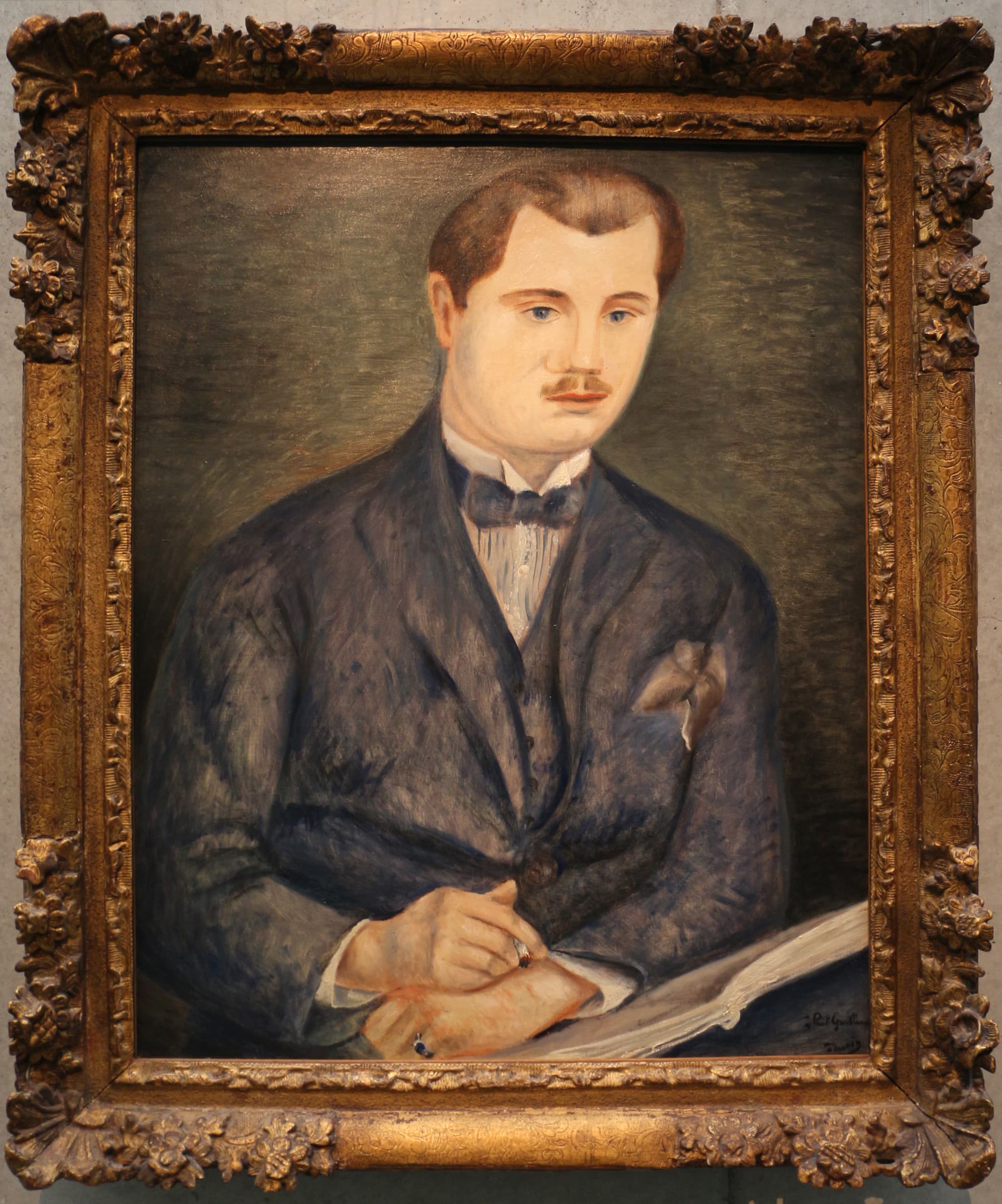
The dealer in three-quarter view, in his favorite blue, leaning on an open book — inscribed 'Paul Guillaume' beside Derain's signature. The museum notes the likeness is not strong.
by André Derain
Derain's 1919 portrait of his dealer Paul Guillaume — elegant, detached, dressed in his favorite blue — painted by the artist whose 31 canvases now form the largest group in the Orangerie's collection.
Paul Guillaume in three-quarter view, very elegant, gaze turned away — 'impassive and detached,' in the museum's words. The background is built from horizontal strokes of blue; the suit and bow tie are blue 'like his eyes,' and the museum adds that blue was actually the dealer's favorite colour. A nearly extinguished cigarette rests in his left hand as he leans on an open book. The inscription 'Paul Guillaume' sits at the lower right beside the signature 'a derain.'
The museum's notice is candid about the likeness: 'the physical resemblance is not, however, very strong, as the model has misshapen facial features.' It is a portrait of a position — the young dealer as man of letters — more than of a face.
André Derain met the young Guillaume through Max Jacob, on Guillaume Apollinaire's advice, and from 1916 the dealer gave him a solo show at the rue de Miromesnil gallery, with catalogue texts by Apollinaire, Cendrars, Jacob, Reverdy, and Divoire. The portrait dates from 1919 — it appeared with that date in a 1920 book by the dealer Kahnweiler — and entered Guillaume's own collection the year it was painted.
The relationship outlasted both men in the plainest way: with 31 canvases, Derain is the largest presence in the Walter-Guillaume collection.
Derain died in 1954, and his work entered the EU public domain on 1 January 2025; the 1920 Kahnweiler publication anchors its US status. The reproduction here is a photograph of the framed canvas by Francesco Bini, shared on Wikimedia Commons — one of the first fruits of the painter's Public Domain Day.
Close reading
Derain paints Paul Guillaume as a cultivated dealer rather than simply recording his features. The details show the turned gaze, open book, and controlled blue palette constructing a social position.
1.The gaze stays deliberately elsewhere
Guillaume looks away with a reserved expression, denying the direct exchange of a conventional commissioned likeness. Detachment becomes part of the identity the portrait presents.
2.Book and cigarette stage the dealer as a man of letters
The nearly extinguished cigarette and open pages suggest thought paused rather than action performed. These objects connect art dealing to reading, criticism, and the literary circle around Guillaume.
3.Blue joins sitter and background
Suit, eyes, and surrounding field repeat Guillaume's favorite color. Horizontal background marks steady the portrait while allowing the dark figure to remain part of one coordinated design.
4.The bow tie sharpens the dealer's carefully managed appearance
The compact knot sits beneath the face like a deliberate finishing mark. It reinforces the elegant public identity that matters more here than exact physical resemblance.
5.The cigarette introduces a brief, modern gesture
The hand and cigarette break the larger stillness of the seated pose. This small sign of contemporary sociability keeps the portrait from feeling like an inherited aristocratic formula.
6.Horizontal strokes make the blue background visibly painted
The background does not dissolve into a smooth atmospheric field. Repeated strokes remain legible, giving the sitter's controlled pose an active surface behind it.
1919
Painted; enters Paul Guillaume's collection the same year. The date is anchored by Kahnweiler's 1920 book.
1959
Purchased by the French state from Domenica Walter with the Société des Amis du Louvre.
2025
Derain's work enters the EU public domain on 1 January, seventy years after his death.
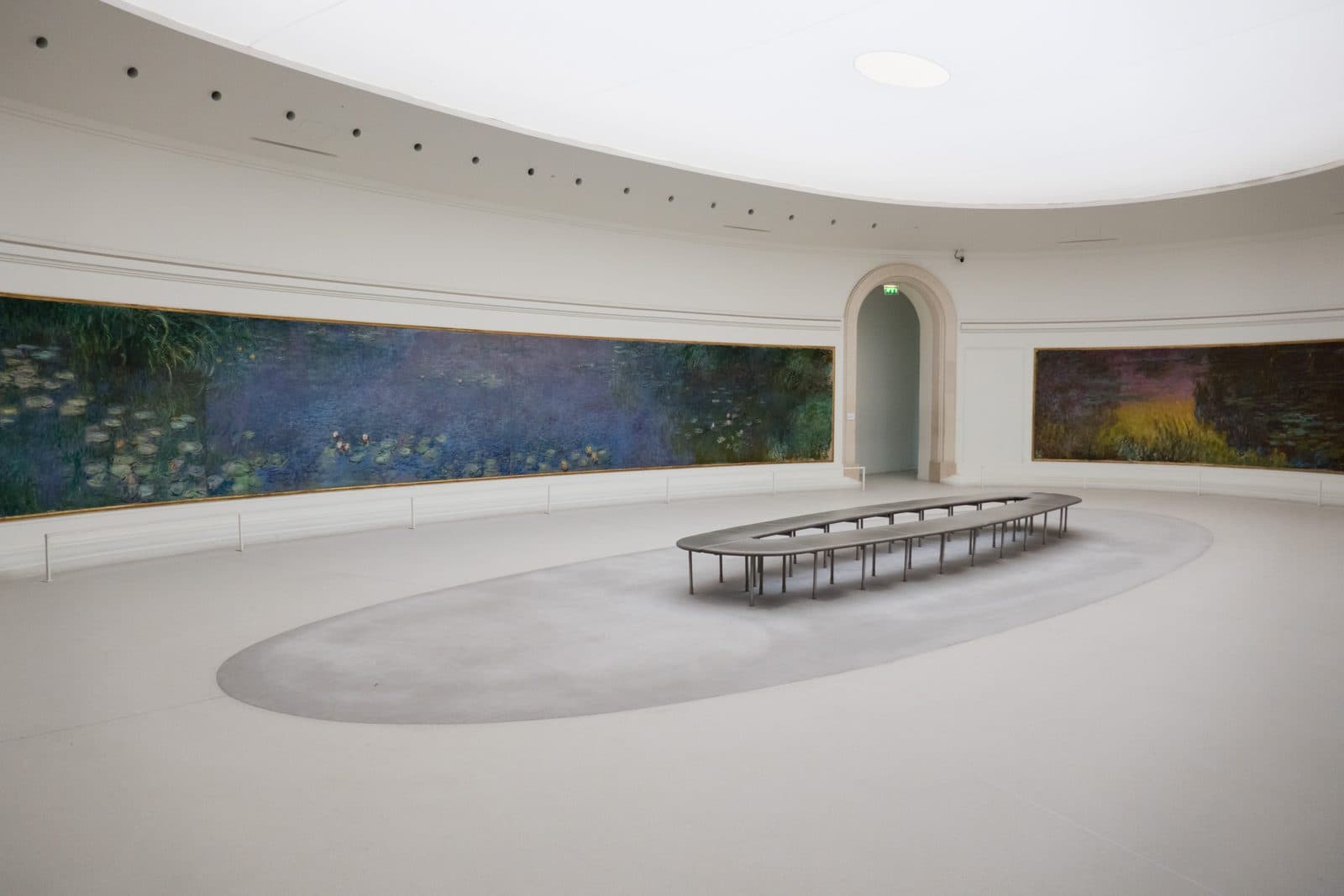
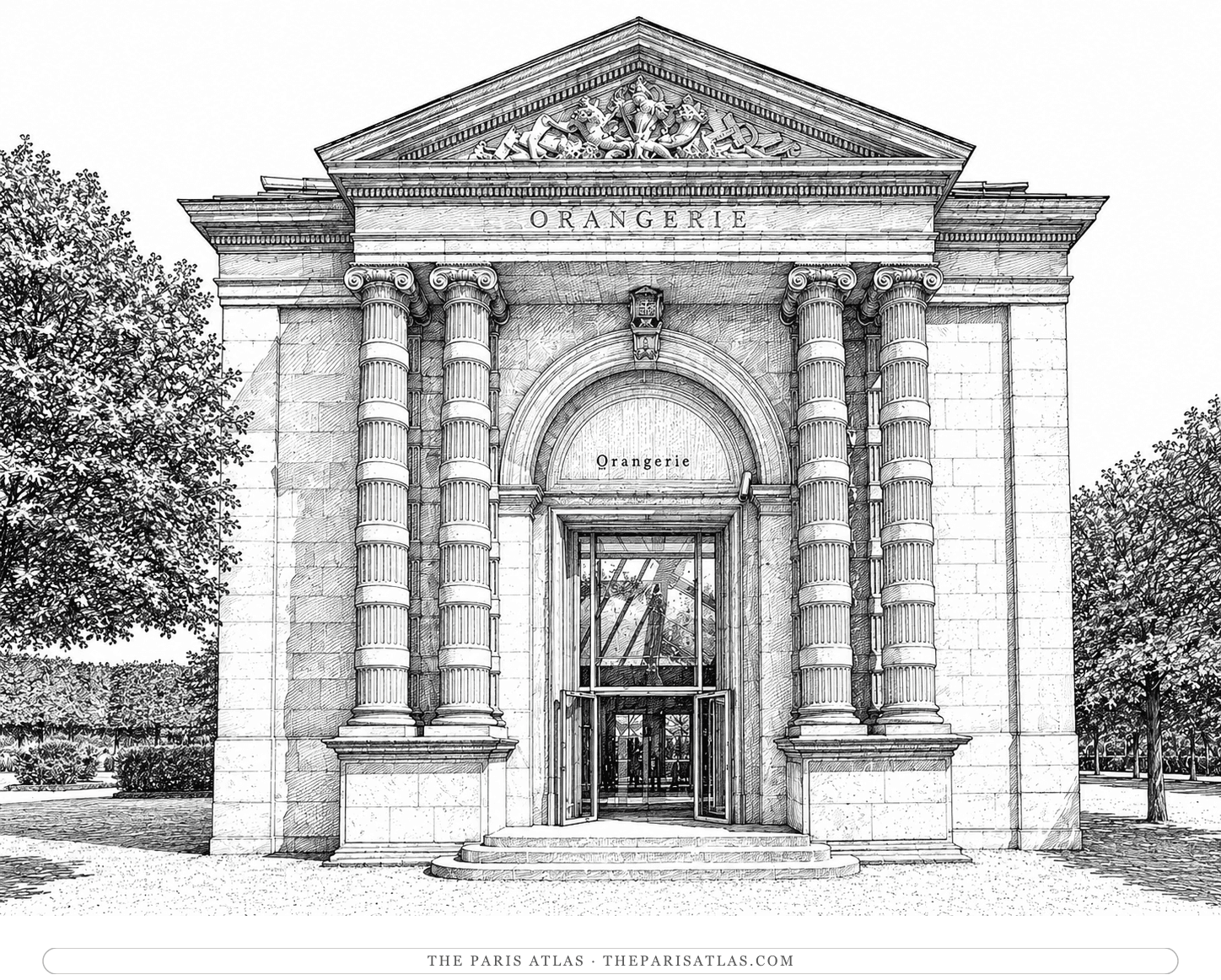
Musée de l'Orangerie, Paris
Jardin des Tuileries, Place de la Concorde (Seine side), 75001 Paris, France
Displays and loans can change. Check whether this work is on view before making a special trip.
Plan your visitAndré Derain, in 1919. The Orangerie also holds a second portrait of Guillaume, Modigliani's 1915 Novo Pilota; Derain's shows the dealer four years on — established, elegant, and detached.
The museum's notice says the blue suit and bow tie match Guillaume's eyes, and that blue was actually his favorite colour. The background is built from horizontal strokes of the same family.
The museum itself says no — 'the physical resemblance is not, however, very strong.' The portrait presents the dealer's elegance and standing rather than an exact face.
It belonged to Paul Guillaume from 1919 and stayed with Domenica Walter until the French state's 1959 purchase, made with the help of the Société des Amis du Louvre.
The oil painting measures 81 by 64 centimetres, or about 31.9 by 25.2 inches. That format leaves room for the open book, cigarette, blue suit, and bow tie that help define Guillaume as a cultivated modern art dealer.
Depicts
The dealer in three-quarter view, in his favorite blue, leaning on an open book — inscribed 'Paul Guillaume' beside Derain's signature. The museum notes the likeness is not strong.
Displayed at · 1959
In the Walter-Guillaume collection since the state's 1959 purchase. The museum's record lists no current room, so presence in the galleries at any given time is not asserted.
Explore painters from the same movements and circles.
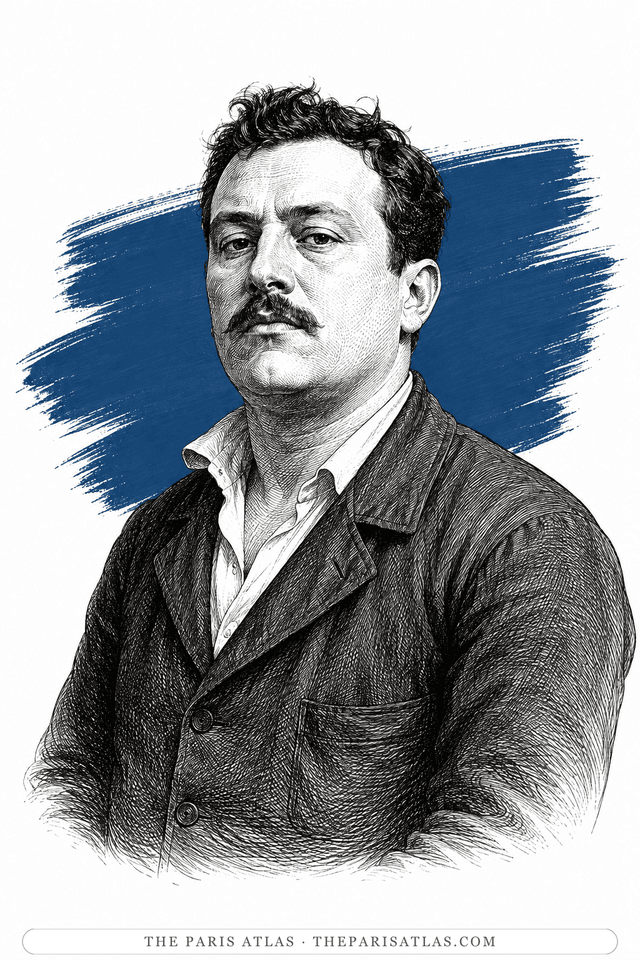
Self-taught French painter whose intense colour and forceful brushwork around Chatou made him one of Fauvism’s central figures.
View artist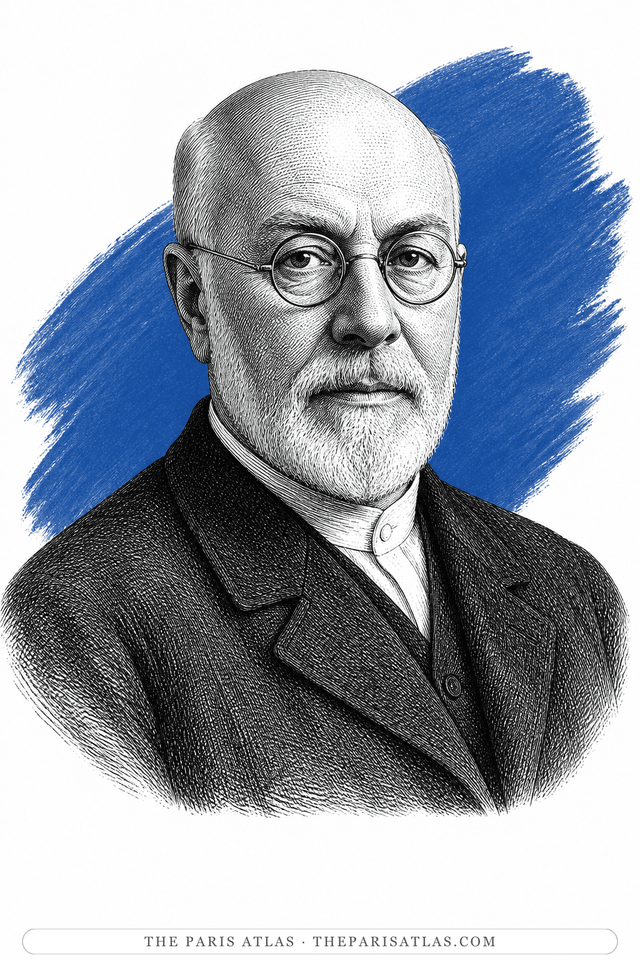
French painter whose room at the Paris Salon d'Automne of 1905 earned the name Fauvism — 'wild beasts' — from a critic's joke. He worked from 19 quai Saint-Michel, was bought early by Gertrude and Leo Stein, and began a forty-year rivalry with Pablo Picasso at the Steins' salon.
View artist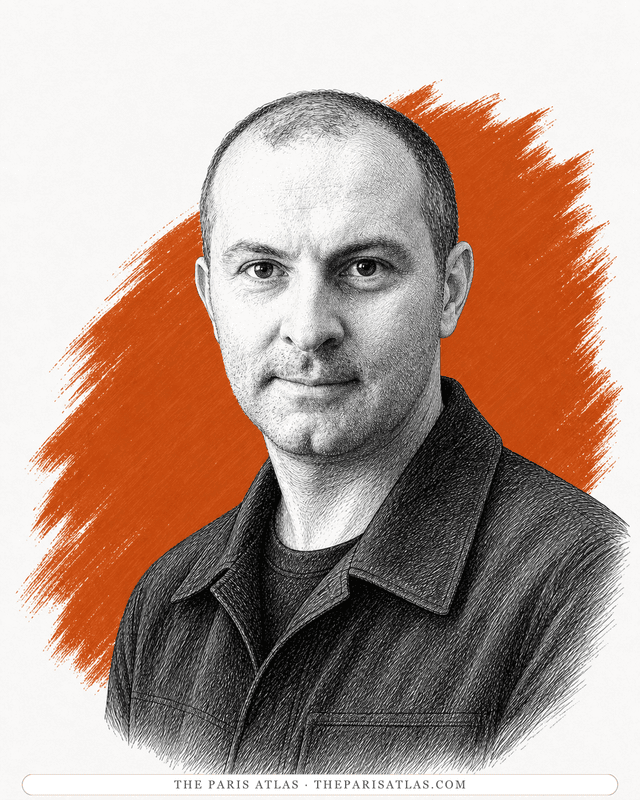
French-American artist, lifelong friend of Yves Klein, and a founder of New Realism.
View artistThe sources below include collection records, catalogues, scholarly research, and primary materials that informed this page. They document Portrait de Paul Guillaume, its making, and its place in cultural history.


Web source consulted for documented facts and historical context presented on the Portrait de Paul Guillaume page.
Used to place Portrait de Paul Guillaume within André Derain's documented oeuvre and verify its period, medium, or institutional context.
Used to cross-check artist chronology and the work's relationship to André Derain's wider practice.
Used for an additional museum or scholarly perspective on Portrait de Paul Guillaume's history and interpretation.
These references provide the documented foundation for this work's history and interpretation. Claim-level citations remain attached to the specific claims they support.
 Explore more resources