American abstract painter, printmaker and expatriate whose paintings transformed remembered landscapes, weather, music, poetry and personal relationships into some of the most powerful color and brushwork of postwar art. She emerged in the New York School of the early 1950s, settled permanently in France in 1959, and produced much of her mature and late work at Vétheuil, northwest of Paris. She died in Paris in 1992, and her will established the Joan Mitchell Foundation to assist working artists.
In images
Details
Lived
1925–1992
Born
1925
Birthplace
Chicago, Illinois, United States
Died
1992
Place of death
Paris, France
Nationality
American
Roles
PainterPrintmaker
About Joan Mitchell
American abstract painter, printmaker and expatriate whose paintings transformed remembered landscapes, weather, music, poetry and personal relationships into some of the most powerful color and brushwork of postwar art.
Joan Mitchell did not paint landscapes by standing in front of them and copying what she saw. She painted what places left behind in memory: the temperature of a field, the movement of water, the pressure of wind through trees, the color of a flower beginning to decay or the emotional atmosphere attached to a particular person and time. She once summarized this approach by saying, “I carry my landscapes around with me.” Although the paintings are abstract, they rarely feel detached from experience. Their lines can suggest branches, bridges or currents; their colors can evoke lake water, gardens, flowers, sunlight or winter without resolving into a conventional view. Mitchell wanted to preserve the feeling of seeing rather than reproduce the object seen.
Her career connected three places that remained active inside her work: Chicago, New York and France. Chicago gave her Lake Michigan, museums, poetry and rigorous art training. New York brought her into the New York School of painters and poets at the moment Abstract Expressionism was becoming internationally important. France, where she settled permanently in 1959, gave her the Paris studios and later the house and gardens at Vétheuil in which she produced much of her mature and late work. She remained unmistakably American and continued exhibiting in New York, yet she spent more than three decades in France and increasingly became part of French artistic life.
Mitchell emerged in the early 1950s as one of the strongest younger painters associated with Abstract Expressionism. She participated in the influential Ninth Street Show in 1951, exhibited at the Stable Gallery and rapidly developed a visual language that could not be reduced to imitation of Jackson Pollock or Willem de Kooning.[1] She rejected the idea that an abstract canvas had to be covered uniformly from edge to edge. Instead, many of her paintings organize concentrated webs or masses of color against open fields of white, creating a changing relationship between painted form and surrounding space. Works such as Ladybug, Hemlock, Evenings on 73rd Street and Hudson River Day Line made her a significant figure in the New York School while she was still in her early thirties.[2]
The physical energy of Mitchell's paintings can make them look impulsive, but she objected to the assumption that they were created through uncontrolled action. She worked directly on canvas, often without an easel, yet she understood every stroke as part of a developing structure. She might begin with thin arching lines, then build the surface over days, weeks or months, responding to each previous decision rather than erasing it. Mitchell described the apparent freedom of her work as highly controlled and insisted that she wanted to know what her brush was doing. Her paintings depend on the tension between speed and deliberation: marks retain the force of the gesture that made them, but their placement, weight, density and color were carefully judged.
Her private life was equally intense. Mitchell was married briefly to the future publisher Barney Rosset and later spent nearly twenty-five years with the Canadian painter Jean Paul Riopelle.[3] Her friendships included Frank O'Hara, John Ashbery, James Schuyler, Samuel Beckett, Elaine de Kooning, Franz Kline and numerous artists, writers and musicians in New York and Paris. Friends and critics remembered a formidable personality: funny, intelligent, loyal and generous, but also capable of harsh judgments, explosive arguments and alcohol-fueled cruelty. The volatility of her social life should not be confused with the discipline of her studio practice. Whatever disorder existed around her, the paintings were constructed with sustained concentration.
Mitchell's strongest work came across the entire length of her career rather than in one brief period. The densely structured canvases of the 1950s, the poured and flung paint of the early 1960s, the expansive “Fields” of the early 1970s, the dark quadriptych La Vie en rose, the luminous Grande Vallée paintings and the increasingly vulnerable trees and sunflowers of her final years all belong to one continuing investigation. She changed her handling of paint, scale and color repeatedly, but she never abandoned abstraction or the belief that painting could hold several sensations and memories at once.
A Chicago childhood beside Lake Michigan
Joan Mitchell was born in Chicago on 12 February 1925, the second daughter of James Herbert Mitchell and Marion Strobel Mitchell. Her father was a dermatologist and amateur artist; her mother was a poet and editor associated with the influential Chicago journal Poetry. The family was affluent, culturally ambitious and demanding. Music, literature, museum visits and artistic achievement were treated as normal parts of family life rather than exceptional interests.
The Mitchell family lived only a few blocks from Lake Michigan, which could be seen from their apartment. Joan watched the lake change with weather, season and light. She later remembered it as immense, bleak, blue and continually alive. Those childhood observations mattered long after she stopped painting recognizable scenes. Water, reflected light and vast horizontal spaces recur throughout her work, and several paintings refer directly to Chicago or Michigan in their titles. Mitchell did not reproduce the lake's appearance so much as return to the sensations it had established in her memory.
Her father took her to the Art Institute of Chicago and the Field Museum, where they drew and made watercolors.[4] At the Art Institute, Mitchell encountered nineteenth-century French painting, including works by artists who remained important to her throughout her life. She later spoke with particular admiration of Vincent van Gogh and Henri Matisse, while her sensitivity to light, color and changing natural conditions also connected her to the legacy of French landscape painting. These influences did not lead her to imitate Impressionism or Post-Impressionism directly; they gave her an early understanding that color could carry feeling and that a landscape could be reconstructed through paint rather than simply described.
The family's expectations could be difficult. Accounts of Mitchell's youth describe her father as competitive and hard to satisfy, encouraging excellence in several areas. Mitchell later connected her decision to become an artist partly with a desire to claim a field that belonged entirely to her. That wish for independence remained powerful throughout her life. She resisted condescension, disliked being categorized primarily as a woman painter and protected the solitude of her studios with unusual intensity.
Poetry before painting
Mitchell's first public creative success was not in painting but in poetry. In 1935, when she was ten, her poem “Autumn” appeared in Poetry, the magazine where her mother worked as an editor. Writers and literary conversation were part of the family environment, and visitors connected with the journal exposed Mitchell early to the idea that art could be both a private discipline and a public profession.
She considered writing seriously before committing herself fully to visual art. Poetry nevertheless remained central after she became a painter. She read poets throughout her life, formed close friendships with several members of the New York School of poetry and collaborated on projects combining poems with visual images. The relationship between painting and poetry was not decorative. Mitchell believed that a painting could resemble a poem in its ability to hold several ideas, memories and emotions without becoming a literal story.
This literary background helps explain the unusual importance of titles in her work. Mitchell's paintings do not illustrate the words attached to them, but titles such as To the Harbormaster, Hemlock, The Bridge, Plowed Field, La Vie en rose, Heel, Sit, Stay and Salut Tom create additional associations. Some refer to poems, people, places, music or private jokes. They guide memory without closing interpretation, much as a line of poetry can alter the emotional meaning of an image without explaining it completely.
The athlete
Before Mitchell concentrated on painting, she was an exceptional athlete. She rode horses, dived, played tennis and competed seriously as a figure skater.[5] In 1941, she and Bobby Specht won the Midwest junior pairs title. The following year, she placed fourth in the junior women's division of the United States Figure Skating Championships.
Her athletic training is relevant to the physical intelligence of her later painting. Figure skating requires the body to create movement within a defined space while maintaining balance, rhythm and control. Mitchell's paintings similarly contain sweeping turns, abrupt directional changes, accelerations and pauses without becoming disorganized. It would be reductive to explain her brushwork through skating alone, but the discipline helped form her understanding of movement as something simultaneously expressive and structured. The apparent freedom of a completed performance depends upon control developed through repetition, a principle that also describes her studio practice.
After finishing fourth at the national championship, Mitchell reportedly decided that she would stop dividing her ambitions among several activities and concentrate on art. Whether or not the decision happened in one dramatic moment, the early 1940s clearly marked the transition from the high-achieving athlete and published child poet to a young woman building her identity around painting.
Smith College and the decision to study art
Joan Mitchell at seventeen, in the 1942 yearbook of the Francis W. Parker School in Chicago. The following year the school hosted her first solo exhibition. (Francis W. Parker School yearbook, 1942, photographer unknown · Public domain)
Mitchell entered Smith College in 1942 as an English major. The choice reflected the literary culture of her upbringing, but she soon concluded that language alone was not the medium she wanted to pursue. In 1943, while still a student, she held her first solo exhibition at her former school, the Francis W. Parker School in Chicago.
In 1944, she transferred to the School of the Art Institute of Chicago, where she studied drawing, painting, anatomy, lithography and art history. She also spent summers at Ox-Bow, the school's art colony in Saugatuck, Michigan. The curriculum was traditional enough to give her a strong technical foundation. She learned how to construct figures and spaces, model light and shadow, layer color and control the physical properties of oil paint.
Mitchell's early paintings focused on figures, still lifes and landscapes. They show a growing interest in representing objects as interlocking masses rather than as isolated forms placed in conventional depth. Even before she abandoned recognizable subject matter, she was beginning to treat the painted surface as a structure of color and shape. She experimented with thick, buttery strokes, thin veils and hatch-like marks, developing a range of paint handling that later became fundamental to her abstract work.
During the summers of 1945 and 1946, Mitchell traveled to Guanajuato, Mexico, where she painted alongside friends. The trips broadened her experience beyond the academic environment of Chicago and exposed her to new architecture, landscapes and qualities of light. They also confirmed a pattern that continued throughout her life: travel could change the emotional and visual material she carried back into the studio without producing straightforward travel pictures.
Mitchell graduated in 1947 and received the James Nelson Raymond Traveling Fellowship. Her lithograph Tired Children was shown at the Art Institute of Chicago and received a prize from the museum's Print Committee. Postwar conditions delayed her European trip, so she initially moved to Brooklyn, where she continued painting while living with Barney Rosset.
Barney Rosset
Mitchell had known Barney Rosset since their school years in Chicago. Rosset came from a wealthy family and possessed his own strong cultural ambitions. They became romantically involved, lived together at 1 Fulton Street in Brooklyn and traveled to France together. Rosset later became internationally important as the publisher behind Grove Press, known for defending experimental literature and challenging censorship.
The relationship connected two ambitious young people who were still forming their professional identities. Mitchell painted while Rosset pursued interests in film, literature and publishing. In 1951, Mitchell helped Rosset establish Grove Press, which he developed into one of the most important American publishers of avant-garde and previously censored writing, publishing writers including Samuel Beckett and Henry Miller. Their marriage itself was brief, but their years together coincided with Mitchell's first Paris period and her transition from student work toward abstraction.
They married on 10 September 1949 in France and returned to the United States later that month. The marriage ended in divorce in 1952. Mitchell then moved to 60 St. Marks Place in Manhattan, while Rosset continued building Grove Press. Their separation belongs to the moment when Mitchell was becoming independent both personally and professionally and establishing herself in the downtown New York art community.
First Paris, 1948
Mitchell used her traveling fellowship in 1948, arriving in a Paris still visibly damaged by the Second World War. She rented a rudimentary apartment and studio at 73 rue Galande in the Latin Quarter. Plumbing and electricity were minimal, but the room had white walls, enormous north-facing windows and a view toward Notre-Dame.
The studio's north light would have appealed to a painter trained to value stable illumination, but the building was damp and extremely cold. Mitchell became ill during the winter and left Paris for Le Lavandou on the Mediterranean coast at the end of 1948. She and Rosset lived at Villa le Pin before marrying and returning to America in 1949.
This first stay in France was more than a youthful travel episode. Mitchell's paintings became increasingly abstract during the period. She encountered European modernism directly, studied the French painters she had first seen in Chicago and learned that a life outside the United States was possible. Paris did not immediately become home, but it established the transatlantic pattern that defined the rest of her career.
Returning to New York
Mitchell returned to the United States in late 1949 and settled in New York. In 1950, she received an MFA from the School of the Art Institute of Chicago and established studios first on 11th Street and then on 9th Street. She met painters including Franz Kline and Willem de Kooning, spent time at the Cedar Tavern and joined discussions at the Artists' Club, entering the downtown network later known as the New York School.
The New York School was not a unified style or formal organization. It was a community of painters, sculptors, poets, critics and musicians connected through studios, bars, galleries and informal discussion. Abstract Expressionism was emerging as the most visible form of ambitious American painting, with large scale, gestural mark-making and the individual process of the artist receiving unusual emphasis. Mitchell entered this environment slightly younger than Pollock, Kline and de Kooning but quickly established herself as more than a follower.
Her paintings from around 1949–50 record a rapid transition. Works such as Figure and Child, Coney Island and Backyards retain references to bodies or city architecture but translate them into interlocking fields. By 1951, the recognizable subject had largely disappeared. Cross Section of a Bridge presents cool blues and grays interrupted by red and yellow, but it does not describe a bridge in conventional perspective. The title provides an origin or association while the painting functions as an independent structure of color, line and pressure.
The Ninth Street Show
In 1951, Mitchell participated in the Ninth Street Exhibition of Painting and Sculpture, organized by artists and associated with the Artists' Club. The exhibition has become one of the defining events in the history of Abstract Expressionism because it brought together established and emerging artists working outside the conventional gallery system. Mitchell exhibited alongside painters including Jackson Pollock, Willem de Kooning, Hans Hofmann and numerous others.
Her inclusion marked an important early recognition. The downtown art world was heavily dominated by men, and women painters were often treated as secondary figures, students or companions even when their work was equally ambitious. Mitchell was one of the relatively few women to achieve sustained visibility within this environment during the 1950s. She did so without being professionally defined through marriage to a more established painter, and she resisted questions that grouped women artists together as though gender constituted a shared style.
Mitchell's forceful personality helped her survive the social aggressiveness of the scene, but it also became exaggerated into mythology. Stories about her drinking, arguments and insults sometimes displaced attention from the paintings. The important distinction is that her public volatility did not imply artistic carelessness. Her paintings were among the most controlled and structurally sophisticated works produced by her generation.
The first New York exhibitions
Mitchell had solo exhibitions in Saint Paul and Lake Forest in 1950, but her first professional New York solo exhibition opened at the New Gallery in 1952. The following year, she exhibited at the Stable Gallery, which became one of the important venues for younger New York School artists after the Ninth Street Show.
In 1952, she moved to 60 St. Marks Place, a fourth-floor walk-up in the East Village. The studio consisted largely of one room divided between living and working areas. Its north-facing windows provided consistent light, and Mitchell frequently stapled unstretched canvas directly to the wall. She guarded the space carefully and later remembered it as a place that remained entirely her own except for the presence of her poodle, Georges du Soleil.
Mitchell kept the lease long after moving to France, retaining it into the 1980s. The apartment represented more than real estate. It preserved her connection to New York and provided continuity across a life increasingly divided between continents. She returned regularly for exhibitions, friendships and professional business, maintaining representation with New York galleries throughout her career.
During the summers of 1953 and 1954, Mitchell lived and painted in Springs on eastern Long Island, where several New York School artists spent time. Photographs from this period show her with Georges du Soleil in a wooded landscape, already joining studio life, nature and dogs in the pattern that later became central at Vétheuil.
Abstraction without abandoning landscape
Mitchell's movement into abstraction did not represent a rejection of the visible world. She continued to think through places, but she distinguished between describing a scene and painting the response that remained afterward. Memory allowed several moments to exist together. A painting could carry Lake Michigan, New York streets, the Hudson River, a French garden and the emotional association of a friend without depicting any one of them literally.
This is one reason her paintings differ from conventional landscape painting and from abstraction based primarily on geometry or formal systems. Mitchell's starting point was often sensory and emotional, but she did not treat the canvas as a diary page. Memories had to be translated into relationships among colors, strokes, density, movement and open space. The finished painting remained autonomous; viewers did not need to know the biographical source in order to experience its structure.
Her phrase “the feeling of a landscape” included more than rural nature. Evenings on 73rd Street refers to social gatherings at the Manhattan home of Hal Fondren. The painting's branchlike lines, complex color and areas of white preserve something of movement, conversation and urban sociability without illustrating a dinner party. Mitchell's landscapes could therefore be social environments as well as rivers, fields and trees.
The controlled freedom of the 1950s
Mitchell's mature paintings of the 1950s often begin with a loose armature of thin blue, brown or gray lines. She then builds outward and inward through strokes of different widths and consistencies. Some marks are thick enough to stand above the surface; others are diluted until they run downward or expose the weave of the canvas. White may remain as untouched ground, or it may be painted over earlier colors, making empty space difficult to distinguish from actively constructed space.
Her process was cumulative. Mitchell rarely removed large passages or scraped the canvas back to a clean beginning. Instead, she accepted each decision as a new condition to which the next mark had to respond. A difficult stroke was not simply erased; the painting had to develop around it until the relationship worked. This method helps explain the density of her surfaces. They preserve the history of their making without becoming merely records of action.
Ladybug, painted in 1957, is one of the clearest demonstrations of this method.[6] Marigold, mauve, dark red and brown strokes overlap and collide while excess pigment runs downward. Beneath the apparent empty ground are several layers of white paint. The painting looks spontaneous, but the Museum of Modern Art describes it as carefully plotted, with each color and stroke adjusted in relation to the whole.
Hemlock, painted in 1956, creates a different atmosphere. Flashes of blue and green alternate with broad areas of milky white, while strokes of different lengths produce rhythm and movement. Its title recalls Wallace Stevens's poem “Domination of Black,” but the painting does not illustrate the poem. Poetry provides an emotional and verbal association that remains parallel to the visual structure.
Frank O'Hara and the New York poets
After moving to St. Marks Place, Mitchell became close to Frank O'Hara and the circle of poets and artists around him. O'Hara's poetry was conversational, urban, personal and open to painting, music and the events of ordinary days. Mitchell's paintings were not visual versions of his poems, but both artists allowed private experience, friendship and contemporary culture to enter ambitious work without becoming conventional narrative.
Mitchell's relationship with poetry extended beyond O'Hara. In 1960, Tiber Press published The Poems, combining work by John Ashbery with Mitchell's color lithographs as part of a group of artist-poet collaborations. In 1975, she created pastel works incorporating typed poems by Jacques Dupin, J. J. Mitchell, James Schuyler, Pierre Schneider and Chris Larson. She also titled paintings for composers and poets, demonstrating that literature and music functioned as active studio materials rather than cultural decoration.
When O'Hara died after an accident on 25 July 1966, Mitchell lost one of her closest literary friends. The date later became the title of a group of paintings. As with her landscapes, the reference is not descriptive. The title attaches the work to an emotional event, while the painting carries grief through color and structure rather than through recognizable imagery.
Returning to Paris in 1955
Mitchell returned to Paris in 1955. For the next four years, she divided her life between Paris and New York, occupying eight temporary Paris studios. The constant movement created practical difficulties, especially for an artist working on increasingly large canvases, but it also placed her within both American and European networks of abstraction.
That year she met Jean Paul Riopelle, a Canadian painter who had settled in Paris and achieved recognition for dense abstract paintings constructed with palette-knife applications of color. Mitchell also met Samuel Beckett, who remained a close friend. Her Paris circle eventually included writers, composers and artists from several countries, while her exhibitions continued on both sides of the Atlantic.
Mitchell did not leave New York because her career had failed there. She was already represented by the Stable Gallery, included in major exhibitions and collected by American museums. Her move was personal and artistic rather than a retreat. Paris gave her another community, a long relationship with Riopelle and proximity to the French painting she had studied since childhood.
Jean Paul Riopelle
Mitchell and Jean Paul Riopelle began a relationship in 1955 that lasted until 1979. Both were already established abstract painters, and neither became simply the assistant or follower of the other. Their work remained distinguishable, but they shared an intense conversation about painting, nature, scale and the history of abstraction. Exhibitions devoted to Mitchell and Riopelle have emphasized both the artistic exchange and the increasingly tumultuous nature of their relationship.
Riopelle's paintings often build dense, mosaic-like surfaces through compressed applications of pigment, while Mitchell generally preserved more open space and used the individual brushstroke as a moving unit. Their differences may have been as stimulating as their similarities. Living near another serious painter provided constant comparison, disagreement and challenge without producing a unified shared style.
The relationship was emotionally difficult and frequently unstable. Mitchell and Riopelle maintained separate identities, friendships and at times separate spaces, even when sharing a home. Accounts of their life together describe affection, competition, drinking, arguments and repeated separations. It would be misleading either to romanticize them as an ideal artistic couple or to explain Mitchell's work primarily through Riopelle. The relationship mattered deeply, but her development before, during and after it remained her own.
The rue Frémicourt studio
In late 1959, Mitchell settled permanently in Paris and moved with Riopelle into a renovated apartment and studio at 10 rue Frémicourt in the 15th arrondissement. She described it as the closest thing to a New York loft that could be found in Paris. The large, open room and movable wall allowed her to work on several canvases at once and to increase the scale of her paintings, some of which reached approximately ten feet in height.
The studio transformed her practice. In the early 1960s, Mitchell experimented more extensively with throwing, splattering, dripping, rubbing and pouring paint. Color combinations became increasingly adventurous and sometimes intentionally discordant. Thick central masses could be surrounded by runs and washes, creating the sense that a concentrated form was dispersing into the surrounding atmosphere.
Works such as Blue Tree of 1964 combine earthy brown with intense blues, violet and pink. Mitchell frequently sailed around Corsica and the Mediterranean coast during this period, and the rugged vegetation and rock formations contributed to paintings such as Girolata. Again, the connection is not illustration. The visual experience was broken down and reassembled as color, motion and remembered physical sensation.
The Frémicourt studio's size was valuable, but its location inside the shared home also created difficulties. Mitchell increasingly wanted separation between domestic life and painting. The later move to Vétheuil gave her a dedicated studio at a distance from the house and allowed her to control access more completely.
Recognition during the early 1960s
Mitchell's international standing grew rapidly after her permanent move to France. She participated in documenta II in Kassel in 1959 and held solo exhibitions in Paris and Milan in 1960. In 1961, she received the Premio Lissone, appeared on the cover of ARTnews and saw the Museum of Modern Art acquire Ladybug. Additional exhibitions followed in Paris, Bern and at MIT.
These events challenge the later assumption that Mitchell was overlooked throughout her lifetime. She did achieve substantial recognition, museum acquisitions and international exhibitions. At the same time, her reputation was not always maintained at the same level as those of male Abstract Expressionists with comparable achievements. Later retrospectives helped correct the tendency to describe her merely as a strong “second-generation” painter rather than as a major modern artist in her own right.
Her location in France also complicated art-historical categories. American museums classified her through Abstract Expressionism and the New York School, while French audiences encountered an American painter whose love of color and landscape had deep connections to French art. Mitchell belonged to both histories without fitting entirely inside either one.
Family losses and the middle 1960s
Mitchell's father died in 1963. Her mother, who had been diagnosed with cancer in 1960, died on 14 March 1966. Four months later, Frank O'Hara died after being struck by a vehicle on Fire Island. These losses accumulated during a period when Mitchell's paintings often became darker, denser and more physically turbulent.
It would be too simple to assign each formal change to a specific death. Mitchell resisted narrative interpretations of her paintings, and grief does not produce one predictable color or technique. Nevertheless, people and losses entered the emotional memory from which she worked. Paintings and suites were later named for O'Hara, her mother Marion, her sister Sally, her friend Edrita Fried and others. The title could serve as a dedication while the abstraction preserved the complexity of the relationship more fully than a conventional portrait might have done.
Vétheuil
In 1967, Mitchell bought La Tour, a property in Vétheuil, approximately seventy kilometers northwest of Paris. After extensive renovations, she moved there permanently in late 1968. The estate included gardens, fruit trees and a separate former game pavilion on the hillside, which she converted into a studio.
The property overlooked the Seine, the village of Lavacourt across the river, distant fields and lakes, and the Gothic church of Vétheuil. Mitchell jokingly referred to the view as her “View of Delft,” invoking Vermeer's famous cityscape. The remark reflects her awareness that a view could become both daily environment and art-historical subject without requiring her to paint it literally.
Vétheuil changed her relationship to scale, color and solitude. She could work in an independent studio, live among gardens and animals and accommodate visiting artists without surrendering the working space itself. The environment entered her paintings through greens, yellows, blues, flowering forms, fields and trees, but Mitchell did not set up an easel outdoors and copy what lay beyond the window. She actually covered the west-facing studio windows with burlap and usually painted at night under what she called “electric light,” inspecting the paintings again in daylight the following morning.[7]
This working arrangement is essential to understanding her use of landscape. The visible view supplied experience, but the painting occurred through memory in a controlled interior. Mitchell wanted enough distance for the landscape to become mental and emotional material. The result could feel saturated with nature while remaining completely abstract.
Sunflowers and the memory of Van Gogh
Soon after moving to Vétheuil, Mitchell produced a group of Sunflower paintings. Sunflower of 1969 joins yellow, orange, green and darker passages without presenting a botanical study. The flower is experienced as growth, color, fragility and eventual decay.
Mitchell had known Vincent van Gogh's paintings since childhood visits to the Art Institute of Chicago. She was especially moved by sunflowers as they aged, finding the dying flower as compelling as the young one. This interest continued into her final years, when trees and flowers became increasingly recognizable without turning the paintings into ordinary representation.
The sunflower is therefore not a fixed symbol with one meaning. It can carry admiration for Van Gogh, the physical life of Mitchell's garden, the intensity of yellow, the approach of death and the persistence of painting. Mitchell's abstraction allowed these associations to coexist rather than requiring the image to illustrate one of them.
The Fields and monumental scale
The move to the countryside contributed to a major group of paintings shown in Mitchell's 1972 exhibition My Five Years in the Country at the Everson Museum of Art. The exhibition contained forty-nine works and became her first major museum solo presentation. A group described in the catalogue as “The Fields” used irregular rectangular passages, loose strokes, exposed canvas, thin washes, dry scumbling and heavy impasto.
Plowed Field of 1971 extends more than seventeen feet across three panels. Its gold, green, ochre and red passages suggest an elevated or panoramic view of agricultural land, but the seams between canvases interrupt any continuous illusion. The viewer must look across the whole and then back into each panel, experiencing the work both as one environment and as several adjacent structures.
Mitchell's multi-panel paintings were partly practical. Separate canvases were easier to move and handle than one enormous support. She also valued the vertical divisions themselves. A seam could pause the movement of a color, set up a comparison between adjacent areas or make the viewer experience a sequence resembling pages in a book or movements in music.
This was not simply enlargement for dramatic effect. Mitchell adjusted her marks to the human body and to the viewer's movement before the painting. The largest works surround peripheral vision and cannot be absorbed in one glance. Looking becomes physical, requiring shifts of position and attention that echo the experience of moving through a landscape.
The Whitney exhibition of 1974
In 1974, the Whitney Museum of American Art presented a solo exhibition of Mitchell's work curated by Marcia Tucker. The exhibition confirmed her continuing importance to American art despite her long residence in France. It also provided an opportunity to view works from the Vétheuil years alongside the paintings through which she had first established herself in New York.
Mitchell told Tucker that music, poems, landscape and dogs made her want to paint and that painting allowed her to survive. The remark is useful because it identifies the major sources of her work without suggesting that paintings are illustrations of any one source. Painting was the process through which those experiences could be combined, tested and made physically present.
Dogs, gardens and daily life
Dogs were a major part of Mitchell's life from the 1950s onward. Her first especially important dog was the poodle Georges du Soleil, who shared the St. Marks Place studio and appeared in photographs made by Barney Rosset. At Vétheuil, Mitchell kept several dogs and organized much of her daily life around them and the garden.
The dogs entered the work through names, associations and titles rather than naturalistic portraits. Heel, Sit, Stay of 1977 takes its title from commands used in training. The painting is composed largely of densely applied green and blue vertical strokes, producing an immersive sensation of foliage or forest while the title introduces a comic domestic reference.
Mitchell's attachment to animals also complicates the image of her as entirely hostile or socially difficult. She could be fiercely protective of creatures and people she cared about and later opened Vétheuil to younger artists who needed time or space to work. Her will extended this practical generosity by creating a foundation intended to assist working artists after her death.
Pastels, prints and collaborations
Although oil painting remained Mitchell's central medium, she also worked seriously in printmaking, drawing and pastel. Her training at the School of the Art Institute had included lithography, and Tired Children received recognition as early as 1947. Later print projects allowed her to translate the energy of brushwork into processes requiring collaboration with printers and carefully separated applications of color.
In 1972, she made seven large etchings with Arte Adrien Maeght in Paris. In 1981, she worked with Kenneth Tyler on the Bedford Series, a group of ten large color lithographs. Additional projects included the 1991 suites Fields, Trees and Weeds and the 1992 book Poems with Nathan Kernan.
Pastel became especially important during the final years of her life. After a second hip operation in 1989, Mitchell leased a studio on rue Campagne-Première in Montparnasse devoted exclusively to works on paper. Pastel allowed direct, saturated color without the physical demands of handling enormous oil paintings, but the resulting works are not minor substitutes for canvas. They preserve the pressure, layering and chromatic daring of the paintings in a more intimate scale.
The end of the Riopelle relationship
Mitchell's relationship with Riopelle ended in 1979 after nearly twenty-five years. The separation did not interrupt her career; it coincided with one of the most ambitious paintings she had yet produced. La Vie en rose is a quadriptych almost twenty-three feet wide, organized through dark blue, black, violet and muted pink across four related but distinct panels.
The title refers to Édith Piaf's famous song and to Riopelle's nickname for Mitchell, Rosa Malheur. After meeting him in 1955, Mitchell had written to a friend that la vie en rose was beginning. By using the phrase again at the end of the relationship, she gave it an unmistakably ironic edge.
The painting should not be reduced to a coded account of a breakup. Its four panels function almost like musical movements, varying in pressure, darkness and intensity. Personal history supplied the title and emotional condition, but Mitchell's achievement lies in transforming that history into a self-sufficient visual structure. The work acknowledges loss while demonstrating that painting, rather than the relationship, remained the organizing commitment of her life.
Edrita Fried and memorial painting
Mitchell had spent many years in psychoanalysis and formed a lasting friendship with the psychologist Edrita Fried. When Fried died of cancer in 1981, Mitchell named a monumental quadriptych for her. Edrita Fried extends across nearly twenty-five feet, moving through blue, lavender, orange and yellow.
The work is another example of Mitchell's abstract memorial practice. It does not depict Fried's face or narrate their relationship. Instead, the changing color across four panels creates a form of remembrance that remains expansive, active and unresolved. Mitchell repeatedly found abstraction more capable than portraiture of holding the contradictory feelings attached to a person's presence and loss.
The Paris museum exhibition of 1982
In 1982, the Musée d'Art Moderne de la Ville de Paris presented Joan Mitchell: Choix de peintures, 1970–1982. According to the Joan Mitchell Foundation's chronology, she was the first American woman to receive a solo exhibition at the museum.
The exhibition represented an important recognition from the city where Mitchell had lived since the 1950s. She was no longer simply an American artist temporarily working abroad. Her paintings belonged to the artistic history of Paris and France, even as she remained connected to American museums, galleries and artists.
The same year brought a major personal loss when her older sister Sally Perry died of cancer. As in the 1960s, professional recognition and private grief occurred together, feeding a body of work whose color became increasingly intense rather than subdued.
The Grande Vallée paintings
In 1983, Mitchell began the group of twenty-one monumental paintings known as La Grande Vallée. The starting point was not a place Mitchell had personally visited but a story told by her friend Gisèle Barreau about an idyllic hidden valley in Brittany where Barreau and a cousin had played as children.
This origin reveals how freely Mitchell used memory. The memory did not even have to be her own. Another person's description could awaken associations with gardens, childhood, loss and imagined landscape. Mitchell then worked through those associations in closely packed strokes and unusually intense combinations of green, blue, yellow, violet, red and white.
The paintings are not illustrations of a Breton valley. They construct an environment that exists only in paint, generated from memory transferred through language. In this respect, the Grande Vallée group brings together several of Mitchell's central concerns: landscape, friendship, poetry-like association, repetition with variation and the ability of color to create a place that has no single visible source.
Cancer and physical decline
Mitchell was diagnosed with cancer of the jaw in 1984 and began treatment. Her health continued to deteriorate during the remainder of the decade. She underwent hip surgery in 1985 and a second operation in 1989, while the deaths of close friends, including dealer Xavier Fourcade in 1987, added further emotional pressure.
Illness altered the conditions under which she worked but did not produce a retreat from ambition. Faded Air I of 1985 uses raw, ragged marks and deliberately difficult color. The painting belongs to a period in which Mitchell was confronting her own cancer and the impact of AIDS among friends. Its discordance is not evidence of declining ability; it shows her continuing willingness to test combinations that resisted easy beauty.
The late 1980s also brought major institutional recognition. In 1988, Mitchell became the first recipient of the College Art Association's Distinguished Artist Award for Lifetime Achievement. She received an honorary doctorate from the School of the Art Institute of Chicago and was appointed Commandeur des Arts et des Lettres by the French Ministry of Culture. A major American retrospective, The Paintings of Joan Mitchell: Thirty-six Years of Natural Expressionism, toured museums across the United States.
In 1991, the City of Paris awarded her its Grand Prix des Arts in painting. This recognition completed an arc that had begun with the cold, poorly equipped rue Galande studio of 1948. Mitchell had arrived as a young fellowship student and eventually became one of the city's honored painters.
The final paintings
Mitchell's late paintings often move closer to recognizable natural forms without abandoning abstraction. Trees and sunflowers become more apparent, but they remain unstable, built through accumulated marks and changing color rather than fixed outline. The boundary between object and atmosphere becomes porous.
An Untitled diptych from 1992 presents tall yellow and orange forms against a pale ground, suggestive of isolated sunflowers. Purple and green interrupt the warmth, while the surrounding space gives the forms a vulnerable, almost suspended presence. The work recalls Van Gogh and Mitchell's own long history of painting flowers, but it also carries the physical fragility of her final months.
Mitchell was not simplifying because she had lost control of her medium. The paintings retain complex relationships of hue, density and space. What changes is the visibility of the reference. After four decades of translating landscape into abstraction, she allowed the tree or flower to come closer to the surface without becoming a conventional image.
Death of Joan Mitchell
In 1992, Mitchell continued exhibiting and producing work despite declining health. Her first museum exhibition devoted to pastel opened at the Whitney Museum of American Art. A French-language monograph by Michel Waldberg appeared, and she completed the artist's book Poems with Nathan Kernan and Tyler Graphics.
Later that year, Mitchell was diagnosed with advanced lung cancer. She returned to France and entered a Paris hospital. She died on 30 October 1992, aged sixty-seven. The Joan Mitchell Foundation identifies lung cancer as the cause of death and Paris as the place of death.
Mitchell had continued working through jaw cancer, impaired mobility and repeated operations. Her final decade was not a minor afterword to the New York paintings that first made her famous. It produced the Grande Vallée paintings, major works on paper, ambitious print suites and some of the most emotionally and chromatically concentrated paintings of her career.
Joan Mitchell and Barney Rosset
Barney Rosset belonged to Mitchell's life before either of them became nationally known. Their relationship began in the Chicago school world, continued through Brooklyn and France and culminated in a marriage lasting from 1949 to 1952. During these years, Mitchell was completing her formal training, making her first extended stay in Paris and moving into full abstraction.
Mitchell also played a role in the beginnings of Grove Press, which Rosset transformed into a publisher of writers including Samuel Beckett, Henry Miller and numerous authors whose work faced censorship. Their later careers developed independently, but the partnership connects Mitchell to the history of postwar experimental publishing as well as painting.
Joan Mitchell and Jean Paul Riopelle
Riopelle was Mitchell's longest romantic partner and the person with whom she shared much of her transition from New York to France. They lived together in Paris and later near one another in Vétheuil, traveled, socialized and argued about painting. Their relationship lasted from 1955 until 1979 and was marked by both artistic respect and emotional volatility.
Their paintings should not be treated as interchangeable. Riopelle often used a palette knife to compress pigment into dense, tessellated surfaces. Mitchell favored a broader vocabulary of strokes, open ground, drips, washes and color masses. The artistic dialogue lies partly in their differences: each observed another serious abstractionist making decisions according to a distinct temperament.
After the relationship ended, both artists continued working. Mitchell's subsequent achievements—including La Vie en rose, Edrita Fried, La Grande Vallée and the late sunflowers—make it especially clear that Riopelle was an important part of her life but never the source of her artistic identity.
Joan Mitchell and the poets
Mitchell's closest artistic community included poets as well as painters. Frank O'Hara, John Ashbery and James Schuyler belonged to a New York culture in which poetry, painting and friendship continually overlapped. Mitchell did not translate poems into images mechanically, but she shared with these writers an interest in association, shifting attention, ordinary experience and the emotional charge of names and places.
Her friendship with Samuel Beckett connected her to a different literary world. Mitchell met him in Paris in 1955 and remained close to him. Both artists were capable of removing conventional narrative while preserving emotional intensity, though their work reached that point through very different means. Mitchell also formed friendships with French poets and critics, including Jacques Dupin and Pierre Schneider, and repeatedly brought written language into collaborative books and works on paper.
Temperament, drinking and generosity
Mitchell's personality became nearly as famous as her paintings. People who knew her often described a quick intelligence, fierce loyalty, humor and an ability to identify weakness immediately. They also remembered verbal attacks, arguments and unpredictable behavior, particularly when she had been drinking. Alcohol was a persistent part of her adult life and of the hard-drinking social worlds she inhabited in New York and France.
It is important not to convert these stories into a romantic myth of artistic violence. Her cruelty could hurt people, and her social behavior sometimes damaged relationships. At the same time, the familiar anecdotes can become a way of treating a woman artist's personality as more remarkable than her technique. Mitchell herself resisted being reduced either to the category of “woman painter” or to the role of unruly Abstract Expressionist character.
Her generosity was equally real. She supported artists, invited younger painters to work and stay at Vétheuil and left instructions for a foundation that would provide direct assistance to working artists. The coexistence of generosity and hostility is not something a biography needs to resolve. It is part of a complicated personality whose private behavior could be difficult while her practical support for other artists remained substantial.
Painting style and techniques
The sections that follow describe how Joan Mitchell actually worked: where her paintings began, how she handled the brush, color and white space, and how the multi-panel format, poetry, music and printmaking entered the studio.
Memory rather than direct observation
Mitchell's paintings usually began with remembered experience rather than direct transcription. She carried visual and emotional impressions away from lakes, rivers, cities, gardens, flowers and people, allowing them to change before they reached the canvas. This removed the obligation to reproduce appearances and allowed several memories to occupy one painting.
Her approach explains why terms such as “landscape abstraction” are useful but incomplete. The landscape might be Lake Michigan, the Hudson River, Corsica, Vétheuil or an imagined valley described by a friend. It might also be a social gathering or the emotional memory of a person. What matters is not the identity of the scene but the pressure it creates within the painting.
Brushwork
Mitchell developed an unusually broad vocabulary of marks. A single painting may contain thin lines, wide loaded strokes, dry scumbles, drips, rubbed passages, pooled paint and rapid-looking dashes. Each kind of mark carries a different physical weight and direction.
Her brushwork is frequently described as gestural, but the term can be misleading if it suggests that the gesture matters more than the finished composition. Mitchell did not regard the canvas as a passive record of bodily movement. A stroke had to function within the painting. Its color, length, thickness and relation to surrounding marks determined whether it remained.
Controlled improvisation
Mitchell's process resembles improvisation in music more than uncontrolled spontaneity. She responded to what had already occurred, but she brought a sophisticated understanding of composition and color to each response. An unexpected drip could be retained, yet keeping it transformed accident into choice.
Paintings often took weeks or months. She might work on several canvases simultaneously, allowing one to rest while another developed. This pacing preserved freshness without requiring the work to be completed in a single burst. The finished surface may appear immediate because the brushstrokes retain their physical energy, but that immediacy was carefully constructed.
Color
Color was Mitchell's most powerful instrument. She could combine intense blue, acidic green, yellow, violet, pink, orange, brown and black without relying on conventional harmony. Some paintings are radiant; others deliberately use muddy, discordant or difficult colors.
Her colors are not fixed symbols. Blue can evoke water, sky, distance, cold or grief, but its function changes according to adjacent colors and physical density. Yellow can appear light and airy in one work and heavy in another. Color creates weight, temperature, depth and rhythm rather than merely identifying objects.
Mitchell's admiration for Henri Matisse, Vincent van Gogh and nineteenth-century French painting shaped her confidence in color, but she did not imitate their palettes. She combined the chromatic intensity of European painting with the scale and physical mark-making of postwar American abstraction.
White space
White is active in Mitchell's paintings. It may be exposed canvas, a painted layer beneath color or white pigment laid over previous strokes. The eye cannot always determine whether it represents emptiness, light or another material form.
This treatment distinguished her from painters who pursued an even, all-over field. Mitchell often concentrated marks into a central structure or several interacting clusters, allowing the surrounding white to push back. The resulting balance between figure and ground keeps the painting spatially unstable: color seems to hover, spread, recede or press forward.
Multi-panel paintings
Mitchell began using joined canvases extensively during the 1960s and continued through the end of her life. Diptychs, triptychs and quadriptychs allowed her to work at architectural scale while still moving and handling individual units.
The seams are not inconveniences hidden by the composition. Mitchell used them as visual events. A color may stop at one edge and resume differently on the next panel; one section may answer another; repeated forms may create a rhythm of variation. The viewer moves between the painting as a whole and the individual panels, producing an experience that unfolds in time.
Plowed Field, La Vie en rose, Edrita Fried and Salut Tom demonstrate different possibilities. One can resemble a broad landscape, another a four-part musical composition, and another a conversation between adjacent fields. The panel format became one of Mitchell's most important tools for joining physical scale to memory and sequence.
Cycles and related groups
Mitchell often worked through a motif or color structure across several related paintings. She did not always consider these formal series, but paintings produced close together may share palettes, kinds of strokes and compositional problems.
This cyclical method allowed her to test a feeling repeatedly without reproducing the same picture. The sunflower paintings, the “Fields,” the Grande Vallée group and the late trees are not variations made according to a predetermined system. Each painting begins again while carrying knowledge from the previous one.
Poetry and music
Mitchell frequently compared painting to poetry because both could compress complicated experience without explaining it narratively. Her paintings do not tell stories with beginnings and endings, yet they can hold memory, association, rhythm and emotion simultaneously.
Music offers another useful comparison. Changes in intensity across a multipanel painting can resemble movements in a composition, while repeated colors behave like motifs. Mitchell's friendship with composers and her titles for musical friends reinforce this connection, but the analogy is structural rather than illustrative. She did not paint what music sounded like; she used visual means to create rhythm, pause, recurrence and variation.
Printmaking and pastel
Mitchell's prints are not reproductions of paintings. Lithography and etching required different decisions about line, layering and color separation, often made in close collaboration with master printers. The resulting works allowed her to test the relationship between immediacy and a process involving proofs, stages and repeated impressions.
Pastel offered direct color and physical pressure on paper. In her late works, Mitchell could layer pastel densely, break marks apart or leave substantial areas untouched. The medium was smaller and more manageable than monumental oil painting but still capable of the chromatic force and movement central to her art.
Major works
Fourteen paintings mark the arc of Mitchell's career, from the final approach to abstraction in 1950 to the sunflowers of her last year.
Backyards, 1950
Backyards belongs to Mitchell's final transition toward complete abstraction. Building façades, windows and vegetation remain detectable, but the city is already being reorganized into flat, interlocking shapes. The painting demonstrates that her abstraction developed through sustained engagement with modernist structure rather than through one sudden act of rejection.
Cross Section of a Bridge, 1951
By Cross Section of a Bridge, recognizable imagery has largely disappeared. The title preserves a connection with architecture and the bridges that fascinated Mitchell, while the canvas itself operates through cool color, intersecting forms and flashes of red and yellow. It helped establish the large-scale abstract language she brought to the Ninth Street Show period.
Hemlock, 1956
Hemlock creates movement through alternations of green, blue and milky white. Its title connects the painting to Wallace Stevens, demonstrating how poetry could provide an associative starting point. The work does not depict a hemlock tree; it evokes a changing environment through color, rhythm and light.
Ladybug, 1957
Ladybug is one of Mitchell's best-known New York paintings. Its colored arcs and drips appear improvisational, but the composition was painstakingly developed. The concentrated field of color hovers over layered white, demonstrating her rejection of uniform all-over painting and her mastery of the relationship between painted mass and open ground.
Evenings on 73rd Street, 1957
The title of Evenings on 73rd Street refers to gatherings with friends in Manhattan. Its energetic, branchlike marks and shifting white space convert a social memory into painting without reproducing the people or room. It demonstrates Mitchell's broad definition of landscape, which could include urban friendship as readily as fields or rivers.
Blue Tree, 1964
Blue Tree belongs to Mitchell's early Paris maturity. Pouring, rubbing, dripping and direct brushwork create a concentrated body of blue, violet, pink and brown. The title provides a natural reference, but the tree exists as accumulated force rather than outline.
Sunflower, 1969
Painted soon after Mitchell settled at Vétheuil, Sunflower joins her garden environment with a lifelong admiration for Van Gogh. The flower is represented through chromatic energy and physical movement, not botanical detail. Its beauty includes the awareness that the plant will age and collapse.
Plowed Field, 1971
More than seventeen feet wide, Plowed Field turns the multi-panel format into a panoramic experience. Gold, green, red and ochre suggest agricultural land viewed from above or at a distance. The vertical seams prevent the illusion from becoming seamless and make the viewer move continually between part and whole.
Heel, Sit, Stay, 1977
Heel, Sit, Stay combines dense vertical greens and blues with a title drawn from Mitchell's life with dogs. The painting can suggest immersion in vegetation, but its domestic title prevents the work from becoming grandiose. It is an example of how Mitchell joined humor, daily life and expansive natural feeling.
La Vie en rose, 1979
Created as her relationship with Riopelle ended, La Vie en rose unfolds across four panels in dark, muted and interrupted color. Its ironic title refers both to Piaf's song and to Riopelle's nickname for Mitchell. The painting turns private change into a monumental visual sequence without becoming an autobiographical illustration.
Edrita Fried, 1981
The quadriptych Edrita Fried commemorates Mitchell's former psychologist and longtime friend. Blue, lavender, yellow and orange travel across nearly twenty-five feet of canvas. The work demonstrates her ability to create a memorial through color and rhythm rather than likeness.
La Grande Vallée IX, 1983
The Grande Vallée works grew from a friend's childhood memory of a hidden valley. Their tightly interwoven brushwork and extraordinary range of color create an imagined natural environment rather than a specific view. They are among the clearest demonstrations of Mitchell's ability to make another person's remembered place emotionally present through abstraction.
Faded Air I, 1985
Faded Air I uses discordant hues and ragged marks during a period shaped by Mitchell's cancer and the deaths of friends during the AIDS crisis. The painting refuses consoling beauty while remaining carefully structured. Its power comes from making difficult color feel necessary rather than attractive.
Untitled, 1992
One of Mitchell's final large paintings suggests isolated yellow-orange sunflowers against a pale, misted field. The natural reference becomes unusually visible, but the forms remain unstable and painterly. The work brings together Van Gogh, Vétheuil, mortality and Mitchell's lifelong effort to paint what nature left in memory.
Joan Mitchell and Paris
Mitchell first came to Paris in 1948, when she was twenty-three. Her studio at 73 rue Galande had very little comfort but offered large windows, north light and a view toward Notre-Dame. The cold drove her south after only a few months, yet the experience established France as an artistic possibility rather than merely a place to visit.
When she returned in 1955, Paris had become an international center for postwar abstraction. Mitchell's life there connected American artists with Canadian, French and expatriate circles. She met Riopelle and Beckett, occupied a succession of studios and continued sending work to exhibitions in the United States.
The move to 10 rue Frémicourt in 1959 gave her a large Paris studio in which the paintings expanded physically and technically. The room supported multiple canvases and adventurous applications of paint. Later, her studio on rue Campagne-Première became a specialized place for pastel, demonstrating that Paris remained part of her working geography even after Vétheuil became her principal home.
Mitchell's French life did not make her a follower of French painting, but it intensified interests that had begun at the Art Institute of Chicago. Matisse, Van Gogh, landscape, color and the history of painting remained active presences. She brought these interests into dialogue with the bodily scale and gestural rigor of the New York School.
Her relationship to Paris culminated institutionally in the 1982 Musée d'Art Moderne de la Ville de Paris exhibition and the 1991 Grand Prix des Arts de la Ville de Paris. She had arrived in the city as an American art student and died there as an internationally established painter honored by French cultural institutions.
Mitchell is therefore more than an American painter who happened to live in France. Paris enabled the central transatlantic structure of her career, while Vétheuil provided the physical and psychological conditions for much of her mature work. Her art belongs to the history of the New York School and to the continuing history of painting in France.
Joan Mitchell's place in postwar art
Mitchell is frequently described as a second-generation Abstract Expressionist, a label that locates her historically but can also diminish her achievement by making her sound like a delayed follower. She entered the New York School just as Abstract Expressionism was becoming publicly visible and developed a mature abstract language by the beginning of the 1950s. Her work continued evolving for another forty years.
She extended gestural painting without accepting all of its assumptions. Her paintings are physical but controlled, autobiographical but not narrative, rooted in nature but not representational. She rejected uniform all-over composition, retained active white space and developed multi-panel structures that made the act of looking sequential and bodily.
Mitchell also demonstrated that abstraction could remain emotionally and formally productive after the heroic moment of 1950s New York had passed. While Pop, Minimalism and Conceptual art changed the institutional landscape, she continued painting without turning repetition into formula. The Vétheuil paintings, late pastels and final sunflowers show an artist repeatedly renewing the possibilities of color and brushwork rather than preserving a historical style.
Her career has also become central to the reassessment of women within Abstract Expressionism. Mitchell achieved more recognition during her lifetime than many women of her generation, yet her work was still frequently discussed through gender, romantic relationships or the broader achievements of male painters. Major retrospectives and recent scholarship have increasingly positioned her as one of the defining painters of postwar abstraction without qualification. A retrospective organized by the San Francisco Museum of Modern Art and the Baltimore Museum of Art traveled from San Francisco to Baltimore and the Fondation Louis Vuitton in Paris between 2021 and 2023. It brought together more than eighty works from across her career.
The Joan Mitchell Foundation
Mitchell's will directed that part of her estate be used to establish a foundation that would “aid and assist” working artists while preserving her own legacy. The Joan Mitchell Foundation was incorporated in New York in 1993 and began awarding unrestricted grants to painters and sculptors the following year.
The decision extended practices already visible during her lifetime. Mitchell had hosted artists at Vétheuil and understood that time, space and money could determine whether serious work continued. The Foundation's artist-support programs transformed that personal generosity into a permanent structure.
The Foundation also preserves Mitchell's archival materials, supports research and exhibitions and is developing a catalogue raisonné. Its existence gives her legacy an unusual dual form: one side protects and studies the work of a major twentieth-century painter, while the other directs resources toward artists still building their careers.
Life events
1925
Born Joan Mitchell in Chicago on 12 February, the second daughter of James Herbert Mitchell and Marion Strobel Mitchell. The family lives close to Lake Michigan and maintains a household strongly oriented toward art, music and literature.
1930s
Begins visiting the Art Institute of Chicago and the Field Museum with her father, drawing and making watercolors while developing an early attachment to nineteenth-century French painting.
1935
Her poem “Autumn” is published in Poetry magazine, where her mother works as an editor. Mitchell is ten years old.
1941
Wins the Midwest Junior Pairs figure-skating title with Bobby Specht.
1942
Places fourth in the junior women's division of the United States Figure Skating Championships and enters Smith College as an English major.
Joan Mitchell at seventeen, in the 1942 yearbook of the Francis W. Parker School in Chicago. The following year the school hosted her first solo exhibition. (Francis W. Parker School yearbook, 1942, photographer unknown)
1943
Holds her first solo art exhibition at the Francis W. Parker School in Chicago.
1944
Transfers from Smith College to the School of the Art Institute of Chicago and spends the summer painting and making prints at Ox-Bow, the school's art colony in Saugatuck, Michigan.
1945
Travels to Guanajuato, Mexico, during two successive summers and paints there with fellow artists.
1947
Graduates from the School of the Art Institute and receives the James Nelson Raymond Traveling Fellowship. Her lithograph Tired Children receives the Print Committee Prize at the Art Institute of Chicago. Moves to 1 Fulton Street in Brooklyn with Barney Rosset.
1948
Travels to Paris and rents a studio at 73 rue Galande in the fifth arrondissement, with north-facing windows and a view toward Notre-Dame. Leaves the cold, damp studio after becoming ill and moves with Rosset to Le Lavandou on the Mediterranean coast.
1949
Lives and paints at Villa le Pin in Le Lavandou as her work moves steadily toward abstraction. Marries Barney Rosset in France on 10 September and returns with him to the United States later that month.
1950
Receives an MFA from the School of the Art Institute of Chicago. Establishes studios in downtown Manhattan, meets Franz Kline and Willem de Kooning, frequents the Cedar Tavern and paints transitional works including Backyards and Coney Island.
1951
Participates in the influential Ninth Street Exhibition of Painting and Sculpture in New York and paints Cross Section of a Bridge. Studies art history at Columbia University and French at New York University and helps Barney Rosset establish Grove Press.
1952
Holds her first professional New York solo exhibition at the New Gallery. Divorces Rosset, moves to 60 St. Marks Place and becomes close to poet Frank O'Hara and his circle.
1953
Holds her first solo exhibition at the Stable Gallery, which represents her through much of the following decade. Spends this and the following summer painting in Springs on eastern Long Island with her poodle Georges du Soleil.
1955
Returns to Paris and meets Canadian painter Jean Paul Riopelle, beginning a relationship that lasts until 1979. Meets Samuel Beckett, who becomes a close friend. For the next four years divides her life between New York and Paris across eight temporary studios.
1956
Paints Hemlock, in which shifting blue-green strokes and white space evoke light, movement and remembered landscape.
1957
Paints Ladybug and Evenings on 73rd Street, two defining works of her mature New York School period.
1958
The Whitney Museum acquires Hemlock, the Art Institute of Chicago acquires City Landscape and Mitchell's work appears at the Venice Biennale.
1959
Settles permanently in Paris with Riopelle at 10 rue Frémicourt, where a large studio allows her to work on increasingly ambitious canvases. Participates in documenta II in Kassel.
1960
Holds solo exhibitions in Paris and Milan. Tiber Press publishes The Poems, combining John Ashbery's poetry with Mitchell's color lithographs.
1961
Receives the Premio Lissone, appears on the cover of ARTnews and sees the Museum of Modern Art acquire Ladybug. Experiments at rue Frémicourt with thrown, poured, splattered, rubbed and dripped paint.
1963
Her father, James Herbert Mitchell, dies.
1964
Paints Blue Tree and develops monumental works informed by memories of the Mediterranean landscape.
1966
Her mother, Marion Strobel Mitchell, dies on 14 March after a long illness. Frank O'Hara dies on 25 July after an accident on Fire Island; Mitchell later uses the date as the title of a group of paintings.
1967
Purchases La Tour in Vétheuil, overlooking the Seine northwest of Paris. Holds her first solo exhibition with Galerie Jean Fournier in Paris and participates in the Museum of Modern Art's memorial project for Frank O'Hara.
1968
Moves permanently to Vétheuil in late 1968 after renovating the house and converting a former game pavilion into a separate painting studio.
1969
Produces major sunflower paintings, drawing upon her garden, remembered nature and lifelong admiration for Van Gogh.
1971
Paints Plowed Field and other expansive multi-panel works associated with the group later called “The Fields.”
1972
The Everson Museum presents My Five Years in the Country, Mitchell's first major museum solo exhibition, containing forty-nine paintings. Produces seven large etchings with Arte Adrien Maeght in Paris.
1974
A solo exhibition curated by Marcia Tucker opens at the Whitney Museum of American Art.
1975
Creates pastel-and-poetry collaborations using texts by Jacques Dupin, J. J. Mitchell, James Schuyler, Pierre Schneider and Chris Larson.
1977
Paints Heel, Sit, Stay, whose title refers to her dogs and whose dense greens and blues evoke immersion in a garden or forest.
1979
Her relationship with Riopelle ends after nearly twenty-five years. Completes the monumental quadriptych La Vie en rose, whose title refers ironically to the beginning and end of the relationship.
1981
Works with Kenneth Tyler on the ten large color lithographs of the Bedford Series. Her friend and former psychologist Edrita Fried dies; Mitchell creates a monumental quadriptych in her memory.
1982
The Musée d'Art Moderne de la Ville de Paris presents Joan Mitchell: Choix de peintures, 1970–1982, making her the first American woman to receive a solo exhibition at the museum. Her older sister, Sally Perry, dies of cancer.
1983
Begins the twenty-one monumental paintings of the Grande Vallée group, inspired by Gisèle Barreau's account of a hidden childhood valley in Brittany.
1984
Is diagnosed with cancer of the jaw and begins treatment.
1985
Undergoes hip surgery and continues painting, producing works including Faded Air I.
1987
Her New York dealer and close friend Xavier Fourcade dies.
1988
Becomes the first recipient of the College Art Association's Distinguished Artist Award for Lifetime Achievement. Receives an honorary doctorate from the School of the Art Institute of Chicago and is appointed Commandeur des Arts et des Lettres by the French Ministry of Culture. The retrospective The Paintings of Joan Mitchell: Thirty-six Years of Natural Expressionism begins touring major American museums.
1989
Undergoes a second hip operation and leases a studio on rue Campagne-Première in Paris devoted to pastel works.
1991
Receives the Grand Prix des Arts de la Ville de Paris in painting and produces the print suites Fields, Trees and Weeds with Tyler Graphics.
1992
The Whitney Museum presents Joan Mitchell: Pastel, her first museum solo exhibition devoted to works on paper. Completes the artist's book Poems with Nathan Kernan and produces final paintings in which trees and sunflowers become increasingly recognizable.
1992
Dies of lung cancer in a Paris hospital on 30 October, aged sixty-seven, after continuing to work through years of serious illness.
1993
The Joan Mitchell Foundation is incorporated in New York according to the instructions in her will.
1994
The Foundation awards its first unrestricted grants to eighteen working painters and sculptors.
2021
A major retrospective organized by SFMOMA and the Baltimore Museum of Art opens, traveling from San Francisco to Baltimore and the Fondation Louis Vuitton in Paris through 2023 and bringing together more than eighty works.
2025
Museums, scholars and the Joan Mitchell Foundation mark the centenary of her birth through exhibitions, research and public programs.
People Joan Mitchell Knew
Relationships with other people, with sources for each connection.
Joan Mitchell met Samuel Beckett in Paris in 1955, the year she returned to the city and met Jean Paul Riopelle. Beckett remained a close friend through her decades in France, and her first husband Barney Rosset became Beckett's American publisher at Grove Press.
— Joan Mitchell: Biography; Joan Mitchell: Timeline
Joan Mitchell encountered Henri Matisse's work in the nineteenth- and twentieth-century French painting she studied from childhood at the Art Institute of Chicago and spoke of him with particular admiration. Her confidence in color joined that European chromatic intensity to the scale and mark-making of postwar American abstraction.
— Joan Mitchell: Biography; Joan Mitchell: Materials and Practice
Joan Mitchell knew Vincent van Gogh's paintings from childhood visits to the Art Institute of Chicago and spoke of him with particular admiration. Her Sunflower paintings, begun at Vétheuil in 1969, return to his subject, and she was especially moved by sunflowers as they aged.
— Joan Mitchell: Biography; Joan Mitchell: Key Works
John Ashbery
Poet
Critic
Collaborated with · 1960
Tiber Press published The Poems in 1960, combining John Ashbery's poetry with Joan Mitchell's color lithographs as part of a group of artist-poet collaborations.
— Joan Mitchell: Timeline
Barney Rosset
Publisher
Married to · 1949–1952
Joan Mitchell and Barney Rosset had known each other since their Chicago school years and married in France on 10 September 1949. Mitchell helped Rosset establish Grove Press in 1951; the marriage ended in divorce in 1952, after which Mitchell moved to 60 St. Marks Place in Manhattan.
— Joan Mitchell: Biography; Joan Mitchell: Timeline
Frank O'Hara
Poet
Critic
Met · 1952–1966
After moving to 60 St. Marks Place in 1952, Joan Mitchell became close to Frank O'Hara and the circle of New York School poets around him. When O'Hara died after an accident on 25 July 1966, Mitchell used the date as the title of a group of paintings.
— Joan Mitchell: Biography; Joan Mitchell: Timeline
Jean Paul Riopelle
Painter
Sculptor
Partner of · 1955–1979
Joan Mitchell met the Canadian painter Jean Paul Riopelle in Paris in 1955, and the two abstract painters were partners for nearly twenty-five years, sharing an apartment and studio at 10 rue Frémicourt from 1959 and later living near one another at Vétheuil. The relationship ended in 1979, the year Mitchell completed the quadriptych La Vie en rose.
— Mitchell/Riopelle: Nothing in Moderation; La Vie en rose, 1979
Questions about Joan Mitchell
Who was Joan Mitchell?
Joan Mitchell was an American abstract painter and printmaker, born in Chicago on 12 February 1925 and died in Paris on 30 October 1992. She emerged in the New York School of the early 1950s, took part in the Ninth Street Show in 1951, and spent more than three decades in France, where she produced much of her strongest work.
Why did Joan Mitchell live in France?
She first came to Paris in 1948 on a traveling fellowship, returned in 1955, and settled permanently in 1959 with the painter Jean Paul Riopelle. The move was personal and artistic rather than a retreat: Paris gave her another community and proximity to the French painting she had loved since childhood visits to the Art Institute of Chicago. From 1968 she lived at Vétheuil, seventy kilometers northwest of Paris, in a house overlooking the Seine.
What kind of paintings did Joan Mitchell make?
Large abstract paintings built from remembered landscapes rather than observed ones — lakes, rivers, gardens, weather, and sometimes people. She said “I carry my landscapes around with me.” The paintings look impulsive but were carefully constructed over days, weeks or months, often across two, three or four joined panels.
Was Joan Mitchell an Abstract Expressionist?
She is usually placed in the second generation of Abstract Expressionism and was one of the few women to achieve sustained visibility in the New York School of the 1950s. She extended gestural painting without accepting all of its assumptions: she rejected uniform edge-to-edge composition, kept active white space, and never abandoned the memory of landscape.
How did Joan Mitchell die?
She died of lung cancer in a Paris hospital on 30 October 1992, aged sixty-seven. She had already been treated for cancer of the jaw from 1984 and had continued painting through years of illness and two hip operations, producing the Grande Vallée paintings and her late sunflowers in that final decade.
What is the Joan Mitchell Foundation?
A foundation created by instructions in Mitchell's will and incorporated in New York in 1993. It awards unrestricted grants to working painters and sculptors — the first eighteen in 1994 — preserves her archives, supports research and exhibitions, and is developing a catalogue raisonné of her work.
Where can I see Joan Mitchell's paintings?
The Museum of Modern Art holds Ladybug (1957), the Whitney Museum holds Hemlock (1956), and the Art Institute of Chicago holds City Landscape. A retrospective of more than eighty works organized by SFMOMA and the Baltimore Museum of Art traveled to the Fondation Louis Vuitton in Paris between 2021 and 2023.
Connections and Sources
Joan Mitchell’s connections to people, places, and works, with the sources behind each one.
Joan Mitchell met Samuel Beckett in Paris in 1955, the year she returned to the city and met Jean Paul Riopelle. Beckett remained a close friend through her decades in France, and her first husband Barney Rosset became Beckett's American publisher at Grove Press.
— Joan Mitchell: Biography; Joan Mitchell: Timeline
Joan Mitchell encountered Henri Matisse's work in the nineteenth- and twentieth-century French painting she studied from childhood at the Art Institute of Chicago and spoke of him with particular admiration. Her confidence in color joined that European chromatic intensity to the scale and mark-making of postwar American abstraction.
— Joan Mitchell: Biography; Joan Mitchell: Materials and Practice
Joan Mitchell knew Vincent van Gogh's paintings from childhood visits to the Art Institute of Chicago and spoke of him with particular admiration. Her Sunflower paintings, begun at Vétheuil in 1969, return to his subject, and she was especially moved by sunflowers as they aged.
— Joan Mitchell: Biography; Joan Mitchell: Key Works
Collaborated with · 1960
John Ashbery
Tiber Press published The Poems in 1960, combining John Ashbery's poetry with Joan Mitchell's color lithographs as part of a group of artist-poet collaborations.
— Joan Mitchell: Timeline
Married to · 1949–1952
Barney Rosset
Joan Mitchell and Barney Rosset had known each other since their Chicago school years and married in France on 10 September 1949. Mitchell helped Rosset establish Grove Press in 1951; the marriage ended in divorce in 1952, after which Mitchell moved to 60 St. Marks Place in Manhattan.
— Joan Mitchell: Biography; Joan Mitchell: Timeline
Met · 1952–1966
Frank O'Hara
After moving to 60 St. Marks Place in 1952, Joan Mitchell became close to Frank O'Hara and the circle of New York School poets around him. When O'Hara died after an accident on 25 July 1966, Mitchell used the date as the title of a group of paintings.
— Joan Mitchell: Biography; Joan Mitchell: Timeline
Partner of · 1955–1979
Jean Paul Riopelle
Joan Mitchell met the Canadian painter Jean Paul Riopelle in Paris in 1955, and the two abstract painters were partners for nearly twenty-five years, sharing an apartment and studio at 10 rue Frémicourt from 1959 and later living near one another at Vétheuil. The relationship ended in 1979, the year Mitchell completed the quadriptych La Vie en rose.
— Mitchell/Riopelle: Nothing in Moderation; La Vie en rose, 1979
References
References
The sources below include biographies, scholarly essays, interviews, and primary materials that informed this page. They reflect both the historical record and ongoing critical conversations about Joan Mitchell and their work.
The Foundation's introduction to the major paintings, from Backyards and Cross Section of a Bridge through the Grande Vallée group and the late sunflowers.
The Foundation's account of how she painted: working at night under electric light, the covered studio windows, unstretched canvas and the layering of marks.
The Foundation's biography, the backbone for the life narrative: Chicago childhood, training, New York years, the move to France and the final illness.
The Foundation's account of her addresses and studios in Chicago, Brooklyn, Manhattan, Paris and Vétheuil, including rue Galande, 60 St. Marks Place, rue Frémicourt and La Tour.
These references anchor the page in the documented record and in the scholarly conversations around Joan Mitchell. Every claim on this page traces back to one or more of the works listed here.

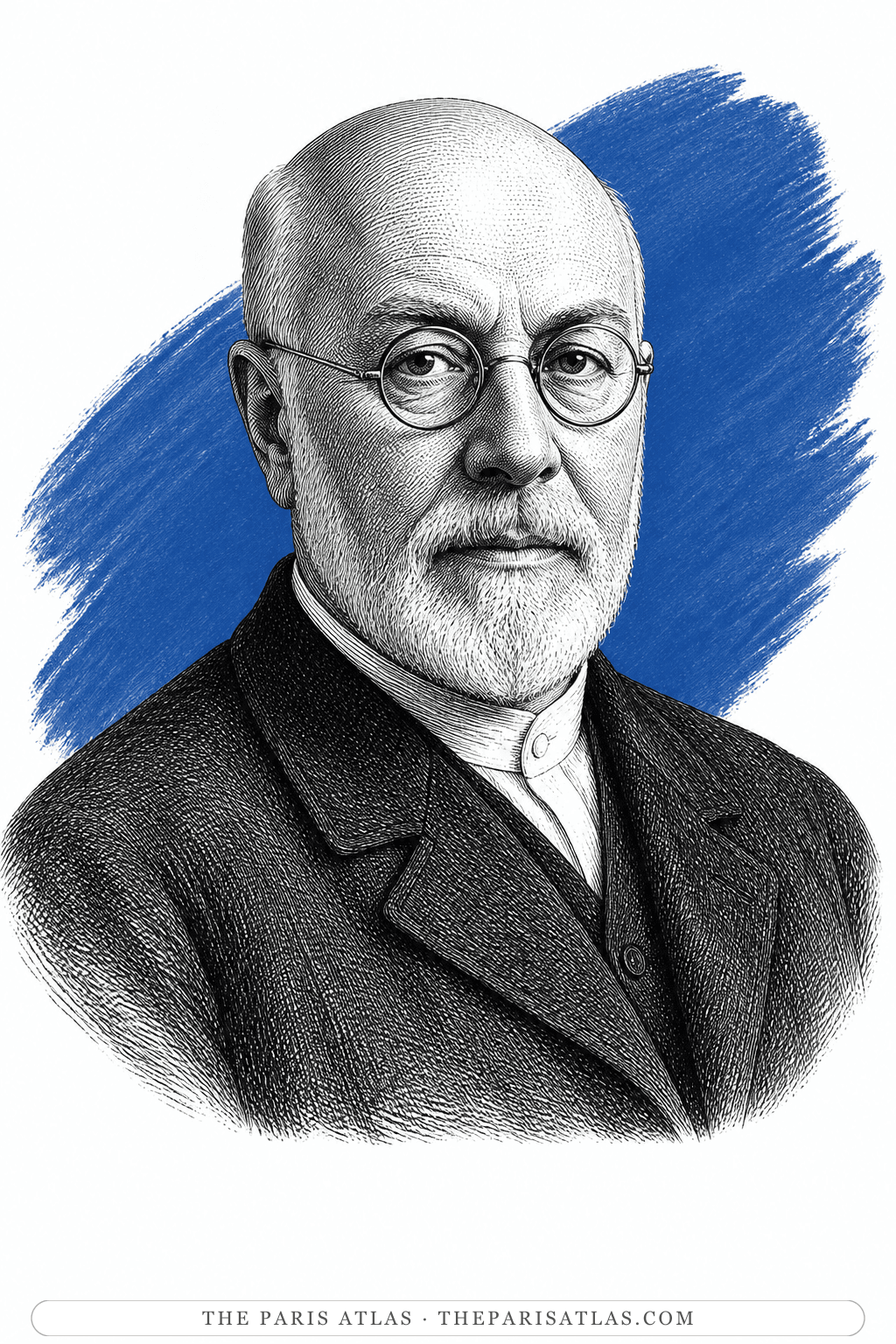
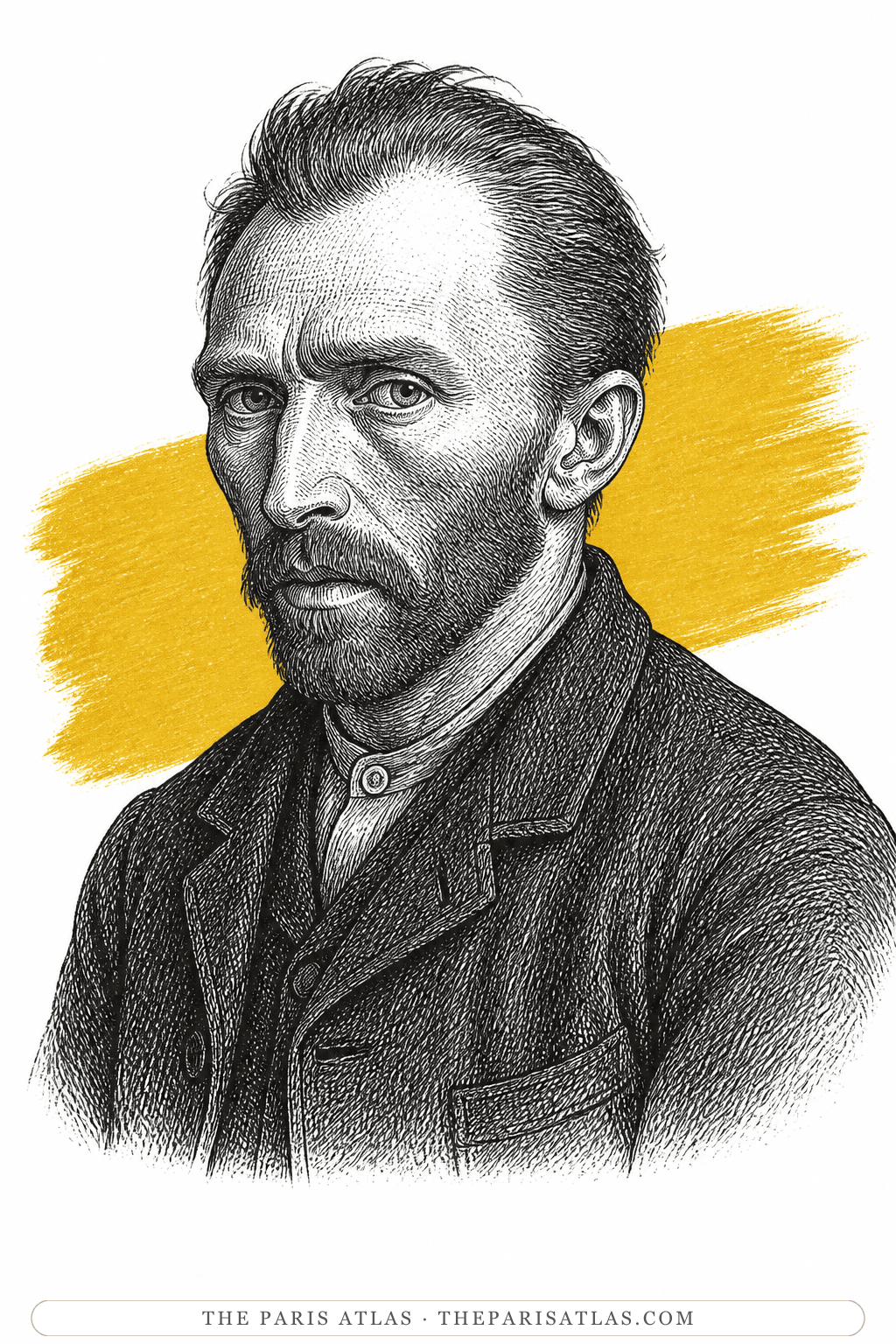
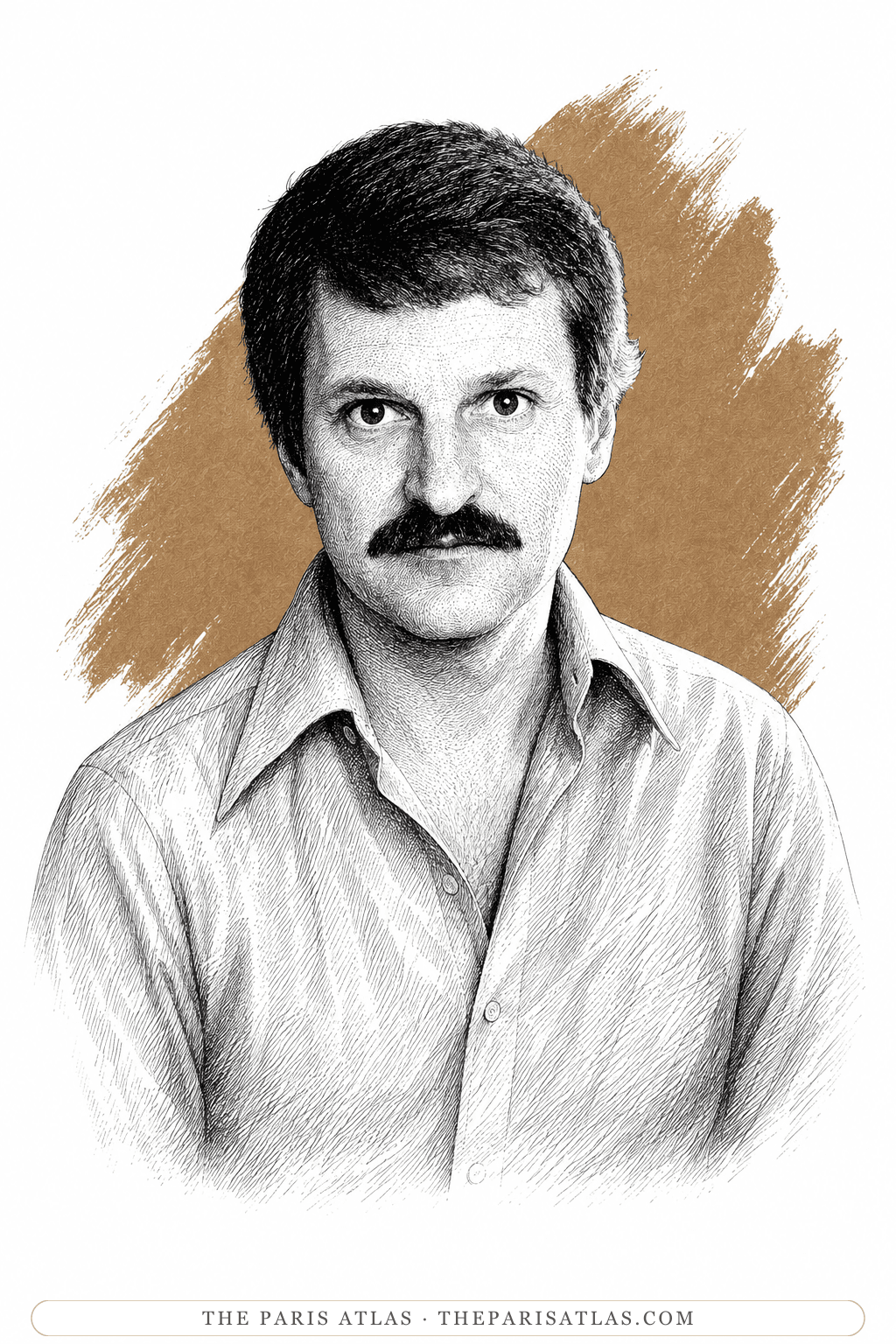
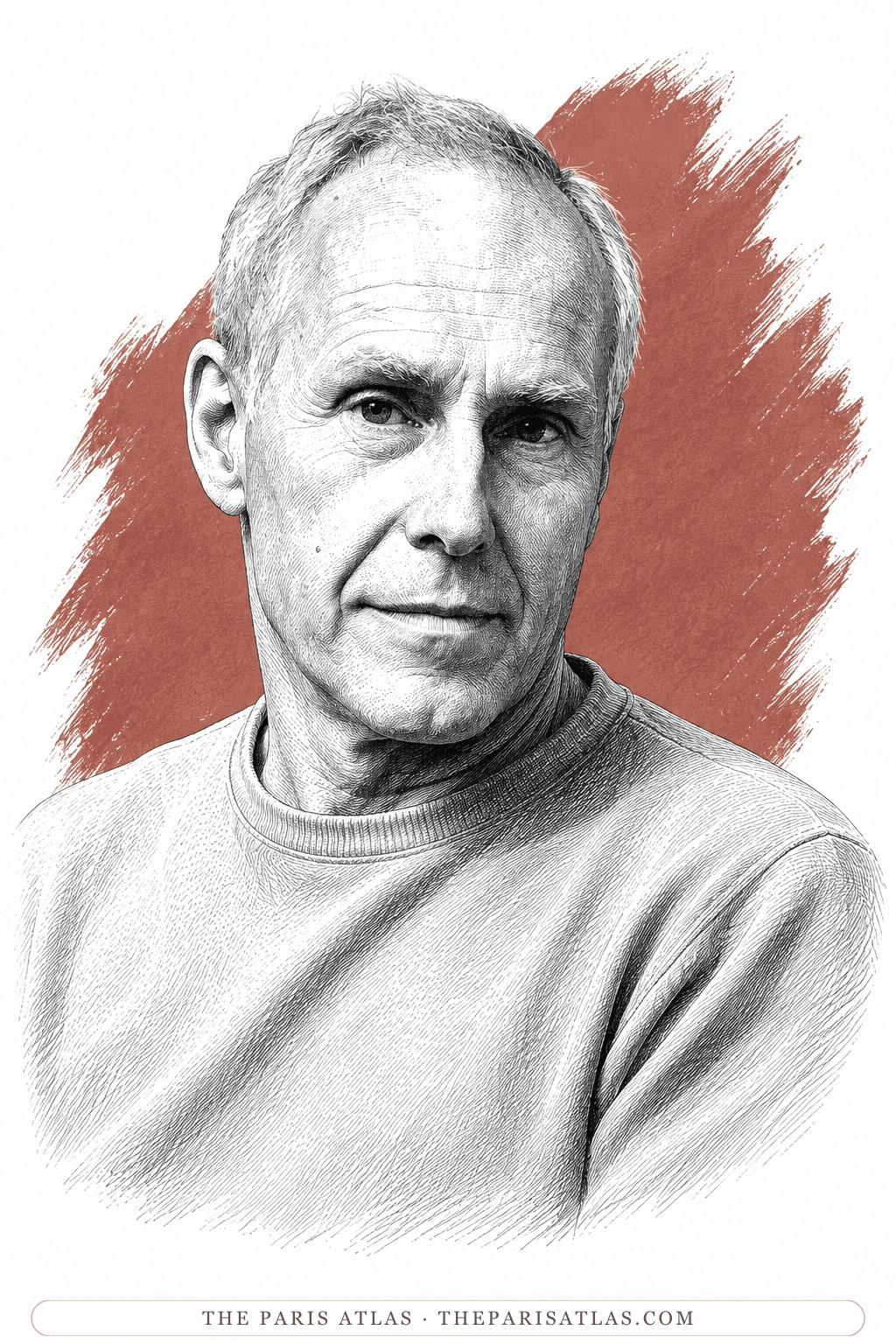
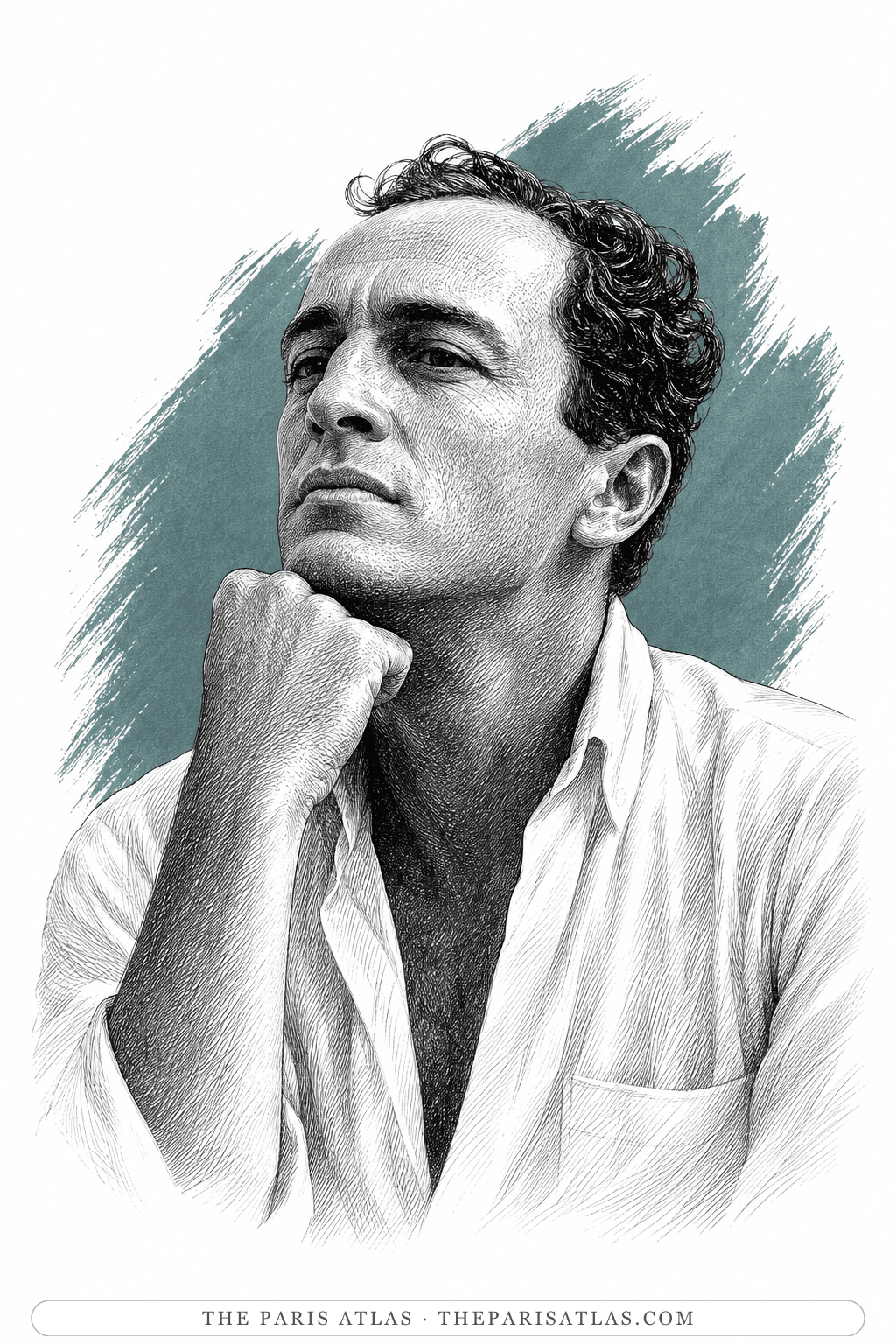
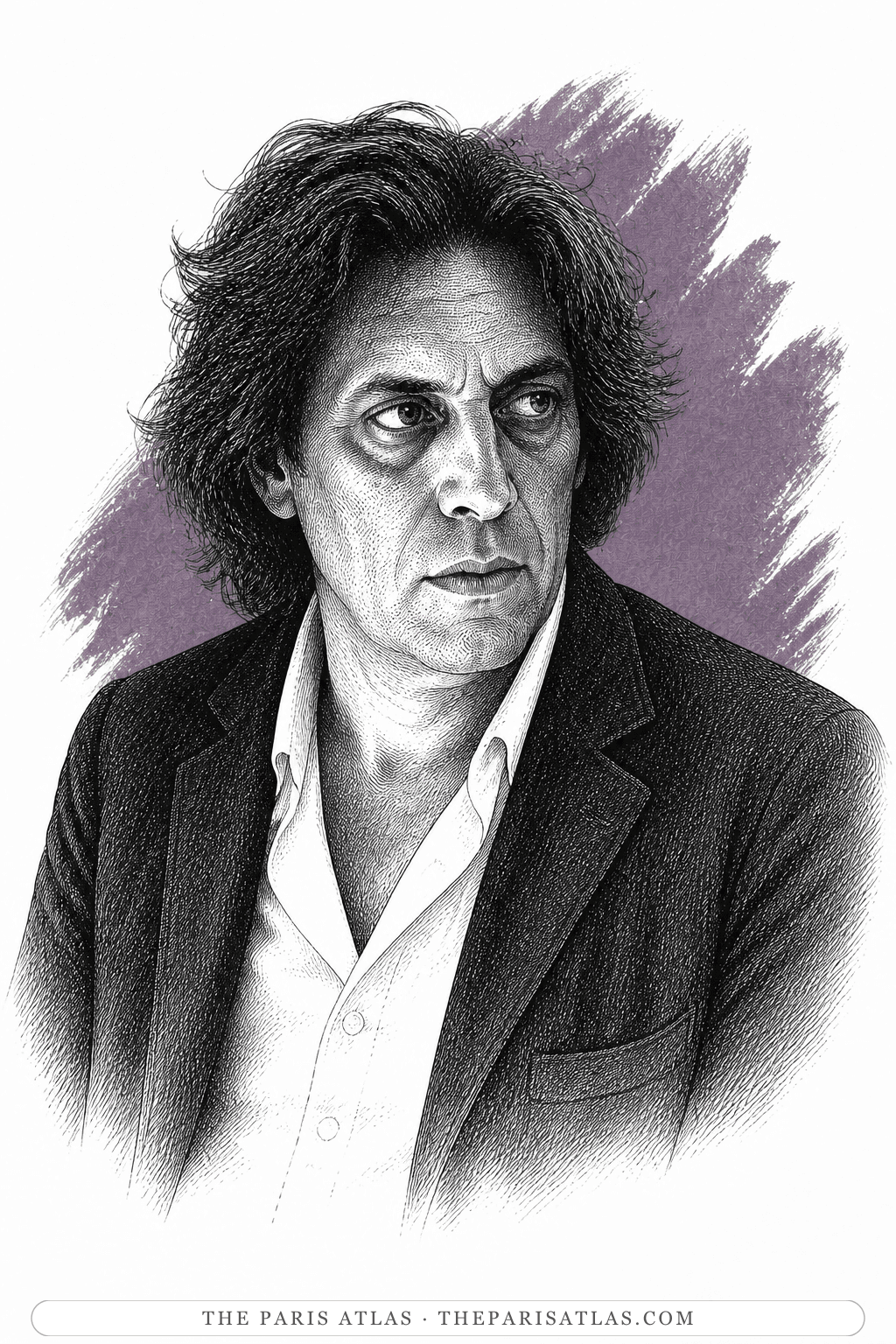


 View source