The Paris AtlasCharting the artists, works, and places worth returning to.
  • Painter
  • Illustrator
· French · 1864–1901

Henri de Toulouse-Lautrec

Aristocrat, painter and printmaker who moved to Montmartre in the 1880s and made its nightlife his single subject. His 1891 Moulin Rouge poster of the dancer La Goulue changed what a poster could be; he died at thirty-six leaving more than five thousand drawings.

In images

Details

Lived
1864–1901
Born
1864
Birthplace
Albi
Died
1901
Place of death
Château Malromé, Gironde
Nationality
French
Roles
PainterIllustrator

About Henri de Toulouse-Lautrec

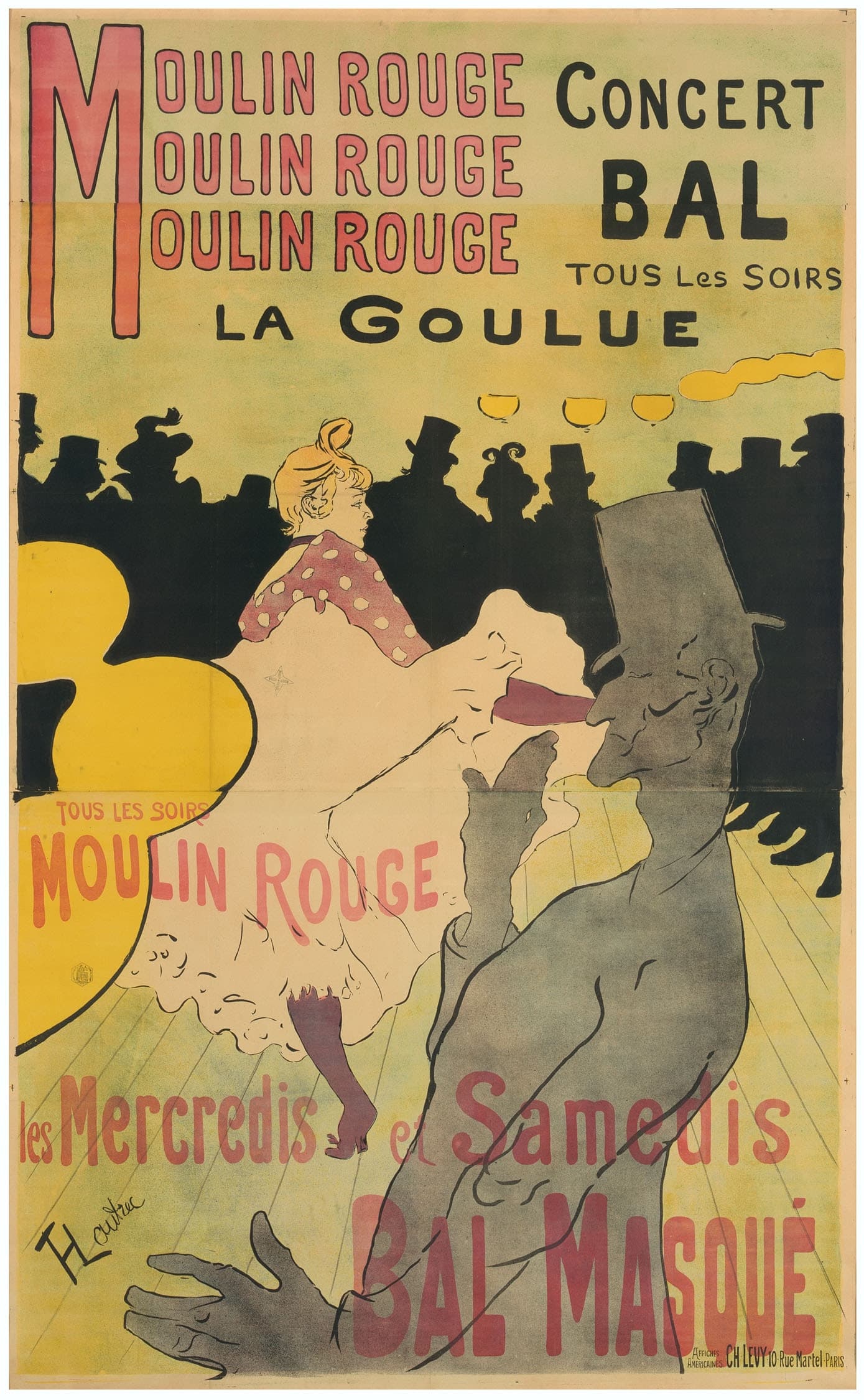
Henri de Toulouse-Lautrec came from one of the oldest noble families in France and spent his working life in the dance halls, cabarets and brothels of Montmartre, painting the performers as they actually looked. When the Moulin Rouge opened in 1889 it hung his painting in the foyer and kept a table for him; his 1891 poster of the dancer La Goulue mid-kick, the crowd reduced to a black silhouette, was pasted three thousand times across Paris and made him famous overnight.

Two teenage leg fractures that never healed — the result of a genetic bone disorder, his parents being first cousins — left him an adult of about five feet, with a man's torso on a child's legs. In Montmartre the aristocrat with the sketchbook became part of the furniture of the night he recorded: Aristide Bruant's cabaret, the cancan lines, the maisons closes, and the drink that killed him at thirty-six.

An aristocrat with broken legs

Toulouse-Lautrec was born on 24 November 1864 in Albi, in the south-west, to the comte and comtesse de Toulouse-Lautrec-Monfa — first cousins whose marriage carried a genetic bone disorder to their son. At thirteen he broke his right femur, at fourteen the left; neither healed properly, his legs stopped growing, and he reached an adult height of about five feet. Painting and drawing, a family hobby, became the thing he could do.

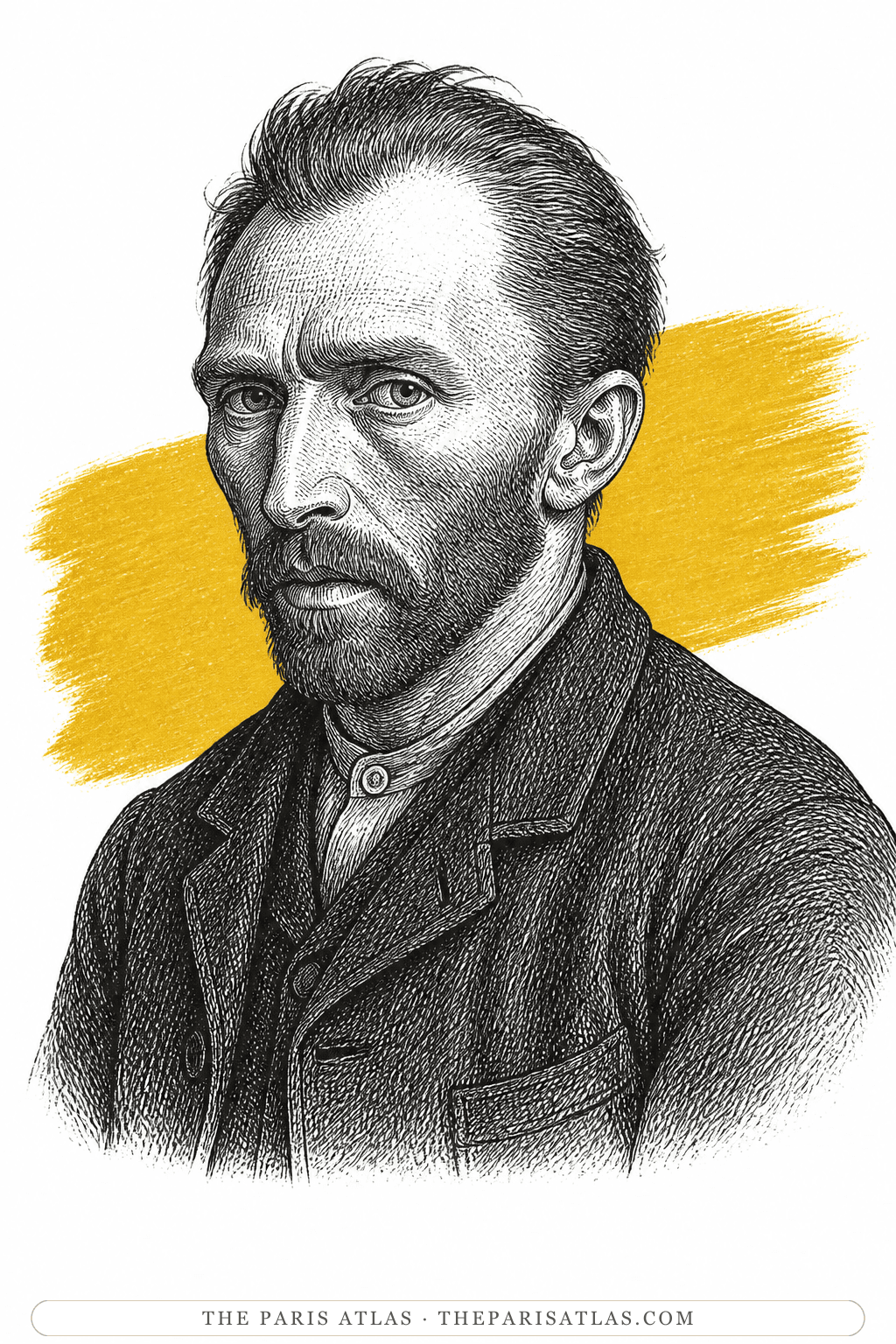
He moved to Paris in 1882, at seventeen, to train under the portraitist Léon Bonnat, then spent five years in Fernand Cormon's studio, where the students beside him included Vincent van Gogh — whose portrait he drew in pastel in 1887 — and Émile Bernard. By the mid-1880s he had his own studio in Montmartre, at the corner of the rue Tourlaque and the rue Caulaincourt, and had stopped going home at night.

Crossing his eyes in Japanese costume, around 1892 — photographed by his drinking companion Maurice Guibert. (Maurice Guibert, via Wikimedia Commons · Public domain)

In 1885 he met Suzanne Valadon, an acrobat turned artists' model who was teaching herself to draw between sittings. She modelled for him, they were lovers, and the relationship ended around her suicide attempt in 1888. He was among the first to take her own drawings seriously.

The Moulin Rouge and the poster

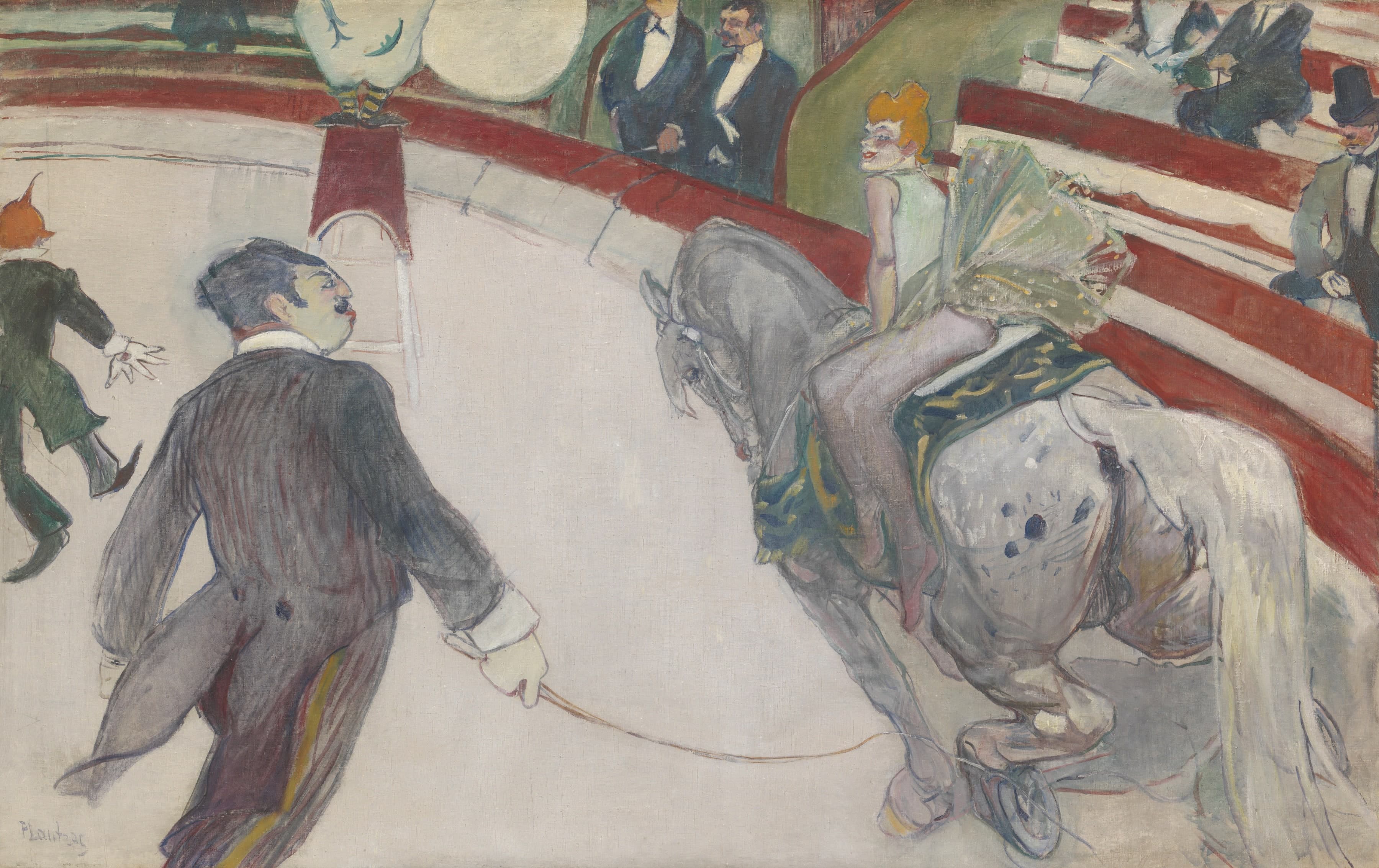
The Moulin Rouge opened at the foot of the Butte in October 1889, and Toulouse-Lautrec belonged to it from the first season: the management bought his painting of a circus rider for the foyer and kept him a table. In 1891 it commissioned a poster from him — his first — to announce the new season and its star, the cancan dancer Louise Weber, called La Goulue, the Glutton.

Moulin Rouge: La Goulue, 1891. Three thousand copies went up across Paris; the crowd is a single black silhouette. (Henri de Toulouse-Lautrec (Metropolitan Museum of Art), via Wikimedia Commons · CC0)

Moulin Rouge: La Goulue compressed everything he had learned from Japanese prints and Degas into a design a passer-by could read in a second: the dancer's white blouse mid-kick, her partner Valentin le Désossé sketched grey in the foreground, the audience one flat black band. Three thousand copies were pasted up in the last days of 1891 and Paris took notice of the form itself — the poster became art criticism's business, and Lautrec its most argued-over maker. He produced around thirty more.

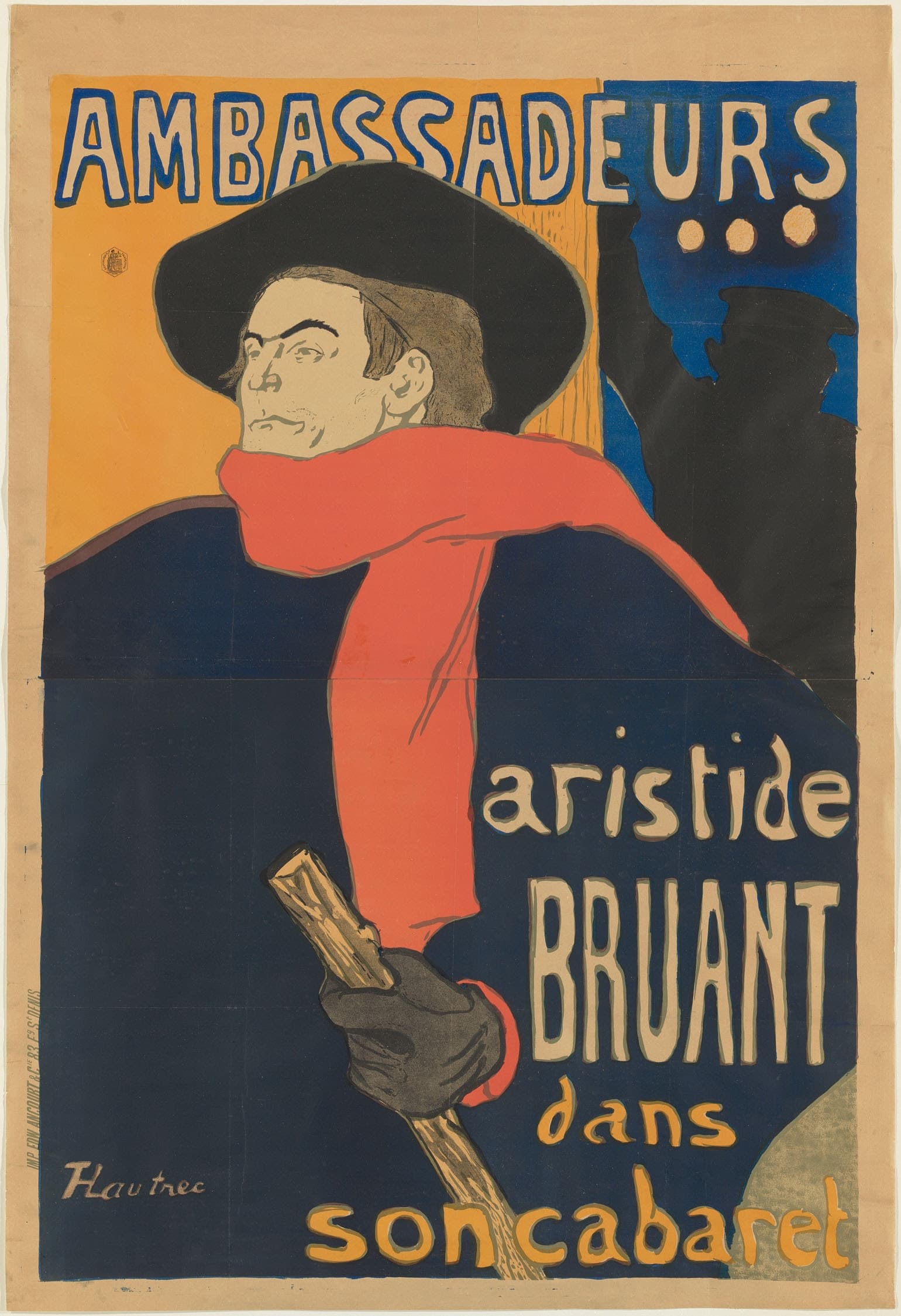
Aristide Bruant in the 1892 Ambassadeurs poster: hat, cape, red scarf, contempt. (Henri de Toulouse-Lautrec (Bibliothèque nationale de France), via Wikimedia Commons · Public domain)

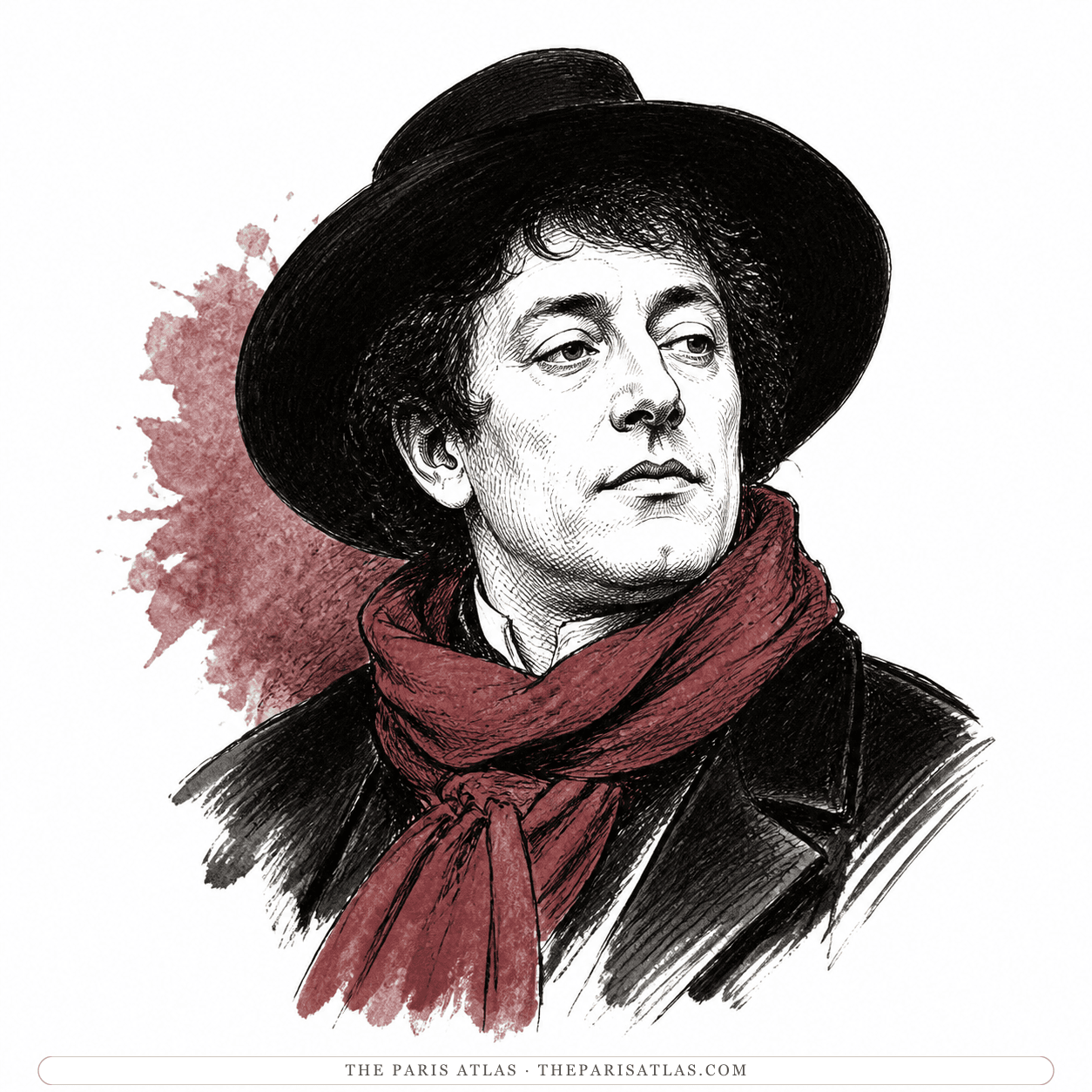
The most famous after La Goulue served Aristide Bruant, the singer whose cabaret Le Mirliton Lautrec drank at and drew for. When the smart café-concert Les Ambassadeurs booked Bruant in 1892, Lautrec's poster gave him a monument: black hat, black cape, red scarf, and a stare of total contempt for the audience about to pay him. The Ambassadeurs' manager hated it; Bruant refused to go on unless it stayed on the walls.

Inside the houses

Through the 1890s Lautrec lived for stretches inside the licensed brothels of the rue des Moulins and the rue d'Amboise — a resident, not a tourist. The roughly fifty paintings and hundred drawings he made there, and the 1896 lithograph album Elles, show the women off duty: waiting, washing, playing cards, asleep. The pictures neither glamorize nor moralize, which is why they still look modern; the medical inspection queue in the Musée d'Orsay's Rue des Moulins canvas is as plain as a timetable.

He worked constantly between the drinking. The count of what he left behind, made after his death: 737 paintings, 275 watercolours, 363 prints and posters, and 5,084 drawings — in a working life of under twenty years.

The fall

The drink was constant — he carried a hollowed cane that held a half-litre of spirits — and syphilis, contracted in the houses he painted, advanced through the 1890s. In February 1899 his family had him committed to a sanatorium at Neuilly for three months; to prove his sanity he drew the circus from memory, thirty-nine crayon drawings, and argued his way out with them.

The reprieve lasted two years. After a stroke he was taken to his mother's estate, the Château Malromé in the Gironde, where he died on 9 September 1901, aged thirty-six. His mother and his dealer Maurice Joyant built the Musée Toulouse-Lautrec in Albi around the contents of his studio; it remains the largest collection of his work anywhere.

Life events

  1. 1864

    Born on 24 November in Albi, to parents who are first cousins.

    Henri de Toulouse-Lautrec — Wikipedia

  2. 1878

    Breaks his right femur at thirteen; the left follows a year later. Neither heals properly and his legs stop growing.

    Henri de Toulouse-Lautrec — Wikipedia

  3. 1882

    Moves to Paris at seventeen to study under Léon Bonnat, then spends five years in Fernand Cormon's studio, beside Vincent van Gogh and Émile Bernard.

    Henri de Toulouse-Lautrec — Wikipedia

  4. 1885

    Meets Suzanne Valadon, model and self-taught artist; they become lovers.

    Henri de Toulouse-Lautrec — Wikipedia

  5. 1889

    The Moulin Rouge opens and hangs his circus painting in the foyer; he gets a standing table.

    Toulouse-Lautrec and Montmartre — National Gallery of Art exhibition contextualising Steinlen's 1896 Chat Noir poster inside the broader Belle Époque poster tradition alongside Toulouse-Lautrec, Chéret and Mucha

  6. 1891

    Moulin Rouge: La Goulue, his first poster, is pasted three thousand times across Paris in the last days of the year.

    Moulin Rouge: La Goulue, 1891 (Metropolitan Museum of Art) — Toulouse-Lautrec's first poster, three thousand copies pasted across Paris, with the crowd cut to a black silhouette behind the dancer. (Henri de Toulouse-Lautrec (Metropolitan Museum of Art), via Wikimedia Commons)

    Henri de Toulouse-Lautrec — Wikipedia

  7. 1892

    The Ambassadeurs poster of Aristide Bruant — hat, cape, red scarf. The manager hates it; Bruant refuses to perform unless it stays up.

    Ambassadeurs: Aristide Bruant dans son cabaret, 1892 (Bibliothèque nationale de France). The Ambassadeurs' manager hated it; Bruant refused to perform unless it went up. (Henri de Toulouse-Lautrec (Bibliothèque nationale de France), via Wikimedia Commons)

    Toulouse-Lautrec and Montmartre — National Gallery of Art exhibition contextualising Steinlen's 1896 Chat Noir poster inside the broader Belle Époque poster tradition alongside Toulouse-Lautrec, Chéret and Mucha

  8. 1896

    Publishes Elles, the lithograph album of the licensed houses' women off duty — waiting, washing, asleep.

    Toulouse-Lautrec and Montmartre — National Gallery of Art exhibition contextualising Steinlen's 1896 Chat Noir poster inside the broader Belle Époque poster tradition alongside Toulouse-Lautrec, Chéret and Mucha

  9. 1899

    Committed to a Neuilly sanatorium for three months; draws the circus from memory, thirty-nine drawings, to argue his way out.

    Henri de Toulouse-Lautrec — Wikipedia

  10. 1901

    Dies on 9 September at his mother's Château Malromé in the Gironde, aged thirty-six, of complications of alcoholism and syphilis after a stroke.

    Henri de Toulouse-Lautrec — Wikipedia

  11. 1922

    The Musée Toulouse-Lautrec opens in Albi, built by his mother and his dealer Maurice Joyant from the contents of his studio.

    Henri de Toulouse-Lautrec — Wikipedia

People they knew

Documented connections — every one carries its source.

Vincent van Gogh

  • Painter

Painted a portrait of · 1887

Pastel on cardboard, 1887: Van Gogh in profile at a café table with a glass in front of him. The Van Gogh Museum, Amsterdam holds it.

Vincent van Gogh — frequently asked questions — Van Gogh Museum

Met · 1886

Fellow students in Fernand Cormon's Paris studio in 1886. Toulouse-Lautrec drew Van Gogh in pastel in 1887, in profile at a café table; the portrait is in the Van Gogh Museum, Amsterdam.

Vincent van Gogh — frequently asked questions — Van Gogh Museum

Suzanne Valadon

  • Painter
  • Artists' model

Partner of · 1885–1888

Valadon modelled for him from 1885 and the two were lovers; the relationship ended around her 1888 suicide attempt. He was among the first to take her own drawings seriously.

Henri de Toulouse-Lautrec — Wikipedia

Illustrated portrait of Aristide Bruant

Aristide Bruant

  • Singer
  • Author

Painted a portrait of · 1892

The 1892 Ambassadeurs poster - black hat, black cape, red scarf - and three more Bruant posters after it made the singer's silhouette one of the most recognized images in Paris. Lautrec drank and drew at Bruant's cabaret Le Mirliton.

Toulouse-Lautrec and Montmartre — National Gallery of Art exhibition contextualising Steinlen's 1896 Chat Noir poster inside the broader Belle Époque poster tradition alongside Toulouse-Lautrec, Chéret and Mucha

Henri de Toulouse-Lautrec’s Places

The cataloged places connected to Henri de Toulouse-Lautrec — through the books, and through the documented record.

Places you can enter today appear first, followed by addresses to see from outside and sites that have vanished.

Questions about Henri de Toulouse-Lautrec

What was wrong with Toulouse-Lautrec's legs?

A genetic bone disorder — modern medicine's best guess is pycnodysostosis — traceable to his parents being first cousins. He broke his right femur at thirteen and his left at fourteen; neither healed properly, his legs stopped growing, and he reached about five feet, an adult torso on a child's legs. The condition pushed him from an aristocrat's outdoor life toward drawing, which became everything.

What is Toulouse-Lautrec's most famous work?

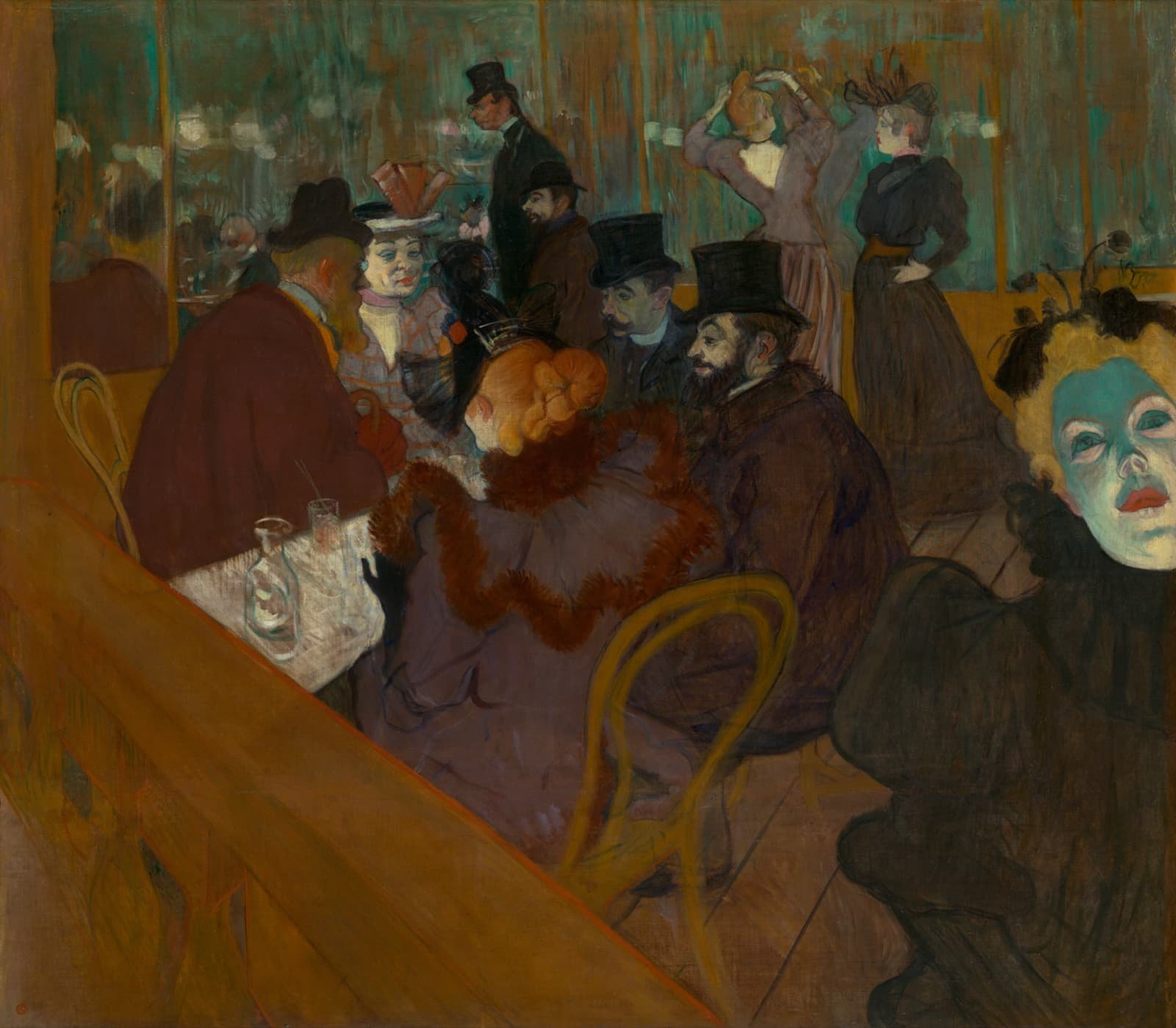
The 1891 poster Moulin Rouge: La Goulue — the cancan dancer Louise Weber mid-kick in a white blouse, the crowd behind her one flat black silhouette. Three thousand copies were pasted across Paris and it made both the Moulin Rouge and the artistic poster famous. Among paintings, At the Moulin Rouge (Art Institute of Chicago) and the Rue des Moulins brothel pictures are the most reproduced.

Did Toulouse-Lautrec really live in brothels?

For stretches of the 1890s, yes — in the licensed houses of the rue des Moulins and rue d'Amboise, as a lodger the women treated as furniture. The point was access to the unposed: roughly fifty paintings and a hundred drawings of the residents waiting, washing, playing cards and sleeping, plus the 1896 lithograph album Elles. The pictures record; they do not advertise and they do not scold.

How did Toulouse-Lautrec die?

Of the combined effects of alcoholism and syphilis, at thirty-six. Years of constant drinking — his hollowed walking cane carried spirits — led to a family-ordered sanatorium stay in 1899, which he exited by drawing thirty-nine circus scenes from memory to prove his mind sound. A stroke followed in 1901, and he died at his mother's Château Malromé on 9 September 1901.

Where can you see Toulouse-Lautrec's work?

The Musée Toulouse-Lautrec in Albi, his birthplace, holds the largest collection — built from his studio's contents by his mother and his dealer after his death. In Paris, the Musée d'Orsay hangs the major brothel and dance-hall paintings. The posters are in print-room collections everywhere; the Metropolitan Museum and the Bibliothèque nationale de France both hold fine impressions of La Goulue and the Bruant posters.

Was Toulouse-Lautrec connected to Van Gogh?

Yes — they were fellow students in Fernand Cormon's Paris studio from 1886, and Toulouse-Lautrec drew Vincent van Gogh in pastel in 1887, in profile over a café glass; the portrait is in the Van Gogh Museum in Amsterdam. In 1890 Lautrec challenged a critic to a duel for disparaging Van Gogh's work — it went no further than the challenge.

Sourced claims

Every connection the graph holds for Henri, with the evidence behind it.

Frequented

Le Chat Noir

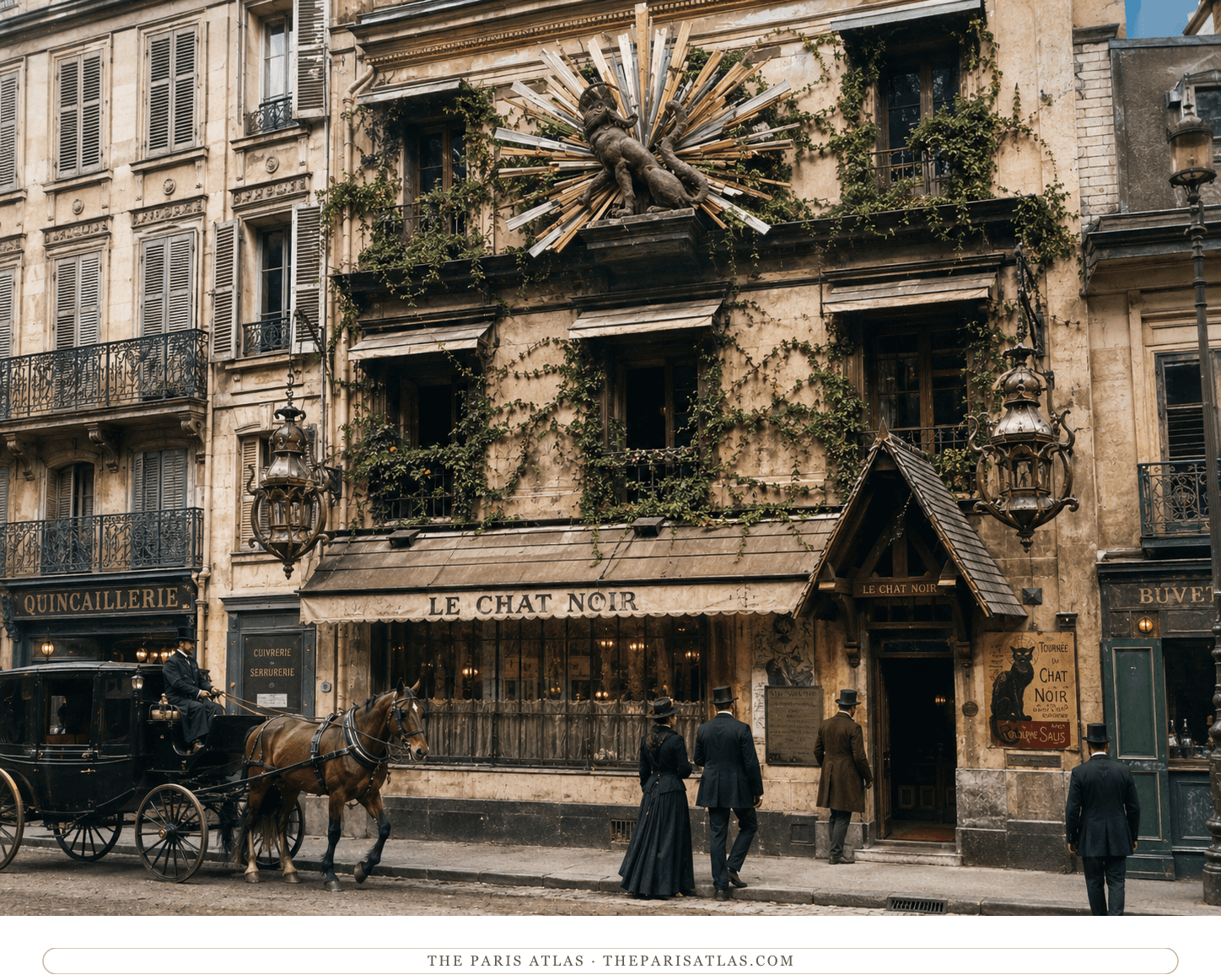
Maurice Joyant remembered Toulouse-Lautrec entering Salis's noisy Chat Noir before the artist became famous.

Musée d'Orsay, Le cabaret du Chat Noir (1881–1897) (1992)

Painted a portrait of · 1887

Vincent van Gogh

Pastel on cardboard, 1887: Van Gogh in profile at a café table with a glass in front of him. The Van Gogh Museum, Amsterdam holds it.

Vincent van Gogh — frequently asked questions — Van Gogh Museum

Partner of · 1885–1888

Suzanne Valadon

Valadon modelled for him from 1885 and the two were lovers; the relationship ended around her 1888 suicide attempt. He was among the first to take her own drawings seriously.

Henri de Toulouse-Lautrec — Wikipedia

Painted a portrait of · 1892

Aristide Bruant

The 1892 Ambassadeurs poster - black hat, black cape, red scarf - and three more Bruant posters after it made the singer's silhouette one of the most recognized images in Paris. Lautrec drank and drew at Bruant's cabaret Le Mirliton.

Toulouse-Lautrec and Montmartre — National Gallery of Art exhibition contextualising Steinlen's 1896 Chat Noir poster inside the broader Belle Époque poster tradition alongside Toulouse-Lautrec, Chéret and Mucha

Met · 1886

Vincent van Gogh

Fellow students in Fernand Cormon's Paris studio in 1886. Toulouse-Lautrec drew Van Gogh in pastel in 1887, in profile at a café table; the portrait is in the Van Gogh Museum, Amsterdam.

Vincent van Gogh — frequently asked questions — Van Gogh Museum

References

References

The sources below include biographies, scholarly essays, interviews, and primary materials that informed this page. They reflect both the historical record and ongoing critical conversations about Henri de Toulouse-Lautrec and his work.

  1. 1Henri de Toulouse-Lautrec — Wikipedia

    Wikipedia
    View source
  1. 2Toulouse-Lautrec and Montmartre — National Gallery of Art exhibition contextualising Steinlen's 1896 Chat Noir poster inside the broader Belle Époque poster tradition alongside Toulouse-Lautrec, Chéret and Mucha

    National Gallery of Art
    View source
i
Why these sources are here

These references anchor the page in the documented record and in the scholarly conversations around Henri de Toulouse-Lautrec. Every claim on this page traces back to one or more of the works listed here.

Explore more resources