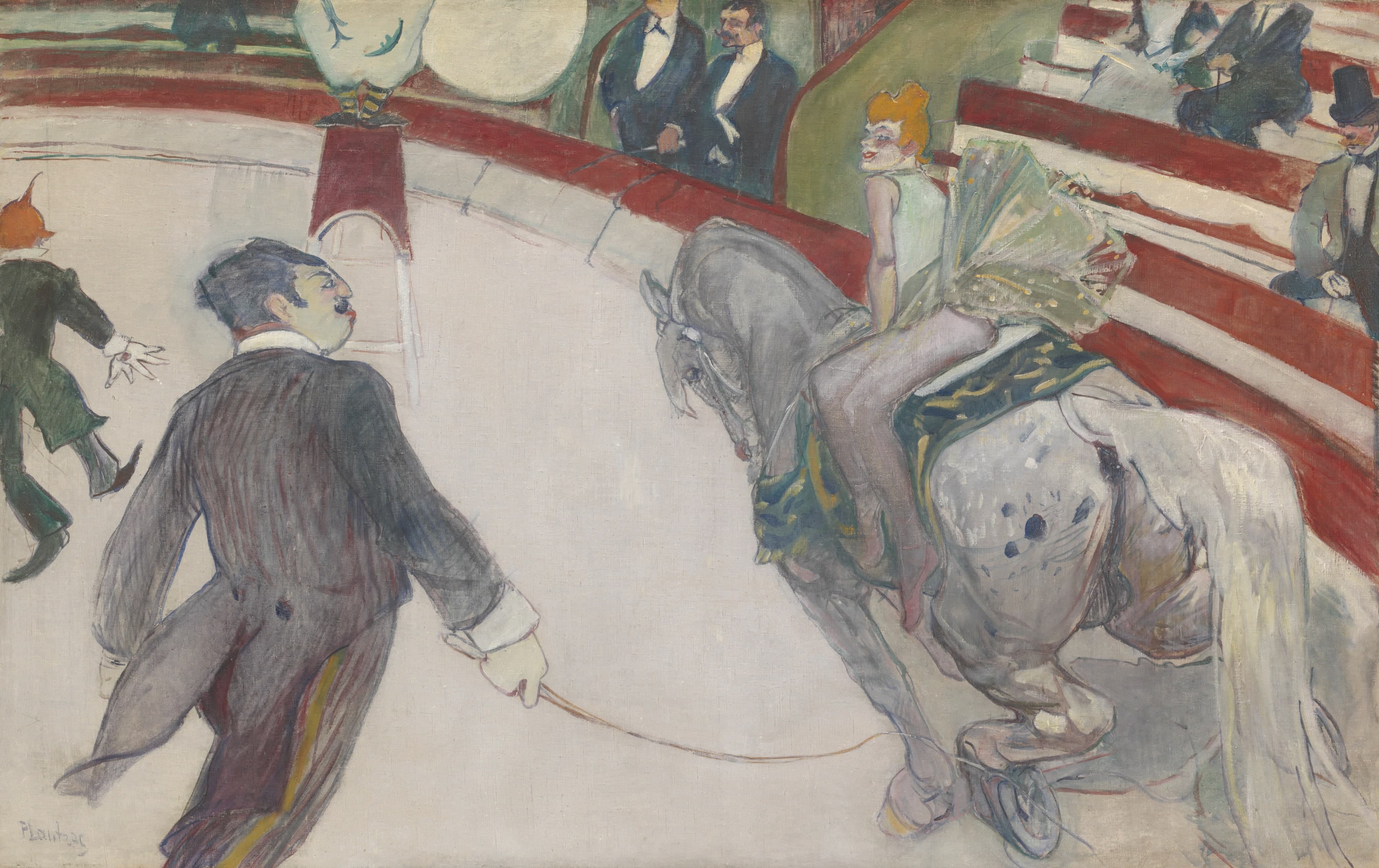
Equestrienne (At the Cirque Fernando)
A bareback rider in a gauze skirt sits sideways on a gray horse that is gathering speed, while the ringmaster, Monsieur Loyal, urges it on with his whip. Henri de Toulouse-Lautrec painted it in 1887–88, and it is set at the Cirque Fernando in Montmartre. Joseph Oller bought it for the Moulin Rouge, where it hung near the entrance. It is now at the Art Institute of Chicago, 1925.523.
- 1887–88
- Oil on canvas
- Art Institute of ChicagoChicago, United States
About Henri de Toulouse-Lautrec
What the painting shows
The circus ring fills the canvas, seen from above. Most of it is an empty stretch of pale floor, painted so thinly that the weave of the canvas shows through.
A gray horse with dark spots on its rump canters around the curve of the ring at the right, its head bent low. A young woman sits sideways on its back on a green and gold saddlecloth. She has bright orange hair and red lips, and she turns her head back over her shoulder toward the man in the ring. Her bodice is pale green, her arms are bare, and a skirt of gauze dotted with gold flares out behind her.
The man is the ringmaster. He stands at the left in a dark striped tailcoat with a high white collar, his black hair slicked flat and a thick black mustache on his lip. He holds a long whip, and its thin lash trails across the floor toward the horse's hooves.
At the far left edge a clown in green runs out of the picture, one white-gloved hand spread wide. At the top a performer in striped stockings stands on a red pedestal, cut off at the waist by the top of the canvas. Beside him is a large pale disc.
Behind the ring barrier, a red band curving across the top of the picture, sit the audience. Two men in evening dress stand at the center, and a man in a top hat sits at the far right. Tiers of red and white benches rise behind the rider.
The trick that is about to happen
The Art Institute of Chicago explains the moment. The rider is about to stand up on the horse and jump through a paper hoop held by a clown. The horse is picking up speed, driven by the ringmaster's whip.
The pale disc next to the performer on the pedestal at the top may be that paper hoop. The painting cuts it off, and the museum does not say which figure is holding it.
The Art Institute names the ringmaster as the famous Monsieur Loyal. It says the rider seems to snarl at him, and he glares back at her. Her lips are drawn back, but whether she is smiling or snarling is hard to judge.
The Cirque Fernando
The Cirque Fernando was a circus in Montmartre, the hilltop district of Paris where Toulouse-Lautrec lived and worked. The Art Institute notes that it is the same circus Pierre-Auguste Renoir painted in his portrait of the Wartenberg sisters, two young acrobats, which the Art Institute also owns.
The Art Institute says Toulouse-Lautrec may have based the rider on Suzanne Valadon. She had been a circus performer before she became a model and then an artist, and she and Toulouse-Lautrec had a relationship that lasted nearly three years. The museum puts this as a possibility, not a fact.
Hung at the entrance of the Moulin Rouge
Joseph Oller, one of the owners of the Moulin Rouge, bought the painting in 1888. The Moulin Rouge opened in 1889, and the painting was hung near the entrance.
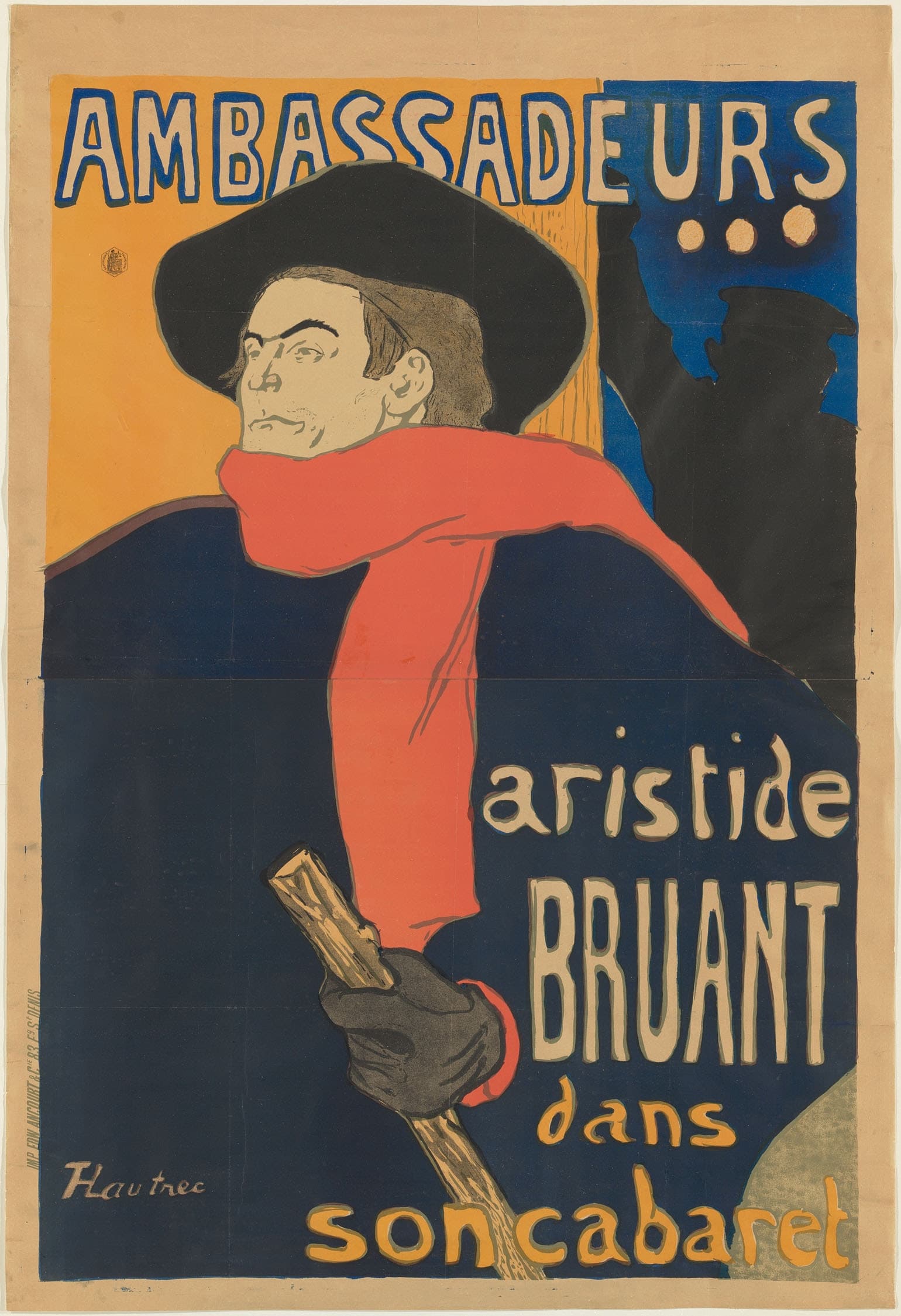
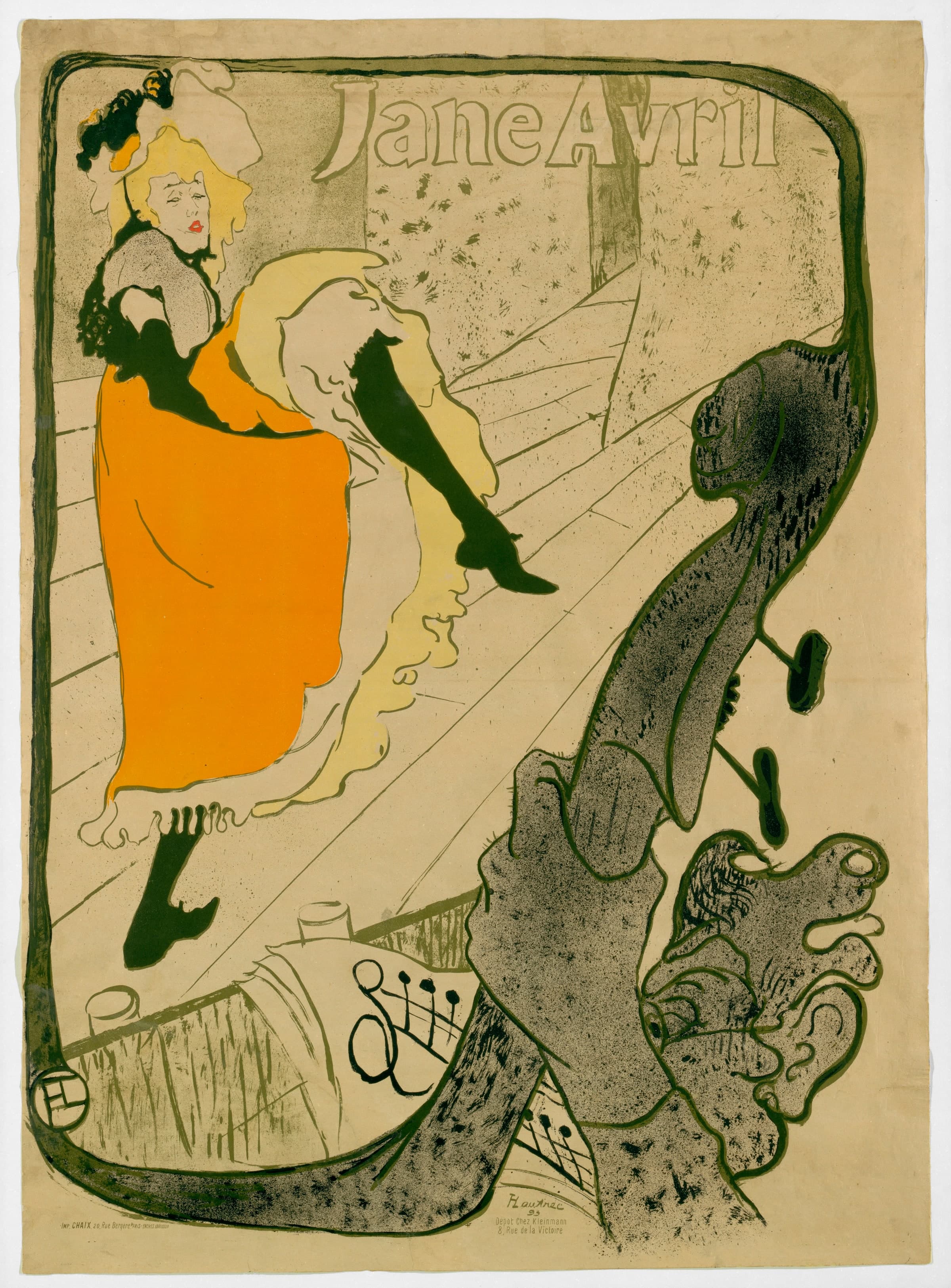
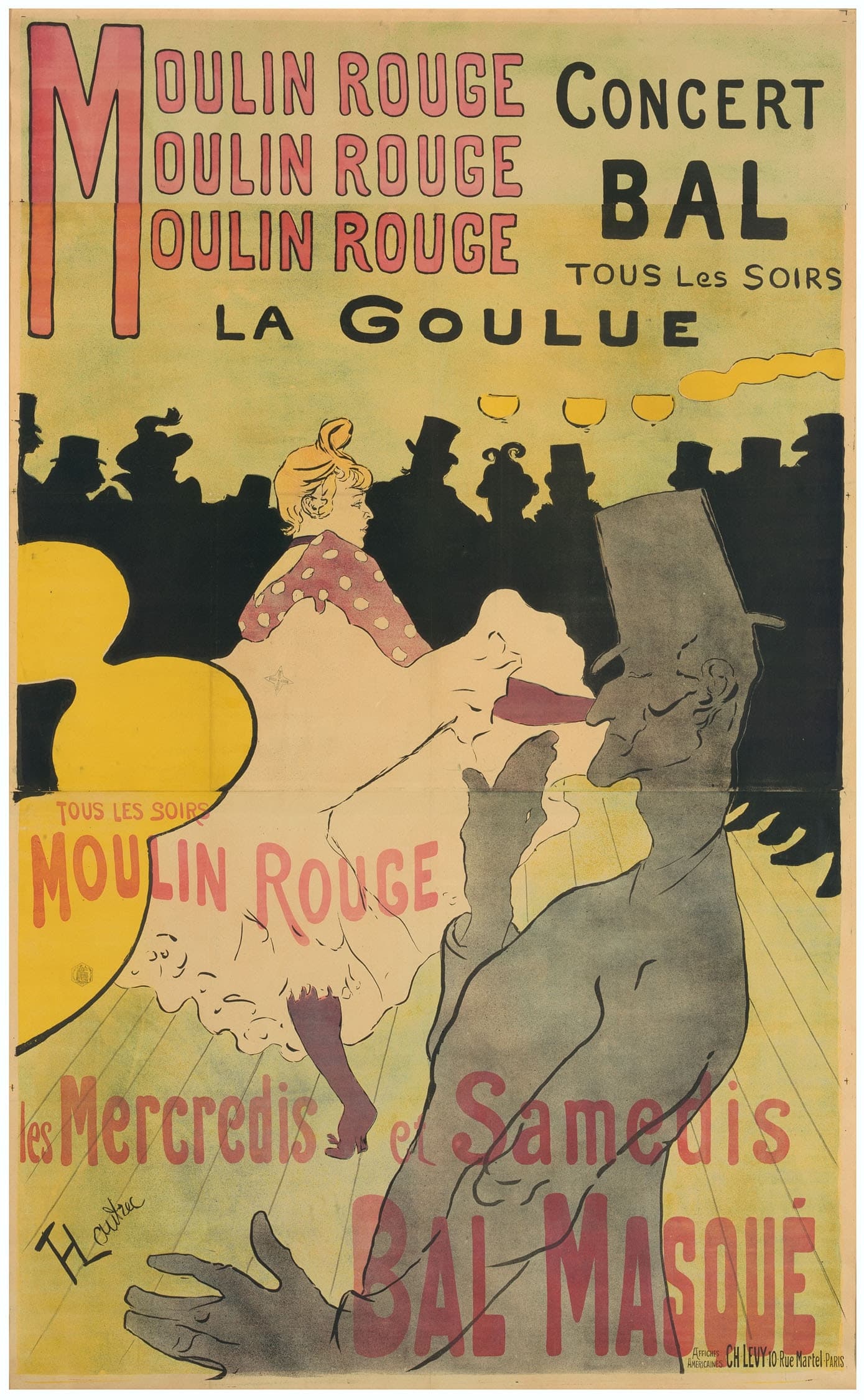
Colta Ives of the Metropolitan Museum of Art writes that Toulouse-Lautrec soon became a fixture there himself, sitting most nights at a front-row table with his friends. In 1891 the Moulin Rouge ordered his first poster, Moulin Rouge: La Goulue.
The Art Institute's exhibition history lists it in a permanent display at the Moulin Rouge, which it dates from 1888. The critic Félix Fénéon wrote about it in the magazine La Vogue in September 1889.
A painting with many names
The painting has carried different titles over the years. When it was shown in Paris in 1914 it was called Monsieur Loyal, after the ringmaster. For much of the twentieth century the Art Institute of Chicago called it The Circus, and then In the Circus Fernando: The Ringmaster.
By its 1979 exhibition of Toulouse-Lautrec's paintings, the Art Institute was calling it At the Circus Fernando, the Equestrienne. An equestrienne is a woman who performs on horseback, so the title had moved from the ringmaster to the rider.
How it reached Chicago
The painting was still Joseph Oller's in January 1914, when the Galerie Paul Rosenberg in Paris showed it as Monsieur Loyal. By that summer it belonged to Baron Lafaurie, who lent it to a Toulouse-Lautrec show at the Galerie Manzi-Joyant.
The dealer Paul Rosenberg had it by 1924. The Art Institute of Chicago bought it from him in 1925 with money given by Joseph Winterbotham, and it is one of the thirty-five works in the Winterbotham Collection.
It has traveled often since. It went to the Museum of Modern Art in New York in 1931 and 1956, to the Louvre in 1964, and to London and Paris for the big Toulouse-Lautrec retrospective of 1991–92. In September 2026 the Art Institute listed it as on view in Gallery 242.
Close reading
Reading the work, detail by detail
Henri de Toulouse-Lautrec left most of this big canvas as an empty ring and packed the people into its edges. Moving around the painting shows the ringmaster, the rider, the horse, two clowns and the audience, and how thinly some of it is painted.
1.Monsieur Loyal's profile
The ringmaster faces right, toward the horse. His black hair is slicked flat, he has a thick black mustache, and his lips are red. His face is pale with a greenish tint. The Art Institute of Chicago names him as Monsieur Loyal and says he glares at the rider.
2.The hand on the whip
His hand comes out of a stiff white cuff and holds the whip low. The long thin lash curves away across the floor toward the horse. The Art Institute says the whip is driving the horse to pick up speed.
3.A striped tailcoat
His tailcoat is painted in long vertical strokes of brown, maroon and gray, so it looks striped. A round dark button sits at the waist. We see him mostly from behind, which puts us behind him in the ring.
4.The rider looks back
The rider turns her head back over her shoulder, toward the ringmaster. Her hair is bright orange, and her red mouth is stretched wide. The Art Institute says she seems to snarl at him. It's hard to be sure whether she is snarling or grinning.
5.A gauze skirt with gold dots
Her skirt flares out behind her in layers of pale greenish gauze, dotted with small gold spots. The Art Institute describes it as a tutu of gauze and sequins. Her legs below are in pink tights.
6.The horse's lowered head
The horse holds its head low, bent down toward the ring. A bridle with a small white rosette crosses its face. The gray is thin, and the pale canvas shows through it in places.
7.Legs on a green and gold saddlecloth
The rider sits sideways, both legs on the near side of the horse. Her pink tights rest on a dark green saddlecloth patterned in gold. The Art Institute says she is about to stand up on the horse's back.
8.Dark spots on a gray horse
The horse's rump is pale gray with a few dark round spots and small blue dashes. The brushwork here is looser than on the ringmaster's coat. The tail hangs in long pale strokes at the right.
9.The lash crosses the horse's legs
At the bottom of the canvas the horse's legs and hooves are drawn in thin gray lines. The whip lash runs in from the left, a thin tan line that turns pale and crosses right over the horse's legs. The legs are only sketched, and the canvas shows between the lines.
10.A clown runs out of the picture
At the left edge a clown in a green costume runs out of the picture. One white-gloved hand is spread wide, and one leg kicks up behind. The canvas edge cuts him in half.
11.A performer on a pedestal
At the top, legs in yellow and dark striped stockings stand on a red pedestal. The top edge of the canvas cuts the performer off at the waist. The large pale disc beside him may be the paper hoop the Art Institute says the rider will jump through.
12.Two men in evening dress
Behind the red barrier stand two men in black tailcoats and white shirtfronts. One holds a thin cane. Their heads are cut off by the top of the canvas.
13.A man in a top hat at the edge
At the far right a man in a gray coat sits on the benches, one gloved hand on his knee. The red and white tiers of seats run behind him.
14.The empty ring
Most of the canvas is the empty floor of the ring. It is painted so thinly that the weave of the canvas shows through. The emptiness puts a wide gap between the ringmaster on the left and the rider on the right.
15.The signature in the corner
In the lower left corner, below the flaring tail of the ringmaster's coat, is the signature in faint gray-blue paint. The Art Institute records it as HT Lautrec. It is easy to miss against the pale floor.
Timeline
1887–1888
Toulouse-Lautrec paints the rider and the ringmaster of the Cirque Fernando in Montmartre.
1888
Joseph Oller buys the painting for the Moulin Rouge.
1889
The Moulin Rouge opens, with the painting near the entrance. Félix Fénéon writes about it in La Vogue in September.
1914
Shown in Paris as Monsieur Loyal. By the summer it belongs to Baron Lafaurie.
1925
The Art Institute of Chicago buys it from Paul Rosenberg with funds from Joseph Winterbotham.
1979
Shown at the Art Institute as At the Circus Fernando, the Equestrienne.
1991–1992
Shown in the Toulouse-Lautrec retrospective at the Hayward Gallery in London and the Grand Palais in Paris.
Where to see it
Art Institute of Chicago
111 South Michigan Avenue, Chicago, IL 60603, United States
The Art Institute of Chicago's record listed the painting as on view in Gallery 242 in September 2026. Gallery displays change, so check the museum's page before a special visit.
Plan your visit on the museum’s official website (opens in a new tab)Frequently asked questions
Where is Equestrienne (At the Cirque Fernando)?
At the Art Institute of Chicago, accession number 1925.523, in the Joseph Winterbotham Collection. In September 2026 the museum listed it as on view in Gallery 242.
Who is the man with the whip?
The Art Institute of Chicago identifies him as Monsieur Loyal, the famous ringmaster of the Cirque Fernando. The painting was shown under his name in 1914.
Who is the rider?
She is not named. The Art Institute says Toulouse-Lautrec may have based her on Suzanne Valadon, a former circus performer who became a model and painter and was his partner for nearly three years. The museum presents this as a possibility.
What does it have to do with the Moulin Rouge?
Joseph Oller, one of the owners of the Moulin Rouge, bought it in 1888, and it hung near the entrance when the Moulin Rouge opened in 1889. Two years later the Moulin Rouge ordered Toulouse-Lautrec's first poster.
What does equestrienne mean?
A woman who rides or performs on horseback. The French title, Au Cirque Fernando: l'Écuyère, means the same thing.
How big is it?
100.3 by 161.3 centimeters, a little over five feet wide. It is painted in oil on canvas and signed at the lower left.
More by Henri de Toulouse-Lautrec
If you like Henri de Toulouse-Lautrec
Explore painters from the same movements and circles.
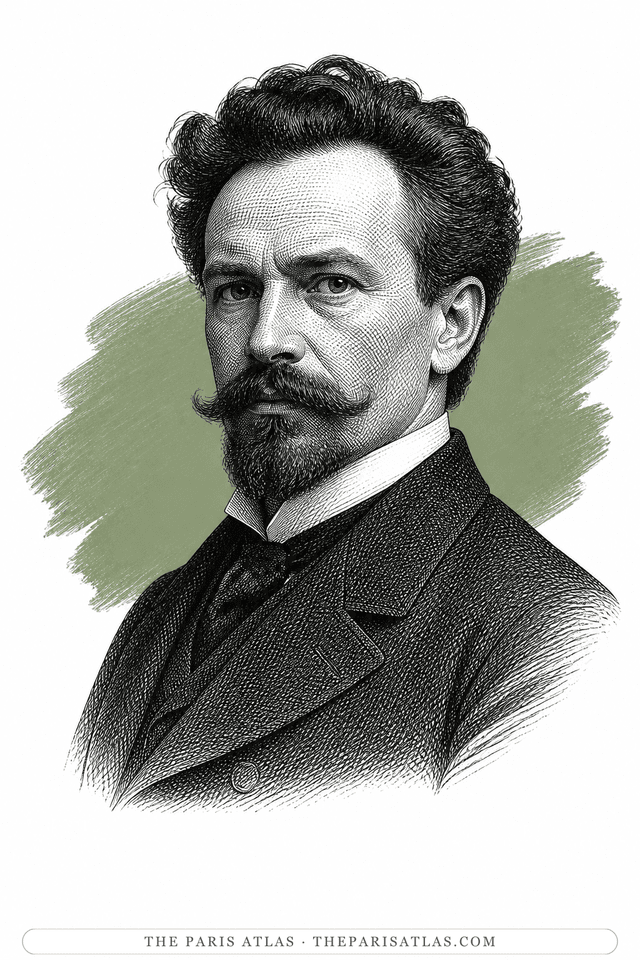
Alphonse Mucha
Czech poster artist whose Gismonda, designed for Sarah Bernhardt over the last week of December 1894, went up on Paris walls on 1 January 1895 and made him famous in days. The six-year Bernhardt contract that followed put his work on every kiosk in the city and gave Art Nouveau its face.
View artist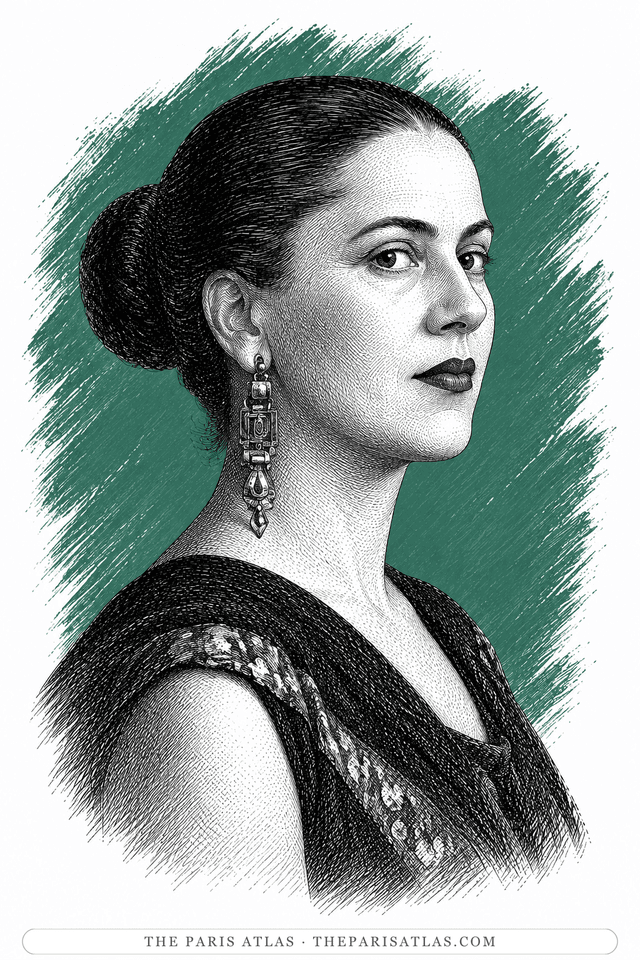
Tarsila do Amaral
Brazilian painter who spent the 1920s moving between São Paulo and Paris, studied Cubism under André Lhote, Albert Gleizes and Fernand Léger, and used what she learned to paint Brazilian towns, railways, plants and bodies. Her 1928 painting Abaporu prompted the manifesto that gave the Anthropophagic movement its name.
View artist
Pierre Bonnard
French painter, printmaker and illustrator whose intimate rooms, Paris streets, gardens and bathing figures transformed everyday life into complex fields of color, memory and perception.
View artist
References
The sources below include collection records, catalogues, scholarly research, and primary materials that informed this page. They document Equestrienne (At the Cirque Fernando), its making, and its place in cultural history.


1Henri de Toulouse-Lautrec, Equestrienne (At the Cirque Fernando), 1887–88 (1925.523)
WebsiteArt Institute of ChicagoUsed forThe holding museum's record, with its description, provenance, exhibition and publication history, and the reproduction the close-reading views were cropped from.

2Toulouse-Lautrec in The Metropolitan Museum of Art
Exhibition catalogueThe Metropolitan Museum of Art, 1996Used forColta Ives on Joseph Oller buying the painting and hanging it at the Moulin Rouge.
3Henri de Toulouse-Lautrec, Moulin Rouge: La Goulue, 1891 (32.88.12)
WebsiteThe Metropolitan Museum of ArtUsed forThe Met's note that one of Toulouse-Lautrec's paintings hung near the Moulin Rouge entrance.
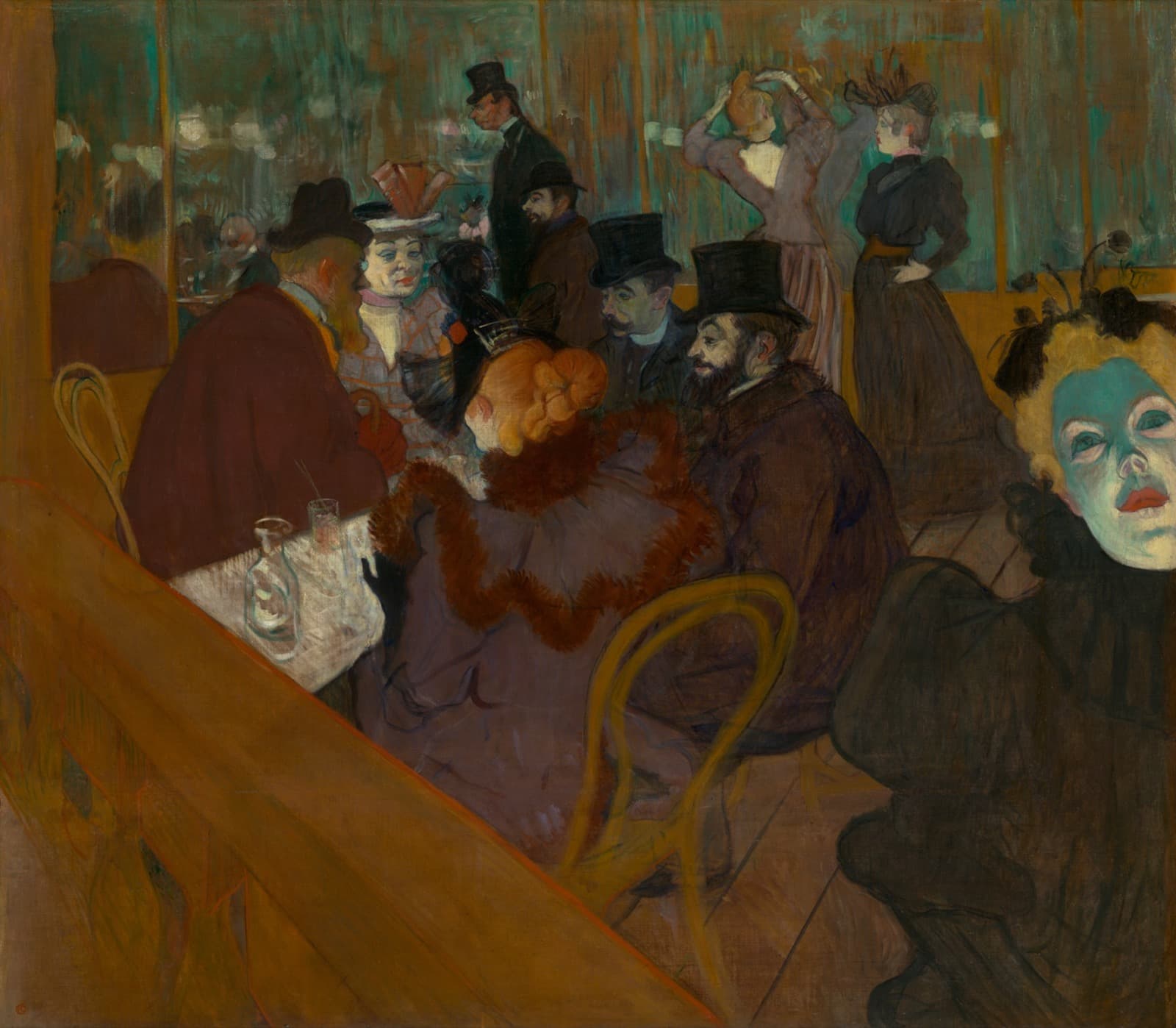
4Henri de Toulouse-Lautrec, At the Moulin Rouge, 1892-95 (1928.610)
WebsiteArt Institute of ChicagoUsed forThe Art Institute on the Moulin Rouge owner buying Equestrienne for the lobby.
These references provide the documented foundation for this work's history and interpretation. Claim-level citations remain attached to the specific claims they support.
 Explore more resources