Associated with · 1892
Post-Impressionism
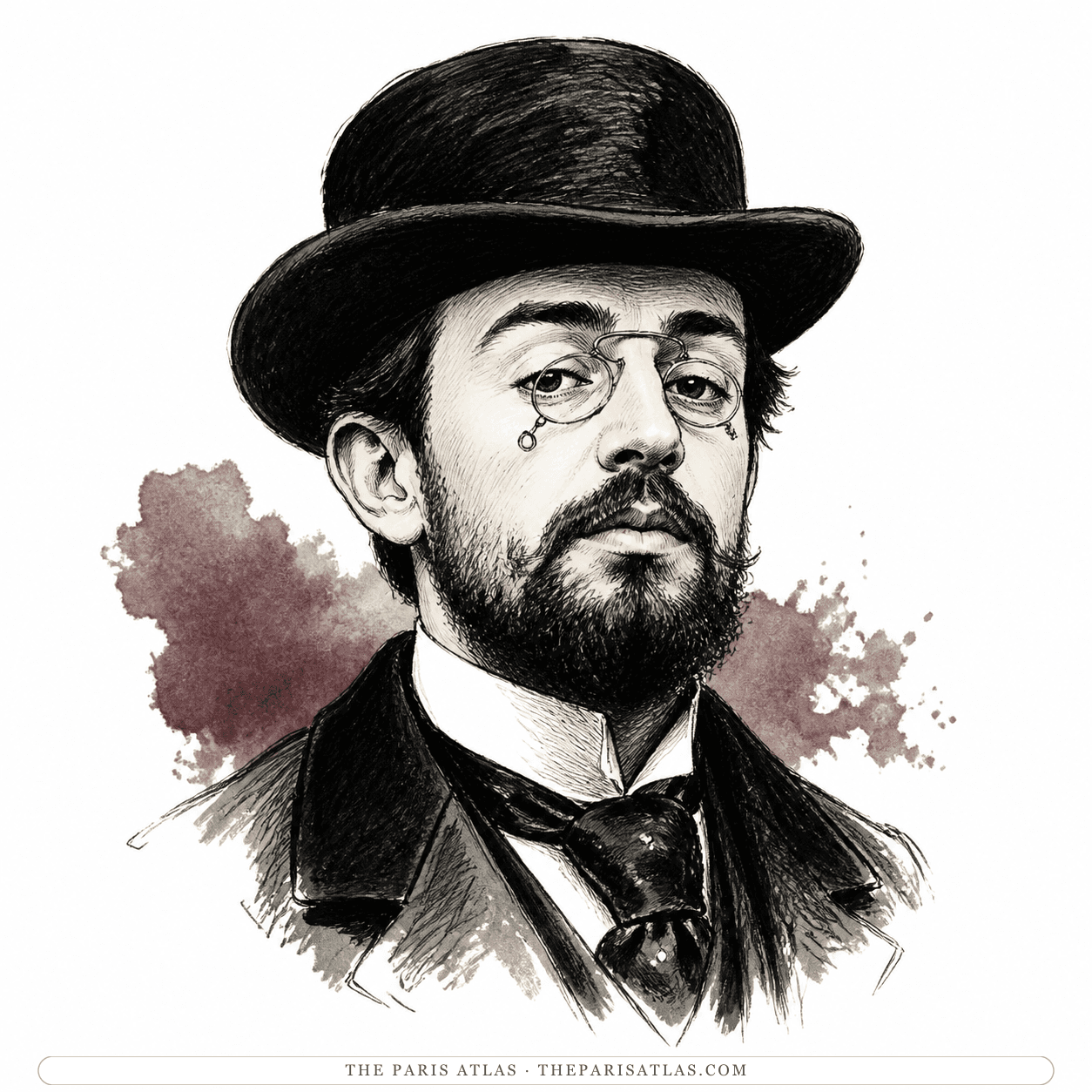
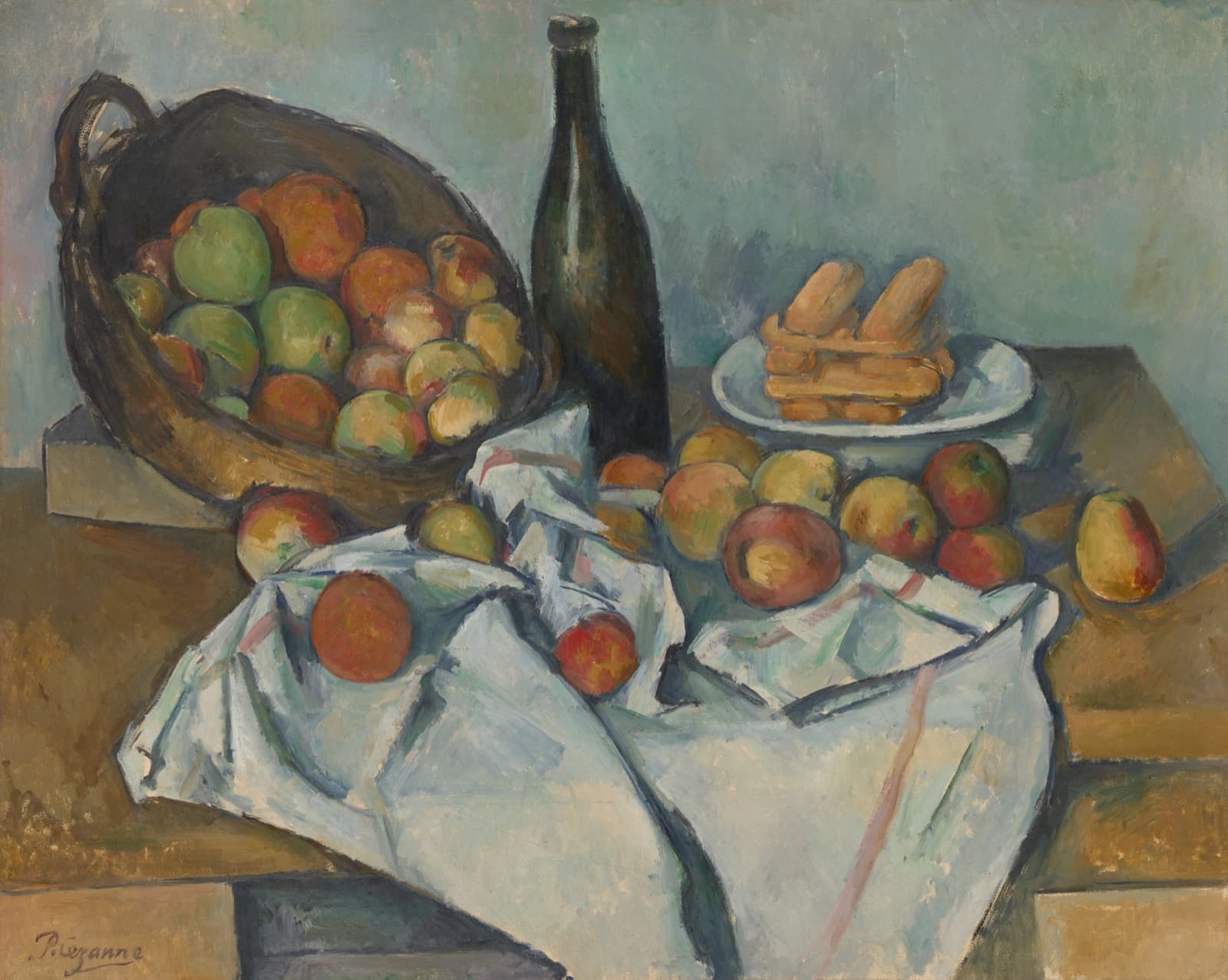
Toulouse-Lautrec is commonly grouped with the Post-Impressionists, though institutions differ on whether he belongs. Tate's own definition of the term names only Cezanne, Gauguin, Seurat and Van Gogh.
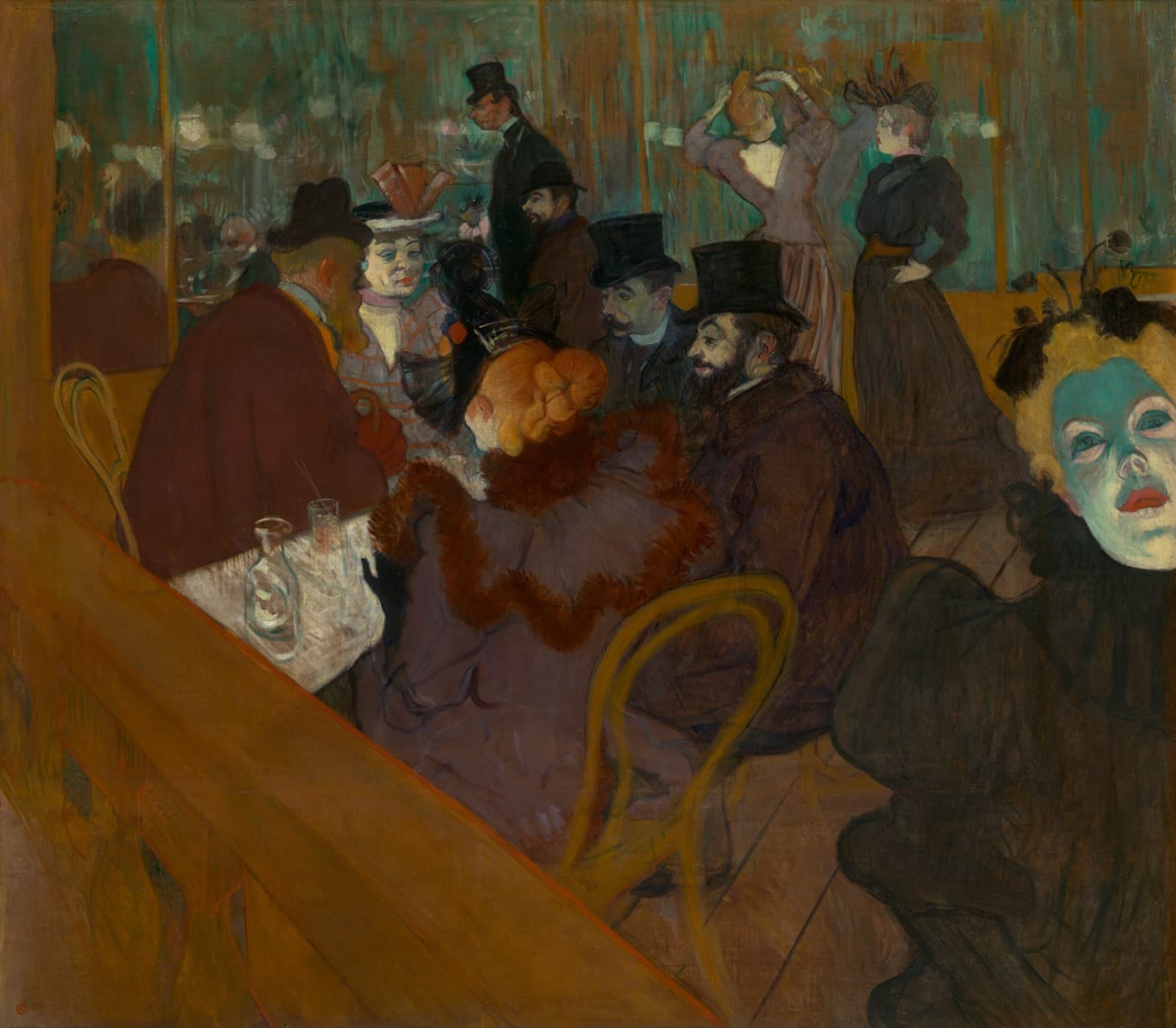
Henri de Toulouse-Lautrec painted the customers and performers of the Moulin Rouge as a group portrait of people he knew by name, including himself. It is at the Art Institute of Chicago.
The Moulin Rouge opened in Montmartre in 1889 and became the best known of the café-concerts, the Paris venues that combined drinking with a stage show. Henri de Toulouse-Lautrec was a regular there, and the Art Institute of Chicago records that he had a table permanently reserved for him.
What he painted is not an anonymous crowd. It is a group portrait of his own circle, and the museum names them. Seated at the table are the dancers La Macarona and Jane Avril, the photographer Paul Sescau, the poet Édouard Dujardin and the vintner Maurice Guibert. The dancer La Goulue stands in the background arranging her hair. The singer May Milton looks out from the right edge.
The artist put himself in it too, in the centre background, a short figure walking beside his much taller cousin, the physician Gabriel Tapié de Céleyran.
The detail that makes the painting hard to forget is May Milton's face at the right edge, lit from below in an acid green that belongs to no daylight.
It is a record of a technology. The Moulin Rouge was built with electric light, which was still new, and the Art Institute notes that Toulouse-Lautrec took pleasure in what artificial glare could be made to do. A face lit from underneath by electricity did not look like a face lit by gas or by the sun, and he painted the difference rather than correcting for it.
The composition works by interruption. A pale balustrade runs diagonally across the lower left corner and blocks the way in, so the viewer is held above and outside the room rather than seated in it.
May Milton is cut in half by the frame. The figures at the table are seen from behind or in profile, several of them talking to people the picture does not show. Nothing is centred and no one is posed.
The result reads less like a painting of a night out than like a glimpse of one, taken by someone who was there often enough to stop finding it remarkable.
Close reading
Toulouse-Lautrec painted people he drank with, and the Art Institute of Chicago names almost all of them. Start with the face at the right edge, then find the artist himself in the background.
1.May Milton's face
The singer May Milton, cut in half by the edge of the canvas. The Moulin Rouge was built with electric light while it was still a novelty, and the Art Institute notes that Toulouse-Lautrec enjoyed what artificial glare could do. Lit from underneath, a face turns colours no daylight produces, and he painted them.
2.La Goulue doing her hair
The dancer La Goulue, the star of the house, caught doing something unglamorous. She is not performing here and nobody in the painting is watching her; the gesture belongs to the part of the evening the audience does not buy a ticket for.
3.Toulouse-Lautrec and his cousin
The tall man is the physician Gabriel Tapié de Céleyran, the artist's cousin. The short bearded man is Toulouse-Lautrec. He broke both femurs as a teenager, they never healed properly, and he reached an adult height of about five feet. He put the difference in the picture rather than leaving himself out of it.
4.The table
The Art Institute names them: the dancers La Macarona and Jane Avril, the photographer Paul Sescau, the poet Édouard Dujardin and the vintner Maurice Guibert. This is a group portrait of a circle, not a study of a crowd, and everyone in it knew the painter.
5.The boa and the turned back
The largest figure in the foreground shows the viewer nothing but her back and the boa. Toulouse-Lautrec repeatedly gives the best-lit, closest position in a composition to someone facing away, which keeps the picture from settling into a portrait.
6.The barrier across the corner
The balustrade blocks the way into the room. It puts the viewer above the floor and outside the group, looking down over a rail rather than sitting at the table, and it is the main reason the painting reads as a glimpse rather than an invitation.
1889
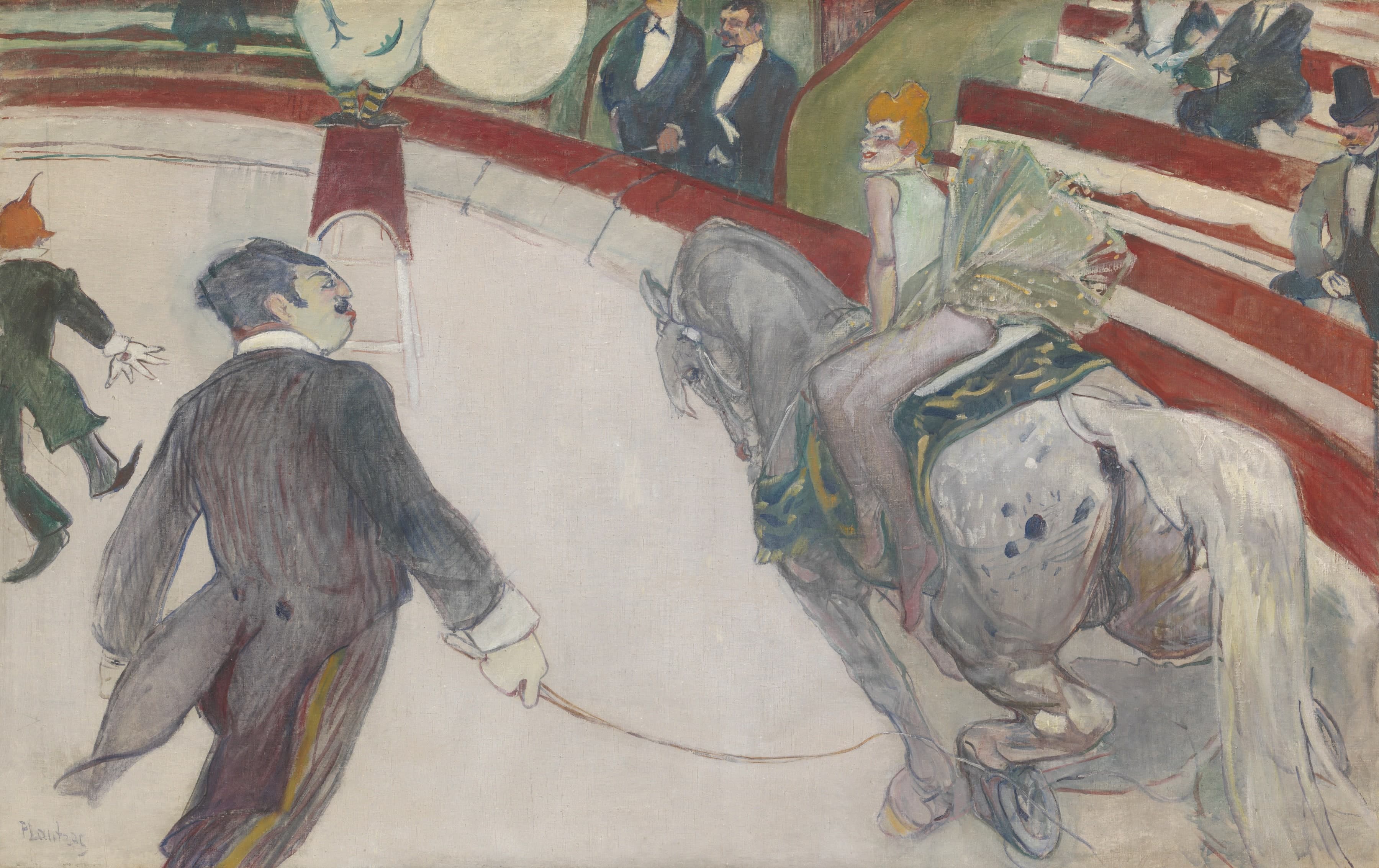
The Moulin Rouge opens in Montmartre. The owner buys Toulouse-Lautrec's Equestrienne for the lobby.
1891
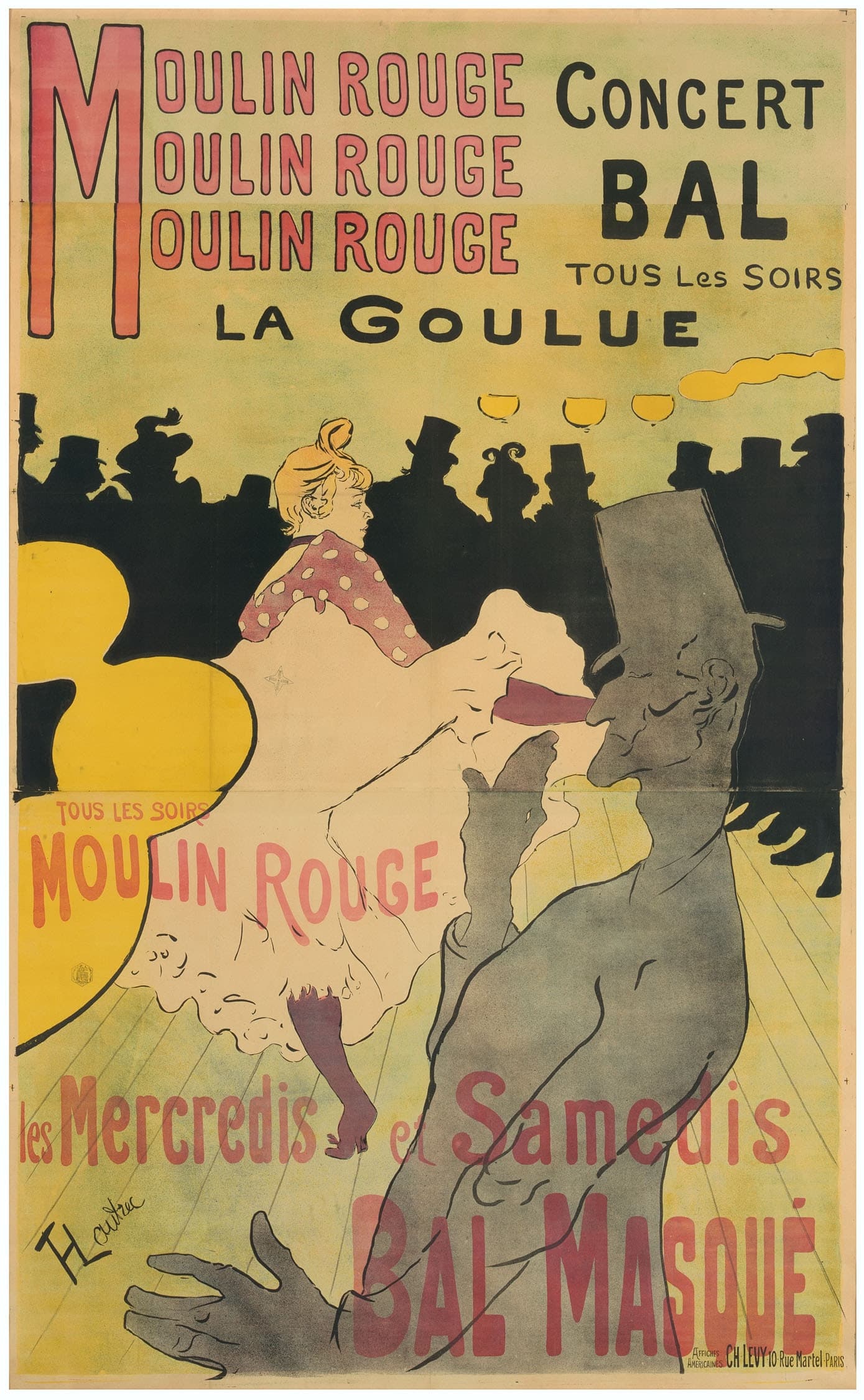
Toulouse-Lautrec's first commissioned poster, for the Moulin Rouge, goes up across Paris and makes his name.
1892
He begins At the Moulin Rouge, working on it until about 1895.
1928
The painting enters the Art Institute of Chicago with the Helen Birch Bartlett Memorial Collection.
Art Institute of Chicago
111 South Michigan Avenue, Chicago, IL 60603, United States
Displays and loans can change. Check whether this work is on view before making a special trip.
Plan your visit on the museum’s official website (opens in a new tab)The Art Institute of Chicago names almost everyone. Around the table sit the dancers La Macarona and Jane Avril, the photographer Paul Sescau, the poet Édouard Dujardin and the vintner Maurice Guibert. The dancer La Goulue stands in the background, doing her hair. The singer May Milton is at the right edge. Toulouse-Lautrec painted himself in too, in the centre background. He is the short figure beside the tall one, who is his cousin, the physician Gabriel Tapié de Céleyran.
She is May Milton, and the green is electric light. The Moulin Rouge was built with electric lighting when it was still a novelty, and the Art Institute notes that Toulouse-Lautrec enjoyed the effects of artificial glare. Lit from below by electricity, a face does not look the way it looks in daylight or gaslight, and he painted what he saw rather than correcting it.
At the Art Institute of Chicago, accession number 1928.610, in the Helen Birch Bartlett Memorial Collection. It is oil on canvas, 123 × 141 cm, and dated 1892 to 1895.
Yes. He is in the centre background, a short bearded man in a bowler hat, walking beside the tall clean-shaven man in a top hat who is his cousin, Dr Gabriel Tapié de Céleyran. Toulouse-Lautrec broke his right femur at thirteen and his left at fourteen; neither healed properly, his legs stopped growing, and he reached an adult height of about five feet. He painted the difference between himself and his cousin rather than hiding it.
A café-concert in Montmartre, opened in 1889, where people drank and watched a stage show. The Art Institute describes the café-concerts as popular venues for drinking and entertainment in late nineteenth-century Paris, and the Moulin Rouge as the most famous of them. Toulouse-Lautrec had a table reserved there, and an earlier painting of his, Equestrienne, was bought by the owner to hang in the lobby.
Associated with · 1892
Toulouse-Lautrec is commonly grouped with the Post-Impressionists, though institutions differ on whether he belongs. Tate's own definition of the term names only Cezanne, Gauguin, Seurat and Van Gogh.
Explore painters from the same movements and circles.
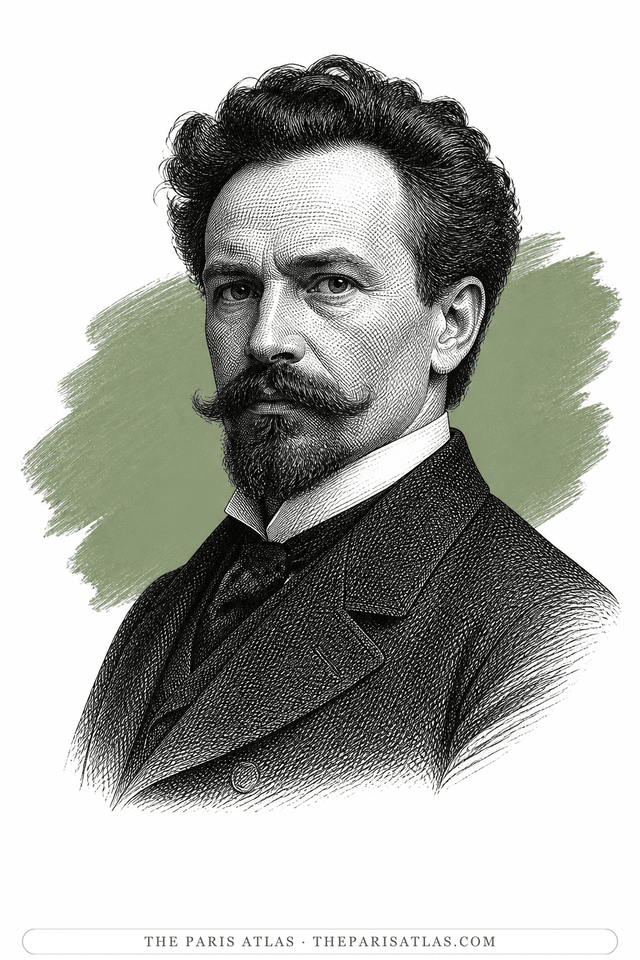
Czech poster artist whose Gismonda, designed for Sarah Bernhardt over the last week of December 1894, went up on Paris walls on 1 January 1895 and made him famous in days. The six-year Bernhardt contract that followed put his work on every kiosk in the city and gave Art Nouveau its face.
View artist
Brazilian painter who spent the 1920s moving between São Paulo and Paris, studied Cubism under André Lhote, Albert Gleizes and Fernand Léger, and used what she learned to paint Brazilian towns, railways, plants and bodies. Her 1928 painting Abaporu prompted the manifesto that gave the Anthropophagic movement its name.
View artist
French painter, printmaker and illustrator whose intimate rooms, Paris streets, gardens and bathing figures transformed everyday life into complex fields of color, memory and perception.
View artistThe sources below include collection records, catalogues, scholarly research, and primary materials that informed this page. They document At the Moulin Rouge, its making, and its place in cultural history.

Web source consulted for documented facts and historical context presented on the At the Moulin Rouge page.
Web source consulted for documented facts and historical context presented on the At the Moulin Rouge page.
Web source consulted for documented facts and historical context presented on the At the Moulin Rouge page.
Web source consulted for documented facts and historical context presented on the At the Moulin Rouge page.
Web source consulted for documented facts and historical context presented on the At the Moulin Rouge page.
These references provide the documented foundation for this work's history and interpretation. Claim-level citations remain attached to the specific claims they support.
 Explore more resources