The Paris AtlasCharting the artists, works, and places worth returning to.
  • Singer
  • Author
· French

Aristide Bruant

Montmartre singer and songwriter whose streetwise chansons helped define the cabaret's sound.

In images

Details

Nationality
French
Roles
SingerAuthor

Art Depicting Aristide Bruant

Works with Aristide as their subject.

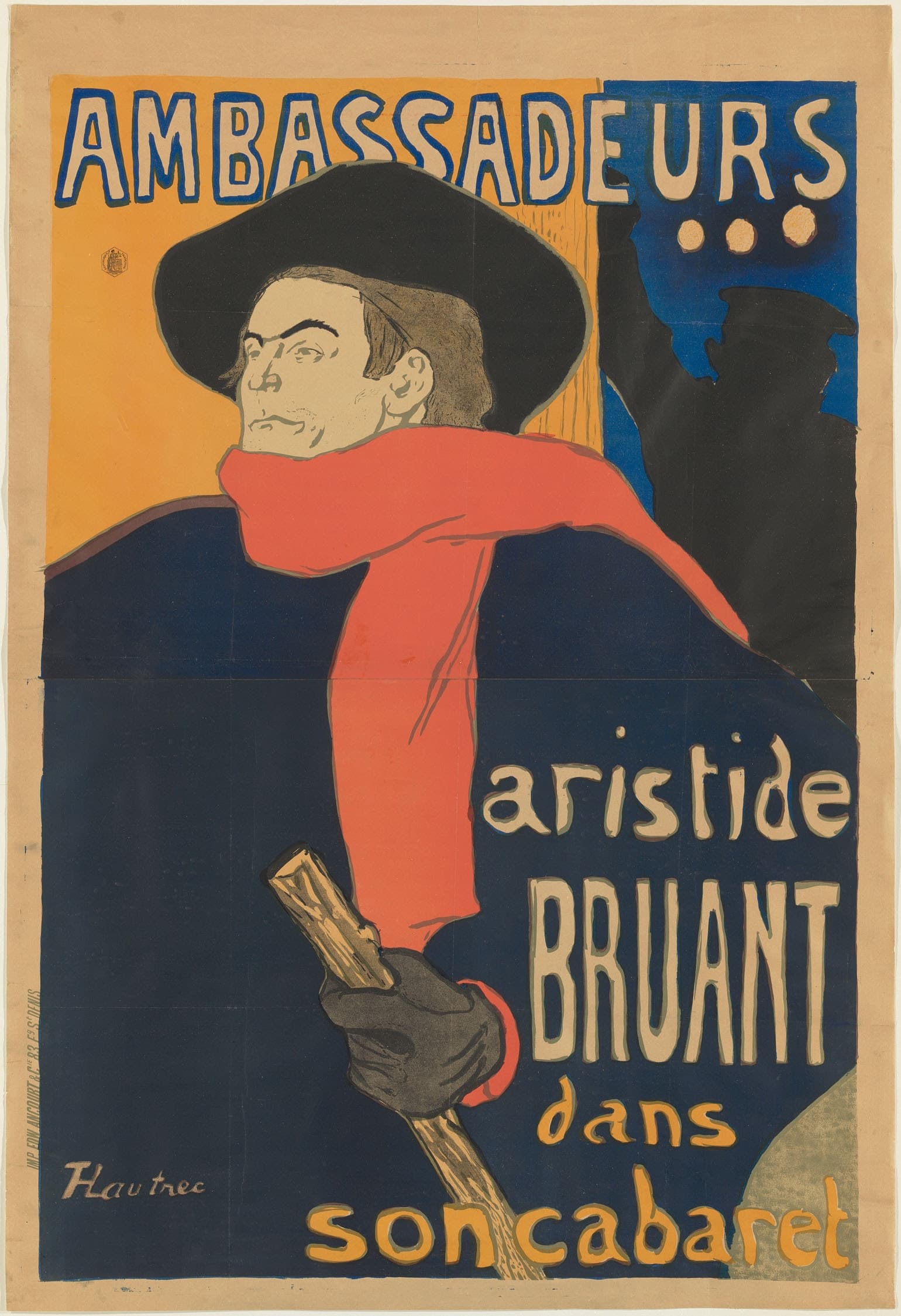
A poster of a heavy-set man in a wide black hat looking back over his shoulder with a frown. A long dark blue cape covers the lower half of the sheet, a bright red scarf hangs down the front, and a dark-gloved hand grips a short wooden stick. The background is flat orange with a strip of grained wood, and at the top right a black silhouette of a man raises an arm against blue under three pale lights. AMBASSADEURS is lettered across the top, and aristide BRUANT dans son cabaret runs down the right side

Artwork reproduction

Poster · Belle Époque Paris

Ambassadeurs: Aristide Bruant

Henri de Toulouse-Lautrec · 1892 · Color lithograph on tan wove paper

The singer Aristide Bruant looks back over his shoulder in a wide black hat, a dark cape and a red scarf, with a wooden stick in his gloved hand. Henri de Toulouse-Lautrec made the poster in 1892 for Bruant's shows at the Ambassadeurs, a café-concert on the Champs-Élysées. The director disliked it, and Bruant refused to go on stage unless it was used. The Art Institute of Chicago's copy is 1948.450.
Art Institute of Chicago

Henri de Toulouse-Lautrec, Ambassadeurs: Aristide Bruant, 1892. Art Institute of Chicago. Image: public domain.

People Aristide Bruant Knew

Relationships with other people, with sources for each connection.

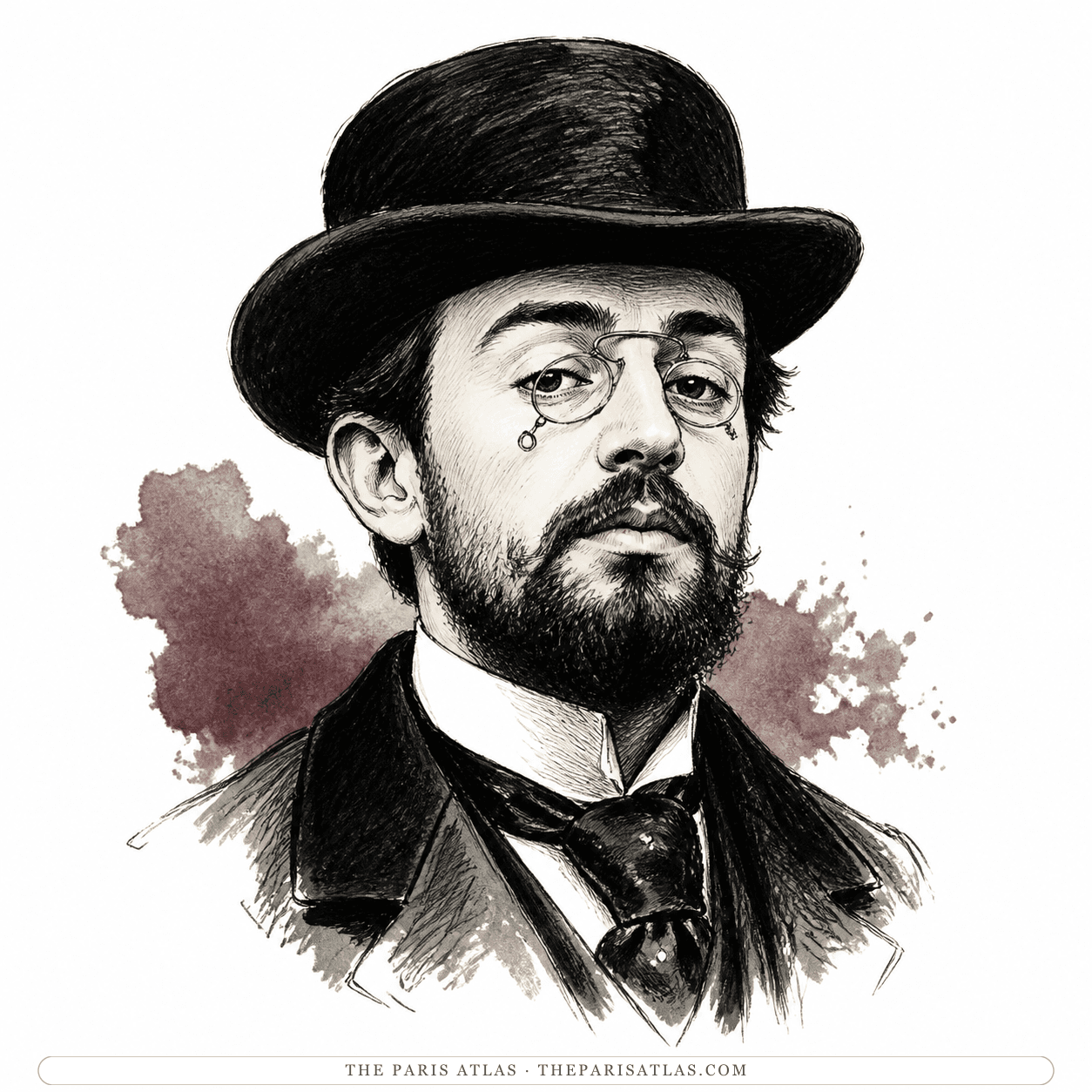
Illustrated portrait of Henri de Toulouse-Lautrec

Henri de Toulouse-Lautrec

  • Painter
  • Illustrator

Sat for a portrait by · 1892

The 1892 Ambassadeurs poster - black hat, black cape, red scarf - and three more Bruant posters after it made the singer's silhouette one of the most recognized images in Paris. Lautrec drank and drew at Bruant's cabaret Le Mirliton.

— Toulouse-Lautrec and Montmartre — National Gallery of Art exhibition contextualising Steinlen's 1896 Chat Noir poster inside the broader Belle Époque poster tradition alongside Toulouse-Lautrec, Chéret and Mucha

Aristide Bruant’s Places

The cataloged places connected to Aristide Bruant — through the books, and through the documented record.

Places you can enter today appear first, followed by addresses to see from outside and sites that have vanished.

Connections and Sources

Aristide Bruant’s connections to people, places, and works, with the sources behind each one.

Performed at

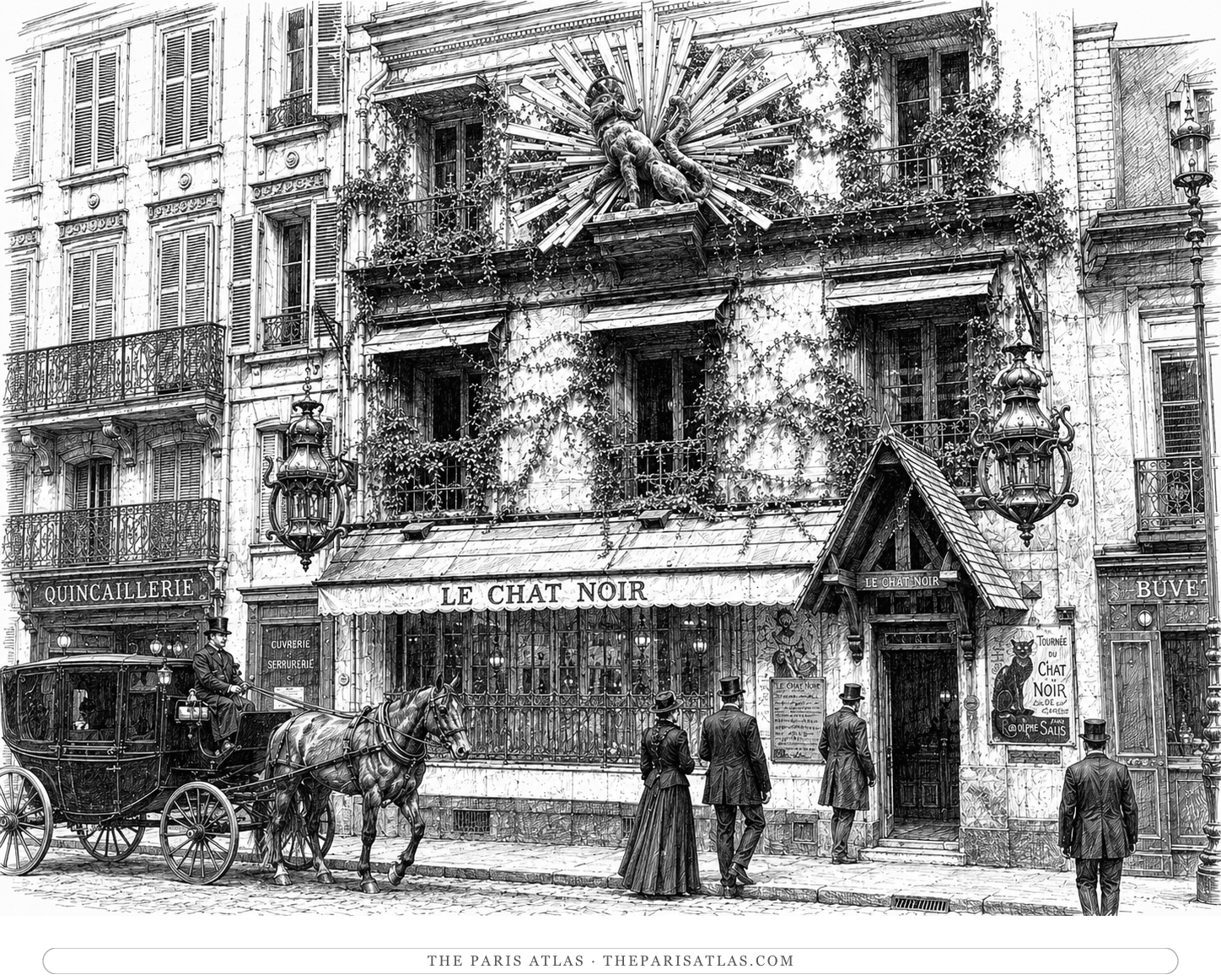
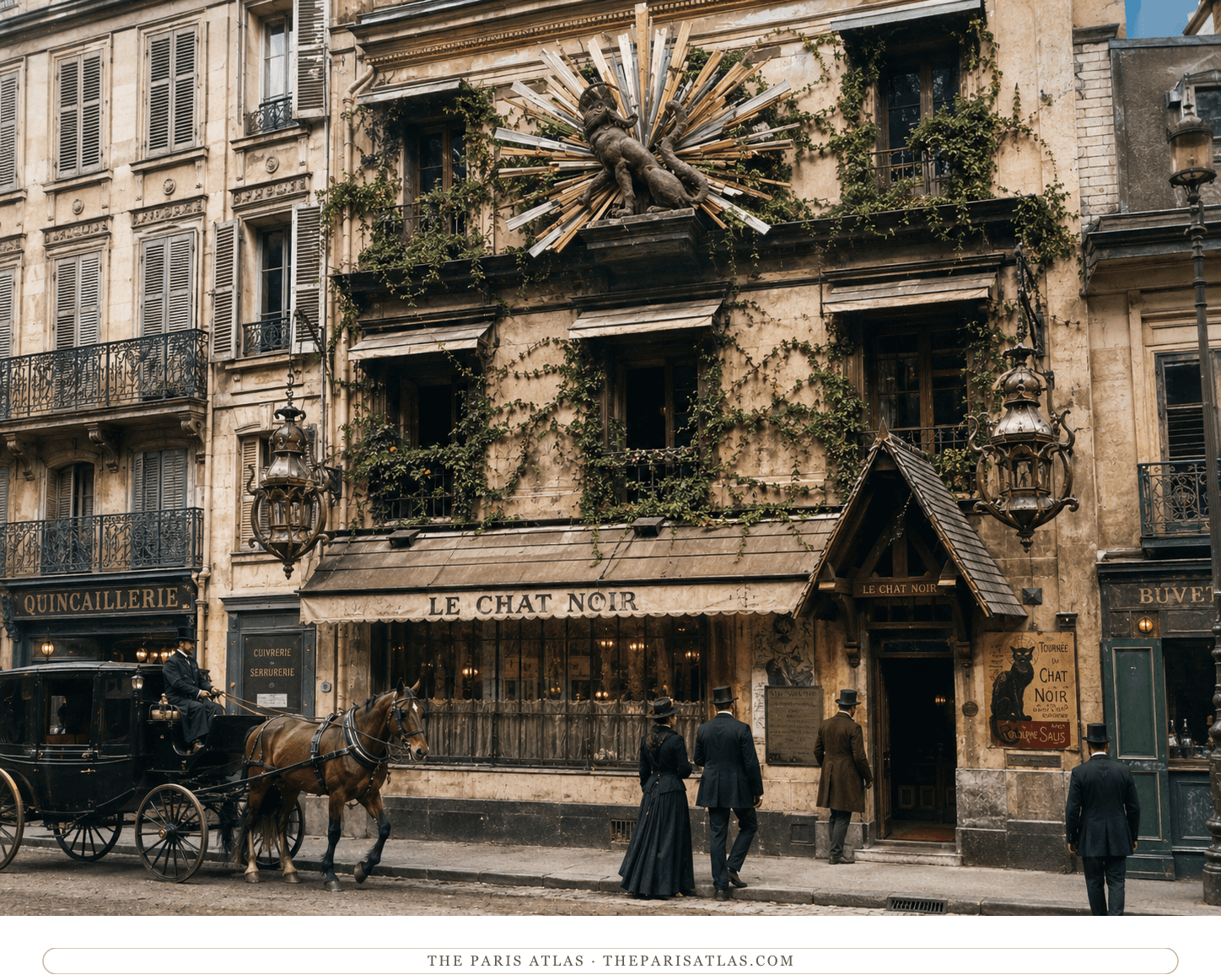
Le Chat Noir

Bruant's songs belonged to the distinctively Parisian chanson culture that developed around Le Chat Noir.

— Musée de Montmartre, The reconstruction of the cabaret Le Chat Noir

Sat for a portrait by · 1892

Henri de Toulouse-Lautrec

The 1892 Ambassadeurs poster - black hat, black cape, red scarf - and three more Bruant posters after it made the singer's silhouette one of the most recognized images in Paris. Lautrec drank and drew at Bruant's cabaret Le Mirliton.

— Toulouse-Lautrec and Montmartre — National Gallery of Art exhibition contextualising Steinlen's 1896 Chat Noir poster inside the broader Belle Époque poster tradition alongside Toulouse-Lautrec, Chéret and Mucha

Depicted in · 1892

Ambassadeurs: Aristide Bruant

The poster advertised Aristide Bruant's own shows at the Ambassadeurs café-concert in 1892 and names him in its lettering. The Musée Toulouse-Lautrec describes his wide-brimmed hat, red scarf and the stick he used as a cane.

— Ambassadors. Aristide Bruant in his cabaret — Masterpieces under the microscope; Henri de Toulouse-Lautrec, Ambassadeurs: Aristide Bruant, 1892 (E.227-1921), E.227-1921

References

References

The sources below include biographies, scholarly essays, interviews, and primary materials that informed this page. They reflect both the historical record and ongoing critical conversations about Aristide Bruant and their work.

  1. 1The reconstruction of the cabaret Le Chat Noir

    Website
    Musée de Montmartre
    Used for

    Web source consulted for documented facts and historical context presented on the Aristide Bruant page.

    View source
  2. 2Toulouse-Lautrec and Montmartre — National Gallery of Art exhibition contextualising Steinlen's 1896 Chat Noir poster inside the broader Belle Époque poster tradition alongside Toulouse-Lautrec, Chéret and Mucha

    Essays
    National Gallery of Art
    Used for

    Published analysis and historical context used in preparing the Aristide Bruant page.

    View source
i
Why these sources are here

These references anchor the page in the documented record and in the scholarly conversations around Aristide Bruant. Every claim on this page traces back to one or more of the works listed here.

Explore more resources