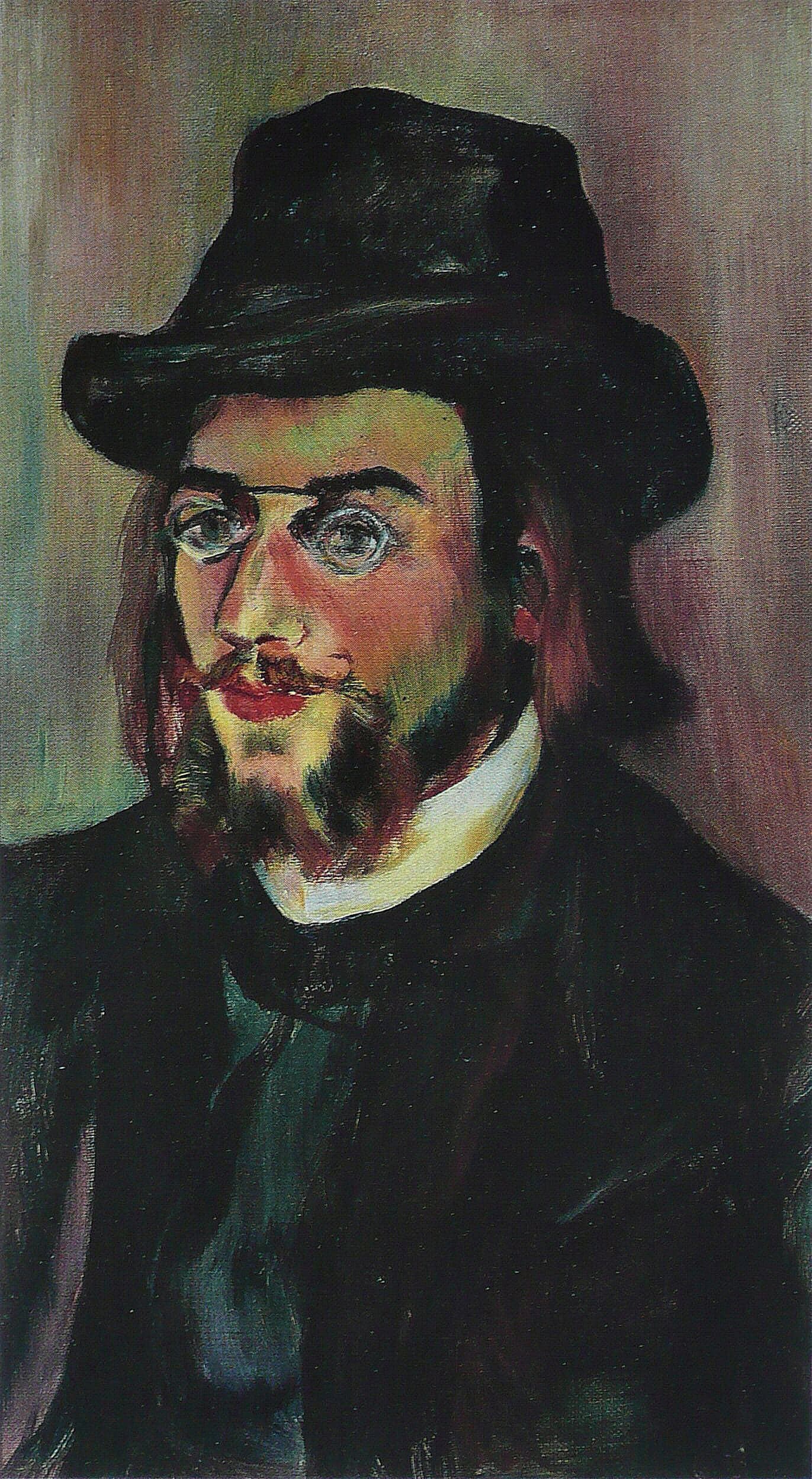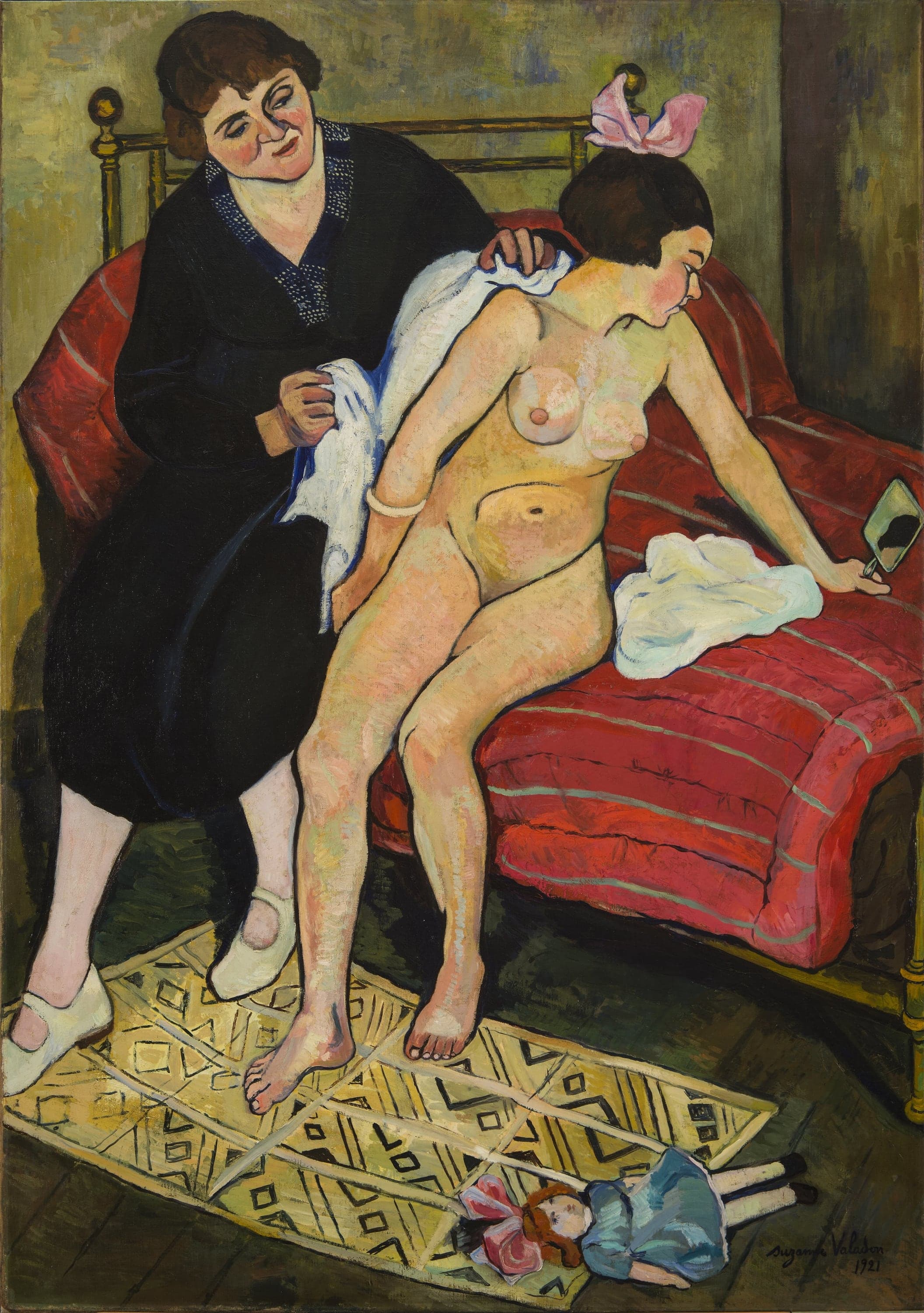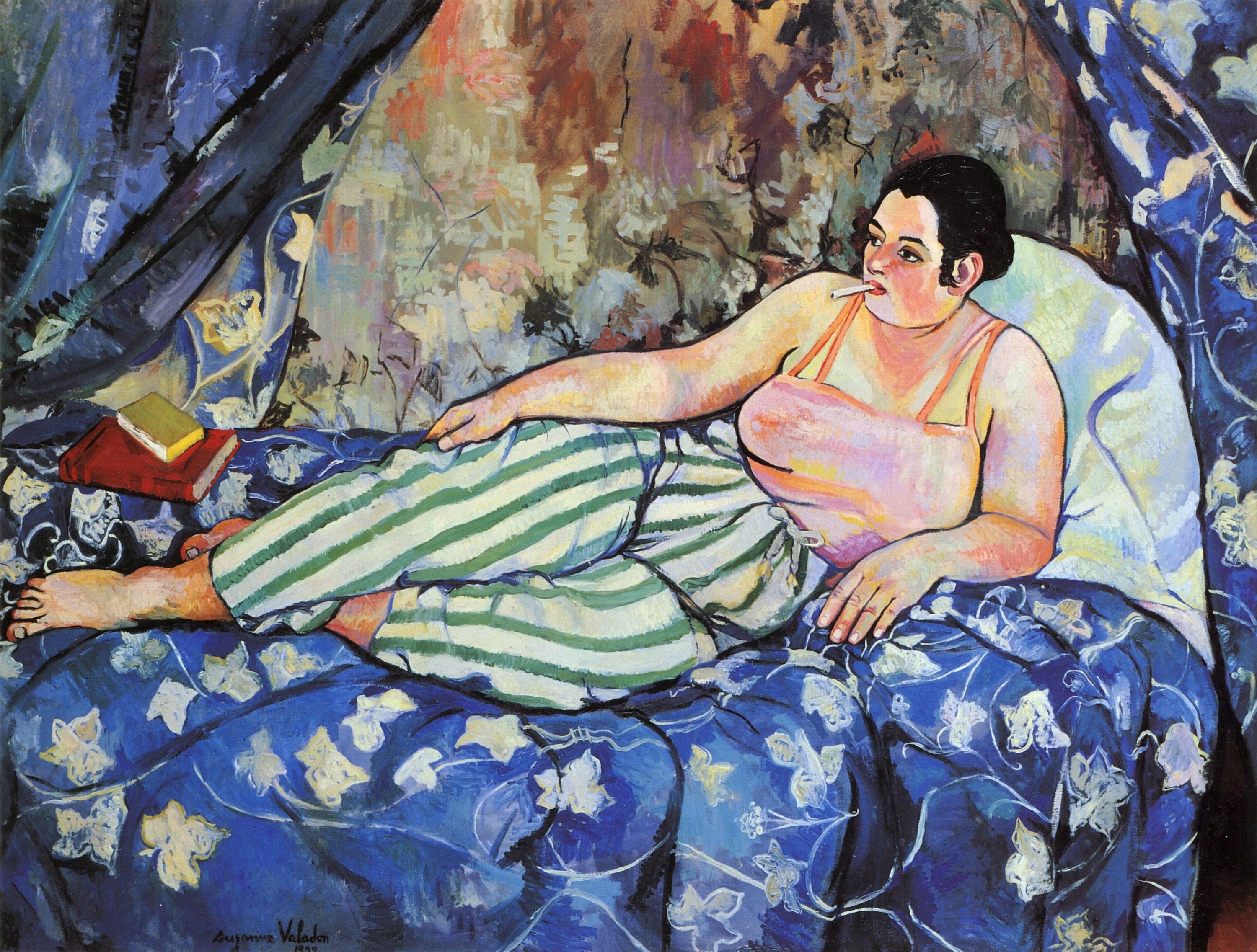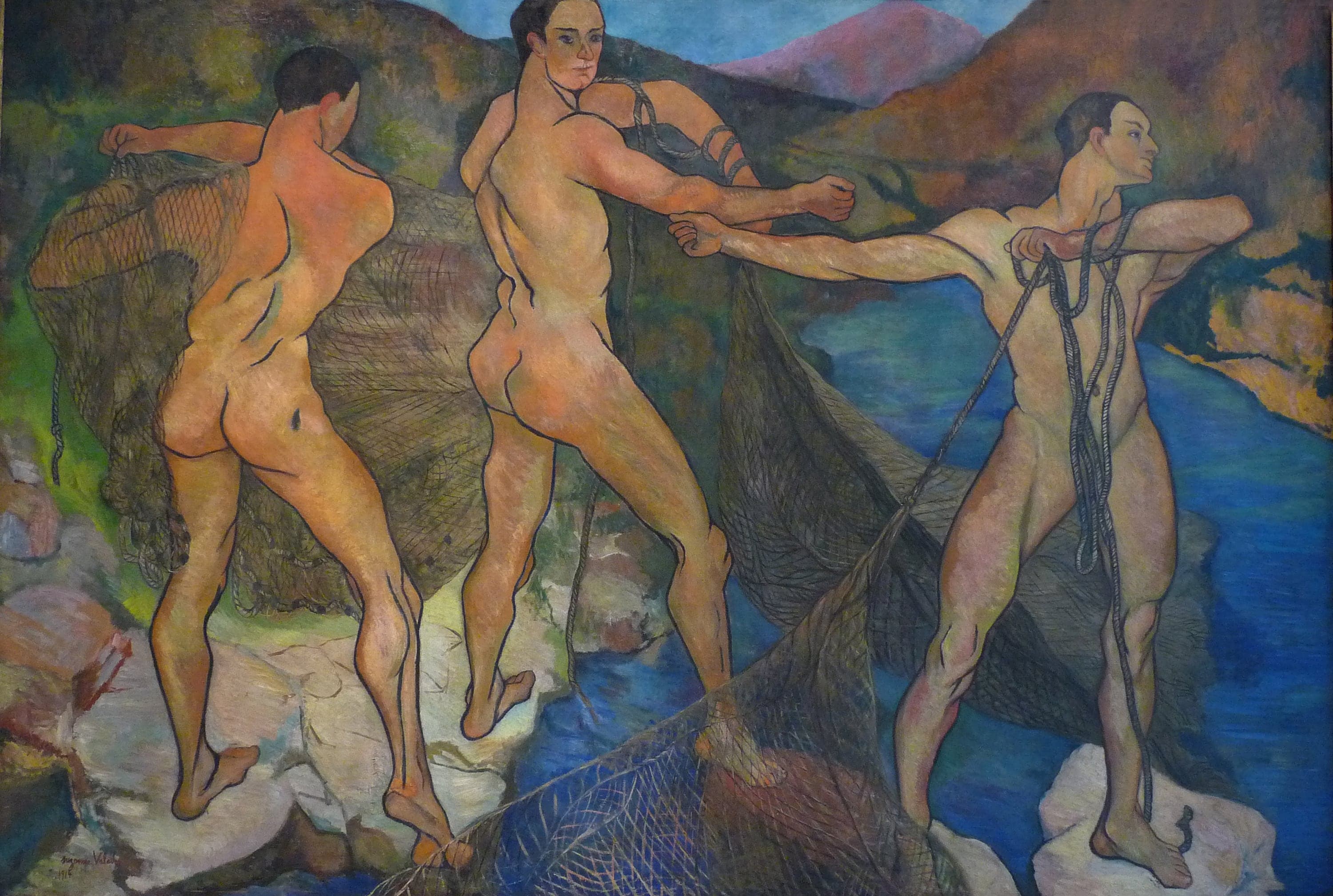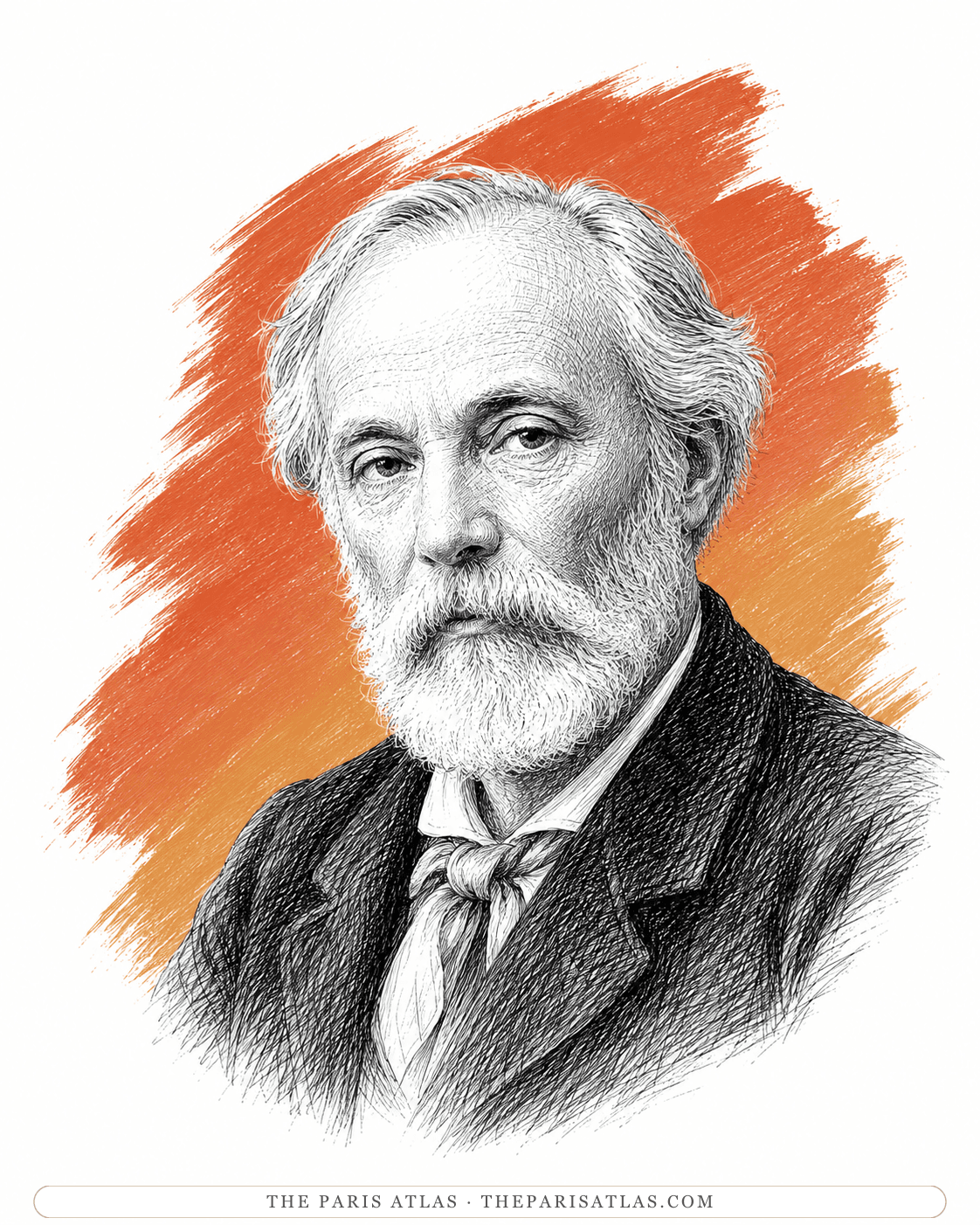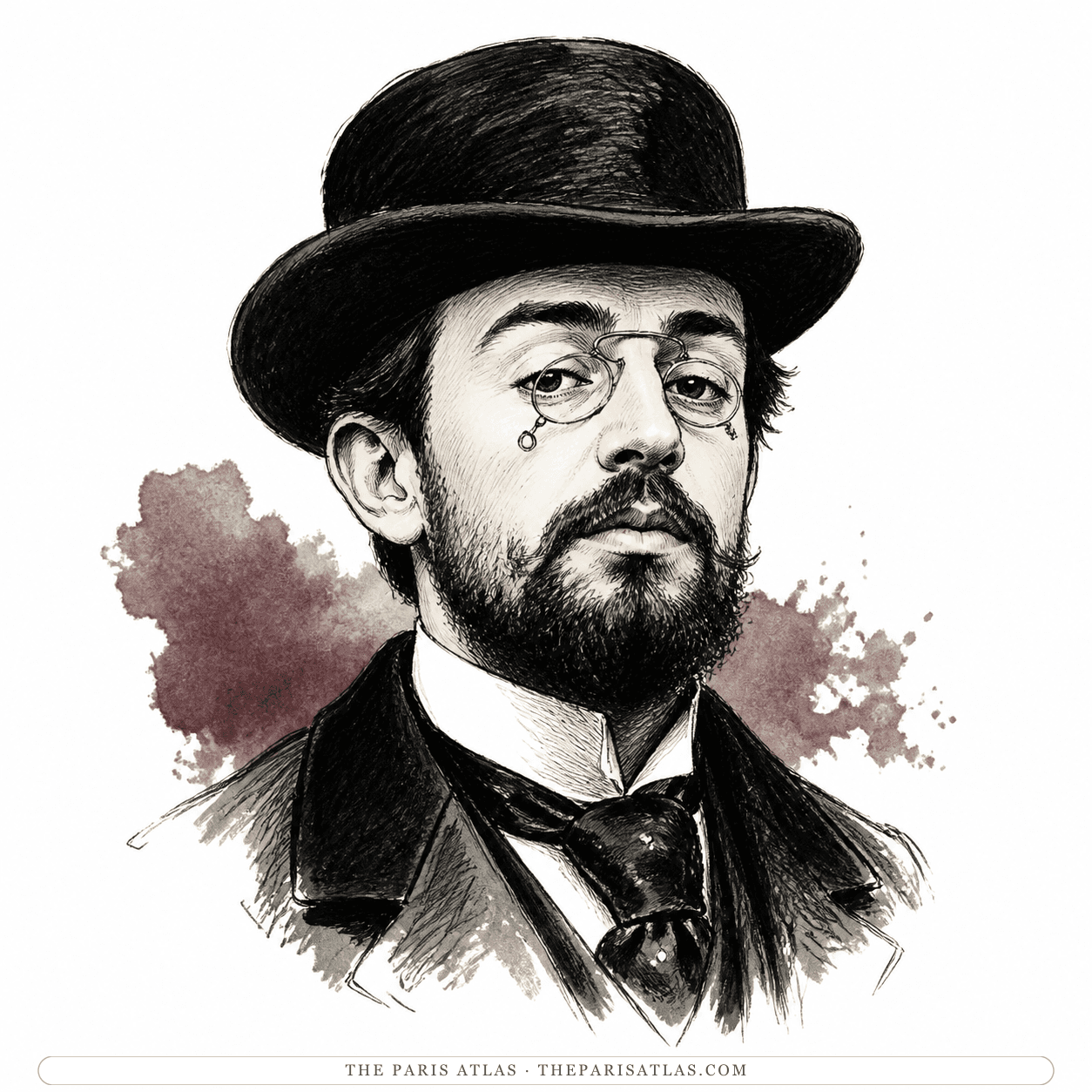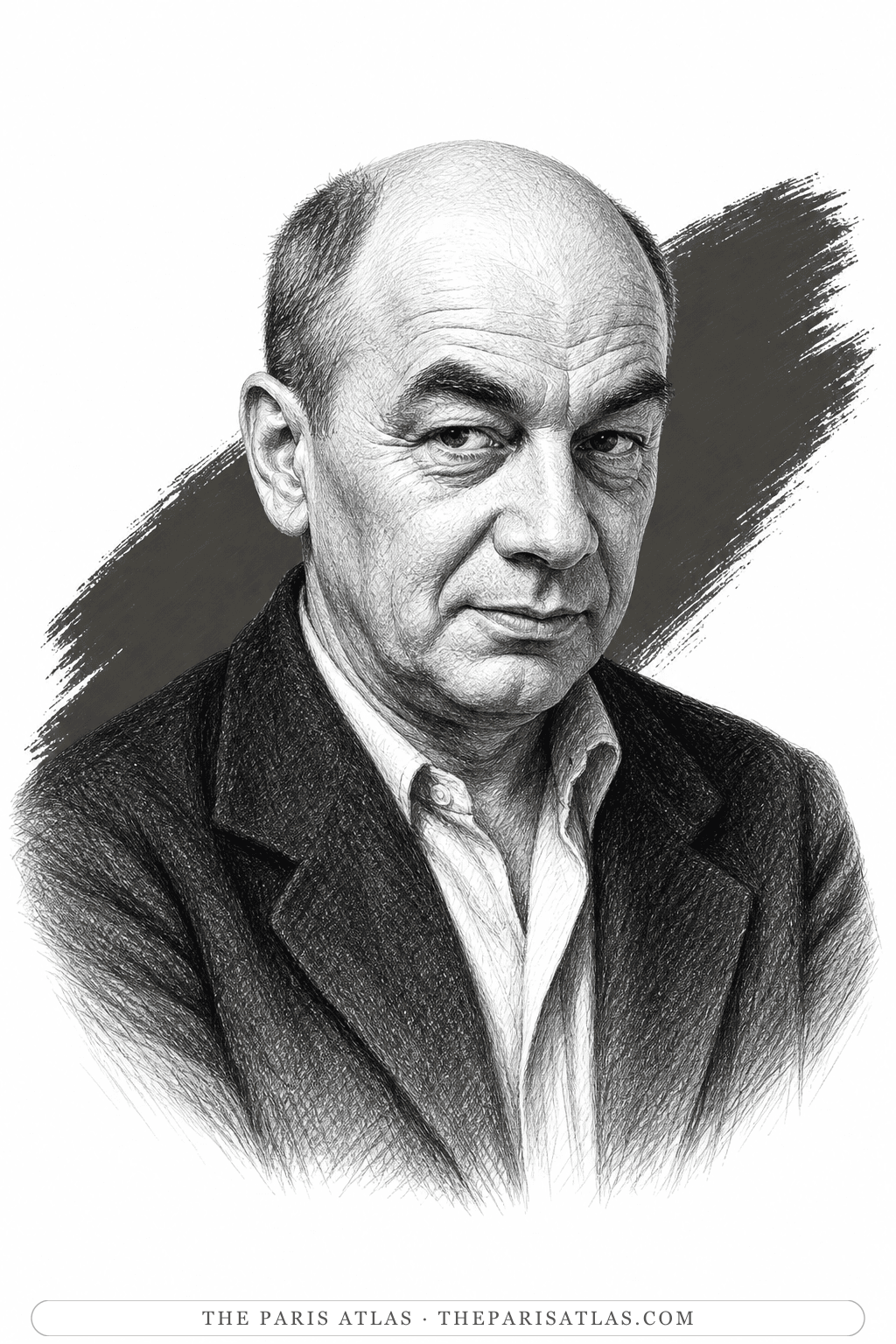
Suzanne Valadon is the answer to a question nobody at the easels thought to ask: what was the model seeing? Born Marie-Clémentine Valadon in 1865 to an unmarried laundress, raised on the Butte Montmartre, she joined the circus at fifteen and left it when a fall from the trapeze ended acrobatics. From 1880 she modelled — for Puvis de Chavannes, for Pierre-Auguste Renoir, who put her in the red bonnet of Dance at Bougival, and for Henri de Toulouse-Lautrec, her lover, who renamed her Suzanne after the biblical bathing scene's watched woman.
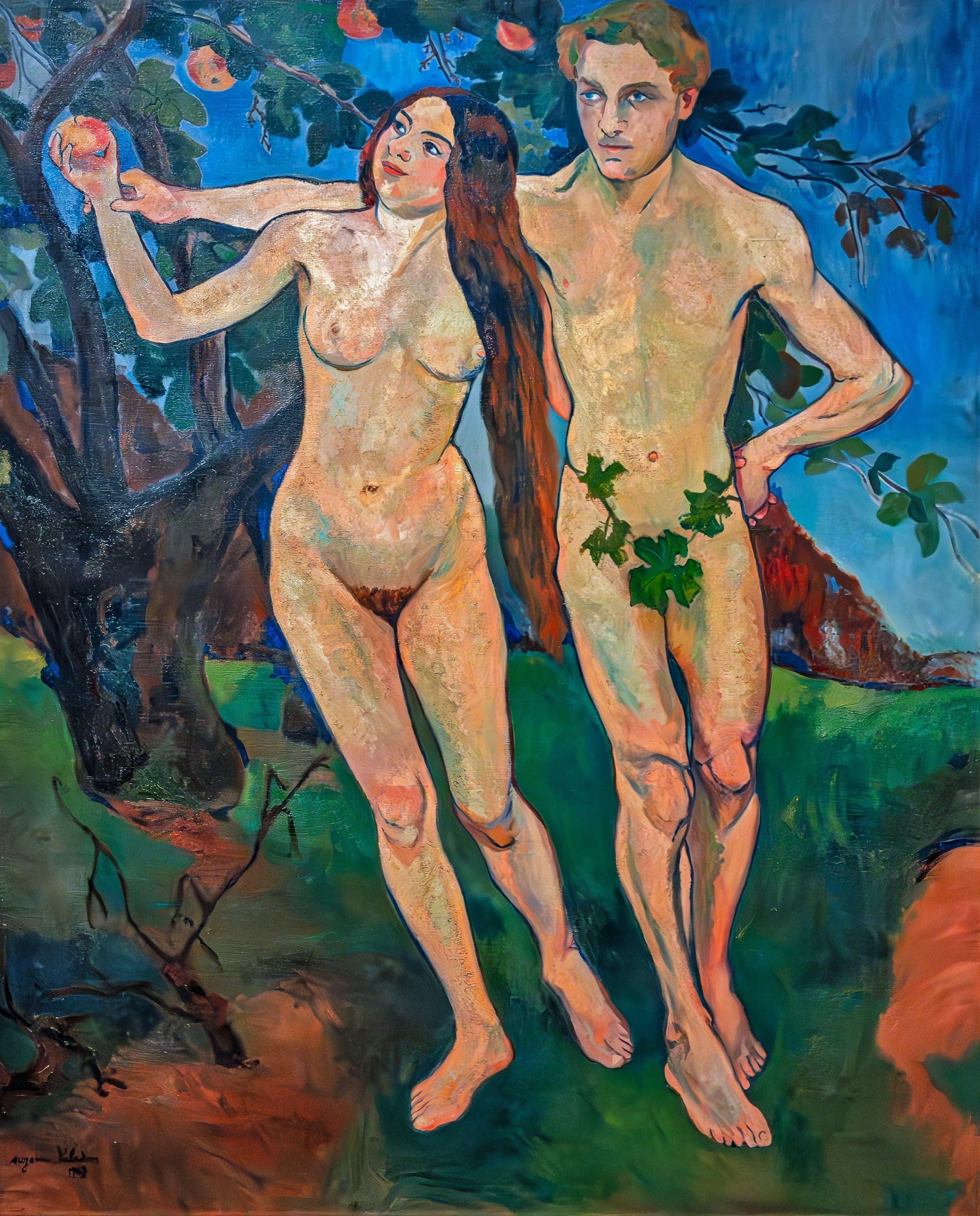
Between poses she drew — she had drawn since childhood, on pavements and scraps — and it was Toulouse-Lautrec who put her drawings in front of Edgar Degas. Degas bought them, taught her soft-ground etching, and paid her the compliment she quoted for the rest of her life: she was 'one of us'. She became the first woman admitted to the Société Nationale des Beaux-Arts in 1894, painted nudes with a bluntness the Salon had never permitted a woman, and raised, in the apartment at 12 rue Cortot, a son who painted too: Maurice Utrillo.