Art Nouveau
Art Nouveau brought the curves and patterns of nature into buildings, furniture, jewelry, glass and posters around 1900. Its designers sought a modern style for everyday life, from Hector Guimard’s Paris Métro entrances to Alphonse Mucha’s theater posters.
Overview
Art Nouveau transformed the appearance of modern life around 1900, carrying the curves of plants and the patterns of the natural world into buildings, furniture, jewelry, glass and the printed page. In Paris, its ambitions reached from Hector Guimard’s Métro entrances to Alphonse Mucha’s posters for the actress Sarah Bernhardt—and into a dealer’s gallery that helped give the movement its name.
What is Art Nouveau?
Art Nouveau was an international movement in architecture and the decorative and graphic arts that developed during the last decades of the nineteenth century and flourished around 1890–1910. Its designers wanted an art appropriate to modern life, rather than another revival of Greek temples, Gothic churches or eighteenth-century drawing rooms. Their most recognizable answer was a flowing, often asymmetrical line derived from stems, tendrils, wings, hair and the movements of living things. That line could become the framework of a chair, the lettering on an advertisement, a staircase railing or the outline of an entire building.[1][2][3]
The movement was never confined to one appearance. French and Belgian examples often favor curling, elastic forms; Scottish and Austrian designers frequently combine ornament with straight lines, grids and severe geometry. Nor was Art Nouveau primarily a school of painting, although it had close relationships with painters. Its distinctive achievement was to treat the objects and spaces of everyday life as serious artistic work: architecture, furniture, glass, ceramics, jewelry, textiles, bookbindings, posters, cutlery, wallpaper and even door handles.[2][3]
Behind these different activities stood the ideal of the Gesamtkunstwerk, a German term meaning a “total work of art.” A house could be conceived as a connected composition in which the windows, lighting, furniture and fittings belonged to the same imaginative world. A shop might make its display cabinets as memorable as the goods inside them. A poster could unite lettering and illustration so completely that neither seemed detachable from the other. Art Nouveau’s ambition was not simply to decorate existing things more elaborately, but to reconsider how their structure, surfaces and use could work together.[2][3][4]
Paris was central to this story, but not its sole birthplace. Brussels supplied some of its earliest architectural masterpieces; Nancy became a major French center of glass and furniture; Glasgow, Vienna, Munich, Barcelona and other cities developed recognizably different versions. Paris’s particular strength lay in bringing these developments before an international public through exhibitions, shops, theaters, publishing and the streets themselves.[2][3][5][6]
How to recognize the style
The whiplash line and the movement of nature
The line most closely associated with Art Nouveau is the whiplash: an energetic curve that tightens, stretches and reverses direction, often resembling an elongated S. It is not simply a border of pretty flowers. In an effective Art Nouveau design, the line seems to organize the object from within. A stem becomes a chair leg; a branching support opens into a lamp; the shape of a woman’s hair determines the movement of a printed composition. The effect can be graceful, restless, luxuriant or faintly unsettling.[2][7]
Nature offered far more than blossoms. Designers studied roots, seedpods, leaves, insects, feathers, shells and marine organisms, looking both at their outward appearance and at the way their parts were organized. A plant’s growth could suggest how several pieces of furniture should join; the veins of a leaf could become a pattern of metal supports. Some works remain botanically recognizable, while others transform their sources so thoroughly that the finished design looks almost abstract.[2][7][8]
This helps explain why Art Nouveau can seem simultaneously natural and artificial. Its flowers are frequently stylized rather than copied, its metalwork may resemble something alive without depicting a particular species, and its most convincing organic effects often depend on highly sophisticated manufacturing. Guimard’s Métro entrances, for example, look individually grown, but their repeated elements were designed as a modular system.[9][10][11]
Asymmetry, pattern and the integration of lettering
Art Nouveau often replaces a central, balanced arrangement with an image that seems to continue beyond its frame. A branch enters from one side; a figure is cropped unexpectedly; a large area of unprinted paper offsets a densely patterned corner. These effects owe much to Japanese art, as well as to contemporary experiments in European painting and printmaking. Strong outlines, flattened space and broad areas of color allow the same design language to move readily between an illustrated book, a fabric and a poster.[2][3][12]
Lettering is particularly important. In the strongest posters, words are not placed in a neutral box above the image. They participate in it, repeating its curves, filling a shape or establishing a rhythm across the sheet. The public had to recognize an advertisement quickly, but collectors might also want to keep looking at it. Art Nouveau graphic design found ways to satisfy both demands.[4][13]
Why some Art Nouveau is geometric
Not every work contains a whiplash curve. Charles Rennie Mackintosh, the Scottish architect and designer, and Josef Hoffmann, the Austrian architect and co-founder of the Vienna Secession, developed forms in which rectangles, elongated verticals and restrained ornament are as important as flowers. Their work belongs to the same broad reforming movement because it pursues an integrated modern environment and rejects routine historical imitation. Art Nouveau is therefore better understood as a family of related experiments than as a checklist requiring every object to look like a vine.[3][14][15]
The ideas behind Art Nouveau
Reforming design: from Gothic revival to Arts and Crafts
The desire to reform everyday design preceded the movement’s best-known objects by several decades. The English architect Augustus Welby Northmore Pugin’s Floriated Ornament of 1849 and the designer Owen Jones’s The Grammar of Ornament of 1856 encouraged the study of nature and the principles underlying historical decoration. They supplied designers with more than motifs to copy: they suggested that ornament could be studied systematically and adapted to the needs of the present.[2]
The English critic John Ruskin and the French architect and theorist Eugène-Emmanuel Viollet-le-Duc approached the relationship between construction, craftsmanship and artistic expression from different directions. Both helped unsettle the assumption that painting and sculpture were inherently more important than the decorative arts. The Arts and Crafts movement, associated especially with the British designer, writer and social reformer William Morris, made the quality of buildings, furnishings and ordinary objects a matter of cultural importance. Aestheticism, another influential nineteenth-century current, insisted that beauty deserved a central place in daily life.[2][3]
Art Nouveau inherited these ambitions without adopting one consistent attitude toward industry. Some practitioners prized specialized handwork; others looked for ways to improve machine production. Many used both. The movement’s history is not a simple contest between virtuous craftsmen and modern factories: it includes industrially cast Métro railings, color posters printed in large editions, luxury furniture and glass objects that combined repeatable processes with extensive finishing by hand.[9][4][16][17]
Japonisme: a different way of seeing
Japanese prints, ceramics, textiles and other objects gave European designers alternatives to familiar Western conventions. Their asymmetrical arrangements, emphatic silhouettes, flattened color and close attention to plants and animals could be adapted without copying a complete Japanese scene. A designer might borrow the organization of a composition, the treatment of empty space or the way a bird’s wing was reduced to a few decisive lines. This European enthusiasm for Japanese art is usually called Japonisme.[2][12]
Dealers and exhibitions were crucial, but the exchanges also involved direct personal relationships. In Nancy, the Japanese painter and botanist Hokkai Takashima, who stayed in the city between 1885 and 1888, formed friendships with its artistic community. His example helped connect the study of plants with Japanese approaches to drawing. This was one strand in a wider exchange: Japanese art did not merely provide a stock of exotic decorations, but helped European designers rethink the relationship between a natural form and its representation.[18]
Science, microscopes and Ernst Haeckel
Scientific illustration opened another extraordinary catalog of forms. The German zoologist Ernst Haeckel’s Kunstformen der Natur—Art Forms in Nature—appeared in installments from 1899 to 1904. Its hundred plates, translated into print by the lithographer Adolf Giltsch from Haeckel’s drawings and watercolors, made the intricate structures of marine creatures and other organisms available to a broad audience. Radiolarians, jellyfish and other unfamiliar life forms appeared as elaborate arrangements of symmetry, repetition and branching structure.[8]
Haeckel’s book did not start Art Nouveau: major examples of the style already existed before its first installments appeared. His wider scientific imagery nevertheless belonged to the movement’s visual world, and its architectural influence can be demonstrated particularly clearly in René Binet’s monumental entrance to the Paris Exposition of 1900. Binet transformed the structure of a microscopic marine organism into a gateway large enough to admit crowds of visitors.[19][8]
Symbolism, the Nabis and the boundary with painting
Art Nouveau overlapped with Symbolism, a movement in literature and art that favored suggestion, dream, myth and inner experience over straightforward description. A flower could carry an emotional or poetic meaning; a woman might appear as an allegory of a season, an art or a state of mind. These possibilities suited a style in which the expressive movement of a line could matter as much as its descriptive accuracy.[20][21]
The Nabis, a group of painters associated with Post-Impressionism, helped break down the boundary between the independent picture and the decorative surface. Their involvement in screens, prints, furnishings and other applied forms made them natural participants in the broader search for an integrated art. The Austrian painter Gustav Klimt’s patterned figures likewise stand at the meeting point of Symbolism and Art Nouveau: bodily presence, decorative surface and psychological suggestion become difficult to separate.[2][20]
The categories should not be treated as mutually exclusive. A work can be Symbolist in subject and Art Nouveau in its organization of line and ornament. Equally, not every painting made around 1900 belongs to Art Nouveau, and not every curving Art Nouveau object carries a hidden symbolic message.[2][20][21]
A Paris gallery and the name of a movement
The words before the shop
Art nouveau means “new art.” The phrase was already being used in the 1880s in the Belgian journal L’Art Moderne, in connection with the work of Les Vingt, or “The Twenty,” a Brussels group of painters and sculptors committed to artistic reform. The style was therefore not invented on the day a Paris shop opened. What the shop provided was an exceptionally effective name, address and public identity for a set of developments already under way.[2][3]
In December 1895, the German-born art dealer Siegfried Bing opened a gallery called L’Art Nouveau at 22 rue de Provence in Paris. It became one of the principal showcases for contemporary decorative art and helped popularize both the term and the movement internationally. Architecture, furniture, objects and images that had emerged through different national traditions could now be encountered under one commercially memorable label.[2][22][23]
Siegfried Bing and the Japanese foundations of his business
Bing was born in Hamburg on 26 February 1838 and died in 1905. He built his career in Paris, initially through his family’s porcelain and glass business, and became a naturalized French citizen. Before his name became inseparable from Art Nouveau, he had established himself as one of the most important dealers in Japanese art in the city.[22][24]
He opened premises selling Far Eastern objects on the rue Chauchat in 1878 and traveled to Japan with his brother Auguste Bing in 1880–81. In 1890 he organized a landmark European exhibition of Japanese ukiyo-e prints, assembling more than seven hundred prints and over four hundred books. Alongside Hayashi Tadamasa, the Japanese dealer active in Paris, he helped shape what European artists and collectors could see of Japanese art. Bing and Hayashi both received the French Legion of Honour.[22][24][12]
Bing also understood the power of publication. His monthly magazine Le Japon artistique ran for thirty-six issues between 1888 and 1891, with French, English and German editions. Its purpose extended beyond serving collectors: the illustrations offered models and ideas to manufacturers, designers and craftspeople. The decorative-arts gallery that followed was part of the same larger project of renewing European design through exposure to unfamiliar forms and high-quality objects.[22][24][12]
The Japanese and contemporary sides of the business remained physically distinct. Customers entered the Art Nouveau galleries from the rue de Provence, while Japanese art had a separate entrance around the corner on the rue Chauchat. Bing maintained this arrangement until ill health led him to give up the business in 1904. The separation is revealing: he did not present modern European design as simply Japanese art under another name, even though the relationship between the two was fundamental to his career.[22]
Selling a complete environment
Bing’s innovation was not merely to gather unusual objects. He arranged paintings, prints, furniture and everyday things into interiors that visitors could imagine inhabiting. A chair was not isolated from its surroundings: it belonged to a room with its own color, rhythm and atmosphere. The Belgian designer Henry van de Velde worked on the gallery’s early interiors. Other contributors included the French furniture designer Eugène Gaillard, the German-born designer Edward Colonna and the Paris-born artist and designer Georges de Feure.[23][25][16]
De Feure’s gilt-wood side table decorated with a poppy, made for the gallery in 1901, is one surviving example of this approach on a small scale. A floral idea becomes the organizing subject of a useful object. Bing’s rooms made the same argument more expansively: contemporary art could shape an entire interior rather than hang, self-contained, on its walls.[23][25]
Hector Guimard and the remaking of the Paris street
An unconventional architectural career
Hector Guimard was born in Lyon in 1867 and died in New York in 1942. He entered the École nationale des arts décoratifs in Paris in 1882, at fifteen, and later taught geometry there. Admitted to the École des beaux-arts in 1885, he remained connected with its architectural training until he reached the age limit of thirty, but did not complete the final architect’s diploma.[26]
The missing qualification did not prevent him from practicing architecture, but it restricted the conventional route into major public commissions. His career developed instead through private patrons and, most famously, a private transport company. The villas he designed in Auteuil in 1891 and 1893, including the Hôtel Roszé and Hôtel Jassedé, had not yet reached the mature Art Nouveau language associated with his name.[26]
A journey to Brussels in 1895 proved decisive. There he met Victor Horta and Paul Hankar, Belgian architects who were breaking with the normal appearance and organization of the urban house. Guimard’s subsequent work did not simply reproduce their buildings. It developed a more personal vocabulary, in which stone, brick, ceramics and metal could take on the appearance of strange living structures.[26][27]
Castel Béranger: an apartment building as a manifesto
Guimard received the commission for Castel Béranger in late 1894, when he was twenty-seven. His client, Élisabeth Fournier, belonged to the Catholic bourgeoisie of Auteuil and allowed the young architect considerable freedom. Structural work began in the autumn of 1895 and continued until December 1896; the building at 12–14 rue La Fontaine, in the 16th arrondissement, was occupied by 1898.[27][28]
The façade is memorable partly because it refuses to look like a single, smooth architectural surface. Different materials and textures participate in its composition, while ironwork and ceramic details complicate the boundaries between structure and ornament. Guimard’s involvement continued inside, through paneling, wallpaper, fireplaces, door furniture and other fittings. The ironwork was cast by the Durenne foundry at Sommevoire, and the stained glass was supplied by the glass artist Georges Néret. Among the tenants was Paul Signac, the French Neo-Impressionist painter associated with the development of Divisionism and Pointillism.[27][28]
The building’s success was made official on 28 March 1899, when it was named among the winners of the City of Paris façade competition. The newspaper Le Figaro exhibited Guimard’s work in its salons that April. The competition had been introduced partly in response to complaints about the uniformity of the Paris rebuilt under the prefect Georges-Eugène Haussmann: architectural variety was now something the city wished to encourage. Successful owners received a remission of half their relevant public-road charges, giving aesthetic distinction a practical financial incentive.[27]
Castel Béranger was classified as a historic monument on 31 July 1992. The French heritage register describes its importance with the phrase “manifesto of Art Nouveau.” The description is justified not only by the façade’s appearance, but by the ambition to carry one designer’s vocabulary through a complete inhabited building.[28]
The Métro: organic forms made for repetition
The first Paris Métro line opened on 19 July 1900, while the Exposition Universelle was in progress. Guimard’s entrances gave the new underground railway an identity at street level. Iron, cast iron, glass and enameled lava were combined in structures whose plantlike supports and distinctive lettering seemed unlike the usual architectural language of public transport.[26][29][11]
There were several forms of entrance. Small covered structures, known as édicules, sheltered the stairs, while open entourages enclosed them with railings. Larger entrance pavilions were also constructed at important locations such as Bastille and Étoile. The open type predominated partly because substantial covered structures were thought to interrupt the regular views along Parisian avenues.[26][11]
The apparently spontaneous forms concealed a practical system. Repeated cast-iron parts could be assembled to suit differently sized openings, allowing visual consistency without requiring every entrance to be designed from scratch. The tall lamp standards, often compared to plant stalks, framed the sign; smaller components could be repeated along the perimeter. The result was both an expressive piece of design and an early demonstration of a coherent identity applied across a transport network.[9][10][11]
The City of Paris records 167 Guimard works across 107 stations. The transport operator RATP’s account, updated in July 2026, likewise gives a total of 167 entrances and 88 surviving examples. These figures include more than the handful of roofed entrances that attract the most attention. Guimard’s work became so closely identified with the city that French Art Nouveau acquired the names style Métro and style Guimard.[2][26][11]
Porte Dauphine and the entrance that changed stations
At Porte Dauphine, the entrance facing 90 avenue Foch preserves a particularly important covered structure. It is the only survivor of the five examples of its particular model installed in 1900 and 1902, and retains its orange enameled-lava panels. Its combination of a glass canopy, delicate metalwork and colored enclosure makes the intended unity of the design especially clear.[30]
The familiar covered entrance at Abbesses has a less obvious history. It was originally installed at Hôtel de Ville on line 1, at the rue Lobau entrance. It was dismantled in 1972 during work associated with an underground car park and subsequently re-erected at Abbesses; the heritage record specifies 1974 for the relocation. It therefore stands on the former Nord-Sud network, now line 12, for which Guimard had not originally designed entrances.[31]
Porte Dauphine and Abbesses received renewed historic-monument protection by orders dated 12 February 2016, replacing the relevant 1978 listings. Their present familiarity can make them appear inevitable parts of Paris. Their survival was anything but inevitable.[30][31]
Why Parisians wanted the entrances removed
Within a few years of their installation, Guimard’s entrances began to be dismissed as outdated, excessively aggressive or simply peculiar. Critics compared their green paint to German uniforms, imagined the twisting structures emerging from an apocalyptic underworld, and likened the glass lamp globes to half-sucked sweets held aloft on strange metal limbs. These were not mild disagreements over taste: the very qualities that now make the entrances recognizable were the qualities their opponents found offensive.[26]
The Métro company began removing examples as early as 1904, substituting stone or wrought-iron surrounds that were cheaper to maintain. Removals continued for decades. Between the 1930s and the 1960s, some dismantled elements passed to collectors and museums; others were presented as gifts. An original entrance in the sculpture garden of the Museum of Modern Art in New York was given by the RATP, and another entered the National Gallery of Art in Washington.[26][9][10][11]
Guimard’s reputation thus followed an extraordinary reversal. An architect criticized for imposing an alien-looking style on Paris eventually supplied one of its most recognizable visual emblems. The wider return to favor in the later twentieth century, especially evident in Paris by the 1980s, came too late to save much of his work.[26][16]
Hôtel Mezzara and the synagogue in the Marais
Guimard’s later Paris buildings show how adaptable his language could be. The Hôtel Mezzara, at 60–62 rue La Fontaine, was built in 1910–11 for Paul Mezzara, a textile manufacturer and lace designer. Its central patio, originally used as a display space, is lit from above by a large colored-glass roof. The surviving decoration includes Guimard furniture and a dining-room mural by the painter Charlotte Chauchet-Guilleré. The building was classified as a historic monument in 2016.[32]
His synagogue at 10 rue Pavée, in the 4th arrondissement, was constructed between April 1913 and June 1914. It was commissioned through a grouping of Orthodox Jewish congregations associated with Joseph Landau and was the only purpose-built place of worship in Guimard’s career. The narrow site required a very different solution from an Auteuil residence, but his attention to the whole environment remained: he designed the lighting, candelabra, benches and railings as well as the building. Its reinforced-concrete construction also demonstrates that an ornamental vocabulary derived from nature was compatible with modern structural methods.[33]
Beyond Guimard: ceramics, shops and commercial Paris
Jules Lavirotte and Alexandre Bigot
The apartment building at 29 avenue Rapp, in the 7th arrondissement, presents a more densely modeled version of Parisian Art Nouveau. Designed by the architect Jules Lavirotte in 1900, it won the city’s façade competition in 1901. Its owner, Alexandre Bigot, was a ceramicist whose architectural products gave designers new possibilities for color, texture and sculptural modeling. The building was therefore both a residence and a spectacular advertisement for what his workshop could supply. The sculptural decoration involved Jean-Baptiste Larrivé, a French sculptor whose work contributed to the façade’s crowded, animated appearance.[34]
Lavirotte and Bigot collaborated again on the Céramic Hôtel at 34 avenue de Wagram, built in 1904. Here the ceramic surface is not a small decorative insertion into an otherwise conventional building: it defines the façade’s identity. Architectural ceramics could withstand exterior conditions while offering colors and textures very different from ordinary dressed stone. These buildings show that the Parisian movement was not simply a matter of Guimard’s metal curves. It also depended on manufacturers capable of turning ambitious drawings into durable surfaces.[35]
Bigot’s Paris premises at 13 rue des Petites Écuries formed part of a business that supplied work to designs by Henry van de Velde, Guimard and Louis Majorelle, the Nancy furniture designer. He also contributed ceramics to the Samaritaine department store. Following his work through the city reveals a network of architects, designers and workshops behind buildings usually remembered under a single architect’s name.[34][36][37]
The Samaritaine and the architecture of shopping
Between 1905 and 1910, the architect Frantz Jourdain rebuilt part of the Samaritaine department store using a steel structure. Its exterior decoration brought together his son, the artist and designer Francis Jourdain; the Swiss-born graphic artist Eugène Grasset, who designed the store’s lettering; the ironworker Édouard Schenck; and Alexandre Bigot. Color, signs, metal and ceramic ornament worked together to make the building visible as a modern commercial destination.[36]
The response was not universally enthusiastic. The heritage history records strong dislike of the 1905 Samaritaine, particularly its Art Nouveau decoration. A department store needed to attract attention, but the means of doing so challenged ideas of what a respectable Parisian building ought to look like. The later extension associated with the architect Henri Sauvage belongs to the transition toward Art Deco, so the Samaritaine should not be described as the product of one date or a single unchanging style.[36]
Where Parisians bought the new style
Bing’s gallery was one important destination, but it was not the only one. La Maison Moderne, another Parisian enterprise with premises associated with the rue de la Paix and rue des Petits Champs, commissioned contemporary decorative objects around 1900. Its products included a coffee service by Maurice Dufrène, the French designer who would continue working into the Art Deco period. Shops of this kind connected artists with customers who might purchase a complete interior or begin with something as modest as a pot or bowl.[38]
A stoneware bowl in the Victoria and Albert Museum in London records one such transaction. Made by Alexandre Bigot and fitted with a silver-gilt mount by Edward Colonna, it was acquired from Bing’s L’Art Nouveau shop at 22 rue de Provence in 1895. Colonna’s own career illustrates the international character of the trade: trained in architecture, he worked for the Tiffany firm in the United States before settling in Paris and designing for Bing. The gallery also sold the American designer Louis Comfort Tiffany’s Favrile glass, connecting Parisian taste with developments across the Atlantic.[2][37]
The Exposition Universelle of 1900
A temporary city with a permanent legacy
The Paris Exposition Universelle of 1900 gave Art Nouveau an audience far larger than any gallery could command. Open to the public from 15 April to 12 November, a span of 212 days, the exhibition recorded approximately 51 million admissions. Its principal grounds occupied about 120 hectares in central Paris, with a substantial additional site at Vincennes bringing the total exhibition area above 200 hectares. The recorded admissions exceeded the population of France. That total includes repeat visits, so it does not represent 51 million different individuals.[29][19][39][40]
The event belonged to a long history of exhibitions, but the dates need distinguishing. France had held national industrial exhibitions from 1798; the international world’s-fair tradition is conventionally traced to London’s Great Exhibition of 1851. Paris then hosted major universal exhibitions in 1855, 1867, 1878, 1889 and 1900. The roughly eleven-year rhythm belongs to that later Parisian sequence, not to a continuous series of world’s fairs beginning in 1798.[2][29][39][40]
Much of the fair disappeared, but a remarkable part of its infrastructure became permanent Paris. The Grand Palais, Petit Palais and Pont Alexandre III were created for the occasion; the Gare d’Orsay was completed for the influx of visitors; and the first Métro line opened while the exhibition was under way. These projects do not all belong to Art Nouveau stylistically. Together, however, they formed the setting in which the movement achieved its greatest international visibility.[29][19][41]
The Grand Palais and Petit Palais: not everything from 1900 is Art Nouveau
Charles Girault, the architect selected in 1896 to design the Petit Palais, was forty-four when he received the commission and had four years to complete it. He conceived a modern museum within a building that drew on classical precedents while incorporating contemporary decorative ideas and technical innovations, including reinforced concrete. Its relationship to Art Nouveau is therefore one of combination rather than complete stylistic conversion.[19]
The Grand Palais is similarly more complex than its date suggests. Its monumental exterior belongs substantially to the Beaux-Arts tradition, with references to the architecture of Louis XIV and the eighteenth century. Art Nouveau contributes to parts of its decorative language, but it is not an enlarged version of a Guimard house. Distinguishing the fair’s general Belle Époque setting from Art Nouveau itself makes both more intelligible.[42][41]
René Binet’s gateway: a microscopic creature enlarged to forty-five meters
One of the exhibition’s most extraordinary structures was temporary. The architect René Binet designed its monumental entrance near the place de la Concorde as a hemispherical dome supported by three great arches. Rising forty-five meters, it was studded with thousands of blue and yellow glass cabochons and illuminated at night. Its planned capacity was forty thousand visitors an hour.[19]
René Binet based his gateway on a radiolarian, a microscopic marine organism illustrated by the German zoologist Ernst Haeckel. The organism suggested the structure, as well as its ornament. At the 1900 fair, visitors passed under this enlarged natural form, lit by electricity.[19][8]
Above it stood La Parisienne, a figure approximately six and a half meters high by the sculptor Paul Moreau-Vauthier. Rather than wearing timeless classical drapery, she appeared in modern dress, with an evening coat over a gown designed by the couturière Jeanne Paquin. The entrance combined biological inspiration, modern engineering and Parisian fashion in one extravagantly public statement.[19]
Rooms, restaurants and a theater for Loïe Fuller
Bing’s own pavilion, Art Nouveau Bing, presented six domestic interiors, with paintings and other Symbolist works integrated among the furnishings. Visitors could compare the ambitions of a fully coordinated house with individual examples in the decorative-arts displays. The Union Centrale des Arts Décoratifs also had a pavilion, reflecting the close relationship between artistic reform, economic development and the presentation of French national achievement.[2][19]
The Pavillon Bleu, a restaurant beside the Pont d’Iéna at the foot of the Eiffel Tower, included work by Gustave Serrurier-Bovy, a Belgian architect and furniture designer. Henri Sauvage designed a theater-museum for Loïe Fuller, the American dancer whose performances had made moving fabric and colored light into a new kind of spectacle. Sculpture by the French artist Pierre Roche contributed to Fuller’s pavilion.[2][43]
Fuller was more than a convenient subject for decorative artists. Her swirling costumes were engineered to extend the movements of her arms and transform her outline. A United States patent granted in 1894, under her name Marie Louise Fuller, describes improvements to a garment used for serpentine dancing. Her art depended on the interaction of a body, specially designed fabric and theatrical effects: a performance-based counterpart to Art Nouveau’s interest in continuous movement and the union of different media.[44]
The furniture that offended Britain
The exhibition could provoke hostility as effectively as enthusiasm. George Donaldson, a British art dealer and collector serving on its jury, purchased thirty pieces of contemporary furniture and presented them to the Victoria and Albert Museum. They included a table and chairs from the dining room Eugène Gaillard had designed for Bing’s pavilion. The gift brought ambitious new work into a major public collection, but it also produced a controversy over what a museum should teach people to admire.[45]
The British press was scathing. The Times described the display as an “exceedingly vulgar show,” while the Manchester Guardian called the objects “ill-mannered specimens of upstart art.” These reactions capture something easily lost when Art Nouveau is encountered only as tasteful museum furniture: to many contemporaries, its originality looked like bad manners.[45]
The Paris exhibition was nevertheless the movement’s great public culmination, helping establish the French label style 1900. International exhibitions in Glasgow in 1901 and Turin in 1902 continued the exchange. The Glasgow event included Russian pavilions by the architect Fyodor Shekhtel; Turin gave prominence to the furniture of the Italian designer Carlo Bugatti. The movement’s spread depended not only on individual masterpieces, but on these repeated opportunities to see different national experiments together.[2][3][19][43]
Nancy, Émile Gallé and the art of the natural world
A second French capital of Art Nouveau
Nancy’s importance prevents French Art Nouveau from being reduced to a Parisian fashion. The city combined established skills in glass, ceramics and woodworking with a rapidly changing industrial and commercial life. After the annexation of Alsace and part of Lorraine by Germany in 1871, arrivals from the annexed territories contributed artists, skilled workers, investment and manufacturing expertise to the French city.[18]
The École de Nancy was formally founded in 1901 under the name Alliance Provinciale des Industries d’Art. Émile Gallé, the glassmaker, ceramicist and furniture designer, became its first president and drafted its founding texts. The organization promoted Lorraine’s decorative and industrial arts rather than functioning simply as a school with classrooms. Its circle included Louis Majorelle; the glass manufacturer Antonin Daum; the painter and designer Victor Prouvé; the stained-glass artist Jacques Gruber; and the cabinetmaker and architect Eugène Vallin.[6][18]
The movement had a public history before receiving its formal name. A decorative-arts exhibition in Nancy in 1894 brought together more than seventy Lorraine exhibitors, and approximately fifty artists from the region received awards at the Paris Exposition of 1900. In 1903 the group exhibited at the Pavillon de Marsan in Paris, at the invitation of the Union Centrale des Arts Décoratifs. Gallé died in 1904, but the group’s activities continued, including a major presence at Nancy’s International Exhibition of Eastern France in 1909.[6]
Gallé’s glass: objects that invite close looking
Gallé’s work turns the study of nature into something more intimate than architectural spectacle. Glass allowed him to suggest the translucency of petals, the density of foliage and changes of atmosphere through overlapping colors and variations of surface. Cutting and etching could reveal one layer beneath another; polishing could intensify the contrast between translucent and opaque areas. A vase could therefore acquire depth without behaving like a painted picture.[2][46]
His Oakleaf vase in the Victoria and Albert Museum combines cased glass with wheel-cutting, acid-etching and fire-polishing. The design emerged as layers of colored glass were cut back and their surfaces worked. The Oakleaf vase was among Gallé’s favorite designs, and he made variants: some were polished, while others retained a rougher appearance and the marks of carving. The difference was expressive rather than simply a matter of one version being finished and another unfinished.[46][47]
The same investment in natural material informed his furniture. He selected different woods for their visual qualities and the meanings he associated with them, using their grain and color as part of a composition. His factory’s oak doors bore the motto Ma racine est au fond des bois—“My roots are deep in the woods.” The words connect the material source of his work with the imaginative world from which it developed.[46][47]
Horticulture was part of the workshop
Nancy’s artists did not obtain all their flowers from decorative pattern books. They maintained relationships with horticulturists who were developing new varieties of plants, and designs could refer to particular hybrids or honor the people who produced them. Gallé and the Daum firm made objects that celebrated this local culture of gardening and botanical study. Nature was not an abstract slogan: living plants, nurseries and the knowledge of specialist growers were part of the artistic environment.[6]
This close observation helps distinguish Nancy’s work from a generic floral style. Leaves, flowers and insects could be studied as individual forms before being adapted to a vessel or a piece of furniture. The result might remain recognizable, but it could also be simplified into the rhythm of a support, a pattern of marquetry or the structure of a handle.[46][6]
Louis Majorelle and the complete house
Majorelle’s furniture often makes the transition between structural parts appear continuous: legs, supports and carved ornament seem to develop from one another. Marquetry—the arrangement of thin pieces of wood into an inlaid design—provided another way to make natural imagery belong to the surface of an object rather than appear as an unrelated addition. His work joined the movement’s new vocabulary to the technical prestige of French cabinetmaking.[2][18]
The Villa Majorelle in Nancy, designed by Henri Sauvage and built around 1901–02, gives that ambition an architectural setting. Its furniture and decoration were conceived in relation to the building, making it one of the clearest examples of the total-work-of-art ideal. The house also links Paris and Nancy directly: Sauvage had worked with Majorelle on the Café de Paris, whose surviving interiors can now be seen in the Musée Carnavalet.[48][18][49]
Furniture, glass and jewelry
Modern design and the inheritance of luxury
Art Nouveau furniture did not abandon everything that made earlier French furniture desirable. Expensive veneers, skillful carving and finely cast gilt-metal mounts remained important to designers including Georges de Feure, Louis Majorelle, Edward Colonna and Eugène Gaillard. Their work could be formally adventurous while preserving the finish and material richness expected of a luxury object.[2]
The relationship with Rococo is especially significant. The eighteenth-century style and its nineteenth-century revivals had already explored asymmetry, curving profiles and the movement of ornament across a surface. Contemporary cabinetmakers such as François Linke sustained the prestige of that tradition. Art Nouveau did not merely imitate Rococo, but its claim to be entirely new should not conceal the older skills and expectations it adapted. Japanese art, natural history and Symbolist imagination entered a furniture culture that already valued elaborate workmanship.[2]
René Lalique: design mattered more than the price of the stones
René Lalique began his career as a jeweler and became one of the most inventive figures in French Art Nouveau. He used gold and precious stones, but refused to let their market value determine an object’s artistic importance. Horn, glass, enamel and less costly stones offered colors, translucencies and textures that conventional high jewelry could overlook. A material could be valuable because it produced the right effect, not simply because it was rare.[50][51]
The French jeweler Georges Fouquet and the Belgian jeweler and sculptor Philippe Wolfers likewise used female figures, fairies, sirens and hybrid creatures as parts of their designs. Bodies might merge with wings, flowers or curling stems, turning jewelry into small-scale sculpture. Such objects belong to Art Nouveau’s dreamlike and sometimes unsettling side as much as to its love of botanical beauty.[2][50][51]
Lalique’s later reputation as a glassmaker should not flatten his career into a single period. His celebrated Art Nouveau jewelry and his subsequent development of glass production belong to connected but distinct phases. Much of the widely reproduced Lalique glass associated with the interwar years belongs to the history of Art Deco rather than to Art Nouveau at its height.[52][50][51]
Sarah Bernhardt’s eagle pendant
One surviving jewel connects these artistic circles with unusual precision. Lalique’s Pendentif Aiglon, made around 1898–1900 and now in the Musée des Arts Décoratifs in Paris, is an eagle pendant of chased and cast gold, enamel and cabochon rubies. Its gold chain incorporates two pearls, and Lalique’s signature appears on the reverse of the tail. The pendant measures approximately 7.5 centimeters high and 6 centimeters wide.[53]
Sarah Bernhardt, the French actress whose performances and public image were central to Belle Époque theater, bought the jewel at the Exposition Universelle of 1900. She later gave it to the poet Rosemonde Gérard, wife of the playwright Edmond Rostand. Rostand had written L’Aiglon, the play in which Bernhardt took the title role. The object therefore connects a jeweler, an actress, a poet, a playwright and a major exhibition through a documented chain of ownership.[53]
Bernhardt’s importance to Art Nouveau was not limited to appearing on posters. She was also a patron and purchaser whose theatrical relationships connected different fields of design. The same public figure who helped make Mucha famous could carry the new jewelry into another artistic and literary circle.[53][54]
Louis Comfort Tiffany and the people behind the name
In the United States, Louis Comfort Tiffany became so closely associated with the movement that it was sometimes called the Tiffany style. His Favrile glass reached European customers through Bing, while his firm’s lamps and windows explored the possibilities of colored glass in domestic and architectural settings. “Tiffany” here means Louis Comfort Tiffany, the artist and designer, rather than treating the name as a guarantee that every object was personally designed or fabricated by one man.[2][3][55]
The American designer Clara Driscoll, who headed the Women’s Glass Cutting Department at Tiffany Studios, played a substantial role in its lamp production. Her Dragonfly & Water lampshade received an award at the Paris fair of 1900. The discovery of her correspondence helped inform the New-York Historical Society’s 2007 exhibition on Driscoll and the “Tiffany Girls,” bringing the studio’s collaborative work to a wider public. Other important women in the enterprise included Agnes Northrop, Alice Gouvy and Julia Munson, designers whose contributions likewise complicate the idea of an isolated creative genius.[55]
These workshops reveal another aspect of Art Nouveau’s economics. Driscoll’s letters describe the pressure to balance artistic invention with material costs, standardization and profitability. A lamp could be an imaginative study of wings, water or flowers and still belong to a department expected to make money. The decorative object was not outside modern industry; it was often one of the places where art and business met most directly.[55]
Alphonse Mucha’s jewelry shop for Georges Fouquet
The jewelry shop Mucha designed for Fouquet in 1901 extended his graphic imagination into a complete commercial interior. Sculptural figures, peacocks, mirrors and display fittings created a setting in which the customer encountered an environment rather than a row of neutral showcases. It was an unusually literal fulfillment of the idea that the container and its contents should belong to the same artistic world.[48][56]
The shop also tells a story about changing taste and unexpected survival. Its decoration was replaced in 1923, when it no longer appeared sufficiently modern, but Fouquet did not destroy it. He preserved the components and gave them to the Musée Carnavalet in 1941. The museum completed their painstaking reconstruction in 1989. An interior once removed for being out of date thus became one of the most vivid places in which to experience Art Nouveau at room scale.[56]
Posters: Art Nouveau in the street
Color printing and a city of advertisements
For many Parisians, the most frequent encounter with the new art came not inside a carefully furnished house but on a wall. Chromolithography made it possible to produce large color images in sufficient numbers for commercial advertising. The poster joined the expansion of entertainment, retail and publishing, bringing artists into a visual contest for the attention of people moving through the city.[57][4][13]
France’s press law of 29 July 1881 helped create a more permissive environment for printed communication, but it did not turn every wall into an unrestricted advertising space. Its provisions reserved certain locations for official notices and prohibited private posters there. The familiar warning Défense d’afficher—loi du 29 juillet 1881 belongs to this regulated world of public display. The significance of the law for poster culture lies in the broader liberalisation of print, not in a universal right to paste advertisements wherever one pleased.[58][59]
Artists developed strikingly different answers to the same practical problem. Jules Chéret offered buoyant figures and luminous color; Henri de Toulouse-Lautrec used aggressive silhouettes, cropping and caricature; Alphonse Mucha created tall, elaborate compositions with an almost ceremonial presence. Their work belongs to the overlapping histories of the modern poster, Belle Époque entertainment and Art Nouveau, rather than to one uniform graphic formula.[4][60]
Jules Chéret and the modern color poster
Jules Chéret, born in 1836, is often called the father of the modern poster. His achievement involved printing technology as well as drawing. He developed an economical process using a small number of lithographic stones—famously three—with relatively transparent inks that could be overprinted to produce a varied color range. Instead of treating each shade as a completely separate printing problem, the process exploited the effects of overlapping color.[61][4]
Chéret opened his own Paris printing house in 1866, a date often used to mark the emergence of his modern color poster. Color lithography itself was older; his importance lay in making large, vivid, commercially effective designs practical and influential. He also drew lettering by hand, allowing words and figures to participate in the same composition rather than separating the image from a block of typeset information.[4][60]
Over his career he produced more than a thousand posters. In 1890 he received the Legion of Honour for his contribution to the artistic poster, recognition that a commercial printed sheet could constitute a significant artistic achievement. He later retired to Nice and died in 1932. His example helped establish the poster as a field in which a designer could achieve both mass visibility and artistic distinction.[60]
Henri de Toulouse-Lautrec and the Moulin Rouge
Henri de Toulouse-Lautrec, the French painter and printmaker born in 1864, made his first commissioned poster in 1891 for the Moulin Rouge. Moulin Rouge, La Goulue advertised the dancer Louise Weber, known as La Goulue, alongside the dancer and contortionist known professionally as Valentin le Désossé, whose stage name referred to his extraordinary flexibility. The composition makes its effect through contrast: the dancer’s pale petticoats, the dark band of spectators and the cropped foreground figure establish a visual drama that remains intelligible from a distance.[60][62]
Thousands of copies appeared around Paris, rapidly making Toulouse-Lautrec’s name familiar beyond the audience for his paintings. He produced only about thirty poster designs before his death in 1901. The Musée Toulouse-Lautrec in Albi, which holds the complete series, counts thirty-one made between 1891 and 1900; other museum summaries give the rounded figure of thirty.[60][63]
His style was not universally admired. Its mixture of observation, exaggeration and caricature could appear harsh beside the buoyancy of Chéret’s work. Yet that lack of idealisation is fundamental to its force. The people in Toulouse-Lautrec’s posters are not interchangeable decorative figures: they have recognizable bodies, gestures and public identities. His relationship to Art Nouveau lies partly in his expressive line and flattened design, but his work retains an observational edge that differs sharply from Mucha’s allegorical elegance.[4][60][62]
Alphonse Mucha before Gismonda
Alphonse Mucha, also known by the Czech spelling Alfons Mucha, was born in Moravia in 1860 and arrived in Paris in the autumn of 1887. He studied at the Académie Julian with financial support from Count Karl Khuen-Belasi, a patron who had previously employed him on decorative commissions. He was not yet the internationally recognized artist of flowing-haired women and elaborate ornamental frames. His transformation into that figure began through the theater.[60][64]
The famous story concerns an urgent commission for Sarah Bernhardt. According to the account repeated by the Mucha Foundation, on 26 December 1894 Mucha was at the Lemercier printing works correcting proofs as a favor to a friend when a new poster was demanded for the actress within a week. The regular artists were away for the Christmas holidays, leaving him unexpectedly available. The foundation itself presents this episode as a legend in one account and more directly in another, so the circumstances are best treated as a well-established story rather than a completely settled record of the day.[64][54]
What followed is much clearer. Mucha’s Gismonda appeared on Paris hoardings on the morning of 1 January 1895 and caused a sensation. Its tall format, subdued colors and commanding single figure stood apart from the noisier competition on the walls. Bernhardt appeared less like an entertainer caught in a moment of action than like an icon occupying a richly patterned architectural niche.[64][65][66][67]
Collectors reportedly bribed the people putting up the posters to obtain copies; others went out at night and cut sheets from the walls with razors. Such stories are part of the wider phenomenon of poster collecting, but in Mucha’s case they also express the speed with which a paid theatrical advertisement became a desirable object in its own right.[4][64]
The poster advertised a revival, not the première
Gismonda, by the French playwright Victorien Sardou, had already opened at the Théâtre de la Renaissance on 31 October 1894. Mucha’s poster was made for the production’s return on 4 January 1895, not for the play’s first performance. This distinction matters because the poster’s breakthrough is sometimes incorrectly merged with the opening of the play itself.[65][66]
Bernhardt engaged Mucha for six years to design posters and work on stage settings and costumes. Six further principal theater posters followed the success of Gismonda: La Dame aux Camélias and Lorenzaccio in 1896, La Samaritaine in 1897, Médée and La Tosca in 1898, and Hamlet in 1899. They developed a recognizable visual identity through the tall sheet, dominant figure and carefully composed decorative surround, while adapting that language to different characters and plays.[64][54]
The partnership connected commercial publicity with costume, performance and the cultivation of a star’s public image. It also shows why Art Nouveau cannot be understood solely through a list of individual objects: the same artist and patron could collaborate across several media, each reinforcing the others.[54]
Decorative panels and art that ordinary households could buy
In 1896 Mucha began working with the printer and publisher Ferdinand Champenois. The partnership extended his designs into decorative panels, calendars, postcards, theater programs and menus, while licensing spread the images through Europe and North America. Reproduction was not merely a compromise imposed on the original artwork. It was one of the principal means through which his art reached its audience.[64][68]
Les Saisons, his first major set of decorative panels, appeared in 1896. Its success led Champenois to commission further treatments of the seasons in 1897 and 1900. Les Fleurs and The Arts followed in 1898. These images could be purchased for their decorative appeal rather than for the information normally carried by an advertisement.[64][69]
Mucha welcomed the possibility of making art accessible beyond wealthy drawing rooms. He described wanting inexpensive images that could belong in modest homes as well as affluent ones. The practical success of this ambition depended on printers, distribution and repeat production—the same commercial mechanisms sometimes imagined to be the enemy of serious art. He nevertheless resisted being defined simply as an “Art Nouveau artist,” despite becoming one of the figures most commonly associated with the label.[7][69]
Zodiaque: an advertisement worth keeping
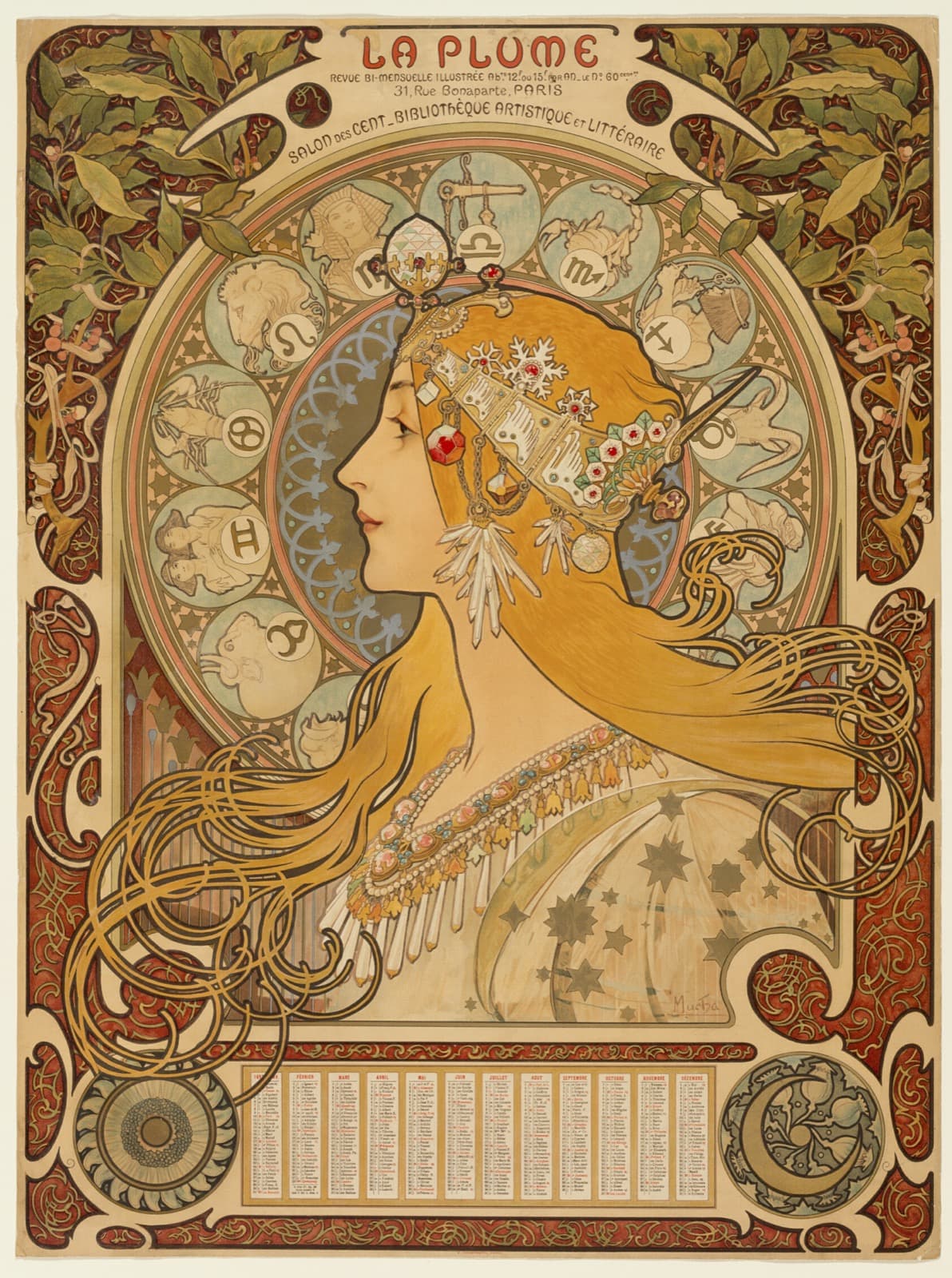
Mucha’s Zodiaque of 1896 began as a calendar design for Champenois. Its central woman is framed by a disk containing the twelve zodiac signs, turning the passing of the year into a richly ornamented image. The design was subsequently adapted for La Plume, a Parisian arts magazine, and associated with its Salon des Cent exhibition program.[70][71]
The magazine’s version advertised its presence at 31 rue Bonaparte, while the months printed across the lower part of the sheet gave the image a practical use. An advertisement could therefore remain on a wall long after the immediate event it promoted. The relationship between commerce and decoration was not incidental: the calendar made the image useful, and the image made the calendar desirable.[70][71]
Théophile-Alexandre Steinlen and the black cat
Théophile-Alexandre Steinlen, a Swiss-born artist who arrived in Paris in 1881, belonged to the Montmartre world of illustrators, writers and performers that also included Toulouse-Lautrec. Born in Lausanne in 1859, he became closely associated with Le Chat Noir, the cabaret whose name means “The Black Cat.” His 1896 poster for its touring performances turned that animal into one of the enduring emblems of Parisian nightlife.[60][72][73]
The cat’s severe silhouette and ornamental surround echo the cabaret’s broader use of feline imagery, including the cats represented on its walls. Steinlen’s many commercial commissions gave his work a wide public reach. He has sometimes been described as better known than Toulouse-Lautrec during their lifetimes, although this is a judgment about contemporary visibility rather than a measurable ranking. The comparison is a useful reminder that the artists most familiar to later museum audiences were not necessarily those whose images contemporaries encountered most often.[72]
One account links Steinlen’s Tournée du Chat Noir publicity to the Chat Noir cabaret’s reopening on October 3, 1896, and its theater on October 6. The connection between these dates and the poster remains uncertain. Its use as publicity for the cabaret’s touring performances is better established.[72][73]
Affichomanie: collecting the city’s walls
The appetite for posters became known as affichomanie, or poster mania. Images covered hoardings, scaffolding, shop windows, kiosks, public urinals and the cylindrical advertising structures called Morris columns; some advertisements traveled through the streets on carts. Exposure to weather, fresh layers of paste and the attention of collectors meant that sheets were short-lived, often lasting less than a week.[74][13]
Contemporary commentators compared the streets to an open-air museum, free to enter and constantly changing. The comparison was not entirely metaphorical. People followed artists, sought particular designs and treated advertisements as objects of taste. At the same time, France’s legal-deposit system preserved material that the street itself could not: the Bibliothèque nationale de France, the French national library, now holds a poster collection of approximately three hundred thousand items.[57][74][13]
Women as subjects—and as makers of their own public image
Women dominate much of Art Nouveau’s imagery, but they do not all perform the same role. Some appear as allegories, fairies or decorative ideals; others advertise new forms of leisure, consumption and mobility. The period’s femme nouvelle, or “new woman,” represented challenges to conventional domestic expectations. Images of the demimonde belonged to a different social world, associated with courtesans and fashionable nightlife. It would be misleading to collapse every actress, dancer or independent woman into that category.[2]
Bernhardt and Fuller also demonstrate that women were not merely subjects chosen by male designers. They commissioned work, developed recognizable public identities and created performances that shaped the movement’s imagery. Alongside the women working in decorative-arts studios, they formed part of the active artistic and commercial network through which Art Nouveau developed.[53][54][55][44]
An international movement with many names
France and Belgium: “new art,” “noodles” and “whiplash”
The movement accumulated names because it developed through different institutions, cities and markets. In France it could be called style moderne, style fin de siècle, art Belle Époque, style 1900, style Métro or style Guimard. The label style Jules Verne, referring to the French novelist famous for scientific and fantastic adventure stories, suggests how readily its unfamiliar forms could evoke an imagined modern world.[2][3]
Other names were less flattering. Style nouille, or “noodle style,” mocked the curling lines; style coup de fouet described their resemblance to the movement of a whip. Such expressions circulated in French-speaking discussion and should not be treated as neatly bounded national categories. The same formal feature could be admired as expressive freedom and ridiculed as shapeless excess.[2][3]
Brussels has a particularly strong claim to an early role in Art Nouveau architecture. Victor Horta’s houses transformed the narrow urban dwelling through the use of light, iron structure and connected interior spaces. Decorative lines move across railings, wall surfaces and floor patterns, making different elements of the house feel parts of a single composition.[3][5]
UNESCO, the United Nations cultural organization, inscribed four of Victor Horta’s Brussels buildings on its World Heritage List in 2000. They are Hôtel Tassel, begun in 1893; Hôtel Solvay, commissioned in 1894; Hôtel van Eetvelde, begun in 1895; and Horta’s own house and studio. Hôtel Tassel is frequently described as the first major Art Nouveau house. It stands among the early architectural works of a movement that developed through several sources.[5]
Henry van de Velde pursued the total-work ideal across a similarly broad range of objects. Originally a painter, he became an architect, designer and theorist, moving between Belgium, France and Germany. His work included furniture, metalwork, books and advertising. His abstract poster for the protein product Tropon in 1898 shows how far Art Nouveau could move from literal flowers while retaining an insistence on expressive line and integrated lettering.[3][16]
Germany: Jugendstil and the search for a modern visual language
In Germany the movement became known as Jugendstil, or “youth style,” after the Munich journal Jugend, founded in 1896. Munich was an important center, but German work ranged from luxuriant organic ornament to more restrained, geometric design. Magazines and workshops helped carry the style across typography, illustration, furniture and household goods.[2][3]
The movement’s passage toward later design reform is particularly visible in Germany. Designers increasingly asked how an object’s structure, production and use might determine its appearance, rather than treating ornament as something to add afterward. Art Nouveau’s pursuit of a coherent modern language could therefore lead toward simpler forms as well as more elaborate ones.[3][16]
Vienna: the Secession and the total work of art
The Vienna Secession was founded in 1897 by artists who broke away from the conservative Künstlerhaus, an established exhibition association. Gustav Klimt became its first president. Other founders included the painter and designer Koloman Moser, sometimes called Kolo Moser; the painter Carl Moll; and the architects Josef Hoffmann and Joseph Maria Olbrich. Their aim was not to enforce one visual formula but to create an independent setting for new art.[75]
Olbrich designed the group’s exhibition building when he was barely thirty. The city initially permitted only a provisional pavilion, authorised to stand for no more than ten years. Its foundation stone was laid on 28 April 1898, and it was completed on 29 October of the same year. The building outlasted that temporary permission and became the movement’s architectural emblem.[76]
For the fourteenth Secession exhibition, held from 15 April to 27 June 1902, Klimt created the Beethoven Frieze. Twenty-one artists worked under Hoffmann’s direction on an exhibition conceived around the composer Ludwig van Beethoven. Architecture, painting and sculpture were coordinated as parts of a single environment. This was the total-work ideal applied not to a private home but to an exhibition.[77]
Klimt’s frieze is both decorative and narrative: its stylized figures and patterned surfaces form an allegory of the search for happiness. It was initially intended as a temporary work, making its survival particularly remarkable. Its enduring significance lies partly in this meeting of the ephemeral exhibition, monumental painting and the modern decorative surface.[77]
Hoffmann’s Palais Stoclet in Brussels offers a different culmination. Commissioned in 1905 by the banker Adolphe Stoclet and completed in 1911, it brought together work associated with the Wiener Werkstätte, or Vienna Workshops, including contributions by Klimt and Koloman Moser. Its disciplined geometry points beyond the most familiar curvilinear Art Nouveau toward Art Deco and the Modern Movement.[14]
Otto Wagner brought Vienna’s new architecture into public transport through his work on the Stadtbahn railway around 1900. At Karlsplatz, the two entrance pavilions combine iron frames, marble panels and elaborate ornament. The Wien Museum describes Wagner’s achievement as the integration of practical requirements with artistic design. Like Guimard’s Métro entrances in Paris, these stations gave an expanding transport network a distinctive public appearance.[78]
Barcelona: Antoni Gaudí and Catalan Modernisme
Antoni Gaudí, born in 1852, is frequently included in accounts of Art Nouveau, but his work belongs more specifically to Catalan Modernisme, a wider cultural movement. The distinction does not mean that one label must exclude the other. His architecture shares the period’s interest in nature, craftsmanship and the unity of structure and decoration, while developing an exceptionally individual approach.[3][79]
The Sagrada Família began in 1882 under another architect; Gaudí took over the project in 1883. He continued transforming it over the following decades until his death in 1926. The building should not be understood simply as the largest example of a decorative fashion around 1900: it was a long-running architectural and religious project with its own development.[79]
UNESCO recognizes seven components under the collective designation “Works of Antoni Gaudí”: Park Güell, Palau Güell, Casa Milà, Casa Vicens, the Nativity façade and crypt of the Sagrada Família, Casa Batlló, and the crypt of the Colònia Güell. Its account places him within Modernisme and emphasizes the synthesis of influences in his work, including Arts and Crafts, Symbolism, Expressionism and Rationalism. The Museum of Modern Art nevertheless included him in its 1960 Art Nouveau survey. The two approaches are compatible: one identifies a specific cultural setting, while the other considers a wider international relationship.[79][16]
Catalan Modernisme also included major work by Lluís Domènech i Montaner. His Palau de la Música Catalana uses a steel frame and extensive glass to bring daylight into a public concert hall. His Hospital de Sant Pau combined decorative invention with the demands of ventilation, hygiene and patient care. UNESCO inscribes the concert hall and hospital together. The pair of building types broadens the Barcelona story from Gaudí’s houses and religious architecture to music and medicine.[80]
Glasgow: Charles Rennie Mackintosh and Margaret Macdonald Mackintosh
Charles Rennie Mackintosh was born in Glasgow in 1868 and married the artist Margaret Macdonald in 1900. Their work combines elongated proportions and geometric order with highly stylized organic motifs. It offers a useful corrective to the idea that Art Nouveau must be crowded with twisting vegetation. A severe vertical, a carefully placed rose or the relationship between a pale wall and a dark piece of furniture could carry the design.[3][15]
In the spring of 1902, the publisher Walter Blackie sought an architect for a modern villa at Helensburgh, near Glasgow. The resulting Hill House is best understood as a collaboration, particularly in its interiors. Margaret Macdonald Mackintosh was an artist with an independent contribution, not merely an assistant carrying out her husband’s ideas.[15]
Mackintosh’s own statements make that clear. He credited her with genius where he claimed talent, and described her share in his achievement as more than half—indeed, three quarters. The exact division of authorship varies from work to work, but his testimony rejects the habit of making her disappear behind his name. Their combination of geometric discipline and decorative invention had a strong influence on Austrian designers.[3][15]
Charles Rennie Mackintosh’s largest early commission was the new Glasgow School of Art, designed in 1896. Lack of money divided construction into two phases, 1897–99 and 1907–09. During that interval he revised the design, bringing Scottish historical references together with newer materials and building methods. The library completed in 1909 used an intricate arrangement of timber posts and beams, drawing partly on Japanese domestic interiors. The school extended his work beyond the private home into a place of artistic training.[81]
Italy and Britain: Liberty, Celtic forms and commercial design
In Italy the movement became known as Stile floreale, Arte nuova or Stile Liberty. The last name referred to Liberty & Co., the London business that had sold Asian textiles, ceramics and other objects to aesthetically minded customers since the 1870s. A retailer’s name thus became shorthand for modern design in another country, much as Bing’s gallery helped establish the French term internationally.[2][17]
The Manx designer Archibald Knox, born on the Isle of Man, was one of Liberty’s most distinctive contributors. His metalwork combined Celtic interlacing with fluid modern forms. The firm’s Cymric range was associated with gold and silver, while Tudric was principally pewter—not another silver range. That material distinction matters: the less expensive metal made sophisticated design available at a different price level.[17]
Knox’s work also challenges the notion that Art Nouveau was inherently hostile to industrial production. Designs could be made through casting or stamping and then assembled and finished by hand. The object’s artistic character did not require every stage to be performed as a unique act of carving or forging.[17]
British graphic art supplied another important strand. Aubrey Beardsley, the English illustrator whose brief career ended with his death in 1898, used black-and-white contrast, elaborate pattern and a sharply expressive line. His work for the Irish writer Oscar Wilde’s Salomé belongs to the same broad world of Symbolism, Aestheticism and new graphic design, though its unsettling wit is far removed from a conventional celebration of flowers.[3][16]
Beyond the usual centers
The movement cannot be adequately mapped by naming only Brussels, Paris and Munich. Nancy, Glasgow, Vienna and Barcelona were major centers in their own right, and other cities adapted the style to local building traditions and rapidly expanding urban life. Riga, now the capital of Latvia, preserves an especially concentrated architectural legacy recognized in the UNESCO listing of its historic center.[3][6][82]
This international spread does not mean that all these places adopted an identical Parisian fashion. The movement’s names—Jugendstil, Secession, Modernisme, Liberty and Art Nouveau—record different institutions, markets and cultural ambitions. What connects them is a search for a modern artistic environment in which architecture and the applied arts could be considered together.[2][3][14][79][82]
Why Art Nouveau declined
A style could look old before its buildings were finished
Art Nouveau began losing its position as the most advanced decorative language before the First World War. Its very recognizability made it vulnerable: a curve that had appeared startlingly new could become a formula when repeatedly copied. Some designers sought greater restraint, while others developed geometric approaches that made the more luxuriant examples seem tied to an earlier moment.[3][52][83]
The year 1914 remains a useful boundary, but it should not be mistaken for an instantaneous artistic extinction. Tate, the British museum organization, summarizes the movement’s ending through the First World War. Other histories emphasize that the change in taste was already under way. Artists and workshops did not all stop working at once, and the construction histories of individual buildings could extend well beyond the movement’s fashionable peak.[1][3]
Nor is it sufficient to say that Art Nouveau failed because handcraft was too expensive to compete with machines. Its total interiors could certainly be costly, and sustained attention to every detail could be difficult to reconcile with rapid production. Yet its success also depended on casting, printing and other repeatable industrial processes. Art Nouveau’s production methods reveal a tension between individual invention and repeated manufacture. Changing fashion added another pressure.[9][4][16][83][17]
Art Nouveau and Art Deco: the difference and the continuity
Art Deco is often introduced as Art Nouveau’s opposite: geometry instead of tendrils, streamlined elegance instead of organic profusion. The contrast is useful as a first approximation, but incomplete. Geometric Art Nouveau was already well developed in the work of Mackintosh and Hoffmann. The Palais Stoclet demonstrates how disciplined structure and luxurious decoration could lead toward the later style from within the earlier movement.[14][52]
The Paris Exposition Internationale des Arts Décoratifs et Industriels Modernes of 1925 became Art Deco’s landmark exhibition. The name Art Deco gained wider use in the 1960s as a label for earlier work. Designers had used other names during the interwar years, including Style Moderne. Art Deco carried forward Art Nouveau’s interest in coordinated interiors and the decorative arts. Its sources also included modern painting, historical designs and machine-age imagery.[52]
The simplest distinction is therefore one of emphasis. Art Nouveau typically gives priority to the movement and structure of organic forms; Art Deco more often favors geometric organization, stylized repetition and a polished modern surface. Neither is without exceptions, and the careers of individual designers—including René Lalique and Maurice Dufrène—cross the boundary.[38][52][50][51]
Rejection, rescue and rediscovery
Why the Surrealists admired it
Art Nouveau’s fall from fashion did not make it invisible to everyone. The Surrealists found possibilities in precisely the qualities that rationalist critics disliked: its ambiguous forms, irrational associations and tendency to make a building resemble a living body. Salvador Dalí, the Spanish Surrealist painter, helped give the rejected architecture a new imaginative life.[84]
In 1933 Dalí published “On the Terrifying and Edible Beauty of Art Nouveau Architecture” in the journal Minotaure. Photographs by Man Ray, the American artist and photographer, illustrated the work of Antoni Gaudí; photographs by Brassaï, the Hungarian-born photographer associated with Paris, showed Guimard’s architecture. Dalí had already paid tribute to Gaudí’s earthly, organic forms in his painting The Enigma of Desire: My Mother, My Mother, My Mother.[84]
Salvador Dalí’s enthusiasm for Art Nouveau lasted well beyond the 1930s. Into the 1970s Dalí was still denouncing the architecture of Le Corbusier, the Swiss-born modernist architect. He praised the erotic suggestiveness of Hector Guimard’s ornament. Dalí also admired Clovis Trouille, a French painter who called himself a survivor of 1900 and continued invoking Art Nouveau long after it had ceased to be fashionable. Dalí and Trouille continued to admire and draw on Art Nouveau while the style remained unfashionable with the wider public.[84]
In a different context, the Finnish architect and designer Alvar Aalto developed sinuous, free-flowing forms during the 1930s. Their resemblance to the more abstract side of Art Nouveau does not make them replicas of it, but demonstrates that organic form could remain a productive modern possibility after the earlier style’s decline.[84]
The 1960 exhibition and the return of ornament
The Museum of Modern Art in New York marked a major stage in Art Nouveau’s reassessment with an exhibition held from 8 June to 6 September 1960. More than three hundred objects brought together jewelry, furniture, books, posters, painting and architectural material. The museum presented a movement that had once been fashionable, then rejected, as an important early phase of modern art and design.[16]
Peter Selz directed the Museum of Modern Art’s 1960 Art Nouveau exhibition. He argued that the movement had freed designers from old rules and opened new possibilities for twentieth-century art. His account emphasized Art Nouveau’s influence on graphic design, furniture and buildings, beyond the changing taste for its ornament.[16]
The revival was not confined to museums. Psychedelic poster designers of the 1960s rediscovered expressive lettering, flowing hair, peacocks, elongated figures and ornamental borders. In Britain, Michael English and Nigel Waymouth worked together as Hapshash and the Coloured Coat; in the United States, designers including Wes Wilson adapted related devices to rock-concert publicity. Art Nouveau returned not simply as nostalgia for elegant interiors, but as a source for a new countercultural graphic language.[4][84]
Preservation changed what later generations could see
The material record of Art Nouveau was shaped by changing taste. Interiors could be dismantled, metalwork sold and entire buildings demolished before anyone considered them worth protecting. The rediscovery therefore involved more than revising an art-historical opinion: it required finding objects, preserving fragments and reconstructing environments.[26][16][56][85]
The Musée d’Orsay’s decorative-arts collections provide one example of this work. Their formation brought dispersed objects back into view and added important examples by Guimard, Horta, Gallé, Majorelle and designers from elsewhere in Europe. The museum also acquired a large body of material from Guimard’s architectural office that had been discovered in a gardener’s shed at Saint-Cloud in 1968 by Alain Blondel and Yves Plantin, then architecture students. More than two thousand of these documents reached the museum in 1995, preserving evidence of how projects had developed from drawings to executed work.[85]
That archival recovery, the reconstruction of Fouquet’s shop, and the protection of surviving Métro entrances all contributed to the Art Nouveau visible today. Its apparent permanence in the tourist image of Paris is the result of decisions made after a prolonged period of neglect.[30][31][56][85]
Major works and ensembles
Art Nouveau is best understood through different kinds of work rather than paintings alone. The following examples show how the movement operated at the scale of a printed sheet, a jewel, an interior and a building. Dates refer to the original work or principal design phase, not necessarily to every surviving edition or later reconstruction.
| Work or ensemble | Artist or designer | Date | Collection or location | What it demonstrates |
|---|---|---|---|---|
| Hôtel Tassel | Victor Horta | Begun 1893 | Brussels | Iron structure, light and ornament brought into a unified domestic interior.[5] |
| Gismonda | Alphonse Mucha | Designed 1894; issued 1895 | Impressions in collections including the Victoria and Albert Museum and Art Institute of Chicago | The poster as both theater advertising and an independent decorative image.[65][66][67] |
| Castel Béranger | Hector Guimard | Commissioned 1894; developed 1895–98 | 12–14 rue La Fontaine, Paris | A modern apartment building designed down to its interior fittings.[27][28] |
| Oakleaf vase | Émile Gallé | About 1895 | Victoria and Albert Museum, London | Botanical form developed through layered and worked glass.[46][47] |
| Paris Métro entrances | Hector Guimard | Designs introduced 1900 | Paris; original examples also in museums abroad | Expressive organic forms combined with repeatable industrial components.[9][10][11] |
| Pendentif Aiglon | René Lalique | About 1898–1900 | Musée des Arts Décoratifs, Paris | Jewelry as sculpture, with a documented connection to Sarah Bernhardt and Edmond Rostand.[53] |
| Fouquet jewelry shop | Alphonse Mucha | 1901 | Reconstructed in the Musée Carnavalet, Paris | The total-work-of-art ideal applied to a commercial interior.[48][56] |
| Villa Majorelle | Henri Sauvage, Louis Majorelle and collaborators | About 1901–02 | Nancy | Architecture and furnishings conceived as an interdependent whole.[18][49] |
| Beethoven Frieze | Gustav Klimt | 1902 | Secession, Vienna | Symbolist painting integrated into a coordinated exhibition environment.[77] |
| Palais Stoclet | Josef Hoffmann and collaborating artists | 1905–11 | Brussels | Geometric Art Nouveau developing toward Art Deco and modern architecture.[14] |
Where to see Art Nouveau in Paris
Musée Carnavalet: interiors at human scale
The Musée Carnavalet, the museum of the history of Paris, offers two especially revealing encounters with Art Nouveau. Its Belle Époque displays include the decoration of the Café de Paris, originally at 41 avenue de l’Opéra, by Henri Sauvage and Louis Majorelle, and Mucha’s reconstructed shop for Georges Fouquet. These interiors make it possible to understand the movement as an inhabited or commercial environment rather than as a collection of isolated details.[48][56]
The museum is in the Marais, with its visitor entrance at 23 rue Madame de Sévigné. Its permanent collections are free for individual visitors and do not require advance booking under the museum’s published arrangements; temporary exhibitions have separate conditions. Room access can change, so the current visitor information should be checked before planning a visit around a particular interior.[86]
Guimard in the 16th arrondissement
Castel Béranger at 12–14 rue La Fontaine and the Hôtel Mezzara at 60–62 rue La Fontaine can be considered together as two stages in Guimard’s career. The first presents the assertive, materially varied character of his breakthrough; the second shows a more restrained later domestic architecture organized around an important central space. Both are significant buildings, but exterior visibility should not be confused with unrestricted access to their interiors.[28][32]
Porte Dauphine, on Métro line 2, provides the most complete encounter with a surviving covered entrance of its particular model. The important structure faces 90 avenue Foch. Abbesses, on line 12 in Montmartre, offers another famous covered entrance, but one that was moved from Hôtel de Ville rather than designed for its present site.[30][31]
Ceramic façades and commercial buildings
The Lavirotte building at 29 avenue Rapp and the Céramic Hôtel at 34 avenue de Wagram are particularly useful for studying architectural ceramics. Their surfaces show how color and sculptural modeling could challenge the normal appearance of a Paris façade. The Samaritaine adds the scale of the department store, while also illustrating the movement’s transition into later architectural phases.[34][36][35]
At 10 rue Pavée, Guimard’s synagogue offers a different building type and a more compact urban setting. Its façade belongs within the same career as the Métro entrances, but the project’s purpose, structure and organization are markedly different. It should be approached as religious architecture, not assumed to operate as an open architectural museum.[33]
Maxim’s and the Belle Époque interior
Maxim’s, at 3 rue Royale in the 8th arrondissement, remains a restaurant within a celebrated Belle Époque setting. The French heritage register attributes its late-nineteenth-century restaurant interior to the designer Louis Marnez and protects the three ground-floor salons and their decoration through a listing made in December 1979. The restaurant’s own presentation identifies the rooms with Art Nouveau.[87][88]
As a working restaurant, Maxim’s is different from a museum installation. Seeing the interior is best considered in connection with a reservation or an expressly offered visit, rather than assuming that all rooms are available for casual sightseeing. Its continued commercial use also recalls the original setting of much Art Nouveau: places where people ate, shopped and socialised.[88]
Musée d’Orsay, Musée des Arts Décoratifs and the monuments of 1900
The Musée d’Orsay’s decorative-arts collections place French Art Nouveau in an international context, including furniture, glass, metalwork and architectural decoration. The Musée des Arts Décoratifs provides another essential setting for studying the relationship between objects, interiors and the longer history of design. Its holdings include Lalique’s Aiglon pendant, although an object’s presence in a collection does not guarantee that it is on display during every visit.[53][85][89]
The Grand Palais, on avenue Winston-Churchill, and the nearby Petit Palais preserve part of the architectural setting of the 1900 exhibition. They are worthwhile companions to a study of Art Nouveau, provided their classical and Beaux-Arts elements are not mistaken for pure examples of the style. Their importance is also historical: they belong to the event at which the movement achieved its broadest international audience.[19][42][41]
Art Nouveau connections
Artists
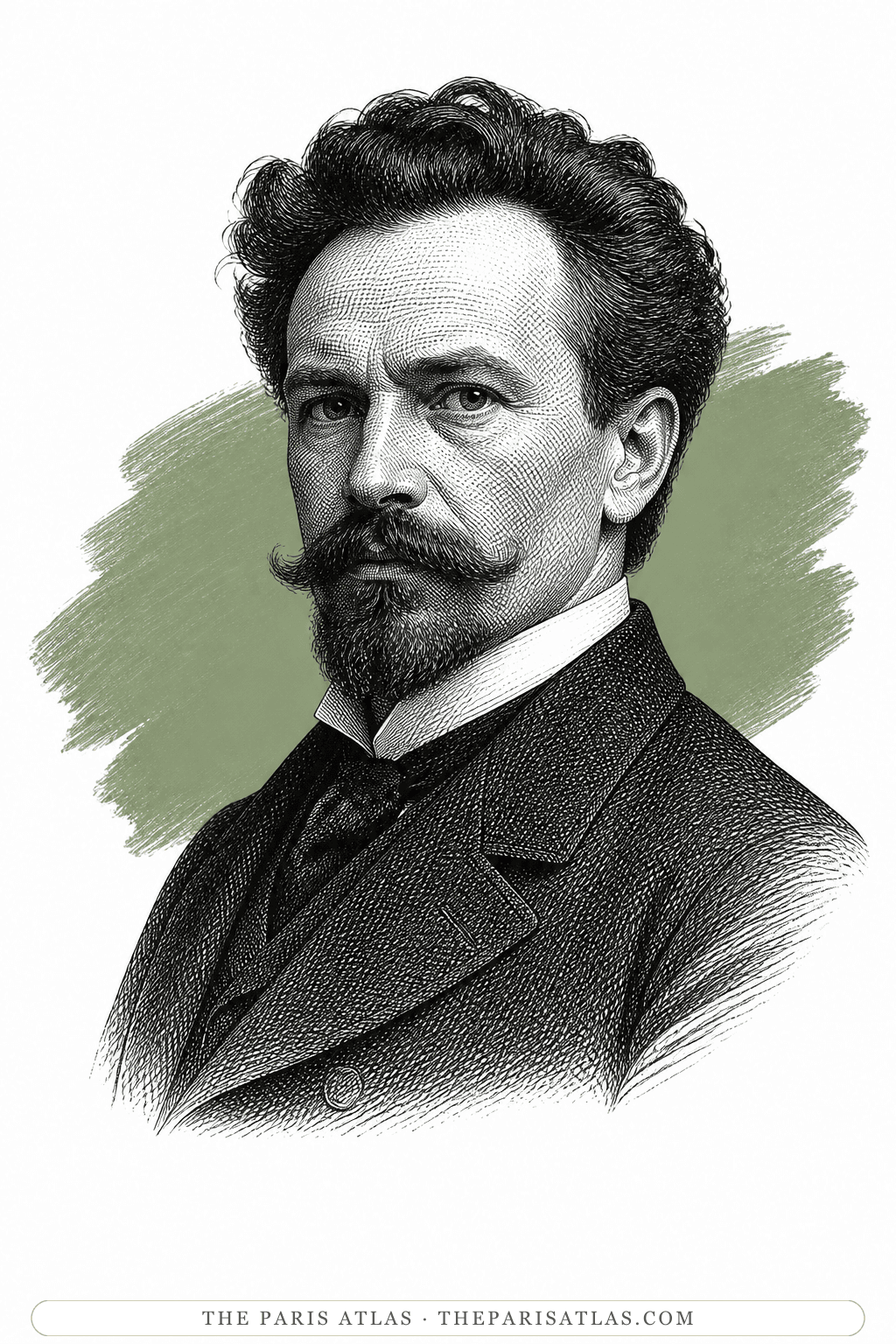
Painter · Illustrator
Alphonse Mucha
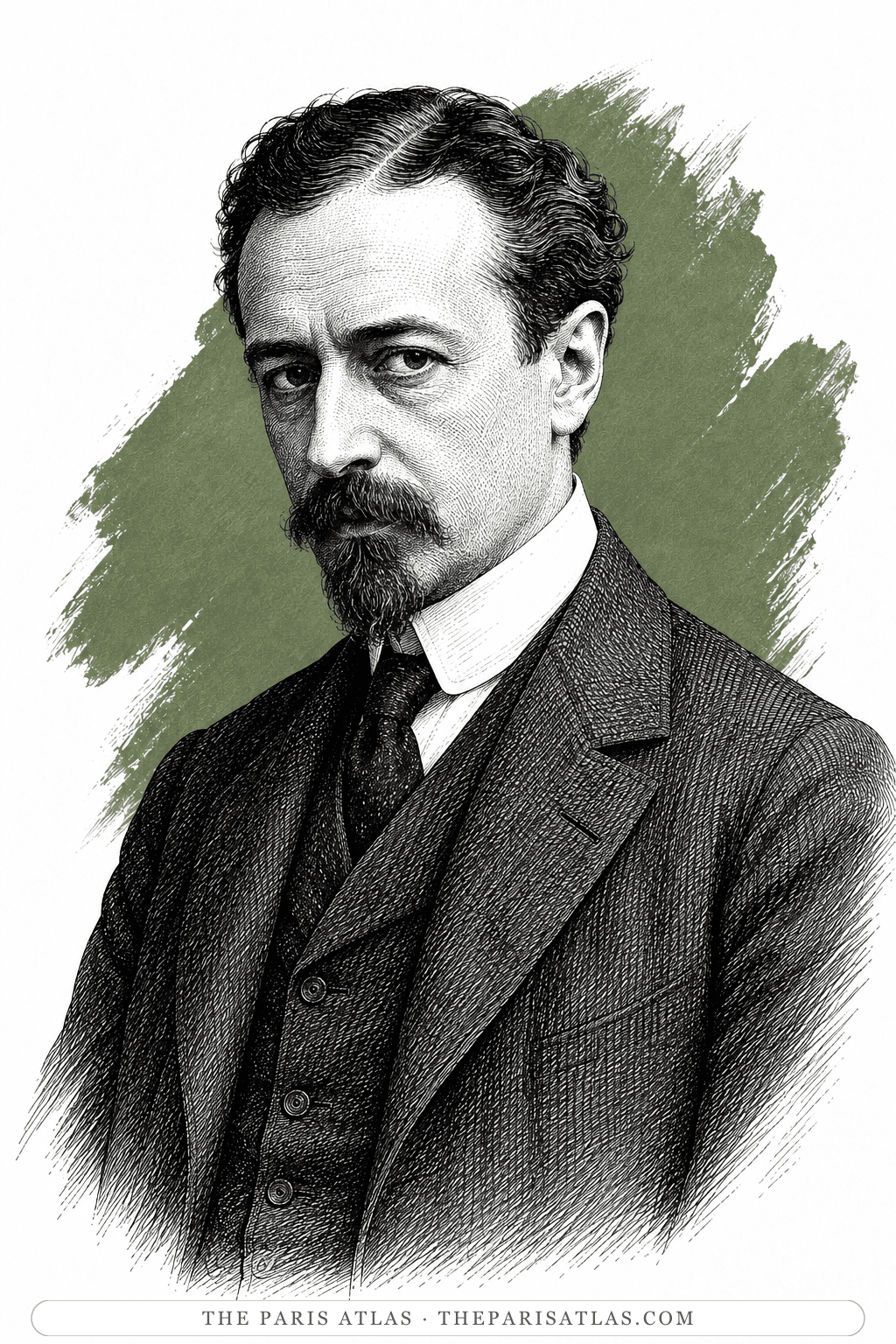
Designer
René Lalique
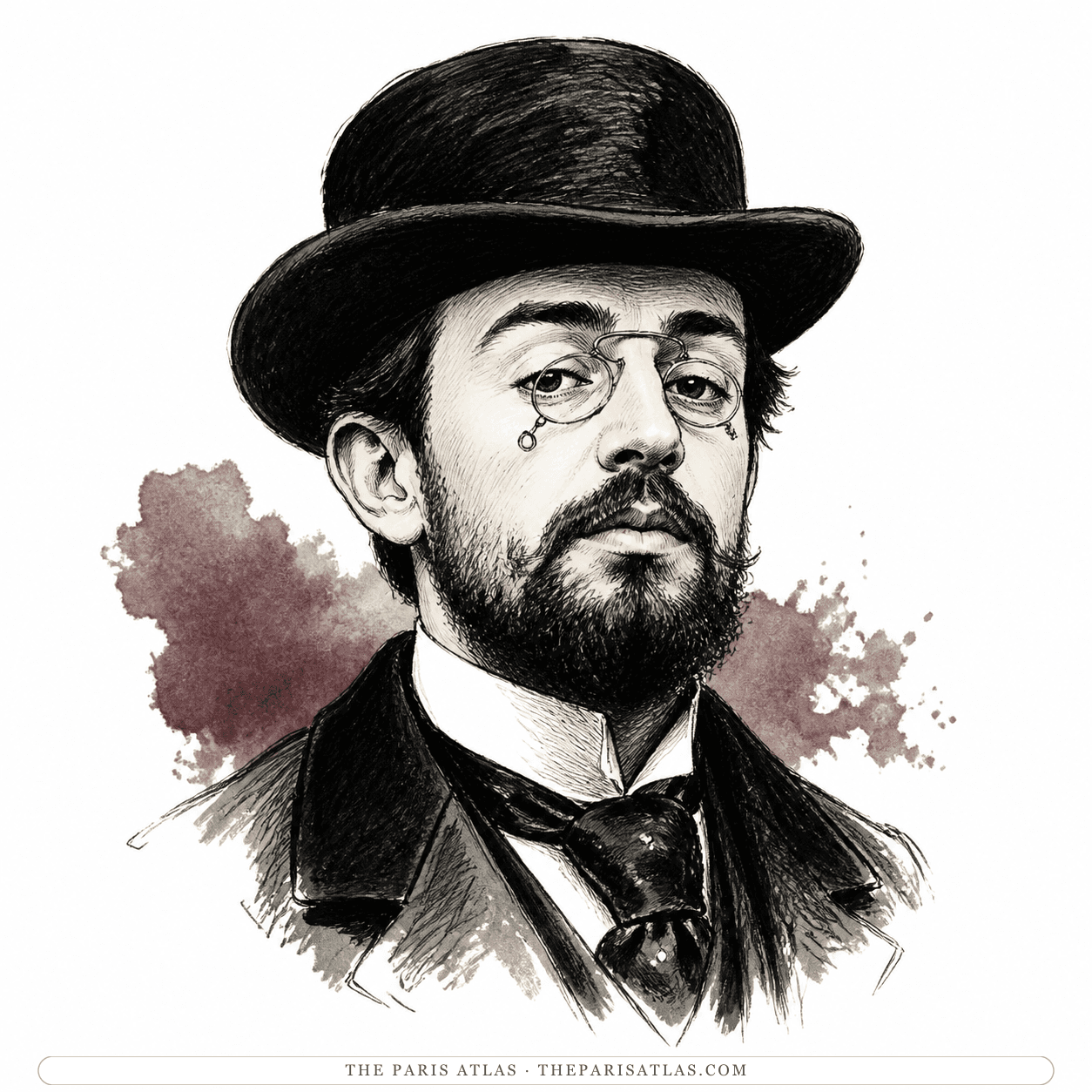
Painter · Illustrator
Henri de Toulouse-Lautrec
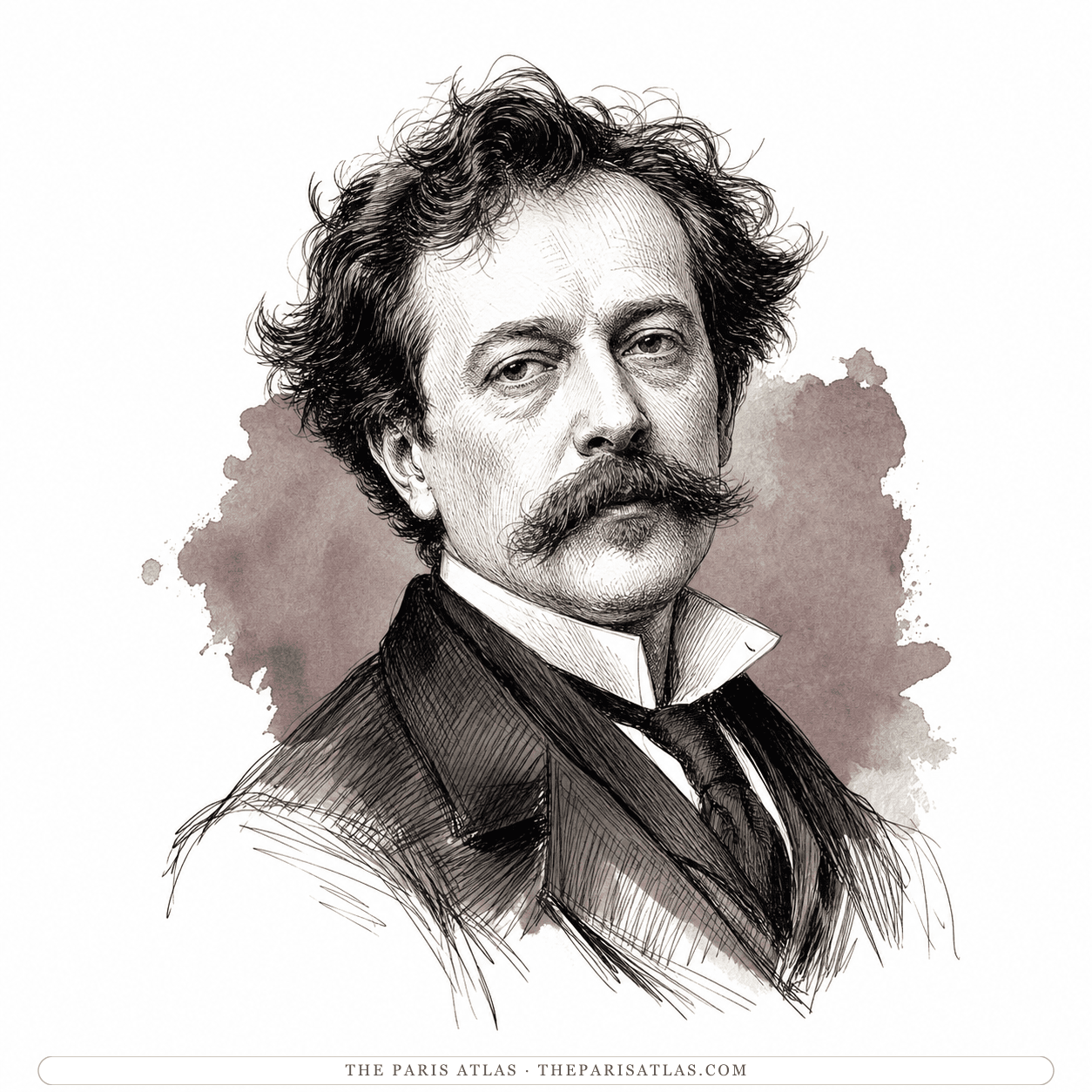
Illustrator · Painter
Théophile-Alexandre Steinlen
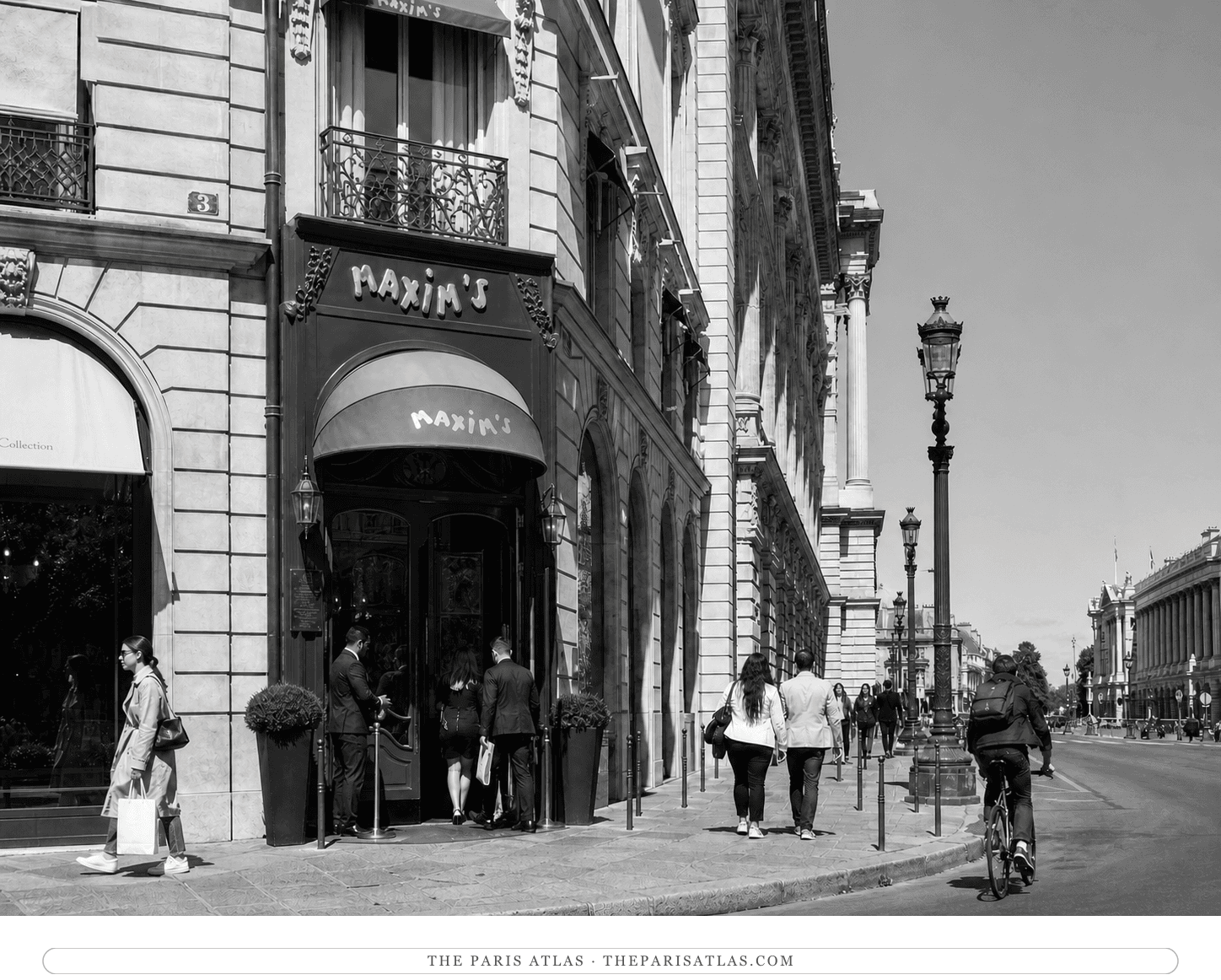
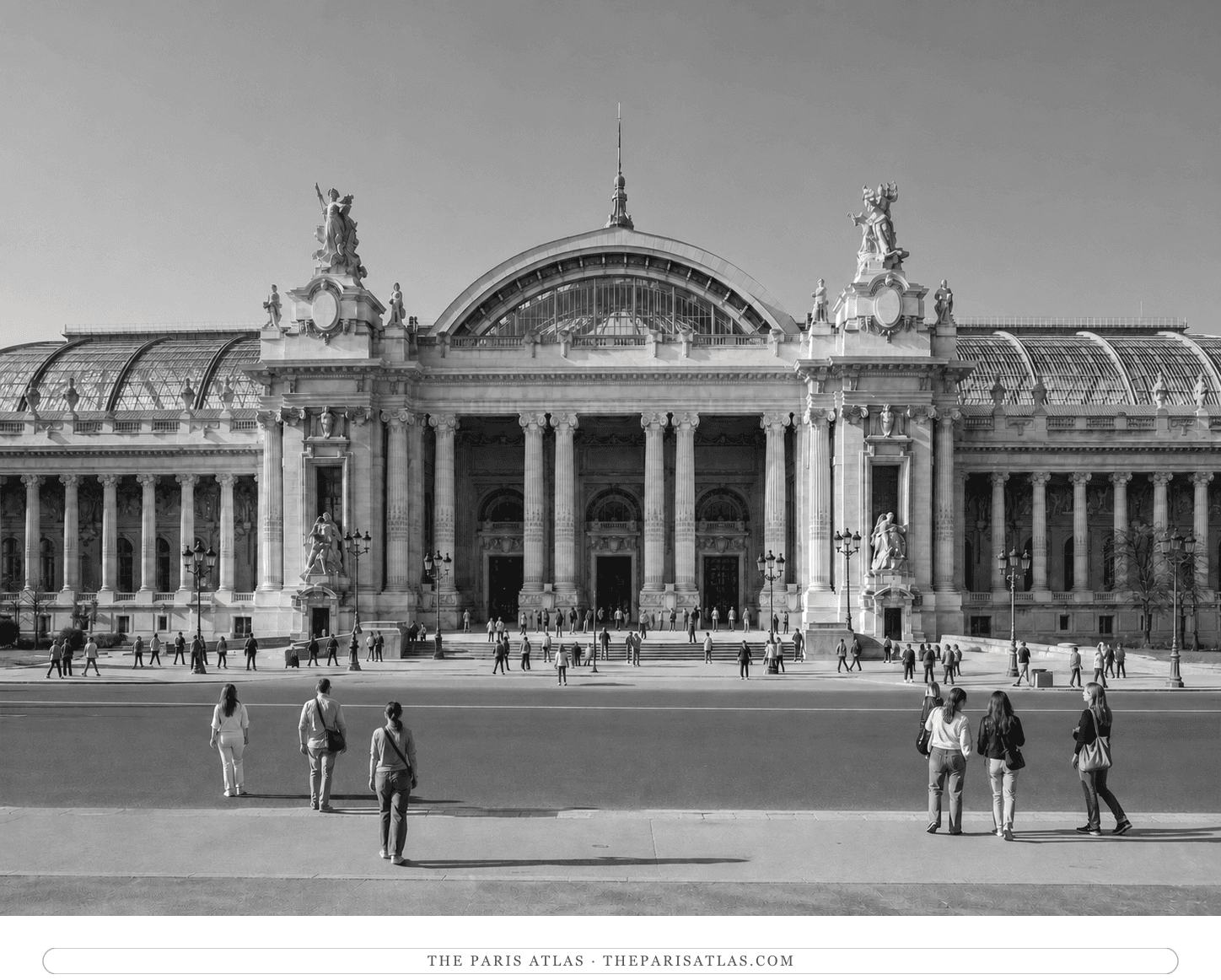
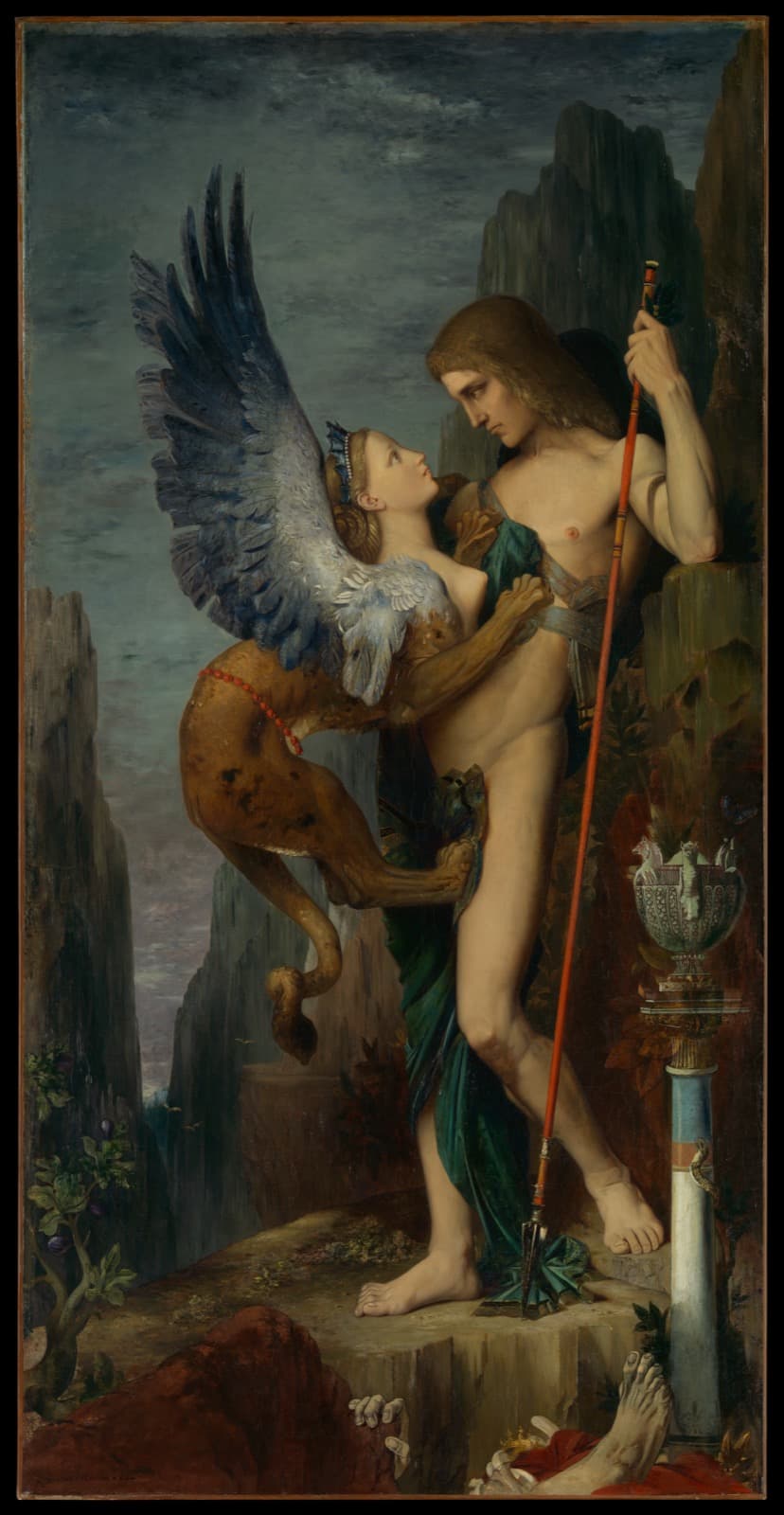
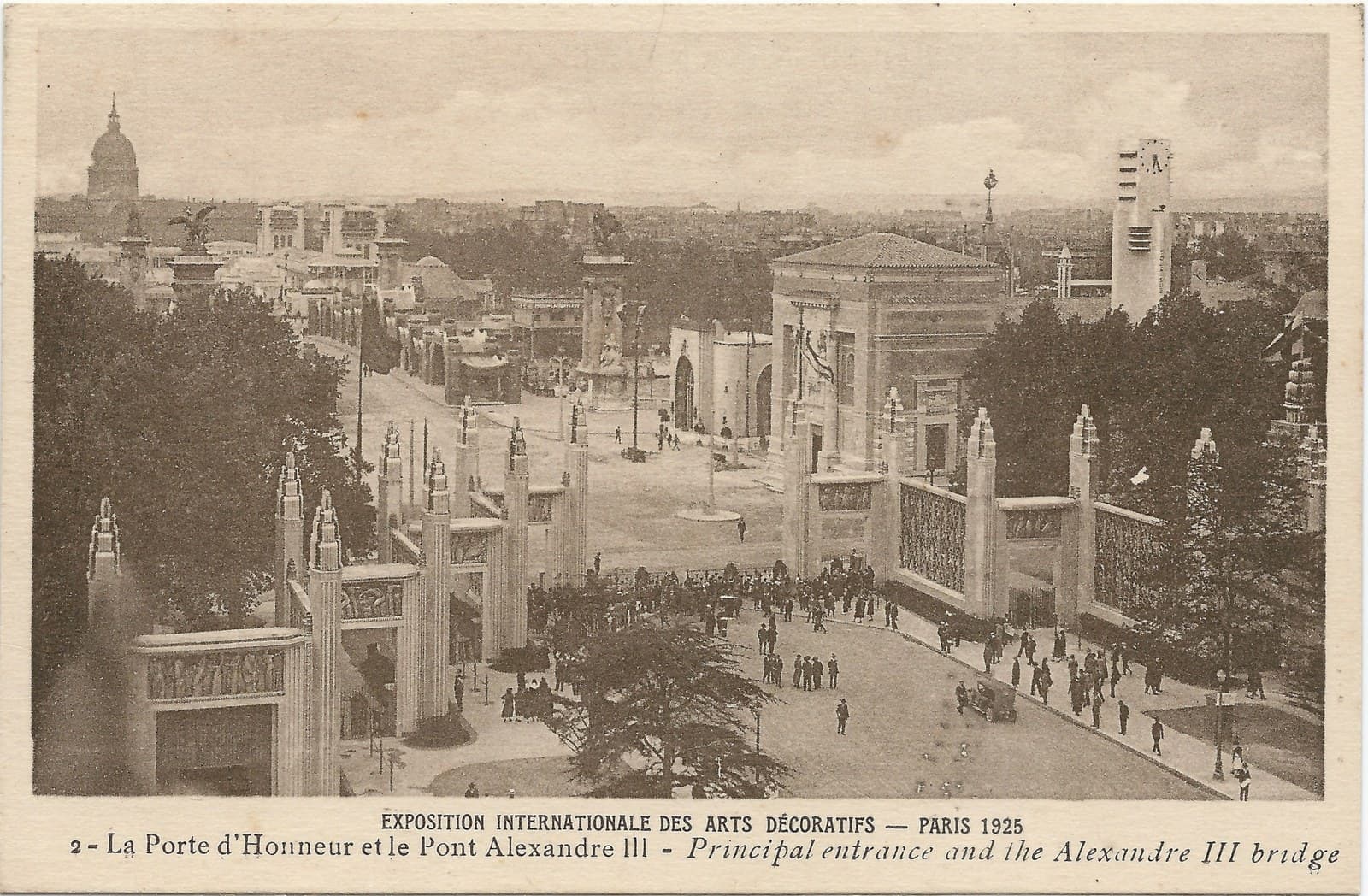
Timeline
1849
Augustus Welby Northmore Pugin publishes Floriated Ornament, an influential contribution to the study of nature and decorative design.[2]
1856
Owen Jones publishes The Grammar of Ornament in London.[2]
1866
Jules Chéret establishes his Paris printing house and begins the work that makes him a pioneer of the modern color poster.[4][60]
1878
Siegfried Bing opens premises selling Far Eastern objects on the rue Chauchat in Paris.[12]
1881
The French press law of 29 July changes the legal environment for print and public display.[58][59]
1888–91
Bing publishes the thirty-six issues of Le Japon artistique in French, English and German.[22][24][12]
1890
Bing organizes a major exhibition of Japanese prints, including more than seven hundred prints and over four hundred books.[22][24]
1891
Toulouse-Lautrec’s Moulin Rouge, La Goulue appears across Paris.[60][62]
1893
Work begins on Victor Horta’s Hôtel Tassel in Brussels.[5]
1894
Élisabeth Fournier commissions Castel Béranger from Hector Guimard. Nancy hosts an important exhibition of Lorraine decorative and industrial arts.[27][6]
1 January 1895
Mucha’s Gismonda poster for Sarah Bernhardt appears on Paris hoardings.[64][66]
1895
Guimard visits Brussels and encounters Horta and Hankar. Structural work begins on Castel Béranger. Bing opens L’Art Nouveau at 22 rue de Provence in December.[22][26][27]
1896
Mucha begins working with Champenois and produces Les Saisons. The journal Jugend is founded in Munich. Steinlen designs his famous Chat Noir touring poster.[3][64][69][73]
1897
Gustav Klimt and fellow artists establish the Vienna Secession.[75]
1898
The Secession building in Vienna is constructed. Castel Béranger is occupied by this year.[27][76]
1899
Castel Béranger’s success in the Paris façade competition is announced on 28 March. Publication of Haeckel’s Kunstformen der Natur begins; installments continue until 1904.[27][8]
1900
The Paris Exposition Universelle brings the movement before an immense international public. The first Métro line opens on 19 July with Guimard-designed entrances.[29][19][11]
1901
The École de Nancy is formally founded. Mucha designs Fouquet’s jewelry shop, and Lavirotte’s building at 29 avenue Rapp wins the Paris façade competition.[34][48][6]
1901–02
The Villa Majorelle is built in Nancy to designs by Henri Sauvage, with furnishings and decoration conceived as part of the whole.[49]
1902
Turin holds its international exhibition of modern decorative art. Klimt presents the Beethoven Frieze at the fourteenth Vienna Secession exhibition.[2][77]
1904
Gallé dies. Bing relinquishes his business because of ill health. The Métro company begins removing some Guimard entrances.[22][26][6]
1905–10
Frantz Jourdain’s rebuilding of the Samaritaine gives Art Nouveau a prominent—and controversial—commercial setting.[36]
1910–11
Guimard builds the Hôtel Mezzara in Paris.[32]
1911
The Palais Stoclet is completed in Brussels.[14]
1913–14
Guimard’s synagogue on the rue Pavée is constructed.[33]
1914
The First World War marks a major historical boundary for a movement already losing its fashionable position.[1][3]
1925
The Paris decorative-arts exhibition becomes the defining international event associated with Art Deco.[52]
1933
Salvador Dalí publishes his celebrated defense of Art Nouveau architecture in Minotaure.[84]
1960
The Museum of Modern Art presents the first comprehensive American survey of Art Nouveau.[16]
1968
Alain Blondel and Yves Plantin discover material from Guimard’s office in a shed at Saint-Cloud; the documents later enter the Musée d’Orsay.[85]
1972–74
The entrance formerly at Hôtel de Ville is dismantled and relocated to Abbesses.[31]
1978
A major listing protects surviving Guimard Métro structures.[30][31][11]
1989
The Musée Carnavalet completes its reconstruction of the Fouquet jewelry shop.[56]
1992
Castel Béranger is classified as a historic monument on 31 July.[28]
2000
Four major Horta town houses in Brussels are inscribed together on UNESCO’s World Heritage List.[5]
2016
Updated protection orders cover the relevant Guimard Métro entrances; the Hôtel Mezzara is classified as a historic monument.[30][31][32]
Art Nouveau: frequently asked questions
What is Art Nouveau?
Art Nouveau was an international movement that brought flowing lines and stylized natural forms into architecture, furniture, glass, jewelry and graphic design. It developed during the late nineteenth century, flourished around 1890–1910 and lost ground before the First World War. Many designers pursued the Gesamtkunstwerk, or total work of art: a building, its rooms and its furnishings conceived together. Curves are its best-known feature, but designers in Glasgow and Vienna also developed geometric versions.[1][2][3]
Where does the name Art Nouveau come from?
The name means “new art” and was used in the Belgian journal L’Art Moderne during the 1880s. Siegfried Bing helped popularize it internationally when he opened his Paris gallery L’Art Nouveau at 22 rue de Provence in December 1895. The gallery displayed paintings, furniture and decorative objects in coordinated interiors. Bing gave an existing movement a prominent commercial showcase; he did not invent the words or all the designs associated with them.[2][3][22][25]
Who was Hector Guimard?
Hector Guimard was the French architect best known for Paris’s Art Nouveau Métro entrances and the Castel Béranger apartment building. Born in Lyon in 1867, he trained in Paris but never completed the final architecture diploma. That restricted his access to major public commissions, and he worked largely for private clients. His buildings included Hôtel Mezzara and the synagogue on rue Pavée. The City of Paris records 167 Métro entrance structures across 107 stations. RATP counts 88 surviving entrances. Guimard died in New York in 1942.[26][28][32][33][11]
Where can I see Art Nouveau in Paris?
The Musée Carnavalet displays Mucha’s Fouquet jewelry shop and the Café de Paris interiors by Henri Sauvage and Louis Majorelle. Its permanent collections are free. For Guimard’s architecture, visit Castel Béranger at 12–14 rue La Fontaine and Hôtel Mezzara at 60–62 on the same street. Porte Dauphine on Métro line 2 preserves a covered entrance of its original model. Abbesses on line 12 has an entrance moved from Hôtel de Ville. The Lavirotte building at 29 avenue Rapp offers an elaborate ceramic façade. The Musée d’Orsay and Musée des Arts Décoratifs hold furniture, glass, jewelry and other examples. Interior access and objects on display vary by venue.[28][30][31][32][34][48][85][89][86]
When and why did Art Nouveau end?
Art Nouveau lost its fashionable position before 1914 as tastes shifted toward simpler forms and new approaches to design. The First World War marks its conventional endpoint, though individual designers continued working afterward. The change was gradual: the geometric work of Josef Hoffmann and Charles Rennie Mackintosh helped shape Art Deco. Cost and demanding workmanship affected some commissions, but a simple conflict between handcraft and machines cannot explain the decline. Art Nouveau also relied on industrial casting, commercial printing and other methods of repeated production.[1][3][14][16][52][83]
Is Gaudí an Art Nouveau architect?
Antoni Gaudí is often included in international accounts of Art Nouveau, although Catalan Modernisme is the more precise setting for his work. His architecture shares the period’s interest in nature, craftsmanship and the relationship between structure and decoration. UNESCO places his seven listed works within Modernisme and describes a synthesis of several artistic traditions. The Museum of Modern Art included him in its 1960 Art Nouveau survey. These classifications describe different aspects of his architecture and can be used together.[3][79][16]
What is Art Nouveau called in other countries?
Common names include Jugendstil in Germany, Secession style or Sezessionstil in Austria and Hungary, and Arte nuova, Stile floreale or Stile Liberty in Italy. The Liberty name comes from the London retailer Liberty & Co. In Catalonia, Art Nouveau is associated with the broader movement of Modernisme. French-speaking writers also used style nouille, or “noodle style,” and style coup de fouet, or “whiplash style.” In the United States, the name Tiffany style reflected Louis Comfort Tiffany’s prominence. These labels overlap, but local movements had different aims and institutions.[2][3][79][17]
Is Art Nouveau an art movement or a design style?
Art Nouveau was both a movement to reform architecture and the applied arts and a group of related design styles. Its designers wanted everyday objects and buildings to receive the same artistic attention as painting and sculpture. French and Belgian examples often emphasize curling organic forms, while Scottish and Austrian work can be strongly geometric. The movement’s shared aims connect objects that do not all look alike.[2][3]
When did Art Nouveau begin and end?
Art Nouveau developed from nineteenth-century design reforms, with recognizable precursors in the 1880s. Its strongest period of international growth was roughly 1890–1910. The Paris Exposition Universelle of 1900 marked a major high point. The First World War is a conventional endpoint, though the style was already declining before 1914 and individual artists continued working afterward.[1][2][3][19]
Did Art Nouveau begin in Paris?
Art Nouveau developed in several places, with Brussels especially important to its early architecture. Paris helped establish its name and international visibility through Siegfried Bing’s gallery and the 1900 exhibition. Nancy, Glasgow, Vienna, Munich and Barcelona also developed distinctive forms. Paris was a major center for exhibiting, selling and circulating the new designs.[2][3][5][6]
Who designed the Paris Métro entrances?
Hector Guimard designed the celebrated Art Nouveau entrances introduced with the early Paris Métro in 1900. He used standardized components that could be assembled around openings of different sizes. His designs included open railings, small covered entrances and larger pavilions. This system gave the railway a recognizable appearance across the city. Other architects designed many of the network’s later entrances.[26][9][11]
Is Art Nouveau the same as Art Deco?
No. Art Nouveau developed earlier and is especially associated with organic lines and stylized natural forms. Art Deco became prominent between the world wars and generally favors geometry, repeated patterns and a polished modern appearance. The transition was gradual. The geometric designs of Josef Hoffmann and Charles Rennie Mackintosh helped prepare the later style, and designers such as René Lalique worked across both periods.[14][52][50][51]
Was everything made by hand?
No. Art Nouveau combined skilled handwork with printing, casting and other forms of industrial production. Guimard’s Métro entrances used repeatable parts, Chéret’s color posters were printed in large numbers, and Liberty’s metalwork could be cast or stamped before finishing. Some objects required extensive work by hand, but the movement had no single rule against machinery.[9][4][17][11]
Why do women appear so often in Art Nouveau?
Artists used female figures to represent beauty, nature, seasons, myth, modern independence and fashionable entertainment. Women also helped create and commission the work. Actress Sarah Bernhardt commissioned Mucha’s posters, dancer Loïe Fuller developed influential performances, Margaret Macdonald Mackintosh designed interiors and decorative panels, and Clara Driscoll contributed to Tiffany’s lamps. Their roles included performance, patronage and design as well as appearing in images.[2][54][15][55][44]
Why does Art Nouveau still matter?
Art Nouveau helped establish buildings, furnishings and everyday objects as serious fields of artistic invention. Its designers connected architecture with interiors and carried ambitious images into public life through posters, shops and transport. Later movements rejected much of its ornament but continued to explore coordinated environments and the relationship between art and manufacture. Its surviving works show how design can shape the experience of ordinary places and objects.[2][3][16]
References
The sources below include histories, manifestos, scholarly research, and primary materials that informed this page. They document Art Nouveau, its development, and the artists and works associated with it.

61↑Jules Cheret, La Loie Fuller (E.113-1921)
WebsiteVictoria and Albert MuseumUsed forJules Chéret and color lithography
63↑Toulouse-Lautrec et l'art de l'affiche: communique de presse
WebsiteMusee Toulouse-Lautrec, AlbiUsed forHow many posters did Toulouse-Lautrec make?
68↑Ferdinand Champenois: the printer’s full name
WebsitePrinceton University Art MuseumUsed forFerdinand Champenois: the printer’s full name
80↑Catalan Modernisme beyond Gaudí
WebsiteUNESCO World Heritage CentreUsed forCatalan Modernisme beyond Gaudí
81↑Mackintosh and the Glasgow School of Art
WebsiteGlasgow School of Art, Archives & CollectionsUsed forMackintosh and the Glasgow School of Art
87↑3 Rue Royale (Maxim’s) — Historic Monument Record
WebsiteMinistère de la CultureUsed forMaxim’s: the protected interiors
90The Beethoven Frieze
WebsiteVienna SecessionUsed forWeb source consulted for documented facts and historical context presented on the Art Nouveau page.
91The Secession Building
WebsiteVienna SecessionUsed forWeb source consulted for documented facts and historical context presented on the Art Nouveau page.
92Posters of Paris
WebsiteMilwaukee Art MuseumUsed forWeb source consulted for documented facts and historical context presented on the Art Nouveau page.
93Posters of Paris: Biographies
WebsiteMilwaukee Art MuseumUsed forWeb source consulted for documented facts and historical context presented on the Art Nouveau page.

These references provide the documented foundation for this movement's history and interpretation. Claim-level citations remain attached to the specific claims they support.
 Explore more resources