Displayed at · 1924-12
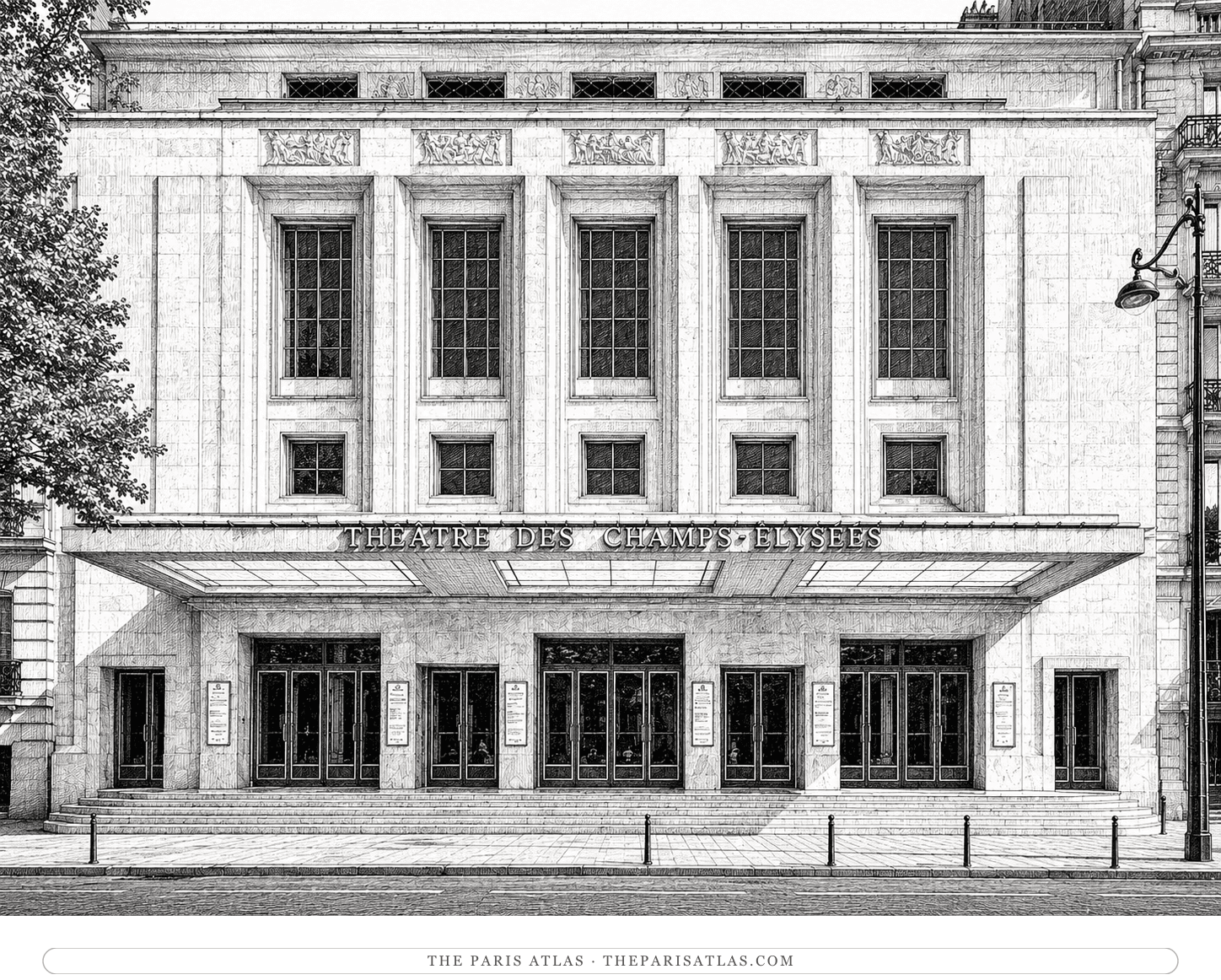
Théâtre des Champs-Élysées
Premiered 4 December 1924 between the acts of Picabia's ballet Relâche — and partly shot on the theater's own roof, where Man Ray and Marcel Duchamp play chess until a water jet ends the game.
by René Clair, Francis Picabia
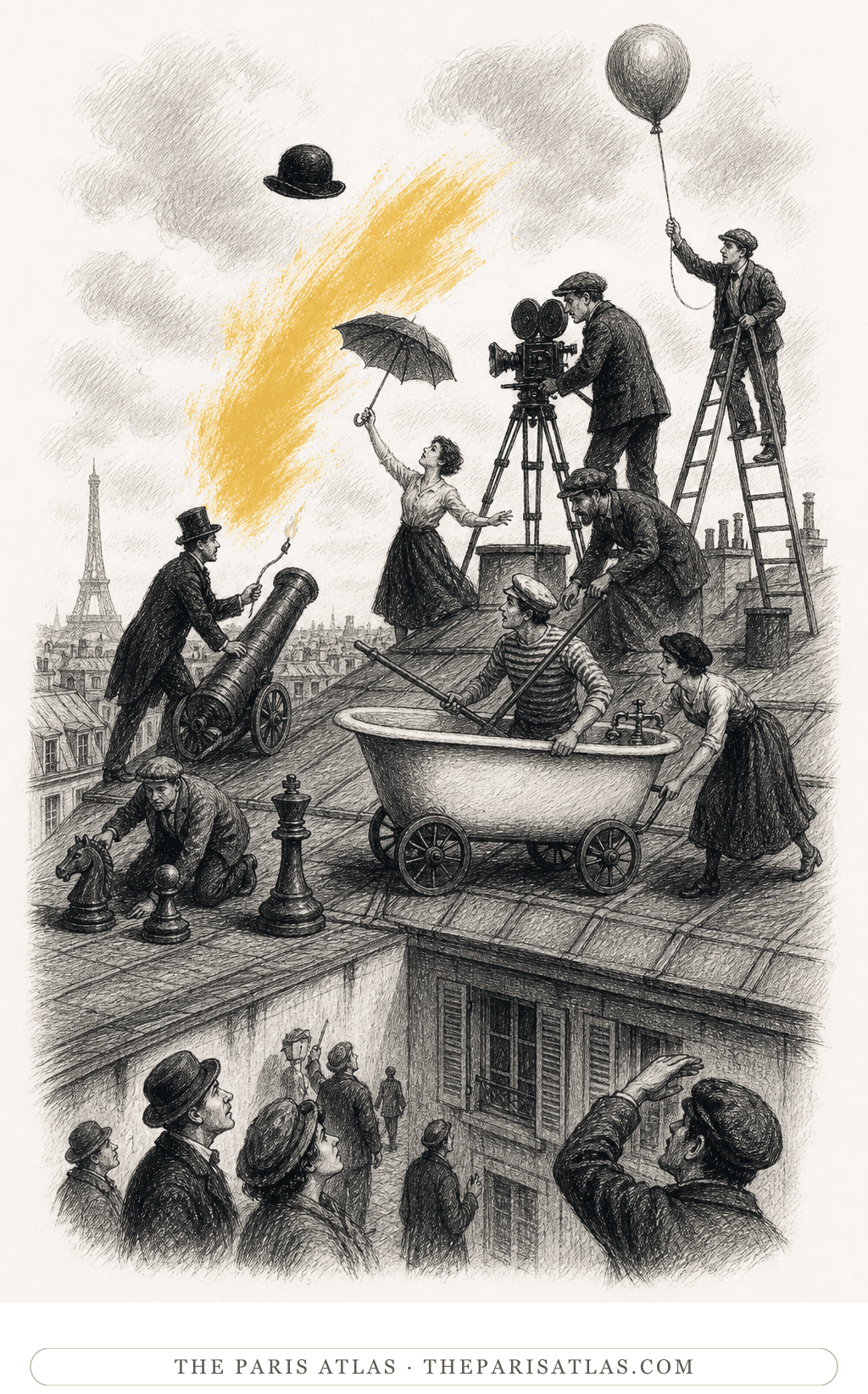
Dada's home movie: Satie and Picabia fire a cannon from a rooftop, Man Ray and Marcel Duchamp play chess above the Théâtre des Champs-Élysées, a ballerina filmed from below turns out to be bearded, and a camel-drawn hearse breaks loose into a slow-motion, then breakneck, chase across Paris. Made to run between the acts of Picabia's ballet Relâche, with Satie writing bar-by-bar music for the images — the whole Paris avant-garde caught on film, playing.
Relâche — the word theaters post when there is no performance — was Picabia's instantaneous ballet for Rolf de Maré's Ballets Suédois, with music by Erik Satie. For the interval, Picabia scribbled a film scenario and handed it to the twenty-six-year-old René Clair, the house's young film enthusiast. The result is the only place the Paris avant-garde of 1924 can be watched moving: Satie, in his bowler, descending in slow motion to fire a cannon at the audience; Man Ray and Marcel Duchamp hunched over a chessboard on the theater's roof until a jet of water sweeps the game away.
The premiere itself became part of the joke: on the announced opening night the theater was dark — relâche, genuinely, because Jean Börlin was ill — and half of Paris assumed it was the piece. The real premiere followed on 4 December 1924.
Satie's score, written to synchronize with the film's shots, is counted among the first purpose-built film scores. It was also nearly his last public act — he died the following summer, with Entr'acte as Dada's parting gift from him.
The film's second half is one long, accelerating gag: a hearse drawn by a camel sets off from the Luna Park fairground, mourners trotting behind and helping themselves to wreaths of funeral bread, until the coffin slips its moorings and the procession becomes a chase — through the Bois, past the Eiffel Tower's legs, onto a rollercoaster — cut faster and faster until the coffin tumbles into a field, opens, and the corpse sits up, produces a wand, and makes everyone disappear, including himself. THE END bursts through the paper screen; a final kick sends it back.
Clair had already frozen Paris from the Eiffel Tower in Paris qui dort (1923); here he proved montage could be pure comic rhythm. Within a decade he would carry that timing into the first great French sound comedies — but Entr'acte remains the purest thing Dada ever put on film, made in the movement's last season, as Surrealism was already gathering to replace it.
1924
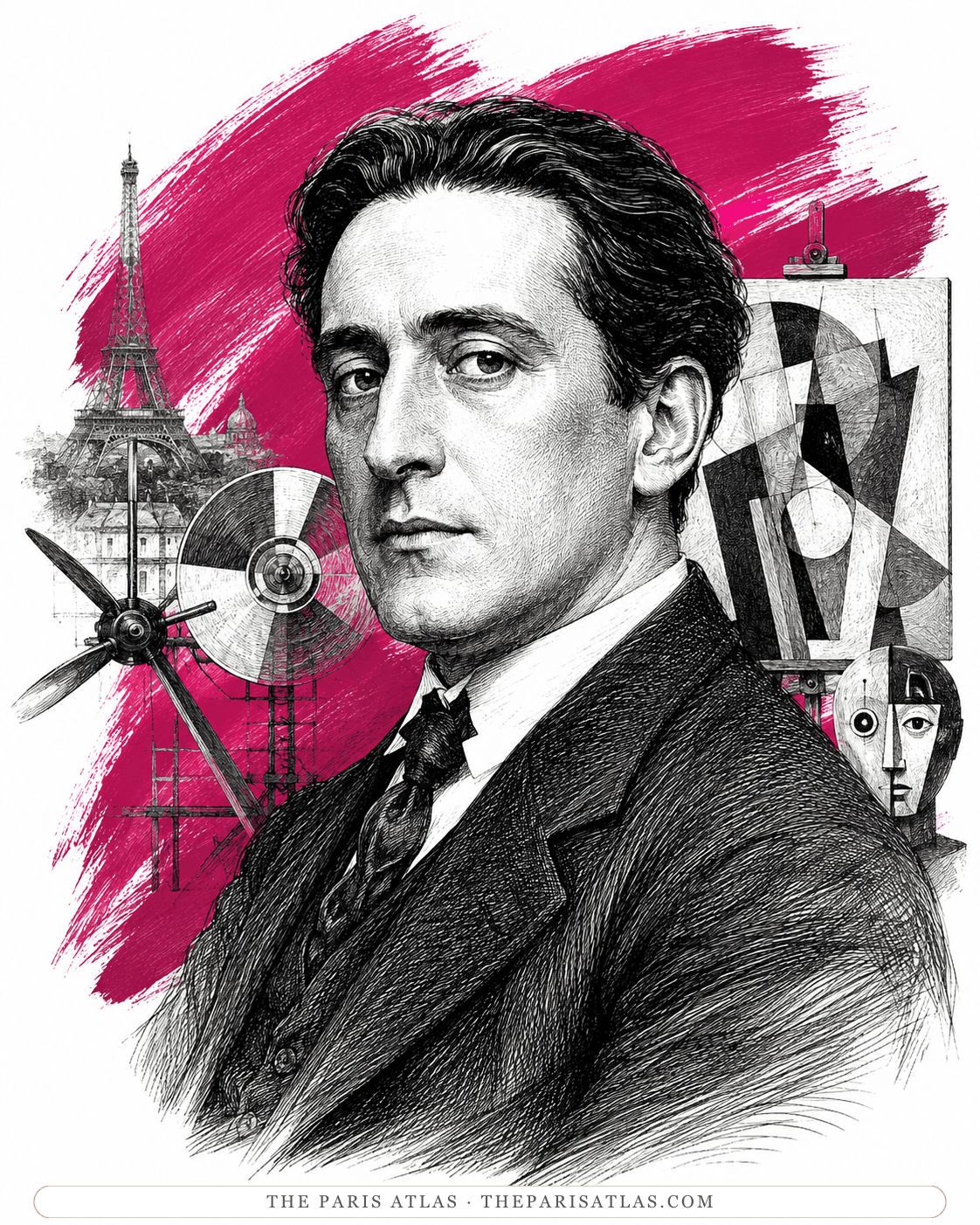
Francis Picabia wrote the film for the interval of his ballet Relâche (Ballets Suédois); René Clair directed, Erik Satie scored it to the shot, and Man Ray and Marcel Duchamp were filmed playing chess on a rooftop.
1924
On the announced opening night the theatre stayed dark — Jean Börlin was ill — and half of Paris took the empty house for the Dada gesture itself.
4 December 1924
Premiered at the Théâtre des Champs-Élysées, screened between the two acts of Relâche.
1925
Erik Satie died the following summer; his score, written to synchronize with the film's shots, is counted among the first purpose-built film scores.
A 22-minute Dada film directed by René Clair in 1924, made to be shown during the intermission of Francis Picabia's ballet Relâche.
The Paris avant-garde at play: Erik Satie and Picabia fire a cannon from a rooftop, and Man Ray and Marcel Duchamp play chess on a terrace above the Théâtre des Champs-Élysées.
Erik Satie, who composed it to synchronize with the film's shots — among the first purpose-built film scores. It was nearly his last work; he died in 1925.
A long, accelerating chase: a hearse drawn by a camel breaks loose from a fairground and the mourners pursue it across Paris, first in slow motion and then at breakneck speed.
Because it was made to run in the entr'acte — the interval — of Picabia's ballet Relâche for Rolf de Maré's Ballets Suédois. Relâche is itself the word theatres post when there is no performance.
At the Théâtre des Champs-Élysées in Paris on 4 December 1924.
Displayed at · 1924-12
Premiered 4 December 1924 between the acts of Picabia's ballet Relâche — and partly shot on the theater's own roof, where Man Ray and Marcel Duchamp play chess until a water jet ends the game.
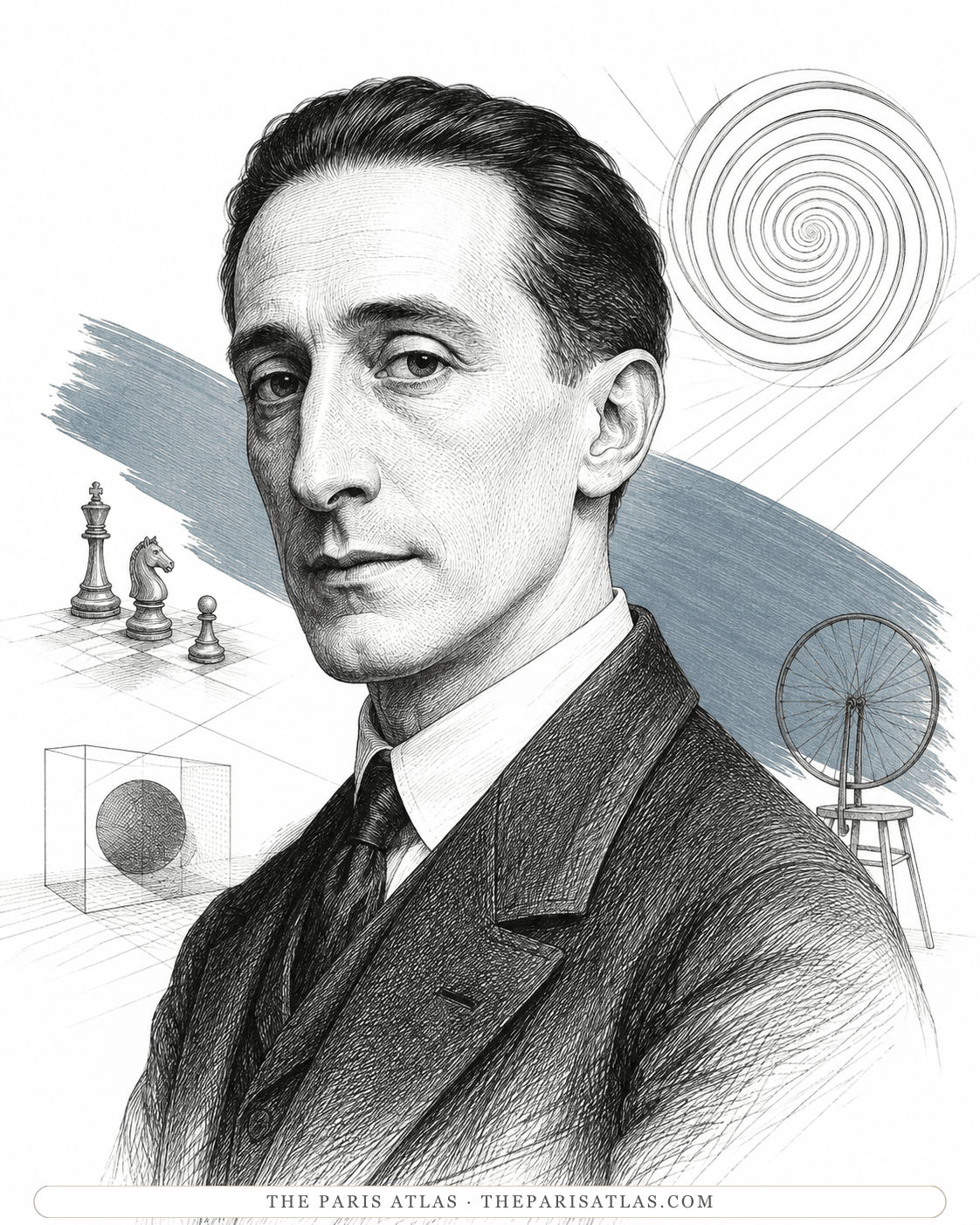
Explore directors from the same movements and circles.
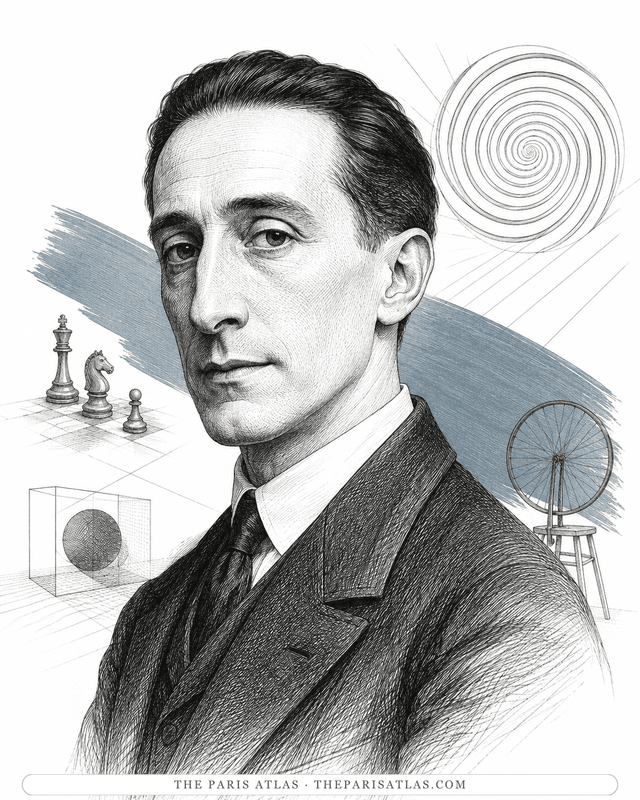
The century's quietest revolutionary — readymades, the abandonment of painting, chess on a Paris rooftop in Entr'acte, and one anemic film of spinning puns signed Rrose Sélavy.
View artist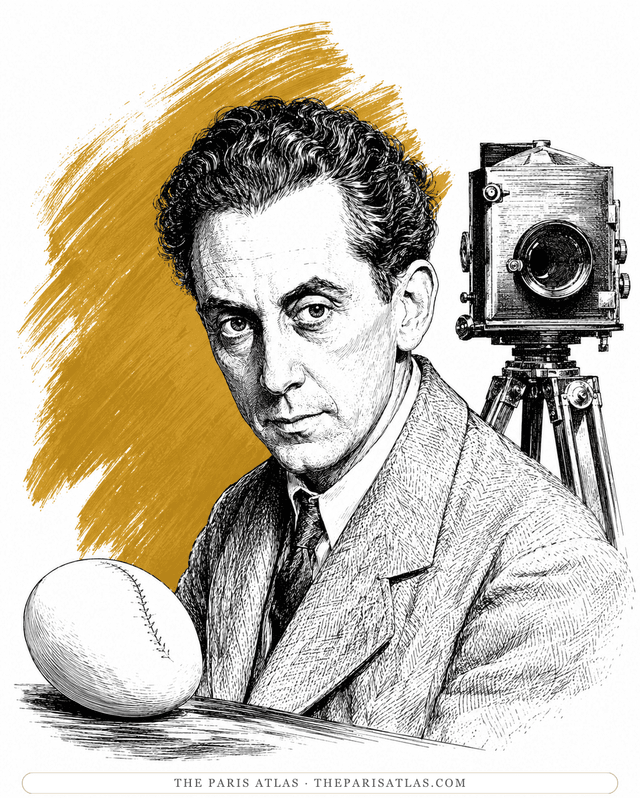
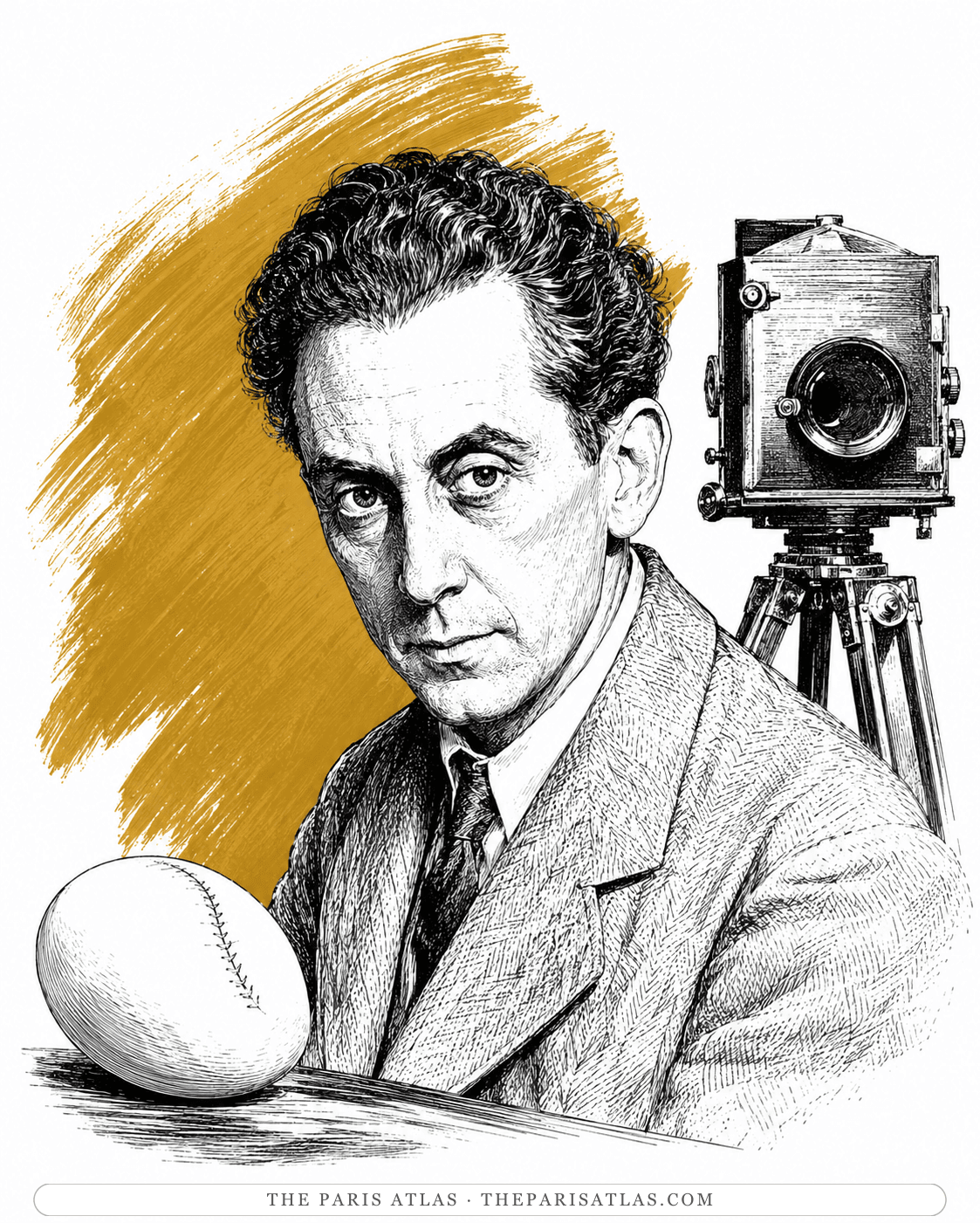
Montparnasse's American eye — portraitist of the whole expatriate quarter, inventor of the rayograph, and maker of films (Emak-Bakia, L'Étoile de mer) that treated the camera as another darkroom.
View artist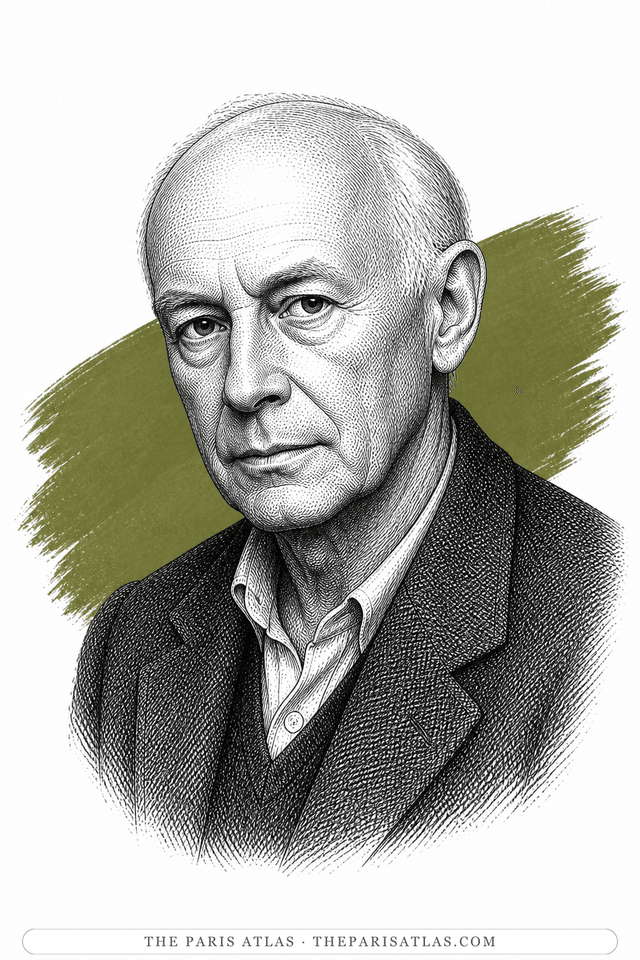
French photographer who turned a pocket-sized 35mm camera into an instrument of split-second composition — the idea the world knows as 'the decisive moment'. He trained as a painter, was taken prisoner in 1940 and escaped on his third try, photographed the Liberation of Paris in August 1944, co-founded the photographer-owned agency Magnum Photos in 1947, gave up reporting for drawing in the 1970s, and left Paris a foundation in the Marais that deliberately hangs no permanent display of his own pictures.
View artistThe sources below include collection records, catalogues, scholarly research, and primary materials that informed this page. They document Entr'acte, its making, and its place in cultural history.


Web source consulted for documented facts and historical context presented on the Entr'acte page.
Web source consulted for documented facts and historical context presented on the Entr'acte page.
Web source consulted for documented facts and historical context presented on the Entr'acte page.

Contemporary reporting or criticism used to document the historical reception and context of Entr'acte.
These references provide the documented foundation for this work's history and interpretation. Claim-level citations remain attached to the specific claims they support.
 Explore more resources