Claude Debussy changed the sound of classical music without announcing that he intended to start a revolution.[1]
There is no dramatic moment in his life when he publicly declared war on the musical past. Instead, he gradually began making music behave differently. Chords that were supposed to move somewhere simply remained suspended. Melodies wandered through whole-tone, pentatonic and modal scales rather than following the familiar highways of major and minor. An orchestra became less like a massive machine and more like a collection of colors, flashes, shadows and distant sounds. Silence itself could become part of the composition.
The result was music that seemed, to many listeners, to float.
Debussy is often called an Impressionist composer, a description that places him beside painters such as Claude Monet and Pierre-Auguste Renoir. The label is useful up to a point, especially because color, atmosphere and fleeting sensation mattered enormously to him. But it can also be misleading. Debussy's strongest intellectual affinities were often with the Symbolist poets, particularly Stéphane Mallarmé, and he resisted the idea that his music could be reduced to a musical version of Impressionist painting.[2] His scores may sound spontaneous, but they are extraordinarily precise.
What Debussy ultimately did was much larger than create a beautiful new style. He weakened some of the assumptions that had governed European harmony for centuries and helped make possible much of twentieth-century music—from Stravinsky and Messiaen to modern film scoring and jazz harmony.[3][1]
Claude Debussy, illustrated
Six drawn scenes from Debussy's life and musical world — illustrations, not photographs.
Claude Debussy conducting with an open score.Claude Debussy with a musical score.Claude Debussy at the opera.Claude Debussy composing at his desk.Debussy encounters Javanese gamelan at the 1889 Exposition Universelle.The young Claude Debussy at the piano.
Achille-Claude Debussy was born on August 22, 1862, in Saint-Germain-en-Laye, just west of Paris.[4] He was the eldest of five children. Nothing about his family suggested that one of the major composers of modern music was about to emerge from it.
His father, Manuel-Achille Debussy, operated a china shop before taking a succession of other jobs; his mother, Victorine Manoury, worked as a seamstress.[5] The china business failed, and the family eventually moved toward Paris, living for a time in Clichy and then in the capital itself.
The political violence surrounding Debussy's childhood unexpectedly helped shape his future.
During the Franco-Prussian War in 1870, his mother took Claude and his sister to Cannes, where they stayed with an aunt. It was there that the boy received some of his first piano instruction. Meanwhile, his father remained in Paris and became involved with the Paris Commune. After the Commune was crushed in 1871, Manuel Debussy was imprisoned.[5]
In prison, Manuel met Charles de Sivry, a musician.[5] When Manuel mentioned that his son showed musical promise, Sivry recommended his mother, the pianist Antoinette Mauté de Fleurville, as a teacher.[5] Mauté was said to have studied with Chopin and was also the mother-in-law of the poet Paul Verlaine.[4][6][5] She recognized Debussy's ability and helped prepare him for the institution that would dominate the next stage of his life.[5]
In 1872, when Debussy was only ten years old, he entered the Paris Conservatoire.[4][3]
A young Debussy at the piano. (Illustration — The Paris Atlas)
Learning the rules he would later break
Debussy spent more than a decade at the Conservatoire. He studied piano with Antoine Marmontel, solfège with Albert Lavignac, harmony with Émile Durand and composition with Ernest Guiraud.[3] He was clearly gifted, but he was not the model of an obedient conservatory student.[1]
Teachers repeatedly noticed the same quality that would eventually distinguish his mature music: Debussy wanted to know why a musical rule had to be followed simply because previous generations had followed it.
At the keyboard, he experimented with unusual chord progressions.[1] Instead of treating dissonant chords as problems that needed to be "resolved" into consonant ones, he became interested in their sound as independent objects. He explored scales and combinations that weakened the listener's sense of a fixed key. Even while learning the traditional craft of composition, he was beginning to question its grammar.
That distinction is important. Debussy was not ignorant of traditional technique. He knew it extremely well.
His freedom came partly from mastery.
He eventually expressed the idea succinctly in a conversation with one of his former teachers: there was no theory that mattered more than listening; pleasure was the law.[5] The remark captures something essential about him. Rules were useful, but sound came first.
Debussy with a musical score. (Illustration — The Paris Atlas)
Russia, Tchaikovsky's patron and an education outside school
While still young, Debussy obtained employment as a pianist in the household of the wealthy Russian patron Nadezhda von Meck, famous for her extraordinary financial and artistic relationship with Pyotr Ilyich Tchaikovsky.[3][1]
Debussy traveled with the von Meck family during the summers of the early 1880s, spending time outside France and encountering Russian music more directly than many of his Parisian contemporaries.[1] He even made arrangements of music by Tchaikovsky and composed a youthful piano trio during this period.
Russian composers would remain important to his development. Debussy admired the freer treatment of harmony, musical color and form that he encountered in composers such as Mussorgsky, Borodin and Rimsky-Korsakov. Mussorgsky's Boris Godunov, in particular, offered an alternative to the enormous influence of German opera and helped point toward the conversational vocal style Debussy would eventually develop in Pelléas et Mélisande.
Debussy studying a score. (Illustration — The Paris Atlas)
Marie Vasnier: love, song and Debussy's first muse
At about the same time, another kind of education was beginning.
Debussy became accompanist for a singing class whose students included Marie-Blanche Vasnier, a talented amateur soprano married to the civil servant Henri Vasnier. Debussy fell intensely in love with her, and the two began a long affair.[1]
Marie was not merely a romantic episode in Debussy's biography. Her voice became a laboratory for his early music. He composed numerous songs for her and experimented with the relationship between language and sound—an obsession that would remain with him throughout his career.[1] His development as a composer cannot be separated from his fascination with poetry, the human voice and the women whose voices he wrote for.
It was an early example of a pattern that would recur throughout his life: emotional relationships and artistic relationships frequently overlapped.
Debussy beside the piano. (Illustration — The Paris Atlas)
The Prix de Rome—and an artist who wanted to come home
Despite irritating some of his teachers with his unconventional instincts, Debussy could compose perfectly well in the official academic style when required.
In 1884, he won France's prestigious Prix de Rome with the cantata L'Enfant prodigue.[4][3] The prize required him to live at the Villa Medici in Rome, where promising French artists were expected to absorb the heritage of European culture.
Debussy disliked it.
Rome offered prestige, but Paris offered life. He found the institutional atmosphere constricting and returned to France earlier than expected.[4][1] The decision was symbolic. The musical world that would make Debussy Debussy was not going to be built by dutifully imitating the approved masters.
It was waiting for him in Paris.
Debussy at the Villa Medici in Rome. (Illustration — The Paris Atlas)
Debussy in Paris
Debussy in Montmartre. (Illustration — The Paris Atlas)
Paris became his real conservatory
After Rome, Debussy plunged back into one of the most fertile artistic environments in European history.
Late nineteenth-century Paris was alive with competing ideas. Symbolist poets were trying to suggest states of mind that ordinary description could not capture. Painters were dismantling academic rules of representation. Japanese prints were changing European ideas about space and composition. Cabarets, café-concerts and music halls mixed popular entertainment with artistic experiment. New sounds and objects were pouring into the city through international exhibitions.
Debussy absorbed all of it.
Grove describes him as a frequenter of the literary and artistic cafés where the Symbolists gathered, while recent scholarship emphasizes how thoroughly he knew Parisian nightlife: café-concerts, cabarets, operetta theaters, circuses and music halls.[7][8] These were not simply places where he relaxed. Popular entertainment eventually found its way into his music through dance rhythms, parody, cabaret gestures and even ragtime.[8]
Claude Debussy in Paris. (Illustration — The Paris Atlas)
Mallarmé and the Symbolists
One of the crucial figures in Debussy's Paris was Stéphane Mallarmé.
Mallarmé held celebrated Tuesday gatherings in his home on the rue de Rome. Writers, artists and intellectuals came to discuss literature, painting, aesthetics and the purpose of art. Debussy became a regular at these Symbolist gatherings—an unusual position for a musician within what was primarily a literary circle.[9][2]
This mattered enormously.
Symbolist poetry did not attempt to explain everything. It suggested. It left spaces. An image could remain mysterious instead of being resolved into a moral or narrative conclusion.
Debussy increasingly wanted music to do the same thing.
Rather than hammering a musical idea through a dramatic sequence of conflict, development and resolution, he could allow a fragment to appear, transform, disappear and leave a memory behind. Atmosphere could become structure. Timbre could carry meaning. Silence could be expressive.
The deepest artistic revolution in Debussy may therefore have begun not with another composer but with poets. Paul Dukas, who knew him well, believed that writers exercised a stronger influence on Debussy than musicians did.[6]
Debussy shaping a musical phrase. (Illustration — The Paris Atlas)
Montmartre, Satie and the question of Le Chat Noir
Debussy's Paris also included Montmartre, whose cabarets had become laboratories for a new bohemian culture.
The most important person he encountered in that world was Erik Satie.
Satie had worked in the orbit of the famous Le Chat Noir, the cabaret founded by Rodolphe Salis, and later played piano at the nearby Auberge du Clou. Some accounts place Debussy and Satie's first meeting at Le Chat Noir, but another well-documented tradition places their meeting at the Auberge du Clou.[10] The safest conclusion is that Debussy belonged to the same Montmartre artistic world surrounding Satie and the experimental cabarets, while the Auberge du Clou is the stronger specific meeting point.
Satie and Debussy became close friends.
Satie's early music was radically stripped down compared with the lush late-Romantic style dominating European concert halls. His Gymnopédies and Sarabandes offered strange modal harmonies, repetition, simplicity and an almost antique stillness.
Debussy recognized something valuable in him. He later orchestrated two of Satie's Gymnopédies, helping bring Satie's music to a wider audience. Satie, in turn, offered Debussy one possible route away from Wagnerian grandeur.
Their friendship lasted for decades, though it eventually deteriorated.[10]
Debussy walking in Paris. (Illustration — The Paris Atlas)
Wagner: the giant he had to escape
Before Debussy could become himself, he had to pass through Richard Wagner.
Like many young European composers, Debussy was initially fascinated by Wagner. He traveled to Bayreuth in 1888 and again encountered Wagner's operas there.[4][11] Wagner's chromatic harmony, orchestral sensuality and ability to create enormous continuous musical structures left clear traces in Debussy's early works.[11]
But admiration gradually became resistance.
For a French composer attempting to create something new around 1890, Wagner presented a problem: his influence was so overwhelming that escaping him required a conscious act of artistic independence.
Debussy's mature music kept some of Wagner's harmonic discoveries but rejected the weight of Wagnerian rhetoric.[3][1] Instead of gigantic mythic statements, Debussy pursued ambiguity, brevity, atmosphere, color and suggestion.
Wagner taught him how far harmony could stretch. Debussy's task became discovering where it could go next.
Debussy at the piano with a score. (Illustration — The Paris Atlas)
The 1889 Exposition Universelle: hearing another musical world
Then came one of the most famous encounters in the history of modern music.
At the 1889 Exposition Universelle in Paris, Debussy heard Javanese gamelan music.[1][12]
Western European harmony was generally organized around chords moving toward expected destinations. Gamelan offered Debussy something radically different: layers of metallic sonorities, cyclical patterns, unfamiliar scales and a different relationship between rhythm, resonance and musical time.
Debussy did not simply imitate Indonesian music; he drew inspiration from it while developing his own distinctive musical language. The encounter demonstrated to him that Western major-minor harmony was not a universal law.[11]
There were other ways of organizing sound.
That realization was liberating.
Pentatonic collections, whole-tone scales, repeated figures, layered textures and sounds treated for their own color became important parts of Debussy's musical vocabulary.
What Debussy's music actually changed
For someone unfamiliar with music theory, the easiest way to understand Debussy's revolution is to think about expectation.
Traditional European harmony creates expectations. A chord generates tension; another chord resolves it. A melody travels away from a home key and eventually returns. Large compositions frequently unfold as musical arguments.
Debussy learned how to weaken those expectations without making the music sound chaotic.
He used whole-tone scales, built entirely from whole steps, which blur the gravitational pull of ordinary major and minor keys. He used pentatonic scales, consisting of five principal notes rather than the familiar seven-note major or minor scales. He revived older modes and borrowed ideas from music outside the mainstream Western classical tradition.
He also allowed chords to move in parallel rather than according to the rules of traditional counterpoint.[1] A chord could function as a color rather than as a grammatical command demanding another chord afterward.
That changed everything.
Orchestration changed too. Debussy was extraordinarily sensitive to the personality of individual instruments. A flute, harp, muted string section or distant horn could be chosen not simply because of its pitch but because of the atmosphere created by its particular sound.
Instead of treating the orchestra like one huge instrument, Debussy could make it shimmer, dissolve, flash or vanish.
This is why descriptions of Debussy as merely "soft" or "dreamy" badly underestimate him. His music can certainly be delicate, but it can also be sensual, violent, rhythmically sharp, humorous and intensely physical. IRCAM specifically warns against the cliché of a vague or blurry Debussy: beneath the atmosphere is exceptionally controlled musical drawing.[3]
Debussy writing a musical score. (Illustration — The Paris Atlas)
The works that made him famous
Debussy's first unmistakable masterpiece was Prélude à l'après-midi d'un faune, first performed in 1894 and inspired by Mallarmé's poem L'Après-midi d'un faune.[3][9]
Its opening flute line has become one of the symbolic starting points of musical modernism.[5] Instead of announcing a clear key and theme in the traditional manner, the flute seems to awaken in mid-thought. Harmonies hover underneath it without behaving in the expected way. Pierre Boulez later treated the opening of Faun as a decisive birth point for modern music.
Then came works including the Nocturnes, Estampes, Images and ultimately the opera that transformed Debussy from an admired avant-garde figure into the central French composer of his generation: Pelléas et Mélisande.[4]
Premiered at the Opéra-Comique in 1902 and based on Maurice Maeterlinck's Symbolist play, Pelléas refused many conventions of nineteenth-century opera.[4][13] Debussy avoided the usual division into showpiece arias and recitative.[1] Speech, silence and orchestral atmosphere merge into a continuous psychological landscape. Its success created an entire generation of "Debussystes."[5]
His next great orchestral statement, La Mer, was completed in 1905.[4][3] Despite its title and marine imagery, the piece is not simply a musical painting of waves. It treats movement, force, changing light and instability almost as abstract musical materials.
For the piano, Debussy created an equally revolutionary body of music: the two books of Préludes, Images, Estampes, Children's Corner, the Études, and the work containing his most famous individual piece, Clair de lune, from the Suite bergamasque.[1][3]
Debussy reading sheet music. (Illustration — The Paris Atlas)
Love, sex and the people closest to him
Debussy's emotional life was far less serene than his most famous music.
The reliable biographical record documents a succession of relationships with women. There is no comparably established evidence of sexual relationships with men; his most consequential relationships with male artists—Satie, Dukas, Mallarmé, Louÿs, Ravel, Caplet and Stravinsky among them—were friendships, collaborations, rivalries and intellectual relationships.
After Marie Vasnier, Debussy lived for many years with Gabrielle "Gaby" Dupont. Their relationship was turbulent. He later became involved with Rosalie "Lilly" Texier, a model and dressmaker, and married her in 1899.[11][1]
The marriage ended catastrophically after Debussy began an affair with Emma Bardac, the sophisticated wife of a Parisian banker and an accomplished singer who had previously been involved with Gabriel Fauré.[11]
Debussy left Lilly in 1904.[1] Devastated, she attempted suicide by shooting herself and survived.[11] The scandal divided Debussy's social circle.[5] Friends who believed Lilly had been cruelly abandoned helped support her financially; Maurice Ravel was among those who contributed, adding to the deterioration of his relationship with Debussy. Paul Dukas and André Messager were also among the friends Debussy lost or alienated during the affair.
Debussy and Emma eventually married in 1908.
Their relationship brought him social and financial complications, but also the person who seems to have inspired his most uncomplicated affection: their daughter, Claude-Emma Debussy, nicknamed Chouchou.[3]
Debussy adored her.
He dedicated Children's Corner to Chouchou, transforming childhood toys, lessons and humor into one of the most charming works in the piano repertory.[3] Whatever difficulties Debussy had sustaining adult relationships, biographers consistently describe his bond with his daughter as unusually tender.
The tragedy did not end with Debussy. Chouchou survived her father by little more than a year and died in 1919 at only thirteen.
Friends, feuds and artistic Paris
Debussy could inspire enormous affection, but friendship with him was not always easy.
He was private, suspicious and capable of cutting remarks. He also wrote music criticism under the persona Monsieur Croche, using essays and reviews to attack conventional musical thinking and the excessive worship of established masters.
With Pierre Louÿs, the poet and novelist, he formed one of the important literary friendships of his life.[6] Louÿs's poetry inspired the Chansons de Bilitis. Their friendship later cooled after Debussy abandoned Lilly.
With Paul Dukas, he shared musical ideas and mutual respect, though the Emma Bardac scandal damaged the relationship.
With Maurice Ravel, the story was more complicated. Ravel admired Debussy and attended every performance in the initial run of Pelléas et Mélisande. The two respected each other's work, but critics and followers began treating them as rivals, arguing over who had invented particular musical techniques. Personal circumstances worsened the distance between them.
With Igor Stravinsky, Debussy met the next generation of musical revolution.
The two first met around 1910.[14] Debussy admired the young Russian's audacity, and they even played Stravinsky's The Rite of Spring together at the piano before its notorious orchestral premiere. Their relationship grew more ambivalent as Stravinsky's radical rhythmic language began pushing modern music beyond the world Debussy had created.[14]
This is one of the fascinating patterns of Debussy's life: the young rebel eventually lived long enough to hear younger rebels moving beyond him.
War, illness and the last music
By the 1910s, Debussy's health was failing.
He developed rectal cancer, underwent surgery and suffered increasingly severe illness.[1] At the same time, Europe entered the First World War. Debussy became more openly attached to French musical traditions and sometimes signed himself "Claude Debussy, musicien français."[5]
His late music changed.
Instead of repeating the atmospheric language that had made him famous, he looked backward toward French composers such as Couperin while simultaneously writing music of astonishing compression and modernity. He planned a cycle of six sonatas for different instruments but completed only three: the Cello Sonata, the Sonata for Flute, Viola and Harp, and the Violin Sonata.[1]
The Violin Sonata was the last major work he completed.
On March 25, 1918, Claude Debussy died in Paris at the age of fifty-five.[4][3] The city was being bombarded by German artillery, and wartime conditions made a grand public funeral impossible.
It was a strangely muted end for a composer whose music had transformed the possibilities of sound.
What Debussy left behind
Debussy stands at one of the great turning points in Western music.
Before him, nineteenth-century harmony had expanded enormously through composers such as Wagner, Liszt and Chopin, but the basic gravitational system of tonal music remained powerful.
Debussy showed composers that they could step partly outside it without abandoning beauty, sensuality or coherence.
A chord did not always need a destination.
A melody did not always need a traditional key.
An orchestra did not always need to behave symphonically.
A composition did not always need to tell a story or win an argument.
Sound itself could be the subject.
That idea opened an immense territory.
Stravinsky absorbed Debussy's color and harmonic freedom.[14] Bartók learned from his treatment of scales and sonority. Messiaen repeatedly studied and reused Debussian ideas.[15] Boulez regarded him as one of the essential ancestors of modernism. His harmonic vocabulary also traveled far beyond classical composition, entering film music and jazz; the language of pianists such as Bill Evans would be difficult to imagine without the harmonic world Debussy helped create.
This may be Debussy's greatest legacy.
He did not replace one set of rules with another.
He made it possible for composers to imagine that music might not need rules in quite the same way at all.
Major works at a glance
Prélude à l'après-midi d'un faune (1894) — Mallarmé-inspired orchestral work often treated as a symbolic beginning of musical modernism.
Pelléas et Mélisande (1902) — his only completed opera and the work that established his international reputation.[4][1]
Nocturnes — three orchestral pieces demonstrating his extraordinary control of color and atmosphere.
La Mer (1905) — three "symphonic sketches" that reinvent orchestral motion and color.
Images — major orchestral and piano works exploring musical color and place.
Estampes — piano pieces reflecting Debussy's fascination with distant places, unusual scales and instrumental color.
A witty and affectionate six-piece piano suite dedicated to Debussy’s daughter Chouchou, where lessons, toys, stories and popular entertainment become sophisticated musical character studies.
Claude Debussy, Children’s Corner, 1906–1908.
Editorial illustration
Music composition · Musical Impressionism and Symbolism
c. 1890; revised and published 1905 · Solo piano · third movement of Suite bergamasque
Debussy’s most famous piano piece turns moonlight into an experience of suspended rhythm, changing register, resonance and return rather than a literal musical picture.
Claude Debussy, Clair de lune, c. 1890; revised and published 1905.
Editorial illustration
Music composition · Modernism, Musical Impressionism and Symbolism
1903–1905; premiered 15 October 1905 · Three symphonic sketches for orchestra
Debussy’s three symphonic sketches turn the sea into an orchestral study of emergence, motion, light, force and instability rather than a literal sequence of painted waves.
Claude Debussy, La Mer, 1903–1905; premiered 15 October 1905.
Editorial illustration
Music composition · Symbolism and musical modernism
1892–1894; premiered 22 December 1894 · Orchestral prelude
Debussy’s languorous orchestral prelude begins with a flute phrase that weakens ordinary tonal certainty and turns Mallarmé’s suggestive poem into a landmark of musical modernism.
Claude Debussy, Prélude à l’après-midi d’un faune, 1892–1894; premiered 22 December 1894.
Editorial illustration
Music composition · Early Debussy and Musical Impressionism
An early piano piece whose singing melody and gently circulating accompaniment made it one of Debussy’s most approachable works while anticipating his mature interest in resonance and suspended time.
Claude Debussy, Rêverie, 1890.
Editorial illustration
Music composition · Musical Impressionism and Symbolism
c. 1890; revised and published 1905 · Four-movement suite for solo piano
A four-movement piano suite in which Debussy looks back to dances and courtly elegance while quietly remaking harmony, rhythm and atmosphere for the twentieth century.
Claude Debussy, Suite bergamasque, c. 1890; revised and published 1905.
Editorial illustration
Music composition · Symbolism and musical Impressionism
1897–1899; premiered 1900–1901 · Three nocturnes for orchestra; women’s chorus in Sirènes
Three orchestral studies in changing perception: clouds crossing an unmoving sky, the pulse and procession of a festival, and moonlit sea heard through a wordless women’s chorus.
Claude Debussy, Nocturnes, 1897–1899; premiered 1900–1901.
Editorial illustration
Music composition · Symbolism and musical modernism
1893–1902; premiered 30 April 1902 · Drame lyrique in five acts
Debussy’s only completed opera turns Maurice Maeterlinck’s Symbolist drama into an inward musical world where speech, silence and orchestral color reveal what the characters cannot explain directly.
Claude Debussy, Pelléas et Mélisande, 1893–1902; premiered 30 April 1902.
August 1912–April 1913; premiered 15 May 1913 · Poème dansé · one-act ballet
Debussy’s final great orchestral score follows three young people searching for a lost tennis ball through a twilight park, turning glances, pursuit and changing desire into music that continually remakes its own form.
Claude Debussy, Jeux, August 1912–April 1913; premiered 15 May 1913.
People Claude Debussy Knew
Relationships with other people, with sources for each connection.
Debussy and Satie met in the Montmartre orbit of the Auberge du Clou and remained close until a rupture in 1916. Debussy later orchestrated two of Satie's Gymnopédies.
— Corinne Amar, Erik Satie, portrait
André Caplet
Musician
Met
A close friend, confidant and practical collaborator. Caplet helped orchestrate, arrange and prepare several Debussy scores and became one of the musicians Debussy most trusted.
— Claude Debussy: Biographie
André Messager
Musician
Met
Conducted the premiere of Pelléas et Mélisande and played a major part in getting the opera staged at the Opéra-Comique. The Bardac scandal later damaged his friendship with Debussy.
Debussy met the younger Russian composer around 1910. They admired one another, exchanged ideas and played The Rite of Spring together at the piano before its premiere.
— Mark McFarland, The Musical Relationship between Claude Debussy and Igor Stravinsky (2024)
Manuel de Falla
Musician
Met
The Spanish composer became part of the Parisian modernist musical circle surrounding Debussy, Ravel and Dukas. Debussy's treatment of Spanish musical imagery strongly interested Falla, who later honored him after his death.
— Claude Debussy: Biographie
Mary Garden
Singer
Met
Created the role of Mélisande in the 1902 premiere and became one of the singers most closely associated with Debussy's music. She later spoke extensively about his personality and work.
— Alex Ross, The Velvet Revolution of Claude Debussy (2018)
Maurice Maeterlinck
Playwright
Poet
Met
Author of the Symbolist drama Pelléas et Mélisande. Their collaboration ended in a bitter dispute over the casting of Mélisande, but Maeterlinck's play gave Debussy the literary material for his only completed opera.
Younger contemporary, admirer, occasional friend and eventual rival. Ravel enthusiastically supported Pelléas, but their relationship cooled as critics compared them and personal tensions accumulated.
— Alex Ross, The Velvet Revolution of Claude Debussy (2018)
Paul Dukas
Musician
Critic
Met
Friend, colleague and perceptive observer of Debussy. Dukas believed literature had influenced Debussy more strongly than other composers did. Their friendship was damaged during the Lilly Texier–Emma Bardac scandal.
— Laura Watson, Composers with Whom Debussy Was Associated — Debussy in Context (2024); Claude Debussy — Biography
Pierre Louÿs
Poet
Author
Met
Close friend during the 1890s. Louÿs's literary sensuality appealed strongly to Debussy; his Bilitis poems became the basis of Debussy's Chansons de Bilitis. Their relationship later cooled.
— Caroline Potter, Relationships with Poets and Other Literary Figures — Debussy in Context (2024)
Ricardo Viñes
Musician
Met
Important pianist in Debussy's artistic circle and a major interpreter of new French and Spanish piano music. Viñes premiered major Debussy piano works and left memorable descriptions of the composer's personality.
— Alex Ross, The Velvet Revolution of Claude Debussy (2018)
A central intellectual influence. Debussy attended Mallarmé's Tuesday salon, and Mallarmé's L'Après-midi d'un faune inspired Debussy's breakthrough orchestral masterpiece.
— François de Médicis, Symbolism — Debussy in Context (2024)
Willy championed Debussy as a music critic, and Colette knew and especially admired the composer. A copy of Debussy's 1895 letter to Willy survived in Colette's collection; she later recalled Debussy in Mes apprentissages.
— Debussy–Colette: copy of Debussy's 10 October 1895 letter to Willy
Who Inspired Claude Debussy
People whose work inspired Claude Debussy. They did not necessarily meet or know one another.
Satie's early modal harmonies, repetition and refusal of grand Romantic rhetoric offered Debussy an important Parisian example of music that could be modern by becoming simpler rather than larger.
— Corinne Amar, Erik Satie, portrait
François Couperin
In his later years Debussy increasingly looked toward older French traditions for clarity, compression and formal elegance, helping shape the late sonatas.
Chopin's treatment of the piano—pedaling, sonority, ornament, harmonic color and freedom of phrase—was foundational for Debussy. Debussy later edited Chopin's music and regarded him with extraordinary admiration.
— Alex Ross, The Velvet Revolution of Claude Debussy (2018)
Mussorgsky showed Debussy an alternative to conventional Western European operatic declamation and formal development. Boris Godunov was particularly important to the formation of Pelléas et Mélisande.
— Alex Ross, The Velvet Revolution of Claude Debussy (2018)
Verlaine's musical, atmospheric poetry became one of Debussy's richest sources for song. Debussy repeatedly returned to his poems while developing the subtle relationship between language and harmony that became central to his vocal style.
— Caroline Potter, Relationships with Poets and Other Literary Figures — Debussy in Context (2024)
Richard Wagner
Wagner demonstrated how far chromatic harmony, orchestral color and continuous musical structure could be pushed. Debussy initially admired him intensely, attended Bayreuth and absorbed Wagnerian techniques before defining his mature style partly by escaping Wagner's enormous shadow.
— Claude Debussy — Biography
Nikolai Rimsky-Korsakov
Russian composers encouraged Debussy's interest in unusual scales, brilliant instrumental color and musical structures less constrained by French academic rules.
Mallarmé showed Debussy a form of art based on suggestion rather than explanation. Symbolist ambiguity, silence and indirect imagery helped Debussy conceive musical forms that evoke rather than narrate. Prélude à l'après-midi d'un faune grew directly from Mallarmé's poetry.
— François de Médicis, Symbolism — Debussy in Context (2024)
Who Claude Debussy Inspired
People who found inspiration in Claude Debussy’s work.
Copland's early works show direct study of Debussian techniques, including whole-tone scales, pentatonic writing, extended harmonies and alternatives to conventional tonal organization.
— Alex Ross, The Velvet Revolution of Claude Debussy (2018)
Debussy's use of modal, pentatonic and nontraditional tonal materials helped Bartók see how folk-derived scales and modern harmony could coexist outside conventional nineteenth-century tonality.
Debussy's extended harmonies, modal color and conception of chords as sonorities rather than merely functional steps in a progression became part of Evans's vocabulary and, through him, part of the language of modern jazz piano.
— Alex Ross, The Velvet Revolution of Claude Debussy (2018)
Debussy expanded the possibilities of orchestral color, nonfunctional harmony and musical form that the younger Stravinsky inherited. Their direct contact in Paris helped connect Debussy's fin-de-siècle revolution with the next generation of modernism.
— Mark McFarland, The Musical Relationship between Claude Debussy and Igor Stravinsky (2024)
The influence was complicated and in some respects mutual, but Debussy's harmonic vocabulary and new approach to piano and orchestral color formed part of the environment in which Ravel developed. Ravel deeply admired Debussy even while insisting that their artistic personalities were fundamentally different.
— Claude Debussy: Biographie
Olivier Messiaen
Debussy's modes, coloristic harmony, treatment of rhythm and conception of sound as an autonomous musical element became fundamental to Messiaen. Scholarship has demonstrated that Messiaen consciously reused and transformed material from Debussy throughout his career.
— Yves Balmer, Thomas Lacôte, and Christopher Brent Murray, Messiaen the Borrower: Recomposing Debussy through the Deforming Prism (2016)
Pierre Boulez
Boulez regarded Debussy as a crucial French ancestor of modern music. He emphasized the structural radicalism beneath Debussy's supposedly "Impressionist" surface and became one of the great twentieth-century interpreters of his work.
— Alex Ross, The Velvet Revolution of Claude Debussy (2018)
Movements
The artistic and literary currents this life ran through.
Debussy began attending Mallarme's Tuesday gatherings around 1887 and set his poem as the Prelude a l'apres-midi d'un faune, first performed in Paris on 22 December 1894. He later made an opera of Maurice Maeterlinck's Symbolist play Pelleas et Melisande.
— La table des mardis; Prelude to the Afternoon of a Faun; Symbolism and Impressionism
Claude Debussy’s Places
The cataloged places connected to Claude Debussy — through the books, and through the documented record.
Places you can enter today appear first, followed by addresses to see from outside and sites that have vanished.
Claude Debussy was a French composer and critic who transformed modern music by making harmony, timbre, resonance, rhythm and silence behave in new ways.
What is Claude Debussy best known for?
He is best known for Clair de lune, La Mer, Prélude à l’après-midi d’un faune and the opera Pelléas et Mélisande, as well as for changing how composers used harmony and orchestral color.
What are Debussy’s most famous works?
Clair de lune, Suite bergamasque, La Mer, Prélude à l’après-midi d’un faune, Pelléas et Mélisande, Nocturnes, Images, Estampes, Children’s Corner and the two books of Préludes are among his central works.
What musical period did Debussy belong to?
Debussy worked at the transition from late Romanticism to twentieth-century modernism. He is often called an Impressionist composer, though his close relationship to Symbolist poetry makes that label incomplete.[2]
Was Debussy an Impressionist composer?
The label is useful for describing his interest in color, atmosphere and changing perception, but Debussy resisted being reduced to it. Symbolism and modernism are equally important contexts.
What was distinctive about Debussy’s musical style?
He used whole-tone and pentatonic scales, modes, parallel chords, flexible rhythm and precise instrumental color to weaken the expected pull of traditional harmony without abandoning beauty or coherence.
What instrument did Claude Debussy play?
The piano. He entered the Paris Conservatoire as a pianist at ten and later created one of the most important bodies of piano music in the repertory.[3][1]
Where and when was Claude Debussy born?
He was born in Saint-Germain-en-Laye, France, on 22 August 1862.[4]
Where did Debussy study music?
He entered the Paris Conservatoire in 1872 and studied there for more than a decade.[4][3]
Where did Claude Debussy live in Paris?
He lived at several Paris addresses across his career. His final home was at 80 avenue du Bois de Boulogne, now avenue Foch, where he died in 1918.
When and how did Claude Debussy die?
He died of cancer in Paris on 25 March 1918, during the German bombardment of the city in the First World War.[3]
How do you pronounce Claude Debussy?
A close English approximation is ‘KLOHD duh-bü-SEE,’ with the stress falling on the final syllable of Debussy.
Who was Claude-Emma ‘Chouchou’ Debussy?
She was the daughter of Claude Debussy and Emma Bardac.[3] Debussy adored her and dedicated Children’s Corner to her; she died in 1919 at thirteen.
What does the surname Debussy mean?
The name historically indicated a connection with a place called Bussy: de Bussy, or ‘from Bussy.’ It is a surname, not the title of a musical style.
Connections and Sources
Claude Debussy’s connections to people, places, and works, with the sources behind each one.
Debussy and Satie met in the Montmartre orbit of the Auberge du Clou and remained close until a rupture in 1916. Debussy later orchestrated two of Satie's Gymnopédies.
Copland's early works show direct study of Debussian techniques, including whole-tone scales, pentatonic writing, extended harmonies and alternatives to conventional tonal organization.
— Alex Ross, The Velvet Revolution of Claude Debussy (2018)
Debussy's use of modal, pentatonic and nontraditional tonal materials helped Bartók see how folk-derived scales and modern harmony could coexist outside conventional nineteenth-century tonality.
Debussy's extended harmonies, modal color and conception of chords as sonorities rather than merely functional steps in a progression became part of Evans's vocabulary and, through him, part of the language of modern jazz piano.
— Alex Ross, The Velvet Revolution of Claude Debussy (2018)
Debussy expanded the possibilities of orchestral color, nonfunctional harmony and musical form that the younger Stravinsky inherited. Their direct contact in Paris helped connect Debussy's fin-de-siècle revolution with the next generation of modernism.
— Mark McFarland, The Musical Relationship between Claude Debussy and Igor Stravinsky (2024)
The influence was complicated and in some respects mutual, but Debussy's harmonic vocabulary and new approach to piano and orchestral color formed part of the environment in which Ravel developed. Ravel deeply admired Debussy even while insisting that their artistic personalities were fundamentally different.
— Claude Debussy: Biographie
Influenced
Olivier Messiaen
Debussy's modes, coloristic harmony, treatment of rhythm and conception of sound as an autonomous musical element became fundamental to Messiaen. Scholarship has demonstrated that Messiaen consciously reused and transformed material from Debussy throughout his career.
— Yves Balmer, Thomas Lacôte, and Christopher Brent Murray, Messiaen the Borrower: Recomposing Debussy through the Deforming Prism (2016)
Influenced
Pierre Boulez
Boulez regarded Debussy as a crucial French ancestor of modern music. He emphasized the structural radicalism beneath Debussy's supposedly "Impressionist" surface and became one of the great twentieth-century interpreters of his work.
— Alex Ross, The Velvet Revolution of Claude Debussy (2018)
Met
André Caplet
A close friend, confidant and practical collaborator. Caplet helped orchestrate, arrange and prepare several Debussy scores and became one of the musicians Debussy most trusted.
— Claude Debussy: Biographie
Met
André Messager
Conducted the premiere of Pelléas et Mélisande and played a major part in getting the opera staged at the Opéra-Comique. The Bardac scandal later damaged his friendship with Debussy.
Debussy met the younger Russian composer around 1910. They admired one another, exchanged ideas and played The Rite of Spring together at the piano before its premiere.
— Mark McFarland, The Musical Relationship between Claude Debussy and Igor Stravinsky (2024)
Met
Manuel de Falla
The Spanish composer became part of the Parisian modernist musical circle surrounding Debussy, Ravel and Dukas. Debussy's treatment of Spanish musical imagery strongly interested Falla, who later honored him after his death.
— Claude Debussy: Biographie
Met
Mary Garden
Created the role of Mélisande in the 1902 premiere and became one of the singers most closely associated with Debussy's music. She later spoke extensively about his personality and work.
— Alex Ross, The Velvet Revolution of Claude Debussy (2018)
Met
Maurice Maeterlinck
Author of the Symbolist drama Pelléas et Mélisande. Their collaboration ended in a bitter dispute over the casting of Mélisande, but Maeterlinck's play gave Debussy the literary material for his only completed opera.
Younger contemporary, admirer, occasional friend and eventual rival. Ravel enthusiastically supported Pelléas, but their relationship cooled as critics compared them and personal tensions accumulated.
— Alex Ross, The Velvet Revolution of Claude Debussy (2018)
Met
Paul Dukas
Friend, colleague and perceptive observer of Debussy. Dukas believed literature had influenced Debussy more strongly than other composers did. Their friendship was damaged during the Lilly Texier–Emma Bardac scandal.
— Laura Watson, Composers with Whom Debussy Was Associated — Debussy in Context (2024); Claude Debussy — Biography
Met
Pierre Louÿs
Close friend during the 1890s. Louÿs's literary sensuality appealed strongly to Debussy; his Bilitis poems became the basis of Debussy's Chansons de Bilitis. Their relationship later cooled.
— Caroline Potter, Relationships with Poets and Other Literary Figures — Debussy in Context (2024)
Met
Ricardo Viñes
Important pianist in Debussy's artistic circle and a major interpreter of new French and Spanish piano music. Viñes premiered major Debussy piano works and left memorable descriptions of the composer's personality.
— Alex Ross, The Velvet Revolution of Claude Debussy (2018)
A central intellectual influence. Debussy attended Mallarmé's Tuesday salon, and Mallarmé's L'Après-midi d'un faune inspired Debussy's breakthrough orchestral masterpiece.
— François de Médicis, Symbolism — Debussy in Context (2024)
Debussy attended Stephane Mallarme's Tuesday gatherings on the rue de Rome and drew directly on Mallarme's poetry, most famously for the Prelude a l'apres-midi d'un faune.
Debussy encountered Javanese gamelan and other non-European music at the Exposition Universelle of 1889, held on the Champ-de-Mars. The experience became lasting in his musical language.
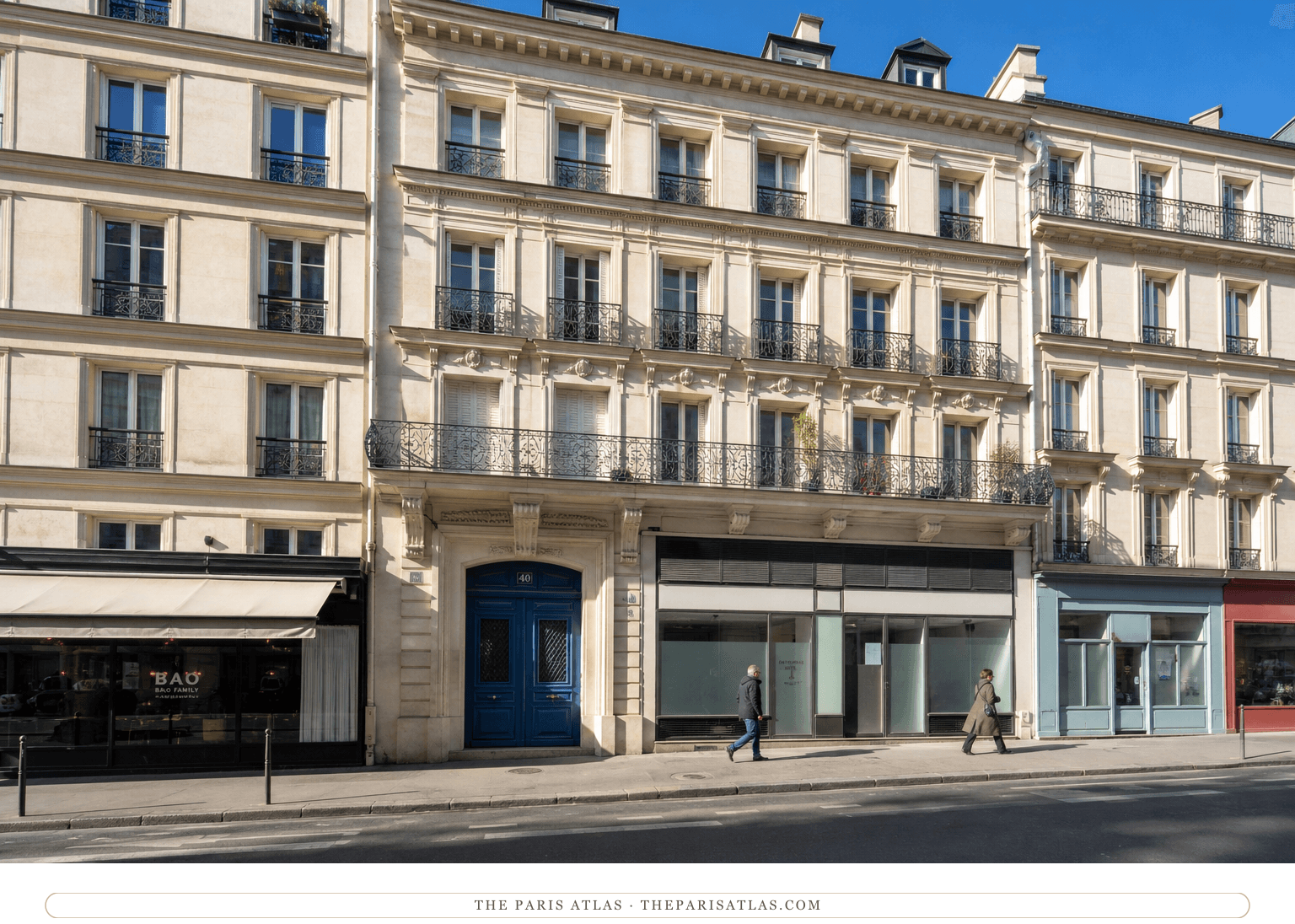
One of Debussy's documented Paris homes, his address until around 1894 - the years of the Prelude a l'apres-midi d'un faune and the first work on Pelleas et Melisande.
Debussy and Emma Bardac moved here in October 1905, to what was then 64 avenue du Bois de Boulogne. The house was renumbered 80 in January 1908 during their occupancy, and the avenue was later renamed avenue Foch. He died here on 25 March 1918.
— Emma and Claude Debussy: Life in the avenue du Bois de Boulogne, 1905–1906
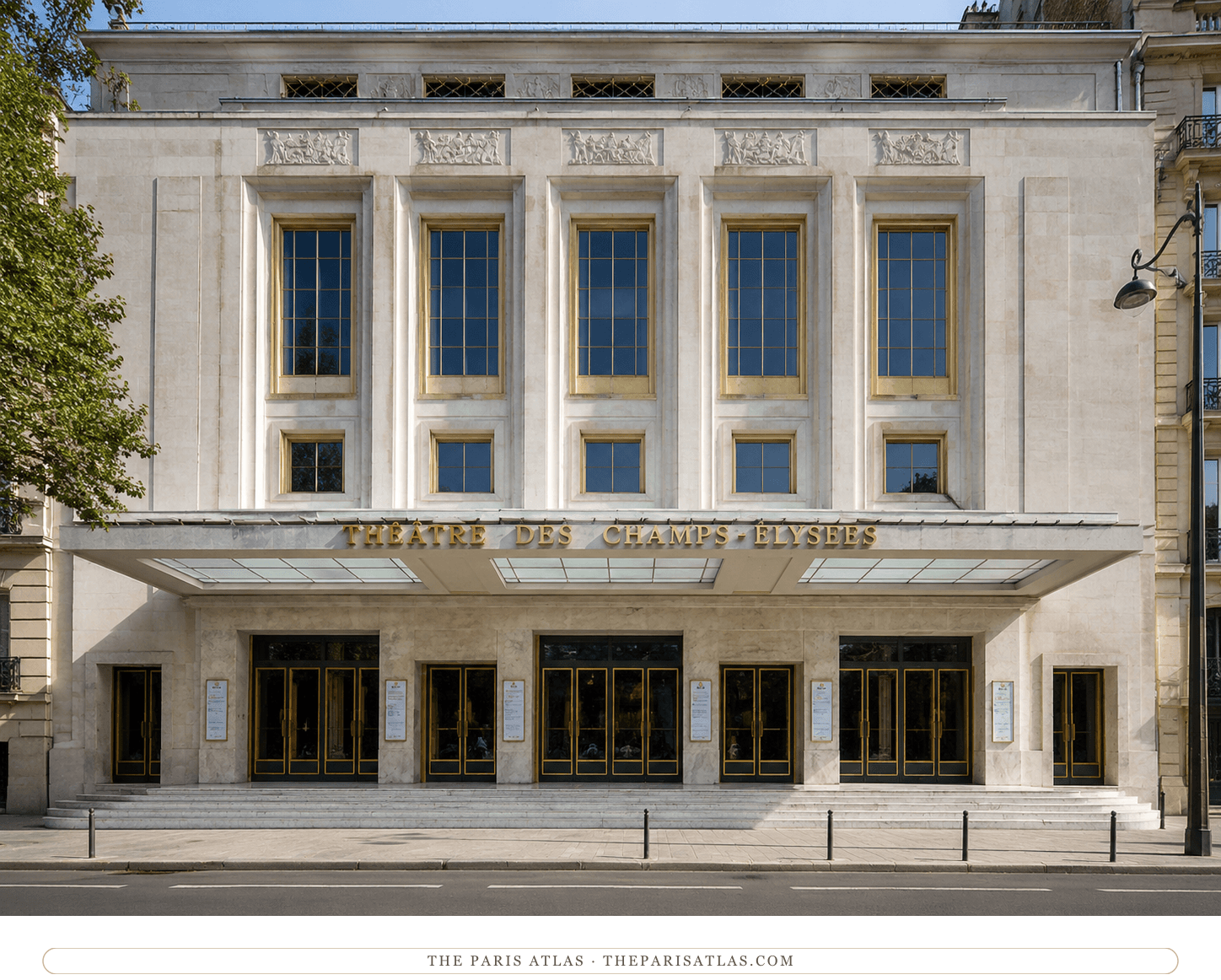
Debussy's ballet Jeux, choreographed by Vaslav Nijinsky, premiered at the Theatre des Champs-Elysees on 15 May 1913 - a fortnight before the Rite of Spring on the same stage.
Debussy began attending Mallarme's Tuesday gatherings around 1887 and set his poem as the Prelude a l'apres-midi d'un faune, first performed in Paris on 22 December 1894. He later made an opera of Maurice Maeterlinck's Symbolist play Pelleas et Melisande.
— La table des mardis; Prelude to the Afternoon of a Faun; Symbolism and Impressionism
Willy championed Debussy as a music critic, and Colette knew and especially admired the composer. A copy of Debussy's 1895 letter to Willy survived in Colette's collection; she later recalled Debussy in Mes apprentissages.
— Debussy–Colette: copy of Debussy's 10 October 1895 letter to Willy
Satie's early modal harmonies, repetition and refusal of grand Romantic rhetoric offered Debussy an important Parisian example of music that could be modern by becoming simpler rather than larger.
— Corinne Amar, Erik Satie, portrait
Influenced by
François Couperin
In his later years Debussy increasingly looked toward older French traditions for clarity, compression and formal elegance, helping shape the late sonatas.
Chopin's treatment of the piano—pedaling, sonority, ornament, harmonic color and freedom of phrase—was foundational for Debussy. Debussy later edited Chopin's music and regarded him with extraordinary admiration.
— Alex Ross, The Velvet Revolution of Claude Debussy (2018)
Mussorgsky showed Debussy an alternative to conventional Western European operatic declamation and formal development. Boris Godunov was particularly important to the formation of Pelléas et Mélisande.
— Alex Ross, The Velvet Revolution of Claude Debussy (2018)
Verlaine's musical, atmospheric poetry became one of Debussy's richest sources for song. Debussy repeatedly returned to his poems while developing the subtle relationship between language and harmony that became central to his vocal style.
— Caroline Potter, Relationships with Poets and Other Literary Figures — Debussy in Context (2024)
Influenced by
Richard Wagner
Wagner demonstrated how far chromatic harmony, orchestral color and continuous musical structure could be pushed. Debussy initially admired him intensely, attended Bayreuth and absorbed Wagnerian techniques before defining his mature style partly by escaping Wagner's enormous shadow.
— Claude Debussy — Biography
Influenced by
Nikolai Rimsky-Korsakov
Russian composers encouraged Debussy's interest in unusual scales, brilliant instrumental color and musical structures less constrained by French academic rules.
Mallarmé showed Debussy a form of art based on suggestion rather than explanation. Symbolist ambiguity, silence and indirect imagery helped Debussy conceive musical forms that evoke rather than narrate. Prélude à l'après-midi d'un faune grew directly from Mallarmé's poetry.
— François de Médicis, Symbolism — Debussy in Context (2024)
References
References
The sources below include biographies, scholarly essays, interviews, and primary materials that informed this page. They reflect both the historical record and ongoing critical conversations about Claude Debussy and their work.
5abcdefghijkThe Velvet Revolution of Claude Debussy
Periodical
The New Yorker, 2018
Used for
Critical biography used for Debussy’s childhood, musical language, Symbolism, gamelan encounter, personality, relationships, visual-art interests including Turner, modernist legacy, and final illness.
These references anchor the page in the documented record and in the scholarly conversations around Claude Debussy. Every claim on this page traces back to one or more of the works listed here.










 View source