La Mer
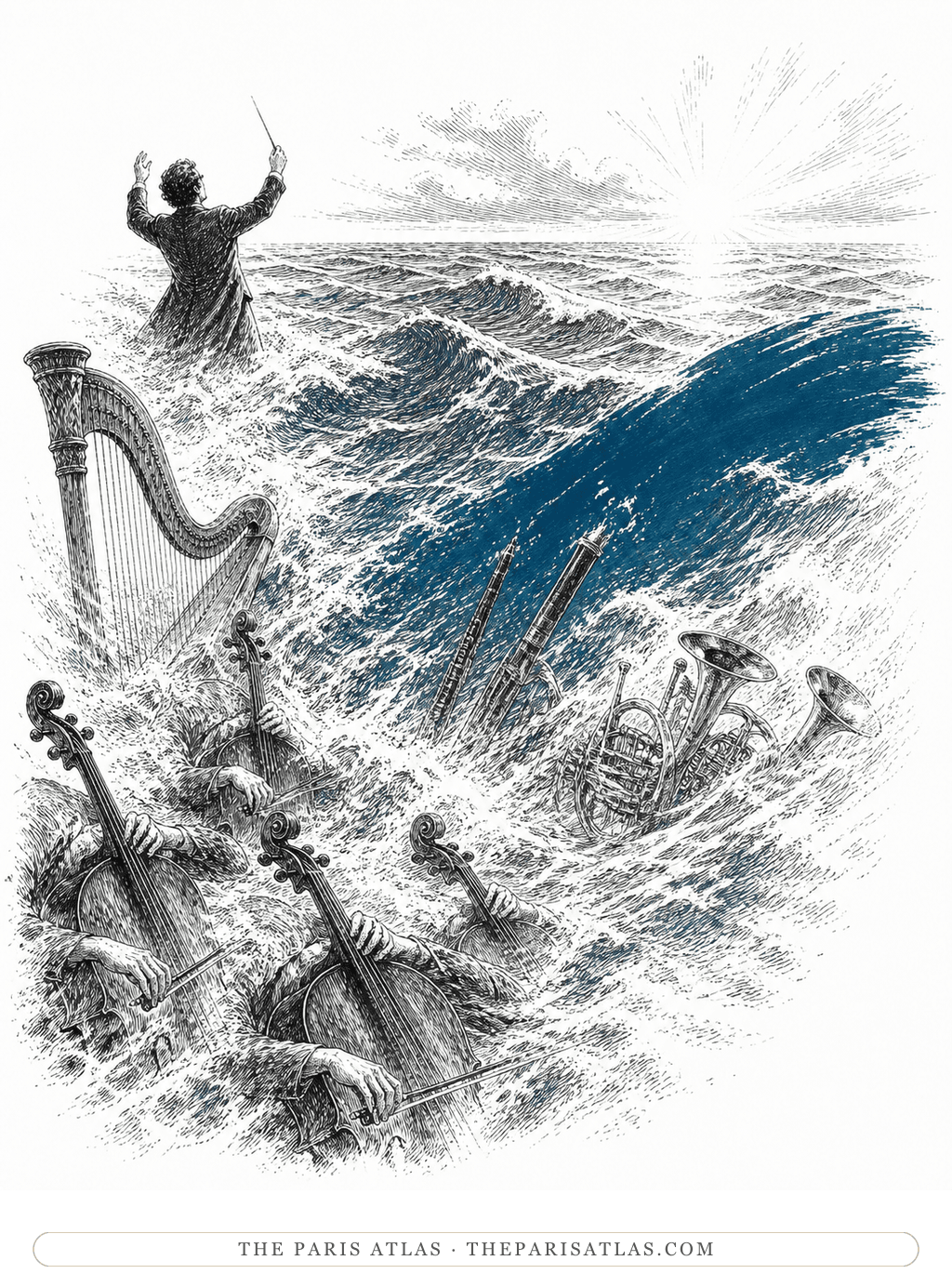
Debussy’s three symphonic sketches turn the sea into an orchestral study of emergence, motion, light, force and instability rather than a literal sequence of painted waves.
- 1903–1905; premiered 15 October 1905
- Three symphonic sketches for orchestra
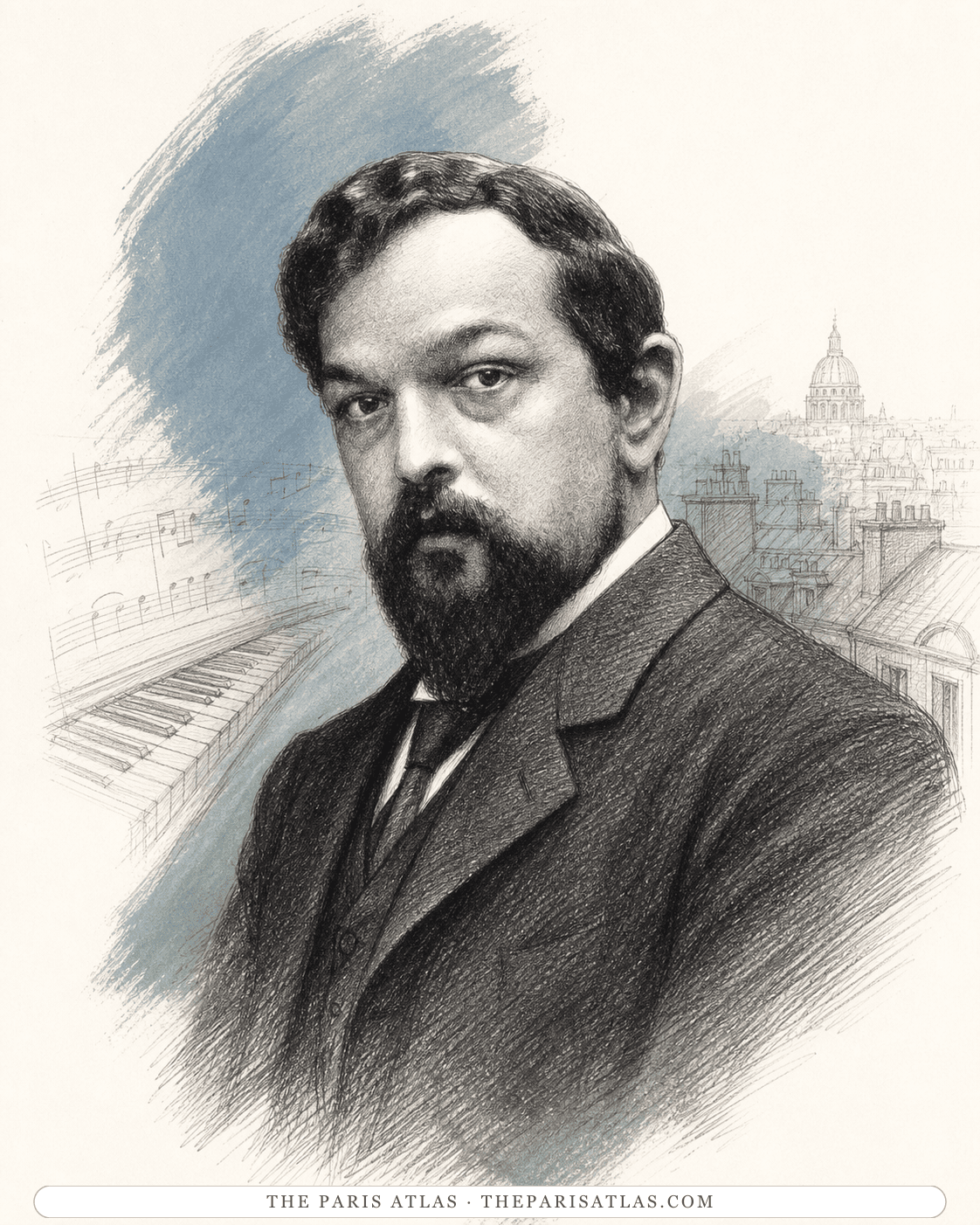
About Claude Debussy
The three symphonic sketches
Debussy avoided calling La Mer a conventional symphony. Its three movements are “symphonic sketches,” each centered on a different kind of motion:
- De l’aube à midi sur la mer — From dawn to noon on the sea.
- Jeux de vagues — Play of the waves.
- Dialogue du vent et de la mer — Dialogue of the wind and the sea.
Together they create a large arc from gradual awakening through flickering play to elemental confrontation.
Composition and the difficult 1905 premiere
Debussy worked on La Mer from 1903 to 1905. It premiered in Paris on 15 October 1905 with the Concerts Lamoureux conducted by Camille Chevillard. The first response was mixed: the score’s rapidly changing textures, unfamiliar formal logic and the scandal surrounding Debussy’s private life all complicated its reception.
The work soon became central to the orchestral repertory. What initially seemed elusive proved exceptionally precise, and later conductors and composers recognized how strongly its transformations hold the three movements together.
Is La Mer a musical painting of the ocean?
The titles invite visual listening, but La Mer is not a soundtrack attached to one view. Debussy works with behaviors: a sound emerging like light, a figure multiplying like ripples, a current gathering weight, a gust interrupting an established surface.
That difference matters. The sea is both subject and compositional model—continuous but never static, recognizable but impossible to hold in one shape.
How the orchestra moves
Themes are often distributed across instrumental colors instead of assigned to one dominating melody. Harps, divided strings, woodwinds, brass and percussion overlap in layers; a line can appear, change timbre and dissolve into the surrounding texture.
The orchestra can sound transparent even when it is large because Debussy controls density as carefully as volume. Climaxes feel earned through accumulated motion rather than through a single tune driven toward a predetermined cadence.
Impressionism, Symbolism and modernism
The Impressionist label helps describe La Mer’s concern with changing light, color and perception, but it is incomplete. Debussy’s ties to Symbolism help explain why suggestion and ambiguity matter, while the score’s handling of orchestral form places it firmly within musical modernism.
Rather than choose one label, it is more accurate to see the work at their intersection: sensory, suggestive and structurally radical.
Why La Mer matters
La Mer demonstrated that a major orchestral work could achieve coherence without following the dramatic path expected of a nineteenth-century symphony. Color could shape form; transformation could replace argumentative development; instability could become the governing principle.
Its influence reaches later orchestral modernism and film scoring, but the work remains singular. It does not merely imitate water. It makes an orchestra think like it.
Timeline
1903
Debussy begins La Mer.
1905
Completes the score and publishes it as three symphonic sketches.
15 October 1905
Camille Chevillard conducts the premiere with the Concerts Lamoureux in Paris.
20th century
The initially contested score becomes one of the central orchestral works of musical modernism.
Frequently asked questions
What does La Mer mean?
The French title means “The Sea.”
How many movements are in Debussy’s La Mer?
Three, which Debussy called symphonic sketches.
When was La Mer composed?
Debussy composed it between 1903 and 1905; it premiered in Paris on 15 October 1905.
Is La Mer a symphony?
It is symphonic in scale, but Debussy deliberately called it three symphonic sketches rather than a symphony.
Is La Mer Impressionist music?
It is frequently described that way, especially because of its color and changing perception, but its Symbolist affinities and modernist structure are equally important.
More by Claude Debussy



If you like Claude Debussy
Explore composers from the same movements and circles.

Louis Armstrong
The New Orleans trumpeter and singer who turned jazz from a band music into a soloist's art, and whose voice became one of the most recognisable sounds of the twentieth century. Paris took him early: he spent the autumn of 1934 living in the city, made his only French records that November, played the Salle Pleyel, the city's principal concert hall, and kept coming back for thirty years — including for the 1961 film Paris Blues, shot in the streets he had once idled in.
View artist
Chet Baker
American trumpeter and singer with the smallest, plainest sound in jazz, who arrived in Paris in September 1955 for eight months, recorded — for the French label Barclay — the sessions that are still his most argued-over records, and lost his pianist Dick Twardzik to a heroin overdose in a Paris hotel room ten days after their first session together.
View artist
Paul Bowles
American novelist and composer whose expatriate fiction explores dislocation, unstable intimacy, fatalism, and North Africa.
View artist
References
The sources below include collection records, catalogues, scholarly research, and primary materials that informed this page. They document La Mer, its making, and its place in cultural history.


1La Mer de Claude Debussy
WebsitePhilharmonie de ParisUsed forWeb source consulted for documented facts and historical context presented on the La Mer page.
2La Mer
WebsiteIRCAM–Centre PompidouUsed forWeb source consulted for documented facts and historical context presented on the La Mer page.
3Claude Debussy: Biographie
WebsiteIRCAM–Centre PompidouUsed forWeb source consulted for documented facts and historical context presented on the La Mer page.
4Claude Debussy (1862–1918)
WebsitePhilharmonie de ParisUsed forWeb source consulted for documented facts and historical context presented on the La Mer page.
These references provide the documented foundation for this work's history and interpretation. Claim-level citations remain attached to the specific claims they support.
 Explore more resources