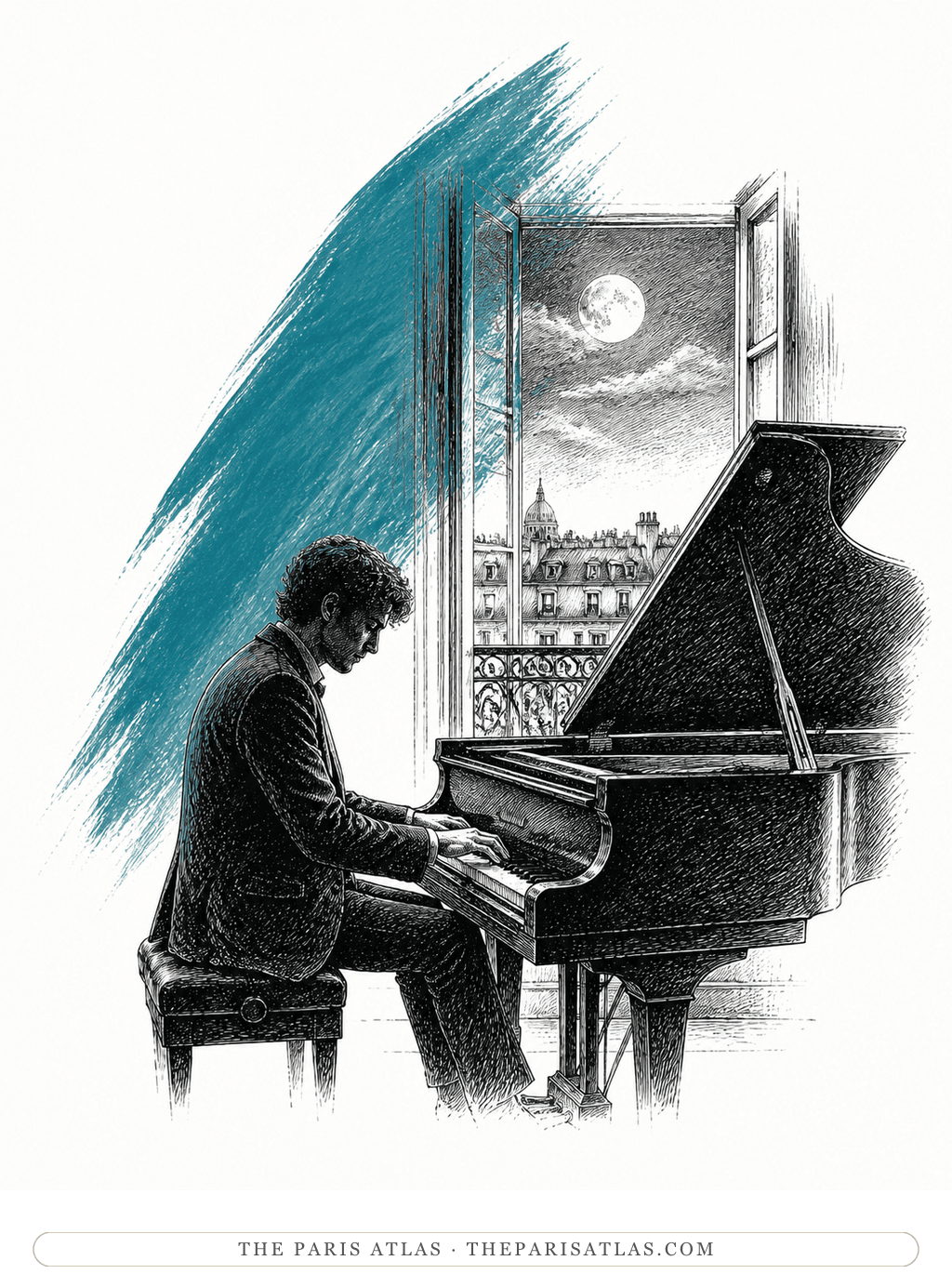
Clair de lune
Debussy’s most famous piano piece turns moonlight into an experience of suspended rhythm, changing register, resonance and return rather than a literal musical picture.
- c. 1890; revised and published 1905
- Solo piano · third movement of Suite bergamasque
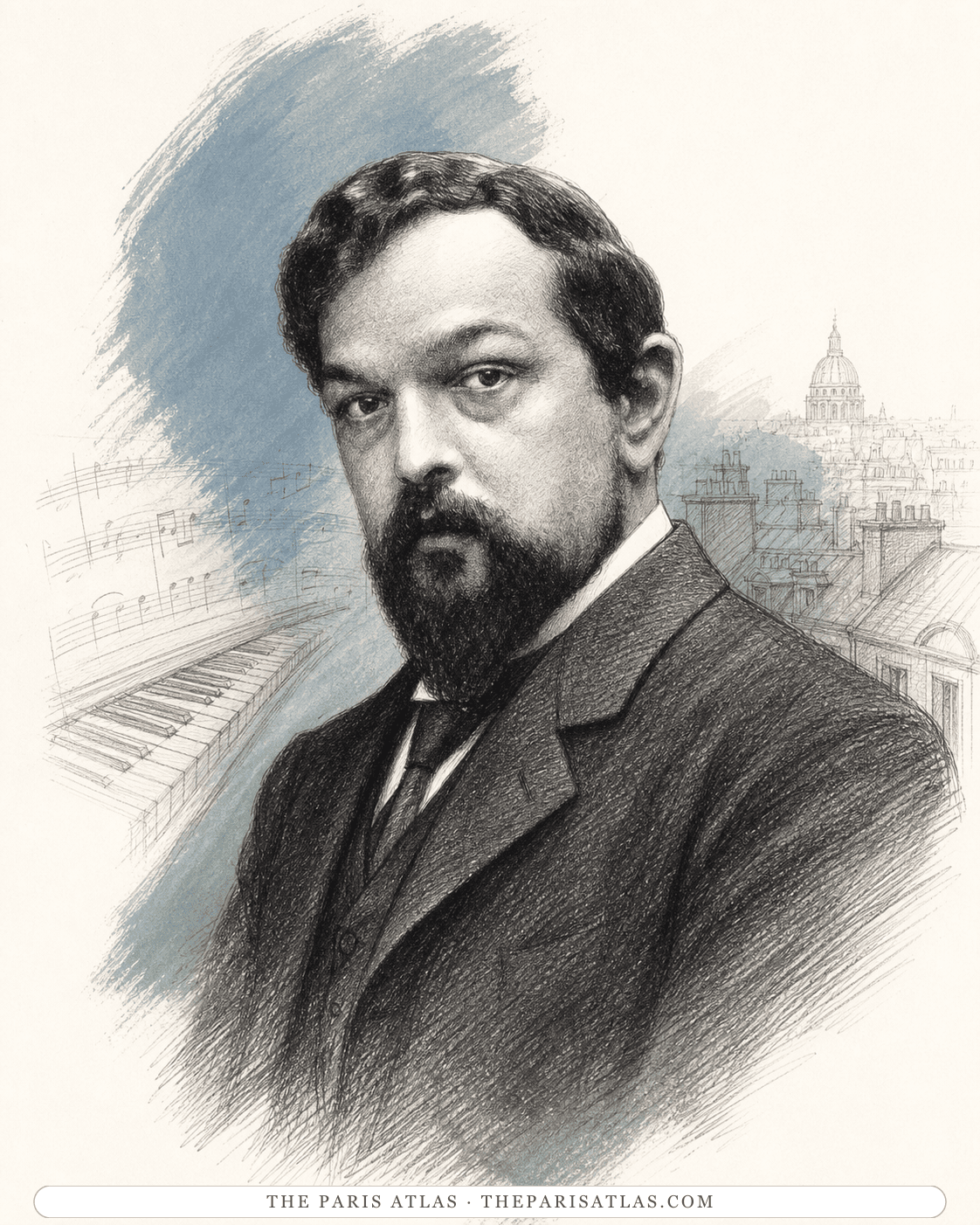
About Claude Debussy
What Clair de lune is
Clair de lune is the third of four movements in Suite bergamasque, between the Menuet and Passepied. Its French title means “moonlight.” It is an instrumental work for solo piano: despite frequent searches for lyrics, the piece has none.
The music lasts only a few minutes, but its scale feels larger because Debussy makes pacing and resonance part of the form. The opening seems to hesitate before every arrival; the more animated middle expands outward; the ending returns to the opening world without simply repeating it.
An early piece transformed before publication
Debussy began Suite bergamasque around 1890, when he was still forming the language of his mature music. He revised the suite before its 1905 publication. That long history explains why Clair de lune can sound both Romantic and unmistakably Debussian: lyrical melody remains central, but ordinary harmonic momentum is repeatedly softened or delayed.
The movement was not conceived as an isolated hit. Hearing the complete suite places its stillness beside three stylized dances and reveals Debussy’s larger game: old forms are remembered, loosened and heard through a modern harmonic atmosphere.
The title and Paul Verlaine’s poem
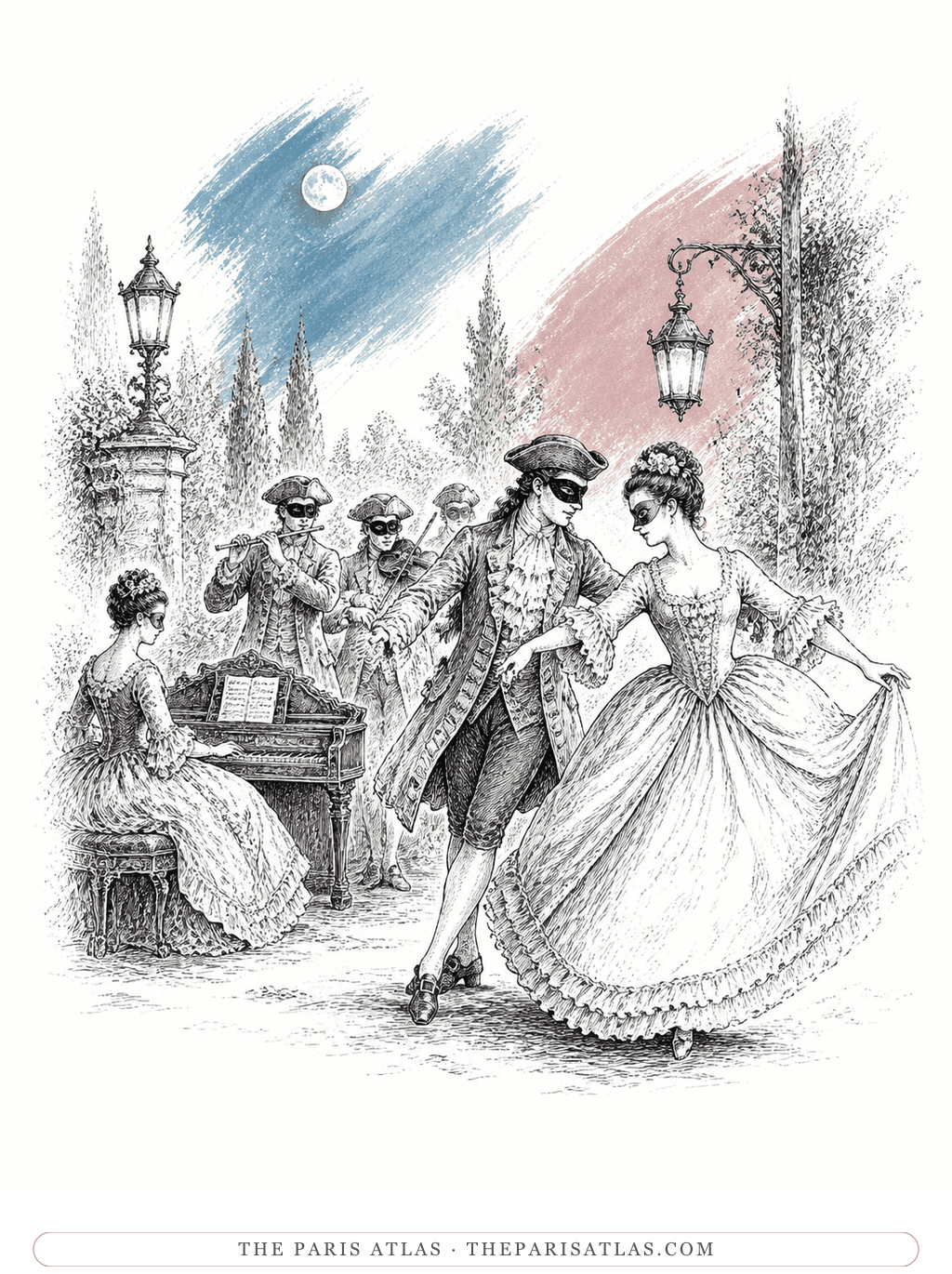
The title connects the piece to Paul Verlaine, whose poem “Clair de lune” evokes masked figures, dancing, moonlight and an undercurrent of melancholy. The poem also contains the word “bergamasques,” linking it to the suite’s title and to the fête galante world of stylized courtly pleasure.
The relationship is suggestive rather than narrative. Debussy does not set the poem’s words here, and the piano does not illustrate each image in sequence. What the two works share is emotional doubleness: elegance shadowed by sadness, beauty that never becomes completely secure.
How the music creates its floating effect
The opening is marked by spacious chords, a melody that enters without theatrical announcement and a flexible 9/8 pulse. Notes are allowed to ring into one another. Harmonic changes often feel like alterations of light and color rather than steps in an argument.
The middle grows more active. Flowing figures travel across the keyboard, the register widens and the dynamic level rises. Yet the climax never becomes a conventional heroic arrival. Energy gathers and recedes, after which the opening material returns quieter and more distant.
Silence and decay matter as much as attack. A performance that treats every beat mechanically loses the work’s breathing space; one that dissolves the pulse completely loses its underlying shape. The expressive tension lies between those two possibilities.
Why Clair de lune matters
Clair de lune became an international entry point into classical piano music because its surface is immediately beautiful while its construction rewards close listening. It is accessible without being simple, memorable without relying on a repeated popular-song hook and atmospheric without becoming formless.
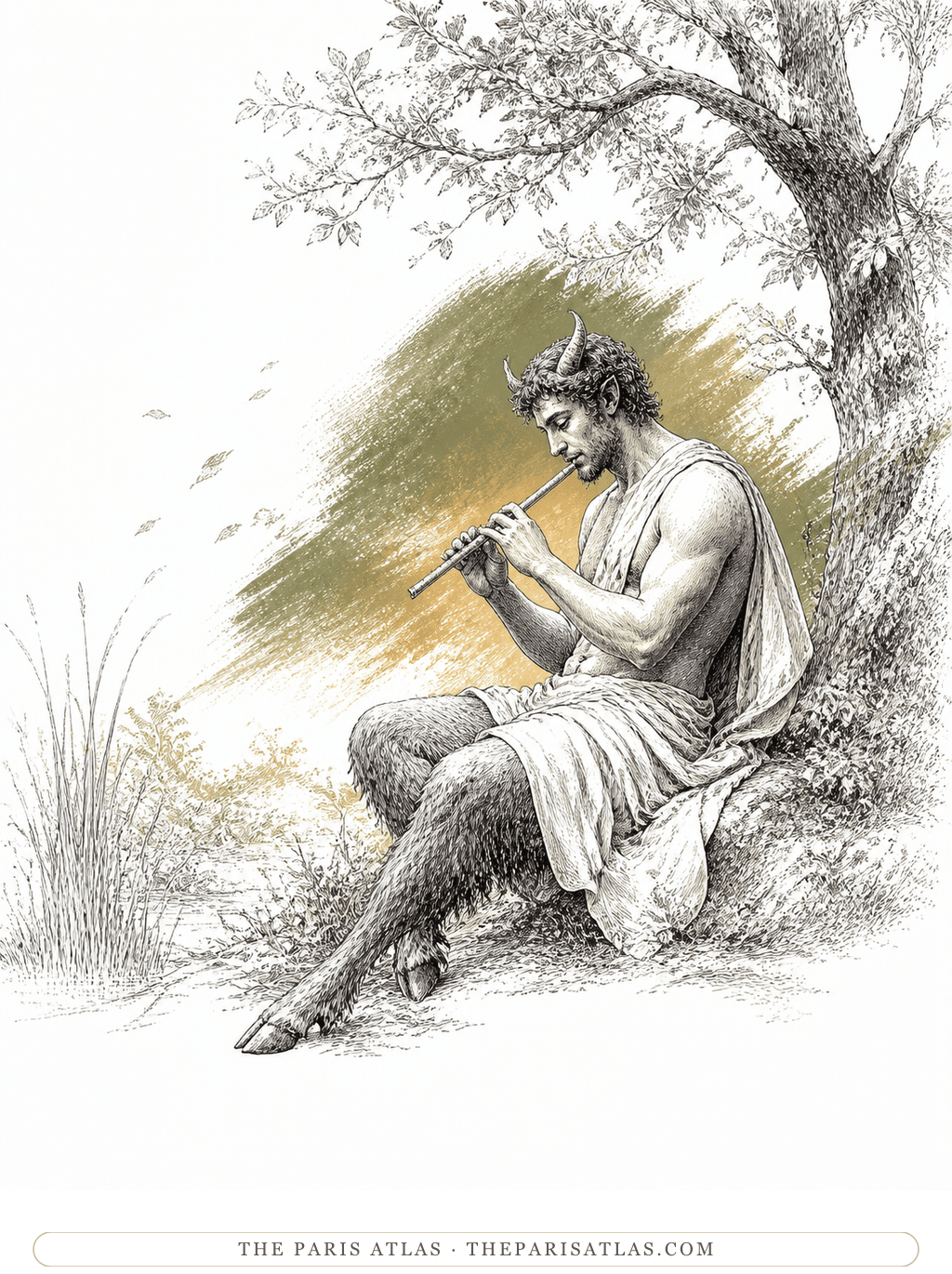
Its fame can obscure Debussy’s range. The composer of this intimate piano movement also wrote the orchestral force of La Mer and the radical ambiguity of Prélude à l’après-midi d’un faune. The piece is best understood as a doorway into that larger catalogue, not as a summary of it.
Timeline
c. 1890
Debussy begins the music that becomes Suite bergamasque.
1905
The revised four-movement suite is published, with Clair de lune as its third movement.
20th century
Arrangements, recordings and screen use carry the piece far beyond the solo-piano repertory.
Frequently asked questions
What does Clair de lune mean?
The French title means “moonlight.” It also recalls Paul Verlaine’s poem of the same name.
Who composed Clair de lune?
Claude Debussy composed it as the third movement of his Suite bergamasque.
Does Clair de lune have lyrics?
No. Debussy’s Clair de lune is an instrumental work for solo piano, not a song.
When was Clair de lune written?
Its origins lie around 1890. Debussy revised Suite bergamasque before the suite was published in 1905.
Is Clair de lune an Impressionist composition?
It is commonly described that way because of its color, atmosphere and softened harmonic direction, but Debussy’s literary and aesthetic ties to Symbolism are equally important.
What suite is Clair de lune part of?
Suite bergamasque. It follows the Prélude and Menuet and comes before the Passepied.
More by Claude Debussy


If you like Claude Debussy
Explore composers from the same movements and circles.

Louis Armstrong
The New Orleans trumpeter and singer who turned jazz from a band music into a soloist's art, and whose voice became one of the most recognisable sounds of the twentieth century. Paris took him early: he spent the autumn of 1934 living in the city, made his only French records that November, played the Salle Pleyel, the city's principal concert hall, and kept coming back for thirty years — including for the 1961 film Paris Blues, shot in the streets he had once idled in.
View artist
Chet Baker
American trumpeter and singer with the smallest, plainest sound in jazz, who arrived in Paris in September 1955 for eight months, recorded — for the French label Barclay — the sessions that are still his most argued-over records, and lost his pianist Dick Twardzik to a heroin overdose in a Paris hotel room ten days after their first session together.
View artist
Paul Bowles
American novelist and composer whose expatriate fiction explores dislocation, unstable intimacy, fatalism, and North Africa.
View artist
References
The sources below include collection records, catalogues, scholarly research, and primary materials that informed this page. They document Clair de lune, its making, and its place in cultural history.


1Suite bergamasque: Clair de lune — Claude Debussy
WebsitePhilharmonie de ParisUsed forWeb source consulted for documented facts and historical context presented on the Clair de lune page.
2Suite bergamasque
WebsitePhilharmonie de ParisUsed forWeb source consulted for documented facts and historical context presented on the Clair de lune page.
3Claude Debussy (1862–1918)
WebsitePhilharmonie de ParisUsed forWeb source consulted for documented facts and historical context presented on the Clair de lune page.
4Claude Debussy: works by date
WebsiteIRCAM–Centre PompidouUsed forWeb source consulted for documented facts and historical context presented on the Clair de lune page.
These references provide the documented foundation for this work's history and interpretation. Claim-level citations remain attached to the specific claims they support.
 Explore more resources