The Paris AtlasCharting the artists, works, and places worth returning to.
  • Musician
  • Singer
  • Actor
· American · 1901–1971

Louis Armstrong

The New Orleans trumpeter and singer who turned jazz from a band music into a soloist's art, and whose voice became one of the most recognisable sounds of the twentieth century. Paris took him early: he spent the autumn of 1934 living in the city, made his only French records that November, played the Salle Pleyel, the city's principal concert hall, and kept coming back for thirty years — including for the 1961 film Paris Blues, shot in the streets he had once idled in.

Details

Lived
1901–1971
Born
4 August 1901
Birthplace
New Orleans, Louisiana
Died
6 July 1971 · aged 69
Place of death
Corona, Queens, New York
Nationality
American
Profession
Trumpeter, singer and bandleader
Major works
West End Blues, Hot Five and Hot Seven recordings, La Vie en Rose, Hello, Dolly!
Roles
MusicianSingerActor
Also known as
Satchmo · Pops

About Louis Armstrong

Louis Armstrong was born in New Orleans in 1901, into a poverty so complete that he learned the cornet — the trumpet's close cousin — in a reform school for Black boys, and he changed the music of his century twice over: first as an instrumentalist, whose improvised solos on the Hot Five and Hot Seven records of the late 1920s turned jazz from an ensemble music into a music of individual voices, and then as a singer, whose rasp and phrasing rewrote how popular song is sung.

Paris runs through the second half of that life. He was living in the city in the autumn of 1934, resting a lip he had played to ruin, and made six sides there in November — his only Paris studio recordings, withdrawn almost immediately because they broke his American contract. He played the Salle Pleyel that month, came back to it in March 1948 under police guard after an anonymous threat, recorded La Vie en Rose in 1950 and made a Paris song into an American standard, played the Olympia music hall in April 1962, and in the winter of 1960–61 filmed Paris Blues on Paris locations, playing a visiting trumpet god named Wild Man Moore, with a score written by Duke Ellington, the great American bandleader and composer.

New Orleans, and the Waif's Home

He was born on 4 August 1901 in New Orleans, in a district so violent it was known as the Battlefield, and left school after the fifth grade. Work delivering coal for the Karnofskys, a Jewish immigrant family who fed him and lent him money, paid for his first cornet. On New Year's Eve 1912 he fired a pistol in the street and was arrested, and the court sent him to the Colored Waif's Home for Boys — where a teacher named Peter Davis taught him to play the instrument properly and eventually put him in charge of the home's brass band. Nearly every account of his life turns on that sentence: the reform school was where he learned the thing he became.

In 1922 the cornettist Joe 'King' Oliver, the best-known New Orleans bandleader of the day and the older musician Armstrong treated as a father, sent for him to come north to Chicago and join his Creole Jazz Band. Armstrong married the band's pianist, Lil Hardin, in 1924; it was Hardin who told him he would never be more than a second cornet standing next to Oliver, and pushed him out. A year in New York with the orchestra of Fletcher Henderson, the city's leading Black bandleader, left him unsatisfied, and in 1925 he went back to Chicago and started making records under his own name.

The Hot Fives, and what they changed

The records he made in Chicago between 1925 and 1928 with the studio groups called the Hot Five and the Hot Seven are the hinge of the music's history. Before them, a jazz band was a collective — everyone improvising at once around the tune. Armstrong's solos are so much stronger than the surrounding parts that the form reorganised itself around the soloist, which is what jazz has been ever since. The unaccompanied opening of 'West End Blues', recorded in 1928, is the passage musicians still cite as the moment the instrument's possibilities were redrawn.

The same records made him a singer. Scat — singing wordless syllables as if the voice were a horn — was not his invention, but 'Heebie Jeebies' in 1926 put it in front of a mass audience, and the phrasing he brought to ordinary popular songs, dragging behind the beat and reshaping the melody as he went, is the model Billie Holiday, Bing Crosby and Frank Sinatra all worked from. He is one of the very few musicians who can be said to have changed two things at once.

Paris, autumn 1934

He first crossed to Europe in 1932 and returned in 1933, and that second visit stretched past a year because his lip had given out. Trumpet playing at his volume and register splits the flesh; a fellow musician in Paris, the trumpeter Arthur Briggs, remembered that Armstrong's lips were as hard as a piece of wood and bleeding. So he stopped. He spent the second half of 1934 in Paris doing very little, in his own phrase lazing around for three or four months and having a lot of fun with the musicians from the States — and with the French ones.

The company was there for the taking. Between the wars, Black American musicians and entertainers had built a working colony in Montmartre and Pigalle — clubs like Le Grand Duc and Bricktop's, where a Paris audience paid to hear the music that America's own segregated circuit had produced. In Paris Armstrong found a city where his celebrity ran ahead of him and the colour bar — the racial exclusion he lived under at home — did not, and he was already an idol of the Hot Club de France, the young Paris society of jazz enthusiasts whose critic Hugues Panassié published Le Jazz Hot in 1934 — among the first books anywhere to treat this music as an art with a canon, and one built largely around Armstrong.

On 7 November 1934, from three in the afternoon until seven in the evening, he recorded six numbers in the Polydor record company's Studio No. 2 at 72–74 boulevard de la Gare in the 13th arrondissement, for the French arm of the American label Brunswick, supervised by the young producer Jacques Canetti — a long 'St. Louis Blues', a 'Super Tiger Rag', 'On the Sunny Side of the Street' spread over two sides. They are the only studio recordings he ever made in Paris, and they were pulled almost at once: he was under exclusive contract to RCA Victor at home, and the French sides were in flat breach of it. Canetti also promoted the concerts that followed at the Salle Pleyel, the city's principal concert hall, in the same month.

The returns: 1948, 1962, and Paris Blues

He came back to the Salle Pleyel on 2 March 1948 — his first appearance there since 1934 — leading the All Stars, the small band of his later career, with Earl Hines on piano, Jack Teagarden on trombone, Barney Bigard on clarinet, Sid Catlett on drums and Velma Middleton singing. The visit had begun at the first Nice Jazz Festival ten days earlier, organised by Hugues Panassié, and it was tense: an anonymous threat of violence meant fifteen policemen and plain-clothes officers escorted him to the hall.

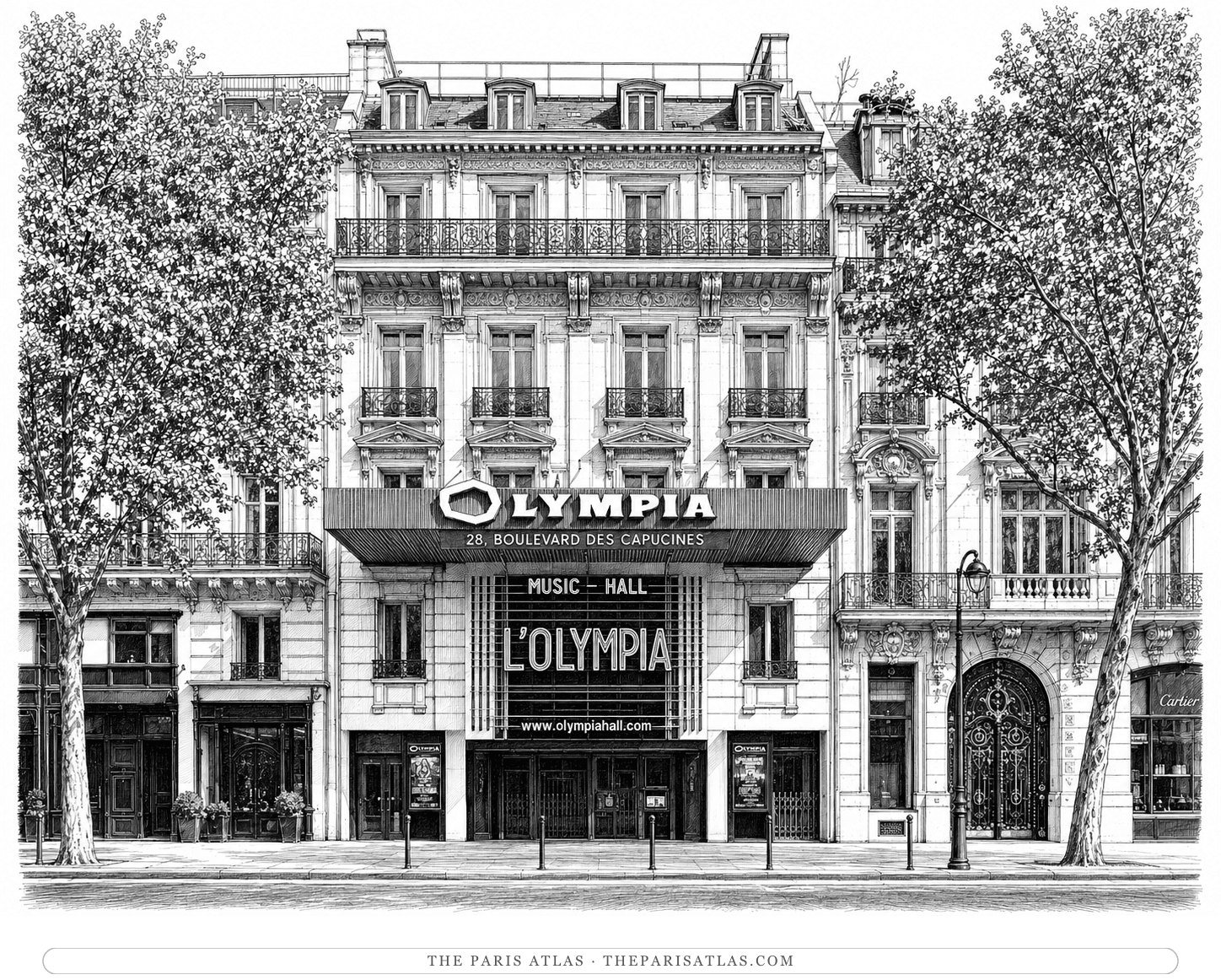
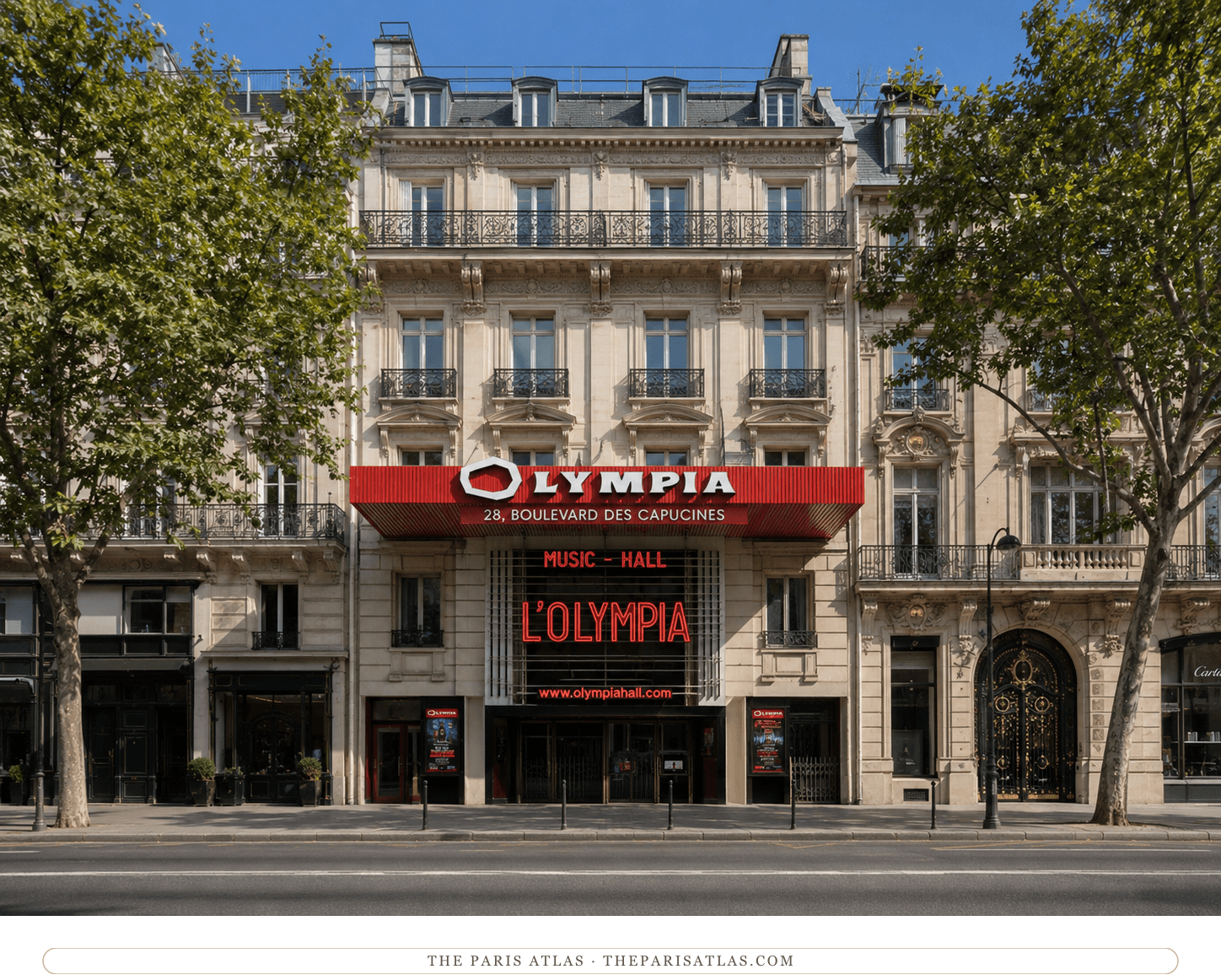
In 1950 he recorded La Vie en Rose — the song the French singer Édith Piaf had written and made famous in the ruins of the post-war city — in an English lyric, and his version is the reason a Paris chanson — a song in the French text-first popular tradition — became a standard played in American hotel bars for the next seventy years. In April 1962 he was back in Paris, at the Olympia, the music hall on the boulevard des Capucines; the concert of 24 April was recorded and released.

The fullest Paris return was on film. Paris Blues, directed by Martin Ritt and released in 1961, sends two jazz musicians — played by Paul Newman and Sidney Poitier — through a Paris where a Black American can live without being told where to sit, and its location scenes were shot in the city. Armstrong appears as Wild Man Moore, a visiting American trumpeter whose arrival turns a club upside down, essentially playing the part he had actually performed in Paris three decades earlier. Duke Ellington wrote the score, coming to Paris in 1960 without his orchestra to compose and record it.

Ambassador, and the argument about him

From the mid-1950s the United States State Department sent him abroad as a cultural envoy, and the press nicknamed him Ambassador Satch. The role sat badly with parts of Black America: to younger musicians and activists his onstage grin looked like a performance of deference, and the criticism followed him for decades. It also underrated him. In 1957, when the state of Arkansas used troops to keep nine Black children out of a Little Rock high school, Armstrong publicly cancelled a State Department tour of the Soviet Union and said the government could go to hell — a rarer and more dangerous thing for a Black entertainer to say in 1957 than the caricature allows.

He kept his commercial reach to the end: 'Hello, Dolly!' knocked the Beatles off the top of the American charts in 1964, when he was sixty-two, and the recording of 'What a Wonderful World' he made in 1967 became, long after his death, the song most people know his voice from. He and his fourth wife Lucille had lived since 1943 in an ordinary house on 107th Street in Corona, Queens, which he never left for anything grander; it is now the Louis Armstrong House Museum. He died there in his sleep on 6 July 1971.

Life events

  1. 1901

    Born in New Orleans on 4 August.

    Louis Armstrong — Biography

  2. 1912

    Arrested on New Year's Eve and sent to the Colored Waif's Home for Boys, where Peter Davis teaches him to play the cornet properly.

    Louis Armstrong — Biography

  3. 1922

    King Oliver sends for him to join his band in Chicago.

    Louis Armstrong — Biography

  4. 1924

    Marries the pianist Lil Hardin, who pushes him to leave Oliver; a year with Fletcher Henderson's orchestra in New York follows.

    Louis Armstrong — Biography

  5. 1925

    Back in Chicago, begins the Hot Five and Hot Seven recordings — the solos that turn jazz from an ensemble music into a soloist's art.

    Louis Armstrong — Biography

  6. 1932

    Performs in Europe for the first time.

    Louis Armstrong — Biography

  7. 1933

    Returns to Europe and stays more than a year, because his lip is damaged past playing.

    Louis Armstrong — Biography

  8. 1934

    Spends several months living in Paris, then records six sides for the French arm of the Brunswick label on 7 November in Polydor's Studio No. 2 on the boulevard de la Gare, supervised by Jacques Canetti — his only Paris studio recordings, withdrawn at once because of his RCA Victor contract. Concerts at the Salle Pleyel follow the same month.

    Ricky Riccardi, 80 Years of Louis Armstrong's Paris Recordings: St. Louis Blues (First Version) (2014)

  9. 1948

    Plays the Salle Pleyel on 2 March with the All Stars — his first appearance there since 1934, under a fifteen-man police escort after an anonymous threat, ten days after headlining Hugues Panassié's first Nice Jazz Festival.

    Ricky Riccardi, March 2, 1948 — Paris Concert, 60 Years Later (2008)

  10. 1961

    Appears as the trumpeter Wild Man Moore in Paris Blues, directed by Martin Ritt with a score by Duke Ellington; the location scenes were filmed in Paris.

    Paris Blues (1961)

  11. 1962

    Back in Paris at the Olympia music hall in April; the concert of 24 April is recorded and released.

    Louis Armstrong — Live in Paris, 24 avril 1962

  12. 1964

    Hello, Dolly! reaches number one in the United States; he is sixty-two.

    Louis Armstrong — Biography

  13. 1971

    Dies in his sleep on 6 July at the house in Corona, Queens, where he had lived with his wife Lucille since 1943.

    Louis Armstrong — Biography

People they knew

Documented connections — every one carries its source.

Duke Ellington

  • Composer
  • Pianist

Collaborated with · 1961

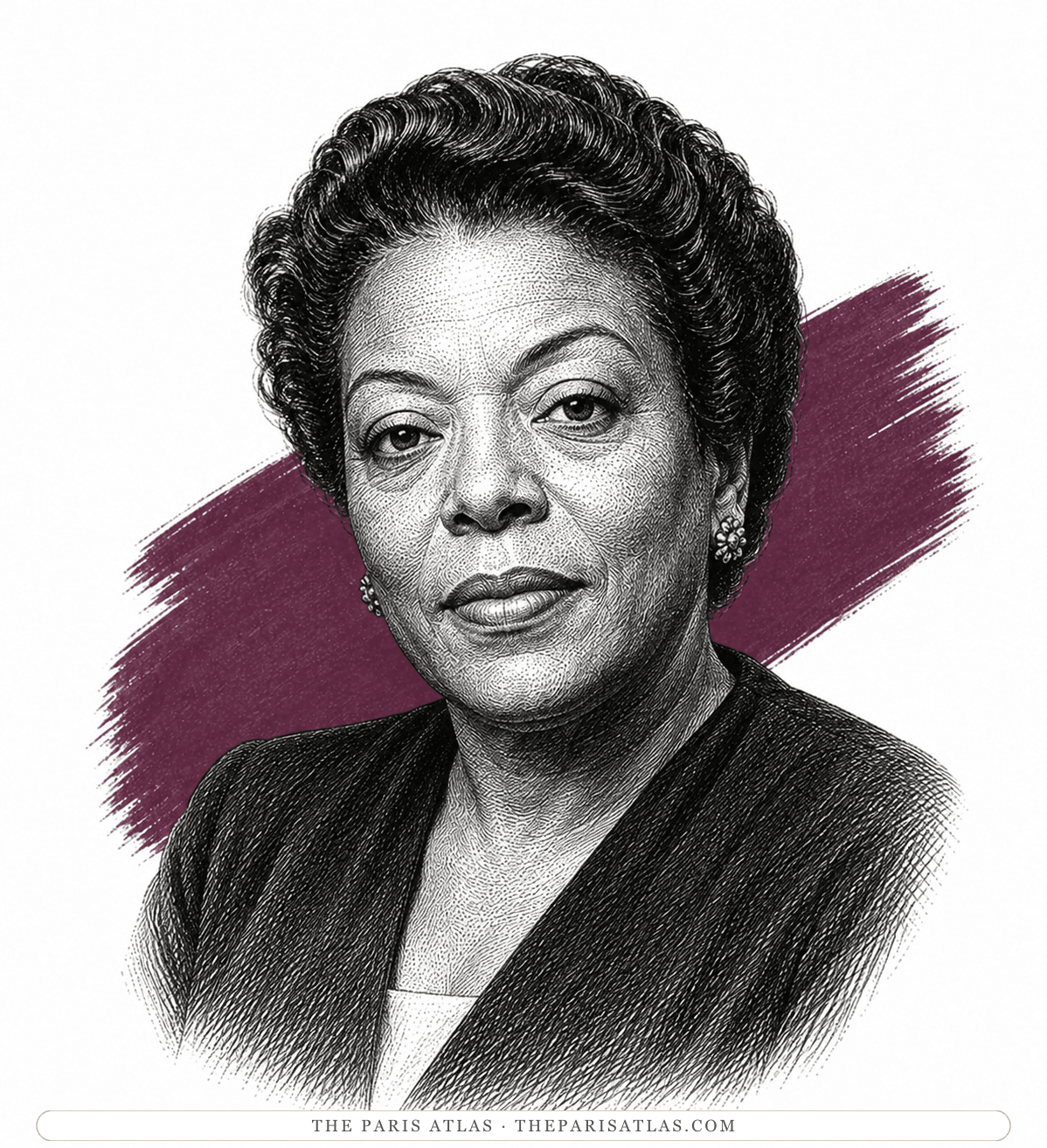
The two most famous men in jazz finally worked together in 1961, in the studio sessions issued as Louis Armstrong and Duke Ellington — Armstrong's All Stars playing Ellington's tunes with Ellington himself at the piano. The same year brought Paris Blues, Martin Ritt's film shot on Paris locations, for which Ellington wrote the score and in which Armstrong appears on screen as the trumpeter Wild Man Moore.
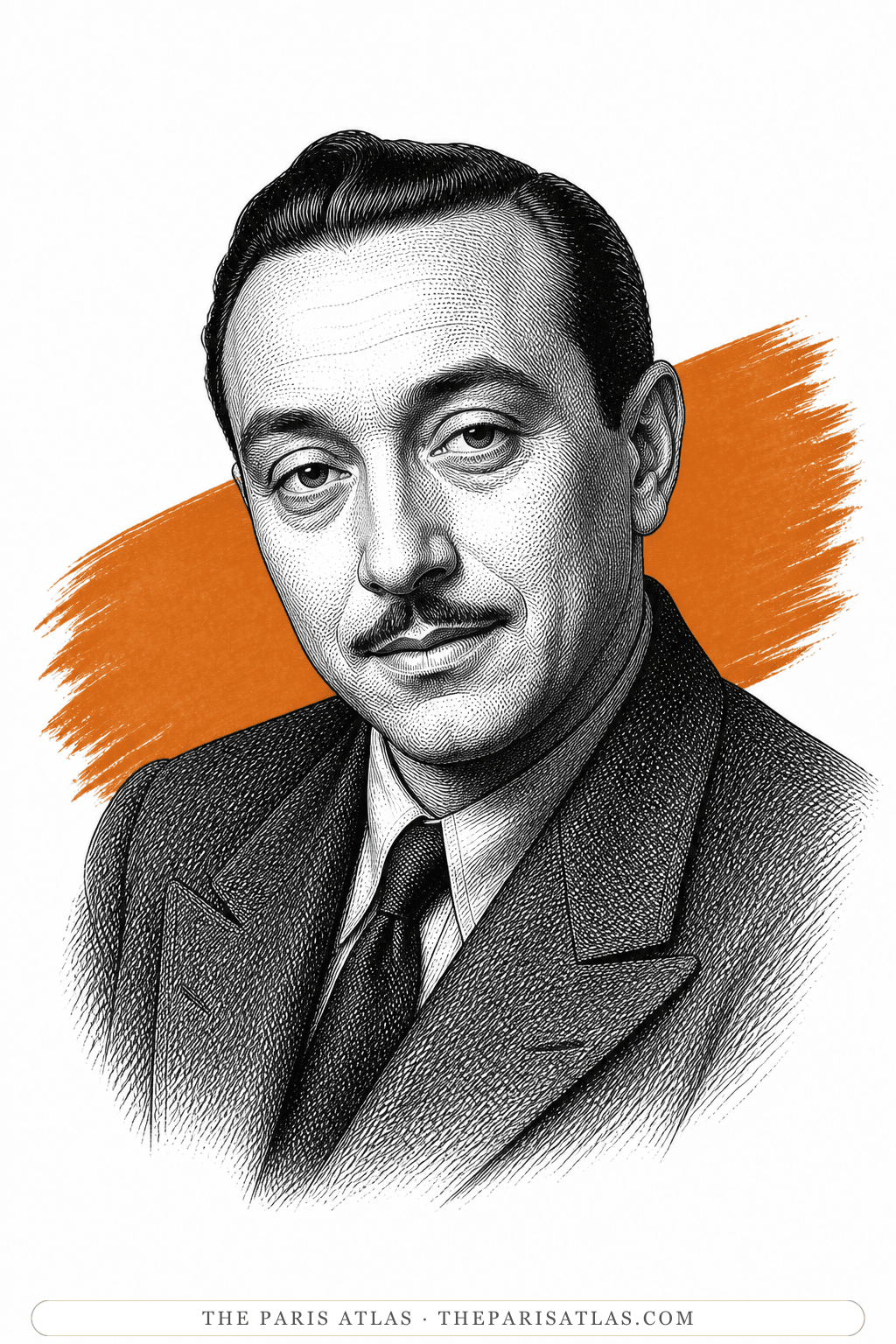
Philippe Baudoin et Claude Carrière, Duke Ellington Panorama — chronologie sélective; Paris Blues (1961)

Who drew from them

Influence running outward — the writers and artists who built on their work.

Django Reinhardt

Reinhardt was playing banjo and guitar for accordionists in the Paris dance halls when the photographer Émile Savitry played him jazz records in Toulon, among them a big-band side by Armstrong. The Philharmonie de Paris describes the hearing as a revelation; it turned a French musette player into the first European jazz soloist of consequence.

Exposition Django Reinhardt, Swing de Paris; Michael Dregni, Django: The Life and Music of a Gypsy Legend (2004)

Louis Armstrong’s Places

The cataloged places connected to Louis Armstrong — through the books, and through the documented record.

Places you can enter today appear first, followed by addresses to see from outside and sites that have vanished.

Questions about Louis Armstrong

Why is Louis Armstrong important?

He changed the music twice. His Hot Five and Hot Seven recordings of 1925–28 made jazz a soloist's art — before them a jazz band improvised collectively, and after them the great player carried the record. And his singing, with its rasp, its scat and its habit of dragging behind the beat and remaking the melody, set the pattern that Billie Holiday, Bing Crosby and Frank Sinatra all worked from.

What was Louis Armstrong's connection to Paris?

It ran nearly forty years. He lived in Paris through the autumn of 1934 while resting a damaged lip, made his only Paris studio recordings there on 7 November 1934 for French Brunswick, and played the Salle Pleyel concert hall that month. He returned to the Pleyel with his All Stars band on 2 March 1948, recorded La Vie en Rose in 1950 and turned a French song into an American standard, filmed Paris Blues on Paris locations in the winter of 1960–61, and played the Olympia music hall in April 1962.

Did Louis Armstrong record in Paris?

Once, on 7 November 1934. Between three and seven in the afternoon he recorded six numbers for the French arm of the Brunswick label in Polydor's Studio No. 2 at 72–74 boulevard de la Gare, supervised by Jacques Canetti — among them a long 'St. Louis Blues' and 'On the Sunny Side of the Street'. They were withdrawn almost immediately: he was under exclusive contract to RCA Victor in America, and the Paris records broke it.

Was Louis Armstrong in the film Paris Blues?

Yes. In Martin Ritt's Paris Blues, released in 1961, he plays Wild Man Moore, a celebrated American trumpeter arriving in Paris, alongside Paul Newman, Sidney Poitier, Joanne Woodward and Diahann Carroll. Duke Ellington wrote the score, travelling to Paris in 1960 without his orchestra to compose and record it, and the film's location scenes were shot in the city.

When was Louis Armstrong born?

On 4 August 1901, in New Orleans — the date the Louis Armstrong House Museum, which holds his papers, gives. He himself said all his life that he had been born on 4 July 1900, and used that date on his own documents; a baptismal record found decades later established the August 1901 birth.

Why was Louis Armstrong criticised by other Black musicians?

Because of the way he presented himself on stage. To a younger generation his broad grin and patter read as a performance of deference to white audiences, and the United States State Department tours that earned him the nickname Ambassador Satch made it worse. The criticism underrates him: in 1957, when Arkansas used troops to keep nine Black children out of a Little Rock school, he cancelled a government-sponsored tour of the Soviet Union in public and said the American government could go to hell.

Did Louis Armstrong sing La Vie en Rose?

Yes — his 1950 recording, in the English lyric, is the version that made Édith Piaf's 1945 song a jazz standard, and it is still the one most non-French listeners know. He was singing about the city he had lived in sixteen years earlier.

Where did Louis Armstrong live, and can you visit?

From 1943 until his death he and his fourth wife Lucille lived in a modest house on 107th Street in Corona, Queens, New York — he could have afforded far grander and never moved. The house is now the Louis Armstrong House Museum and is open to visitors, with his archive, his tapes and his own decorated rooms intact. He died there on 6 July 1971.

Sourced claims

Every connection the graph holds for Louis, with the evidence behind it.

Collaborated with · 1961

Duke Ellington

The two most famous men in jazz finally worked together in 1961, in the studio sessions issued as Louis Armstrong and Duke Ellington — Armstrong's All Stars playing Ellington's tunes with Ellington himself at the piano. The same year brought Paris Blues, Martin Ritt's film shot on Paris locations, for which Ellington wrote the score and in which Armstrong appears on screen as the trumpeter Wild Man Moore.
Philippe Baudoin et Claude Carrière, Duke Ellington Panorama — chronologie sélective; Paris Blues (1961)

Influenced · 1931

Django Reinhardt

Reinhardt was playing banjo and guitar for accordionists in the Paris dance halls when the photographer Émile Savitry played him jazz records in Toulon, among them a big-band side by Armstrong. The Philharmonie de Paris describes the hearing as a revelation; it turned a French musette player into the first European jazz soloist of consequence.

Exposition Django Reinhardt, Swing de Paris; Michael Dregni, Django: The Life and Music of a Gypsy Legend (2004)

Performed at · 1962

L'Olympia

Armstrong returned to the Olympia in April 1962 with the All Stars; the concert of 24 April was recorded and issued by Frémeaux & Associés as Live in Paris. It was one stop in a Paris concert history that had begun at the Salle Pleyel in November 1934.

Louis Armstrong — Live in Paris, 24 avril 1962

References

References

The sources below include biographies, scholarly essays, interviews, and primary materials that informed this page. They reflect both the historical record and ongoing critical conversations about Louis Armstrong and their work.

  1. 1Louis Armstrong — Biography

    Louis Armstrong House Museum

    The Louis Armstrong House Museum's biography, written from the collection held in his own house in Queens.

    View source
  2. 280 Years of Louis Armstrong's Paris Recordings: St. Louis Blues (First Version)

    The Wonderful World of Louis Armstrong, 2014

    Session detail for the November 1934 Paris recordings, from the museum's Director of Research Collections.

    View source
  3. 3March 2, 1948 — Paris Concert, 60 Years Later

    The Wonderful World of Louis Armstrong, 2008

    The 2 March 1948 Salle Pleyel concert and the police escort.

    View source
  1. 4Heart Full of Rhythm: The Big Band Years of Louis Armstrong

    Oxford University Press, 2020

    Riccardi's book-length account of the big-band years, 1929–1947, which the European stay falls inside.

  2. 5Harlem in Montmartre: A Paris Jazz Story Between the Great Wars

    University of California Press, 2001

    William A. Shack's history of the Black American jazz colony in Montmartre between the wars.

    View source
  3. 6Paris Blues (1961)

    AFI Catalog of Feature Films, American Film Institute

    The American Film Institute's record of Paris Blues, its cast and its Paris location shooting.

    View source
i
Why these sources are here

These references anchor the page in the documented record and in the scholarly conversations around Louis Armstrong. Every claim on this page traces back to one or more of the works listed here.

Explore more resources