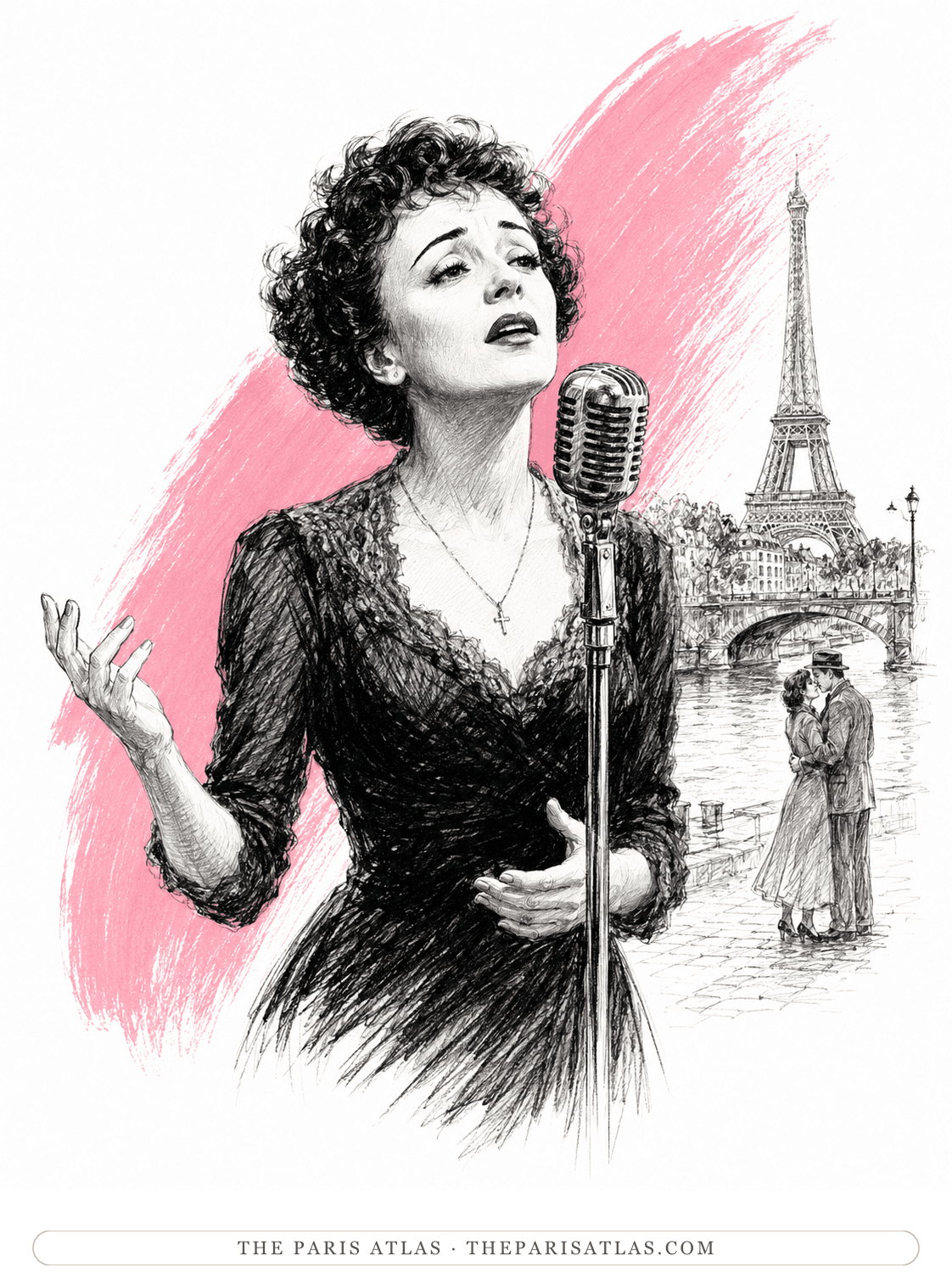
La Vie en rose
by Édith Piaf
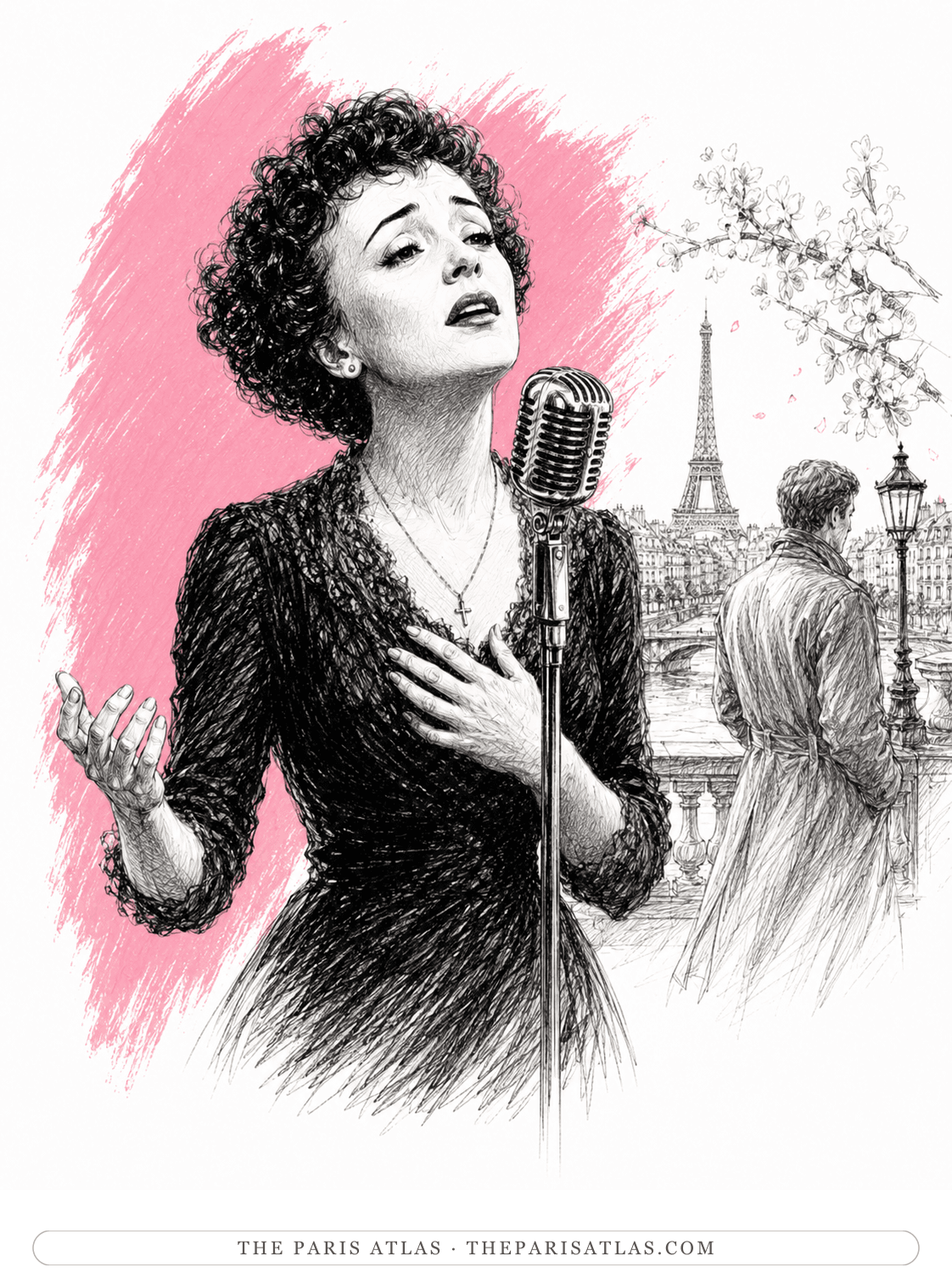
Piaf's own lyric, written in 1945: love as a change in perception — the beloved does not repair the world, only alters its color. Carried abroad on her postwar tours, it became the international shorthand for Paris and the possibility of happiness after catastrophe.
- written 1945, first recorded 1946
- Chanson
About Édith Piaf

What 'la vie en rose' means
The phrase translates literally as 'life in pink' — idiomatically, seeing life through rose-colored glasses. The song's claim is more precise than the idiom: when the beloved holds her and speaks low, the world itself changes color. Love does not repair anything; it alters perception, and that is enough. Sung in a Paris that had just come through occupation, deprivation, and separation, the modesty of the promise was the point — not happiness ever after, only the rose tint of the present moment.
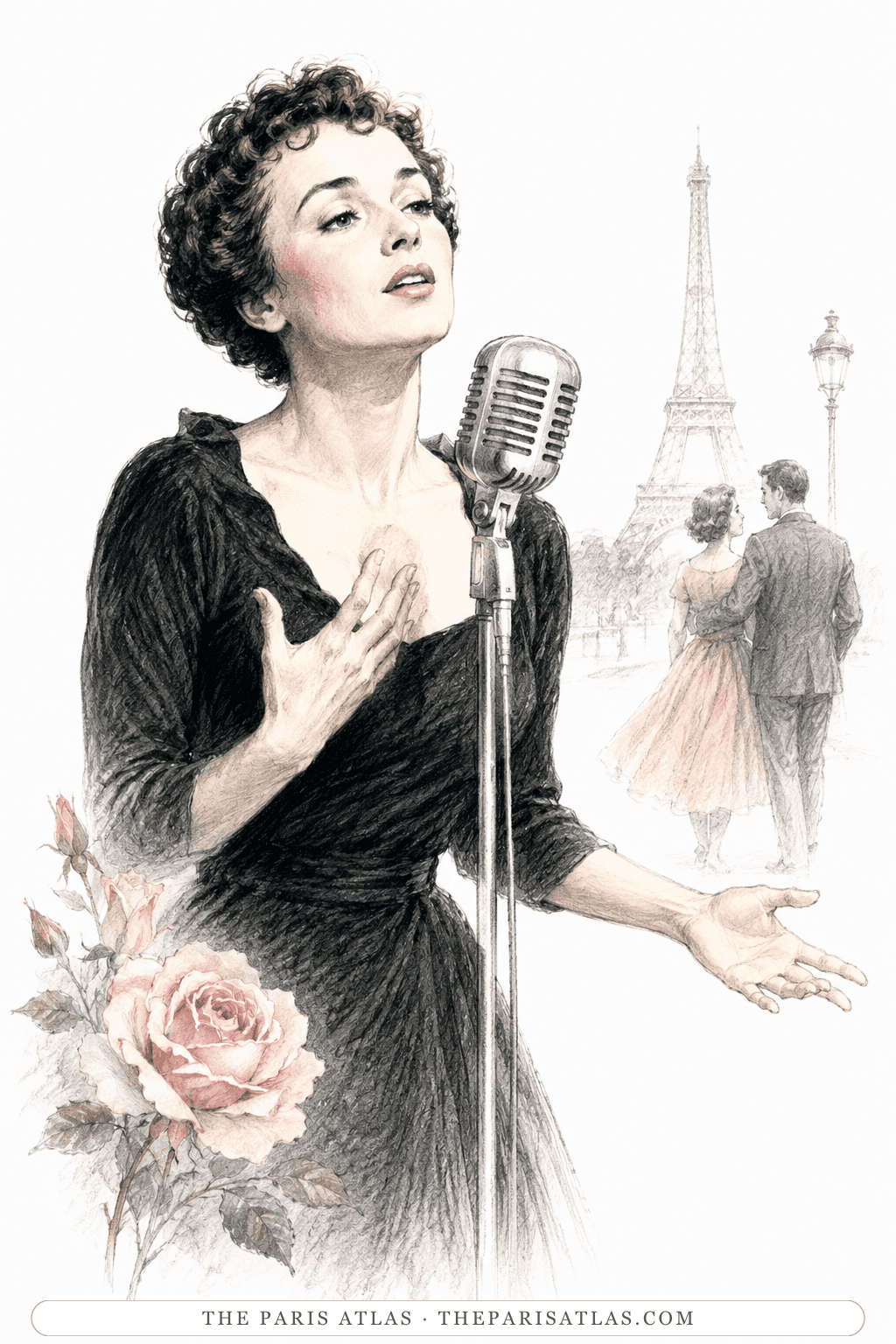
Who wrote it, and when
Piaf wrote the words herself in 1945 — the story runs that colleagues initially told her the song was beneath her — and the composer credited is Louiguy, Louis Guglielmi, though accounts of exactly how the melody took shape vary with the teller. She sang it publicly in 1946 and recorded it that year; the disc issued in 1947 traveled with her first American tours and became the calling card of postwar France.
The song's afterlife outran even hers. Mack David's English lyric arrived in 1950, the year Louis Armstrong's recording naturalized it as a jazz standard; Grace Jones remade it as disco confession in 1977; and by century's end 'la vie en rose' had detached from the song entirely, becoming the world's shorthand for Paris, romance, and the profitable dream of both. We keep the phrase attached to its author: a street singer writing, in the year the lights came back on, about what it feels like when the world briefly turns pink.
Timeline
1945
Piaf wrote the lyric; the melody is credited to Louiguy (Louis Guglielmi).
1946
She first sang and recorded it; the disc was issued in 1947 and traveled with her first American tours.
1950
Mack David's English lyric appeared, and Louis Armstrong's recording naturalized it as a jazz standard.
Frequently asked questions
What does “la vie en rose” mean?
Roughly “life in rosy hues” — love as a change in perception. The beloved does not repair the world, only alters its colour.
Who wrote it?
Édith Piaf wrote the words herself in 1945; the melody is credited to Louiguy (Louis Guglielmi).
When was it recorded?
Piaf first recorded it in 1946, and the disc was issued in 1947.
Is there an English version?
Yes. Mack David wrote English lyrics in 1950, the same year Louis Armstrong's recording helped make it a global standard.
Why is it such a symbol of Paris?
Carried abroad on Piaf's postwar tours, it became international shorthand for Paris and for the possibility of happiness after catastrophe.
Who else has recorded it?
Among countless covers, Louis Armstrong (1950) and Grace Jones (1977) are landmarks.
More by Édith Piaf
If you like Édith Piaf
Explore musicians from the same movements and circles.
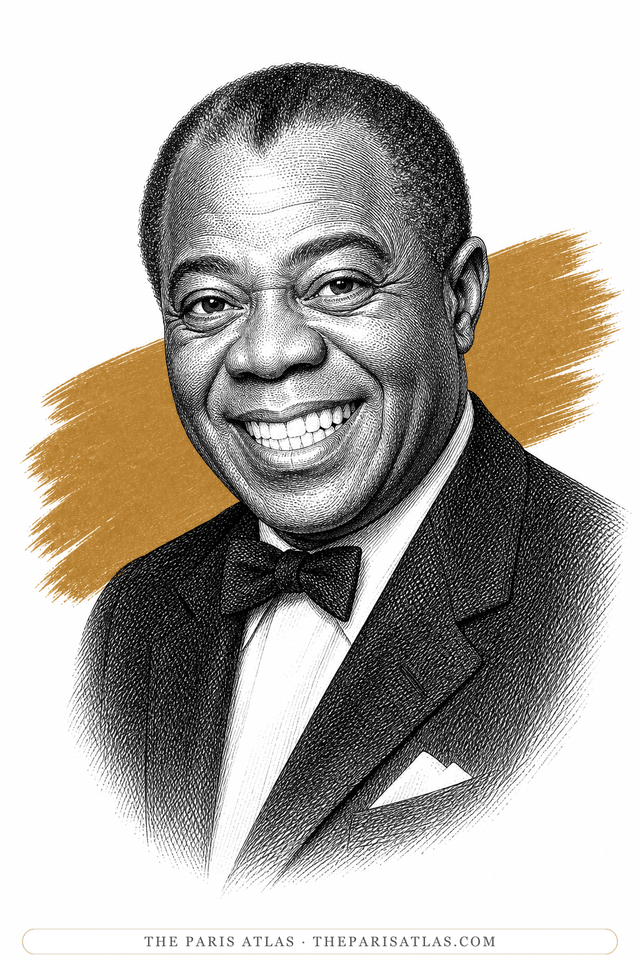
Louis Armstrong
The New Orleans trumpeter and singer who turned jazz from a band music into a soloist's art, and whose voice became one of the most recognisable sounds of the twentieth century. Paris took him early: he spent the autumn of 1934 living in the city, made his only French records that November, played the Salle Pleyel, the city's principal concert hall, and kept coming back for thirty years — including for the 1961 film Paris Blues, shot in the streets he had once idled in.
View artist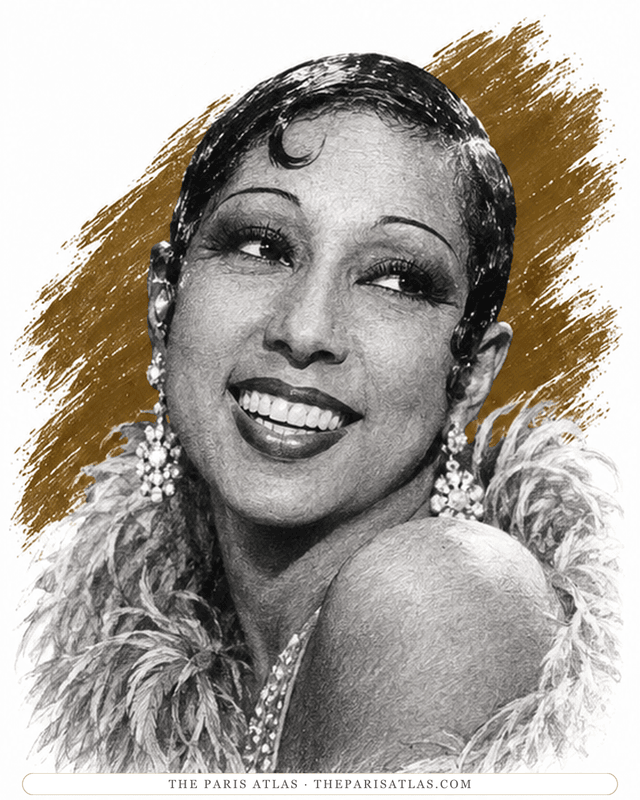
Josephine Baker
American-born French dancer and singer who conquered Paris at nineteen in La Revue Nègre, and who traded expatriate stories at James Baldwin's Saint-Paul-de-Vence table nearly fifty years later.
View artist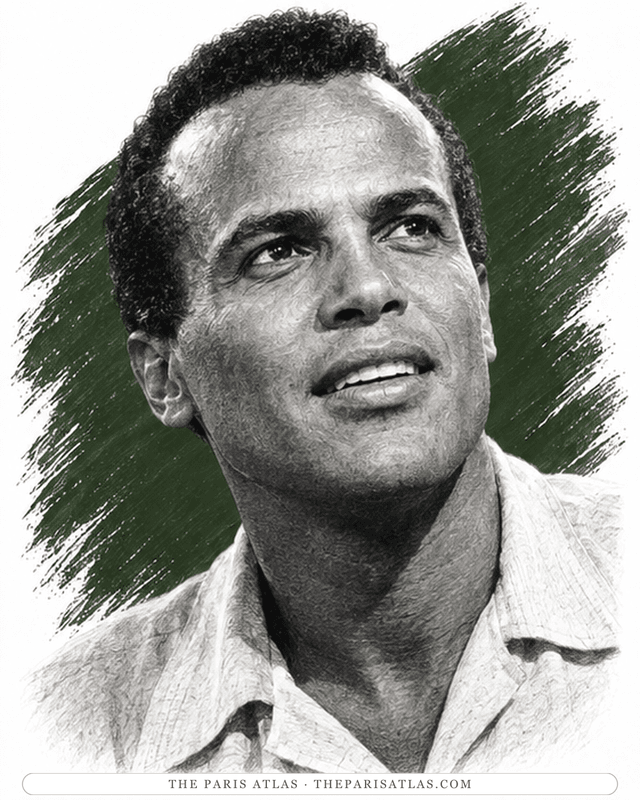
Harry Belafonte
American singer and actor; a civil-rights ally of James Baldwin who sat in the room when Baldwin's delegation confronted Robert Kennedy in May 1963.
View artist
References
The sources below include collection records, catalogues, scholarly research, and primary materials that informed this page. They document La Vie en rose, its making, and its place in cultural history.


1Encyclopaedia Britannica — Édith Piaf
WebsiteUsed forWeb source consulted for documented facts and historical context presented on the La Vie en rose page.

2Édith Piaf — La Vie en rose
ArchiveInstitut national de l'audiovisuelUsed forArchival evidence used to document the historical record connected to La Vie en rose.
3Édith Piaf — Dix chansons
Official recordBibliothèque nationale de FranceUsed forOfficial record used to verify names, dates, institutional details, or other factual information on this page.
4Édith Piaf — L'Intégrale, 1936–1963
Official recordBibliothèque nationale de FranceUsed forOfficial record used to verify names, dates, institutional details, or other factual information on this page.
These references provide the documented foundation for this work's history and interpretation. Claim-level citations remain attached to the specific claims they support.
 Explore more resources