La Foule
by Édith Piaf
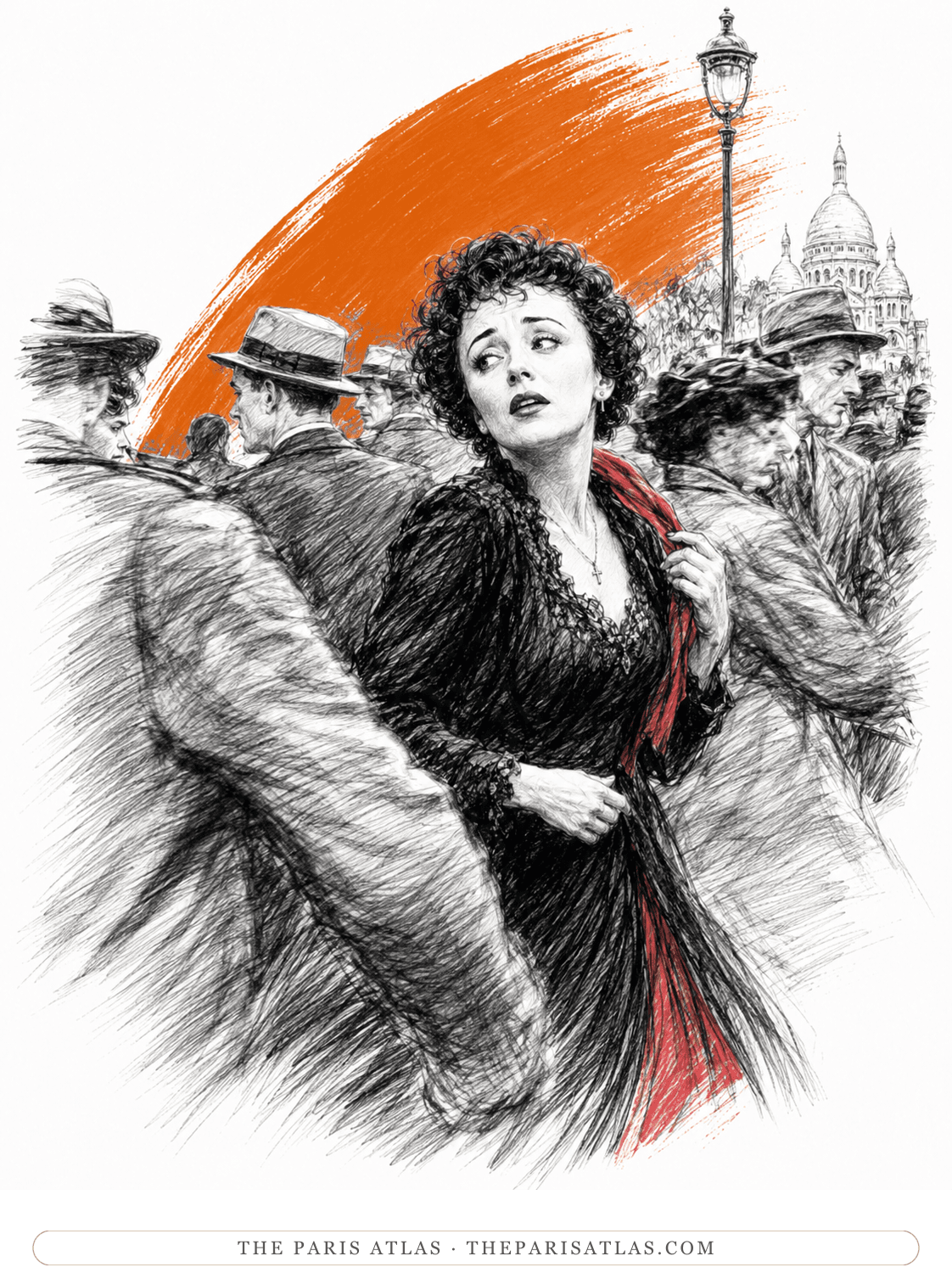
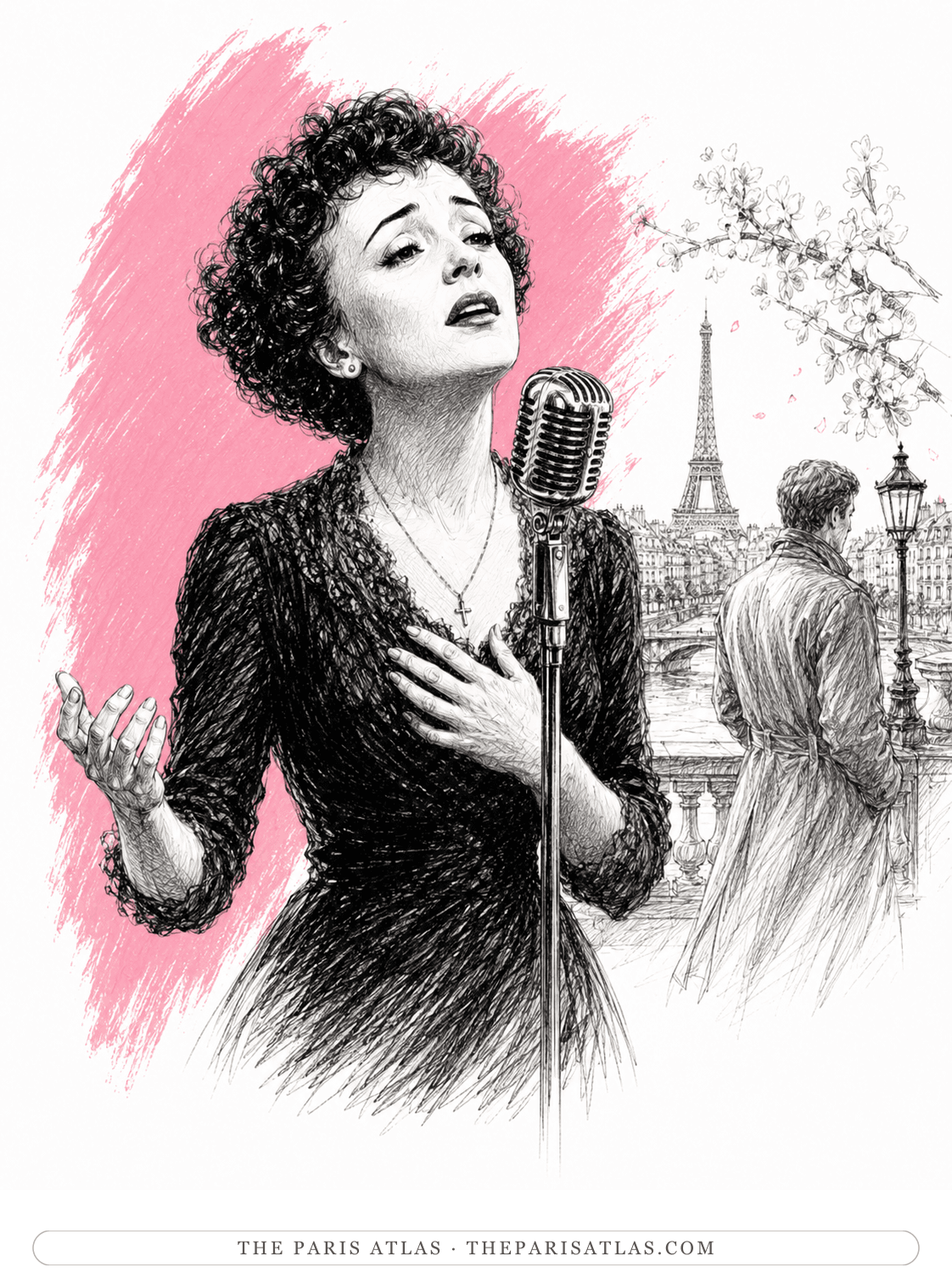
A crowd carries two strangers together and tears them apart again — a miniature film about chance and disappearance in a packed square. Piaf heard the South American waltz on tour; Michel Rivgauche's new words turned it French, and the whirling accompaniment became one of her most breathless recordings: Paris connected to Lima and Buenos Aires in three minutes.
- 1957
- Chanson
About Édith Piaf
What 'La Foule' means
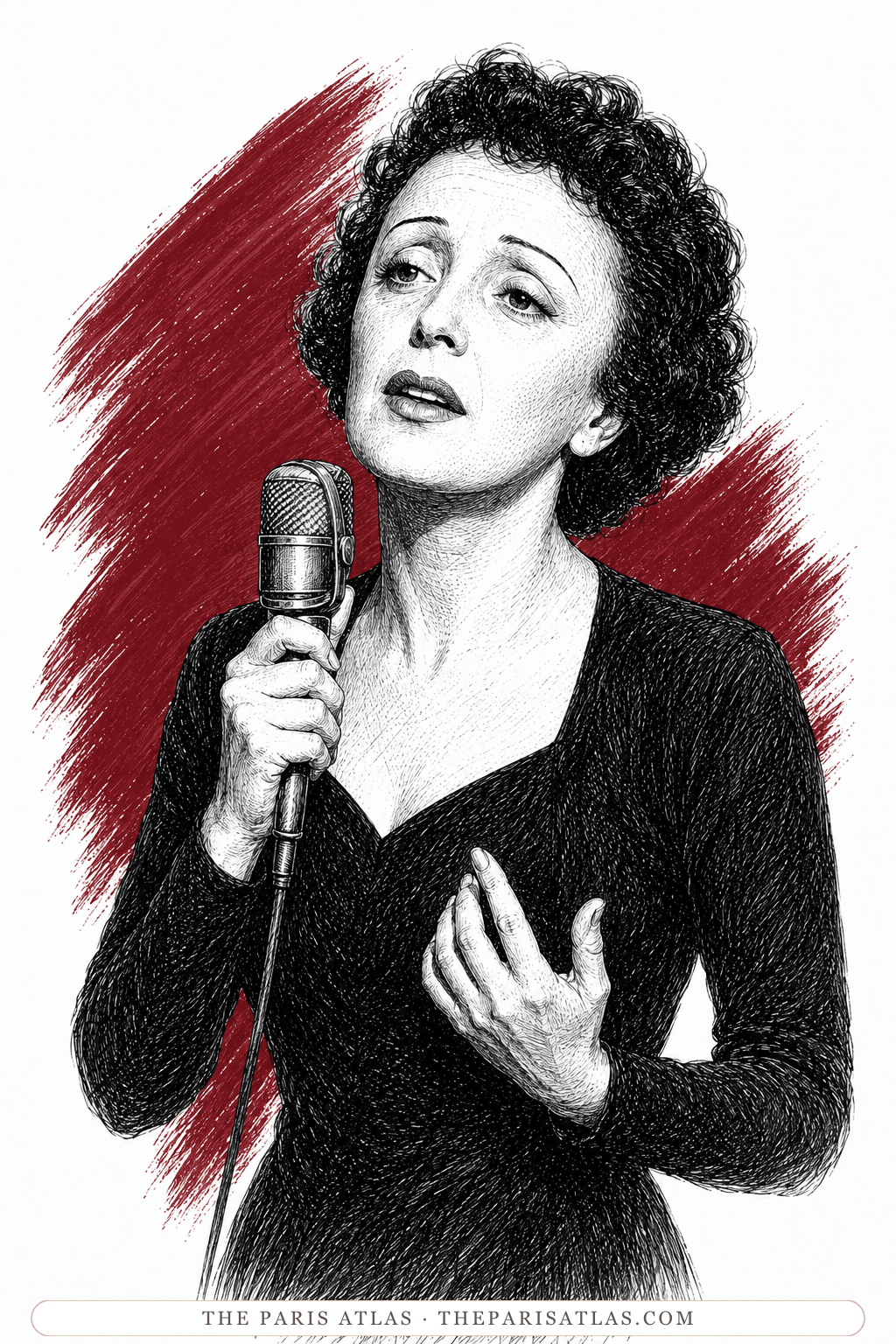
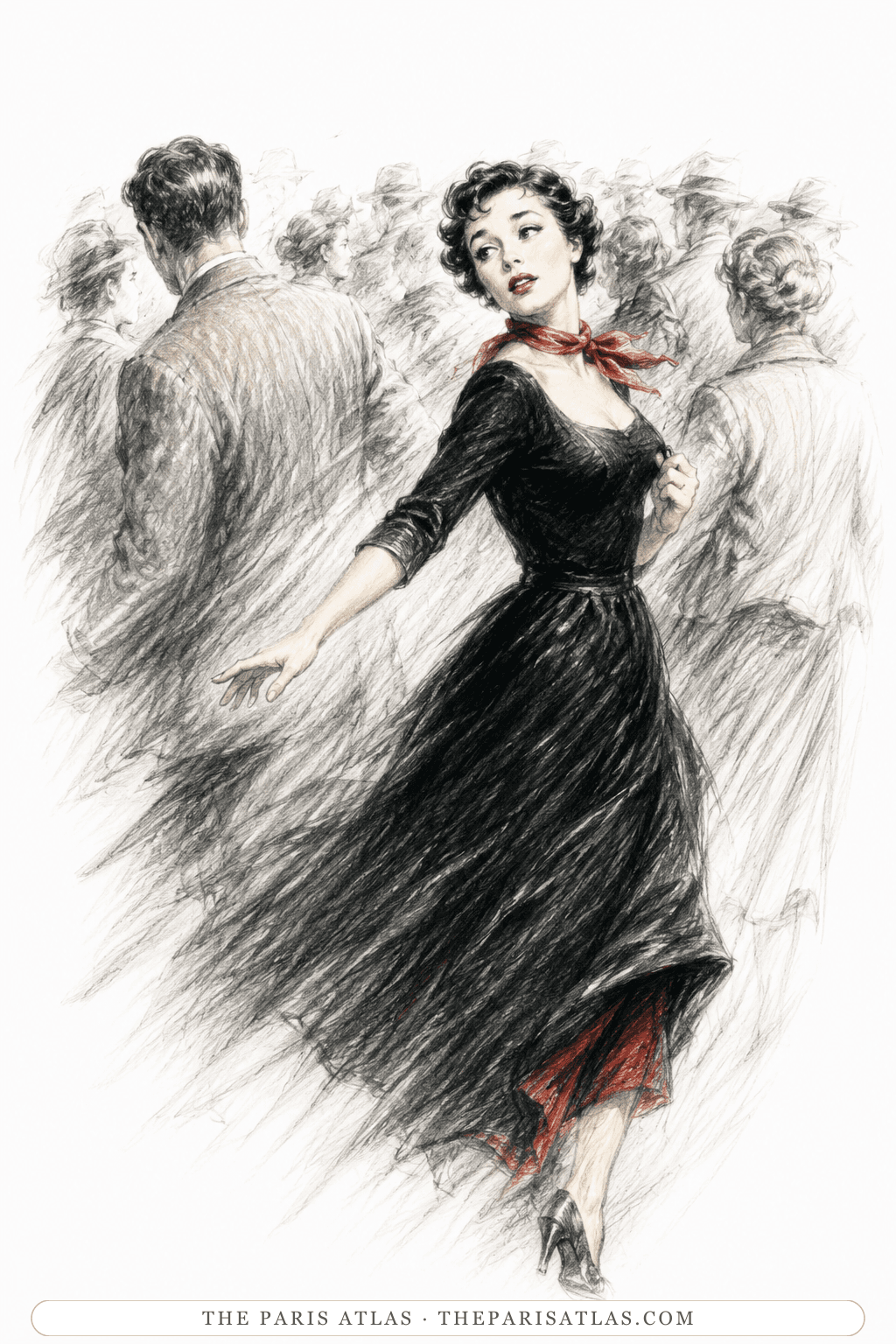
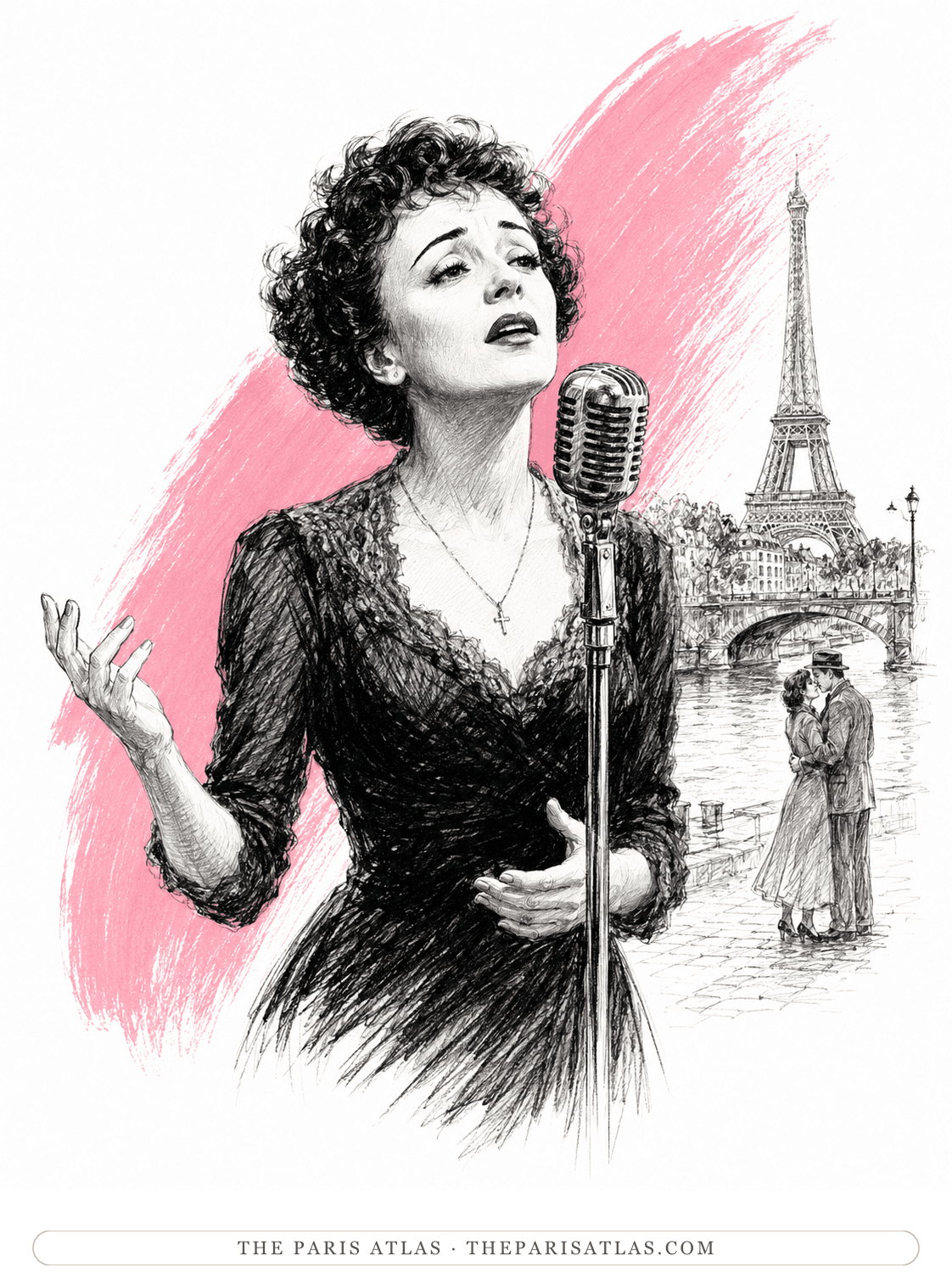
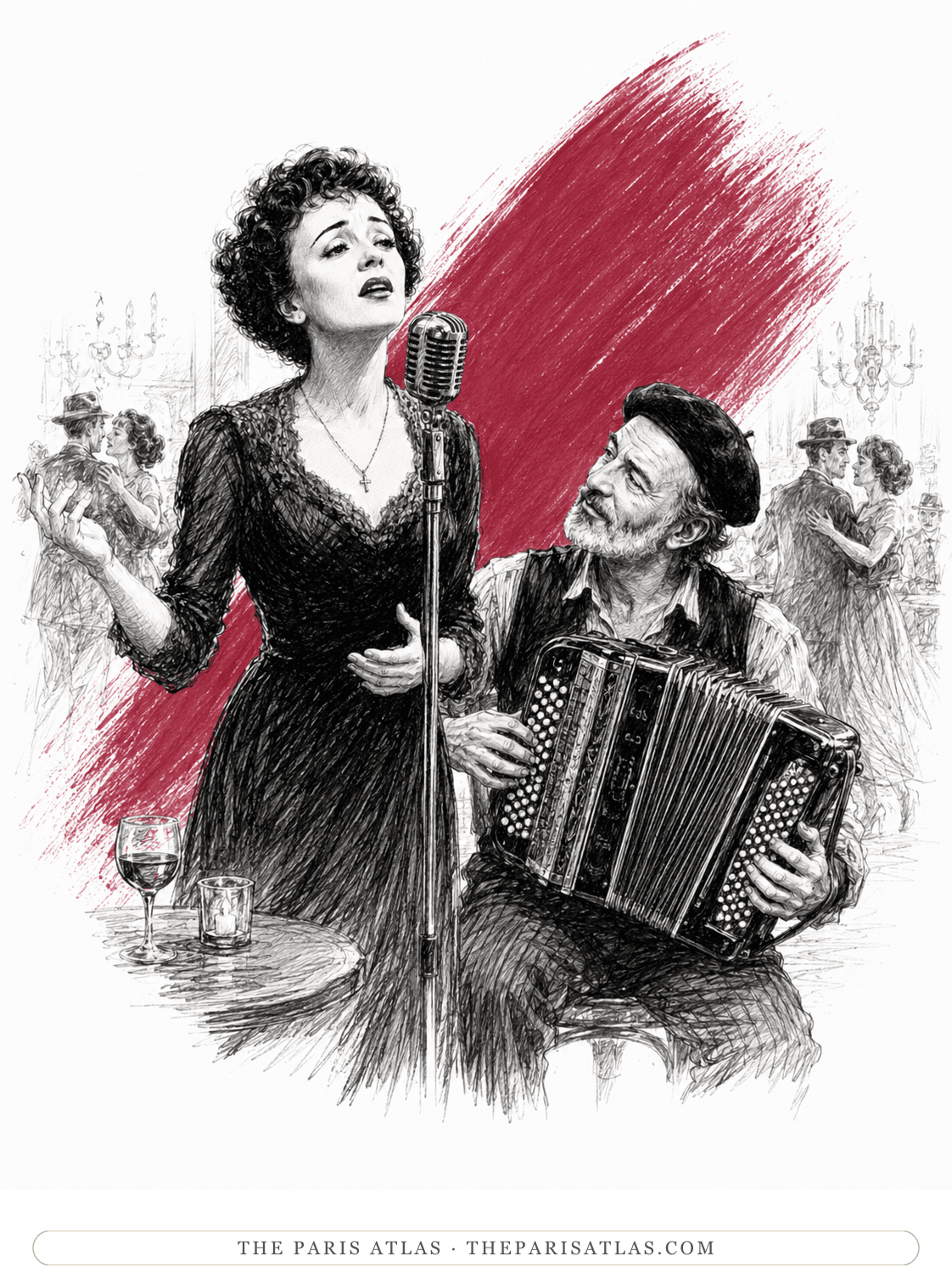
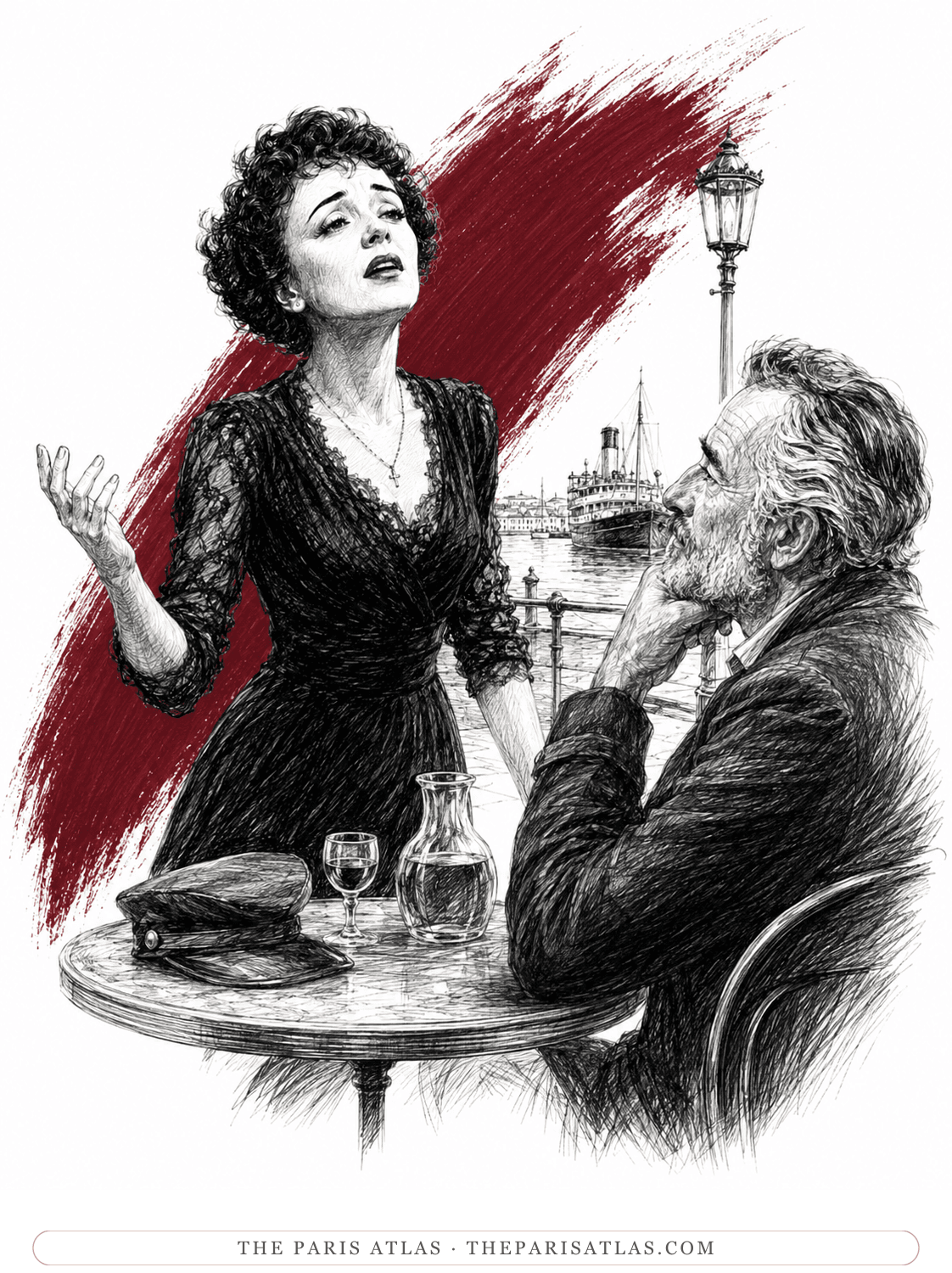
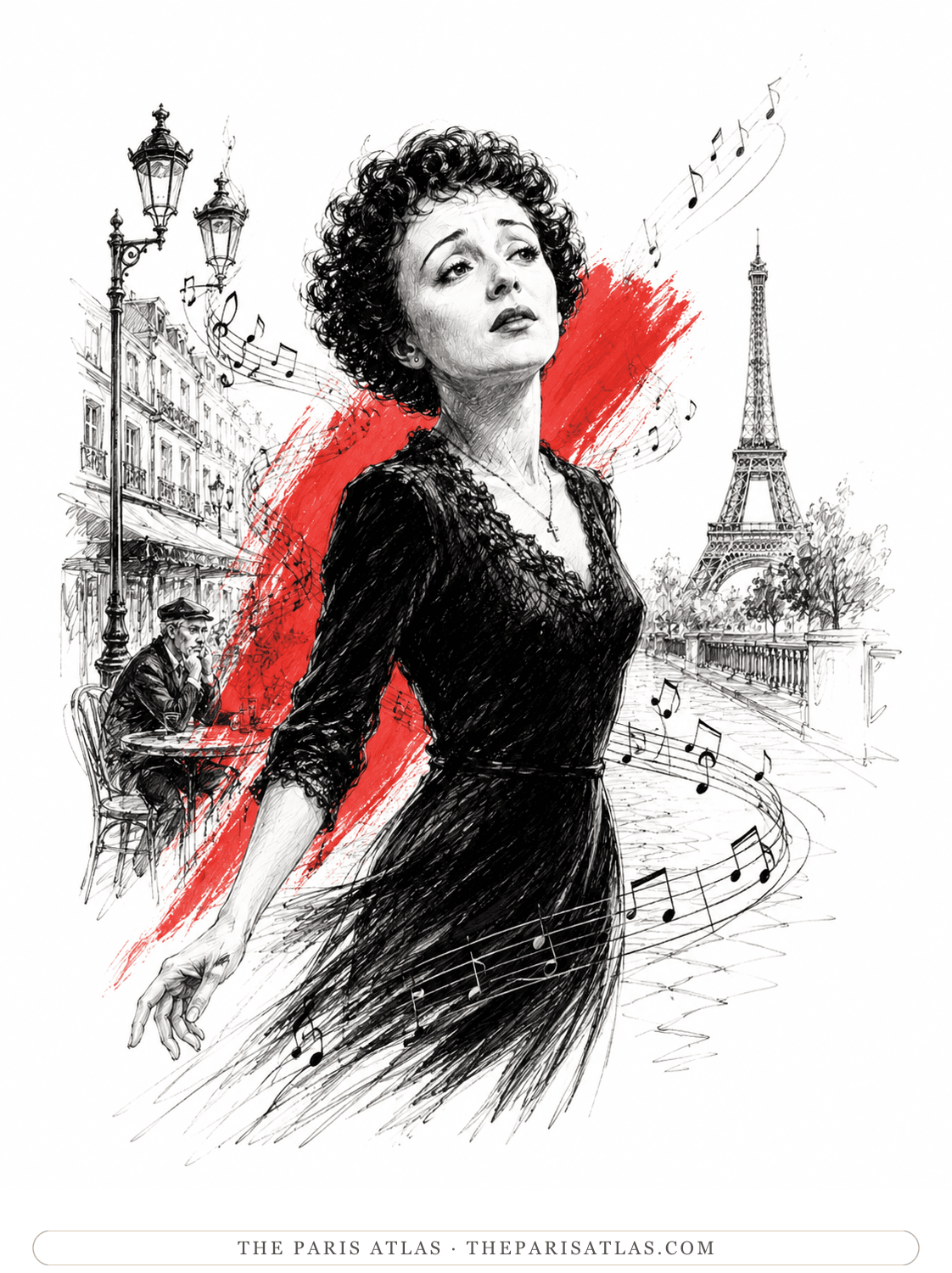
La Foule begins with accidental intimacy: carried through a dense, jubilant crowd, the singer is pushed into the arms of a stranger. For a few moments the crowd is benevolent — it manufactures a complete romance without courtship, history, or even names. Then the movement reverses, and the same force tears the pair apart as arbitrarily as it joined them. She struggles; the stranger disappears into the mass. By the end the crowd is not a backdrop but the song's principal actor — chance made physical, indifferent to the happiness it creates and destroys.
Piaf's recording plays like a miniature film: the waltz accelerates, the orchestration circles, her delivery moves from delight to panic. The listener experiences the square exactly as she does — first dazzling, then claustrophobic. The tragedy is not that love fails; it is that something possibly permanent appears for one moment and vanishes before either person can hold it.
From a South American waltz to a French chanson
The melody began as 'Que nadie sepa mi sufrir,' a Peruvian-style waltz by the Argentine songwriters Ángel Cabral and Enrique Dizeo. Piaf heard it on a South American tour and brought the melody home; Michel Rivgauche wrote an entirely new French story rather than translating the Spanish. The music kept its Latin American pulse while the lyric became a Piaf drama about the instability of urban life — a song that belongs to Lima and Buenos Aires as much as to the Paris it is now identified with everywhere.
Recorded in 1957, it became one of her most kinetic performances — and an inversion of her usual stage: where most of her great songs isolate one figure addressing an absent lover, La Foule surrounds its singer with thousands of anonymous bodies.
Timeline
1936
The melody began as a South American waltz, Ángel Cabral's “Que nadie sepa mi sufrir.”
1957
Piaf heard the waltz on tour; Michel Rivgauche wrote new French words, and she recorded it as “La Foule.”
Frequently asked questions
What does “La Foule” mean, and what is it about?
“The crowd.” A packed square throws two strangers together and then tears them apart again — a miniature film about chance and loss.
Where did the melody come from?
From a 1936 South American waltz, Ángel Cabral's “Que nadie sepa mi sufrir,” which Piaf heard on tour.
Who wrote the French words?
Michel Rivgauche.
When did Piaf record it?
In 1957.
Why is it one of her most breathless recordings?
The whirling waltz accompaniment races beneath the story, matching the crowd that carries the lovers together and then away.
How does it connect Paris to South America?
It carries a Peruvian-Argentine waltz into French chanson — Paris joined to Lima and Buenos Aires in three minutes.
More by Édith Piaf
If you like Édith Piaf
Explore musicians from the same movements and circles.
Louis Armstrong
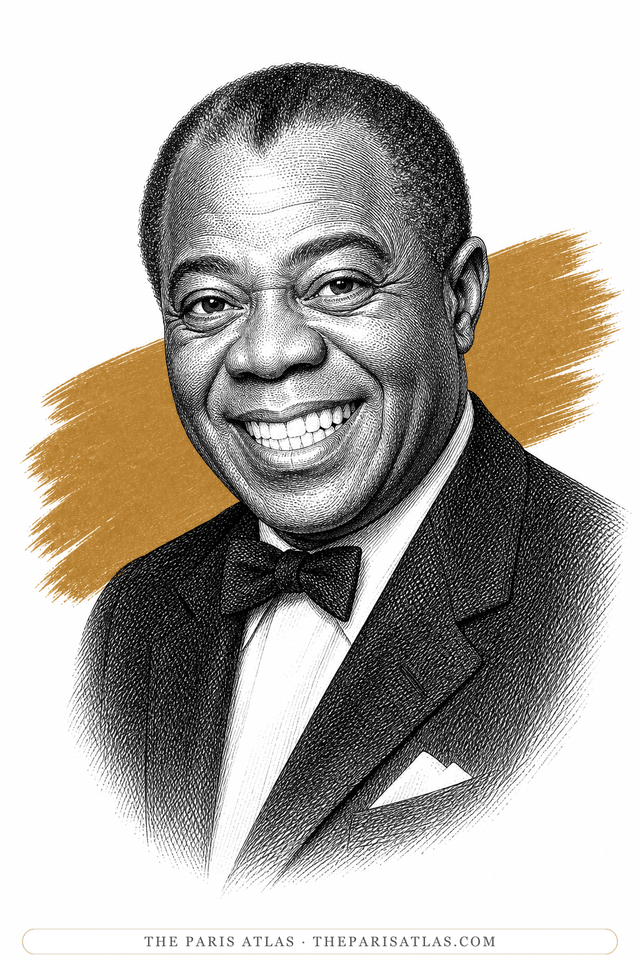
The New Orleans trumpeter and singer who turned jazz from a band music into a soloist's art, and whose voice became one of the most recognisable sounds of the twentieth century. Paris took him early: he spent the autumn of 1934 living in the city, made his only French records that November, played the Salle Pleyel, the city's principal concert hall, and kept coming back for thirty years — including for the 1961 film Paris Blues, shot in the streets he had once idled in.
View artist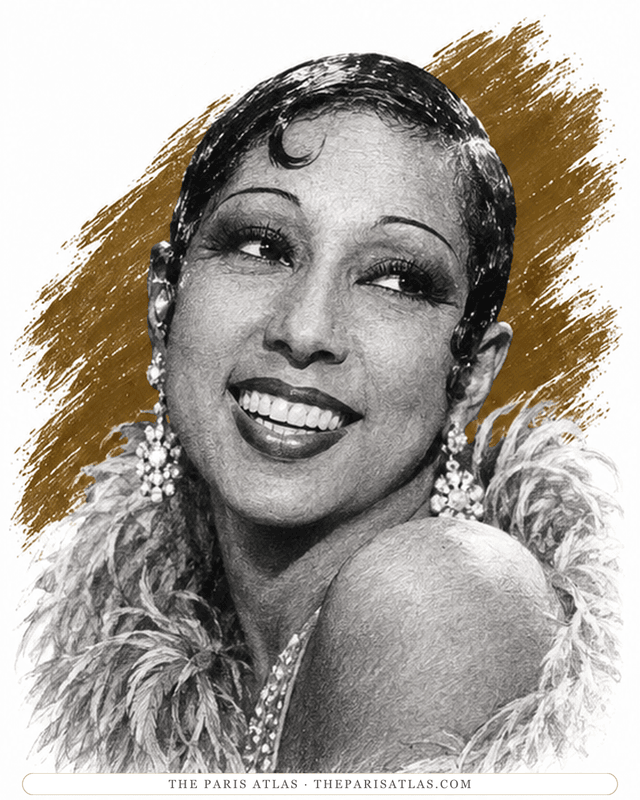
Josephine Baker
American-born French dancer and singer who conquered Paris at nineteen in La Revue Nègre, and who traded expatriate stories at James Baldwin's Saint-Paul-de-Vence table nearly fifty years later.
View artist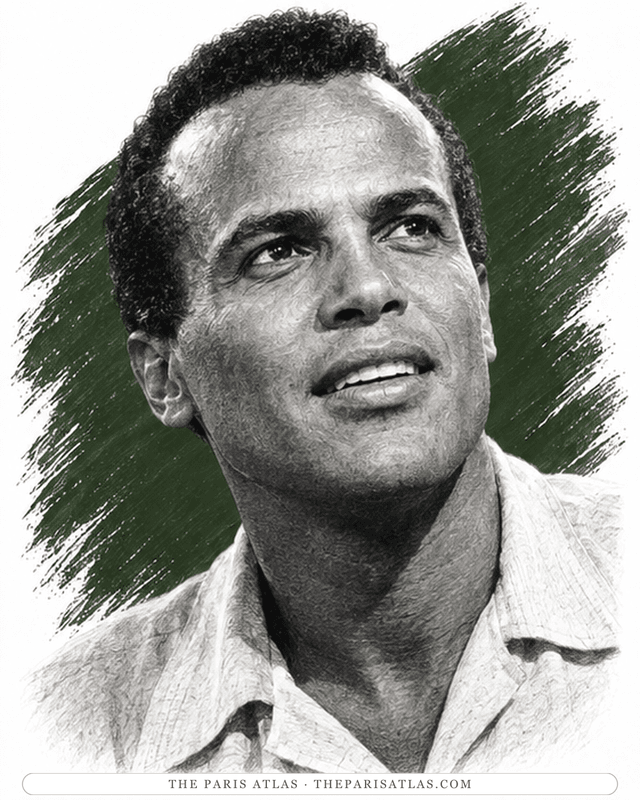
Harry Belafonte
American singer and actor; a civil-rights ally of James Baldwin who sat in the room when Baldwin's delegation confronted Robert Kennedy in May 1963.
View artist
References
The sources below include collection records, catalogues, scholarly research, and primary materials that informed this page. They document La Foule, its making, and its place in cultural history.


1Encyclopaedia Britannica — Édith Piaf
WebsiteUsed forWeb source consulted for documented facts and historical context presented on the La Foule page.
2La Foule — Enregistrement sonore
Official recordBibliothèque nationale de FranceUsed forOfficial record used to verify names, dates, institutional details, or other factual information on this page.
3Édith Piaf — La Foule
ArchiveInstitut national de l'audiovisuelUsed forArchival evidence used to document the historical record connected to La Foule.
4Édith Piaf — L'Intégrale, 1936–1963
Official recordBibliothèque nationale de FranceUsed forOfficial record used to verify names, dates, institutional details, or other factual information on this page.
These references provide the documented foundation for this work's history and interpretation. Claim-level citations remain attached to the specific claims they support.
 Explore more resources