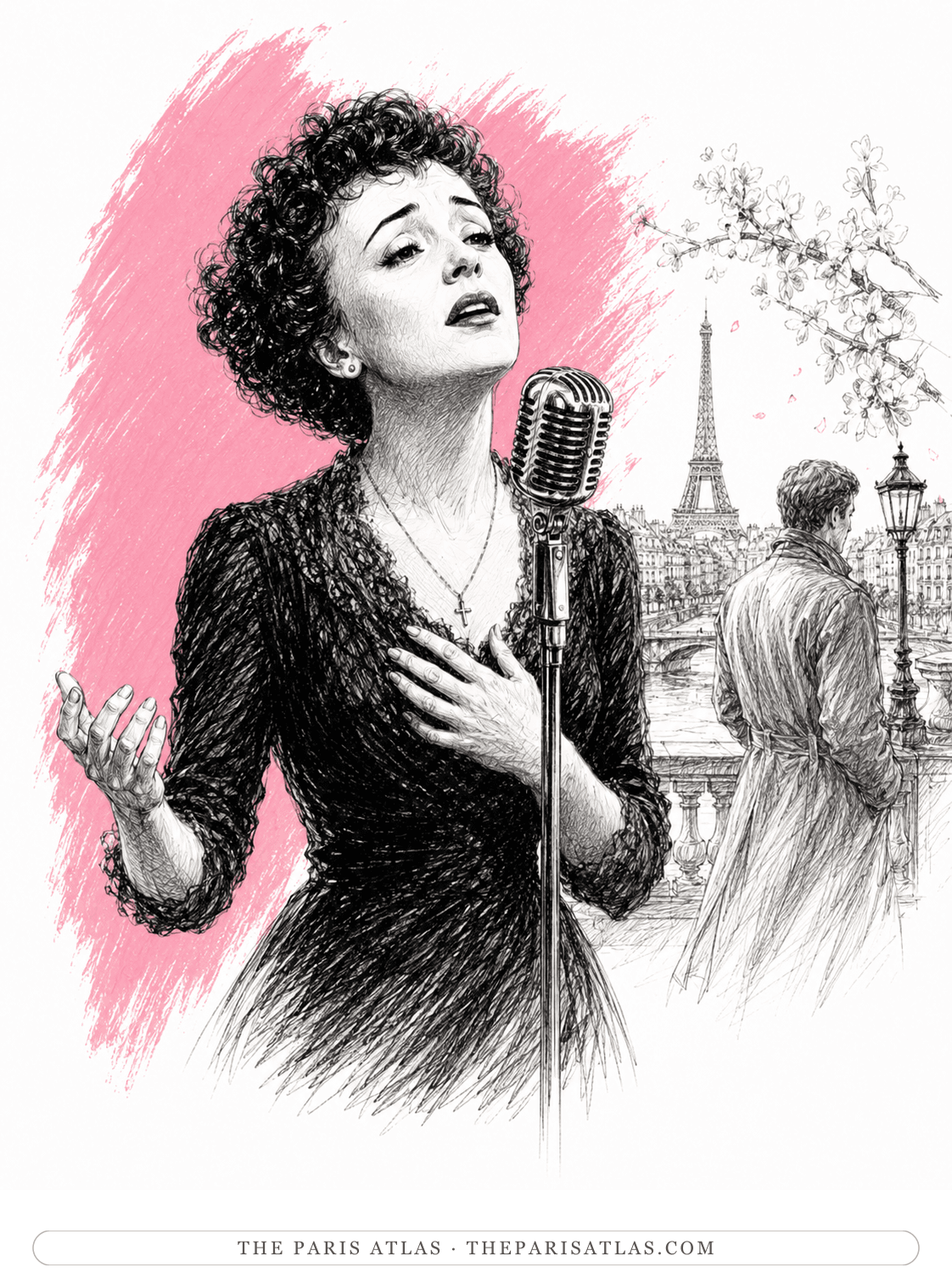
Padam, padam…
by Édith Piaf
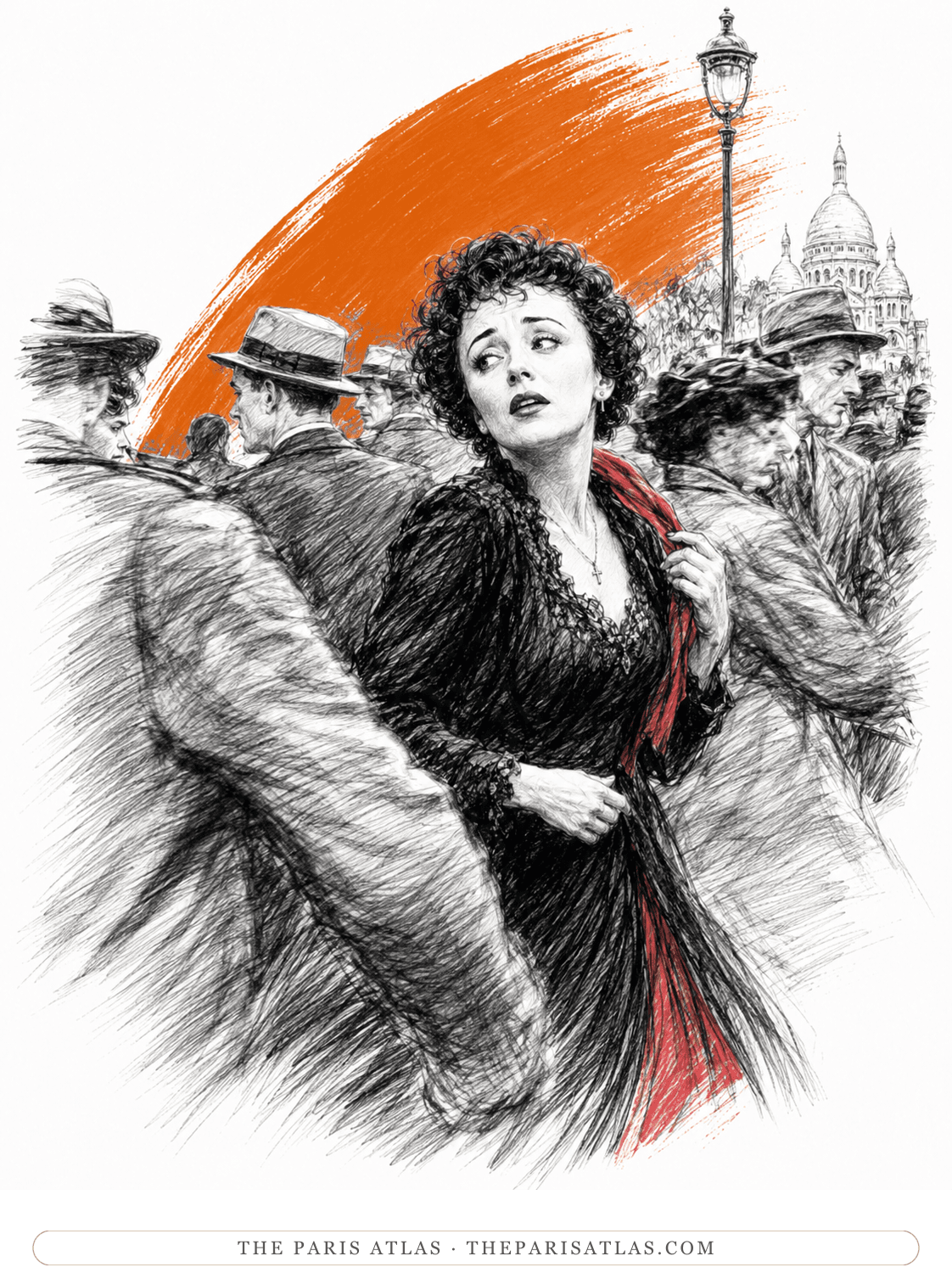
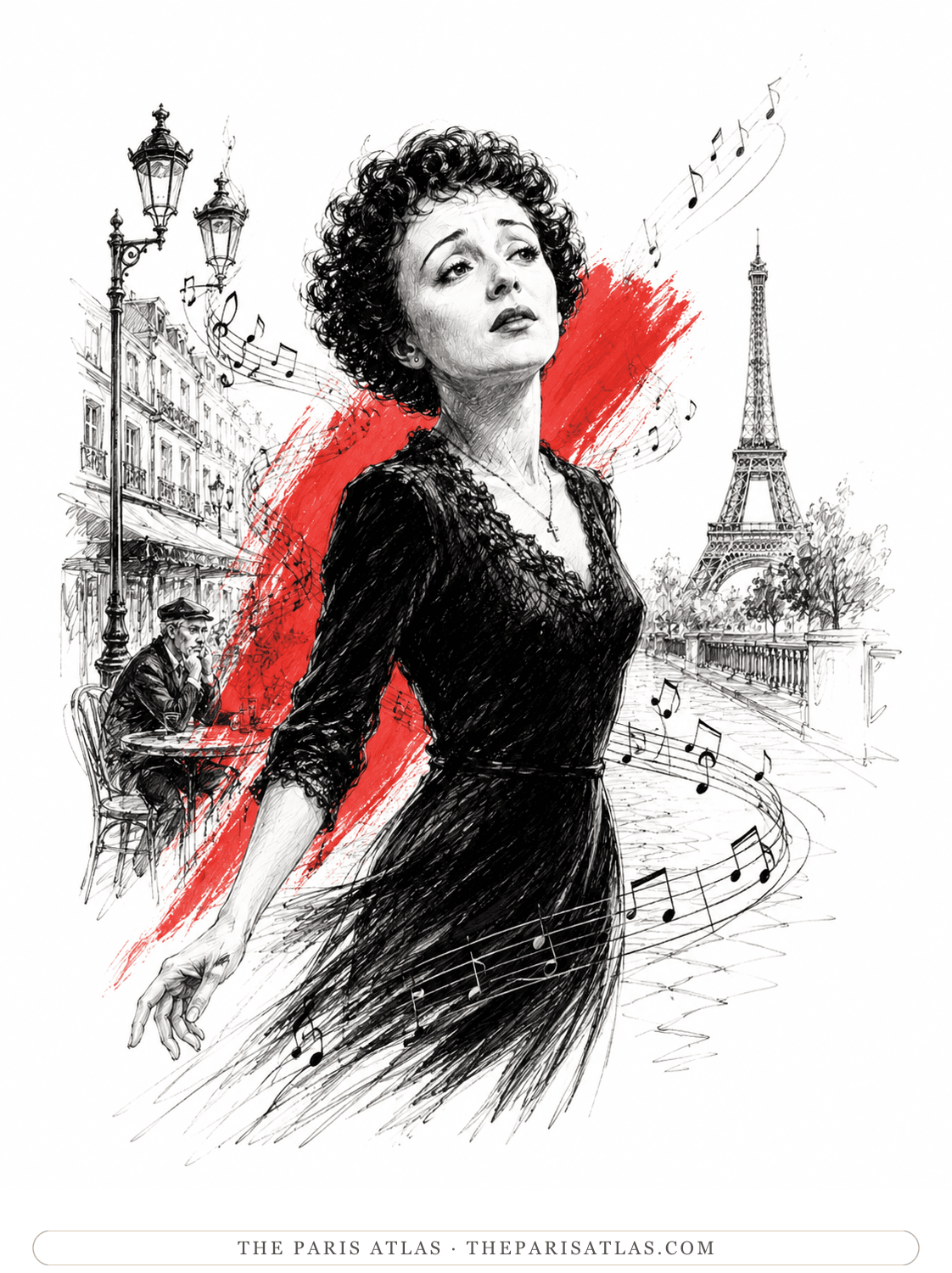
Memory as a tune that will not stop following the singer through the streets — every corner of Paris replaying the same three beats of an old love. Glanzberg's waltz and Contet's words gave Piaf her great song about the city as an echo chamber of the heart.
- 1951
- Chanson
About Édith Piaf

What 'Padam, padam…' means
The song gives memory a sound before giving it a name. The repeated title translates to nothing — it imitates the little musical phrase that follows the singer through Paris, at first merely irritating, then restoring one by one the old lovers and injuries she believed were behind her. The city becomes a map made of involuntary recollection: streets trigger associations without asking permission, and escape is impossible even in motion. 'Padam' can be footsteps, a heartbeat, the pulse of a dance, or memory knocking.
Piaf performs the refrain as complaint and surrender at once — she resists the tune, interrogates it, and finally recognizes that it belongs to her. The melody is the archive of the life she has been trying not to remember.
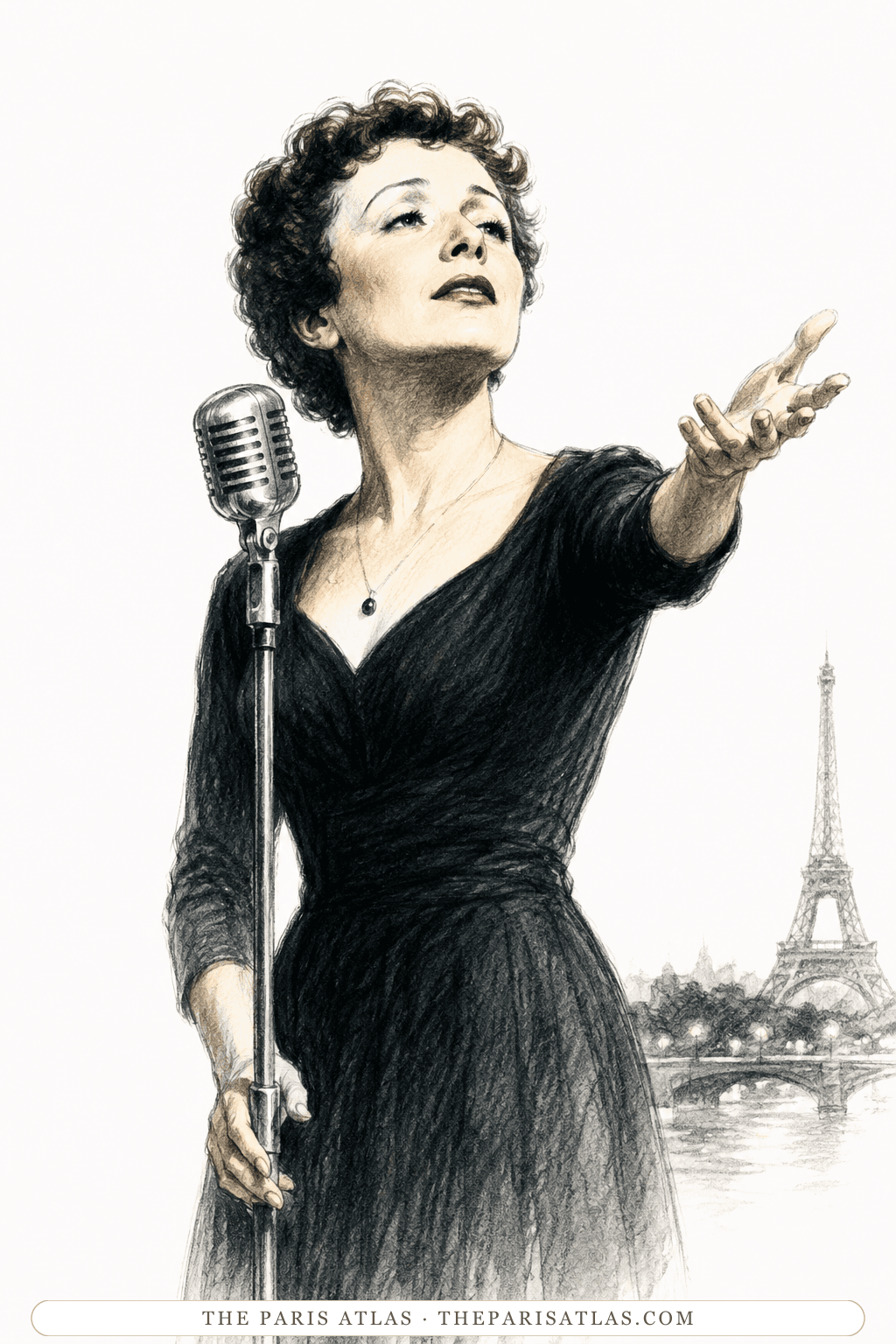
Who wrote it, and when
Norbert Glanzberg wrote the circling waltz and Henri Contet the words; Piaf first recorded it in 1951. The title's refusal to mean anything specific is what lets it travel — 'padam' is no particular lover or place but the mechanism by which any buried experience becomes suddenly present, so every listener supplies their own.
It is also the necessary counterpoint to Non, je ne regrette rien. The later song imagines the past swept away and life restarted; Padam, padam… insists the past is less obedient — it survives in melodies, street corners, and bodily reflexes, waiting for the smallest cue to begin playing again. Among Piaf's Paris songs it is the most spatially intelligent: the city not as scenery but as a mnemonic device, saturated with former selves.
Timeline
1951
Henri Contet wrote words for Norbert Glanzberg's waltz, and Piaf recorded it — her great song about the city as an echo chamber of the heart.
Frequently asked questions
What does “Padam, padam” refer to?
It sounds out the insistent three-beat pulse of a waltz — a tune that follows the singer through the streets and will not stop.
What is the song about?
Memory as a melody that haunts every corner of Paris, replaying an old love wherever the singer goes.
Who wrote it?
Norbert Glanzberg composed the music; Henri Contet wrote the words.
When did Piaf record it?
In 1951.
Why is it seen as her great Paris song?
It turns the city into an echo chamber of the heart, every street replaying the same three beats of an old love.
Who was the composer?
Norbert Glanzberg, a German-born composer who had settled in France; the waltz became one of Piaf's signature numbers.
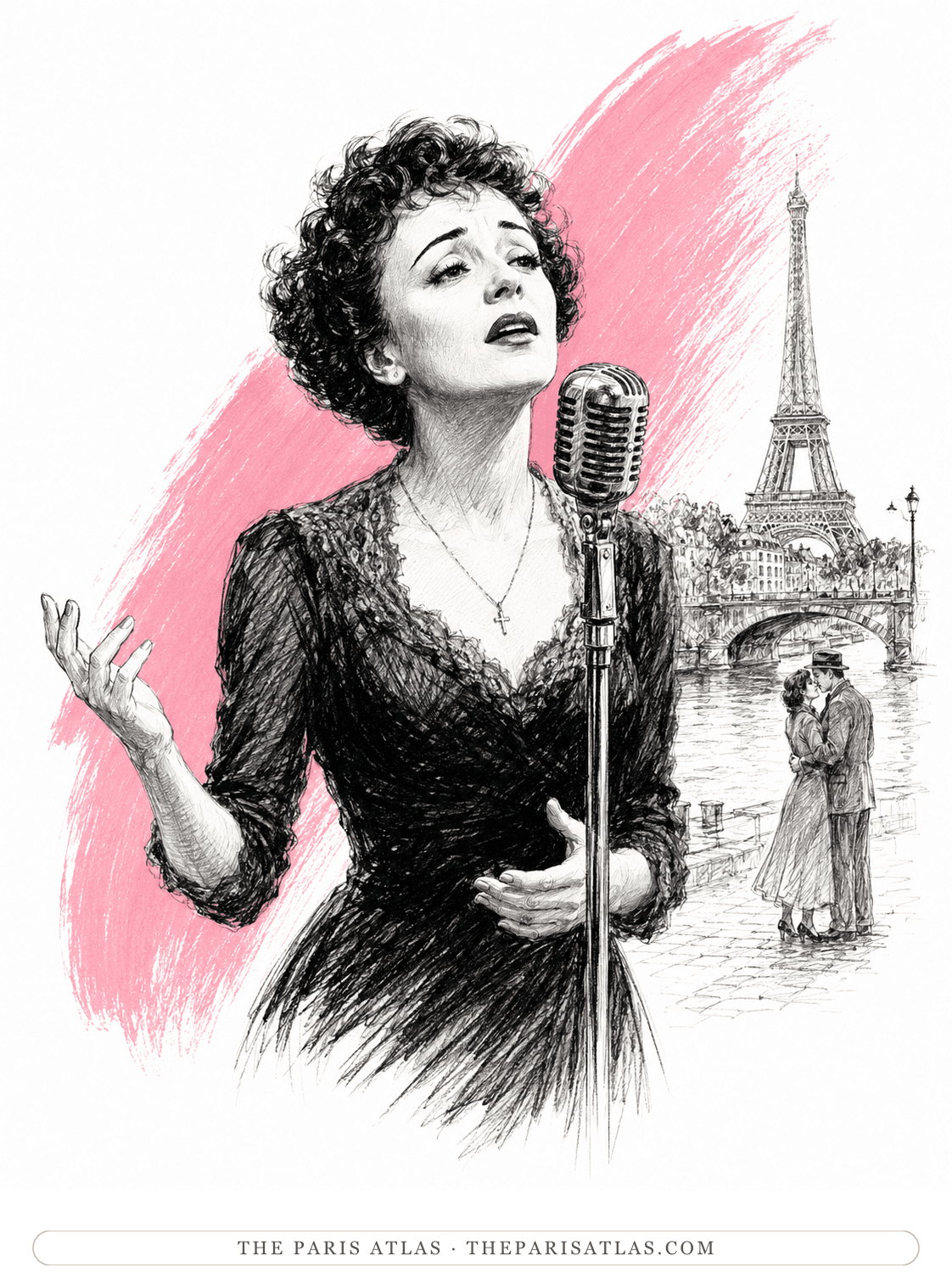
More by Édith Piaf

If you like Édith Piaf
Explore musicians from the same movements and circles.
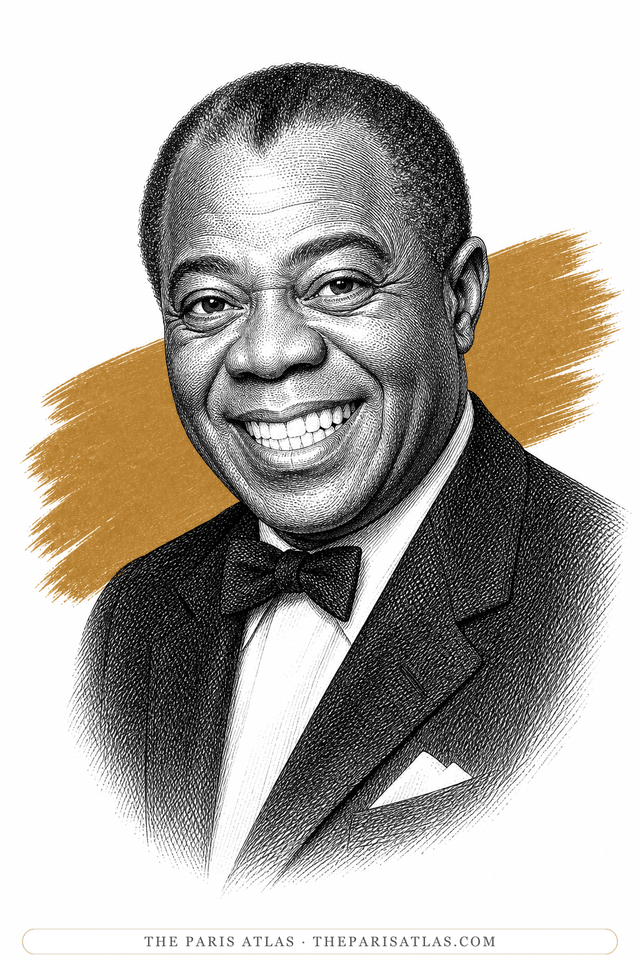
Louis Armstrong
The New Orleans trumpeter and singer who turned jazz from a band music into a soloist's art, and whose voice became one of the most recognisable sounds of the twentieth century. Paris took him early: he spent the autumn of 1934 living in the city, made his only French records that November, played the Salle Pleyel, the city's principal concert hall, and kept coming back for thirty years — including for the 1961 film Paris Blues, shot in the streets he had once idled in.
View artist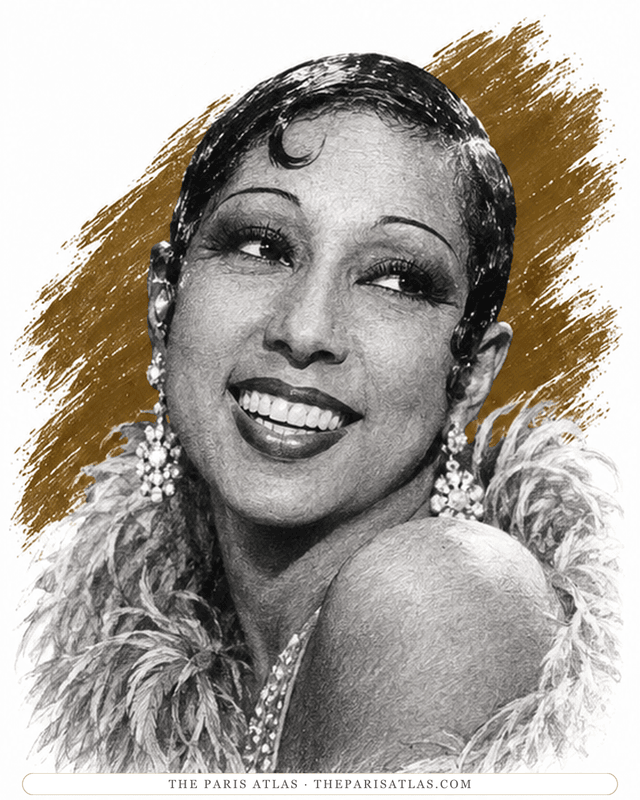
Josephine Baker
American-born French dancer and singer who conquered Paris at nineteen in La Revue Nègre, and who traded expatriate stories at James Baldwin's Saint-Paul-de-Vence table nearly fifty years later.
View artist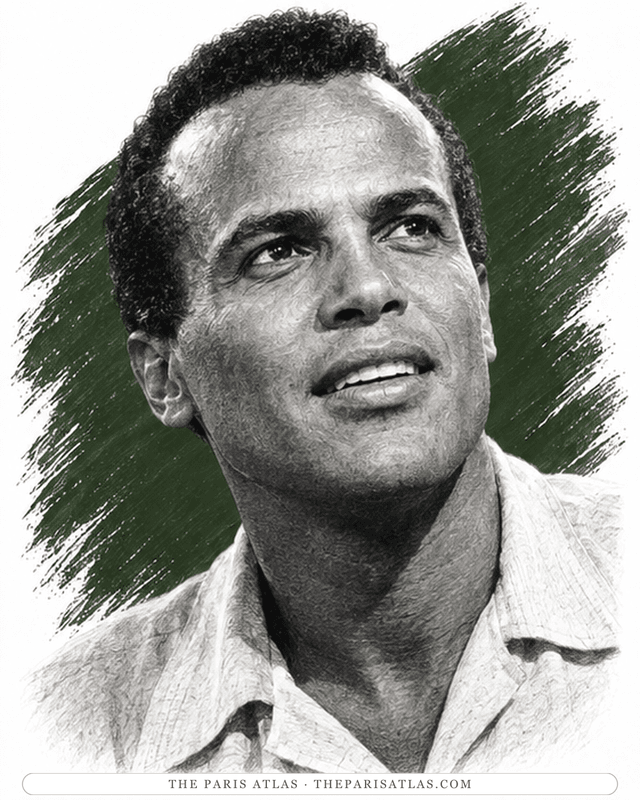
Harry Belafonte
American singer and actor; a civil-rights ally of James Baldwin who sat in the room when Baldwin's delegation confronted Robert Kennedy in May 1963.
View artist
References
The sources below include collection records, catalogues, scholarly research, and primary materials that informed this page. They document Padam, padam…, its making, and its place in cultural history.


1Encyclopaedia Britannica — Édith Piaf
WebsiteUsed forWeb source consulted for documented facts and historical context presented on the Padam, padam… page.

2Padam, padam — Partition musicale
Official recordBibliothèque nationale de FranceUsed forOfficial record used to verify names, dates, institutional details, or other factual information on this page.
3Édith Piaf — Dix chansons
Official recordBibliothèque nationale de FranceUsed forOfficial record used to verify names, dates, institutional details, or other factual information on this page.
4Édith Piaf — L'Intégrale, 1936–1963
Official recordBibliothèque nationale de FranceUsed forOfficial record used to verify names, dates, institutional details, or other factual information on this page.
These references provide the documented foundation for this work's history and interpretation. Claim-level citations remain attached to the specific claims they support.
 Explore more resources