
Commemorates · 1949
Marcel Cerdan
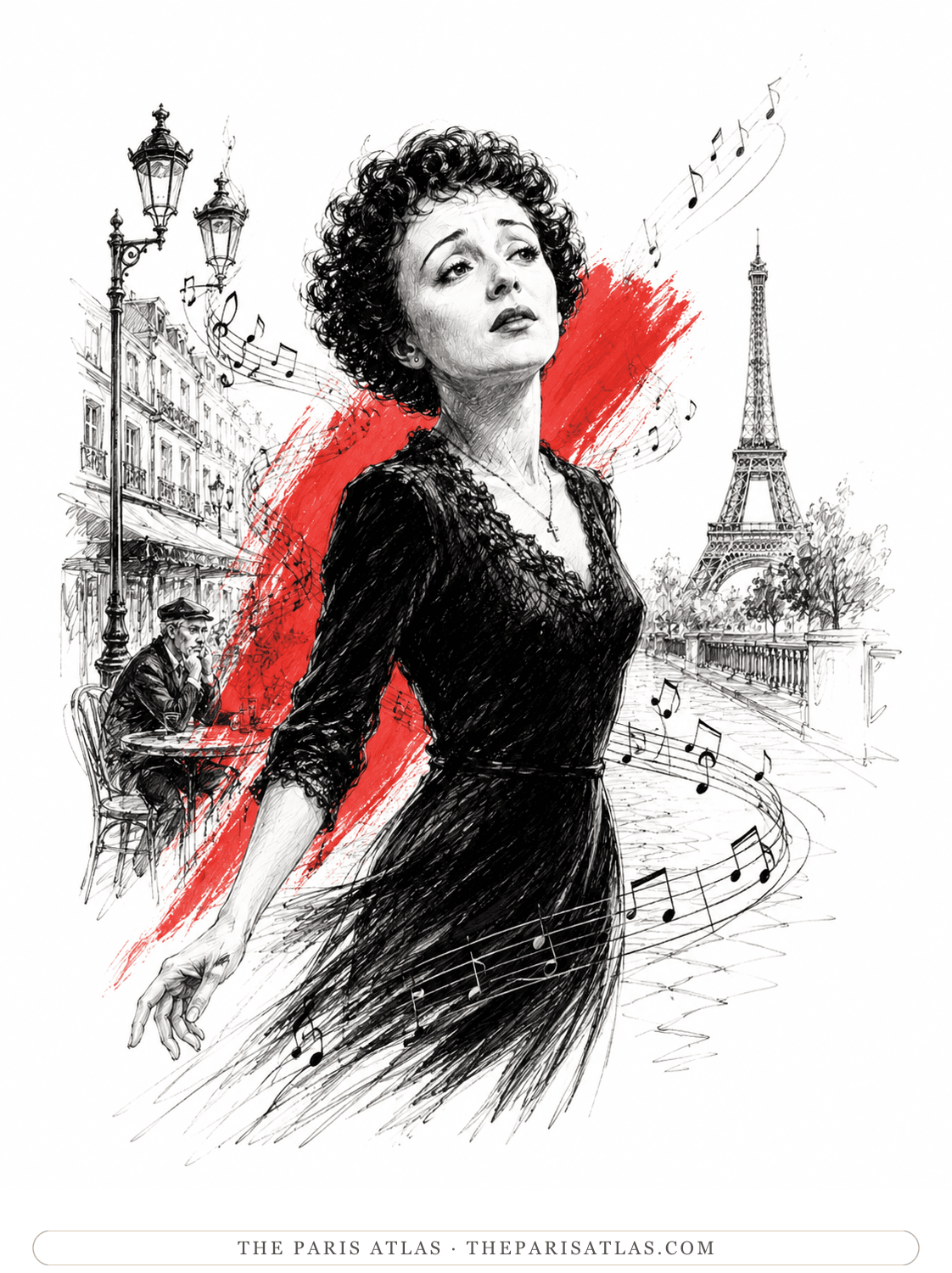
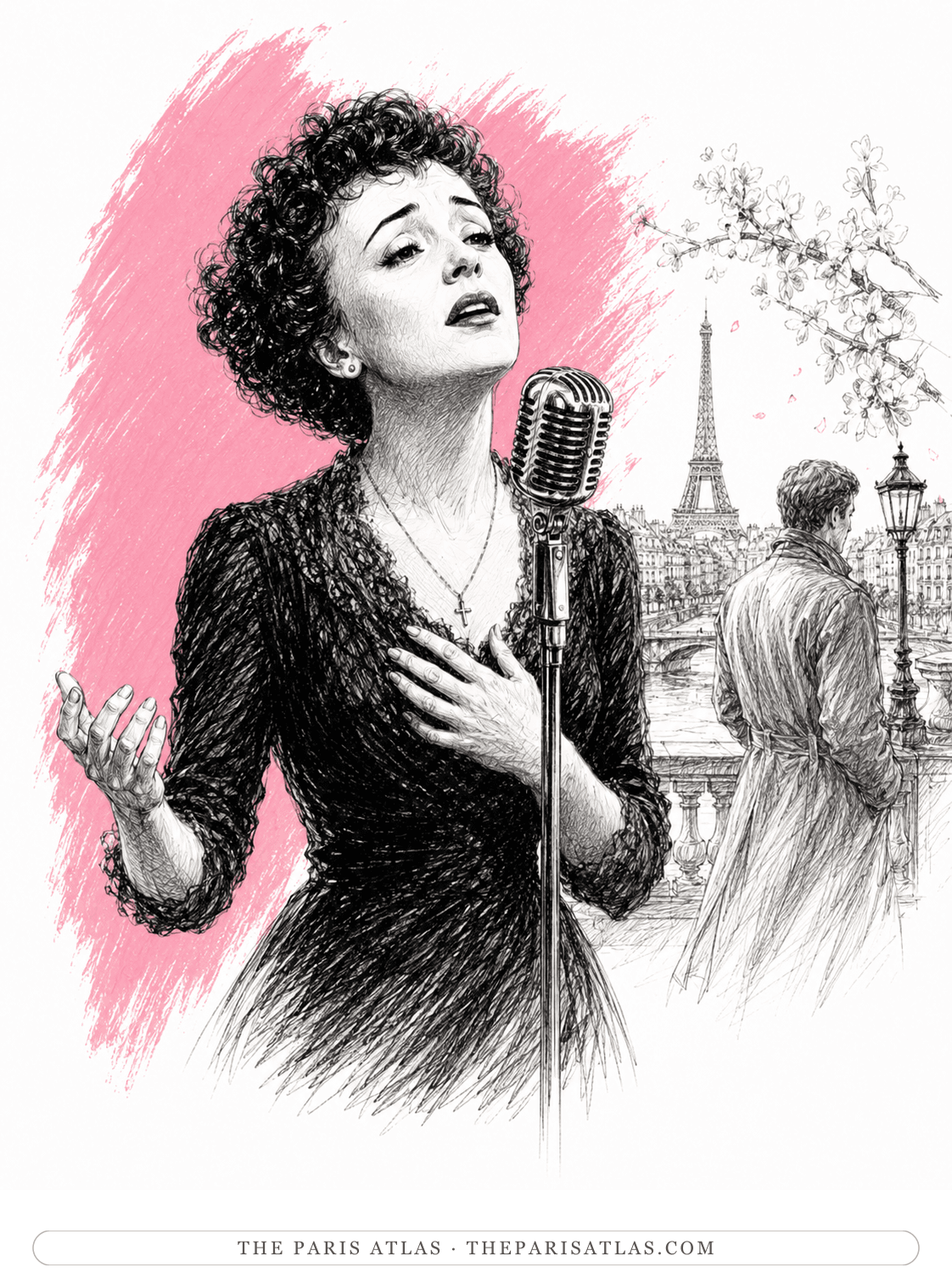
Written during their affair as a promise, remade as an elegy on 28 October 1949, when Cerdan's flight to New York went down in the Azores — the song has carried his memory ever since.
by Édith Piaf
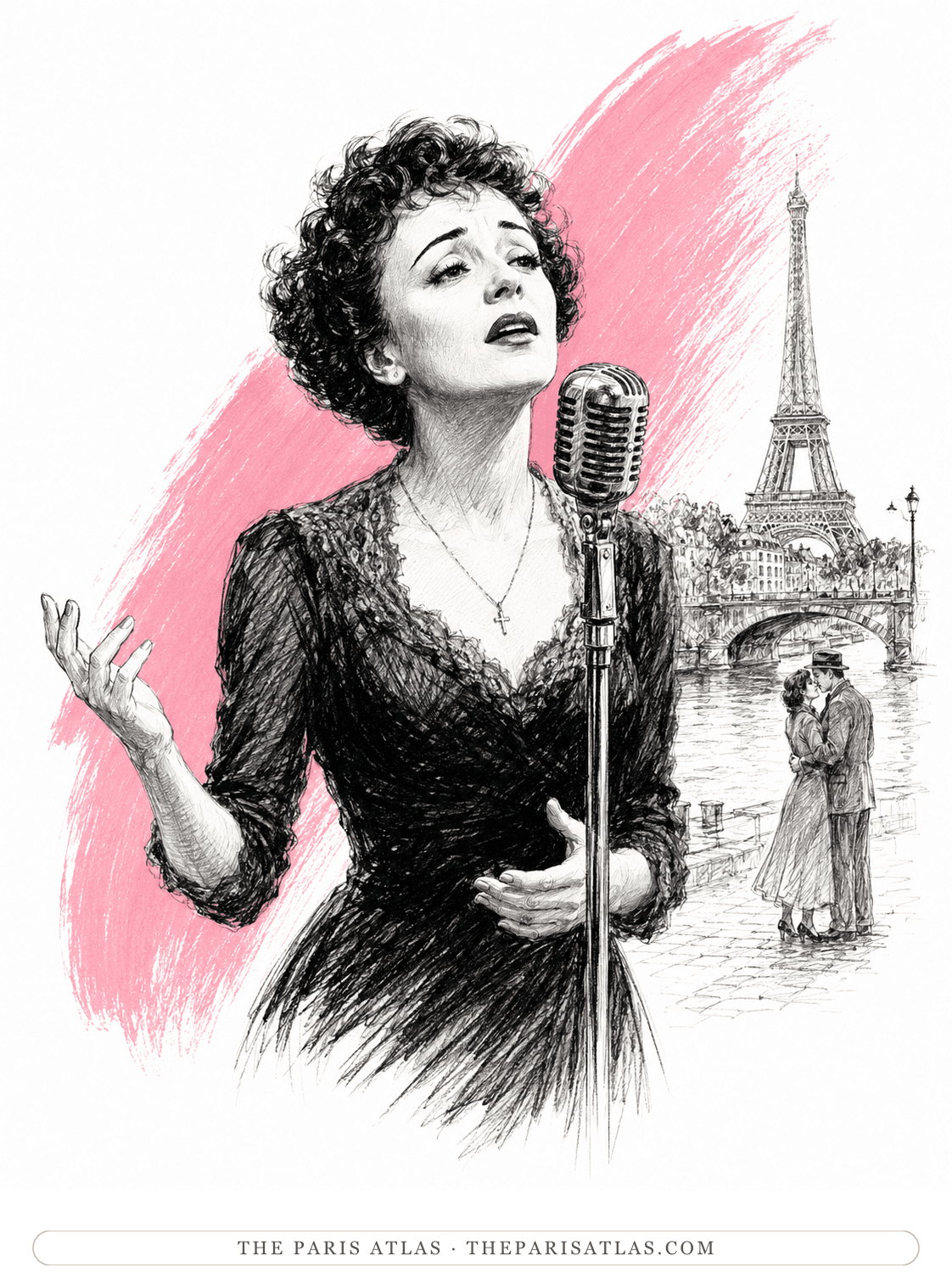
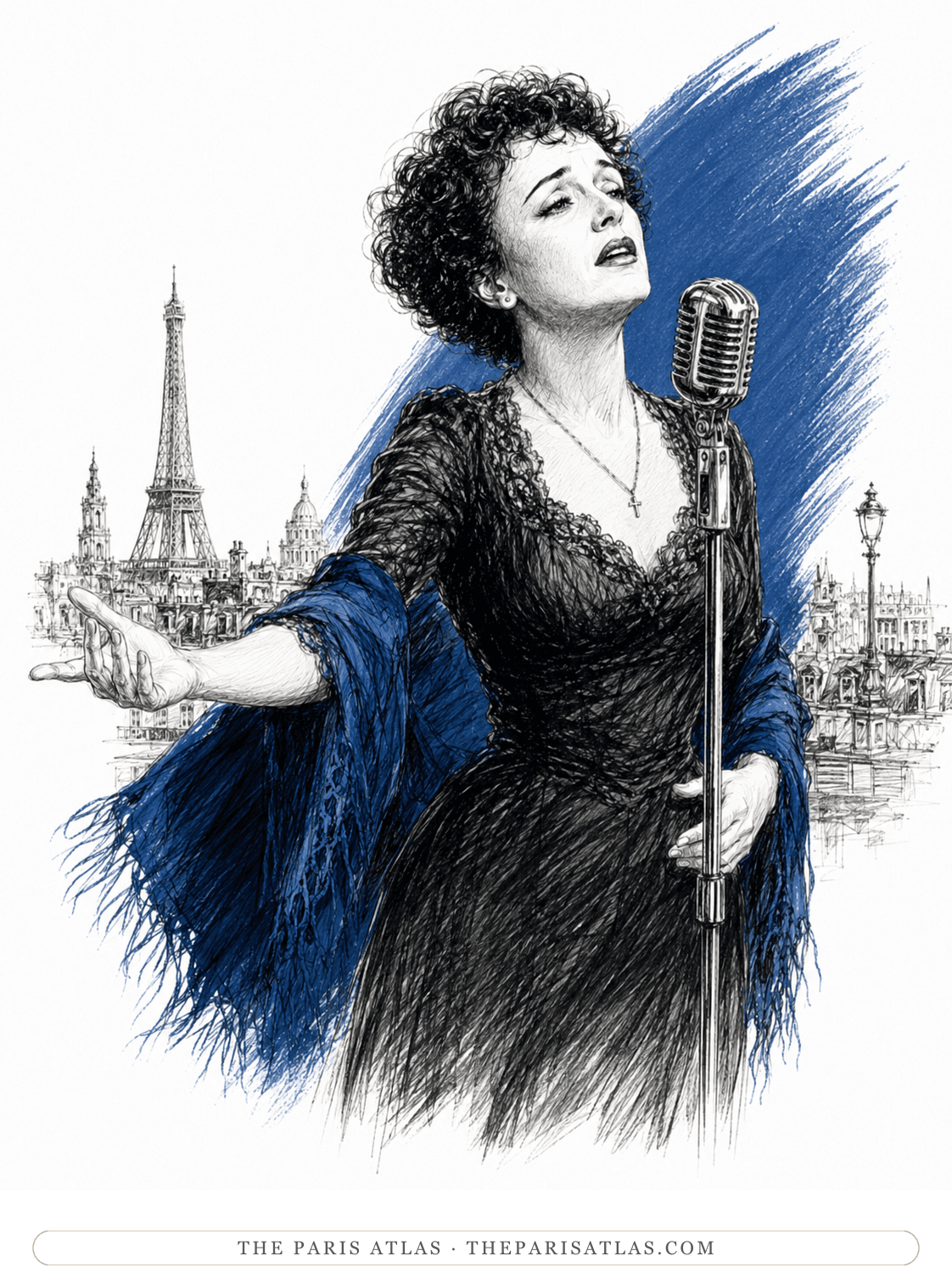
A promise of love made on the scale of apocalypse, written during her affair with the boxer Marcel Cerdan to Marguerite Monnot's steadily rising music. When Cerdan's flight went down in the Azores in October 1949, the song's extravagant vows became an elegy — and in 2024 Céline Dion returned it to the Paris skyline from the Eiffel Tower at the Olympic opening ceremony.
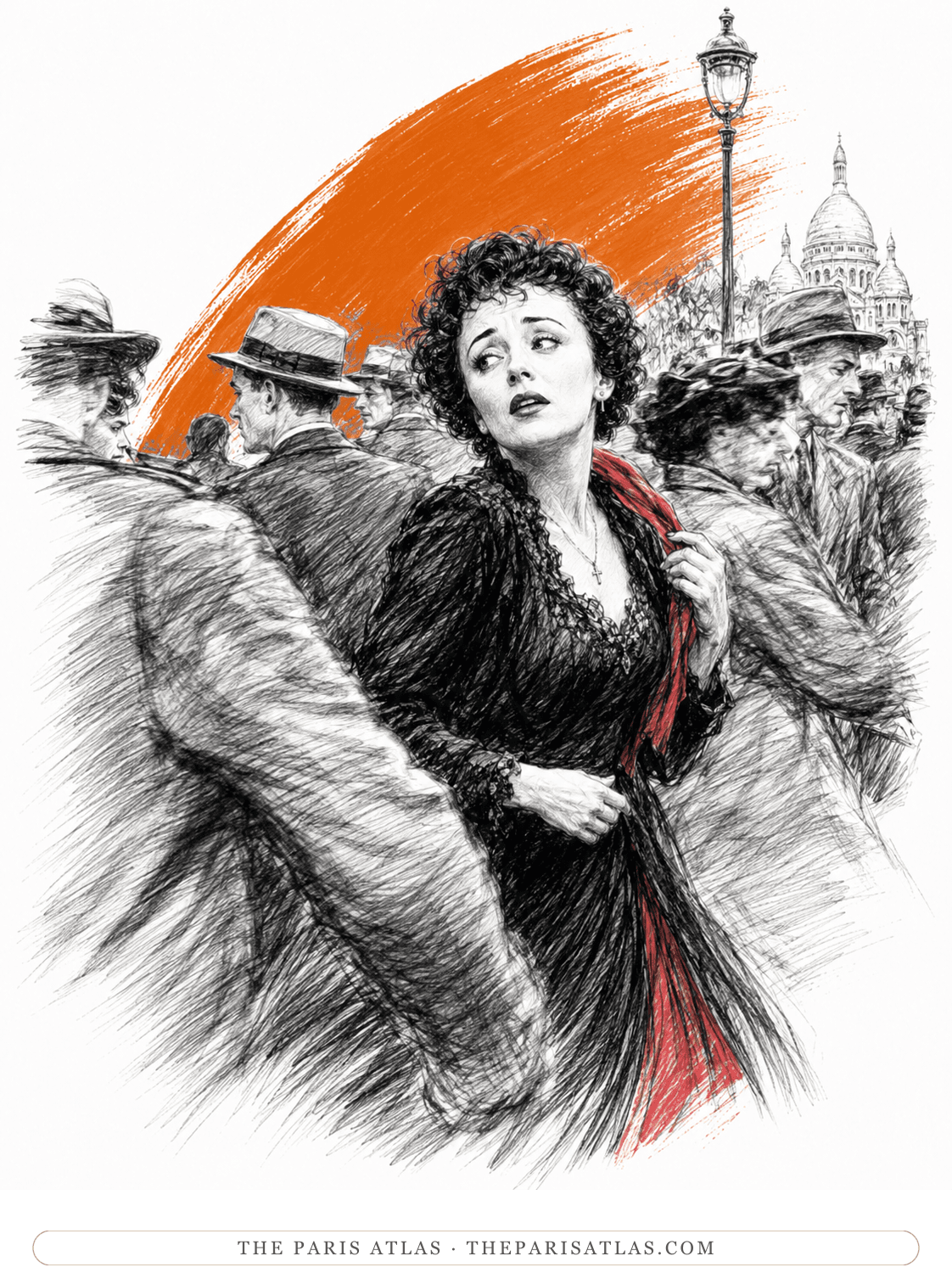
Hymne à l'amour makes its promise by imagining everything that could be lost. The natural world may collapse, society may turn against the lovers, and the singer may surrender her home, her identity, and everything she possesses — none of it matters while the beloved remains. The scale is deliberately excessive: Piaf turns a private declaration into something closer to an oath sworn against catastrophe itself.
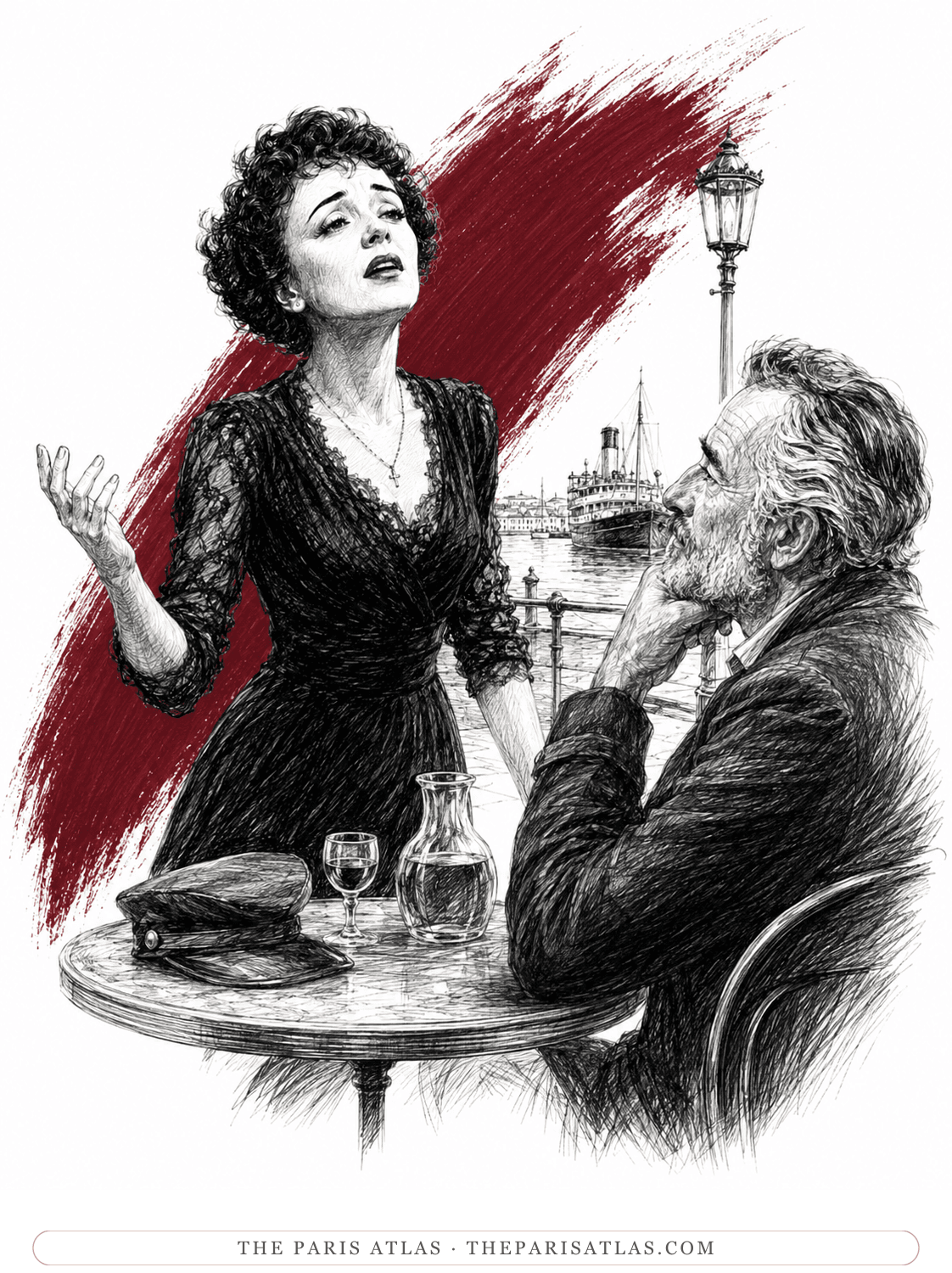
That intensity is inseparable from Marcel Cerdan, the French world-champion boxer with whom Piaf had begun an affair — complicated by distance, publicity, and Cerdan's marriage. The lyric admits no such qualifications. Love is presented as its own moral universe, powerful enough to make ordinary judgment irrelevant.
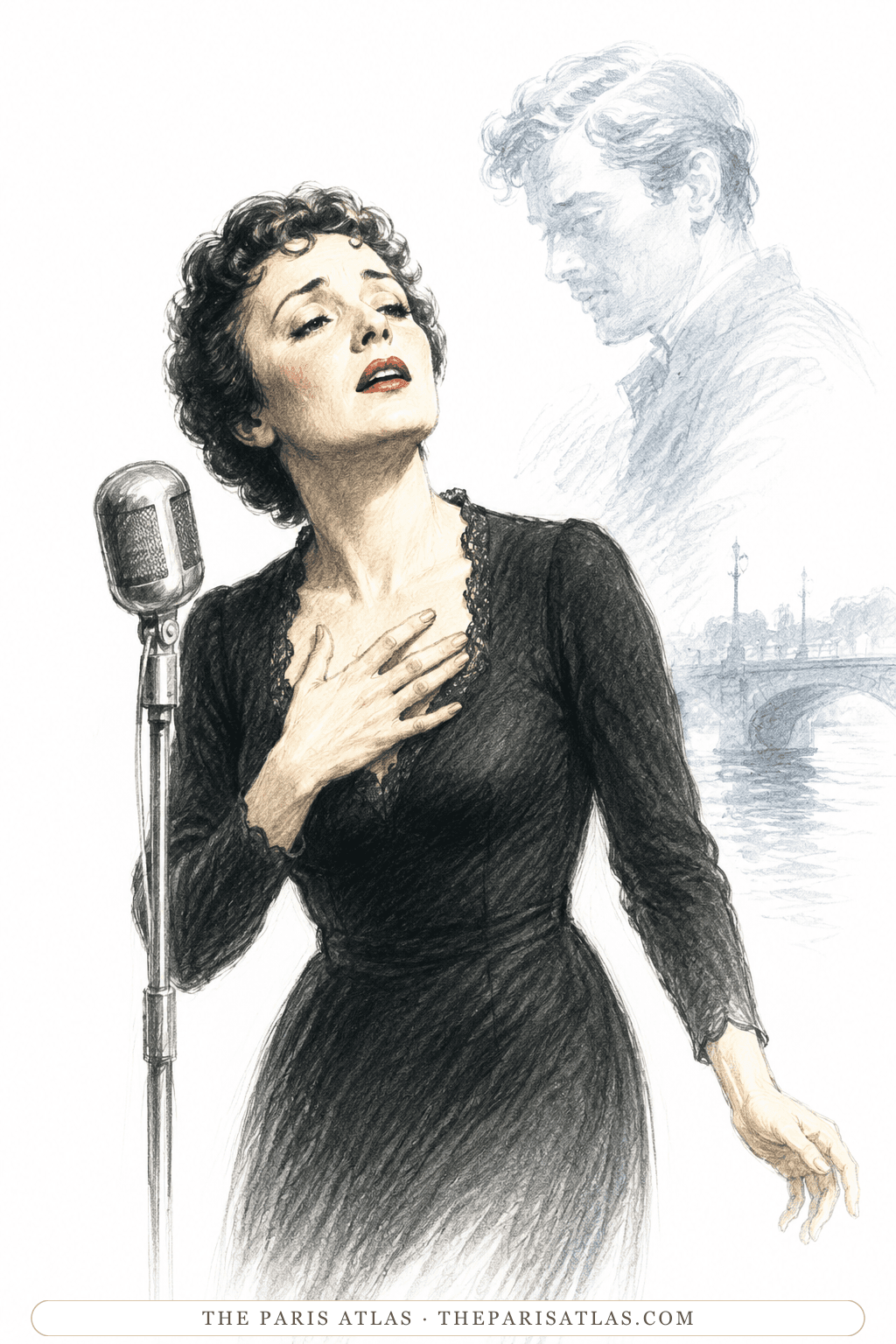
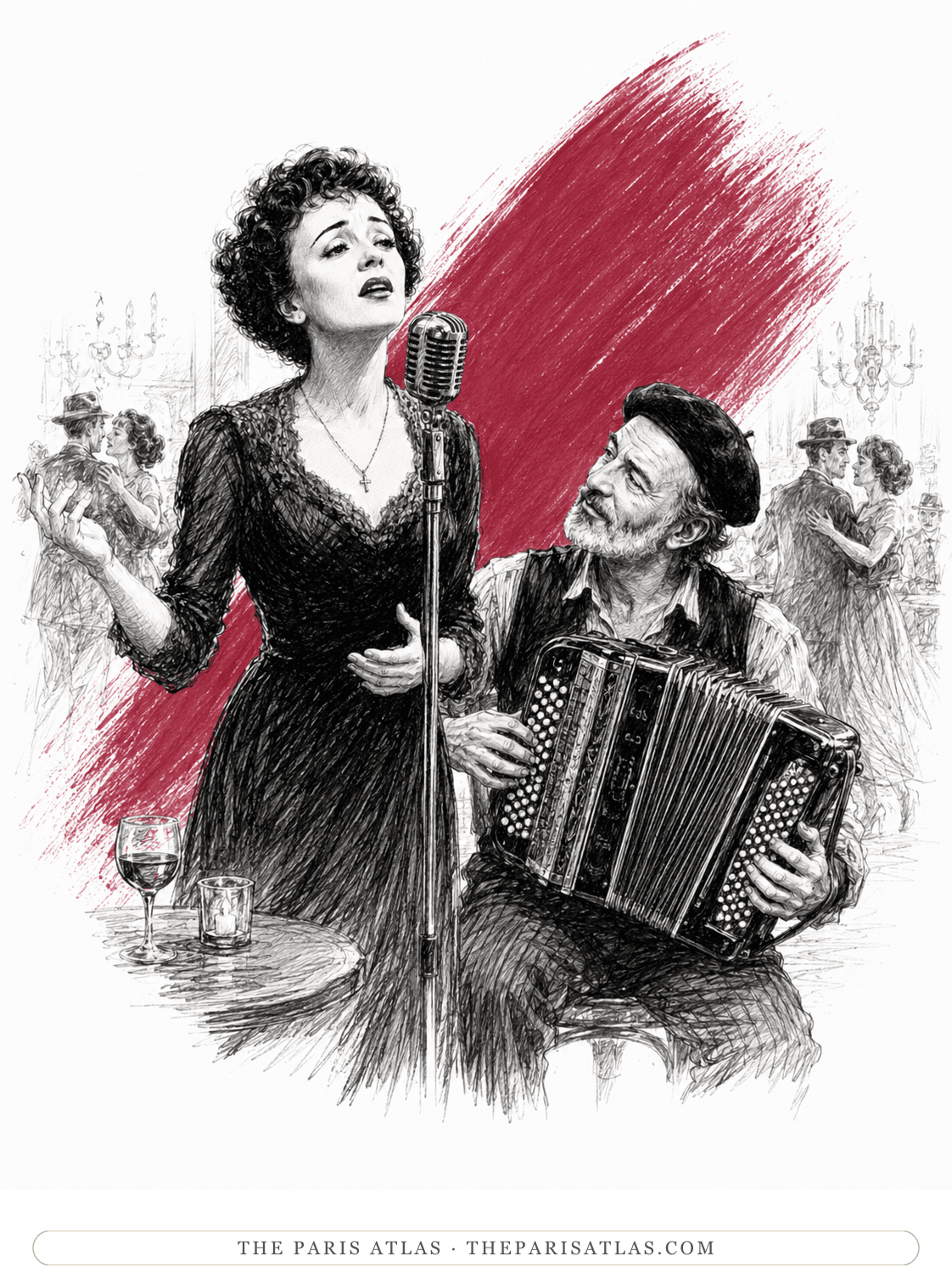
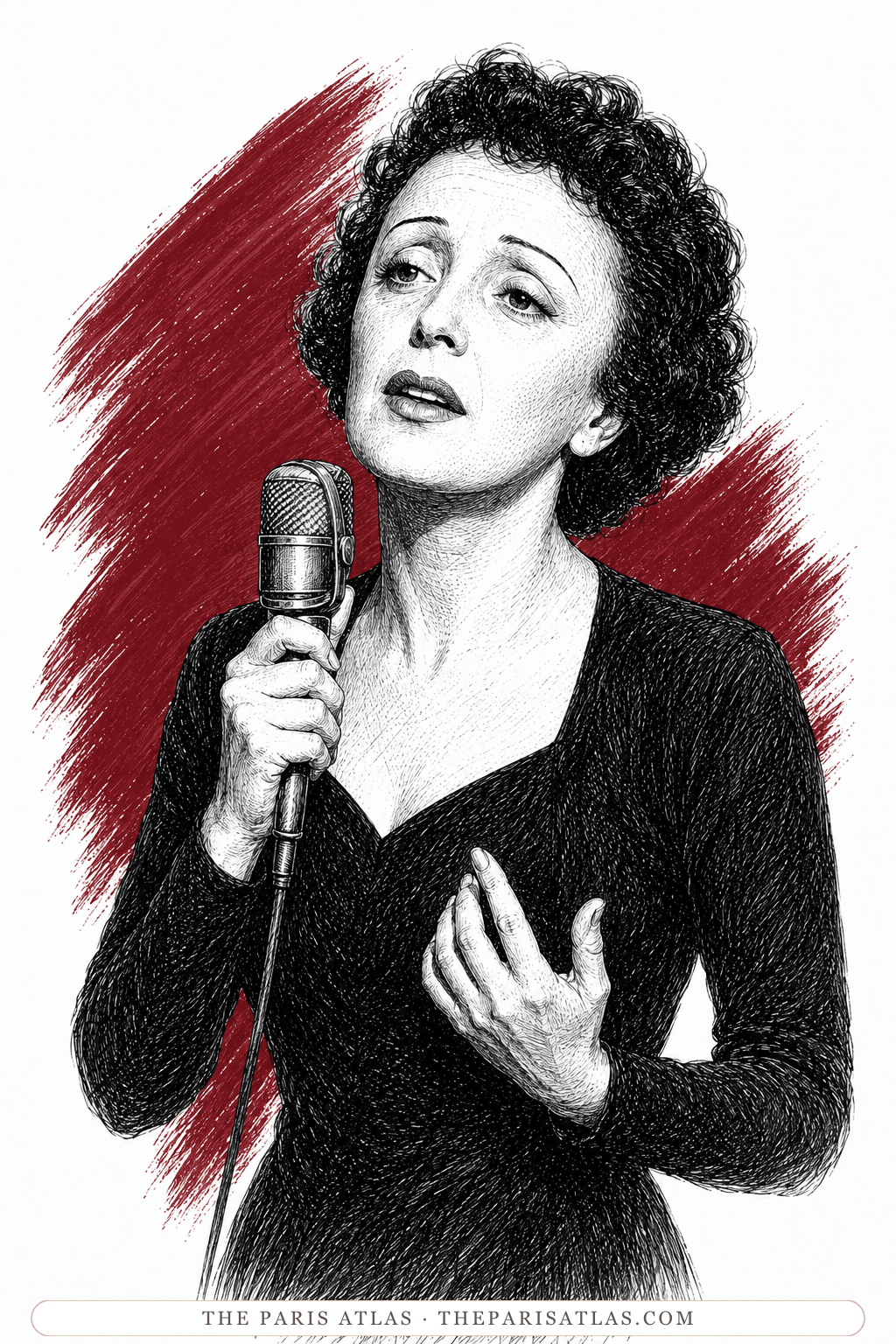
Piaf wrote the words and Marguerite Monnot — her most important musical collaborator, the composer who gave her emotional extremity a disciplined shape — wrote the music. The melody rises gradually beneath the vows, letting the performance grow from intimate confession into public declaration. The BnF dates the work to 1949, with the first commercial release following in 1950.
Cerdan died on 28 October 1949, when his flight from Paris to New York crashed in the Azores; Piaf had been expecting him to join her there. The song had been conceived while he was alive, but its meaning was permanently altered by his death. It has since outgrown the biography that produced it — countless singers have taken up its absolute devotion, and in 2024 Céline Dion sang it from the Eiffel Tower at the Paris Olympics: Piaf's private vow returned to the skyline as a public language for endurance.
1949
Piaf wrote the words for the boxer Marcel Cerdan, to Marguerite Monnot's steadily rising music.
October 1949
Cerdan died when his flight to New York went down in the Azores; the song's extravagant vows became an elegy.
1950
First released.
2024
Céline Dion sang it from the Eiffel Tower at the opening ceremony of the Paris Olympics.
A promise of love made on the scale of apocalypse — the singer vows she would defy the world, and the heavens, if her lover asked it.
Édith Piaf wrote the words in 1949; Marguerite Monnot composed the music.
The boxer Marcel Cerdan, Piaf's lover at the time.
Because Cerdan died in October 1949 when his flight to New York crashed in the Azores. Its vows turned into mourning almost at once.
In 1950.
Céline Dion performed it from the Eiffel Tower at the opening ceremony of the 2024 Paris Olympics.
Commemorates · 1949
Written during their affair as a promise, remade as an elegy on 28 October 1949, when Cerdan's flight to New York went down in the Azores — the song has carried his memory ever since.
Explore musicians from the same movements and circles.
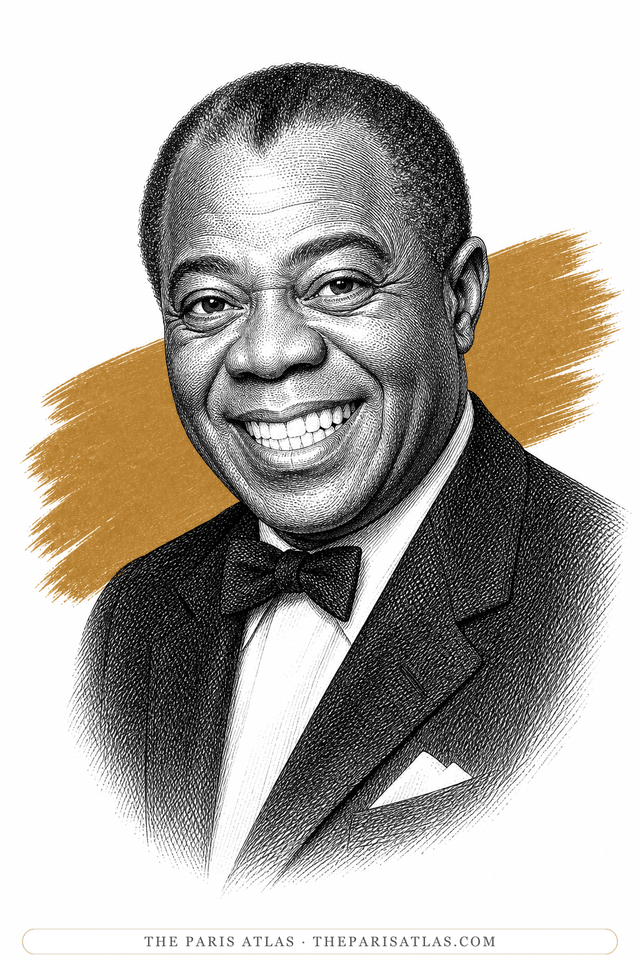
The New Orleans trumpeter and singer who turned jazz from a band music into a soloist's art, and whose voice became one of the most recognisable sounds of the twentieth century. Paris took him early: he spent the autumn of 1934 living in the city, made his only French records that November, played the Salle Pleyel, the city's principal concert hall, and kept coming back for thirty years — including for the 1961 film Paris Blues, shot in the streets he had once idled in.
View artist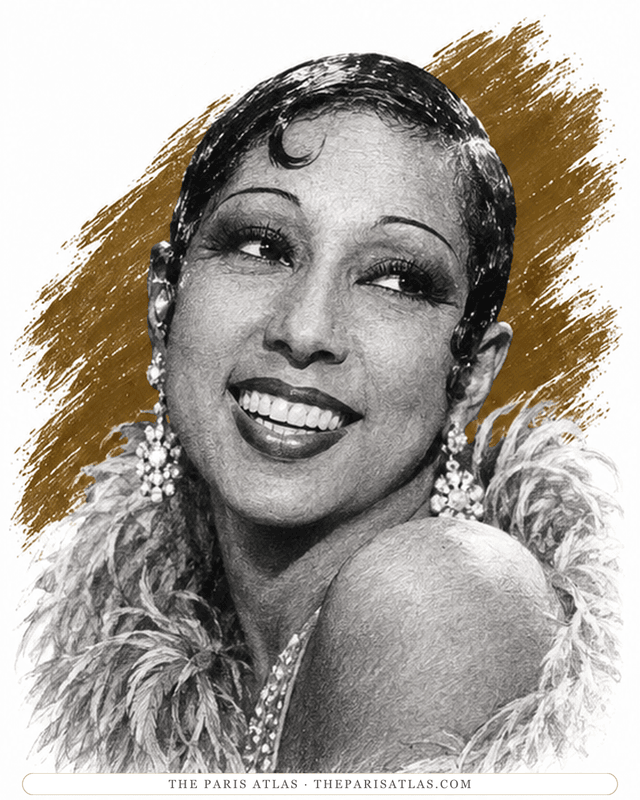
American-born French dancer and singer who conquered Paris at nineteen in La Revue Nègre, and who traded expatriate stories at James Baldwin's Saint-Paul-de-Vence table nearly fifty years later.
View artist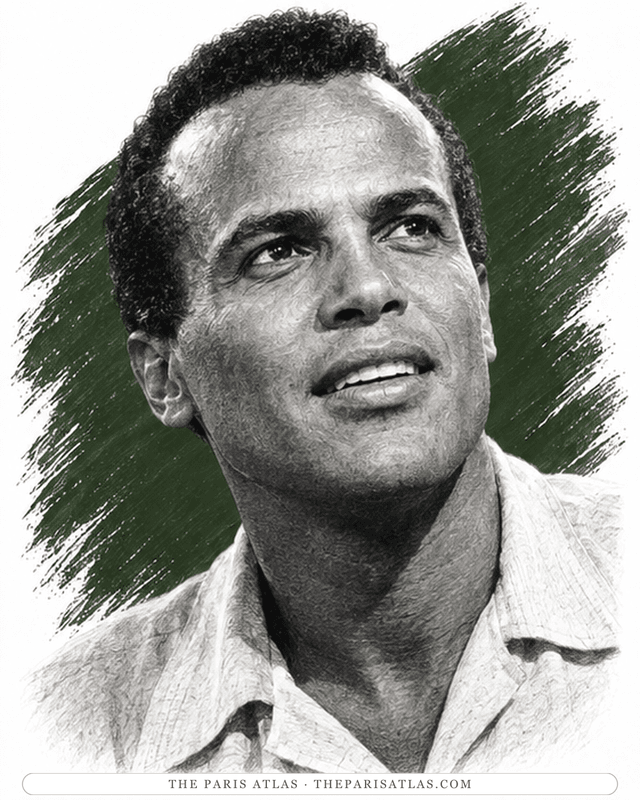
American singer and actor; a civil-rights ally of James Baldwin who sat in the room when Baldwin's delegation confronted Robert Kennedy in May 1963.
View artistThe sources below include collection records, catalogues, scholarly research, and primary materials that informed this page. They document Hymne à l'amour, its making, and its place in cultural history.


Archival evidence used to document the historical record connected to Hymne à l'amour.

Web source consulted for documented facts and historical context presented on the Hymne à l'amour page.
Archival evidence used to document the historical record connected to Hymne à l'amour.
Official record used to verify names, dates, institutional details, or other factual information on this page.
These references provide the documented foundation for this work's history and interpretation. Claim-level citations remain attached to the specific claims they support.
 Explore more resources