The Paris AtlasCharting the artists, works, and places worth returning to.
  • Musician
  • Composer
· French, born in Belgium · 1910–1953

Django Reinhardt

The guitarist who taught Europe to play jazz on its own terms — a Manouche Romani boy raised in a caravan on the wasteland at the edge of Paris, who lost the use of two fingers in a fire at eighteen, refingered the instrument around the injury, and with the violinist Stéphane Grappelli built the Quintette du Hot Club de France, the first jazz band of consequence to come from anywhere but America.

Details

Lived
1910–1953
Born
23 January 1910
Birthplace
Liberchies, Belgium
Birth name
Jean Reinhardt
Died
16 May 1953 · aged 43
Place of death
Samois-sur-Seine, France
Nationality
French, born in Belgium
Profession
Guitarist and composer
Major works
Nuages, Minor Swing, Djangology, Manoir de mes rêves
Children
Babik Reinhardt
Roles
MusicianComposer

About Django Reinhardt

Django Reinhardt was born in a caravan in 1910 and grew up in the Zone — the belt of shacks and encampments on the wasteland outside the old fortification wall of Paris, where the city's poorest people lived. He learned banjo well enough as a boy that accordionists hired him to back them in the bals musette, the working-class dance halls of the rue de Lappe and Belleville, and he was on his way to a career in French dance music when a fire in his caravan in October 1928 burned his left hand into a claw.

What he did next is why his name survives. He rebuilt his technique around two working fingers, discovered American jazz on a set of records played to him in the southern port city of Toulon, and in 1934 founded, with the violinist Stéphane Grappelli, the Quintette du Hot Club de France — three guitars, a violin and a double bass, no drums and no horns, a sound nobody in America had thought to make. He wrote 'Nuages' in occupied Paris in 1940 and became the most famous musician in France while the Nazi regime was deporting and murdering Roma across Europe. He died at Samois-sur-Seine in 1953, at forty-three, and left behind a whole living style of playing that is still called jazz manouche.

The caravan at the edge of Paris

He was born Jean Reinhardt on 23 January 1910, in the back of the family caravan in the Belgian countryside at Liberchies, to a Manouche family — the Manouches are a Romani people long established in eastern France and in Germany. His father was a musician, his mother an acrobatic dancer, and 'Django' was the name the family used. After the First World War his mother parked the caravan in what Parisians called the Zone: the strip of open ground at the foot of the city's demolished fortifications, crowded with shacks, where the poorest of Paris lived and which the photographer Eugène Atget spent years recording.

That is where he learned to play, and the city gave him his first work. Accordionists noticed the boy and hired him to back them on banjo in the bals musette — the cheap public dance halls of working-class Paris, above all in the rue de Lappe behind the Bastille and up in Belleville, where couples danced the java and the valse musette — the house dances of those halls — to accordion and banjo for a few sous, the small coins of the day. He was backing the star accordionists of that world — Guérino, Jean Vaissade, Fredo Gardoni — while still a teenager. He never learned to read music, and he never went to school.

The fire, and the hand he made afterwards

On the night of 25–26 October 1928 the caravan he was living in caught fire — it was stacked with the celluloid flowers his household made to sell, and celluloid burns like a fuse — and he was badly burned down his right side and across his left hand. He was eighteen. He spent close to two years recovering, nursed by his companion Naguine, and when the burns healed the ring and little fingers of his left hand were fixed in a curl he could not straighten. For a guitarist this is normally the end.

Instead he redesigned the instrument's use. Melody lines and solos were played with the index and middle fingers alone, at a speed that made other guitarists doubt what they were hearing; the two damaged fingers were pressed into service for chords across the top strings. The compensation became a style — the leaping, ornamented single-note lines and the abrupt chordal punctuation that anyone playing gypsy jazz today is still copying. He got the sound because of the injury, and he made the injury inaudible.

The records that changed the plan

In Toulon, on the Mediterranean coast, he met the photographer and painter Émile Savitry, who put jazz records on for him — among them a big-band recording by Louis Armstrong, the New Orleans trumpeter whose solos had just turned jazz into a soloist's music. Reinhardt had been playing dance music for accordionists. The Philharmonie de Paris, which mounted an exhibition on him in 2012, describes the hearing as a revelation, and it redirected everything he did afterwards.

Paris in the early 1930s had somewhere to put that ambition. The Hot Club de France, founded by a group of young enthusiasts including Pierre Nourry, the critic Hugues Panassié and Charles Delaunay — the son of the painters Robert and Sonia Delaunay — existed to argue that jazz was serious music and to put on concerts proving it. Panassié's book Le Jazz Hot, published in Paris in 1934, was among the first attempts anywhere to write about the music critically. When the club decided it wanted a band of its own, Reinhardt was the player it had.

The Quintette du Hot Club de France

The Quintette played its first concert on 2 December 1934, billed on the posters as a new kind of hot jazz orchestra, and the novelty was real: it was made entirely of string instruments. Two soloists — Reinhardt's guitar and Stéphane Grappelli's violin — rode over two rhythm guitars and a double bass, with no drummer and no horn section anywhere in it. The rhythm guitars supplied the pulse with a hard downstroke that French players call la pompe, 'the pump'. American jazz had never sounded like this, because no American band was built like this.

It made him internationally famous within a few years, and it made Paris a place American musicians came to record. Passing through the city in the 1930s, the saxophonists Coleman Hawkins and Benny Carter, the trumpeter Bill Coleman, the violinist Eddie South and the trombonist Dicky Wells all cut sides with him. In April 1939 he met Duke Ellington, whose orchestra was on a European tour; while they were in Paris, three of Ellington's players — the cornettist Rex Stewart, the clarinettist Barney Bigard and the bassist Billy Taylor — recorded a handful of small-group pieces with Reinhardt, among them 'Finesse' and 'Solid Old Man'.

Nuages, under the Occupation

The Second World War split the Quintette: Grappelli was in London when war broke out and stayed there, and Reinhardt returned to Paris, which the German army occupied in June 1940. He formed a new quintet with the clarinettist Hubert Rostaing, replacing the violin with a clarinet, and in December 1940 recorded 'Nuages' — 'Clouds' — a slow, resigned, endlessly returning melody that sold more than ten thousand copies and became the tune the Occupation years are remembered by in France.

His position was dangerous in a way the fame disguises. The Nazi regime was interning, deporting and murdering Roma across occupied Europe, and Reinhardt was the most recognisable Romani man in France. He kept his head down in La Roulotte — 'the caravan' — a small cabaret in Pigalle, the nightlife district at the foot of Montmartre, and went on working; he also began, in those years, an ambitious symphonic piece and a mass for the Romani people. He survived, which many of his relatives did not.

Ellington, the electric guitar, and Samois

After the Liberation he played as featured guest with a United States Army big band in 1945, and in late October 1946 he sailed to America at Duke Ellington's invitation, touring with the Ellington orchestra and appearing at Carnegie Hall in New York. It went less well than the invitation promised — he was a soloist grafted onto a band that had no arrangements for him — and he came home.

Then he did the thing few musicians of his generation managed: he changed again. In 1951, after months away from music, younger players brought him bebop — the fast, harmonically restless style the saxophonist Charlie Parker and the trumpeter Dizzy Gillespie had made in New York — and he took to it on an amplified guitar — a French Stimer pickup fitted to his Selmer guitar — in the Club Saint-Germain, on the Left Bank, alongside the saxophonists James Moody and Don Byas and the American drummer Kenny Clarke, who had settled in Paris. He had left the city itself by then for Samois-sur-Seine, a village on the river below Fontainebleau, south-east of Paris, where he fished, played billiards, and spent time with his young son Babik.

He died there of a cerebral haemorrhage on 16 May 1953, aged forty-three. One of his guitars — built at Mantes in 1940 by the Paris instrument maker Selmer, the 'small-mouth' model the firm made from 1936 until 1952 and that he had adopted as his own — was given to the Musée de la musique in Paris in 1964, where it is now among the most-visited objects in the collection. The music outlived him as a living tradition rather than a repertoire: jazz manouche is still played, taught and argued over, and it is the only major style of jazz that did not come out of the United States.

Life events

  1. 1910

    Born on 23 January in the family caravan in the Belgian countryside at Liberchies, to a Manouche father who was a musician and a mother who was an acrobatic dancer.

    Exposition Django Reinhardt, Swing de Paris

  2. 1919

    After the First World War his mother settles the caravan in the Zone, the shanty ground at the foot of the demolished Paris fortifications.

    Exposition Django Reinhardt, Swing de Paris

  3. 1920s

    Hired as a boy banjo player by accordionists — Guérino, Jean Vaissade, Fredo Gardoni — in the bals musette of the rue de Lappe and Belleville.

    Exposition Django Reinhardt, Swing de Paris

  4. 1928

    On the night of 25–26 October his caravan burns. He is severely burned and loses the use of the ring and little fingers of his left hand; the recovery takes close to two years.

    Exposition Django Reinhardt, Swing de Paris; Michael Dregni, Django: The Life and Music of a Gypsy Legend (2004)

  5. 1931

    In Toulon the photographer Émile Savitry plays him jazz records, including a Louis Armstrong big-band side. The Philharmonie de Paris calls the hearing a revelation.

    Exposition Django Reinhardt, Swing de Paris

  6. 1934

    First concert of the Quintette du Hot Club de France on 2 December, advertised as a new kind of hot jazz orchestra — an all-strings band with Reinhardt's guitar and Stéphane Grappelli's violin as its two soloists.

    Exposition Django Reinhardt, Swing de Paris

  7. 1939

    Meets Duke Ellington in Paris in April; Ellington's Rex Stewart, Barney Bigard and Billy Taylor record small-group sides with him there, including Finesse and Solid Old Man.

    Philippe Baudoin et Claude Carrière, Duke Ellington Panorama — chronologie sélective; Exposition Django Reinhardt, Swing de Paris

  8. 1940

    Records Nuages in December, in occupied Paris. It sells more than ten thousand copies and becomes the song of the Occupation years.

    Exposition Django Reinhardt, Swing de Paris

  9. 1941

    Forms a new quintet with the clarinettist Hubert Rostaing and works through the Occupation, keeping a low profile at La Roulotte, a small cabaret in Pigalle.

    Exposition Django Reinhardt, Swing de Paris

  10. 1945

    Featured guest soloist with a United States Army big band after the Liberation.

    Exposition Django Reinhardt, Swing de Paris

  11. 1946

    Sails for America at the end of October at Duke Ellington's invitation, touring with the Ellington orchestra and playing Carnegie Hall.

    Exposition Django Reinhardt, Swing de Paris; Philippe Baudoin et Claude Carrière, Duke Ellington Panorama — chronologie sélective

  12. 1951

    Returns to playing through younger bebop musicians, on an amplified Selmer guitar, at the Club Saint-Germain with James Moody, Don Byas and Kenny Clarke.

    Exposition Django Reinhardt, Swing de Paris

  13. 1953

    Dies of a cerebral haemorrhage on 16 May at Samois-sur-Seine, where he had settled. He was forty-three.

    Exposition Django Reinhardt, Swing de Paris

  14. 1964

    One of his Selmer guitars, built at Mantes in 1940, is given to the Musée de la musique in Paris.

    Exposition Django Reinhardt, Swing de Paris

People they knew

Documented connections — every one carries its source.

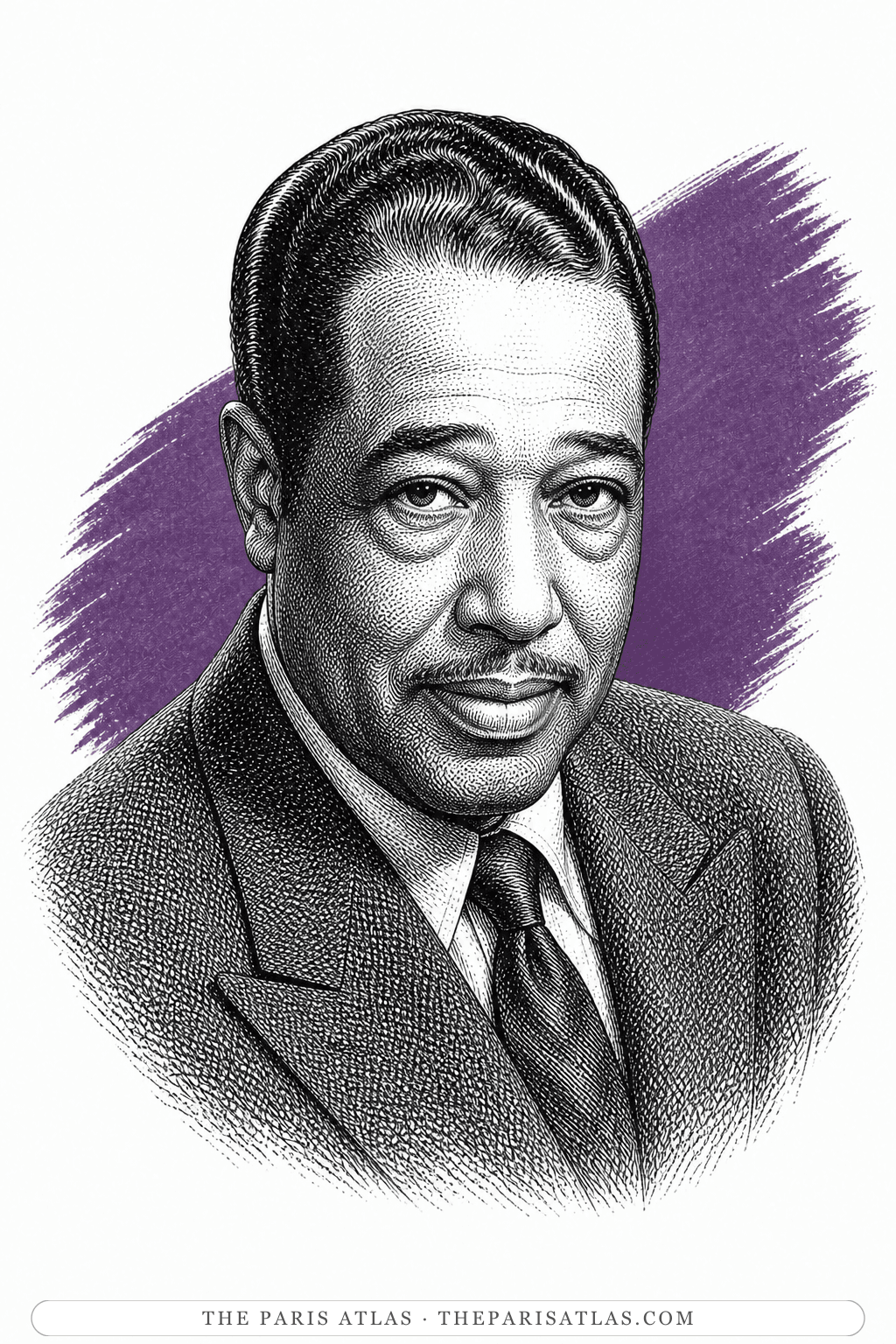
Duke Ellington

  • Composer
  • Pianist

Collaborated with · 1939–1946

They met in Paris in April 1939, while Ellington's orchestra was touring Europe; during that stay three of Ellington's players — Rex Stewart, Barney Bigard and Billy Taylor — recorded small-group sides with Reinhardt in the city, including Finesse and Solid Old Man. At the end of October 1946 Ellington brought him to the United States to tour with the orchestra, Carnegie Hall included. The American tour is generally judged a disappointment: Reinhardt was a soloist dropped into a band with no arrangements written for him.
Philippe Baudoin et Claude Carrière, Duke Ellington Panorama — chronologie sélective; Exposition Django Reinhardt, Swing de Paris

Who they drew from

Influence running inward — the writers and artists whose work fed theirs. Admiration is not acquaintance; these edges claim neither a meeting nor a friendship.

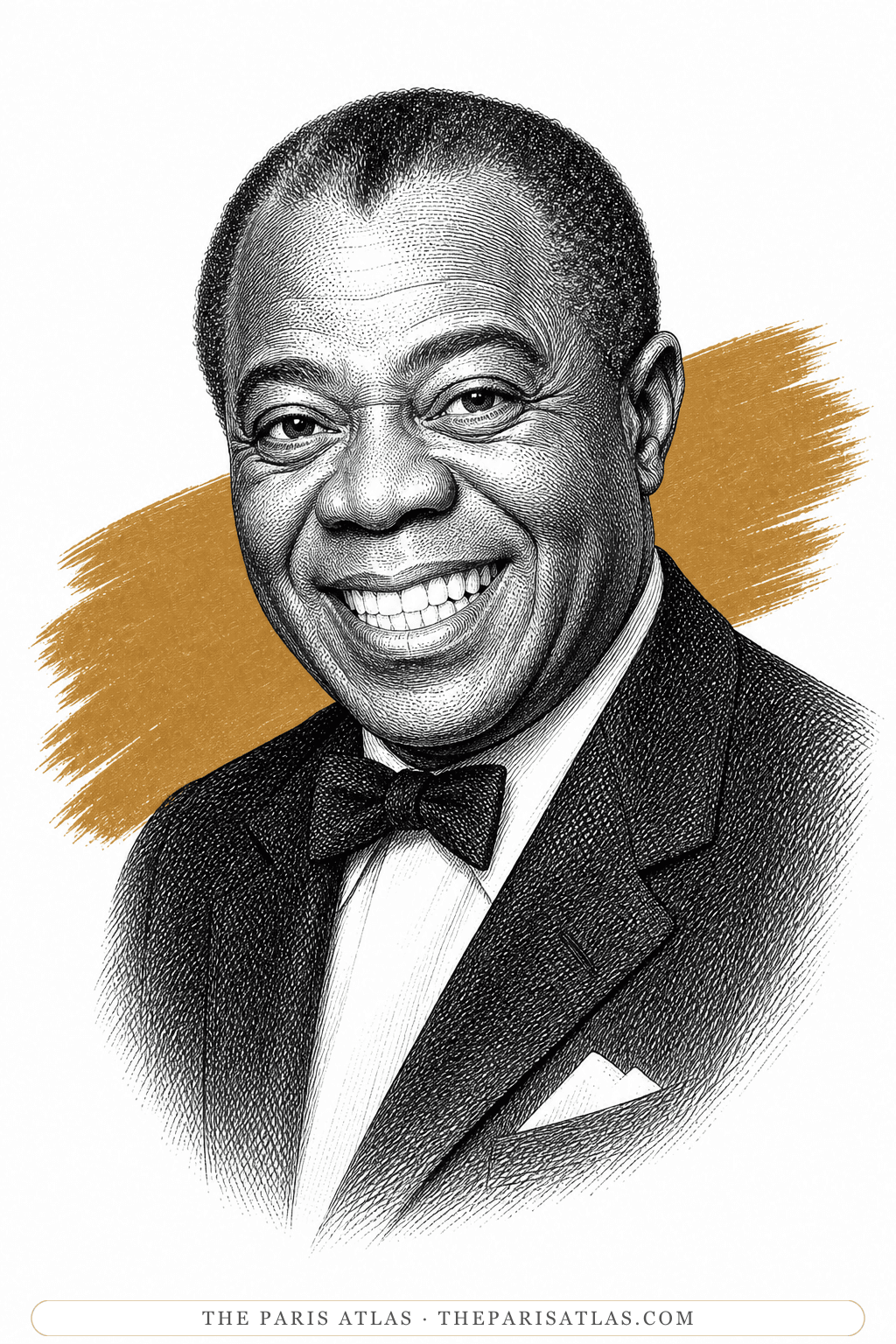
Louis Armstrong

Reinhardt was playing banjo and guitar for accordionists in the Paris dance halls when the photographer Émile Savitry played him jazz records in Toulon, among them a big-band side by Armstrong. The Philharmonie de Paris describes the hearing as a revelation; it turned a French musette player into the first European jazz soloist of consequence.

Exposition Django Reinhardt, Swing de Paris; Michael Dregni, Django: The Life and Music of a Gypsy Legend (2004)

Django Reinhardt’s Places

The cataloged places connected to Django Reinhardt — through the books, and through the documented record.

Places you can enter today appear first, followed by addresses to see from outside and sites that have vanished.

Questions about Django Reinhardt

How did Django Reinhardt play guitar with two fingers?

A fire in his caravan on the night of 25–26 October 1928 burned his left hand, and the ring and little fingers healed curled and unusable. He rebuilt his technique around the index and middle fingers, which carried the melodies and solos, and used the two damaged fingers for chords on the top strings. The workaround produced the style: the fast ornamented single-note lines and the sharp chordal jabs that gypsy jazz guitarists still learn from his records.

What is the Quintette du Hot Club de France?

The band Reinhardt founded with the violinist Stéphane Grappelli, which gave its first concert on 2 December 1934 under the auspices of the Hot Club de France, a Paris society set up by young enthusiasts — Pierre Nourry, Hugues Panassié, Charles Delaunay — to argue that jazz was serious music. It was made of strings alone: two soloists over two rhythm guitars and a double bass, with no drums and no horns. No American band was built that way, which is why it is usually called the first jazz group of real consequence to come from outside the United States.

What is gypsy jazz, or jazz manouche?

The style that grew out of Reinhardt's playing: acoustic guitars and often a violin, a hard steady rhythm-guitar pulse the French call la pompe ('the pump'), fast ornamented soloing, and a repertoire built on his own tunes — Nuages, Minor Swing, Djangology — alongside swing standards. Manouche is the name of the Romani people Reinhardt belonged to. It is a living tradition, still taught and played, and the only major jazz style that did not originate in America.

What is Nuages?

Reinhardt's most famous composition, recorded in Paris in December 1940 during the German occupation of France. The title means 'Clouds'. It sold more than ten thousand copies at a time when little else was selling, and it became the piece the Occupation years are remembered by in France.

What happened to Django Reinhardt during the German occupation of Paris?

He stayed and kept working, which was dangerous: the Nazi regime was interning, deporting and murdering Roma across occupied Europe, and he was the most recognisable Romani man in France. He formed a new quintet with the clarinettist Hubert Rostaing, recorded Nuages, kept a low profile in a small Pigalle cabaret called La Roulotte, and began a symphonic work and a mass for the Romani people. He survived the war; many of his relatives did not.

Did Django Reinhardt play with Duke Ellington?

Yes, twice over. They met in Paris in April 1939, when Ellington's orchestra was touring Europe, and three of Ellington's players — Rex Stewart, Barney Bigard and Billy Taylor — recorded small-group sides with Reinhardt in the city. In late October 1946 Ellington brought him to the United States to tour with the orchestra, including a Carnegie Hall appearance. The American tour is generally judged a disappointment: Reinhardt was a soloist dropped into a band that had written nothing for him.

Where did Django Reinhardt die, and where can you see his guitar?

He died of a cerebral haemorrhage on 16 May 1953 at Samois-sur-Seine, the village on the river below Fontainebleau where he had settled, aged forty-three. One of his Selmer guitars — the 'small-mouth' model he made famous, built at Mantes in 1940 — was given to the Musée de la musique at the Philharmonie de Paris in 1964 and is on display there.

Sourced claims

Every connection the graph holds for Django, with the evidence behind it.

Collaborated with · 1939–1946

Duke Ellington

They met in Paris in April 1939, while Ellington's orchestra was touring Europe; during that stay three of Ellington's players — Rex Stewart, Barney Bigard and Billy Taylor — recorded small-group sides with Reinhardt in the city, including Finesse and Solid Old Man. At the end of October 1946 Ellington brought him to the United States to tour with the orchestra, Carnegie Hall included. The American tour is generally judged a disappointment: Reinhardt was a soloist dropped into a band with no arrangements written for him.
Philippe Baudoin et Claude Carrière, Duke Ellington Panorama — chronologie sélective; Exposition Django Reinhardt, Swing de Paris

Performed at · 1940–1944

Pigalle

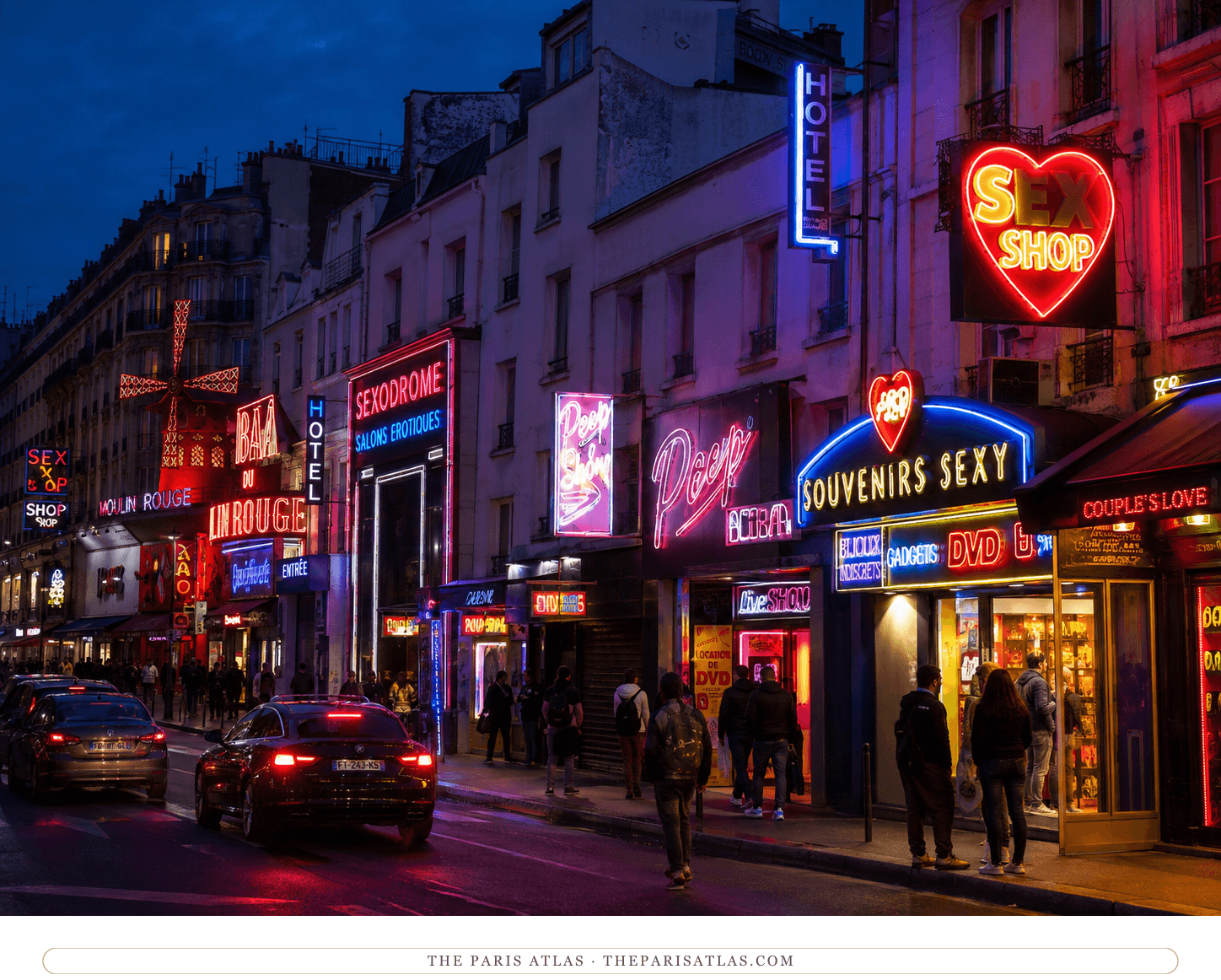
Through the German occupation of Paris, Reinhardt kept a deliberately low profile at La Roulotte — 'the caravan' — a small cabaret in Pigalle, while the Nazi regime was interning and deporting Roma across occupied Europe. He was the most recognisable Romani musician in France, and he went on working.

Exposition Django Reinhardt, Swing de Paris

Influenced by · 1931

Louis Armstrong

Reinhardt was playing banjo and guitar for accordionists in the Paris dance halls when the photographer Émile Savitry played him jazz records in Toulon, among them a big-band side by Armstrong. The Philharmonie de Paris describes the hearing as a revelation; it turned a French musette player into the first European jazz soloist of consequence.

Exposition Django Reinhardt, Swing de Paris; Michael Dregni, Django: The Life and Music of a Gypsy Legend (2004)

References

References

The sources below include biographies, scholarly essays, interviews, and primary materials that informed this page. They reflect both the historical record and ongoing critical conversations about Django Reinhardt and their work.

  1. 1Exposition Django Reinhardt, Swing de Paris

    Philharmonie de Paris

    The Philharmonie de Paris's dossier for its 2012–13 exhibition Django Reinhardt, Swing de Paris — the spine of the dates here.

    View source
  2. 2Django: The Life and Music of a Gypsy Legend

    Oxford University Press, 2004

    The standard English-language biography, by Michael Dregni.

  1. 3Duke Ellington Panorama — chronologie sélective

    La Maison du Duke, Paris

    For the 1939 Paris recordings with Duke Ellington's sidemen and the 1946 American tour.

    View source
i
Why these sources are here

These references anchor the page in the documented record and in the scholarly conversations around Django Reinhardt. Every claim on this page traces back to one or more of the works listed here.

Explore more resources