Children’s Corner
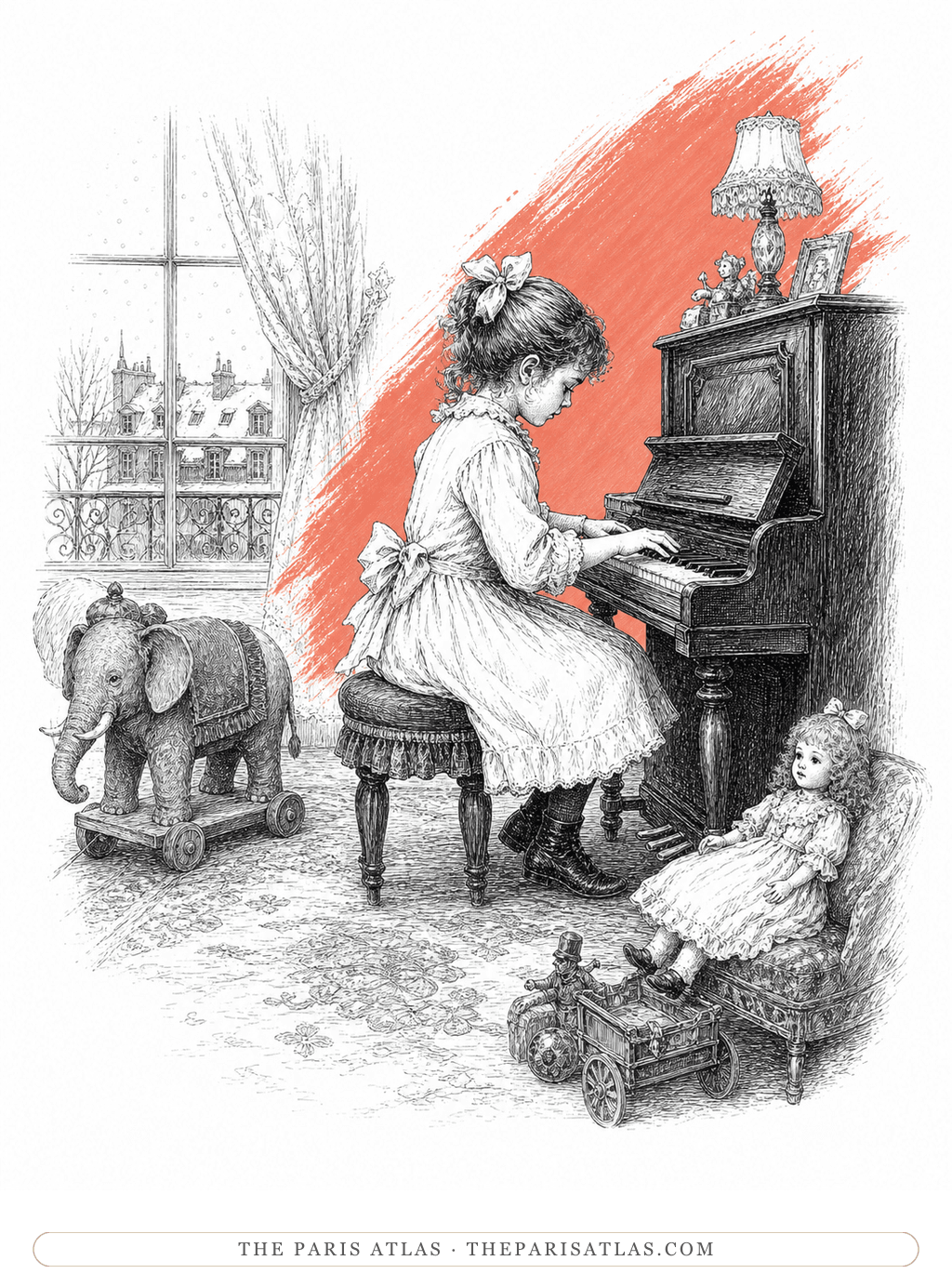
A witty and affectionate six-piece piano suite dedicated to Debussy’s daughter Chouchou, where lessons, toys, stories and popular entertainment become sophisticated musical character studies.
- 1906–1908
- Six-movement suite for solo piano
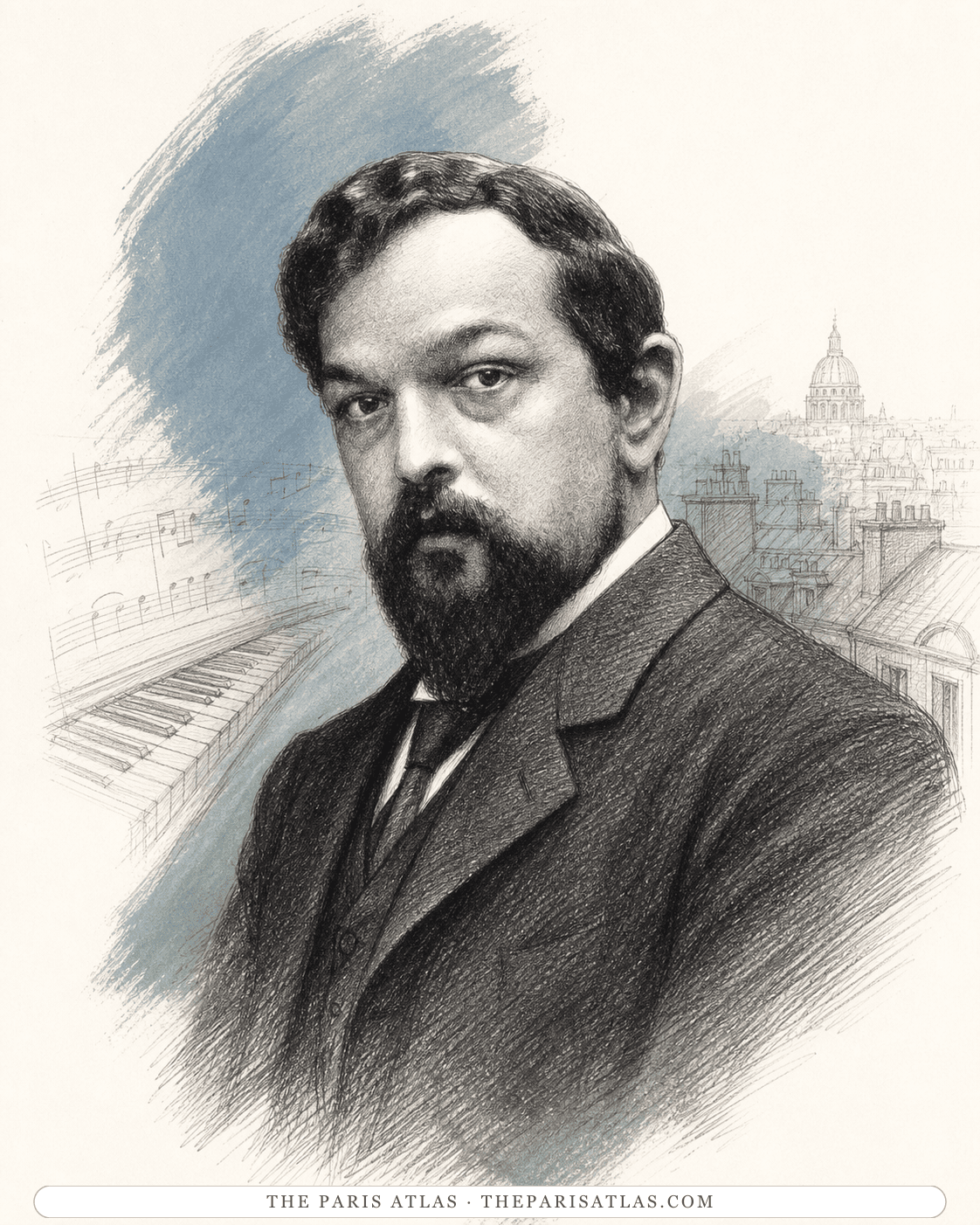
About Claude Debussy
A suite dedicated to Chouchou
Debussy dedicated Children’s Corner to his daughter Claude-Emma, nicknamed Chouchou. The English title and movement names reflect the English governess in her childhood world, but the music is not simply a set of easy exercises for a child performer.
It is music by an adult observing childhood with affection, irony and extraordinary technical imagination. Lessons can become comic theatre; a toy can carry pathos; a dance can expose the way popular culture enters domestic life.
The six pieces
Each movement creates a sharply differentiated scene:
- Doctor Gradus ad Parnassum — a mock-serious piano lesson that turns mechanical practice into speed and play.
- Jimbo’s Lullaby — a heavy, tender lullaby for a toy elephant.
- Serenade for the Doll — delicate, stylized music imagined around a doll’s miniature world.
- The Snow Is Dancing — crossing figures and muted motion make falling snow visible through touch and rhythm.
- The Little Shepherd — a spare pastoral scene shaped by pauses and distant calls.
- Golliwogg’s Cakewalk — a syncopated finale drawing on the cakewalk and interrupting itself with a pointed musical joke about Wagner.
Childhood does not mean simplicity
The suite’s subjects are childlike, but its pianism is exacting. Debussy asks the player to control balance, articulation, pedal, quick changes of character and the weight of individual registers.
That gap between subject and technique is part of the work’s intelligence. Childhood is not reduced to innocence; it includes boredom, imitation, private fantasy, comedy and the unsettling force of things half understood.
The cakewalk and the world outside the nursery
The finale brings an African American-derived dance into a French piano suite through the popular entertainment culture of Debussy’s time. Its syncopation and theatrical swagger are musically vivid, while the movement’s title and imagery also belong to racist caricature and require honest historical context.
The piece demonstrates both Debussy’s openness to musical materials beyond the European concert canon and the unequal cultural systems through which those materials reached him. Admiration, appropriation and stereotype coexist in its history.
Why Children’s Corner matters
Children’s Corner compresses a remarkable range of Debussy’s art into six short movements: parody, tenderness, atmosphere, rhythmic experiment, orchestral thinking at the keyboard and precise characterization.
It also gives his biography an intimate centre. Behind the public modernist was a father writing for the imaginative world of the daughter he adored. Chouchou survived Debussy by little more than a year and died in 1919 at thirteen, giving the dedication a tragic afterlife the music itself could not have anticipated.
Timeline
1905
Claude-Emma ‘Chouchou’ Debussy is born.
1906–1908
Debussy composes the six pieces of Children’s Corner.
1908
The suite is published with its dedication to Chouchou.
1911
André Caplet’s orchestration brings the suite into the orchestral repertory.
1919
Chouchou dies at thirteen, little more than a year after her father.
Frequently asked questions
Who was Children’s Corner written for?
Debussy dedicated it to his daughter Claude-Emma, nicknamed Chouchou.
How many pieces are in Children’s Corner?
Six, ending with Golliwogg’s Cakewalk.
Is Children’s Corner music for beginner pianists?
No. Its subjects come from childhood, but the suite requires sophisticated control of touch, rhythm, balance and character.
Why are the titles in English?
English formed part of Chouchou’s nursery world through her governess, and Debussy used English titles for the suite and its movements.
When did Debussy compose Children’s Corner?
Between 1906 and 1908.
More by Claude Debussy
If you like Claude Debussy
Explore composers from the same movements and circles.
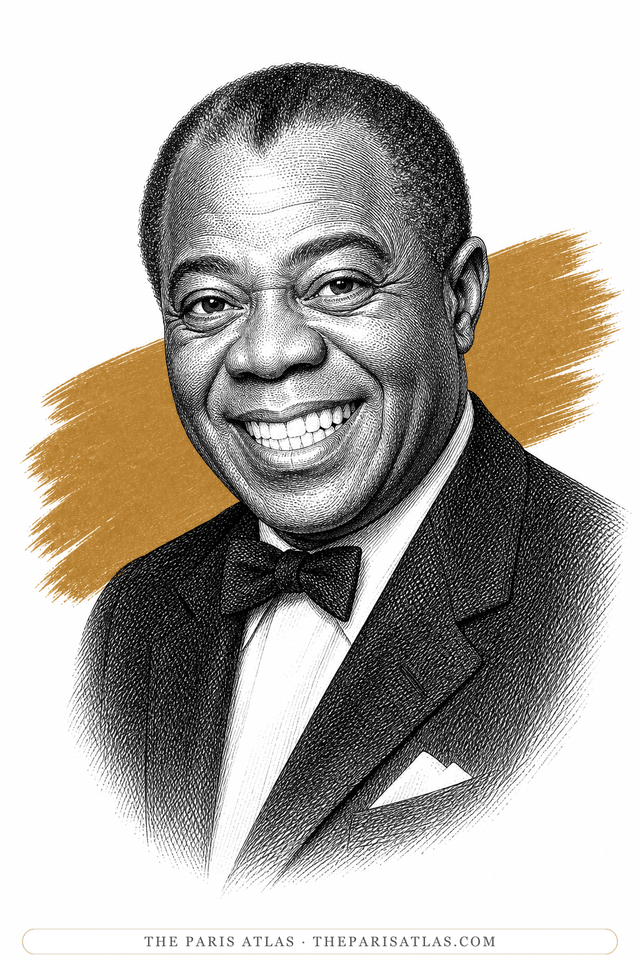
Louis Armstrong
The New Orleans trumpeter and singer who turned jazz from a band music into a soloist's art, and whose voice became one of the most recognisable sounds of the twentieth century. Paris took him early: he spent the autumn of 1934 living in the city, made his only French records that November, played the Salle Pleyel, the city's principal concert hall, and kept coming back for thirty years — including for the 1961 film Paris Blues, shot in the streets he had once idled in.
View artist
Chet Baker
American trumpeter and singer with the smallest, plainest sound in jazz, who arrived in Paris in September 1955 for eight months, recorded — for the French label Barclay — the sessions that are still his most argued-over records, and lost his pianist Dick Twardzik to a heroin overdose in a Paris hotel room ten days after their first session together.
View artist
Paul Bowles
American novelist and composer whose expatriate fiction explores dislocation, unstable intimacy, fatalism, and North Africa.
View artist
References
The sources below include collection records, catalogues, scholarly research, and primary materials that informed this page. They document Children’s Corner, its making, and its place in cultural history.


1Children’s Corner
WebsitePhilharmonie de ParisUsed forWeb source consulted for documented facts and historical context presented on the Children’s Corner page.
2Claude Debussy: works by date
WebsiteIRCAM–Centre PompidouUsed forWeb source consulted for documented facts and historical context presented on the Children’s Corner page.
3Claude Debussy: Biographie
WebsiteIRCAM–Centre PompidouUsed forWeb source consulted for documented facts and historical context presented on the Children’s Corner page.
4Claude Debussy (1862–1918)
WebsitePhilharmonie de ParisUsed forWeb source consulted for documented facts and historical context presented on the Children’s Corner page.
5Children’s Corner — Claude Debussy
WebsiteWise Music ClassicalUsed forWeb source consulted for documented facts and historical context presented on the Children’s Corner page.
These references provide the documented foundation for this work's history and interpretation. Claim-level citations remain attached to the specific claims they support.
 Explore more resources