Suite bergamasque
A four-movement piano suite in which Debussy looks back to dances and courtly elegance while quietly remaking harmony, rhythm and atmosphere for the twentieth century.
- c. 1890; revised and published 1905
- Four-movement suite for solo piano
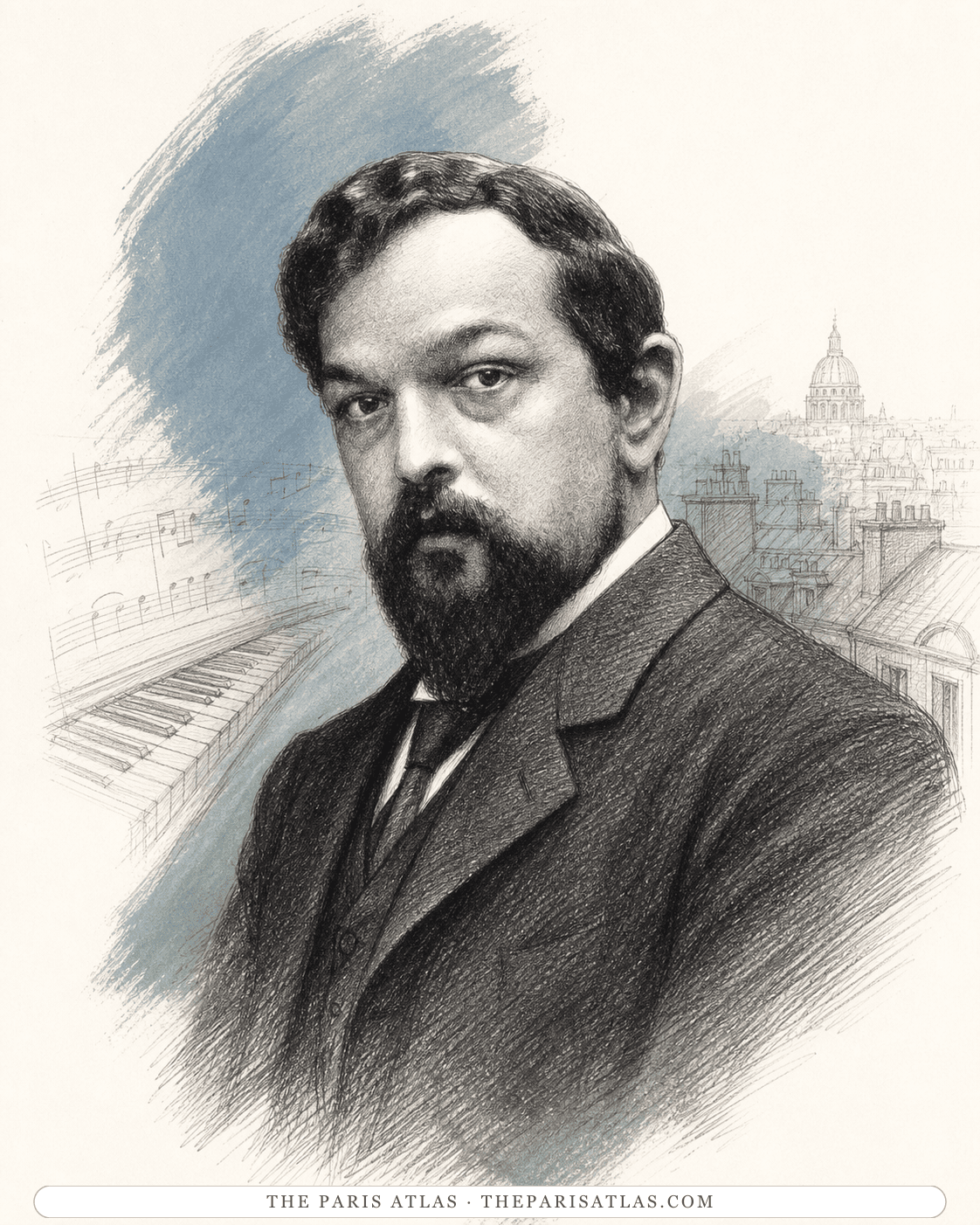
About Claude Debussy
The four movements
Suite bergamasque forms a complete arc rather than a container built only around its famous third movement:
- Prélude — an open, animated beginning whose gestures recall improvisation.
- Menuet — an old dance filtered through irregular accents and modern harmony.
- Clair de lune — the slow centre, spacious and inward.
- Passepied — a light, quick finale derived from another historical dance.
The contrast matters. Clair de lune sounds more suspended because it is framed by music with clearer dance energy.
A suite written across two Debussys
The suite began around 1890 but did not appear in its revised published form until 1905. In those fifteen years Debussy wrote Prélude à l’après-midi d’un faune, Pelléas et Mélisande and La Mer, becoming the composer who transformed French music.
Suite bergamasque therefore preserves an early lyrical Debussy while bearing the touch of the mature one. Its forms look backward, but the handling of resonance and harmonic direction points forward.
What “bergamasque” means
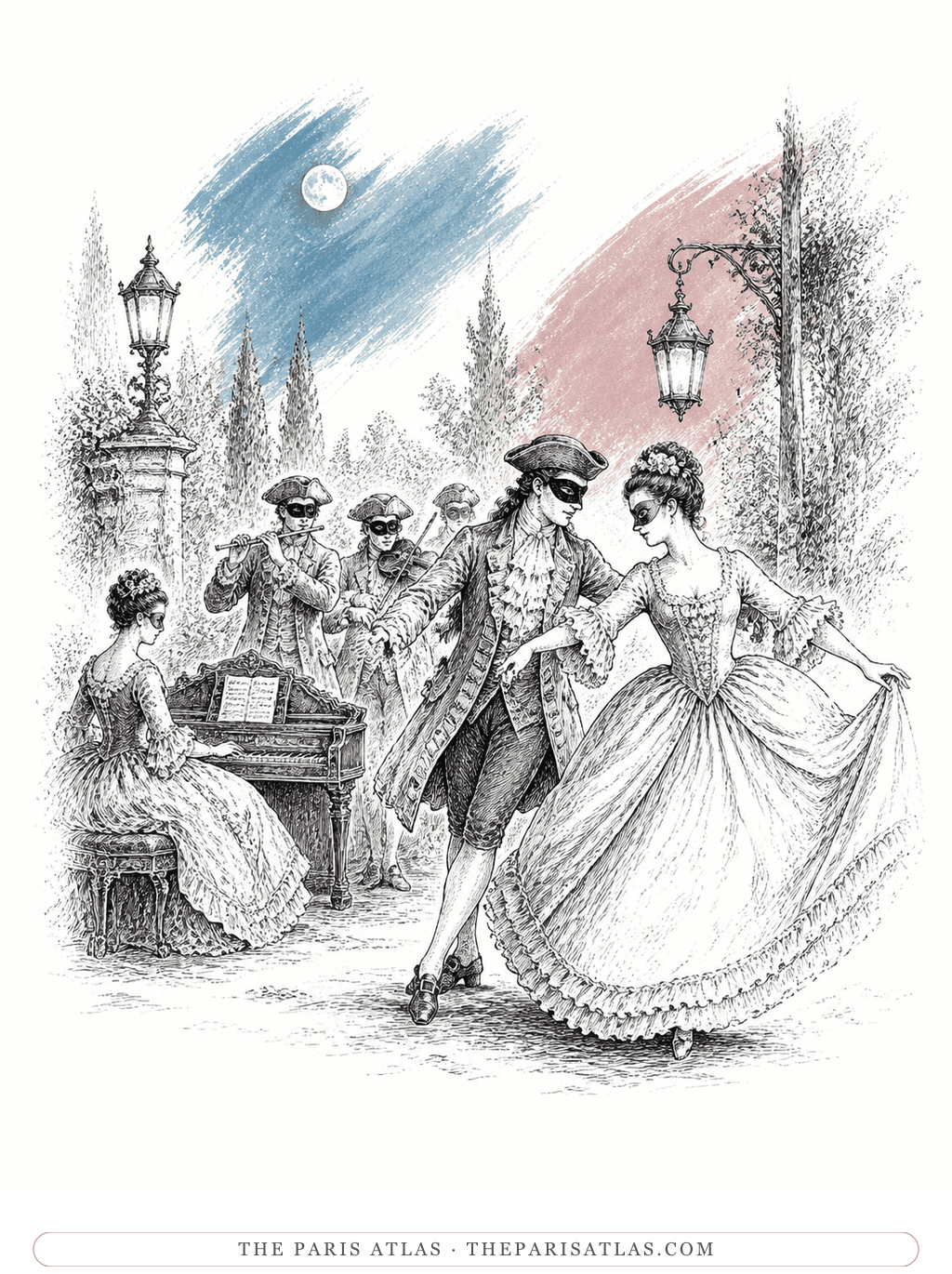
The title invokes bergamasques: dances or figures associated historically with Bergamo and, in French art, with an imagined world of masks and courtly festivity. Paul Verlaine used the word in his poem “Clair de lune,” where elegant dancers appear both charming and faintly sad.
Debussy’s suite belongs to that culture of remembrance. The old dances are not archaeological reconstructions. They are modern impressions of historical form, heard at a distance.
Old forms, new harmonic behavior
A Baroque suite normally establishes identity through a sequence of dances. Debussy keeps the idea of contrasting movements but loosens their grammar. Cadences can be delayed, chords valued for sonority and phrases allowed to breathe outside a rigidly symmetrical frame.
This mixture of clarity and ambiguity keeps the suite from becoming vague. Each movement has a distinct tempo, character and contour. What changes is the force with which harmony insists on a destination.
Why the whole suite matters
Hearing only Clair de lune can make Debussy seem exclusively dreamy. The complete suite is witty, rhythmic and formally alert. It shows how he could transform inherited traditions without staging a public break with them.
It also explains why the famous movement works. Stillness is most legible beside motion; moonlight gains definition because a Prélude, Menuet and Passepied surround it.
Timeline
c. 1890
Debussy begins the suite during his early Paris period.
1894–1902
The breakthroughs of Faune and Pelléas transform Debussy’s public position before the suite appears.
1905
The revised Suite bergamasque is published in four movements.
Frequently asked questions
How many movements are in Suite bergamasque?
Four: Prélude, Menuet, Clair de lune and Passepied.
Is Clair de lune part of Suite bergamasque?
Yes. It is the suite’s third and slowest movement.
When did Debussy compose Suite bergamasque?
He began it around 1890 and revised it before publication in 1905.
What does bergamasque mean?
The word evokes dances and masked figures associated with Bergamo and with the fête galante world remembered in French poetry and art.
More by Claude Debussy


If you like Claude Debussy
Explore composers from the same movements and circles.

Louis Armstrong
The New Orleans trumpeter and singer who turned jazz from a band music into a soloist's art, and whose voice became one of the most recognisable sounds of the twentieth century. Paris took him early: he spent the autumn of 1934 living in the city, made his only French records that November, played the Salle Pleyel, the city's principal concert hall, and kept coming back for thirty years — including for the 1961 film Paris Blues, shot in the streets he had once idled in.
View artist
Chet Baker
American trumpeter and singer with the smallest, plainest sound in jazz, who arrived in Paris in September 1955 for eight months, recorded — for the French label Barclay — the sessions that are still his most argued-over records, and lost his pianist Dick Twardzik to a heroin overdose in a Paris hotel room ten days after their first session together.
View artist
Paul Bowles
American novelist and composer whose expatriate fiction explores dislocation, unstable intimacy, fatalism, and North Africa.
View artist
References
The sources below include collection records, catalogues, scholarly research, and primary materials that informed this page. They document Suite bergamasque, its making, and its place in cultural history.


1Suite bergamasque
WebsitePhilharmonie de ParisUsed forWeb source consulted for documented facts and historical context presented on the Suite bergamasque page.
2Suite bergamasque: Clair de lune — Claude Debussy
WebsitePhilharmonie de ParisUsed forWeb source consulted for documented facts and historical context presented on the Suite bergamasque page.
3Claude Debussy: piano works
WebsitePhilharmonie de ParisUsed forWeb source consulted for documented facts and historical context presented on the Suite bergamasque page.
4Claude Debussy: works by date
WebsiteIRCAM–Centre PompidouUsed forWeb source consulted for documented facts and historical context presented on the Suite bergamasque page.
These references provide the documented foundation for this work's history and interpretation. Claim-level citations remain attached to the specific claims they support.
 Explore more resources