Jeux
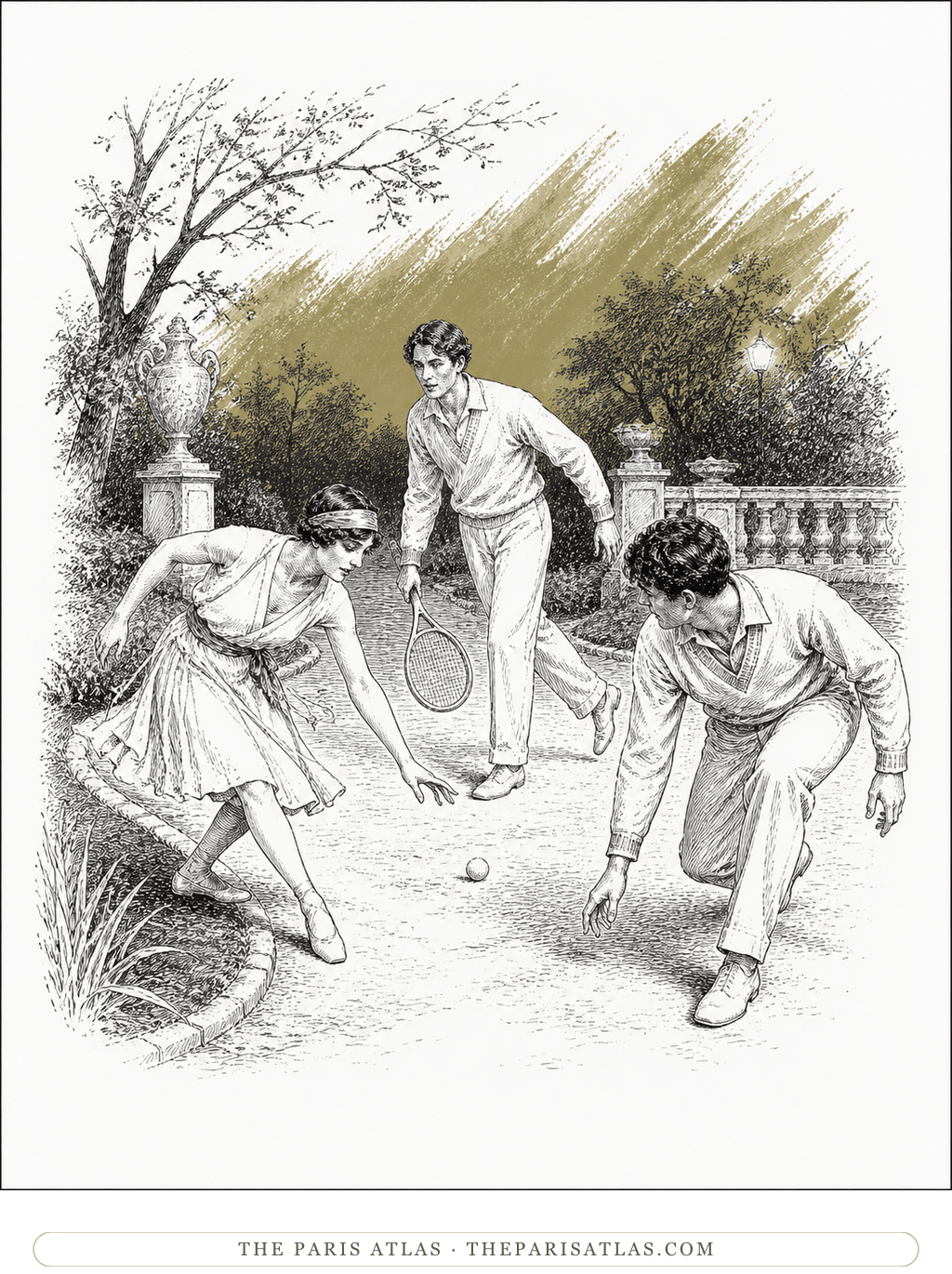
Debussy’s final great orchestral score follows three young people searching for a lost tennis ball through a twilight park, turning glances, pursuit and changing desire into music that continually remakes its own form.
- August 1912–April 1913; premiered 15 May 1913
- Poème dansé · one-act ballet
About Claude Debussy
A Ballets Russes commission
Serge Diaghilev commissioned Jeux for the Ballets Russes in 1912. Vaslav Nijinsky devised the scenario and choreography, Léon Bakst designed the sets and costumes, and Pierre Monteux conducted. Debussy composed the piano score first so rehearsals could begin, then completed the orchestration in spring 1913.
The collaboration placed Debussy inside the company that was making Paris a laboratory for modern ballet. Yet Jeux sounds unlike a conventional sequence of dances. Its action and score are built from fleeting encounters rather than fixed numbers.
A tennis ball in a twilight park
The scenario begins with a tennis ball lost in a park at dusk. A young man and two young women search for it, then turn the search into a game of pursuit, jealousy, quarrelling, reconciliation and attraction. At the end, another ball arrives and the figures scatter.
Almost nothing happens in the conventional dramatic sense. That slightness is the point: movement, hesitation and shifting attention become the subject. The score follows emotional weather too quick and ambiguous to settle into a stable story.
A form that changes every few seconds
Jeux is famous for its continual transformation. Short ideas appear, combine and vanish before they can harden into traditional themes. Tempo, meter, orchestral color and direction change with extraordinary frequency, yet recurring intervals and gestures keep the surface connected.
The result is not random. Debussy replaces the older model of statement and development with a field of possibilities: every musical instant can redirect the next. The score behaves like the glances and feints of the dancers’ game.
The orchestra in motion
A large orchestra is used with chamber-like precision. Harps, celesta, divided strings, woodwinds, muted brass and percussion create rapidly changing combinations, often passing a fragment from one color to another before the listener can identify a single dominant line.
This is late Debussy at his most compressed and mobile. The sensuality of earlier scores remains, but it is broken into a mosaic of impulses and interruptions that points toward later twentieth-century music.
Paris, May 1913
Jeux premiered at the newly opened Théâtre des Champs-Élysées on 15 May 1913, danced by Nijinsky, Tamara Karsavina and Ludmilla Schollar. The audience response was restrained, and criticism focused heavily on Nijinsky’s choreography.
Two weeks later, on the same stage and with the same company and conductor, Stravinsky’s The Rite of Spring overwhelmed Parisian attention. Jeux was eclipsed in the immediate story of 1913 even though its quieter formal radicalism would become increasingly important to later composers and analysts.
Why Jeux matters
Jeux demonstrates that form can emerge from constant change rather than from a stable hierarchy of themes. Its discontinuities, quick transitions and interlocking colors anticipate musical concerns that became central decades later.
It is also an essential Paris work: created by an international team for the Ballets Russes, premiered at the Théâtre des Champs-Élysées and immediately placed beside the most famous ballet event of the century. The score shows that 1913 contained more than one path into modernism.
Timeline
August 1912
Debussy begins the Ballets Russes commission from Nijinsky’s tennis-game scenario.
April 1913
He completes the orchestral score.
15 May 1913
Jeux premieres at the Théâtre des Champs-Élysées under Pierre Monteux.
29 May 1913
The Rite of Spring premieres on the same stage and rapidly overshadows Jeux in accounts of the season.
Later 20th century
Composers and analysts increasingly recognize the score’s constantly transforming form as a major modernist achievement.
Frequently asked questions
What is Debussy’s Jeux?
A one-act ballet, or poème dansé, composed for Diaghilev’s Ballets Russes in 1912–1913.
What happens in Jeux?
A young man and two young women search for a lost tennis ball in a twilight park, turning the search into a shifting game of pursuit, quarrelling and attraction.
When and where did Jeux premiere?
It premiered at the Théâtre des Champs-Élysées in Paris on 15 May 1913.
Who choreographed Jeux?
Vaslav Nijinsky devised the scenario and choreography and danced the young man at the premiere.
Why was Jeux overshadowed?
The Rite of Spring premiered on the same Paris stage only two weeks later and dominated public memory of the 1913 Ballets Russes season.
Why is the score important?
Its rapidly changing motifs, meters, tempos and orchestral colors create form through continual transformation, anticipating later modernist techniques.
More by Claude Debussy
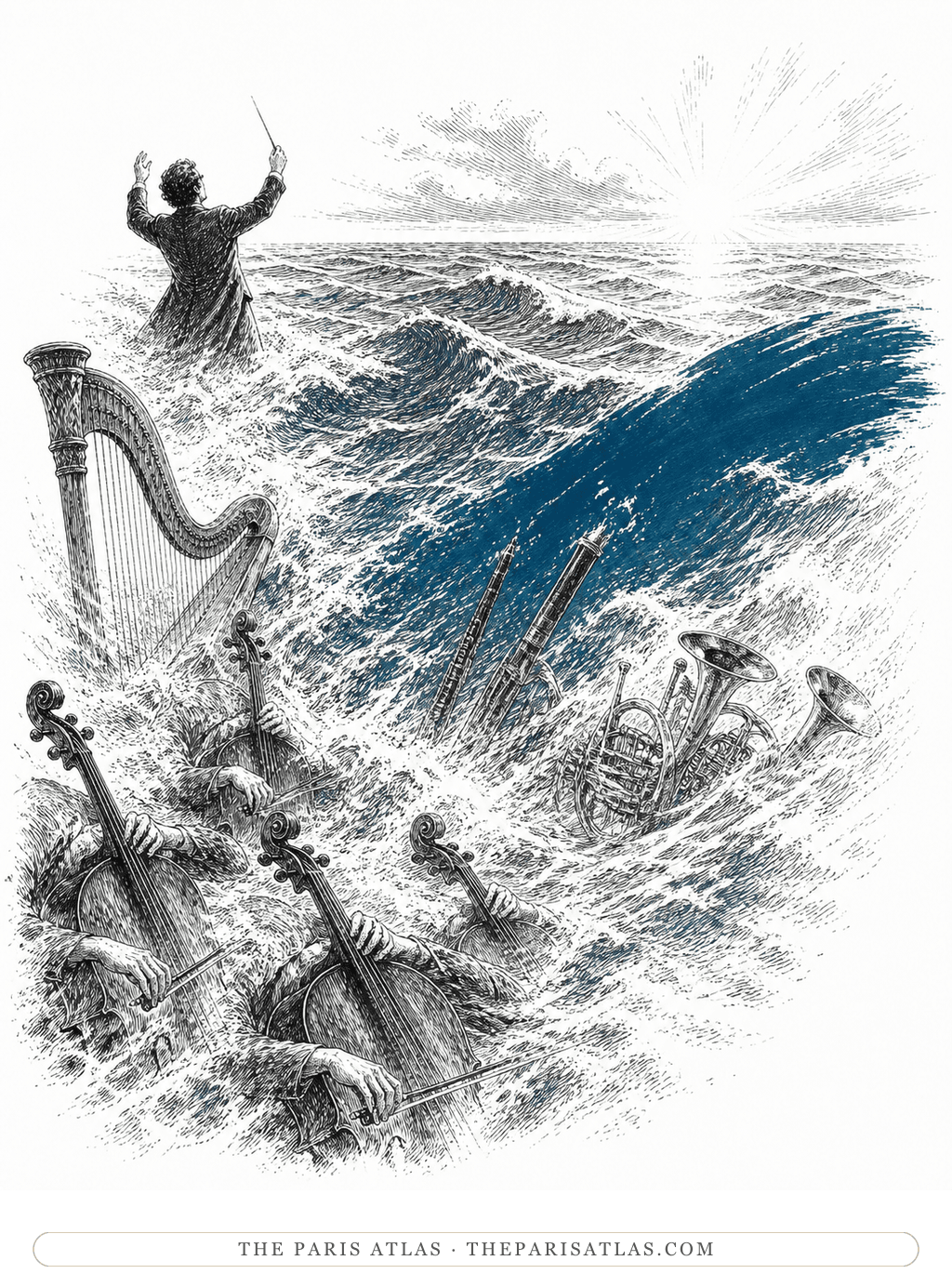
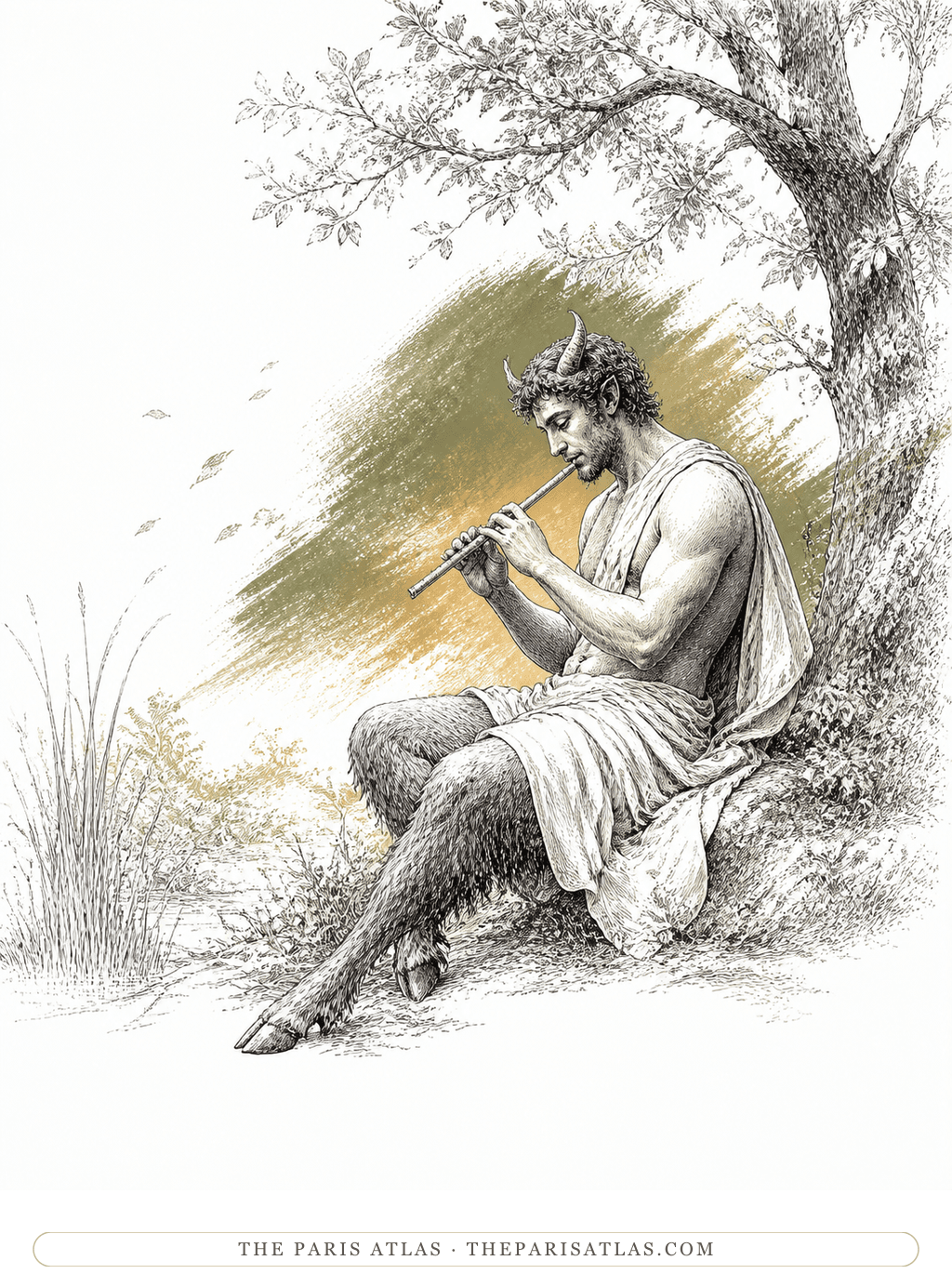
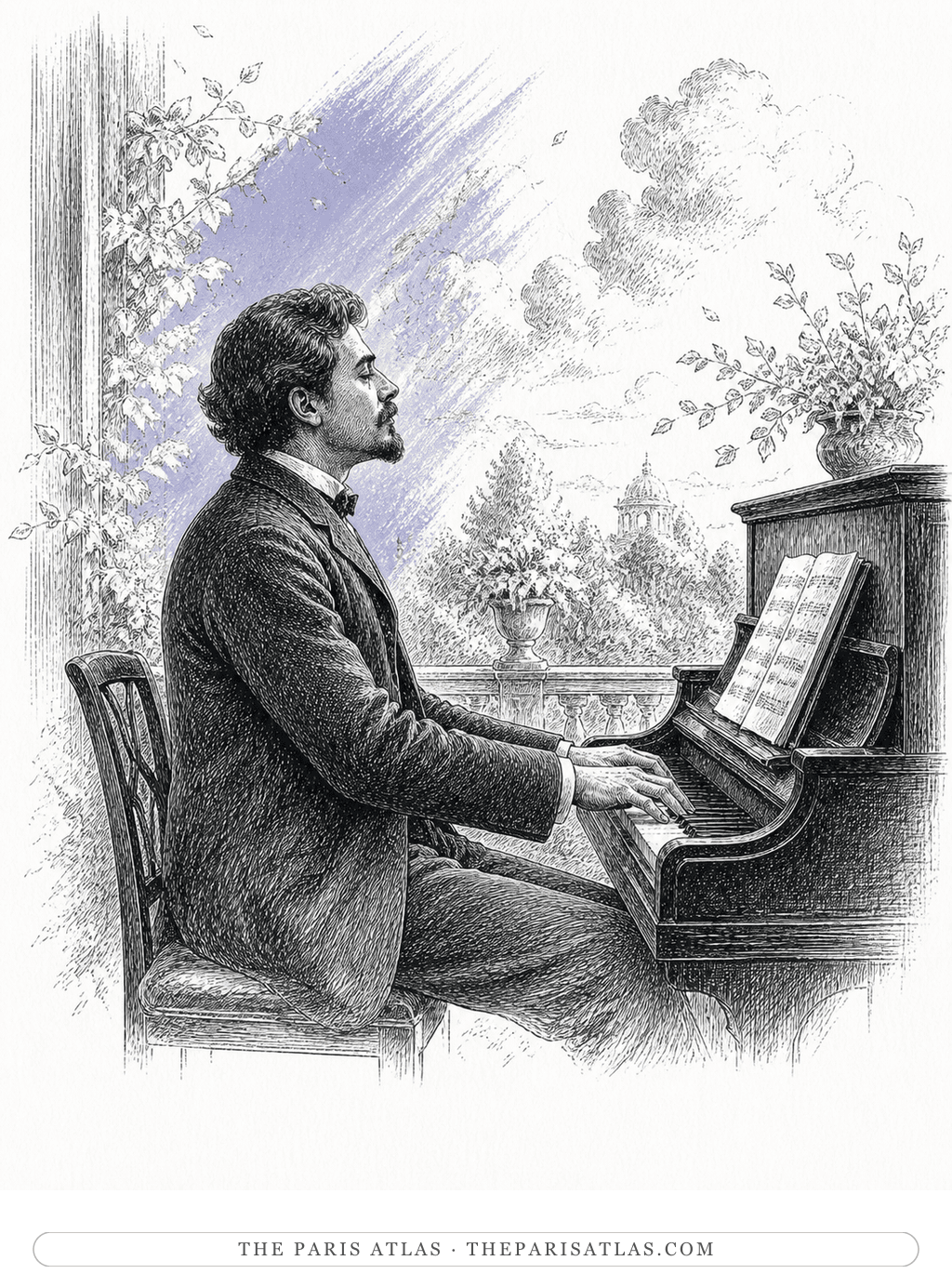
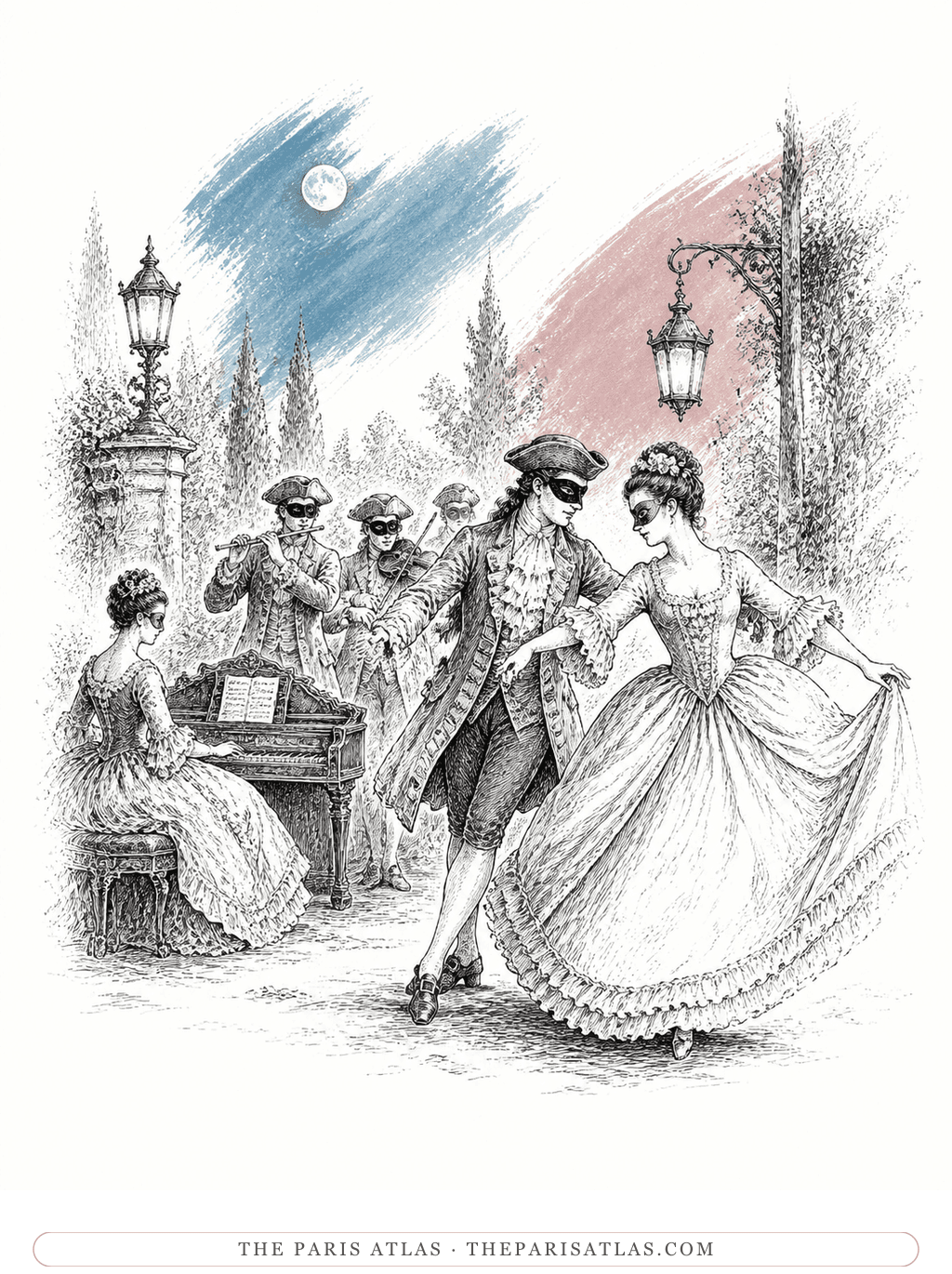
If you like Claude Debussy
Explore dancers and composers from the same movements and circles.
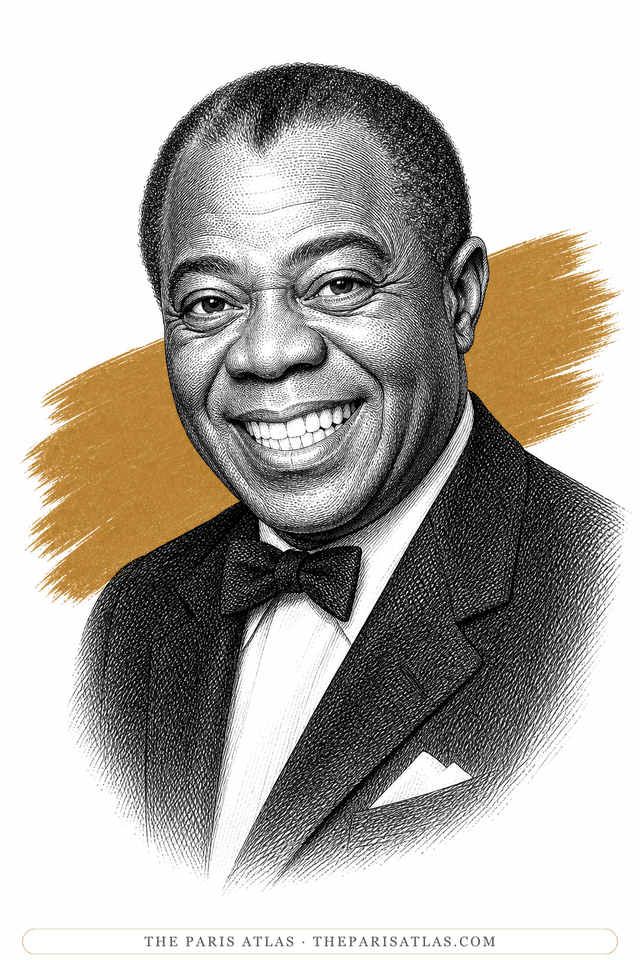
Louis Armstrong
The New Orleans trumpeter and singer who turned jazz from a band music into a soloist's art, and whose voice became one of the most recognisable sounds of the twentieth century. Paris took him early: he spent the autumn of 1934 living in the city, made his only French records that November, played the Salle Pleyel, the city's principal concert hall, and kept coming back for thirty years — including for the 1961 film Paris Blues, shot in the streets he had once idled in.
View artist
Chet Baker
American trumpeter and singer with the smallest, plainest sound in jazz, who arrived in Paris in September 1955 for eight months, recorded — for the French label Barclay — the sessions that are still his most argued-over records, and lost his pianist Dick Twardzik to a heroin overdose in a Paris hotel room ten days after their first session together.
View artist
Paul Bowles
American novelist and composer whose expatriate fiction explores dislocation, unstable intimacy, fatalism, and North Africa.
View artist
References
The sources below include collection records, catalogues, scholarly research, and primary materials that informed this page. They document Jeux, its making, and its place in cultural history.


1Jeux, de Claude Debussy
WebsitePhilharmonie de Paris — ÉduthèqueUsed forWeb source consulted for documented facts and historical context presented on the Jeux page.

2Jeux: poème dansé — Paris, Théâtre des Champs-Élysées, 15 May 1913
ArchiveBibliothèque nationale de France, Catalogue généralUsed forArchival evidence used to document the historical record connected to Jeux.
3Claude Debussy: Biographie
WebsiteIRCAM–Centre PompidouUsed forWeb source consulted for documented facts and historical context presented on the Jeux page.
4Claude Debussy
WebsiteOpéra national de ParisUsed forWeb source consulted for documented facts and historical context presented on the Jeux page.
These references provide the documented foundation for this work's history and interpretation. Claim-level citations remain attached to the specific claims they support.
 Explore more resources