The Paris AtlasCharting the artists, works, and places worth returning to.
  • Composer
· Russian · 1882–1971

Igor Stravinsky

Russian composer whose three ballets for Diaghilev's Ballets Russes — The Firebird, Petrushka, and The Rite of Spring, whose 1913 premiere at the Théâtre des Champs-Élysées became the most famous riot in music — were all made for Paris. He was a French citizen before he was an American one.

In images

Details

Lived
1882–1971
Born
1882
Birthplace
Oranienbaum, Russia
Died
1971
Place of death
New York
Nationality
Russian
Roles
Composer

About Igor Stravinsky

Igor Stravinsky was a Russian composer whose work reshaped rhythm and form in twentieth-century music. He was born at Oranienbaum, near Saint Petersburg, on 17 June 1882 and died in New York on 6 April 1971, aged eighty-eight.

He is best known for three ballets written for Sergei Diaghilev's Ballets Russes in Paris: The Firebird in 1910, Petrushka in 1911, and The Rite of Spring in 1913. The Rite caused a famous disturbance at its premiere and changed what rhythm could do in Western music.

He then changed style twice more. In the 1920s he turned to a spare, clear manner based on eighteenth-century models, which became known as neoclassicism and which he pursued for thirty years. In his seventies, after a lifetime of dismissing Arnold Schoenberg's twelve-tone method, he adopted it.

He left Russia in 1914 and never lived there again, becoming French in 1934 and American in 1945. He returned once, at eighty, in 1962.

Saint Petersburg

Igor Fyodorovich Stravinsky was born on 17 June 1882 at Oranienbaum, a summer resort near Saint Petersburg, the third of four sons. His father, Fyodor, was a leading bass at the Mariinsky Theatre, so the boy grew up around opera.

He was sent to study law at Saint Petersburg University and did badly. In 1902 he met Nikolai Rimsky-Korsakov, the most important Russian composer of the day, showed him his work, and was taken on as a private pupil.[1]

Rimsky-Korsakov taught him orchestration, which is what he was immediately best at, and treated him almost as a son until his death in 1908.

Diaghilev

In February 1909 Sergei Diaghilev heard a short orchestral piece of Stravinsky's, Fireworks, at a concert in Saint Petersburg. Diaghilev was assembling the company that became the Ballets Russes and needed music.

He commissioned Stravinsky to write The Firebird, after two more established composers turned it down. It premiered at the Paris Opera on 25 June 1910 and made Stravinsky famous at twenty-eight.[1]

Petrushka followed at the Théâtre du Châtelet in June 1911, a ballet about fairground puppets that come to life, with a famous chord built from two keys at once. Both were successes, and Stravinsky moved between Russia, Switzerland and Paris, working for the company.[2]

The Rite of Spring

The Rite of Spring was first performed at the Théâtre des Champs-Élysées in Paris on 29 May 1913, with choreography by Vaslav Nijinsky.[3]

The subject is a pagan Russian ritual in which a young woman is chosen and dances herself to death as a sacrifice to spring. The music has no conventional melody to hold on to, hammers the same chord in unpredictable accents, and changes time signature constantly. The dancers stood turned inward, feet pointed in, jumping heavily on the beat, which contradicted everything ballet had trained them to do.

The audience began shouting almost immediately. There was laughter, then argument, then a genuine uproar loud enough that the dancers could not hear the orchestra, and Nijinsky had to stand in the wings shouting counts. Sergei Diaghilev flicked the house lights on and off to quiet the room, and Stravinsky left his seat in fury. Reports of actual fighting vary, and the story has grown in the retelling, but the disturbance was real and the police were involved.

The theatre on the avenue Montaigne has never stopped telling the story.

Within a year the same score was played as a concert piece in Paris and cheered. It is now among the most performed orchestral works in the world, and its rhythmic methods were taken up widely by later composers.[4]

Stravinsky in the years of the Paris premieres — Bain news photograph, Library of Congress. (Bain News Service (Library of Congress), via Wikimedia Commons · Public domain)

Exile and the war years

Stravinsky left Russia in 1914 and spent the First World War in Switzerland, cut off from his estate and income. The Revolution of 1917 removed both permanently.

Poor and with a family to keep, he wrote for small forces. The Soldier's Tale, in 1918, was made with the Swiss writer Charles-Ferdinand Ramuz. It is scored for seven players and a narrator, and was designed to be performed by a travelling troupe in village halls. Les Noces, a Russian wedding ritual for voices, four pianos and percussion, took him nearly ten years.

He settled in France in 1920 and lived there for two decades, at Biarritz, at Nice and in Paris.[1]

Neoclassicism

From about 1920 Stravinsky's music changed completely. Pulcinella, a ballet of 1920 based on eighteenth-century music and dressed by Pablo Picasso, began a thirty-year period. He wrote in it with the clarity, small forces and formal shapes of the Baroque and Classical eras, but with his own harmony and rhythm. Picasso also drew his portrait several times, and the two admired each other for decades.[5]

The neoclassical works include the Octet, the Symphony of Psalms in 1930, the Violin Concerto, the ballet Apollo, and finally the full-length opera The Rake's Progress in 1951, with a libretto by W. H. Auden and Chester Kallman.[3]

Some listeners regarded the change as a retreat from the Rite's violence. Stravinsky's position was that he was not looking backwards but using old shapes as material, in the same way he had used Russian folk tunes.

America

Stravinsky's elder daughter, his wife Katya and his mother all died within a year, between 1938 and 1939. He had tuberculosis himself and spent months in a sanatorium.

He sailed for the United States in September 1939, delivered lectures at Harvard, and settled in Los Angeles. In 1940 he married Vera de Bosset, who had been his companion for eighteen years while he remained married to Katya, an arrangement all three had known about.[1]

He became an American citizen in 1945. In Los Angeles he lived a few miles from Arnold Schoenberg, whose music he had spent decades disparaging. They had met in Berlin in 1912, but saw almost nothing of each other in California.

The twelve-tone turn

Schoenberg died in 1951. Within two years Stravinsky, then seventy, began writing serial music — using Schoenberg's twelve-tone method, in which all twelve notes are ordered in a row and the music is built from it.

The change astonished everyone. Stravinsky had been the standard-bearer for the opposite camp for thirty years, and his conversion at that age was taken as either a betrayal or a demonstration of extraordinary artistic curiosity.

The late works — Agon, Threni, the Requiem Canticles of 1966 — are austere, short and highly concentrated, and are now regarded as among his finest.[3]

His assistant and conductor in these years was Robert Craft, who lived with the Stravinskys, conducted the new music, and published several volumes of conversations with him. How much of those conversation books is Stravinsky's own voice and how much is Craft's has been debated ever since.

Return and death

In 1962, at eighty, Stravinsky returned to the Soviet Union for three weeks at the invitation of the government, conducting in Moscow and Leningrad. He had left in 1914 and had been officially disapproved of for decades. He was received as a national figure.

He died of heart failure in New York on 6 April 1971, aged eighty-eight. At his request he was buried in Venice, in the Russian Orthodox section of the cemetery island of San Michele, a few yards from the grave of Sergei Diaghilev, who had commissioned the three ballets sixty years before.[1]

Why Igor Stravinsky matters

The Rite of Spring is among the most influential scores of the twentieth century. Its rhythmic irregularity, its layering of ostinatos, and its treatment of the orchestra as a percussion instrument became standard technique, and its influence runs through concert music, film scores and jazz.

Beyond that one work, Stravinsky demonstrated that a composer could reinvent himself completely, twice, and remain recognisably himself. The Russian ballets, the neoclassical decades and the twelve-tone late works sound like three different composers, but the same rhythmic and formal habits run through all three.

Life events

  1. 1882

    Born on 17 June at Oranienbaum, near Saint Petersburg, the third of four sons of Fyodor Stravinsky, a leading bass at the Mariinsky Theatre.

  2. 1901

    Enters Saint Petersburg University to study law, at his parents' insistence, and does badly.

  3. 1902

    Meets Nikolai Rimsky-Korsakov, shows him his work, and is taken on as a private pupil.

  4. 1906

    Marries his cousin Katya Nosenko.

  5. 1908

    Rimsky-Korsakov dies. Stravinsky writes Funeral Song in his memory.

  6. 1909

    Sergei Diaghilev hears his orchestral piece Fireworks at a Saint Petersburg concert and commissions a ballet.

  7. 1910

    The Firebird premieres in Paris on 25 June and makes him famous at twenty-eight.

  8. 1911

    Petrushka premieres in Paris, a ballet about fairground puppets, with a chord built from two keys at once.

  9. 1913

    The Rite of Spring premieres at the Théâtre des Champs-Élysées on 29 May, with choreography by Vaslav Nijinsky, and the audience shouts it down.

  10. 1914

    Leaves Russia and settles in Switzerland for the duration of the war, cut off from his estate.

  11. 1917

    The Russian Revolution removes his income and property permanently.

  12. 1918

    Writes The Soldier's Tale for seven players and a narrator, to be performed by a travelling troupe in village halls.

  13. 1920

    Pulcinella, based on eighteenth-century music, begins his neoclassical period. He settles in France.

  14. 1923

    Completes Les Noces, a Russian wedding ritual for voices, four pianos and percussion, after nearly ten years' work.

  15. 1923

    Meets Vera de Bosset, who becomes his companion while he remains married to Katya.

  16. 1927

    Oedipus Rex, an opera-oratorio with a Latin text based on Jean Cocteau's French, is first performed.

  17. 1930

    Completes the Symphony of Psalms for the Boston Symphony Orchestra.

  18. 1931

    Writes the Violin Concerto.

  19. 1934

    Becomes a French citizen.

  20. 1934

    Becomes a French citizen in June.

  21. 1938

    His elder daughter Ludmila dies of tuberculosis.

  22. 1939

    His wife Katya and his mother both die. Stravinsky himself spends months in a sanatorium with tuberculosis.

  23. 1939

    Sails for the United States in September and delivers the Charles Eliot Norton lectures at Harvard.

  24. 1940

    Marries Vera de Bosset and settles in Los Angeles.

  25. 1945

    Becomes an American citizen.

  26. 1948

    Meets Robert Craft, who becomes his assistant, conductor and interlocutor for the rest of his life.

  27. 1951

    The Rake's Progress, a full-length opera with a libretto by W. H. Auden and Chester Kallman, premieres in Venice. Arnold Schoenberg dies in Los Angeles, a few miles away. The two had met in Berlin in 1912 but saw almost nothing of each other in California.

  28. 1953

    Begins writing serial music using Schoenberg's twelve-tone method, at seventy, after thirty years of dismissing it.

  29. 1957

    Completes the ballet Agon, his first fully twelve-tone score.

  30. 1958

    Completes Threni, a setting of the Lamentations of Jeremiah.

  31. 1962

    Returns to the Soviet Union at eighty for three weeks at the government's invitation, conducting in Moscow and Leningrad, forty-eight years after leaving.

  32. 1966

    Completes the Requiem Canticles, his last major work.

  33. 1971

    Dies in New York on 6 April, aged eighty-eight, and is buried at his request on the cemetery island of San Michele in Venice, close to Diaghilev's grave.

People Igor Stravinsky Knew

Relationships with other people, with sources for each connection.

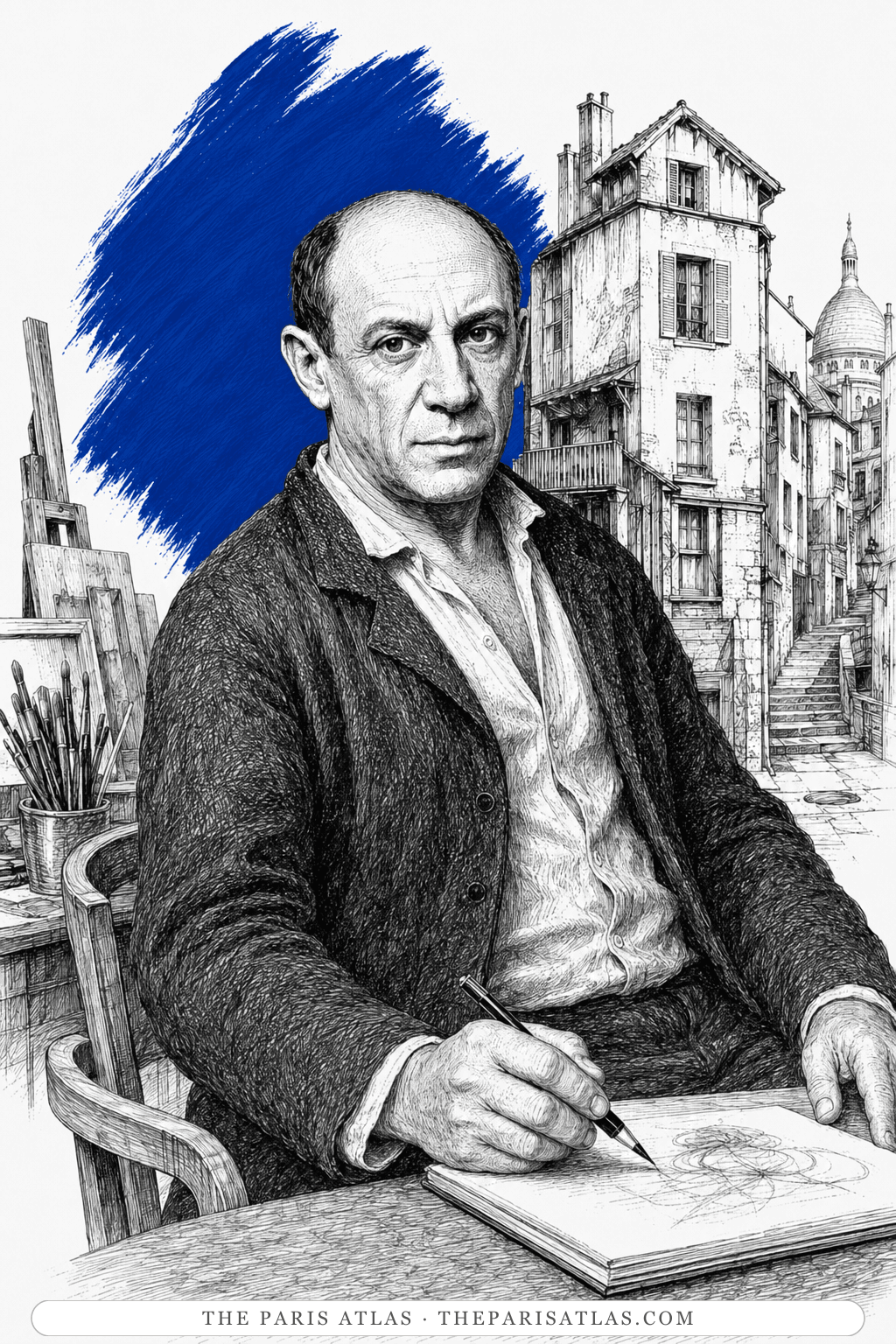
Illustrated portrait of Pablo Picasso

Pablo Picasso

  • Painter
  • Sculptor

Collaborated with · 1920

Pulcinella, 1920: Stravinsky recomposed eighteenth-century Italian scores for Diaghilev's Ballets Russes while Picasso designed sets and costumes. Picasso also drew Stravinsky's portrait several times.

— Malte Krasting, Programme note: Igor Stravinsky, Pulcinella Suite

Met

Stravinsky and Picasso both worked for Diaghilev's Ballets Russes, and Picasso designed the sets and costumes for Stravinsky's Pulcinella, first staged in Paris in 1920. Picasso drew Stravinsky several times.
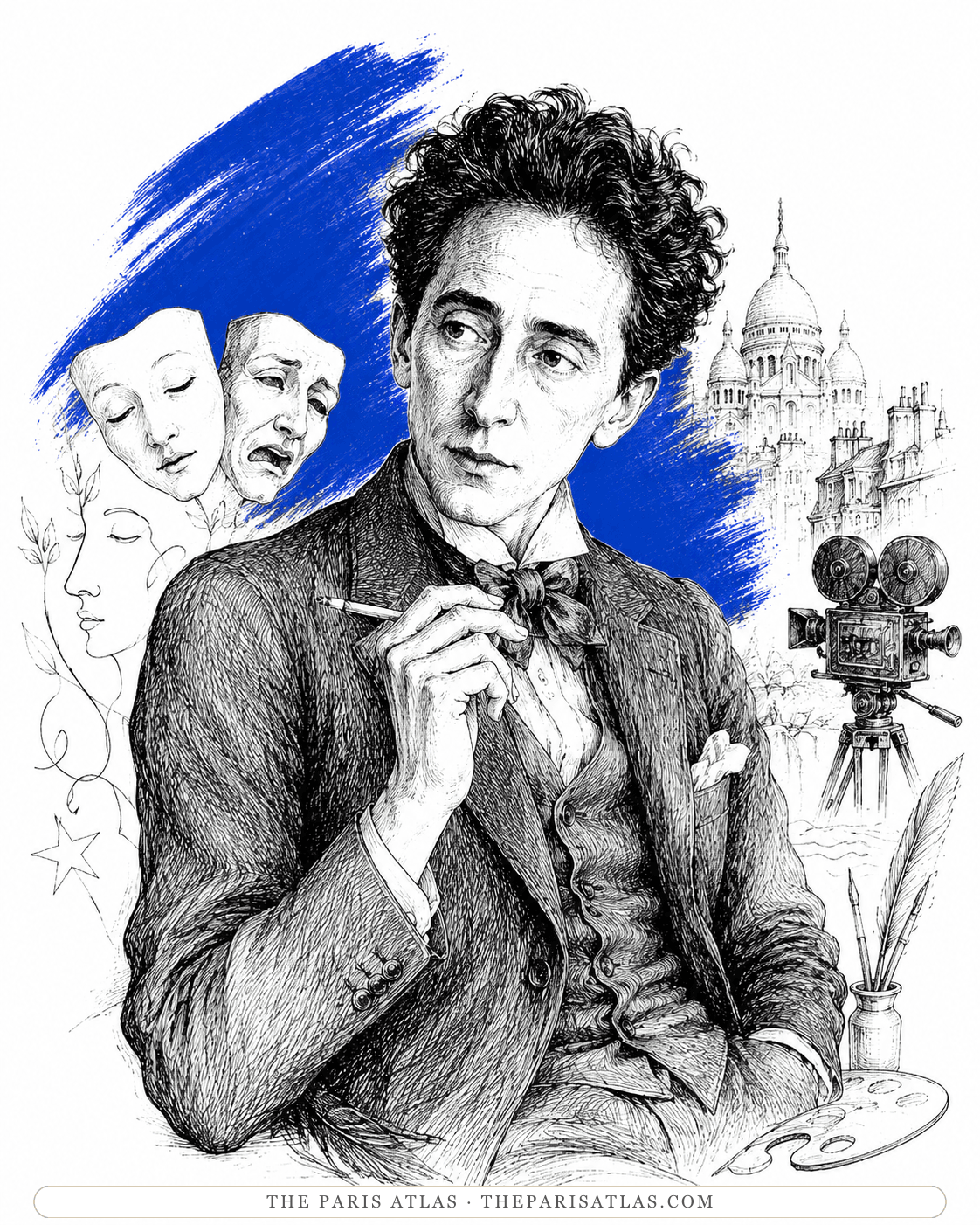
— Malte Krasting, Programme note: Igor Stravinsky, Pulcinella Suite

Illustrated portrait of Jean Cocteau

Jean Cocteau

  • Author
  • Poet
  • Playwright
  • +2

Met · 1910

Acquainted from the early Ballets Russes seasons; in 1927 they made Oedipus Rex together, Cocteau writing the libretto that was then translated into Latin for Stravinsky's opera-oratorio.

— Igor Stravinsky, Oedipus Rex (1926–27) — work details

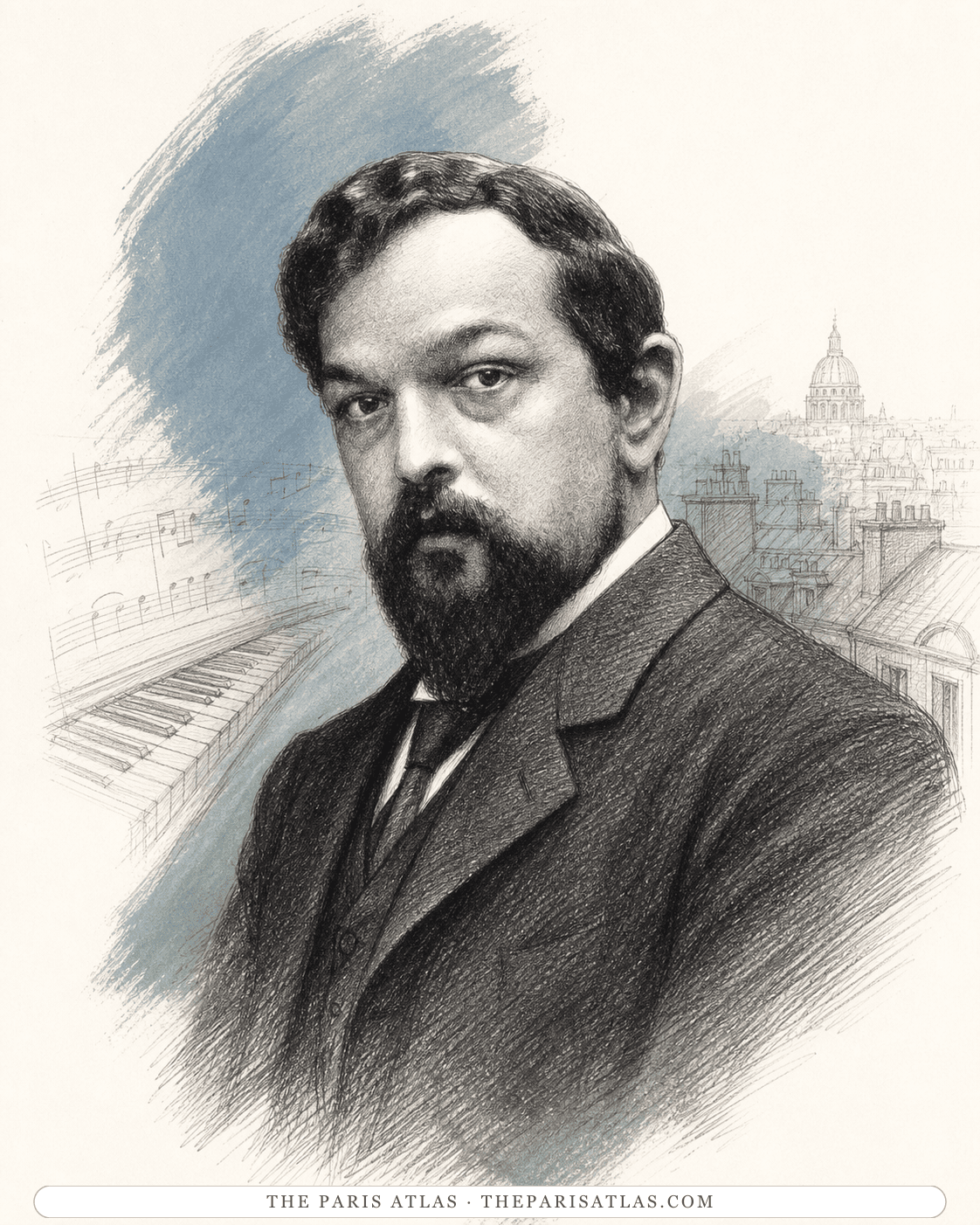
Illustrated portrait of Claude Debussy

Claude Debussy

  • Musician
  • Critic

Met

Debussy met the younger Russian composer around 1910. They admired one another, exchanged ideas and played The Rite of Spring together at the piano before its premiere.

— Mark McFarland, The Musical Relationship between Claude Debussy and Igor Stravinsky (2024)

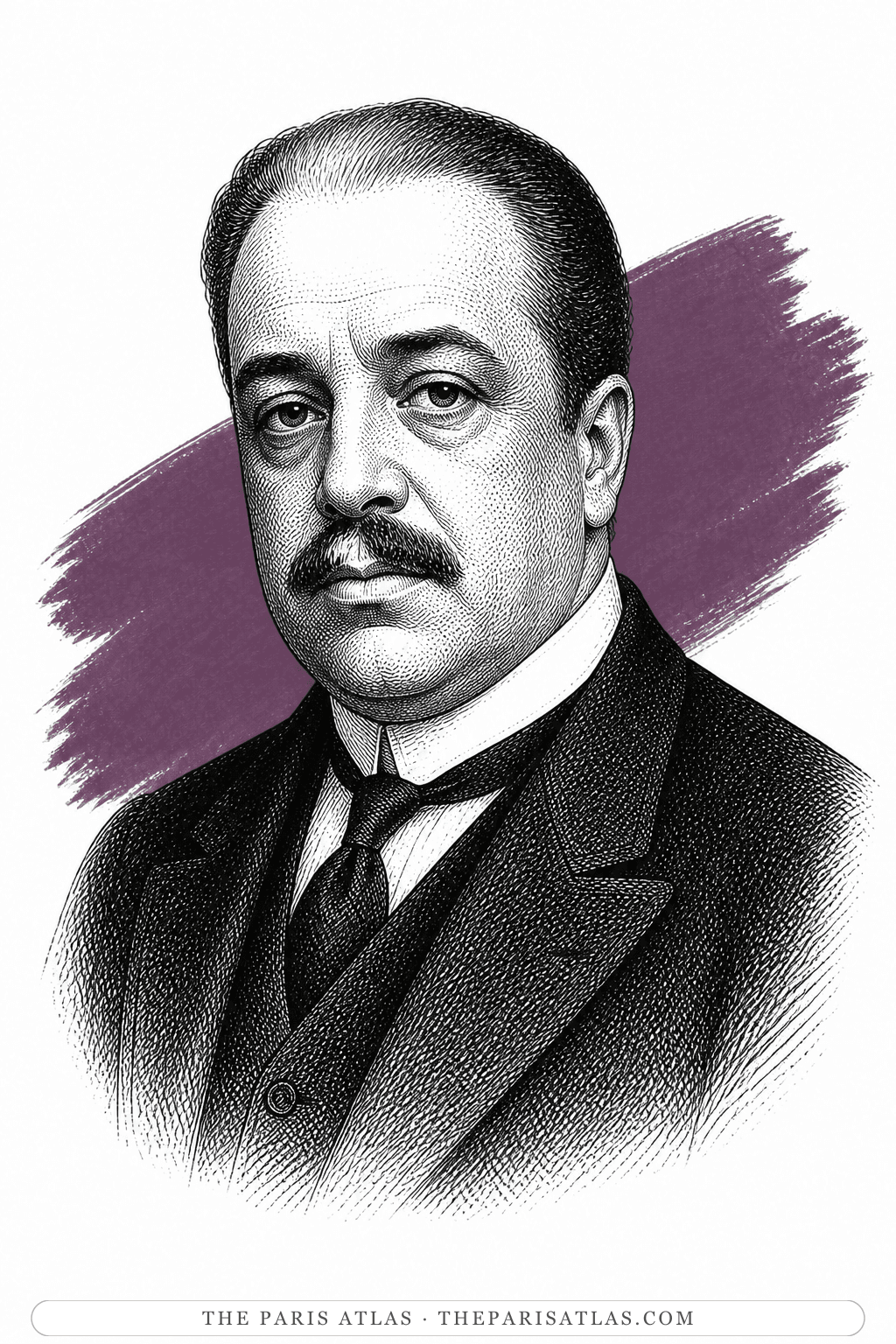
Illustrated portrait of Sergei Diaghilev

Sergei Diaghilev

  • Patron
  • Editor

Collaborated with · 1909–1929

Diaghilev heard two short orchestral pieces by the unknown Stravinsky in St Petersburg in 1909 and commissioned a ballet from him: The Firebird, premiered at the Paris Opera on 25 June 1910, then Petrushka at the Théâtre du Châtelet in June 1911 and The Rite of Spring at the Théâtre des Champs-Élysées on 29 May 1913. The partnership ran to Pulcinella (1920) and Apollon musagète (1928), 'the last ballet staged by Diaghilev one year before his death'.

— Igor Stravinsky — biography, Fondation Igor Stravinsky; Diaghilev and the Ballets Russes – an introduction

Illustrated portrait of Nadia Boulanger

Nadia Boulanger

  • Composer
  • Pianist
  • Educator

Collaborated with · 1930

Boulanger championed, performed, recorded, and taught Stravinsky's music; their close professional friendship lasted for decades.

— Nadia Boulanger and the Stravinskys: A Selected Correspondence; Nadia Boulanger: Enregistrements

Who Inspired Igor Stravinsky

People whose work inspired Igor Stravinsky. They did not necessarily meet or know one another.

Illustrated portrait of Claude Debussy

Claude Debussy

Debussy expanded the possibilities of orchestral color, nonfunctional harmony and musical form that the younger Stravinsky inherited. Their direct contact in Paris helped connect Debussy's fin-de-siècle revolution with the next generation of modernism.

— Mark McFarland, The Musical Relationship between Claude Debussy and Igor Stravinsky (2024)

Who Igor Stravinsky Inspired

People who found inspiration in Igor Stravinsky’s work.

Illustrated portrait of Béla Bartók

Béla Bartók

The mark is clearest in The Miraculous Mandarin, Bartók's 1918–1924 pantomime score, whose driving rhythmic violence takes up the language of Stravinsky's Russian-period ballets alongside Schoenberg and Strauss. The two composers' names became the twin poles of interwar modernism, and Bartók engaged with Stravinsky's percussive piano writing in his own concertos of the 1920s.

— Béla Bartók

Questions about Igor Stravinsky

Who was Igor Stravinsky?

A Russian composer, born near Saint Petersburg in 1882 and died in New York in 1971. He wrote The Firebird, Petrushka and The Rite of Spring for Diaghilev's Ballets Russes in Paris, and changed twentieth-century music more than any other composer.

What happened at the premiere of The Rite of Spring?

The audience at the Théâtre des Champs-Élysées on 29 May 1913 began shouting almost immediately, at the music and at Nijinsky's choreography, and the noise grew loud enough that the dancers could not hear the orchestra. Nijinsky stood in the wings shouting counts. Accounts of actual fighting vary and the story has grown in the retelling, but the disturbance was real and the police were involved.

Why was The Rite of Spring so shocking?

The music has no melody to hold on to, hammers one dissonant chord in unpredictable accents, and changes time signature constantly. The choreography contradicted ballet training: dancers stood turned inward, feet pointed in, and jumped heavily. Within a year the same score was cheered as a concert piece.

What is neoclassicism in Stravinsky?

The style he wrote in for about thirty years from 1920, using the clarity, small forces and formal shapes of eighteenth-century music, with his own harmony and rhythm. Pulcinella began it and The Rake's Progress ended it. He said he was not looking backwards but using old shapes as material.

Did Stravinsky really change style in his seventies?

Yes. He had disparaged Arnold Schoenberg's twelve-tone method for thirty years. Schoenberg died in 1951, and by 1953 Stravinsky, aged seventy, was writing serial music himself. The late works, including Agon and the Requiem Canticles, are now regarded as among his best.

Where is Stravinsky buried?

On the cemetery island of San Michele in Venice, at his own request, a few yards from the grave of Sergei Diaghilev, who commissioned The Firebird, Petrushka and The Rite of Spring sixty years earlier.

Connections and Sources

Igor Stravinsky’s connections to people, places, and works, with the sources behind each one.

Collaborated with · 1920

Pablo Picasso

Pulcinella, 1920: Stravinsky recomposed eighteenth-century Italian scores for Diaghilev's Ballets Russes while Picasso designed sets and costumes. Picasso also drew Stravinsky's portrait several times.

— Malte Krasting, Programme note: Igor Stravinsky, Pulcinella Suite

Met · 1910

Jean Cocteau

Acquainted from the early Ballets Russes seasons; in 1927 they made Oedipus Rex together, Cocteau writing the libretto that was then translated into Latin for Stravinsky's opera-oratorio.

— Igor Stravinsky, Oedipus Rex (1926–27) — work details

Met

Pablo Picasso

Stravinsky and Picasso both worked for Diaghilev's Ballets Russes, and Picasso designed the sets and costumes for Stravinsky's Pulcinella, first staged in Paris in 1920. Picasso drew Stravinsky several times.
— Malte Krasting, Programme note: Igor Stravinsky, Pulcinella Suite

Influenced

Béla Bartók

The mark is clearest in The Miraculous Mandarin, Bartók's 1918–1924 pantomime score, whose driving rhythmic violence takes up the language of Stravinsky's Russian-period ballets alongside Schoenberg and Strauss. The two composers' names became the twin poles of interwar modernism, and Bartók engaged with Stravinsky's percussive piano writing in his own concertos of the 1920s.

— Béla Bartók

Influenced by

Claude Debussy

Debussy expanded the possibilities of orchestral color, nonfunctional harmony and musical form that the younger Stravinsky inherited. Their direct contact in Paris helped connect Debussy's fin-de-siècle revolution with the next generation of modernism.

— Mark McFarland, The Musical Relationship between Claude Debussy and Igor Stravinsky (2024)

Met

Claude Debussy

Debussy met the younger Russian composer around 1910. They admired one another, exchanged ideas and played The Rite of Spring together at the piano before its premiere.

— Mark McFarland, The Musical Relationship between Claude Debussy and Igor Stravinsky (2024)

Collaborated with · 1909–1929

Sergei Diaghilev

Diaghilev heard two short orchestral pieces by the unknown Stravinsky in St Petersburg in 1909 and commissioned a ballet from him: The Firebird, premiered at the Paris Opera on 25 June 1910, then Petrushka at the Théâtre du Châtelet in June 1911 and The Rite of Spring at the Théâtre des Champs-Élysées on 29 May 1913. The partnership ran to Pulcinella (1920) and Apollon musagète (1928), 'the last ballet staged by Diaghilev one year before his death'.

— Igor Stravinsky — biography, Fondation Igor Stravinsky; Diaghilev and the Ballets Russes – an introduction

Collaborated with · 1930

Nadia Boulanger

Boulanger championed, performed, recorded, and taught Stravinsky's music; their close professional friendship lasted for decades.

— Nadia Boulanger and the Stravinskys: A Selected Correspondence; Nadia Boulanger: Enregistrements

References

References

The sources below include biographies, scholarly essays, interviews, and primary materials that informed this page. They reflect both the historical record and ongoing critical conversations about Igor Stravinsky and their work.

  1. 1abcdeIgor Stravinsky — biography, Fondation Igor Stravinsky

    Website
    Fondation Igor Stravinsky, Geneva
    Used for

    Web source consulted for documented facts and historical context presented on the Igor Stravinsky page.

    View source
  2. 2↑Igor Stravinsky, Petrushka (1910–11) — work details

    Website
    Boosey & Hawkes
    Used for

    Web source consulted for documented facts and historical context presented on the Igor Stravinsky page.

    View source
  3. 3abcIgor Stravinsky

    Website
    Encyclopaedia Britannica
    Used for

    Reference entry on the three periods of his work and his place in twentieth-century music.

    View source
  1. 4↑The Musical Relationship between Claude Debussy and Igor Stravinsky

    Essays
    Boydell & Brewer, 2024
    Used for

    Published analysis and historical context used in preparing the Igor Stravinsky page.

    View source
  2. 5↑Programme note: Igor Stravinsky, Pulcinella Suite

    Website
    Berliner Philharmoniker
    Used for

    Web source consulted for documented facts and historical context presented on the Igor Stravinsky page.

    View source
  3. 6Igor Stravinsky

    Website
    Wikipedia
    Used for

    Reference article cross-checked for the Saint Petersburg years, the Diaghilev commissions, the 1913 premiere, the American years and the twelve-tone turn.

    View source
i
Why these sources are here

These references anchor the page in the documented record and in the scholarly conversations around Igor Stravinsky. Every claim on this page traces back to one or more of the works listed here.

Explore more resources