Aaron Copland
- Musician
Taught · 1921–1924
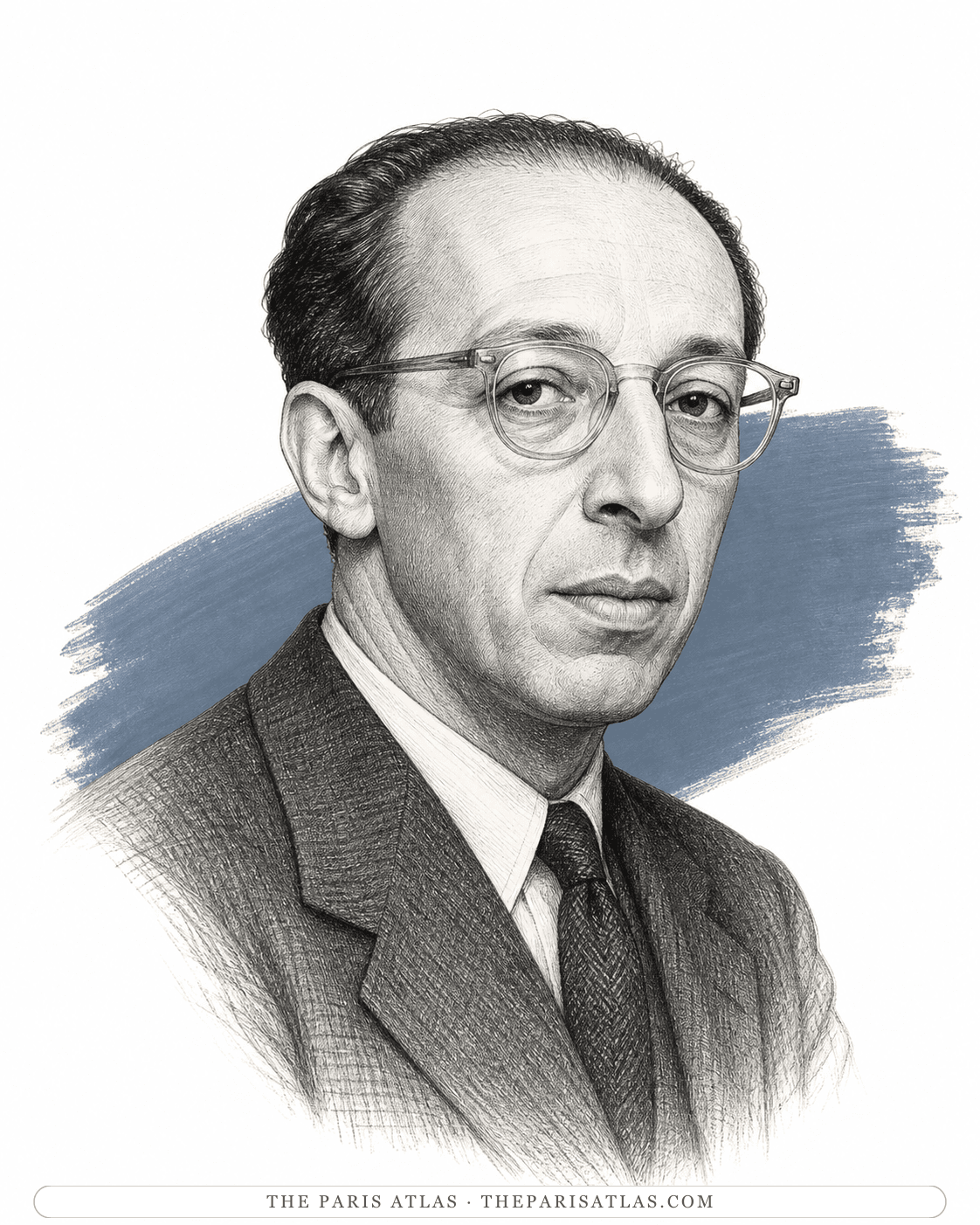
Copland met Boulanger at Fontainebleau in 1921 and studied composition and orchestration with her through 1924. He later described her as the person most influential in forming him as a composer.
Paris-born composer, organist, conductor and teacher whose apartment on rue Ballu and summer classes at Fontainebleau became two of the most influential classrooms in twentieth-century music.
Nadia Boulanger never became famous for a single composition. Her influence spread through other people's music. For more than half a century, young musicians came to Paris or Fontainebleau to study harmony, counterpoint, orchestration, score reading and analysis with her. They included Aaron Copland, Elliott Carter, Astor Piazzolla, Philip Glass and Quincy Jones, along with hundreds of less famous composers, conductors and performers from Europe, Asia and the Americas.
They did not leave sounding alike. Copland helped create a recognizably American concert style; Piazzolla reinvented tango; Glass became one of the leading figures of musical minimalism; Jones moved between jazz, film, arranging and pop. That variety was part of Boulanger's achievement. She was demanding about technique but suspicious of teachers who turned students into copies of themselves. Her job, as she understood it, was to discover what kind of musician was already present and make that person capable of expressing it with complete command of the craft.
Her influence extended beyond teaching. Boulanger was a composer before she decided that teaching was her real vocation, an important performer and organist, an early champion of Monteverdi and other older music, a close collaborator and advocate of Igor Stravinsky, and a pioneering conductor who became the first woman to lead several major orchestras.
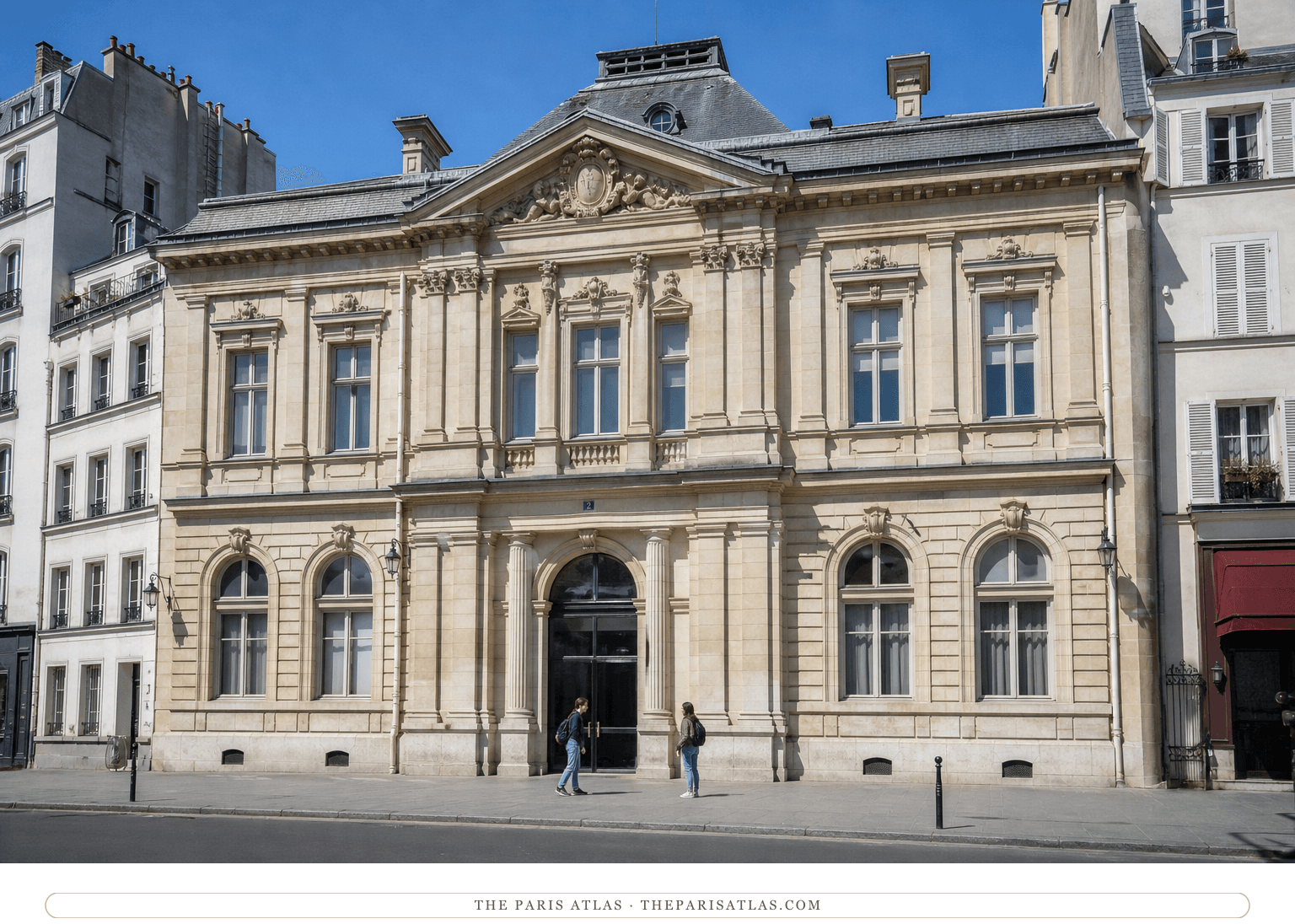
Paris remained the center of this extraordinary network. From 36 rue Ballu, where she lived for most of her life, Boulanger ran private lessons, Wednesday classes and musical gatherings that turned an ordinary apartment in the 9th arrondissement into an international conservatory of its own. A modern scholarly history describes the apartment as simultaneously a classroom, salon and gathering place at the center of her career for roughly seventy-five years.
Juliette Nadia Boulanger was born in Paris on 16 September 1887. Music was already the family profession. Her father, Ernest Boulanger, was a composer, singer and professor at the Paris Conservatoire who had won the Prix de Rome in 1835. Her mother, Raïssa Myshetskaya Boulanger, had come from Russia and studied singing at the Conservatoire. Their home belonged to the highly connected musical world of late nineteenth-century Paris, and figures such as Gabriel Fauré moved through the family's circle.[1]
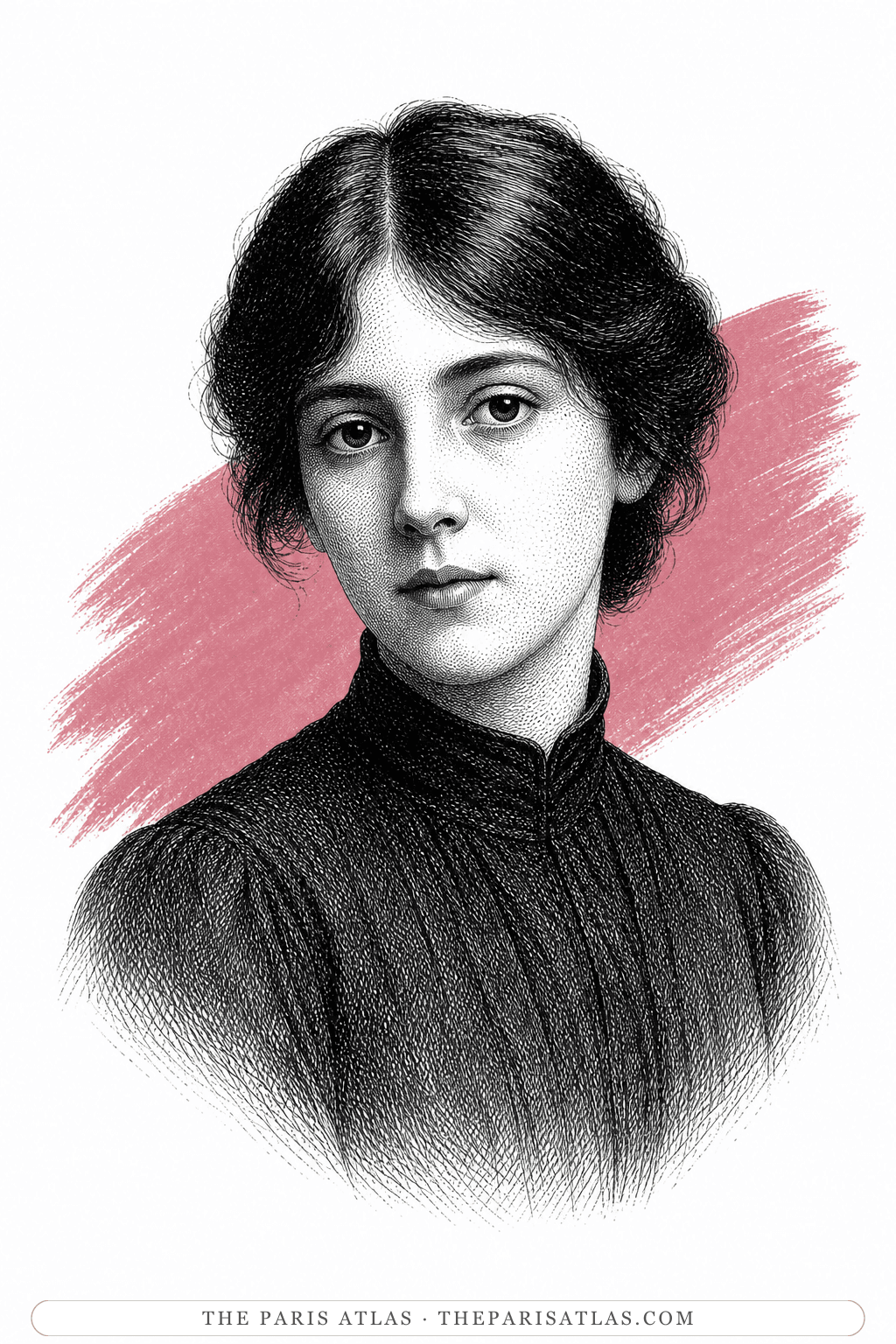
Nadia's younger sister Lili Boulanger, born in 1893, would become equally important to her life. The sisters were unusually close, though their paths eventually diverged. Nadia grew into the formidable teacher and musical organizer; Lili developed into a composer of exceptional promise despite chronic illness. In 1913, Lili became the first woman to win the Grand Prix de Rome for composition.
Nadia's musical ability revealed itself early. She entered the Paris Conservatoire in 1896, when she was nine, and proceeded through a demanding education in harmony, accompaniment, fugue, organ and composition. Her teachers included Gabriel Fauré, Alexandre Guilmant and Louis Vierne. By her mid-teens she was already winning Conservatoire prizes and beginning to earn money as a musician.[2]
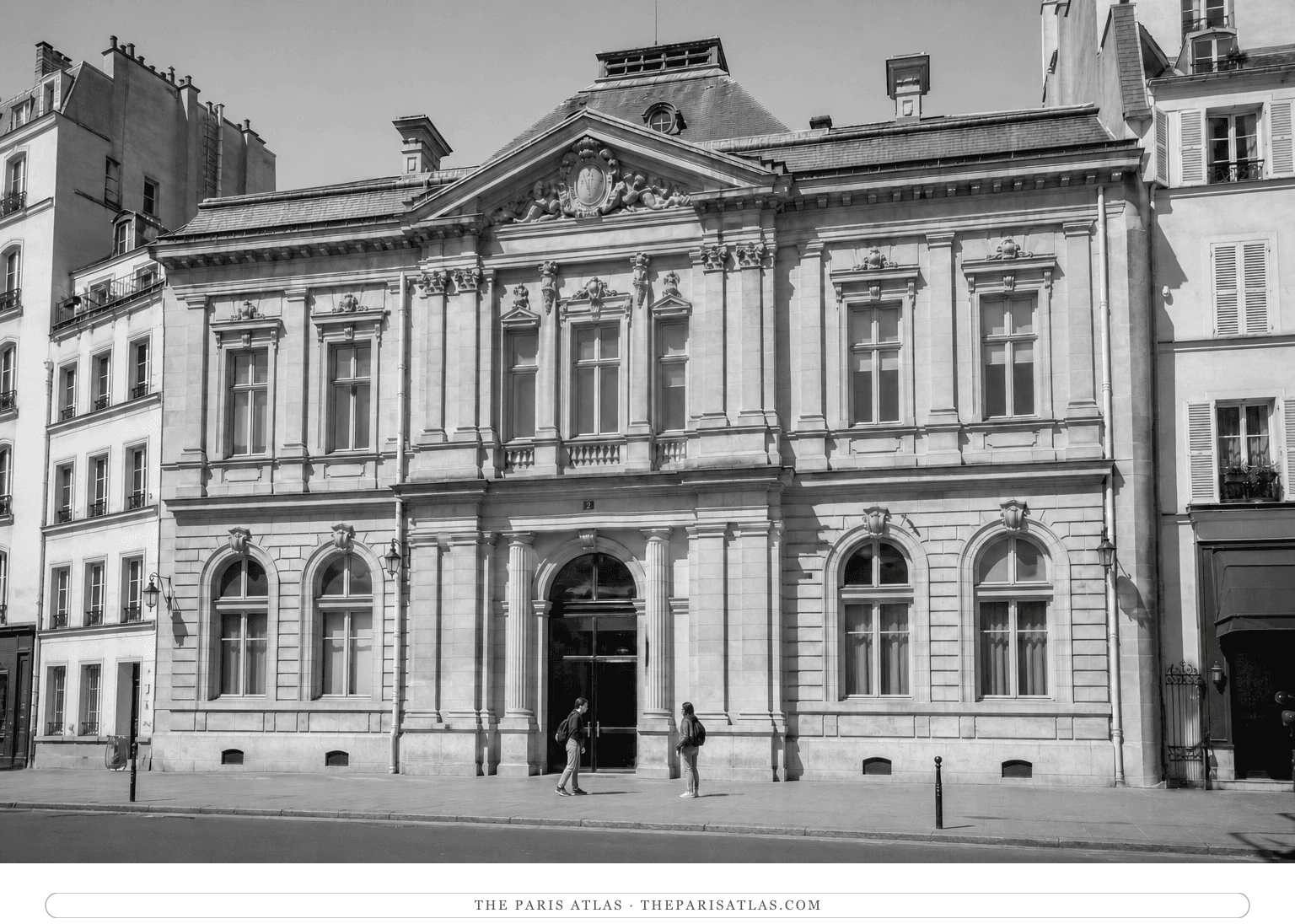
In 1904, the Boulanger family moved to a large apartment at 36 rue Ballu in the 9th arrondissement. Nadia began teaching there almost immediately after completing the principal phase of her Conservatoire studies. The address became one of the remarkable musical places of twentieth-century Paris.[3]
Private pupils climbed the stairs for lessons. Wednesday classes gathered students around scores. Visiting musicians came for discussions and performances. Established composers encountered young students who might later become famous themselves. The apartment contained a Cavaillé-Coll organ and remained closely tied to the memory of Lili after her death. Boulanger continued teaching there almost until the end of her life.
The address itself eventually became part of the sisters' memorial landscape. The corner of rue Ballu and rue de Vintimille was first named for Lili and, in 2021, the City of Paris formally renamed it place Lili-et-Nadia-Boulanger. The old 36 rue Ballu address is now associated with the square bearing both sisters' names.[4]
It is easy to forget that Boulanger originally expected to become a composer. She wrote songs, chamber works, organ pieces and orchestral music and competed for the Prix de Rome. In 1908, her cantata *La Sirène* brought her a Second Prix de Rome. She had already attracted attention during the competition by challenging one of its conventions, producing an instrumental fugue where the rules expected a vocal one.[5]
Another important figure in these years was the older pianist and composer Raoul Pugno. Boulanger met him while still young, and he became a collaborator, supporter and important musical companion. Together they worked on *Les Heures claires, a cycle based on poetry by Émile Verhaeren, and the opera La Ville morte, adapted from Gabriele d'Annunzio. Boulanger also wrote her Fantaisie variée for piano and orchestra* for Pugno.
Pugno died suddenly in Moscow in January 1914, while the two were traveling. It was a profound personal loss. The outbreak of the First World War later that year also prevented the planned production of La Ville morte at the Opéra-Comique. Boulanger's life was beginning to move away from the conventional trajectory of a young composer building a catalogue of works.[5]
The First World War brought the two Boulanger sisters into another kind of musical work. Many students and former students of the Paris Conservatoire had been mobilized. Nadia and Lili helped create the Comité franco-américain du Conservatoire and its Gazette des classes du Conservatoire, which maintained contact with musicians at the front and provided practical and moral support. They acted as founding secretaries and drew upon their family's extraordinary musical and social network to keep the project operating.[6]
The enterprise reveals a side of Nadia's personality that became increasingly important later: she was extraordinarily good at creating networks. She could connect students, patrons, musicians and institutions and keep those relationships alive through letters, lessons, introductions and performances. That organizational ability became one of the foundations of her later international influence.
Lili Boulanger had lived with poor health for much of her life. In early 1918, her condition deteriorated rapidly. She died on 15 March, aged only twenty-four. The loss changed Nadia permanently.
Sources differ somewhat in how absolutely they describe her decision afterward, but Nadia essentially abandoned composition as a central activity after Lili's death. She believed that her younger sister possessed the greater compositional gift, and for the rest of her life she promoted Lili's music, organized performances and preserved her memory. This does not make Nadia's own compositions irrelevant: her songs, organ works and Fantaisie variée have increasingly returned to concert programs. What disappeared was the ambition to make composition the center of her life. Teaching took its place.
In 1920, Boulanger began teaching at the newly established École Normale de Musique de Paris, where she remained until the beginning of the Second World War. Her courses ranged across harmony, musical history and analysis rather than treating composition as an isolated skill.
The following year brought the institution most closely associated with her international reputation. After an earlier wartime school for American military musicians, French and American organizers established the American Conservatory at Fontainebleau in 1921 in the Louis XV wing of the Château de Fontainebleau. Charles-Marie Widor served as its first director, and Boulanger joined the faculty from the beginning. She eventually became its dominant teacher and later its director.[7]
Fontainebleau created a direct route between France and a generation of young American musicians. They could spend the summer studying French musical traditions and then continue privately with Boulanger in Paris. One of the first was a twenty-year-old composer from Brooklyn named Aaron Copland.
Aaron Copland arrived at Fontainebleau in 1921 expecting to study in France, but he had no idea that Nadia Boulanger would become one of the defining people of his life. He began studying composition and orchestration with her that autumn and remained her pupil until 1924. Their correspondence continued for decades. The Library of Congress preserves letters, photographs and later tributes in which Copland described Boulanger as the teacher who most strongly shaped him as a composer.[8]
Their relationship also moved from classroom to concert hall. Copland composed his *Symphony for Organ and Orchestra with Boulanger as its intended organ soloist and dedicated it to her. She played the organ in the New York premiere on 11 January 1925*, with Walter Damrosch conducting.[9]
The fame of Boulanger's students can make her teaching sound mysterious. Much of it was not mysterious at all. She demanded harmony, counterpoint, score reading, sight-singing and analysis. Students were expected to understand how music was built rather than merely produce attractive ideas. Bach was central. Mozart was central. Beethoven, Fauré and Stravinsky could enter the same discussion. A student might be required to analyze a score, identify its harmonic logic and then reproduce musical relationships away from the original page.
The famous Wednesday class at rue Ballu extended this approach. Students gathered in the apartment to analyze music together, hear performances and encounter visitors. Former students who happened to be in Paris might return. The apartment therefore blurred the line between conservatory class, private salon and professional network. Modern scholarship calls it the “center of gravity” of Boulanger's international career.[10]
Boulanger could be intimidating. Students remembered her extraordinary ear and her ability to spot weaknesses quickly. But her strictness was not meant to force everyone toward the same musical style. Her students eventually produced jazz arrangements, film scores, twelve-tone music, tonal symphonies, minimalism and tango. The underlying lesson was technique in service of identity.
One of the best examples came in 1954, when the Argentine composer Astor Piazzolla arrived in Paris to study with Boulanger. Piazzolla wanted to become a serious modern classical composer and was embarrassed by his career in tango. He showed Boulanger his concert music. She listened, then asked about the music he actually played in Argentina. Reluctantly, he admitted that he was a bandoneón player and tango composer.
When he played one of his tangos, Boulanger recognized something missing from the more academically ambitious scores. Piazzolla later remembered her telling him, in essence, that this was where his real musical identity lay and that he should not abandon it. He went home and eventually created nuevo tango, combining tango with counterpoint, jazz and concert-music techniques. The story captures something essential about Boulanger: she was famous for teaching rules, but one of her greatest lessons could be telling a student when not to hide behind them.
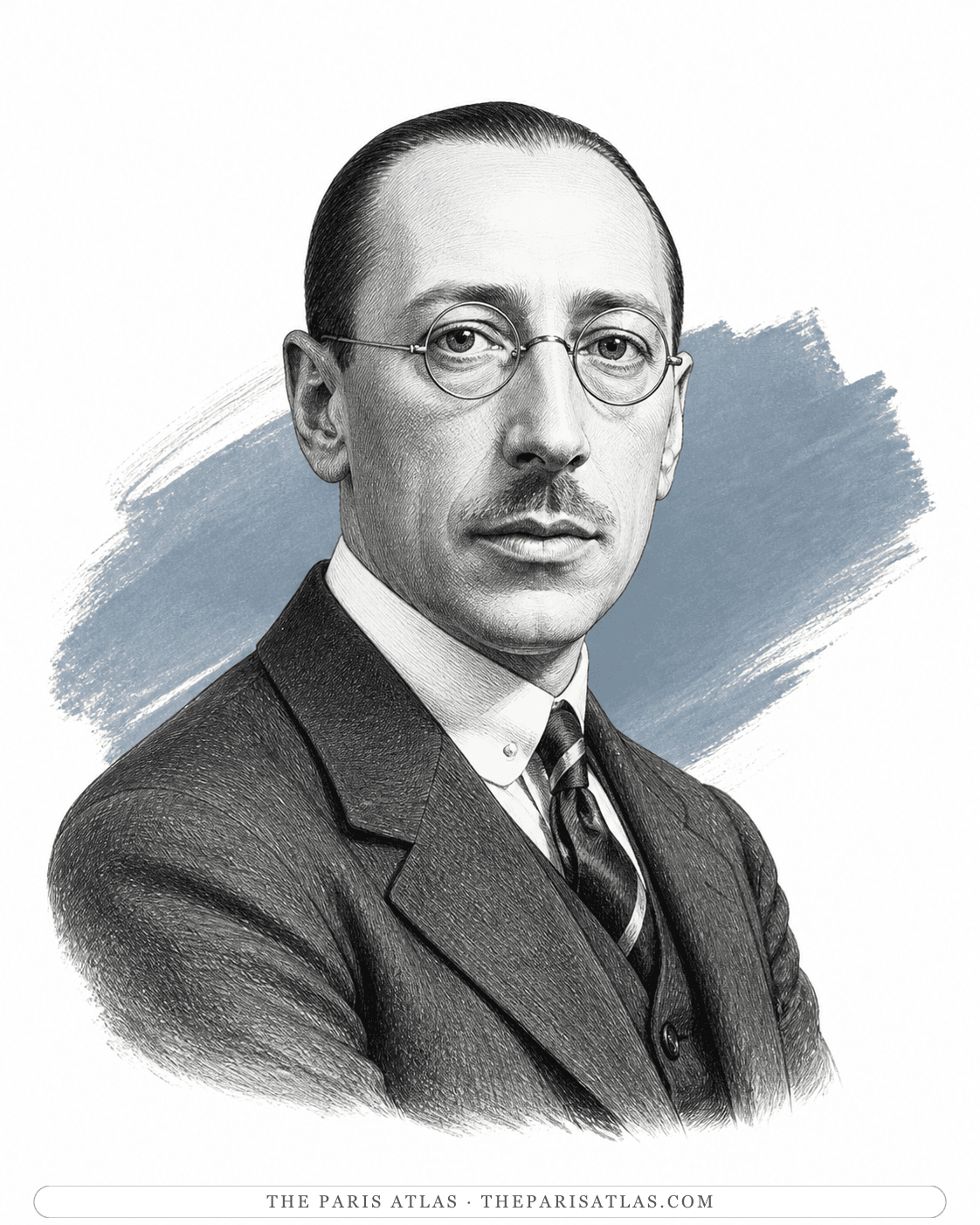
Boulanger's friendship with Igor Stravinsky became one of the most important musical relationships of her adult life. Their sustained correspondence began around the period when Boulanger taught Stravinsky's son Soulima in 1929. She became a close advocate of Stravinsky's music, performed it, taught it, helped with practical musical matters and maintained contact with the family for decades. Their correspondence is extensive enough to fill a scholarly volume.
Stravinsky was particularly important to Boulanger because she did not treat music history as a choice between revering the past and embracing the present. Bach, Monteverdi and Stravinsky could all belong to the same serious musical world.
Boulanger's interest in older music was equally serious. In February 1937, she recorded a substantial group of works by Claudio Monteverdi in Paris at Studio Albert with her vocal and instrumental ensemble. The Bibliothèque nationale de France preserves the recording history and dates the sessions to 13 February 1937.
Monteverdi is now treated as one of the central composers of European music, but in the first half of the twentieth century much of his work was still unfamiliar to general concert audiences. Boulanger's recordings therefore belonged to the early modern revival of seventeenth-century music. Her musical world could stretch from Renaissance and Baroque polyphony to Stravinsky without treating either as a museum object.
Boulanger also broke barriers as a conductor during a period when major orchestras almost never placed women on the podium. In 1936, she became the first woman to conduct the London Philharmonic Orchestra. The following years brought additional appearances in Britain and the United States.
On 18 February 1938, she conducted Fauré's Requiem with the Boston Symphony Orchestra at Symphony Hall. The Boston Symphony's own performance archive confirms the program. Boulanger was the first woman to conduct the orchestra in one of its subscription programs.
Her history with the New York Philharmonic requires a little precision because the common shorthand that she was simply “the first woman to conduct it” hides several different appearances. She conducted special Philharmonic concerts in 1939 and 1941. In February 1962, she became the first woman to conduct the orchestra's regular subscription concerts, leading a program centered on Fauré's Requiem and music by Lili Boulanger. Conducting remained another means of teaching, advocating for composers and putting her musical convictions into practice.
The Second World War again divided Boulanger's life between France and the United States. From about 1940 to 1945, she spent the war years teaching, lecturing and conducting in America. Her reputation was already sufficiently strong that students sought her out at institutions around the country. The war strengthened something that Fontainebleau had begun twenty years earlier: Nadia Boulanger became an unusually powerful bridge between French musical education and American musical life.
Boulanger returned to France in 1946 and resumed the life that had been interrupted by war: private lessons at rue Ballu, work at Fontainebleau, concerts and formal teaching at the Paris Conservatoire. She became professor of piano accompaniment at the Conservatoire, while the Wednesday class at home continued operating according to its own broader curriculum. Sources differ slightly on the administrative date of her formal appointment, but she was teaching there in the postwar period while simultaneously maintaining her independent studio.
The distinction between those two settings mattered. At the Conservatoire she held an institutional post. At rue Ballu she could teach almost anything she believed a musician needed. The students kept arriving.
One of them, in 1957, came from a world far removed from the Paris Conservatoire. Quincy Jones had already played jazz professionally and worked with artists including Lionel Hampton and Dizzy Gillespie when he moved to Paris. He wanted deeper training in composition and orchestration, particularly writing for strings—opportunities that he felt Black arrangers in the United States were often denied.
He studied with Boulanger in Paris and at Fontainebleau. Decades later, Jones still described her as one of the greatest teachers he had encountered. He remembered arguments as well as admiration: some of her classical assumptions did not fit comfortably with jazz, and he did not simply accept everything she told him. That disagreement itself became part of the education. Their relationship demonstrates just how far the Boulanger classroom had expanded. A teacher formed in the Paris Conservatoire of Fauré could sit with an American jazz arranger who would eventually produce Thriller.
Another very different composer arrived in 1964. Philip Glass spent roughly two years in Paris studying privately with Boulanger. He later recalled the period as one of the most rigorous stages of his musical education. Rather than encourage him to chase whatever happened to look newest in Paris, she sent him back through Bach, Mozart and the foundations of Western musical craft.
Glass would eventually become famous for music that sounds almost nothing like Copland, Piazzolla or Jones. That is exactly the point. Boulanger's students did not constitute a “Boulanger school” in the normal stylistic sense. Their common inheritance was the expectation that whatever language they chose, they should know what they were doing with it.
Boulanger remained closely associated with the American Conservatory at Fontainebleau from its founding in 1921 for the rest of her life. The school places her on its faculty from the beginning and records her as director from the late 1940s until 1979. Fontainebleau was unusually suited to her international role. Students could encounter the traditions of French conservatory training without simply enrolling permanently in the Paris system. Many then traveled into Paris to study with Boulanger privately.
Over the decades, the geography of her teaching became almost ritualized: summers at Fontainebleau, the rest of the year around Paris and rue Ballu, interrupted by conducting engagements and international travel. Thousands of individual lessons radiated outward from those two places.
Boulanger remained active astonishingly late in life. Her eyesight and physical mobility declined, but students continued coming. Conductors, composers and performers who had studied with her decades earlier continued to visit. Former pupils became teachers themselves and transmitted parts of her method to another generation.
She also continued defending Lili's music. The devotion had lasted more than sixty years by the end of Nadia's life. Her sister's death had closed one possible career for her while opening another, and Nadia never separated her own legacy completely from Lili's. Honors accumulated. France eventually made her a Grand Officier of the Légion d'honneur, and by her ninetieth birthday tributes arrived from former students around the world.
Nadia Boulanger died in Paris on 22 October 1979, aged ninety-two. She was buried at Montmartre Cemetery with Lili and their parents.
Few teachers have been as closely identified with a single home as Nadia Boulanger was with 36 rue Ballu. The address explains something that institutional titles alone do not. Boulanger certainly belonged to the Paris Conservatoire. She taught at the École Normale. Fontainebleau gave her an international summer school. She conducted famous orchestras. But much of her influence came from a domestic room in Paris.
Students sat near the piano. Scores were opened. Somebody sang. Somebody played Bach. A visiting composer arrived. A former student returned from America. A discussion that had begun as a harmony lesson turned into an argument about what kind of musician someone ought to become. For generations of visitors, musical Paris was not simply the Opéra, the Conservatoire or a concert hall. It was Nadia Boulanger's apartment.
The City of Paris eventually made that relationship literal by attaching both sisters' names to the place outside their former home. Today place Lili-et-Nadia-Boulanger preserves the memory of two very different musical careers that began in the same family and remained emotionally connected for life.
Boulanger's influence is difficult to measure because it does not sound like one thing. There is no obvious musical fingerprint linking Aaron Copland to Quincy Jones, Astor Piazzolla to Philip Glass or Elliott Carter to Michel Legrand. That absence is one of the strongest arguments for taking her seriously as a teacher rather than treating her as the founder of a style.
Her students belonged to different countries, generations and traditions. Some wrote concert music. Some wrote jazz. Some became conductors. Others wrote for films, Broadway or popular singers. Boulanger's common ground was more basic: listen closely, understand the score, know harmony and counterpoint, learn what previous composers had actually done, and then discover what remains genuinely yours.
Her own career contained the same breadth. She could teach Bach in the afternoon, discuss Stravinsky in the evening, record Monteverdi, play the organ, conduct Fauré and then tell a young tango composer that the supposedly less respectable music he was embarrassed to show her was actually the music he needed to follow. That combination of discipline and openness explains why musicians kept climbing the stairs at rue Ballu for so long.
Nadia Boulanger did not write one of the twentieth century's defining masterpieces. Instead, she helped create the conditions in which an extraordinary number of other people could write theirs.
Born Juliette Nadia Boulanger in Paris on 16 September into a musical family.
Her younger sister Lili Boulanger is born; their relationship becomes one of the central relationships of Nadia's life.
Enters the Paris Conservatoire at age nine, studying harmony, accompaniment, fugue, organ and composition.
Wins major Conservatoire prizes in harmony and other disciplines and completes the principal phase of her formal studies.
The Boulanger family moves to 36 rue Ballu; Nadia begins teaching privately from the apartment.
Wins a Second Prix de Rome with her cantata La Sirène.
Works closely with Raoul Pugno on Les Heures claires and La Ville morte and writes Fantaisie variée for piano and orchestra.
Pugno dies while traveling with Boulanger in Moscow; the First World War prevents the planned production of La Ville morte.
Nadia and Lili help organize the Comité franco-américain du Conservatoire and its Gazette to support mobilized musicians.
Lili Boulanger dies on 15 March, aged twenty-four; Nadia thereafter largely abandons composition as a central activity.
Begins teaching at the École Normale de Musique de Paris, where she remains until 1939.
Joins the faculty of the newly opened American Conservatory at Fontainebleau.
Teaches Aaron Copland composition and orchestration at Fontainebleau and in Paris.
Continues the private teaching world at rue Ballu.
Plays the organ in the New York premiere of Copland's Symphony for Organ and Orchestra on 11 January; the work is dedicated to her.
Develops a close professional and personal relationship with Igor Stravinsky after teaching his son Soulima.
Becomes the first woman to conduct the London Philharmonic Orchestra.
Records major works by Claudio Monteverdi in Paris, helping bring seventeenth-century repertoire to a wider modern audience.
Conducts Fauré's Requiem with the Boston Symphony Orchestra, becoming the first woman to conduct it in a subscription concert.
Conducts special concerts with the New York Philharmonic.
Spends much of the Second World War in the United States, teaching, lecturing and conducting.
Returns to Paris and resumes teaching at rue Ballu, Fontainebleau and the Paris Conservatoire.
Becomes director of the American Conservatory at Fontainebleau, a position she retains until her death.
Teaches Astor Piazzolla and helps persuade him to keep tango at the center of his musical identity.
Quincy Jones moves to Paris and studies composition, counterpoint and orchestration with Boulanger.
Becomes the first woman to lead a regular New York Philharmonic subscription program.
Philip Glass studies privately with Boulanger in Paris, concentrating on Bach, Mozart, counterpoint and analysis.
Continues teaching an international stream of composers, performers and conductors at rue Ballu and Fontainebleau.
Is made a Grand Officier of the Légion d'honneur.
Dies in Paris on 22 October, aged ninety-two, and is buried beside Lili and their parents in Montmartre Cemetery.
Paris formally renames the square outside the family's former home place Lili-et-Nadia-Boulanger.
Taught · 1921–1924
Copland met Boulanger at Fontainebleau in 1921 and studied composition and orchestration with her through 1924. He later described her as the person most influential in forming him as a composer.
Collaborated with · 1930
Boulanger championed, performed, recorded, and taught Stravinsky's music; their close professional friendship lasted for decades.

Taught · 1957
Jones studied composition with Boulanger in Paris after moving to France in the late 1950s.
Collaborated with · 1915–1918
The sisters served as founding secretaries of the Comité franco-américain du Conservatoire and helped produce its Gazette des classes du Conservatoire for musicians mobilized during the First World War. Nadia continued promoting and preserving Lili's music after her death.
Taught · 1921–1924
Copland met Boulanger at Fontainebleau in 1921 and studied composition and orchestration with her through 1924. He later described her as the person most influential in forming him as a composer.
Collaborated with · 1930
Boulanger championed, performed, recorded, and taught Stravinsky's music; their close professional friendship lasted for decades.
Taught · 1957
Jones studied composition with Boulanger in Paris after moving to France in the late 1950s.
Studied at · 1896
Larousse and Bru Zane place Boulanger's admission to the Paris Conservatoire in 1896, when she was nine. She studied harmony, accompaniment, fugue, organ, and composition and later won major prizes.
Collaborated with · 1915–1918
The sisters served as founding secretaries of the Comité franco-américain du Conservatoire and helped produce its Gazette des classes du Conservatoire for musicians mobilized during the First World War. Nadia continued promoting and preserving Lili's music after her death.
The sources below include biographies, scholarly essays, interviews, and primary materials that informed this page. They reflect both the historical record and ongoing critical conversations about Nadia Boulanger and their work.


The Bibliothèque nationale de France authority record for Nadia Boulanger's identity and life dates.
The Paris Conservatoire's institutional biography, including her studies and pioneering conducting appearances.
The City of Paris biography and official naming proposal, used for the family, rue Ballu, honors, death and memorial square.
The municipal debate documenting the 2021 name place Lili-et-Nadia-Boulanger.
The Conservatoire's archival history of Nadia and Lili's First World War support network and Gazette.

Fontainebleau's institutional history, documenting Boulanger's faculty role and directorship.
The Library of Congress chronology for Copland's Fontainebleau study and the organ symphony dedicated to Boulanger.
Copland's later tribute to Boulanger and the duration of their musical relationship.
A Library of Congress photograph documenting Boulanger and her Paris class in 1923.
The BnF collection history for Boulanger's recordings and recorded legacy.
The BnF catalogue record establishing the February 1937 Monteverdi recording session.
The national-library catalogue of Boulanger's recorded work as performer and conductor.
The Library of Congress overview of the Aaron Copland Collection and its Boulanger correspondence.
Copland's own account of Boulanger as his teacher, preserved by the Library of Congress.
The Boston Symphony's own performance record for Boulanger's 18 February 1938 subscription concert.
The New York Philharmonic's history distinguishing her special appearances from the 1962 subscription milestone.
Carnegie Hall's research project mapping the breadth and variety of Boulanger's influence.
Larousse's general biography, including her entry into the Conservatoire in 1896 at age nine.
The Larousse music dictionary chronology for her teaching, conducting, wartime years and return to France.
The Palazzetto Bru Zane scholarly biography of Boulanger as composer, conductor, organist and pianist.

The scholarly volume Nadia Boulanger and Her World, used for the breadth of her career and teaching network.
The scholarly chapter devoted to 36 rue Ballu as home, classroom, salon and center of Boulanger's international career.
The published correspondence documenting Boulanger's long relationship with Igor Stravinsky and his family.
The National Endowment for the Arts on Quincy Jones's Paris study and recollections of Boulanger.
A second NEA source for Jones's musical background and the importance of his European study.
The San Francisco Conservatory of Music on Boulanger's teaching methods and legacy, including Philip Glass's Paris study.
Bard Music Festival scholarship on Boulanger's students, including Astor Piazzolla and the lesson that redirected him toward tango.
Scholarly discussion of Boulanger's Prix de Rome work and the conventions she challenged.
Radio France archival programming on the 1913 Fantaisie variée and Boulanger's collaboration with Raoul Pugno.
These references anchor the page in the documented record and in the scholarly conversations around Nadia Boulanger. Every claim on this page traces back to one or more of the works listed here.
 Explore more resources