The Paris AtlasCharting the artists, works, and places worth returning to.
  • Patron
  • Editor
· Russian · 1872–1929

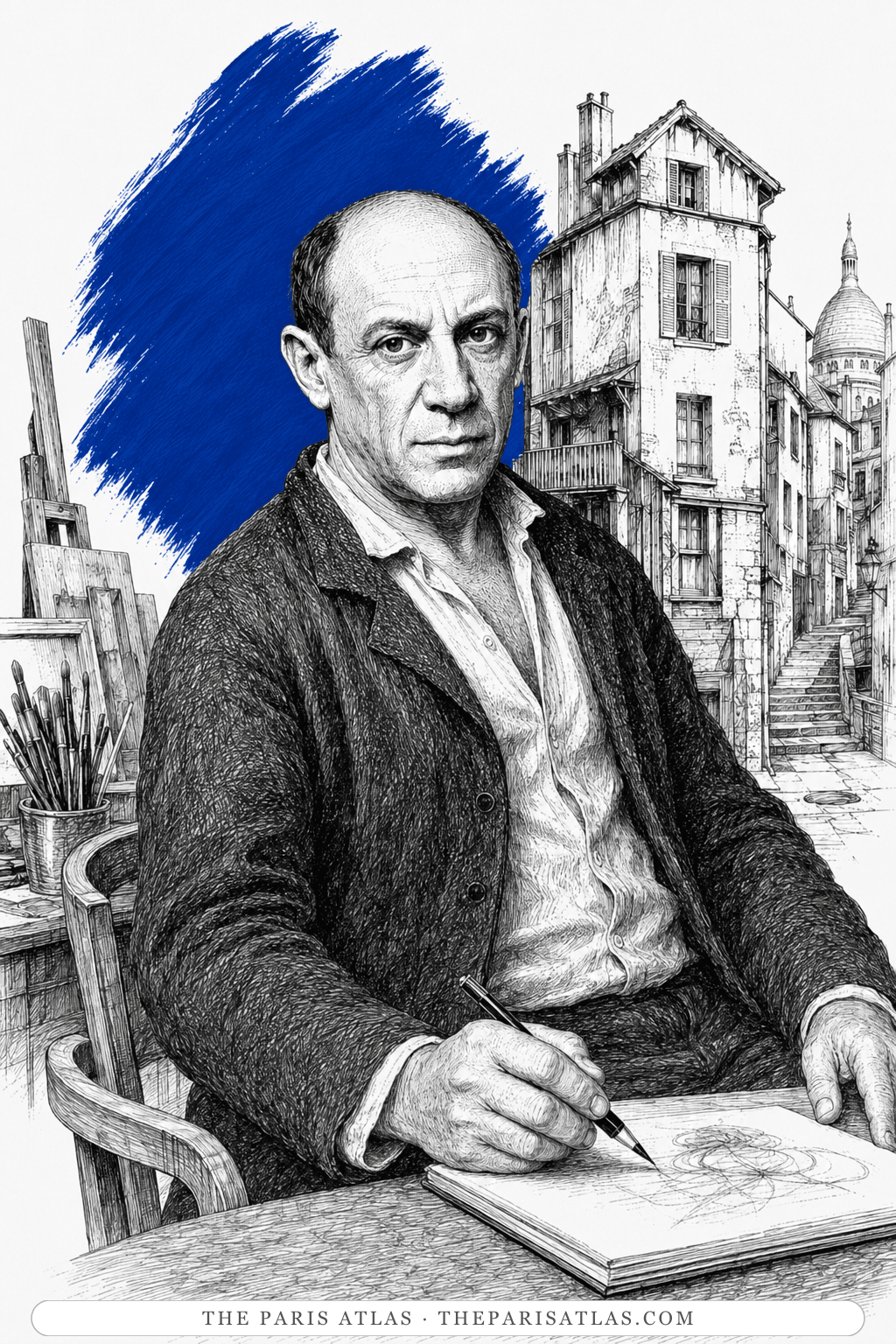
Sergei Diaghilev

The Russian impresario — the man who assembles and finances a company but makes no art himself — who changed everything by choosing other people. From 1909 his Ballets Russes ("Russian Ballets") brought the composers Igor Stravinsky and Erik Satie, the dancer Vaslav Nijinsky, the painter Pablo Picasso, the poet Jean Cocteau and the couturier Coco Chanel together on Paris stages, and established the modern idea of a ballet as one artwork in which music, choreography, design and costume are commissioned together. Paying for all of it ruined him: he died broke in Venice in 1929.

Details

Lived
1872–1929
Born
1872
Birthplace
Novgorod Province, Russia
Died
1929
Place of death
Venice
Nationality
Russian
Profession
Ballet impresario, founder of the Ballets Russes
Roles
PatronEditor
Also known as
Serge de Diaghilev · Sergei Pavlovich Diaghilev · Serge Diaghilev

About Sergei Diaghilev

Sergei Diaghilev never composed a bar, choreographed a step or danced a role. He was an impresario — the person who decides that a performance will exist, chooses who will write, design, choreograph and dance it, finds the theatre, raises the money and takes the blame. From 1909 until his death in 1929 he ran the Ballets Russes — the name is simply French for "Russian Ballets" — a company of Russian dancers based in Paris and Monte Carlo, which never once performed in Russia and reorganised European art around a dance stage.

The list of what he commissioned is the syllabus of modernism — the early-twentieth-century drive, in every art at once, to break with inherited forms: the composer Igor Stravinsky's The Firebird, Petrushka and The Rite of Spring; Parade, with a scenario by the poet Jean Cocteau, a score by the composer Erik Satie and a Cubist curtain — Cubism being the style Picasso had invented, which breaks a figure into flat, tilted planes — by the painter Pablo Picasso; bathing costumes by the couturier Coco Chanel. The Victoria and Albert Museum in London, the V&A, which holds the costumes, curtains and designs the company left behind, sums him up in one sentence and five nouns: 'dictator, devil, charlatan, sorcerer, charmer'.

What an impresario actually does

Diaghilev's job has no modern equivalent, which is why his name is less familiar than the names he assembled. He was, in the V&A's phrase, 'a Russian ballet impresario and founder of the legendary Ballets Russes dance company', and the work consisted of judgement and nerve: hearing a twenty-seven-year-old's short orchestral piece and commissioning a full ballet score from him; putting a Cubist painter in charge of a curtain; deciding that a fashion designer should dress a ballet about the Riviera. He recruited, in the museum's list, 'composers, choreographers, designers and performers, including Mikhail Fokine, Léon Bakst and Vaslav Nijinsky' — and then paid for it, usually with money he did not have. Of those three, Fokine invented the steps, Bakst designed the sets and costumes, and Nijinsky was the dancer the whole of Europe came to see.

He was born in 1872 in Novgorod Province, into a family of provincial gentry that went bankrupt, studied law in St Petersburg while taking singing and composition lessons, and was told by his teacher Nikolai Rimsky-Korsakov, the most eminent Russian composer of the day, that he had no talent as a composer. He turned instead to editing and exhibiting: from 1898 he ran the magazine Mir iskusstva — 'World of Art' — with the painters Alexandre Benois and Léon Bakst, which gave him the two things his later career ran on, a house style and a circle.

The conquest of Paris, 1906–1909

Diaghilev took Russian art to Paris in instalments, each one larger than the last. In 1906 he organised an exhibition of Russian painting at the Salon d'Automne, Paris's big autumn survey show; in 1907 he staged concerts of Russian music; in 1908 he brought the Russian composer Modest Mussorgsky's opera Boris Godunov — the story of a guilt-ridden tsar — to the Paris Opera, the vast state opera house on the Right Bank, with Fyodor Chaliapin, the most celebrated bass singer of the day, in the title role. Each venture was a critical triumph and a financial hole.

Then, on 19 May 1909, after weeks of advance publicity, he launched his first season of Russian ballet in Paris, at the Théâtre du Châtelet on the place du Châtelet — a big commercial theatre on the Right Bank that he had redecorated for the occasion. 'Audiences were dazzled by the dancing and striking designs,' the V&A records. What dazzled them was a kind of performance Paris had not seen: Bakst's saturated colour, Fokine's choreography, and dancers — Vaslav Nijinsky and the ballerina Tamara Karsavina above all — trained at the imperial schools of St Petersburg to a standard the Western companies had lost. The season made Nijinsky famous within a fortnight and made ballet, for the first time in half a century, something serious people argued about.

Stravinsky, and the riot of 1913

In 1909 Diaghilev heard two short orchestral pieces by an unknown twenty-seven-year-old at a concert in St Petersburg and gambled a commission on him. The unknown was Igor Stravinsky, and the commission became The Firebird, premiered at the Paris Opera on 25 June 1910. Petrushka followed at the Théâtre du Châtelet in June 1911, with Nijinsky dancing the puppet. Three Paris premieres in four years turned Stravinsky — a law graduate with no career in music to speak of — into the most discussed composer alive.

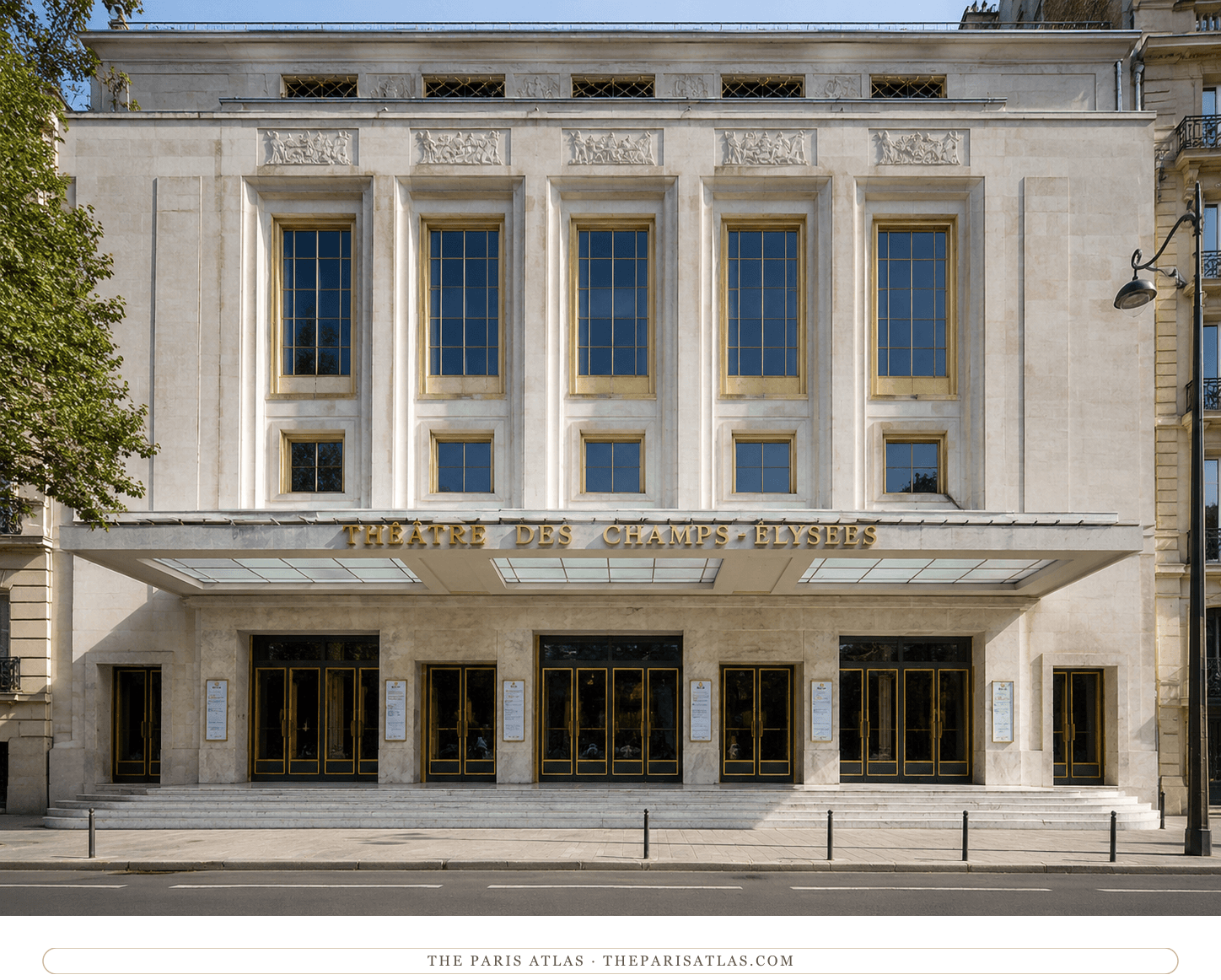
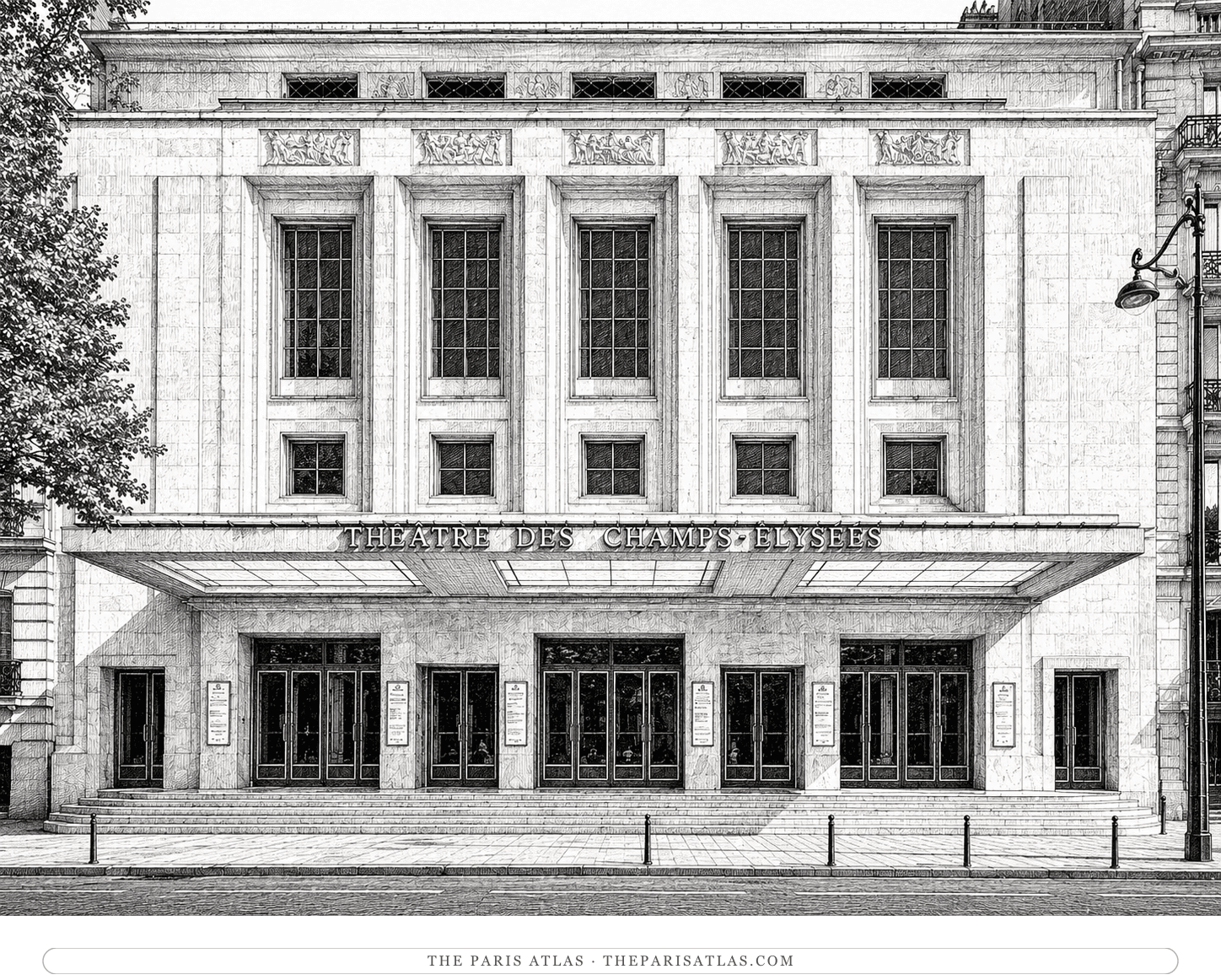
The third was The Rite of Spring, on 29 May 1913 at the newly opened Théâtre des Champs-Élysées — Stravinsky's score of hammering dissonance, Nijinsky's choreography of turned-in feet and stamping, and an audience that howled the orchestra down. The Fondation Igor Stravinsky, the body that keeps the composer's estate and archive, calls it a near-riot; the legend has Diaghilev flicking the house lights on and off to quiet the room. It is the most famous evening in the history of ballet, and it happened because an impresario put a difficult score and a difficult choreographer on the same stage on purpose.

Nijinsky's own story ended badly and quickly. The greatest male dancer in Europe and Diaghilev's lover, he married the Hungarian dancer Romola de Pulszky while on tour in South America in 1913; Diaghilev dismissed him from the company, and after the war a schizophrenia diagnosis ended his career altogether. He spent the last thirty years of his life in and out of institutions.

Parade, 1917: four artists, one afternoon

The war scattered the company across neutral countries and nearly finished it, and Diaghilev answered with the most consequential single production of his life. Parade, premiered at the Théâtre du Châtelet on 18 May 1917, had a scenario by the poet Jean Cocteau, a score by Erik Satie that called for a typewriter and a siren, choreography by Léonide Massine, and curtain, sets and costumes by Pablo Picasso, who built two of the characters as walking Cubist constructions. The house booed. In his programme note the poet Guillaume Apollinaire called the result 'une sorte de sur-réalisme' — 'a kind of surrealism' — the word's first prominent appearance in print and, seven years later, the name of a movement.

Parade is the clearest demonstration of what Diaghilev was for. Cocteau, Satie and Picasso were not collaborators by temperament and would not have found each other; the ballet exists because one man commissioned all three, held them in the same room, and put the result in front of a paying Paris audience in the middle of a war.

The 1920s: painters, couturiers, and Le Train Bleu

After the war the company settled into a rhythm of winters in Monte Carlo and seasons in Paris, and Diaghilev kept commissioning the most conspicuous artists in the city: Picasso again for Pulcinella (1920), with Stravinsky recomposing eighteenth-century scores; the painters Henri Matisse and André Derain for designs; the painter Marie Laurencin for Les Biches ("The Does", 1924), a ballet of flirtation at a house party; Sonia Delaunay, another painter, dressing his dancers in what she called simultaneous colour — blocks of pure colour set side by side so that each makes the others vibrate. He also made the alliance the fashion world has never forgotten.

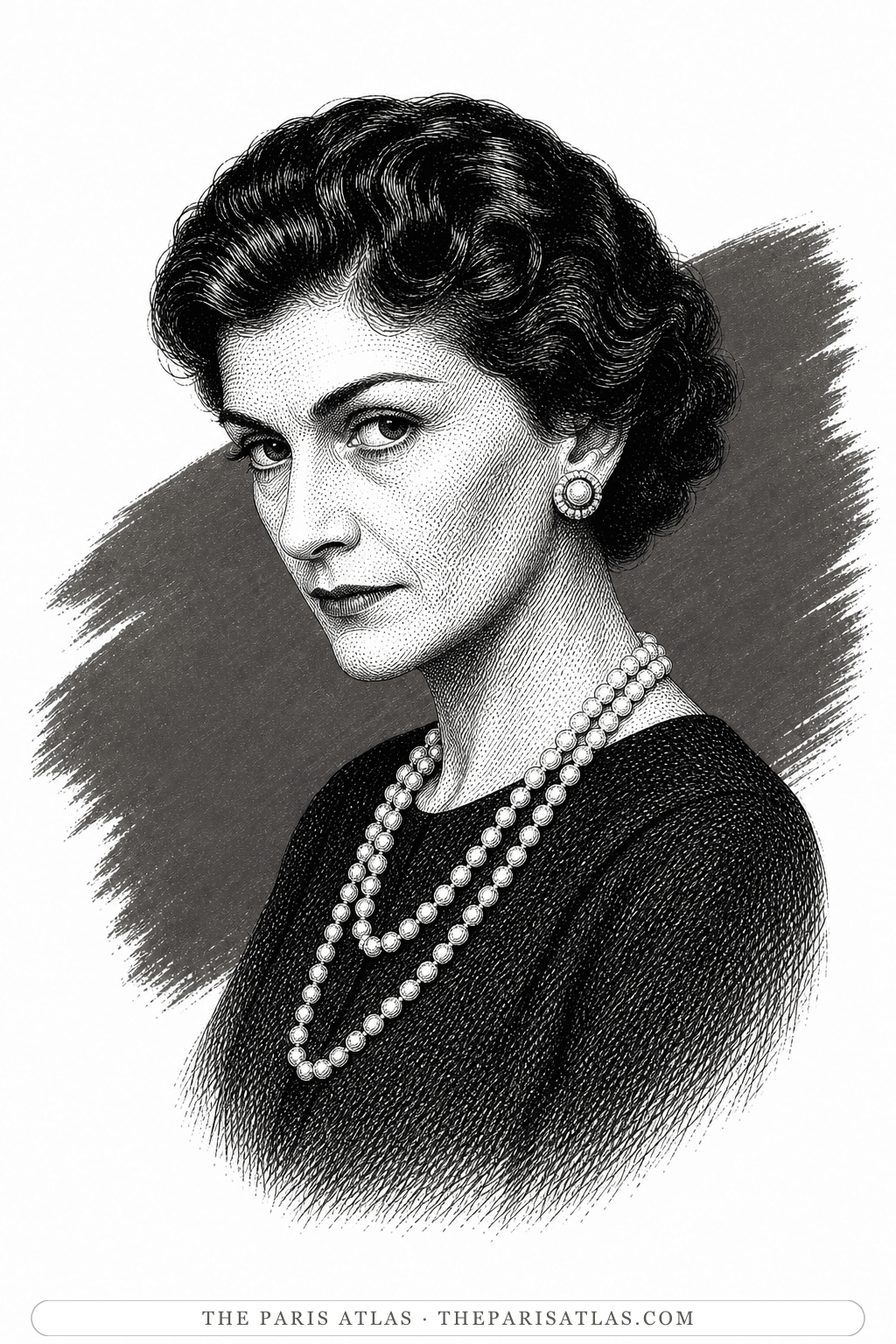
Le Train Bleu ("The Blue Train"), premiered at the Théâtre des Champs-Élysées on 20 June 1924, was named after the express train that carried the rich from Paris to the Riviera, and it dressed its dancers as holidaymakers: Coco Chanel made the costumes — knitted bathing suits, golf sweaters, pearls — while Picasso supplied the giant painted front cloth of two women running on a beach, which the V&A holds to this day. Cocteau wrote the scenario, the composer Darius Milhaud the score, Bronislava Nijinska, Nijinsky's sister and the company's choreographer in these years, the choreography, and the sculptor Henri Laurens the set. The whole apparatus of Paris modernism, hired for one evening by a Russian with no money.

Venice, 1929

Diaghilev's last commission was Stravinsky's Apollon musagète ("Apollo, Leader of the Muses") in 1928 — 'the last ballet staged by Diaghilev one year before his death', as the Fondation Igor Stravinsky puts it. He had diabetes and ignored it. On 19 August 1929 he died in Venice, the city he loved and went to when he could not work, and was buried on the cemetery island of San Michele. He left debts and no institution: the Ballets Russes did not survive him, and the dancers and choreographers he had trained scattered into the companies that became the ballet world of the twentieth century — his last choreographer, George Balanchine, to New York, where he built what became New York City Ballet; the touring troupes of Colonel Wassily de Basil and Léonide Massine across Europe and the Americas.

Stravinsky, who had met him as an unknown twenty-seven-year-old and outlived him by forty-two years, is buried a few steps away on the same island. The V&A gathered the surviving costumes, curtains and designs — including the Picasso front cloth for Le Train Bleu — for its 2010–11 exhibition Diaghilev and the Golden Age of the Ballets Russes, 1909–1929, which is where most of what is left of these evenings can now be seen.

Life events

  1. 1872

    Born on 31 March in Novgorod Province, Russia, into gentry who later went bankrupt.

    Sjeng Scheijen, Diaghilev: A Life (2009)

  2. 1898

    Founds the magazine Mir iskusstva ('World of Art') in St Petersburg with the painters Alexandre Benois and Léon Bakst — the circle that becomes the Ballets Russes.

    Sjeng Scheijen, Diaghilev: A Life (2009)

  3. 1906

    Takes Russian painting to Paris for the Salon d'Automne, the city's big autumn survey show, then Russian concerts in 1907 and Mussorgsky's opera Boris Godunov, with the bass Fyodor Chaliapin in the title role, at the Paris Opera in 1908.

    Sjeng Scheijen, Diaghilev: A Life (2009); Richard Buckle, Diaghilev (1979)

  4. 1909

    Launches his first season of Russian ballet in Paris on 19 May, at the Théâtre du Châtelet; Nijinsky and Karsavina become famous overnight.

    Diaghilev and the Ballets Russes – an introduction; Richard Buckle, Diaghilev (1979)

  5. 1910

    Commissions the ballet score The Firebird from the unknown Igor Stravinsky; it premieres at the Paris Opera on 25 June, choreographed by Mikhail Fokine.

    Igor Stravinsky — biography, Fondation Igor Stravinsky

  6. 1911

    Petrushka premieres at the Théâtre du Châtelet in June, Nijinsky dancing the puppet of the title, the conductor Pierre Monteux in the pit.

    Igor Stravinsky, Petrushka (1910–11) — work details; Igor Stravinsky — biography, Fondation Igor Stravinsky

  7. 1913

    The Rite of Spring premieres on 29 May at the new Théâtre des Champs-Élysées and the audience nearly riots; later that year Diaghilev dismisses Nijinsky, who has married on tour.

    Igor Stravinsky — biography, Fondation Igor Stravinsky; Richard Buckle, Diaghilev (1979)

  8. 1917

    Produces Parade at the Théâtre du Châtelet on 18 May — Cocteau's scenario, Satie's score, Picasso's Cubist curtain and costumes, Massine's choreography — and the poet Guillaume Apollinaire's programme note coins 'sur-réalisme', 'a kind of surrealism', seven years before the movement of that name.

    Title page of Erik Satie's autograph manuscript of Parade, crediting Cocteau's scenario, Picasso's curtain, sets and costumes, and Massine's choreographyBallet · in the catalogParade1917 · Ballet réaliste in one scene

    Diaghilev and the Ballets Russes – an introduction; Richard Buckle, Diaghilev (1979)

  9. 1920

    Pulcinella: Stravinsky recomposes eighteenth-century Italian music, Picasso designs, and the company's postwar Paris seasons begin.

    Igor Stravinsky — biography, Fondation Igor Stravinsky

  10. 1924

    Le Train Bleu premieres at the Théâtre des Champs-Élysées on 20 June with costumes by Coco Chanel and a painted front cloth by Picasso, now in the V&A.

    Diaghilev and the Ballets Russes – an introduction; Diaghilev and the Ballets Russes — collection

  11. 1928

    Stages Stravinsky's Apollon musagète ("Apollo, Leader of the Muses") — the last ballet he staged, a year before his death.

    Igor Stravinsky — biography, Fondation Igor Stravinsky

  12. 1929

    Dies in Venice on 19 August, aged fifty-seven, deep in debt, and is buried on the cemetery island of San Michele; the Ballets Russes does not outlive him.

    Sjeng Scheijen, Diaghilev: A Life (2009); Igor Stravinsky — biography, Fondation Igor Stravinsky

  13. 2010

    The V&A mounts Diaghilev and the Golden Age of the Ballets Russes, 1909–1929, drawn from its collection of the company's costumes and designs.

    Diaghilev and the Ballets Russes – an introduction

People they knew

Documented connections — every one carries its source.

Coco Chanel

  • Fashion designer
  • Patron

Collaborated with · 1924

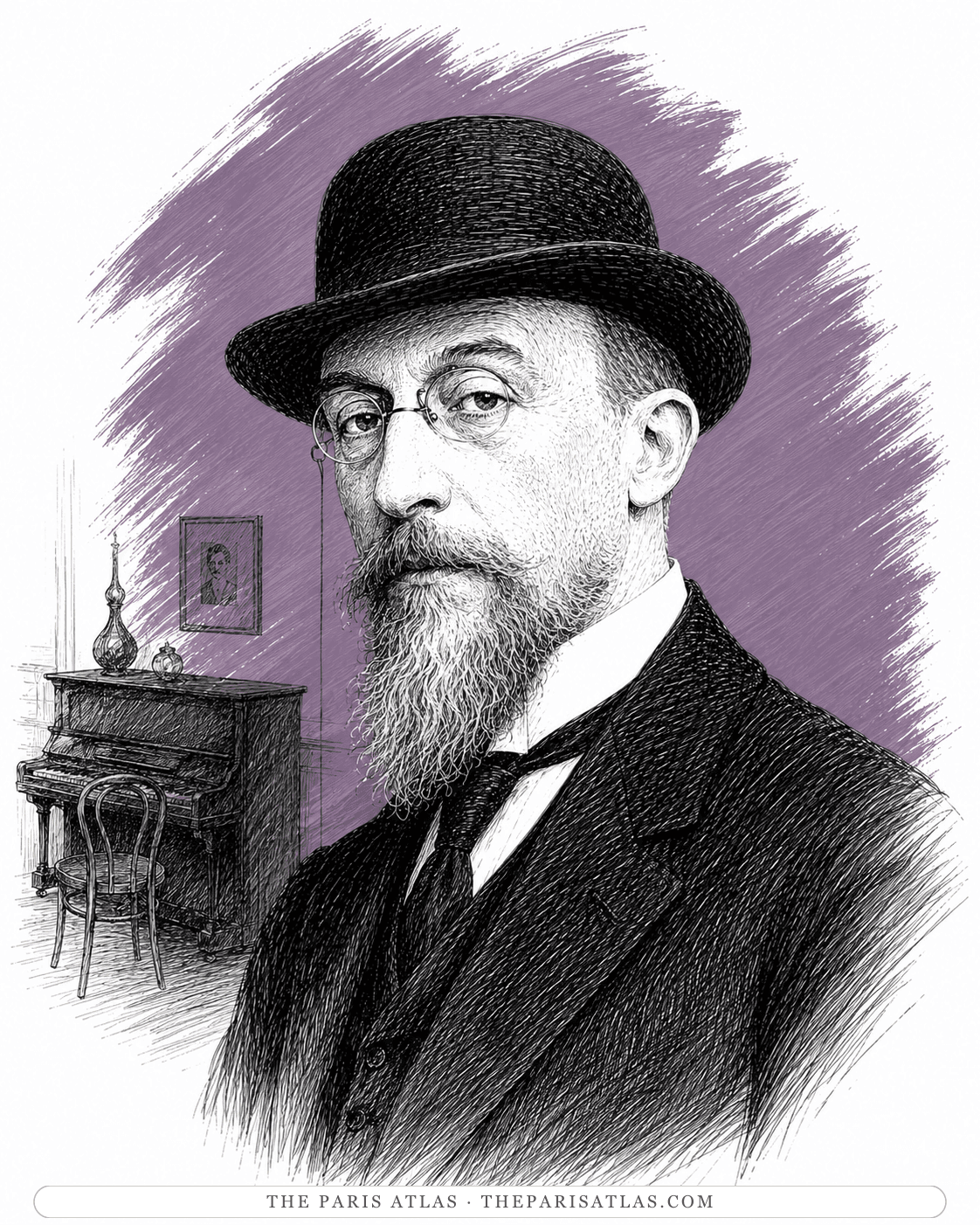
For Le Train Bleu, the ballet about fashionable people on the Riviera that Diaghilev premiered at the Théâtre des Champs-Élysées on 20 June 1924, Chanel dressed the dancers in her own jersey sportswear — bathing suits, golf clothes, pearls — while Picasso supplied the painted front cloth, Cocteau the scenario, Milhaud the score and Nijinska the choreography. It is the first time a working couturier designed a ballet's costumes as the clothes of the moment rather than as theatrical dress.
Diaghilev and the Ballets Russes – an introduction; Diaghilev and the Ballets Russes — collection

Illustrated portrait of Erik Satie

Erik Satie

  • Musician

Collaborated with · 1917

Satie's only ballet score, Parade — typewriter, siren and all — was written for Diaghilev's Ballets Russes and premiered under his production at the Théâtre du Châtelet on 18 May 1917, with Cocteau's scenario, Picasso's designs and Massine's choreography.

Diaghilev and the Ballets Russes – an introduction; Richard Buckle, Diaghilev (1979)

Illustrated portrait of Igor Stravinsky

Igor Stravinsky

  • Composer

Collaborated with · 1909–1929

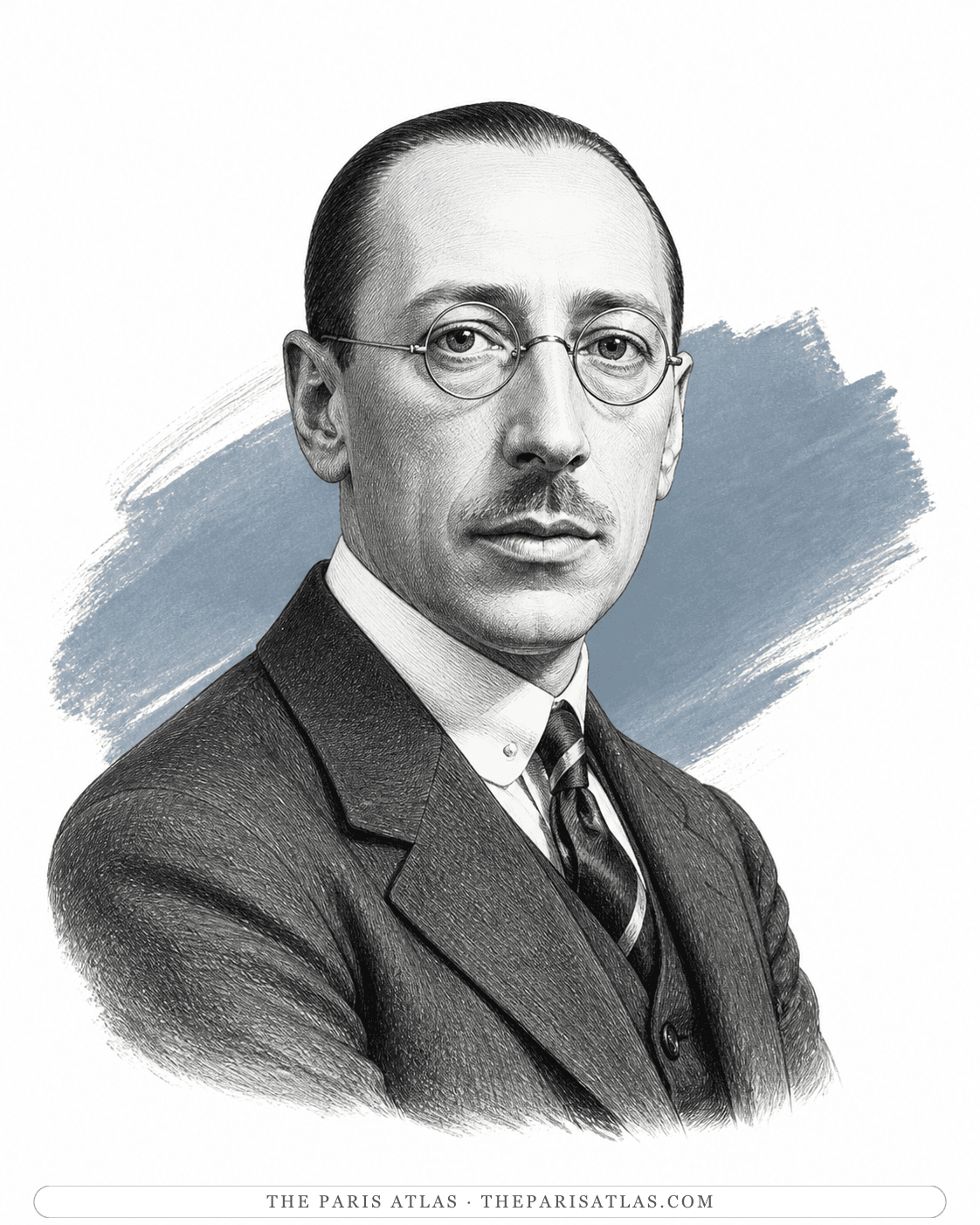
Diaghilev heard two short orchestral pieces by the unknown Stravinsky in St Petersburg in 1909 and commissioned a ballet from him: The Firebird, premiered at the Paris Opera on 25 June 1910, then Petrushka at the Théâtre du Châtelet in June 1911 and The Rite of Spring at the Théâtre des Champs-Élysées on 29 May 1913. The partnership ran to Pulcinella (1920) and Apollon musagète (1928), 'the last ballet staged by Diaghilev one year before his death'.

Igor Stravinsky — biography, Fondation Igor Stravinsky; Diaghilev and the Ballets Russes – an introduction

Illustrated portrait of Jean Cocteau

Jean Cocteau

  • Poet
  • Playwright
  • Illustrator
  • +1

Collaborated with · 1917–1924

Cocteau wrote the scenario for Parade, the ballet Diaghilev produced at the Théâtre du Châtelet on 18 May 1917 with Satie's score and Picasso's designs, and again for Le Train Bleu in 1924. Diaghilev is also the source of the instruction Cocteau repeated all his life — 'Astonish me' — issued when the young poet asked what he could do for the company.

Diaghilev and the Ballets Russes – an introduction; Richard Buckle, Diaghilev (1979)

Illustrated portrait of Pablo Picasso

Pablo Picasso

  • Painter
  • Sculptor

Collaborated with · 1917–1924

Diaghilev commissioned Picasso's first work for the stage: the Cubist curtain, sets and costumes for Parade (1917), then designs for Pulcinella (1920) and the painted front cloth for Le Train Bleu (1924), which the V&A holds — 'Stage cloth for Le Train Bleu, designed by Pablo Picasso, painted by Prince Alexander Schervachidze, 1924'.

Diaghilev and the Ballets Russes – an introduction; Diaghilev and the Ballets Russes — collection

Sergei Diaghilev’s Places

The cataloged places connected to Sergei Diaghilev — through the books, and through the documented record.

Places you can enter today appear first, followed by addresses to see from outside and sites that have vanished.

Questions about Sergei Diaghilev

Who was Sergei Diaghilev?

A Russian impresario (1872–1929) — the organiser and financier behind a performance rather than one of its makers — who founded the Ballets Russes in 1909 and ran it until he died. He commissioned Stravinsky's first three ballets, put Picasso, Matisse, Chanel and Cocteau to work on the ballet stage, and made Paris the capital of modern dance. He never composed, choreographed or danced anything himself.

What is an impresario?

The person who makes a performance happen: chooses the work, commissions the composer, designer and choreographer, hires the dancers, rents the theatre, raises the money and carries the risk. Diaghilev is the reason the word still means something in the arts. His talent was judgement — he heard a short orchestral piece by an unknown twenty-seven-year-old named Stravinsky and commissioned a ballet score from him — and his weakness was money, which he spent faster than he raised it.

What were the Ballets Russes?

The Ballets Russes — French for 'Russian Ballets' — was the company Diaghilev founded in 1909 and directed until 1929, made up of Russian dancers but based in Western Europe — Paris and, from the 1920s, Monte Carlo. It never performed in Russia. Its productions treated a ballet as one artwork made by equals: score, choreography, design and costume commissioned together. The V&A, which holds a great deal of what survives of its costumes and designs, says the company 'revolutionised ballet and had a huge influence on 20th-century art, theatre, fashion and interior design'.

Where in Paris did the Ballets Russes perform?

The first season opened at the Théâtre du Châtelet on 19 May 1909, and the Châtelet also saw Petrushka in 1911 and Parade in 1917. The Théâtre des Champs-Élysées, which opened in 1913 on the avenue Montaigne, hosted the Rite of Spring premiere that May and Le Train Bleu in 1924. The Paris Opera took The Firebird in 1910. The company played other houses too, but those three carry the famous evenings.

Did Diaghilev produce The Rite of Spring?

Yes. He commissioned the score from Stravinsky, engaged Vaslav Nijinsky to choreograph it, and presented it with his own company at the Théâtre des Champs-Élysées on 29 May 1913, where the audience shouted the orchestra down. The evening is remembered as music history; it was also a producer's decision to programme a difficult score and an even more difficult piece of choreography together, and to keep the curtain up while the house rioted.

What was Parade, and why does it matter?

A one-act ballet Diaghilev produced at the Théâtre du Châtelet on 18 May 1917, with a scenario by Jean Cocteau, a score by Erik Satie using a typewriter and a siren, choreography by Léonide Massine, and Cubist curtain, sets and costumes by Pablo Picasso. It scandalised the house. In the programme note the poet Guillaume Apollinaire described it as 'a kind of surrealism' — the first prominent appearance in print of a word that the poet André Breton and his Surrealists adopted as their banner seven years later.

Did Coco Chanel really design for the Ballets Russes?

She did. For Le Train Bleu, premiered at the Théâtre des Champs-Élysées on 20 June 1924, Chanel made the costumes — jersey bathing suits, golf clothes and pearls, the sportswear she had already made fashionable — for a ballet about fashionable people on the Riviera. Picasso painted the front cloth for the same production — two women running on a beach — which the V&A still holds.

How did Diaghilev die?

Of complications of the diabetes he refused to manage, in Venice on 19 August 1929, aged fifty-seven. He was buried on San Michele, the cemetery island in the lagoon, a few steps from where Stravinsky was buried in 1971. He died in debt, and the Ballets Russes dissolved within months: the company existed only as long as the man who paid for it.

Sourced claims

Every connection the graph holds for Sergei, with the evidence behind it.

Collaborated with · 1924

Coco Chanel

For Le Train Bleu, the ballet about fashionable people on the Riviera that Diaghilev premiered at the Théâtre des Champs-Élysées on 20 June 1924, Chanel dressed the dancers in her own jersey sportswear — bathing suits, golf clothes, pearls — while Picasso supplied the painted front cloth, Cocteau the scenario, Milhaud the score and Nijinska the choreography. It is the first time a working couturier designed a ballet's costumes as the clothes of the moment rather than as theatrical dress.
Diaghilev and the Ballets Russes – an introduction; Diaghilev and the Ballets Russes — collection

Collaborated with · 1917

Erik Satie

Satie's only ballet score, Parade — typewriter, siren and all — was written for Diaghilev's Ballets Russes and premiered under his production at the Théâtre du Châtelet on 18 May 1917, with Cocteau's scenario, Picasso's designs and Massine's choreography.

Diaghilev and the Ballets Russes – an introduction; Richard Buckle, Diaghilev (1979)

Collaborated with · 1909–1929

Igor Stravinsky

Diaghilev heard two short orchestral pieces by the unknown Stravinsky in St Petersburg in 1909 and commissioned a ballet from him: The Firebird, premiered at the Paris Opera on 25 June 1910, then Petrushka at the Théâtre du Châtelet in June 1911 and The Rite of Spring at the Théâtre des Champs-Élysées on 29 May 1913. The partnership ran to Pulcinella (1920) and Apollon musagète (1928), 'the last ballet staged by Diaghilev one year before his death'.

Igor Stravinsky — biography, Fondation Igor Stravinsky; Diaghilev and the Ballets Russes – an introduction

Collaborated with · 1917–1924

Jean Cocteau

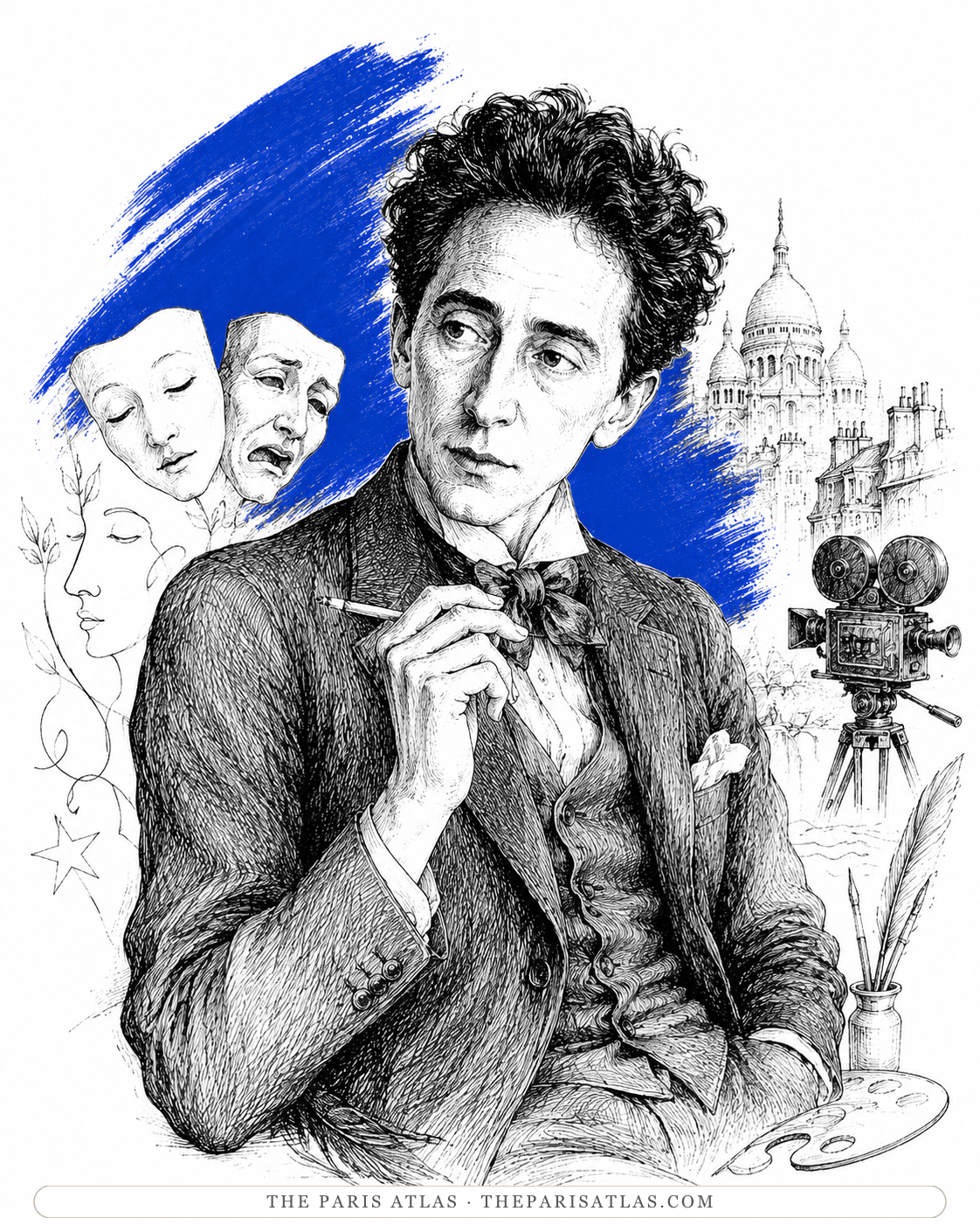
Cocteau wrote the scenario for Parade, the ballet Diaghilev produced at the Théâtre du Châtelet on 18 May 1917 with Satie's score and Picasso's designs, and again for Le Train Bleu in 1924. Diaghilev is also the source of the instruction Cocteau repeated all his life — 'Astonish me' — issued when the young poet asked what he could do for the company.

Diaghilev and the Ballets Russes – an introduction; Richard Buckle, Diaghilev (1979)

Collaborated with · 1917–1924

Pablo Picasso

Diaghilev commissioned Picasso's first work for the stage: the Cubist curtain, sets and costumes for Parade (1917), then designs for Pulcinella (1920) and the painted front cloth for Le Train Bleu (1924), which the V&A holds — 'Stage cloth for Le Train Bleu, designed by Pablo Picasso, painted by Prince Alexander Schervachidze, 1924'.

Diaghilev and the Ballets Russes – an introduction; Diaghilev and the Ballets Russes — collection

Worked at · 1913–1924

Théâtre des Champs-Élysées

Diaghilev took the newly opened theatre on the avenue Montaigne for his Ballets Russes seasons: The Rite of Spring premiered there on 29 May 1913, with Stravinsky's score and Nijinsky's choreography, and the audience nearly rioted; Le Train Bleu followed on 20 June 1924, with Chanel's costumes and Picasso's front cloth.

Igor Stravinsky — biography, Fondation Igor Stravinsky; Diaghilev and the Ballets Russes – an introduction

References

References

The sources below include biographies, scholarly essays, interviews, and primary materials that informed this page. They reflect both the historical record and ongoing critical conversations about Sergei Diaghilev and their work.

  1. 1Diaghilev and the Ballets Russes – an introduction

    Victoria and Albert Museum, London

    The V&A's introduction to Diaghilev and the company, including the 1909 Paris launch.

    View source
  2. 2Diaghilev and the Ballets Russes — collection

    Victoria and Albert Museum, London

    The museum's Ballets Russes holdings, and its one-line definition of what Diaghilev was.

    View source
  3. 3Igor Stravinsky — biography, Fondation Igor Stravinsky

    Fondation Igor Stravinsky, Geneva

    The commissions, premieres and dates on the Stravinsky side of the partnership.

    View source
  1. 4Igor Stravinsky, Petrushka (1910–11) — work details

    Boosey & Hawkes

    Petrushka's premiere details at the Théâtre du Châtelet.

    View source
  2. 5Diaghilev: A Life

    Oxford University Press, 2009

    The standard modern biography — early life, the Paris seasons, the finances, the death in Venice.

  3. 6Diaghilev

    Weidenfeld & Nicolson, 1979

    Richard Buckle's biography, the fullest account of the productions season by season.

i
Why these sources are here

These references anchor the page in the documented record and in the scholarly conversations around Sergei Diaghilev. Every claim on this page traces back to one or more of the works listed here.

Explore more resources