The Paris AtlasCharting the artists, works, and places worth returning to.
  • Musician
· Polish-French · 1810–1849

Frédéric Chopin

The pianist-composer whose pedaling, sonority, ornament, harmonic color, and freedom of phrase were foundational for Debussy.

Details

Lived
1810–1849
Born
1810
Died
1849
Nationality
Polish-French
Roles
Musician

People Frédéric Chopin Knew

Relationships with other people, with sources for each connection.

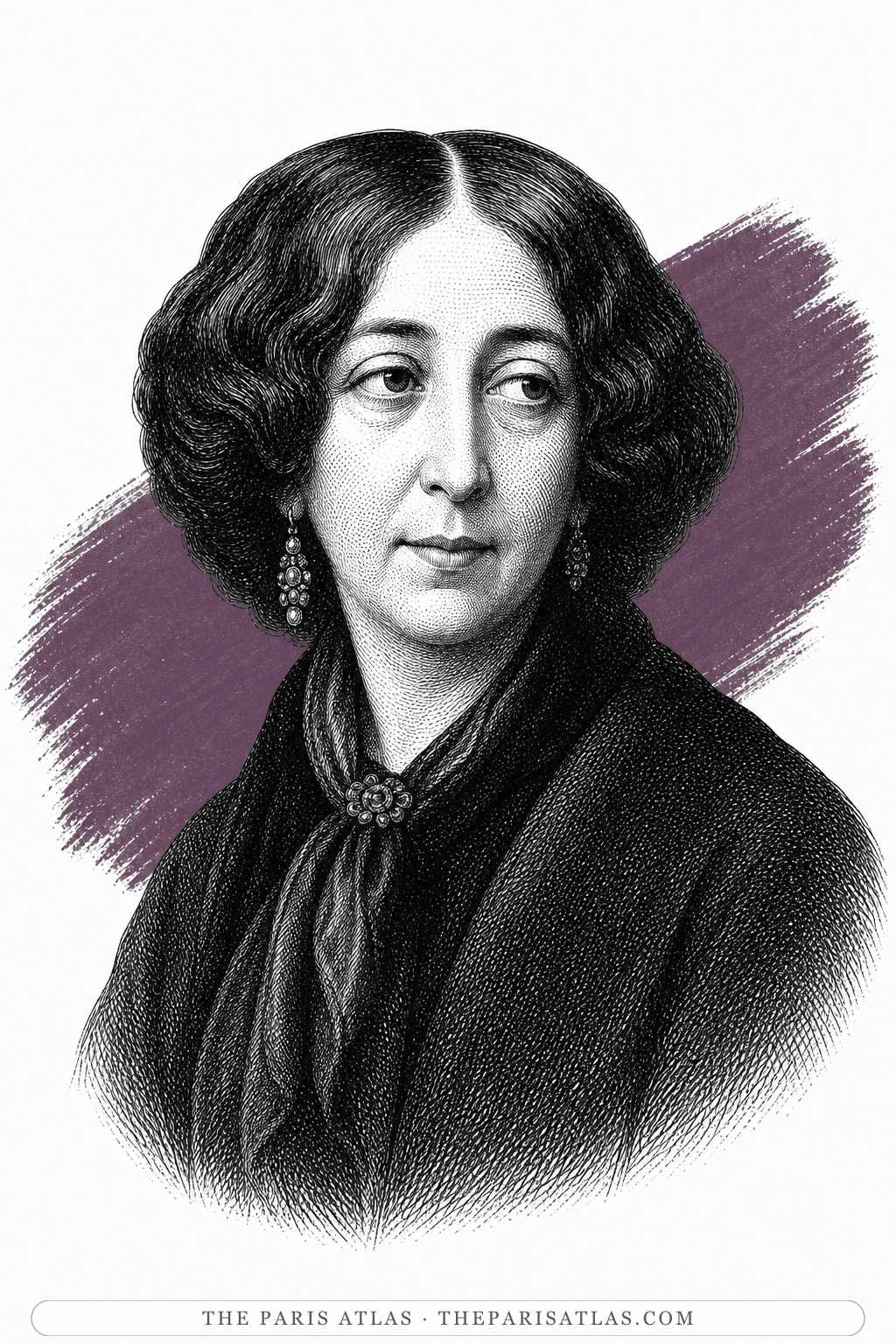
Illustrated portrait of George Sand

George Sand

  • Author
  • Journalist
  • Playwright

Partner of · 1838–1847

The Centre des monuments nationaux, which runs Sand's house at Nohant, names Chopin first among the guests it received and calls him "son compagnon durant neuf ans" — her companion for nine years. Sand met him in 1838; the first winter, spent in an abandoned monastery at Valldemossa on Majorca, worsened his tuberculosis badly. The years that followed settled into winters in adjoining Paris apartments and summers at Nohant, where much of his mature music was written. The break came in 1847 over her daughter Solange's marriage. Sand was still legally married to Casimir Dudevant when they met, and never remarried after her 1836 separation.
— Histoire du domaine de George Sand — Maison de George Sand, Nohant; Qui était George Sand ? — Maison de George Sand, Nohant; Curtis Cate, George Sand: A Biography (1975)

Who Frédéric Chopin Inspired

People who found inspiration in Frédéric Chopin’s work.

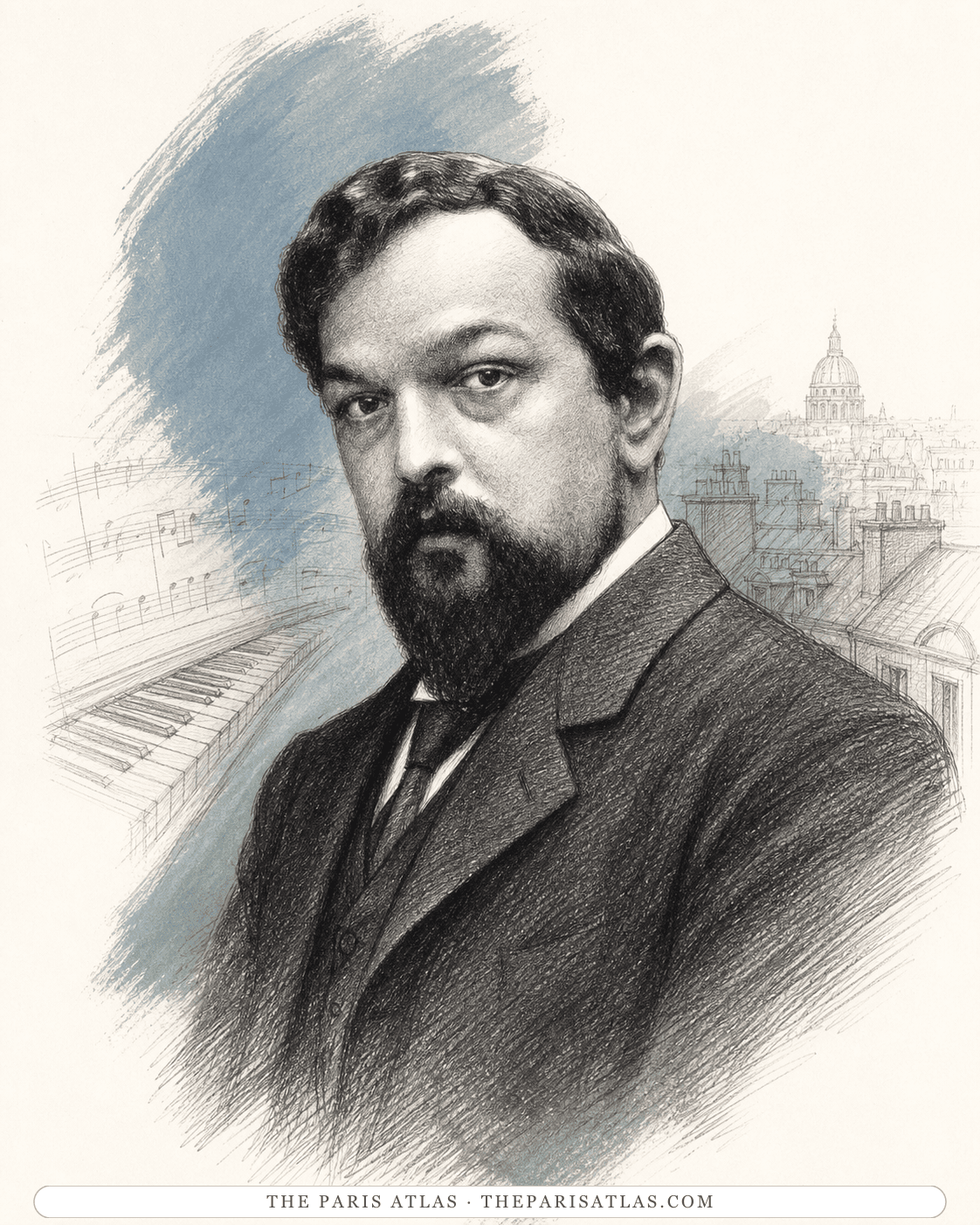
Illustrated portrait of Claude Debussy

Claude Debussy

Chopin's treatment of the piano—pedaling, sonority, ornament, harmonic color and freedom of phrase—was foundational for Debussy. Debussy later edited Chopin's music and regarded him with extraordinary admiration.

— Alex Ross, The Velvet Revolution of Claude Debussy (2018)

Movements

The artistic and literary currents this life ran through.

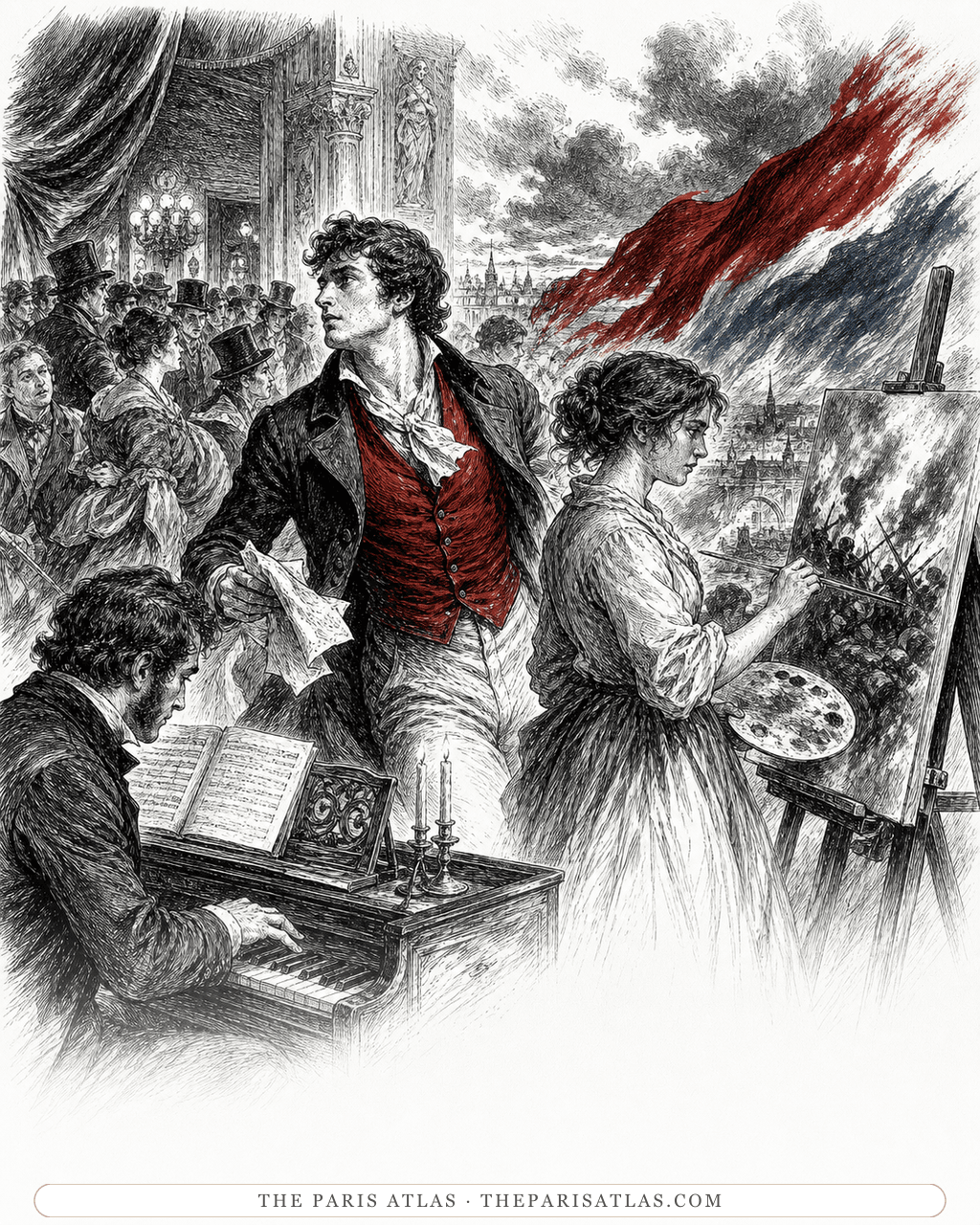
Pen-and-ink illustration of a young playwright in a red waistcoat moving through a crowded 1830 Paris theatre foyer while a woman paints and a pianist plays

Art & literary movement · c. 1790–1850

Romanticism

Named by the Musée de la Vie romantique, with Franz Liszt, as the pianist who took Romantic music to its height of virtuosity and lyricism. Both were regulars at the Friday evenings held a few streets away at 16 rue Chaptal.

— Le romantisme; Histoire de la maison — Musée de la Vie romantique

Connections and Sources

Frédéric Chopin’s connections to people, places, and works, with the sources behind each one.

Influenced

Claude Debussy

Chopin's treatment of the piano—pedaling, sonority, ornament, harmonic color and freedom of phrase—was foundational for Debussy. Debussy later edited Chopin's music and regarded him with extraordinary admiration.

— Alex Ross, The Velvet Revolution of Claude Debussy (2018)

Associated with · 1831–1849

Romanticism

Named by the Musée de la Vie romantique, with Franz Liszt, as the pianist who took Romantic music to its height of virtuosity and lyricism. Both were regulars at the Friday evenings held a few streets away at 16 rue Chaptal.

— Le romantisme; Histoire de la maison — Musée de la Vie romantique

Partner of · 1838–1847

George Sand

The Centre des monuments nationaux, which runs Sand's house at Nohant, names Chopin first among the guests it received and calls him "son compagnon durant neuf ans" — her companion for nine years. Sand met him in 1838; the first winter, spent in an abandoned monastery at Valldemossa on Majorca, worsened his tuberculosis badly. The years that followed settled into winters in adjoining Paris apartments and summers at Nohant, where much of his mature music was written. The break came in 1847 over her daughter Solange's marriage. Sand was still legally married to Casimir Dudevant when they met, and never remarried after her 1836 separation.

— Histoire du domaine de George Sand — Maison de George Sand, Nohant; Qui était George Sand ? — Maison de George Sand, Nohant; Curtis Cate, George Sand: A Biography (1975)

References

References

The sources below include biographies, scholarly essays, interviews, and primary materials that informed this page. They reflect both the historical record and ongoing critical conversations about Frédéric Chopin and their work.

  1. 1The Velvet Revolution of Claude Debussy

    Periodical
    The New Yorker, 2018
    Used for

    Contemporary reporting or criticism used to document the historical reception and context of Frédéric Chopin.

    View source
  2. 2Histoire du domaine de George Sand — Maison de George Sand, Nohant

    Website
    Centre des monuments nationaux
    Used for

    Web source consulted for documented facts and historical context presented on the Frédéric Chopin page.

    View source
  3. 3Qui était George Sand ? — Maison de George Sand, Nohant

    Website
    Centre des monuments nationaux
    Used for

    Web source consulted for documented facts and historical context presented on the Frédéric Chopin page.

    View source
  1. 4George Sand: A Biography

    Biography
    Houghton Mifflin, 1975
    Used for

    Biographical evidence used to verify chronology, relationships, and historical context connected to Frédéric Chopin.

  2. 5Le romantisme

    Website
    Musée de la Vie romantique (Paris Musées)
    Used for

    Web source consulted for documented facts and historical context presented on the Frédéric Chopin page.

    View source
  3. 6Histoire de la maison — Musée de la Vie romantique

    Website
    Musée de la Vie romantique (Paris Musées)
    Used for

    Web source consulted for documented facts and historical context presented on the Frédéric Chopin page.

    View source
i
Why these sources are here

These references anchor the page in the documented record and in the scholarly conversations around Frédéric Chopin. Every claim on this page traces back to one or more of the works listed here.

Explore more resources