Suite bergamasque
Four contrasting movements, including Clair de lune.
Music guide
Debussy’s catalogue moves from intimate piano miniatures to opera, orchestral modernism, poetry settings and radically compressed late sonatas. This guide organizes the essential works by form, explains why they matter and gives a listening path for newcomers.
Detailed Atlas guides
These pages go beyond a list: each covers history, musical meaning, close analysis, movement context, people involved, a timeline and frequently asked questions.
Solo piano · c. 1890; revised 1905
The famous slow movement from Suite bergamasque: spacious, lyrical and built around resonance, pacing and return.
Read the complete guide →Solo piano suite · c. 1890; revised 1905
Four movements that place Clair de lune between older dance forms transformed by Debussy’s modern harmony.
Read the complete guide →Solo piano · 1890
An approachable early work whose melody and circulating accompaniment point toward Debussy’s mature sound world.
Read the complete guide →Orchestral prelude · 1892–1894
The Mallarmé-inspired breakthrough whose opening flute phrase became a landmark of musical modernism.
Read the complete guide →Three symphonic sketches · 1903–1905
A large orchestral study of emergence, play, force and changing light rather than a literal painted seascape.
Read the complete guide →Solo piano suite · 1906–1908
Six witty, affectionate and technically sophisticated pieces dedicated to Debussy’s daughter Chouchou.
Read the complete guide →The piano is the clearest place to hear Debussy remake touch, pedal, resonance and harmonic direction. His keyboard catalogue ranges from intimate early pieces to the concentrated difficulty of the late Études.
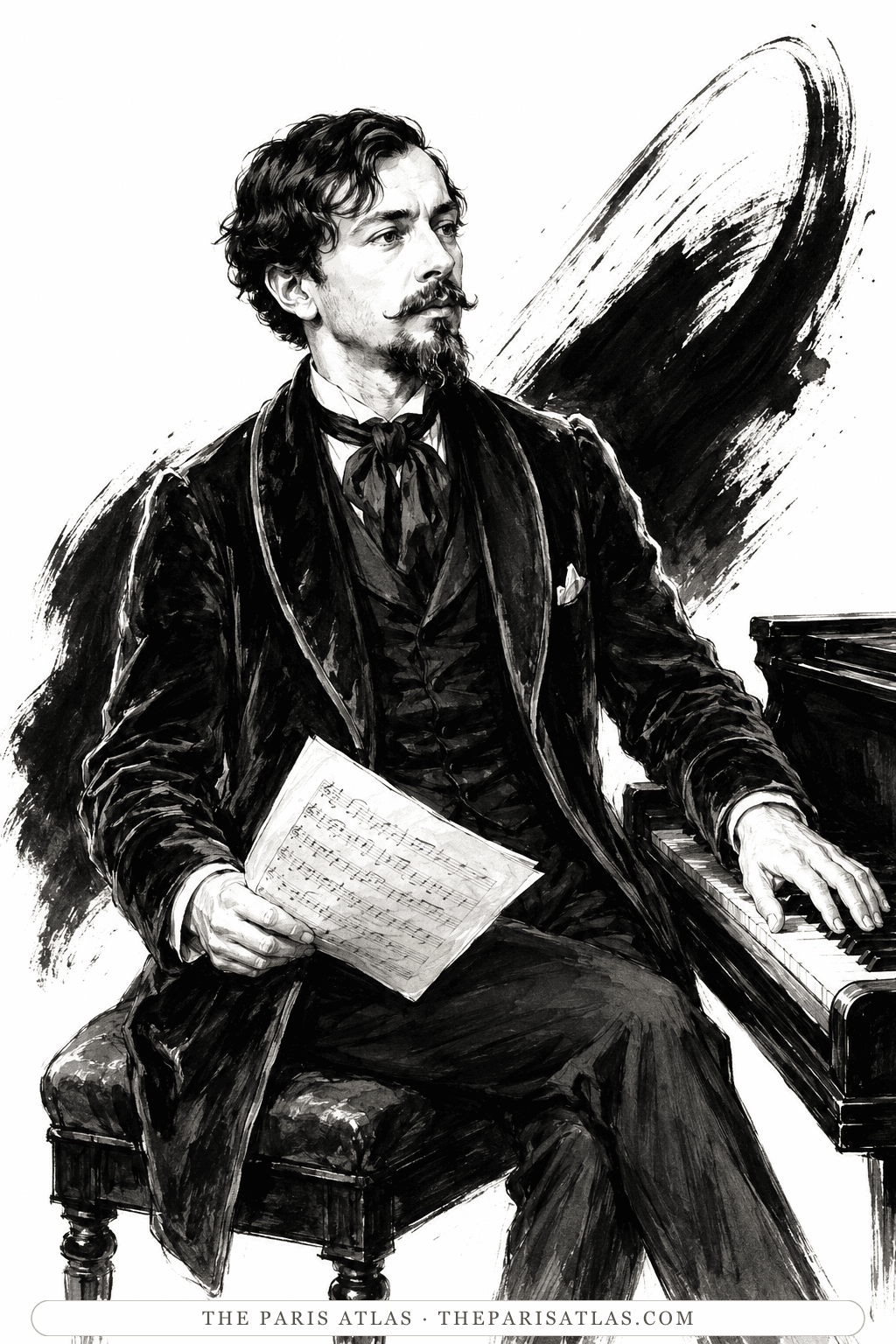
Four contrasting movements, including Clair de lune.
The suite’s still centre and Debussy’s most recognized individual piece.
An early lyrical character piece and a welcoming first listen.
Three pieces exploring place, scale, rhythm and imagined distance.
Six mature pieces in which keyboard sonority becomes an art of reflection, motion and bell-like resonance.
Six affectionate, witty pieces dedicated to Debussy’s daughter Chouchou.
Twenty-four self-contained worlds; Debussy places each title at the end so sound reaches the listener before explanation.
Twelve late studies that turn technical problems into compressed modern compositions.
Debussy changed orchestration by treating instrumental color as a structural force. A work could cohere through shifts of density, register and timbre rather than through a single melody dominating the ensemble.
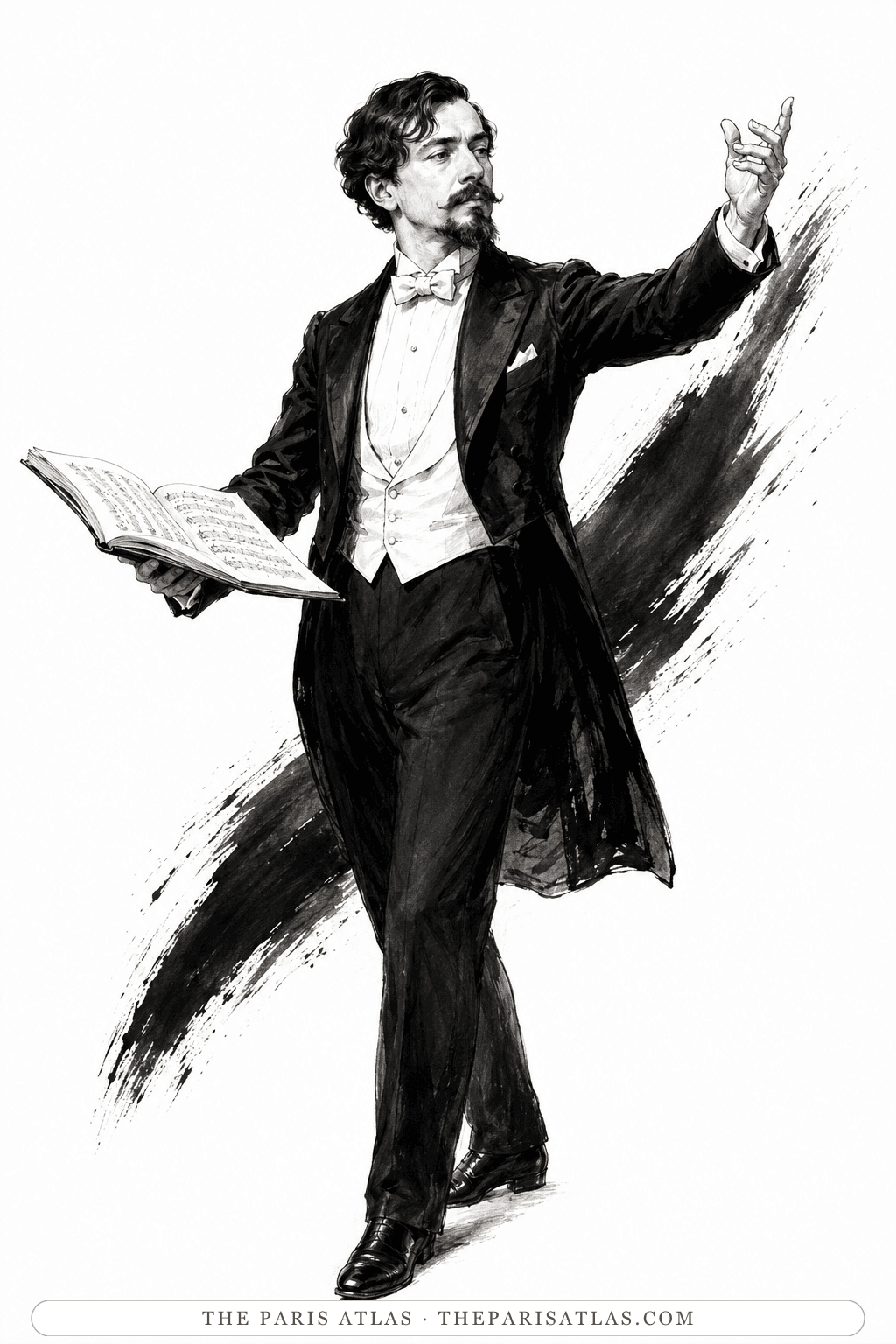
The Symbolist breakthrough and one of modern music’s decisive openings.
Nuages, Fêtes and Sirènes move from cloudlike stasis through procession to wordless vocal seduction.
Three symphonic sketches in which motion and transformation replace a conventional symphonic argument.
A triptych including Ibéria, Debussy’s largest orchestral meditation on place and movement.
A ballet score of rapid change and continuously renewed detail, admired by later modernists.
Onstage, Debussy resisted set-piece display. Speech, silence, gesture and orchestral atmosphere interact, while events seem to emerge from psychological weather rather than theatrical machinery.
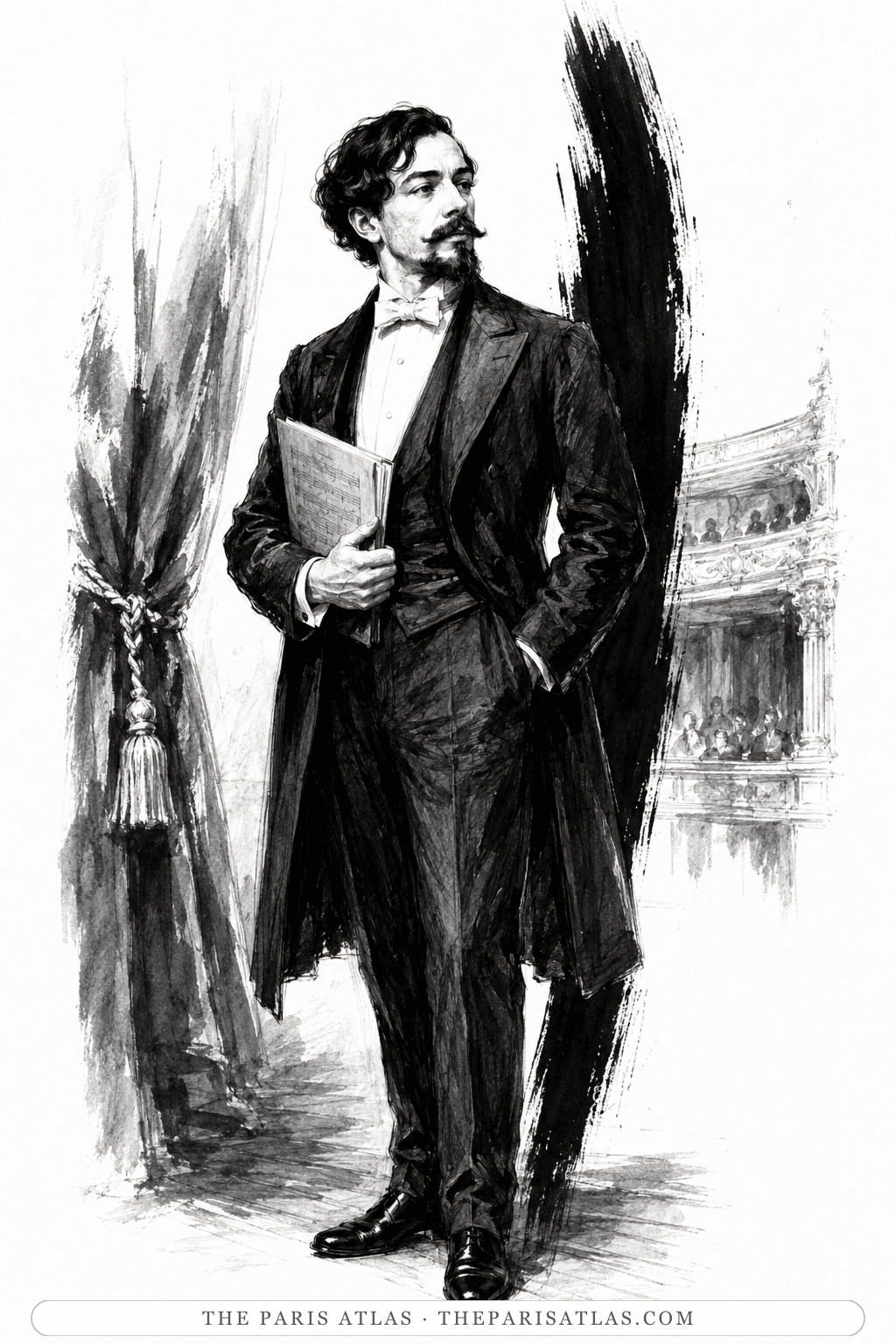
His only completed opera and the work that created an international Debussyste generation.
Incidental music and sacred theatre written for Gabriele D’Annunzio’s mystery play.
A Ballets Russes work whose tennis-game scenario masks an exceptionally fluid score.
Poetry helped Debussy find his musical language. His songs do not merely decorate words: rhythm, harmony and vocal inflection make ambiguity audible.
Six Verlaine settings central to Debussy’s early encounter with Symbolist poetry.
Rich, Wagner-shadowed songs from the period in which Debussy was deciding what to keep and reject.
Two series of Verlaine settings connecting masked pleasure, distance and melancholy.
Three Pierre Louÿs settings whose sensual restraint is characteristic of mature Debussy.
Settings that look back toward older French poetry and musical identity.
Debussy’s chamber music frames his career. A youthful trio precedes his mature breakthroughs; three wartime sonatas close it with economy, clarity and a renewed interest in older French forms.
A youthful work written during Debussy’s travels with Nadezhda von Meck’s household.
Cyclical form, rhythmic energy and unusual color at the edge of the Faun breakthrough.
A brief unaccompanied flute work whose line creates its own stage and atmosphere.
The first completed work in a projected cycle of six sonatas.
An unprecedented instrumental combination organized through delicacy and contrast.
Debussy’s final major composition: compressed, volatile and unsentimental.
A first-listening path
Listen for how the pauses and decay of the piano’s sound shape the phrase.
Notice how dance energy changes the meaning of the slow third movement.
Follow the opening flute whenever it returns in a new harmonic color.
Track changes of density and instrumental color instead of waiting for one tune to dominate.
Move from familiar atmosphere toward pieces that are humorous, physical, strange and sharply etched.
The compositions become richer when placed beside Debussy’s Paris: the Symbolist circle of Stéphane Mallarmé, the poetry of Paul Verlaine, his complicated friendship with Erik Satie, the 1889 Exposition Universelle and the private upheavals behind the works. The full Claude Debussy biography connects those people, places and events.