Depicts
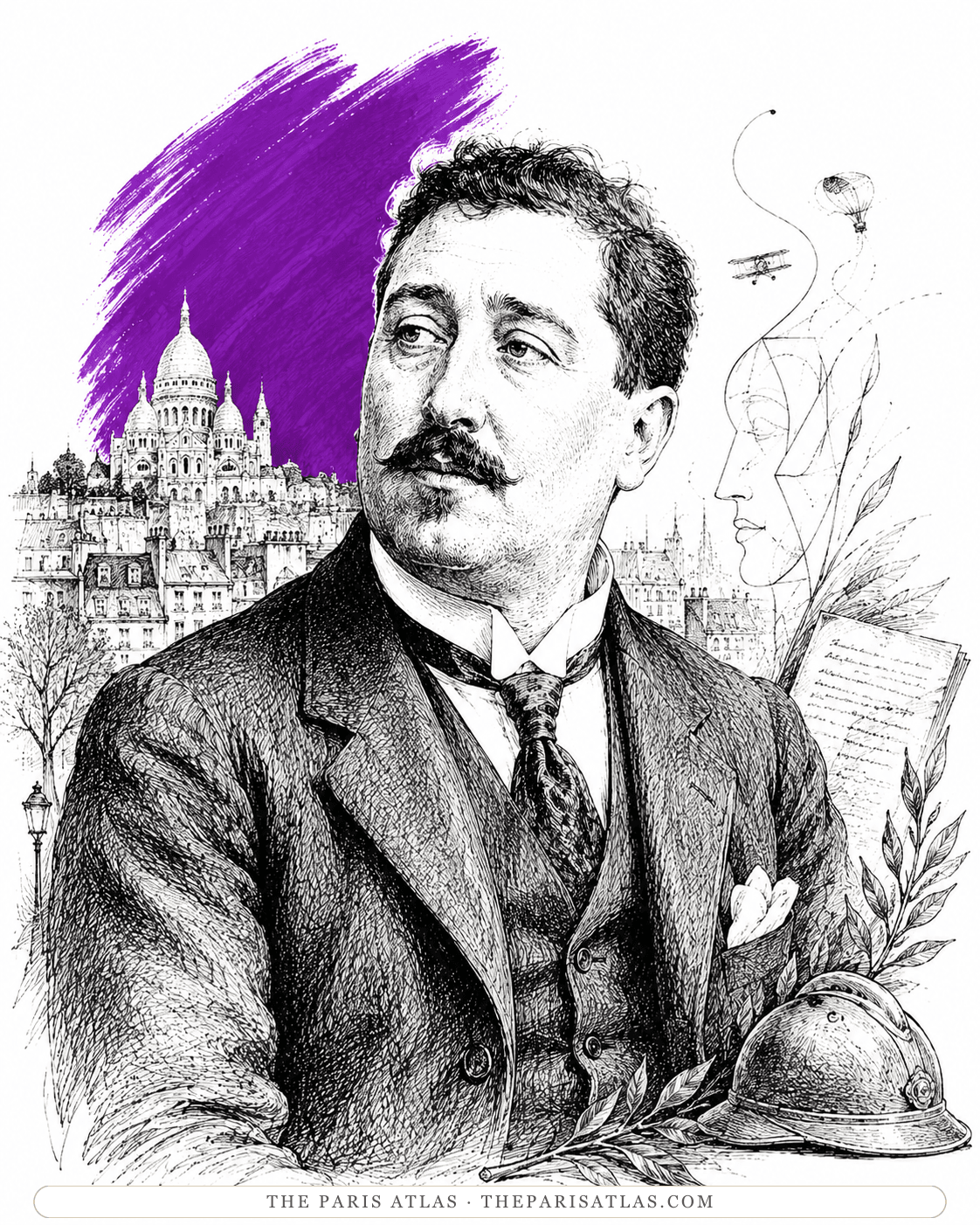
Guillaume Apollinaire
The poet shown frontally and bare-chested, without details, in the manner Laurencin reached around 1908 — painted during their relationship.
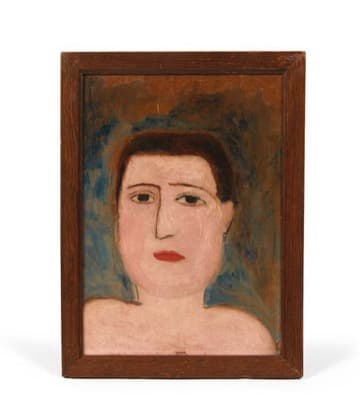
Laurencin's small, frontal portrait of Apollinaire, painted around 1908 during their relationship and bought by the Orangerie at auction in 2019 — the painter's poet, hanging in the collection her dealer built.
A small oil on cardboard, not much larger than a book. The museum's notice describes its manner plainly: Guillaume Apollinaire shown 'very directly, frontally, bare-chested, without details,' in the characteristic style Laurencin had arrived at around 1908. The museum's record leaves the work undated; its text places it in that Bateau-Lavoir moment, the year after Pablo Picasso introduced the painter and the poet in May 1907.
Marie Laurencin and Apollinaire were together from 1907 to about 1912, and the group portraits of those years — Group of Artists in Baltimore, Apollinaire et ses amis at the Musée national d'art moderne — always place him at the center of her circle. This little panel is the private version of those public statements: one sitter, no company, no setting.
The portrait stayed in private hands for a century, most recently in the collection of Geneviève and Jean-Paul Kahn. At the Kahn sale at Drouot on 7 November 2019 — 'Mille nuits de rêve,' by Pierre Bergé & associés — it was bought at auction for the state by the public establishment of the Musée d'Orsay and the Orangerie; La Tribune de l'Art put the price at 35,100 euros. It became the museum's sixth Laurencin, joining the five that came with the Walter-Guillaume collection, and was lent to the Barnes Foundation's Marie Laurencin: Sapphic Paris in 2023–24.
The purchase closed a circle the collection had left open: Paul Guillaume owed his career to Apollinaire, and the museum built on his collection now holds the poet's portrait by the woman who shared those years with him.
Close reading
Laurencin removes nearly everything that could turn Apollinaire into a public literary figure. Three details show how frontal pose, bare torso, and a small painted support make this portrait unusually private and direct.
1.The frontal face refuses anecdote
Eyes, nose, and mouth are reduced to firm, economical shapes. With no turned pose or expressive incident, the poet's presence depends on the intensity of being placed directly before us.
2.The bare torso removes the public costume
No jacket, uniform, desk, or book announces a profession. Laurencin withholds the attributes of the celebrated poet and paints a person known at close range.
3.The scale belongs to a private object
The portrait is only slightly larger than a book and carries little surrounding space. Its physical intimacy matches the visual decision to strip the sitter of public context.
4.The hair forms a compact cap around the simplified head
A single dark mass frames the pale face and gives the small panel its strongest contrast. Laurencin needs little internal detail because the silhouette carries the likeness.
5.A small red mouth interrupts the restrained palette
The lips are one of the few warm, concentrated accents on the face. Their color draws attention without changing the sitter's still, frontal expression.
6.The modest support suits the portrait's private scale
This is oil on cardboard rather than a large ceremonial canvas. The compact support and economical handling reinforce the feeling of an image made within a personal artistic circle.
c. 1908
Painted during the Bateau-Lavoir years of the Laurencin–Apollinaire relationship, per the museum's reading; the record itself is undated.
2019
Bought for the state at the Kahn collection sale at Drouot, 7 November — the Orangerie's sixth Laurencin.
2023–2024
Lent to Marie Laurencin: Sapphic Paris at the Barnes Foundation, Philadelphia.
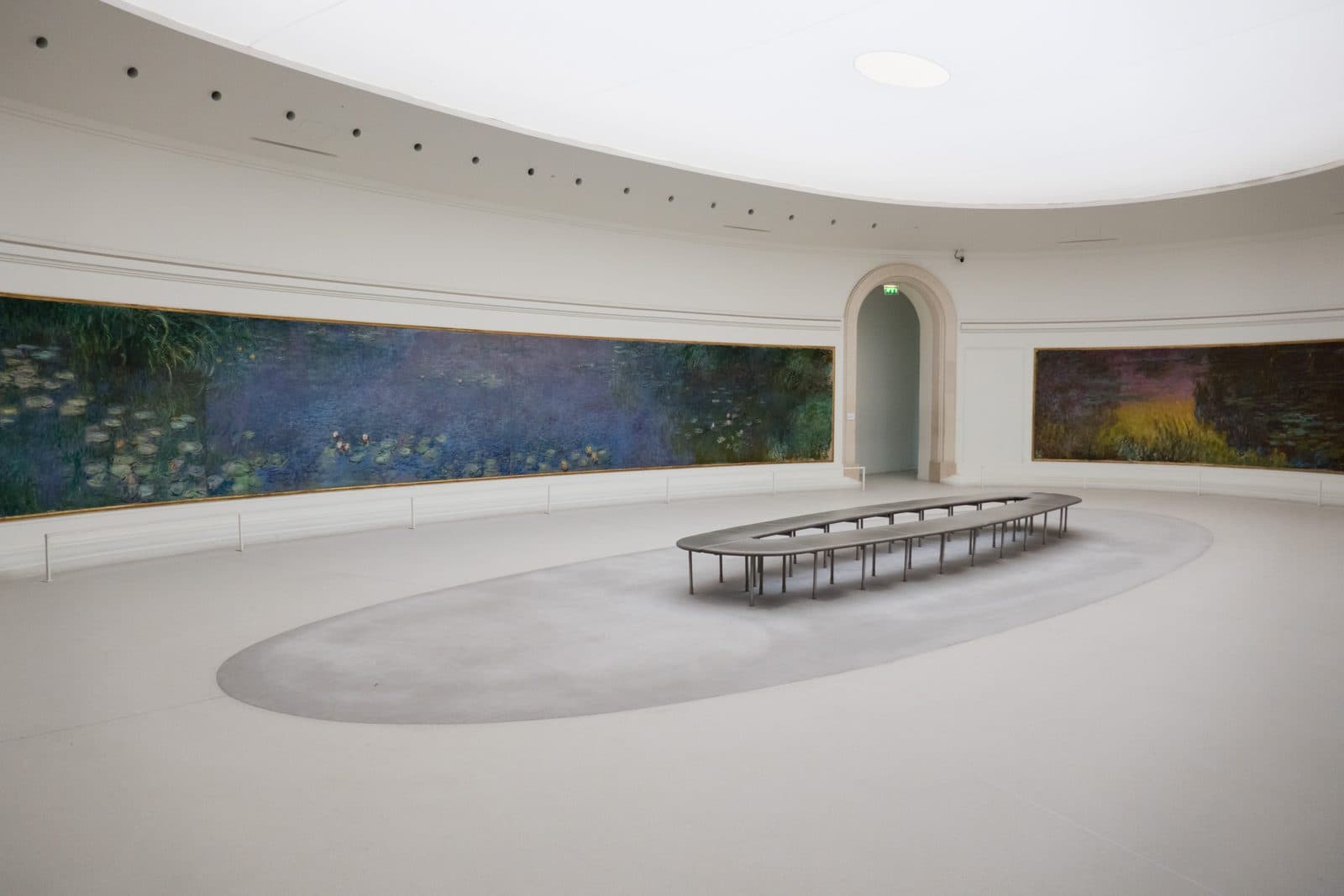
Musée de l'Orangerie, Paris
Jardin des Tuileries, Place de la Concorde (Seine side), 75001 Paris, France
Displays and loans can change. Check whether this work is on view before making a special trip.
Plan your visitThe Orangerie's record carries no date; the museum's text reads it as painted in her characteristic manner around 1908, during their relationship. External accounts date it 1908–1909.
The museum bought it at public auction on 7 November 2019, at the Drouot sale of the Geneviève and Jean-Paul Kahn collection, for a reported €35,100. It is the Orangerie's sixth Laurencin and the only one that did not come with the Walter-Guillaume collection.
A small oil on cardboard, 28.2 by 20.3 centimeters, showing Apollinaire frontally and bare-chested, without details — closer to an icon than to the group portraits Laurencin painted of their circle.
At the Musée de l'Orangerie in Paris, in the Walter-Guillaume rooms (the record places it in room 10, level −2). Holdings rotate, so a specific work is never guaranteed to be on view.
It is a small oil painting on cardboard measuring 28.2 by 20.3 centimetres, or about 11.1 by 8 inches. Its intimate scale helps explain why the simplified face and bare torso feel closer to a private image than a formal public portrait.
Depicts
The poet shown frontally and bare-chested, without details, in the manner Laurencin reached around 1908 — painted during their relationship.
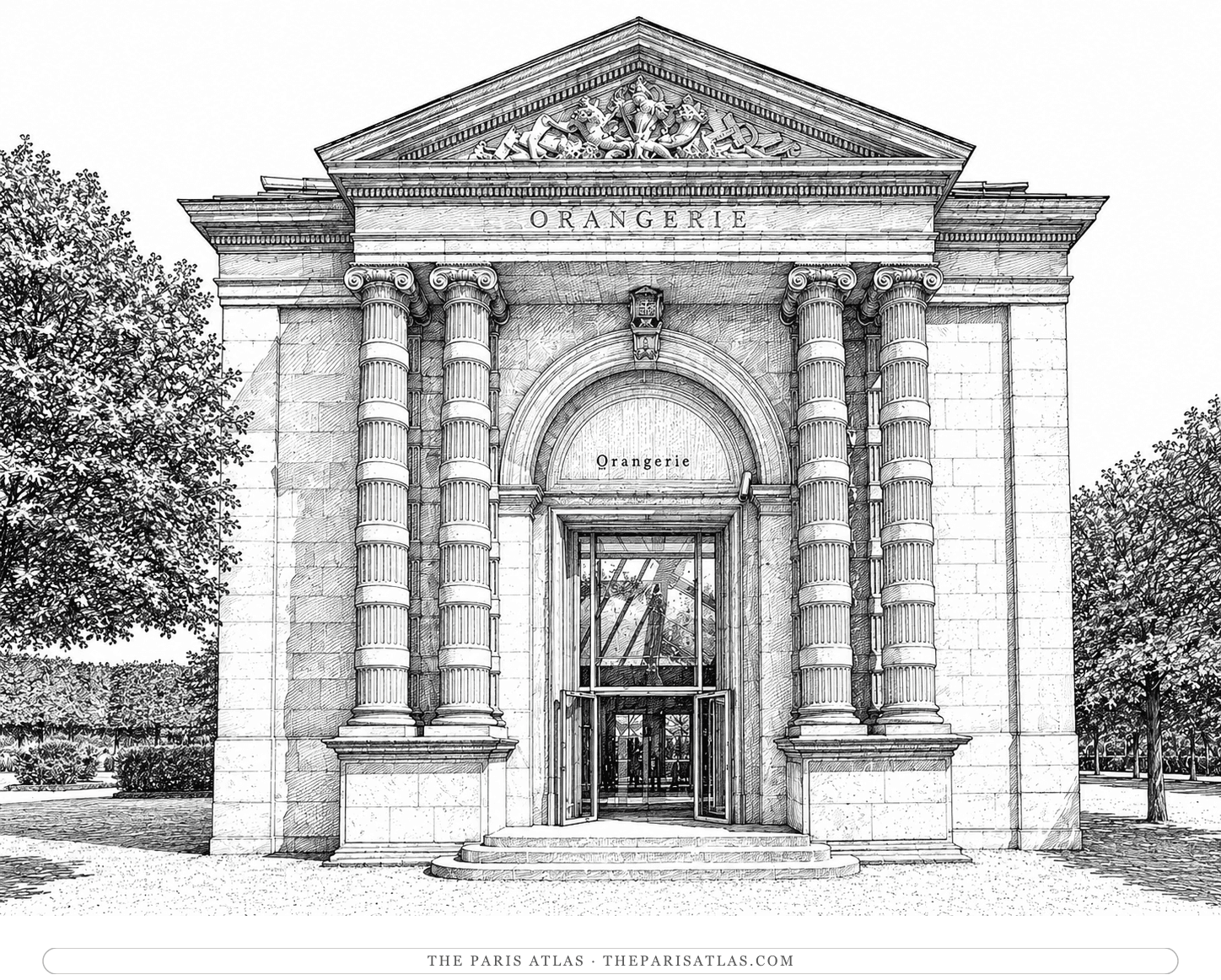
Displayed at · 2019
Bought at auction for the museum in November 2019; the record places it in room 10, level −2, beside the collection's other Laurencins. Holdings rotate.
Explore painters from the same movements and circles.
The Le Havre house-painter's son who invented Cubism in Montmartre with the Spanish painter Pablo Picasso between 1908 and 1914 — the quieter half of the most consequential partnership in modern art — and who invented papier collé, the pasted-paper picture, in September 1912. He was given a French state funeral in 1963.
View artist
Painter between Impressionism and everything after — shown in the independents' exhibitions, emulated by the Cubists, and present at the Orangerie through 15 works in the Walter-Guillaume collection.
View artist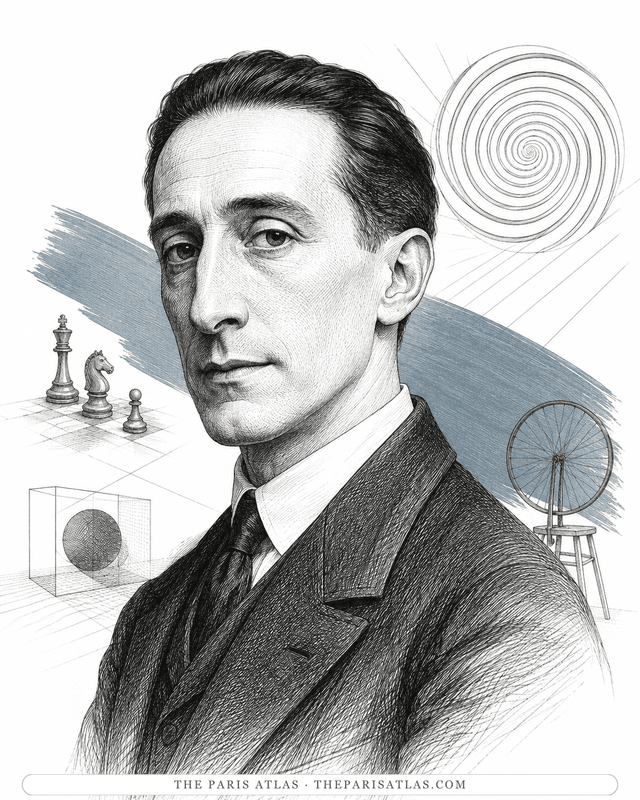
The century's quietest revolutionary — readymades, the abandonment of painting, chess on a Paris rooftop in Entr'acte, and one anemic film of spinning puns signed Rrose Sélavy.
View artistThe sources below include collection records, catalogues, scholarly research, and primary materials that informed this page. They document Portrait de Guillaume Apollinaire, its making, and its place in cultural history.

Web source consulted for documented facts and historical context presented on the Portrait de Guillaume Apollinaire page.

Contemporary reporting or criticism used to document the historical reception and context of Portrait de Guillaume Apollinaire.
AWARE's scholarly artist profile supplies biographical and critical context for Laurencin's Paris circle and portraiture.
The Musée Marie Laurencin provides independent institutional context for the artist's career, relationships and distinctive figurative style.
These references provide the documented foundation for this work's history and interpretation. Claim-level citations remain attached to the specific claims they support.
 Explore more resources