The Paris AtlasCharting the artists, works, and places worth returning to.

House · Giverny

Monet's House and Gardens at Giverny

The buildingStill standing
Getting inHours or admission
What's there nowThe Fondation Claude Monet

Kept by the Fondation Claude Monet and open daily in season, 1 April to 1 November (checked August 2026).

The pink-brick house and two gardens in the Norman village of Giverny where Claude Monet lived from 1883 to 1926 — and where he dug the lily pond that became the Water Lilies.

Address
84 rue Claude Monet, 27620 Giverny
Years
1883–1926
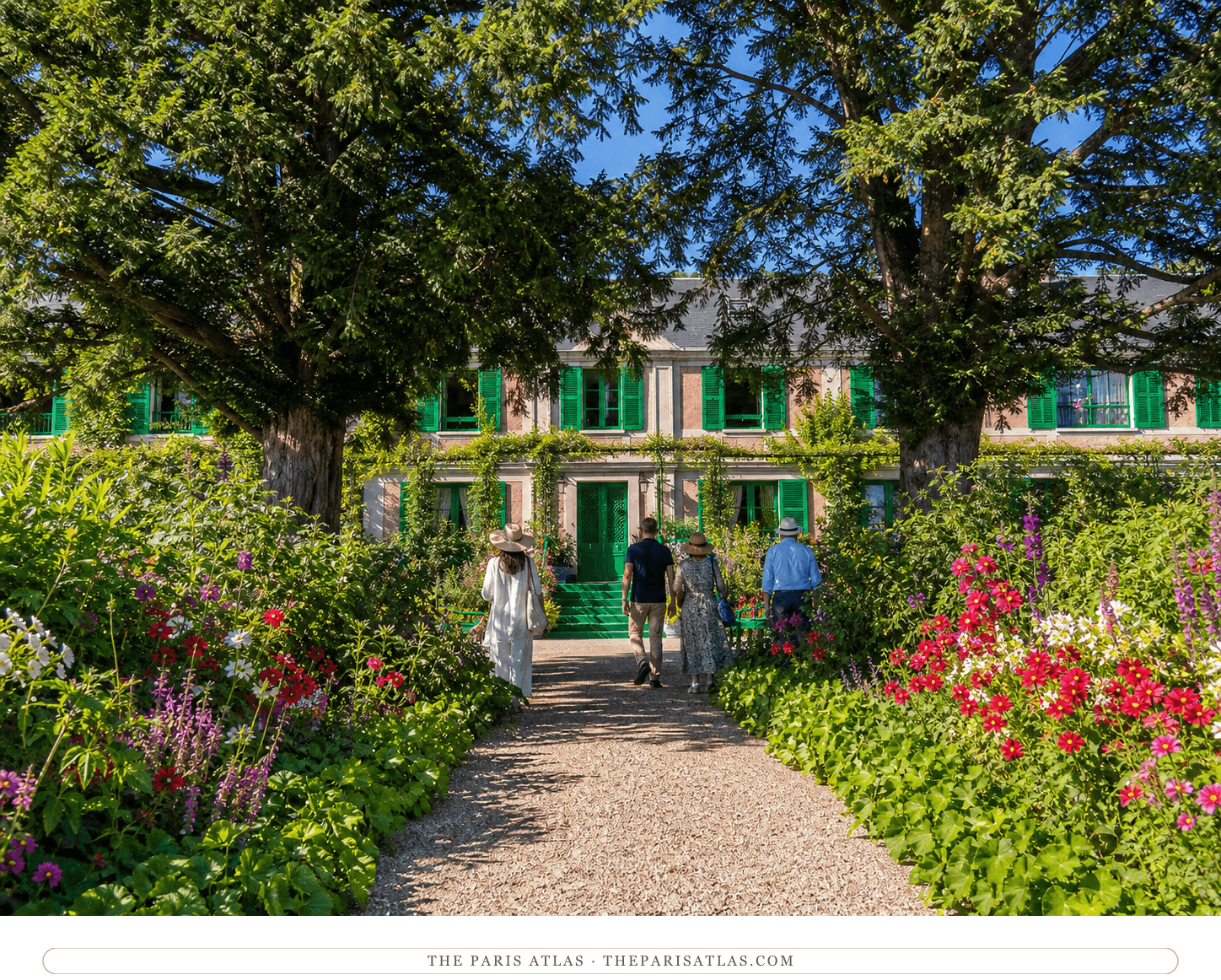
IllustrationClaude Monet's pink house with green shutters beyond the flower-lined central path at Giverny

The restored house and Clos Normand are open to visitors in season

Editorial illustration

The place, briefly

Claude Monet moved to Giverny, a village on the Seine about seventy-five kilometers northwest of Paris, in 1883, renting a long pink-brick house with an orchard on the road through the village. He was forty-two, and he stayed for the rest of his life. In the autumn of 1890 he bought the property, replaced the orchard with the flower garden now called the Clos Normand, and planted it in massed color, bed by bed, planned by season.

In 1893 he bought the strip of land across the road and the railway, diverted an arm of the river Epte, and dug a pond. A local craftsman built the arched wooden footbridge he planted with wisteria — the Japanese bridge of the paintings. The water garden became his chief subject: the Water Lilies series occupied his last three decades, ending in the mural-scale panels he donated to France, installed to his own design at the Musée de l'Orangerie in Paris. Georges Clemenceau, who kept a house nearby, was the friend who pushed that gift to completion. Monet died in the house on 5 December 1926.

His son Michel Monet inherited the estate and in 1966 bequeathed it to the Académie des Beaux-Arts. By then the gardens were derelict; a restoration begun under curator Gérald van der Kemp in 1977 rebuilt them from photographs and letters, and the house and gardens opened to visitors in 1980. The Fondation Claude Monet runs the site today: the Clos Normand and the house with its yellow dining room and blue-tiled kitchen, then the underground passage to the water garden and the bridge. The season runs from the first of April to the first of November.

Key facts

Lived here
Claude Monet, 1883 until his death on 5 December 1926
The purchase
Rented in 1883; Monet bought the house and garden in the autumn of 1890
The water garden
1893 — land across the road, a diverted stream, and the Japanese bridge
The paintings
The pond became the Water Lilies — the subject of his last three decades
The bequest
His son Michel Monet left the estate to the Académie des Beaux-Arts, 1966
Today
Restored and open to visitors since 1980; season runs 1 April–1 November
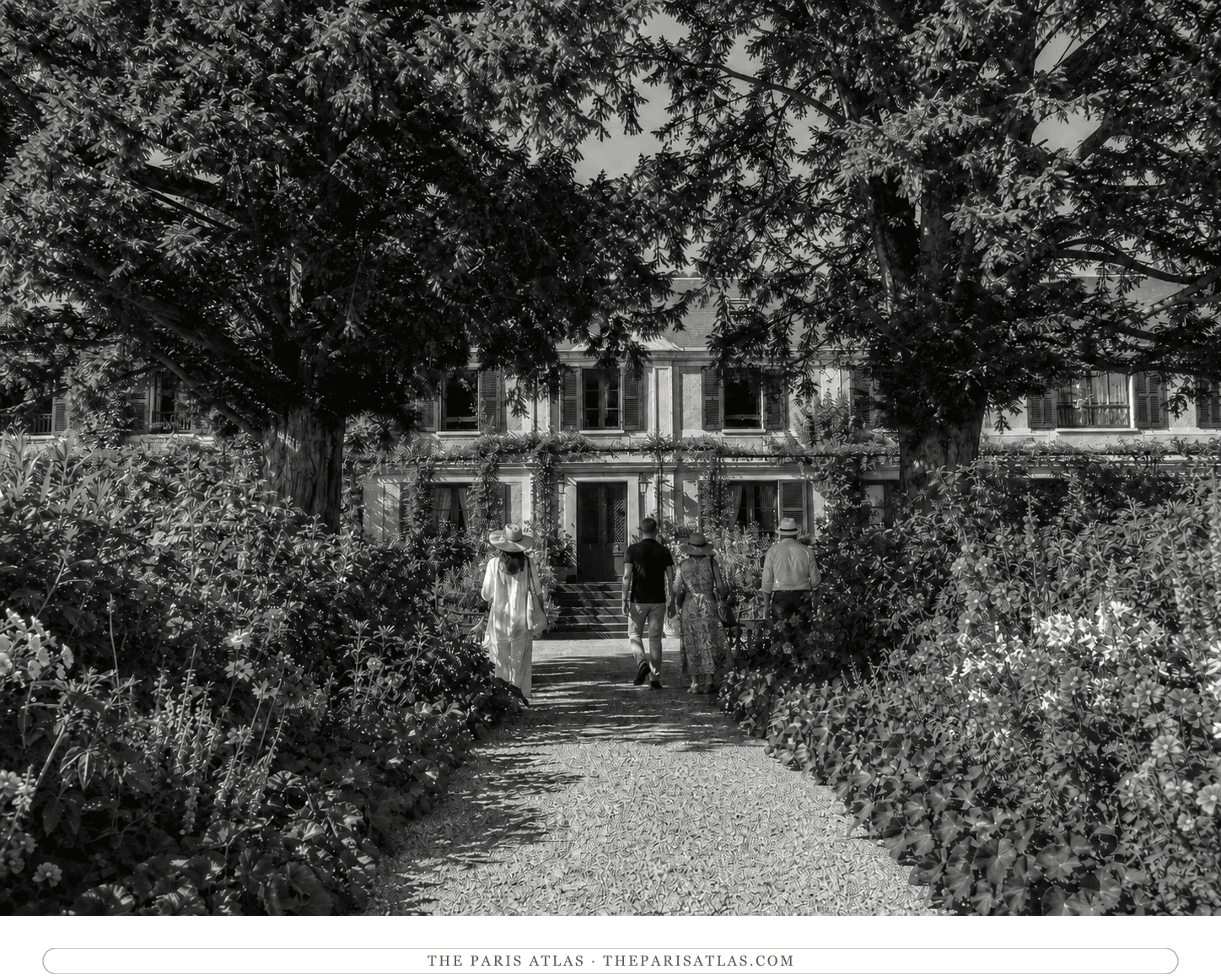
Monet's house and the Clos Normand garden at GivernyEditorial illustration
The restored house and Clos Normand are open to visitors in seasonEditorial illustration
The Japanese bridge and water-lily pondEditorial illustration
The water garden that became one of Monet's defining subjectsEditorial illustration

Timeline

  1. 1883

    Claude Monet rents the house at Giverny and moves in with his family

  2. 1890

    Monet buys the property in the autumn and builds a new studio

  3. 1893

    He buys land across the road, diverts an arm of the Epte, and digs the lily pond

  4. 1926

    Monet dies in the house on 5 December, aged 86

  5. 1966

    Michel Monet bequeaths the estate to the Académie des Beaux-Arts

  6. 1977

    Gérald van der Kemp appointed curator; restoration of house and gardens begins

  7. 1980

    The house and gardens open to the public under the Fondation Claude Monet

The Friday Letter

Paris, one address at a time.

The cafés, studios, and walk-up flats where the work was made — one story from the map in every letter.

One email a week. No spam, no selling your address. Unsubscribe anytime.

