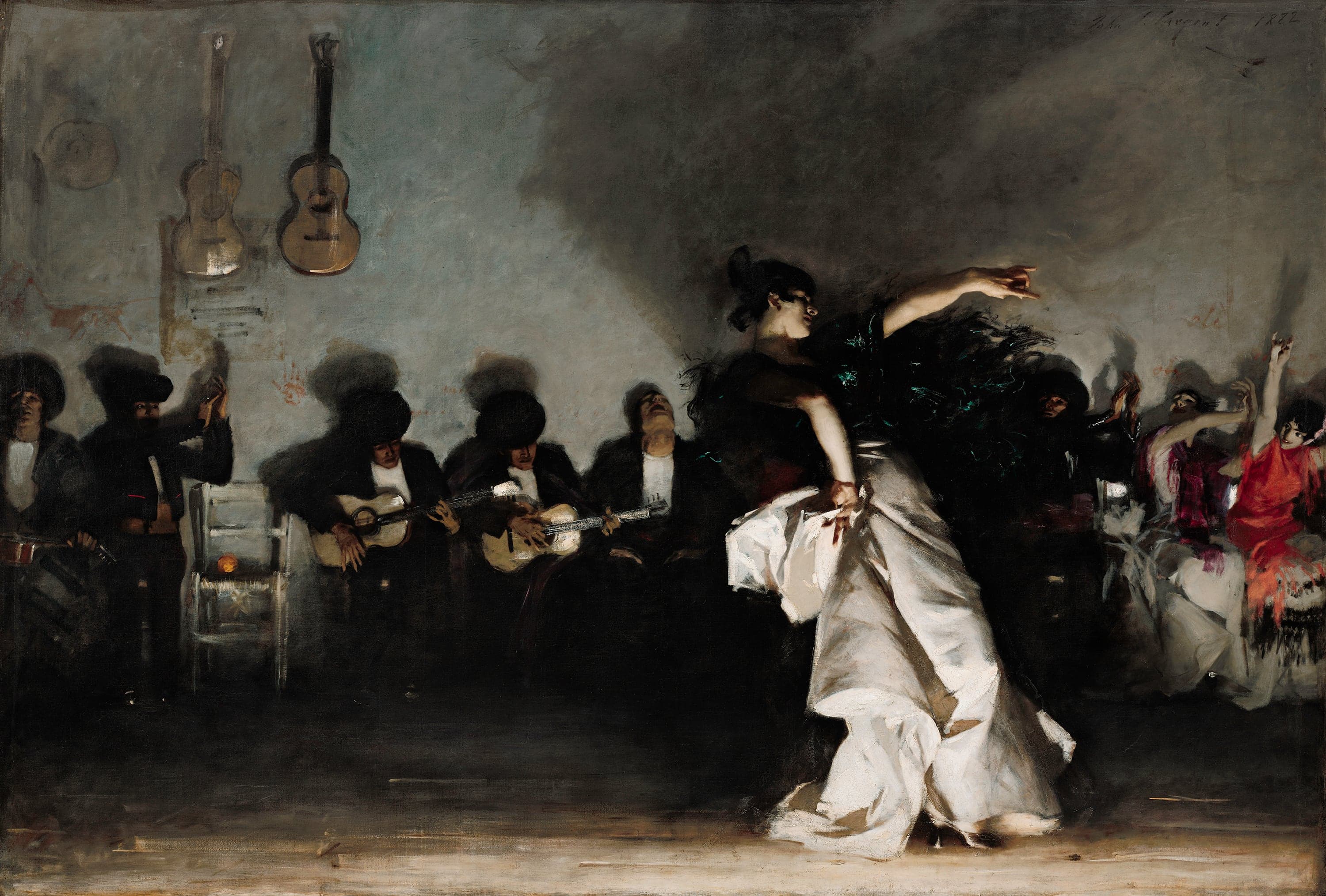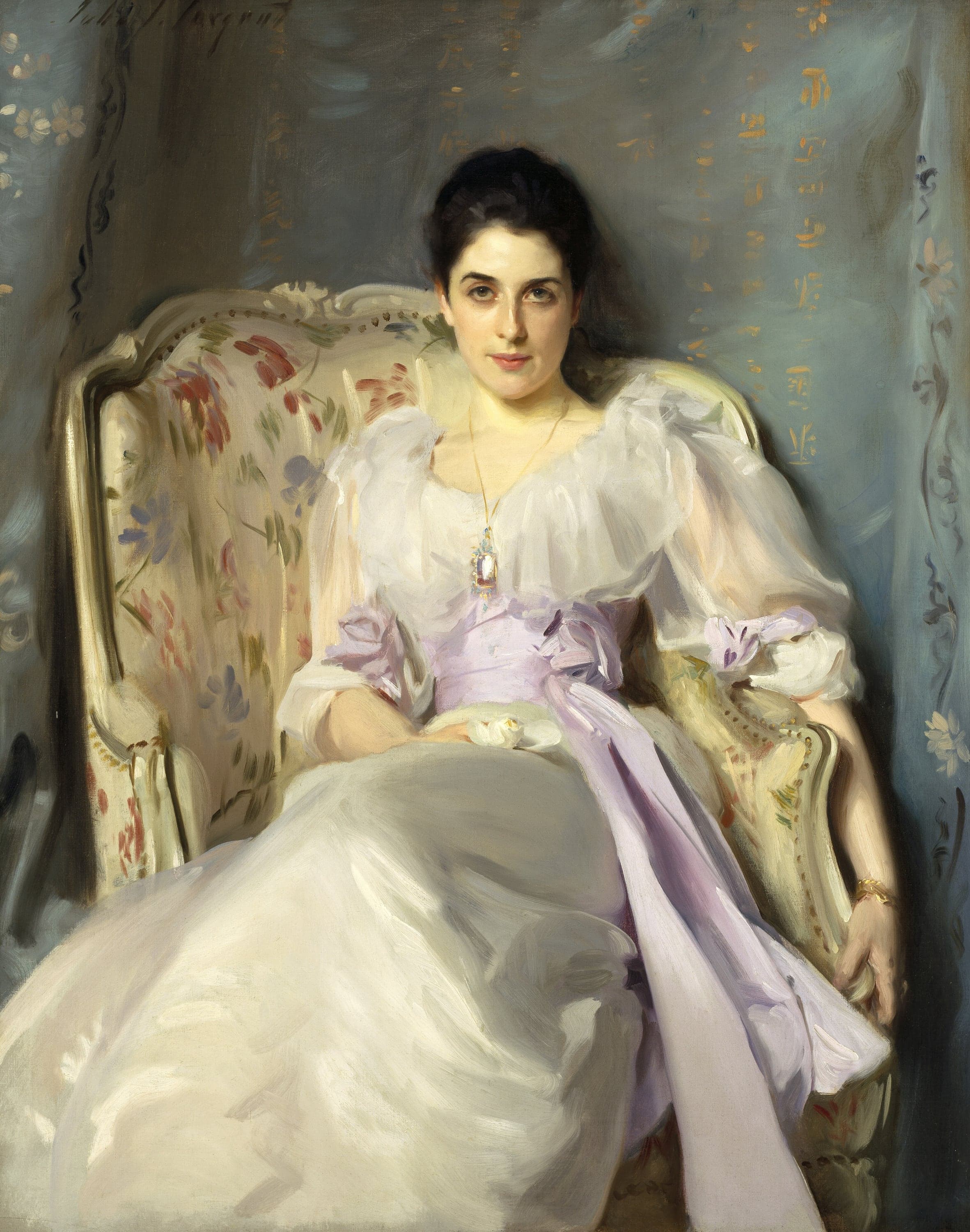
The Paris AtlasCharting the artists, works, and places worth returning to.
  • Painter
· American · 1856–1925

John Singer Sargent

The most sought-after portrait painter of his generation, born in Florence to American parents and made in Paris: he trained in a Paris studio, rose through the Salon, painted the Boit children in the hall of their family's apartment in the 8th arrondissement — and then exhibited Madame X in 1884, a portrait so badly received that it ended his Paris career and sent him to London.

Details

Lived
1856–1925
Born
1856
Birthplace
Florence, Italy
Died
1925
Place of death
London, England
Nationality
American
Profession
Painter
Major works
Madame X, The Daughters of Edward Darley Boit, Claude Monet Painting by the Edge of a Wood
Roles
Painter

About John Singer Sargent

John Singer Sargent was an American who spent almost no time in America. He was born in Florence in 1856 to expatriate American parents, trained as a painter in Paris under the fashionable portraitist Carolus-Duran, worked chiefly in England after 1884, and never gave up his American citizenship. What he became — the portraitist every rich family on both sides of the Atlantic wanted — he became in Paris, at the Salon, the enormous state-run annual exhibition that was still the machine by which a young painter's reputation was made or refused.

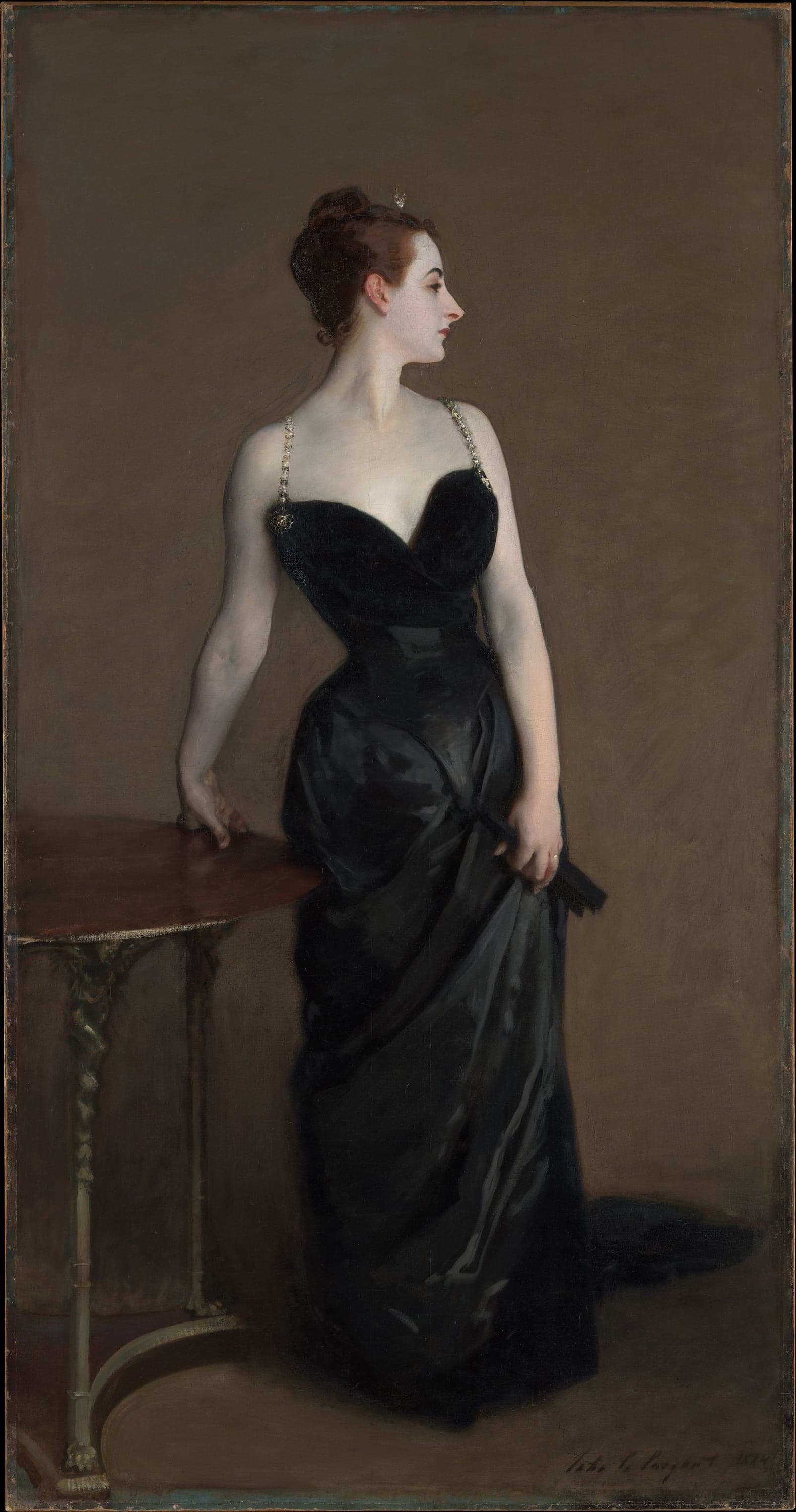
Paris also broke him, once, in public. At the Salon of 1884 he showed a full-length portrait of a young woman of Paris society, Virginie Amélie Avegno Gautreau, and called it simply Madame X. The reception was hostile enough to close his French career; he moved to London, and the painting stayed with him, unsold, until the Metropolitan Museum of Art bought it in 1916 — by which time it had become the picture he is best known for.

An American born abroad

Sargent was born in Florence in 1856, the child of American parents who had settled in Europe and stayed there. As the Cleveland Museum of Art puts it on one of his pictures, he 'was born in Italy, studied in France, and worked chiefly in England, but he never renounced his American citizenship'.

The studying in France is the part that matters here. He entered the Paris atelier — a private teaching studio run by a working painter — of Charles Auguste Émile Durand, who signed his own canvases Carolus-Duran and was one of the most fashionable portraitists in the city. It was an education in looking at old paintings as much as in handling paint: on his teacher's instruction Sargent went to Spain in 1879 to study Velázquez, and to the Netherlands for Frans Hals, the two painters whose loaded, visible brushwork — paint laid on thick and left showing — lies underneath everything he later did quickly and well.

The Salon painter of Paris

By the early 1880s he was a Paris painter with Paris sitters. Madame Paul Escudier (1882) shows a Frenchwoman, Louise Lefevre, in a Parisian apartment lit so that the darkness does most of the work; the Art Institute of Chicago, which owns it, credits the picture with helping 'to establish Sargent's reputation in Paris as a daring and original painter'. He was twenty-six.

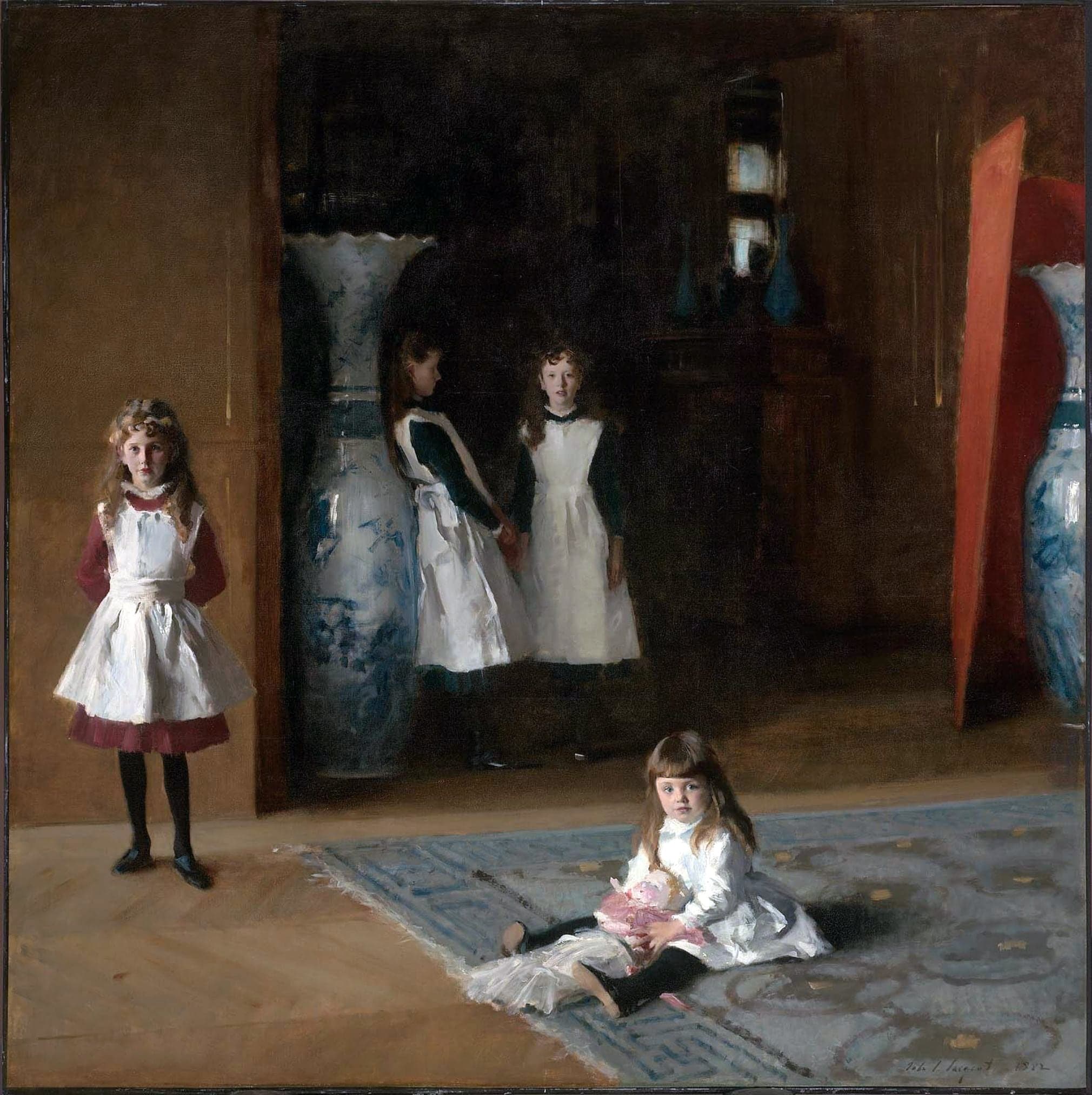
The same autumn he painted the picture that Americans know best after Madame X. The Daughters of Edward Darley Boit was made in Paris in the autumn of 1882, in the entrance hall of the apartment on the avenue de Friedland, in the 8th arrondissement, where an expatriate Boston family lived: Edward Darley Boit, a Harvard-trained lawyer who had given up the law to paint, and his wife Mary Louisa Cushing Boit, whose inheritance from the China Trade — the old American shipping commerce with China — paid for the life abroad. Sargent put their four daughters — Florence, fourteen; Jane, twelve; Mary Louisa, eight; and Julia, four — in a great dim room with two tall Japanese vases, and left most of the canvas to the room itself.

It was shown first in December 1882 at the gallery of the Paris dealer Georges Petit, and again the following spring at the Salon. Critics were unsure what to do with a group portrait in which the sitters are scattered and half in shadow: one dismissed it as 'four corners and a void'. The novelist Henry James saw instead a 'happy play-world of a family of charming children'. The four daughters gave the painting to the Museum of Fine Arts, Boston, in 1919, in memory of their father.

Madame X, and the end of Paris

The sitter was Virginie Amélie Avegno Gautreau, who appears in the older title of the picture as Madame Pierre Gautreau — her husband's name — and who was one of the most looked-at figures in Paris society. Sargent worked on the portrait through 1883 and 1884 and produced something over two metres tall: a standing figure in a black evening dress, her face turned away in profile, one hand resting on the table beside her.

In the version hung at the Salon of 1884, the jewelled strap of the dress had slipped off her right shoulder and hung down her arm. That detail — a strap, painted fallen, on a recognisable living woman whom half the room could name — was what the Salon crowd fixed on, and the mockery fell on the sitter as much as on the painter. Sargent afterwards repainted the strap back onto the shoulder, which is how the picture looks today. The damage was already done: the scandal ended his career as a Paris portraitist and he moved to London.

He kept the portrait for the rest of his working life. In 1916 the Metropolitan Museum of Art in New York bought it, and it hangs there still, catalogued as Madame X (Virginie Amélie Avegno Gautreau), oil on canvas, 208.6 by 109.9 centimetres, acquired through the Arthur Hoppock Hearn Fund. The title he gave it — a name withheld — is part of why it survived the gossip and became a painting rather than an incident.

Painting Monet at the edge of a wood

Sargent's French years also brought him into the orbit of Claude Monet, the painter at the centre of Impressionism — the movement of French painters who worked outdoors and fast, chasing light rather than finish. Monet's example shows in the experimental, loose-handed pictures Sargent made away from his commissioned portraits, and it shows most directly in a canvas now in Tate's collection in London: Claude Monet Painting by the Edge of a Wood, dated by the museum to about 1885, which shows the older painter at his easel in the open air.

It is a rare thing — one major painter watching another at the exact moment of work — and it is the clearest surviving evidence of the contact between the American who made his name inside the Salon system and the Frenchman who had spent a decade painting against it.

After Paris

London made him rich. He became, in the Art Institute of Chicago's phrase, 'the most sought-after portraitist of his generation on both sides of the Atlantic', and he painted the Edwardian upper class at a rate that eventually disgusted him. After 1910 he largely stopped taking portrait commissions and turned to landscape, watercolour and mural painting, including the long decorative cycles he made for the Boston Public Library and the Museum of Fine Arts, Boston.

He died in London in 1925, an American painter who had lived his whole life abroad. The two pictures that anchor his reputation are both from the Paris years, and both are in American museums: the Boit children in Boston, and, in New York, the woman whose portrait drove him out of France.

Life events

  1. 1856

    Born in Florence to expatriate American parents.

    Sargent, John Singer — Union List of Artist Names, record 500023972; John Singer Sargent — artist record

  2. 1879

    Sent by his Paris teacher Carolus-Duran to Spain to study Velázquez, and to the Netherlands for Frans Hals.

    Sargent, John Singer — Union List of Artist Names, record 500023972

  3. 1882

    Madame Paul Escudier, painted in a Parisian apartment, helps establish his reputation in Paris as a daring and original painter.

    John Singer Sargent, Madame Paul Escudier (Louise Lefevre), 1882 — collection record

  4. 1882

    Paints The Daughters of Edward Darley Boit in the autumn, in the hall of the family's apartment on the avenue de Friedland; it is shown in December at Georges Petit's gallery.

    The Daughters of Edward Darley Boit (1882), accession 19.124

  5. 1883

    The Boit portrait is shown again, this time at the Salon.

    The Daughters of Edward Darley Boit (1882), accession 19.124

  6. 1883–1884

    Paints Virginie Amélie Avegno Gautreau, the portrait he exhibits as Madame X.

    Madame X (Virginie Amélie Avegno Gautreau), 1883–84, accession 16.53 — collection record

  7. 1884

    Madame X at the Salon: the fallen shoulder strap and the mockery that follows end his Paris career. He relocates to London, and later repaints the strap upright.

    Sargent, John Singer — Union List of Artist Names, record 500023972; Richard Ormond and Elaine Kilmurray, John Singer Sargent: The Early Portraits (Complete Paintings, Volume I) (1998)

  8. 1885

    Paints Claude Monet Painting by the Edge of a Wood, one painter watching another work outdoors; the canvas is now in Tate's collection.

    John Singer Sargent, Claude Monet Painting by the Edge of a Wood (?1885), N04103

  9. 1910

    Turns away from portrait commissions towards landscape, watercolour and mural work, including cycles for the Boston Public Library and the Museum of Fine Arts, Boston.

    Sargent, John Singer — Union List of Artist Names, record 500023972

  10. 1916

    The Metropolitan Museum of Art acquires Madame X, thirty-two years after the Salon, through the Arthur Hoppock Hearn Fund.

    Madame X (Virginie Amélie Avegno Gautreau), 1883–84, accession 16.53 — collection record

  11. 1919

    The four Boit daughters give their portrait to the Museum of Fine Arts, Boston, in memory of their father.

    The Daughters of Edward Darley Boit (1882), accession 19.124

  12. 1925

    Dies in London.

    Sargent, John Singer — Union List of Artist Names, record 500023972; Madame X (Virginie Amélie Avegno Gautreau), 1883–84, accession 16.53 — collection record

People they knew

Documented connections — every one carries its source.

Illustrated portrait of Claude Monet

Claude Monet

  • Painter

Painted a portrait of · 1885

Claude Monet Painting by the Edge of a Wood, oil on canvas, which Tate dates to about 1885 and holds as N04103: Monet at his easel working outdoors, painted by the American portraitist who had just lost Paris over Madame X. The Getty's authority record notes the Impressionist current in Sargent's unofficial work, Monet's above all.

John Singer Sargent, Claude Monet Painting by the Edge of a Wood (?1885), N04103; Sargent, John Singer — Union List of Artist Names, record 500023972

Questions about John Singer Sargent

Who was John Singer Sargent?

An American portrait painter, born in Florence in 1856 to American parents living in Europe and dead in London in 1925. He trained in Paris under the portraitist Carolus-Duran, made his name at the Paris Salon in the early 1880s, and after the scandal of Madame X in 1884 moved to London, where he became the most sought-after portraitist of his generation on both sides of the Atlantic.

Why was Madame X such a scandal?

Because of a strap. The sitter, Virginie Amélie Avegno Gautreau, was a well-known figure in Paris society, and in the version Sargent hung at the Salon of 1884 the jewelled strap of her black evening dress had slipped off her right shoulder. On a recognisable living woman, in the biggest public exhibition in France, that read as an impropriety rather than a detail, and the ridicule fell on sitter and painter together. Sargent repainted the strap back onto the shoulder afterwards — that is the version now hanging in New York — but the damage to his Paris practice was done, and he left for London.

Where is Madame X now?

In the Metropolitan Museum of Art in New York, which bought it from Sargent in 1916 through the Arthur Hoppock Hearn Fund. The museum catalogues it as Madame X (Virginie Amélie Avegno Gautreau), oil on canvas, 208.6 by 109.9 centimetres, painted 1883–84.

Was Sargent French or American?

American, though he barely lived there. He was born in Florence to American parents, trained in Paris, and worked mostly in London — and he never renounced his American citizenship. His two most famous paintings both came out of his Paris years and both ended up in American museums: The Daughters of Edward Darley Boit in Boston and Madame X in New York.

Did Sargent know Claude Monet?

Yes, and he painted him at work. Tate in London holds Claude Monet Painting by the Edge of a Wood, dated to about 1885, which shows Monet at his easel outdoors. Monet's Impressionism — painting outdoors, fast, after the light — shaped Sargent's freer, unofficial pictures, though his commissioned portraits stayed within the Salon tradition.

What is The Daughters of Edward Darley Boit?

A group portrait of four sisters, painted in Paris in the autumn of 1882 in the hall of their family's apartment on the avenue de Friedland. The Boits were expatriate Bostonians; the girls were Florence (fourteen), Jane (twelve), Mary Louisa (eight) and Julia (four). Sargent scattered them across a dim room dominated by two tall Japanese vases and gave most of the canvas to the space itself — which is why one critic called it 'four corners and a void' and why Henry James called it a 'happy play-world of a family of charming children'. The daughters gave it to the Museum of Fine Arts, Boston, in 1919.

Why did Sargent leave Paris?

The reception of Madame X at the Salon of 1884. A portrait painter in Paris lived on the good opinion of exactly the society he had just been seen to embarrass, and after the scandal the commissions were not going to come. He relocated to London, where the Edwardian rich hired him for the rest of his working life.

Sourced claims

Every connection the graph holds for John, with the evidence behind it.

Painted a portrait of · 1885

Claude Monet

Claude Monet Painting by the Edge of a Wood, oil on canvas, which Tate dates to about 1885 and holds as N04103: Monet at his easel working outdoors, painted by the American portraitist who had just lost Paris over Madame X. The Getty's authority record notes the Impressionist current in Sargent's unofficial work, Monet's above all.

John Singer Sargent, Claude Monet Painting by the Edge of a Wood (?1885), N04103; Sargent, John Singer — Union List of Artist Names, record 500023972

References

References

The sources below include biographies, scholarly essays, interviews, and primary materials that informed this page. They reflect both the historical record and ongoing critical conversations about John Singer Sargent and their work.

  1. 1Sargent, John Singer — Union List of Artist Names, record 500023972

    Getty Research Institute

    Authority record with the biographical note: Carolus-Duran, Velázquez in 1879, the 1884 Salon scandal, the move to London, the late murals.

    View source
  2. 2Madame X (Virginie Amélie Avegno Gautreau), 1883–84, accession 16.53 — collection record

    The Metropolitan Museum of Art (open collection API)

    The Metropolitan Museum's catalogue record for Madame X, including its 1916 acquisition.

    View source
  3. 3The Daughters of Edward Darley Boit (1882), accession 19.124

    Museum of Fine Arts, Boston

    The Museum of Fine Arts, Boston on the Boit portrait, its Paris making and its first showings.

    View source
  4. 4John Singer Sargent — artist record

    Art Institute of Chicago (open collection API)

    Art Institute of Chicago artist record.

    View source
  1. 5John Singer Sargent, Madame Paul Escudier (Louise Lefevre), 1882 — collection record

    Art Institute of Chicago (open collection API)

    On the 1882 Paris interior that built his reputation in the city.

    View source
  2. 6John Singer Sargent, Claude Monet Painting by the Edge of a Wood (?1885), N04103

    Tate

    Tate's record of the portrait of Monet at work.

    View source
  3. 7John Singer Sargent: The Early Portraits (Complete Paintings, Volume I)

    Yale University Press, 1998

    The standard catalogue of the early portraits, for the Madame X sittings and the repainted shoulder strap.

  4. 8John Singer Sargent, The Patio (1908) — collection record

    Cleveland Museum of Art (open access API)

    Cleveland Museum of Art collection text on his nationality and working life.

    View source
i
Why these sources are here

These references anchor the page in the documented record and in the scholarly conversations around John Singer Sargent. Every claim on this page traces back to one or more of the works listed here.

Explore more resources