Camille Pissarro
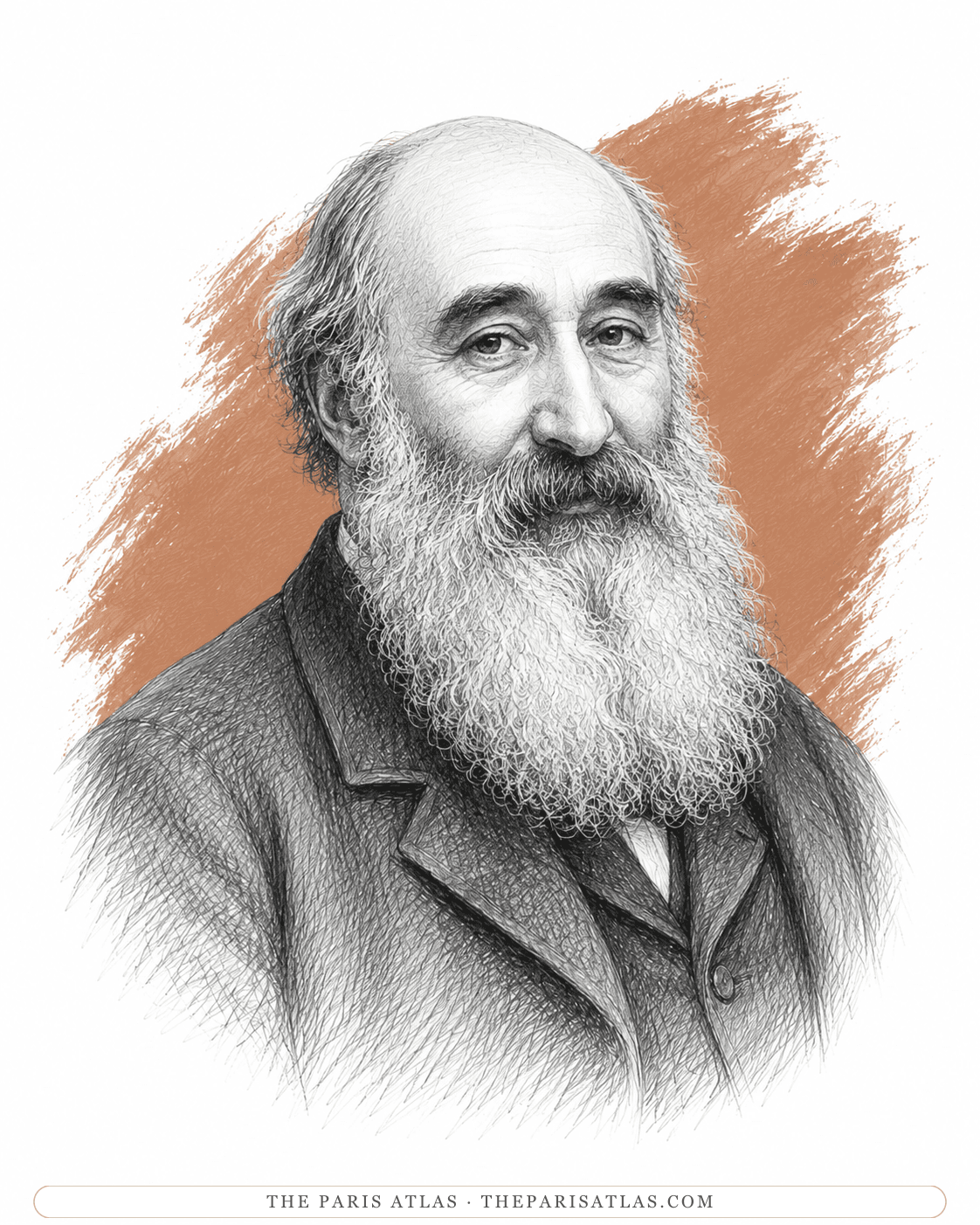
Courbet supplied two things Pissarro kept: ordinary working people as a subject worth the largest canvas, and the example of showing outside the Salon when the Salon would not have you.
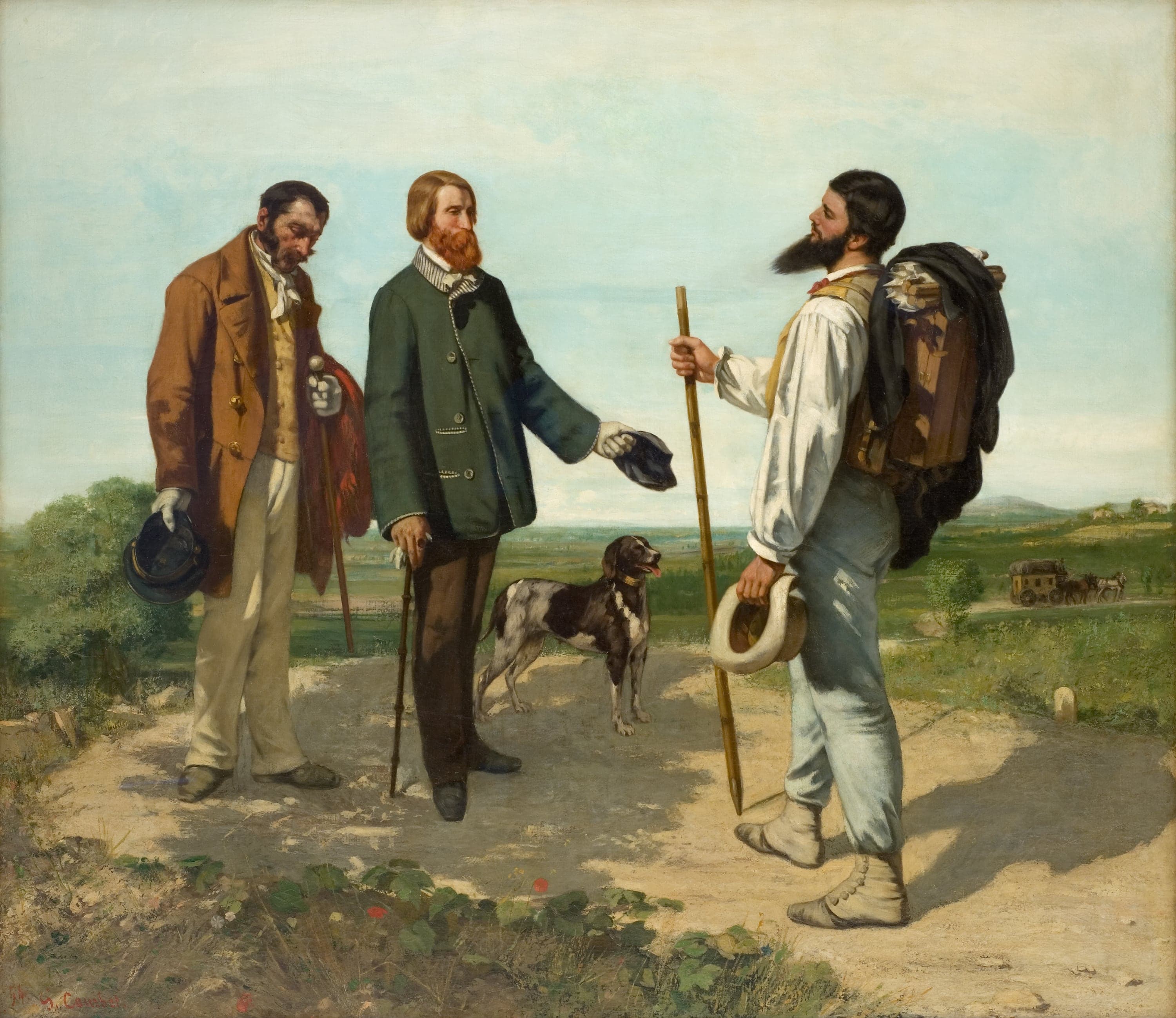
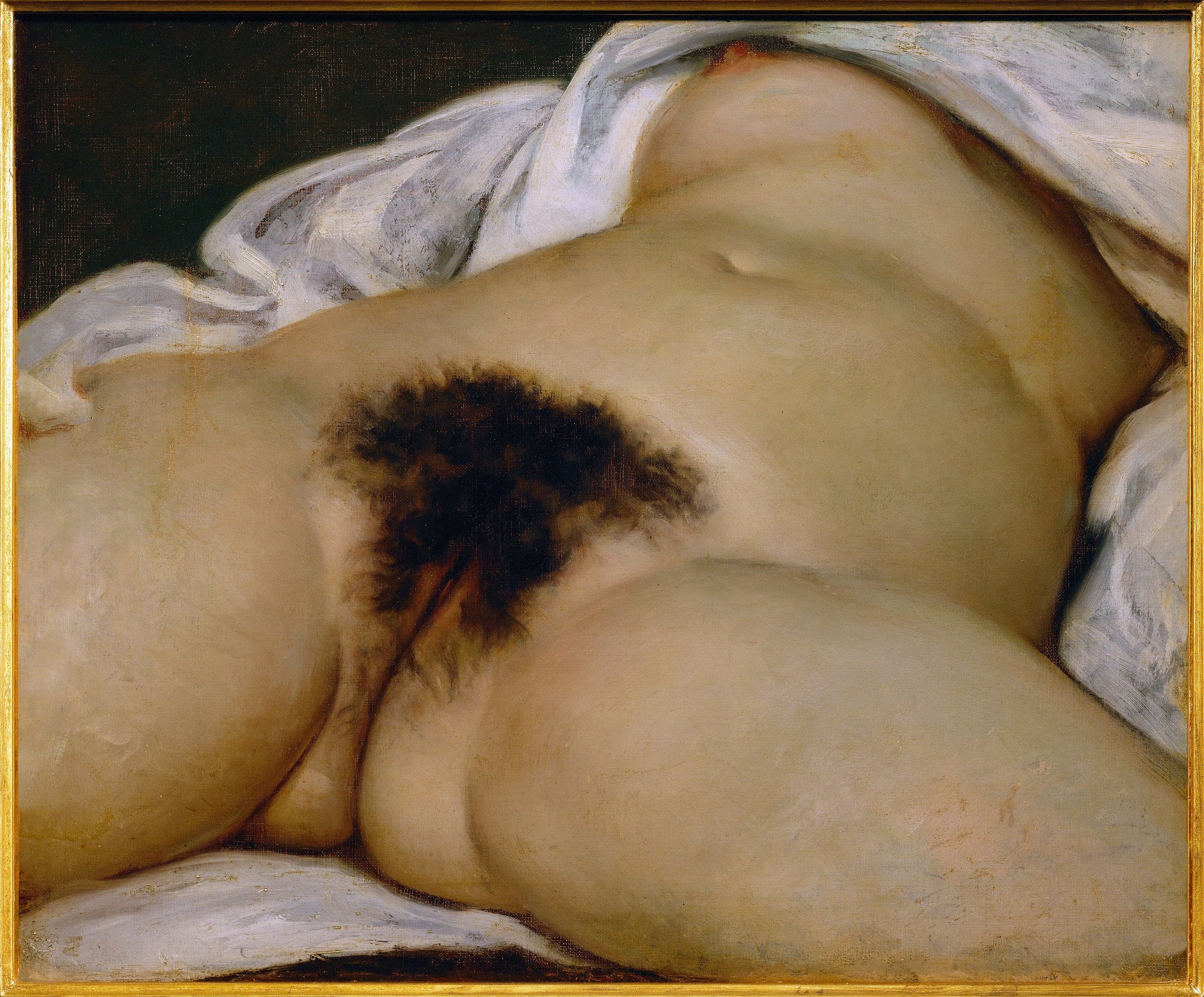
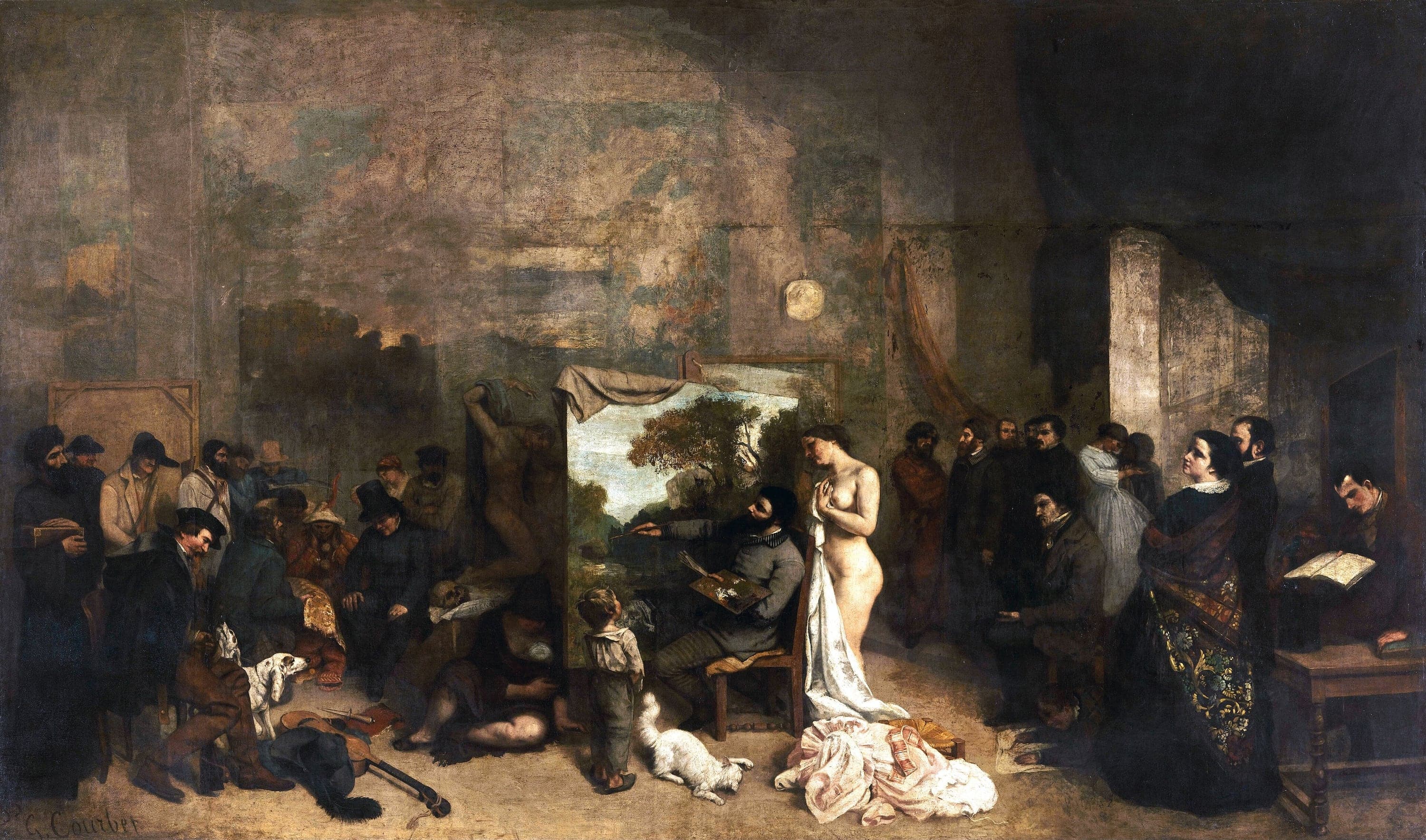
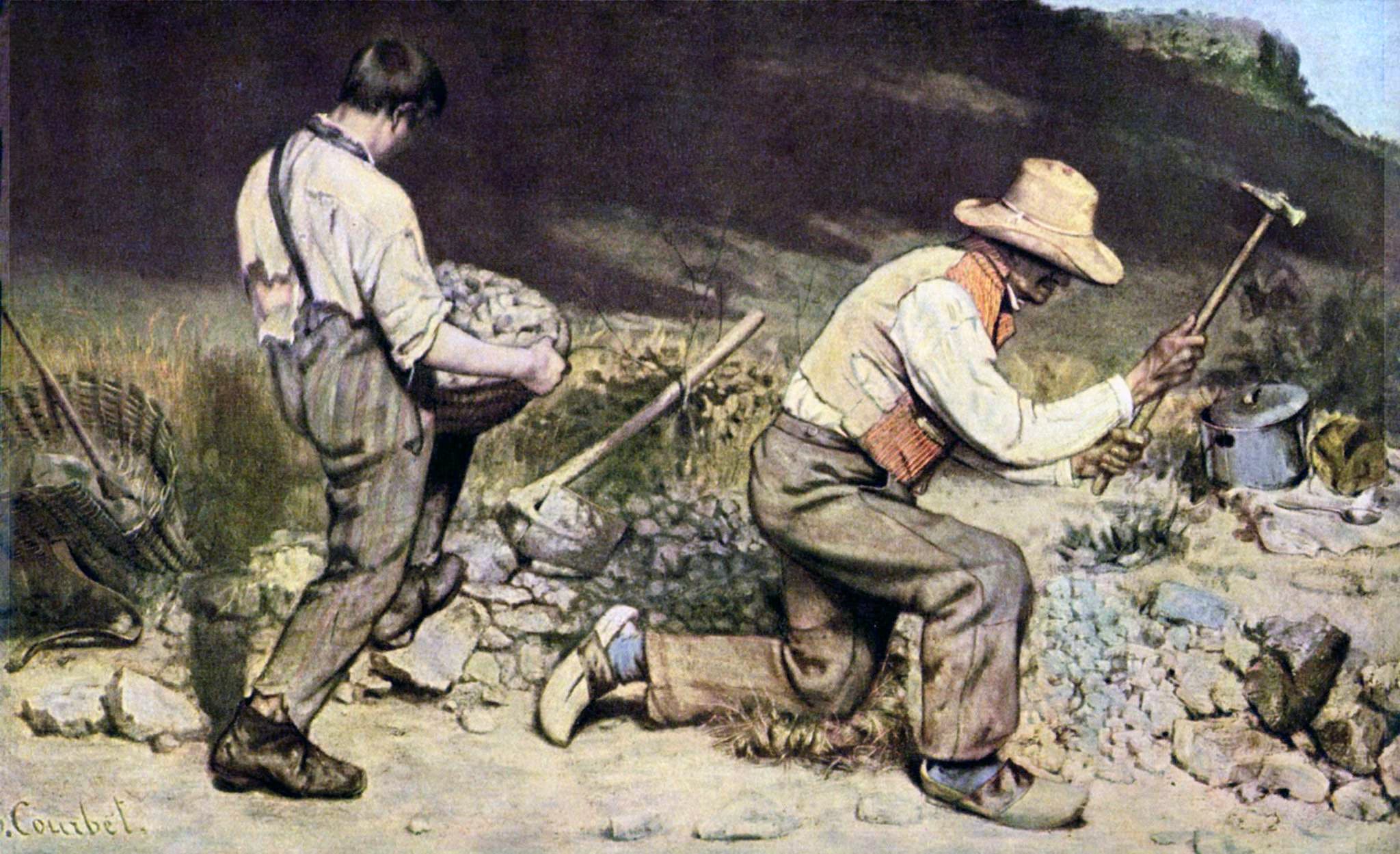
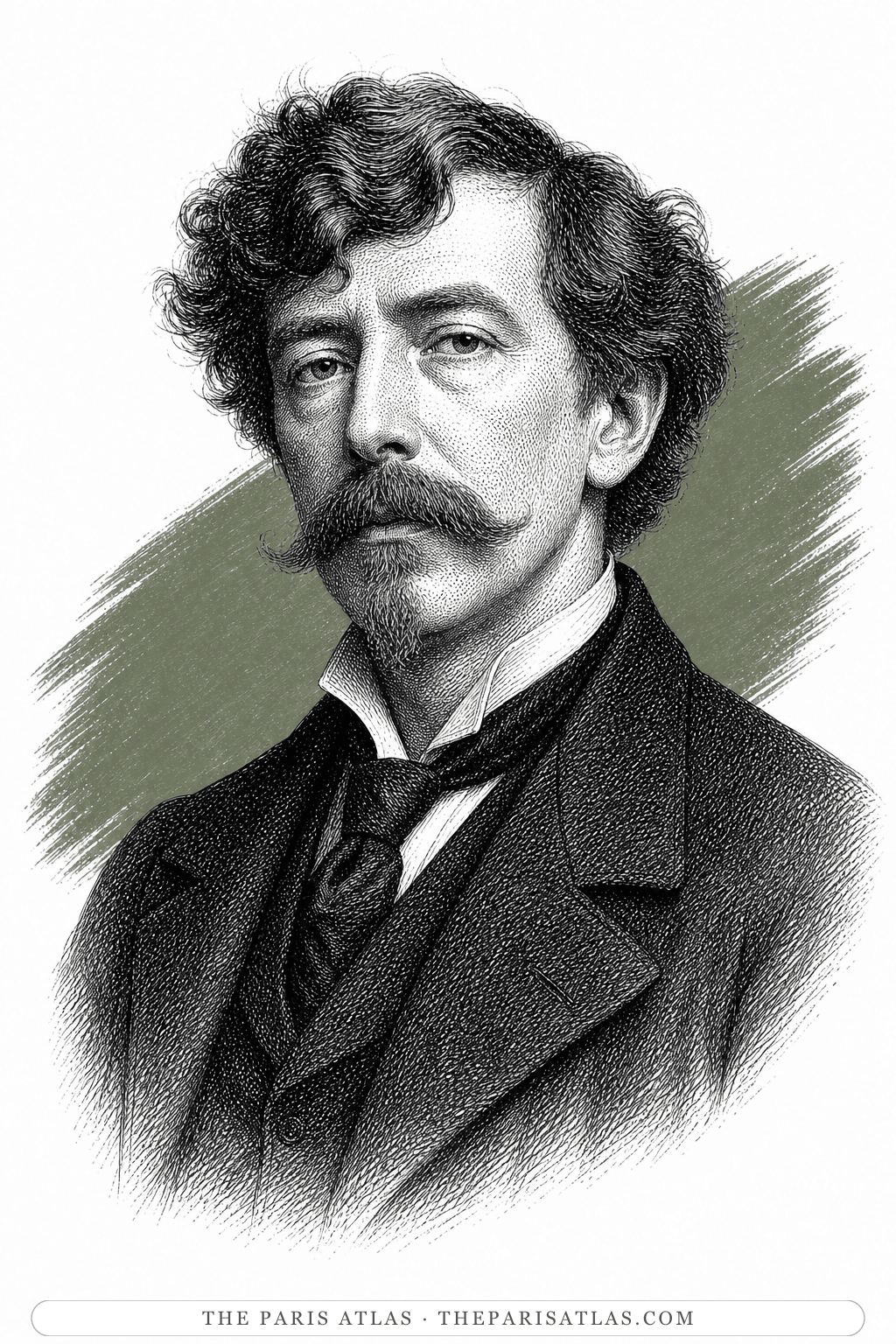
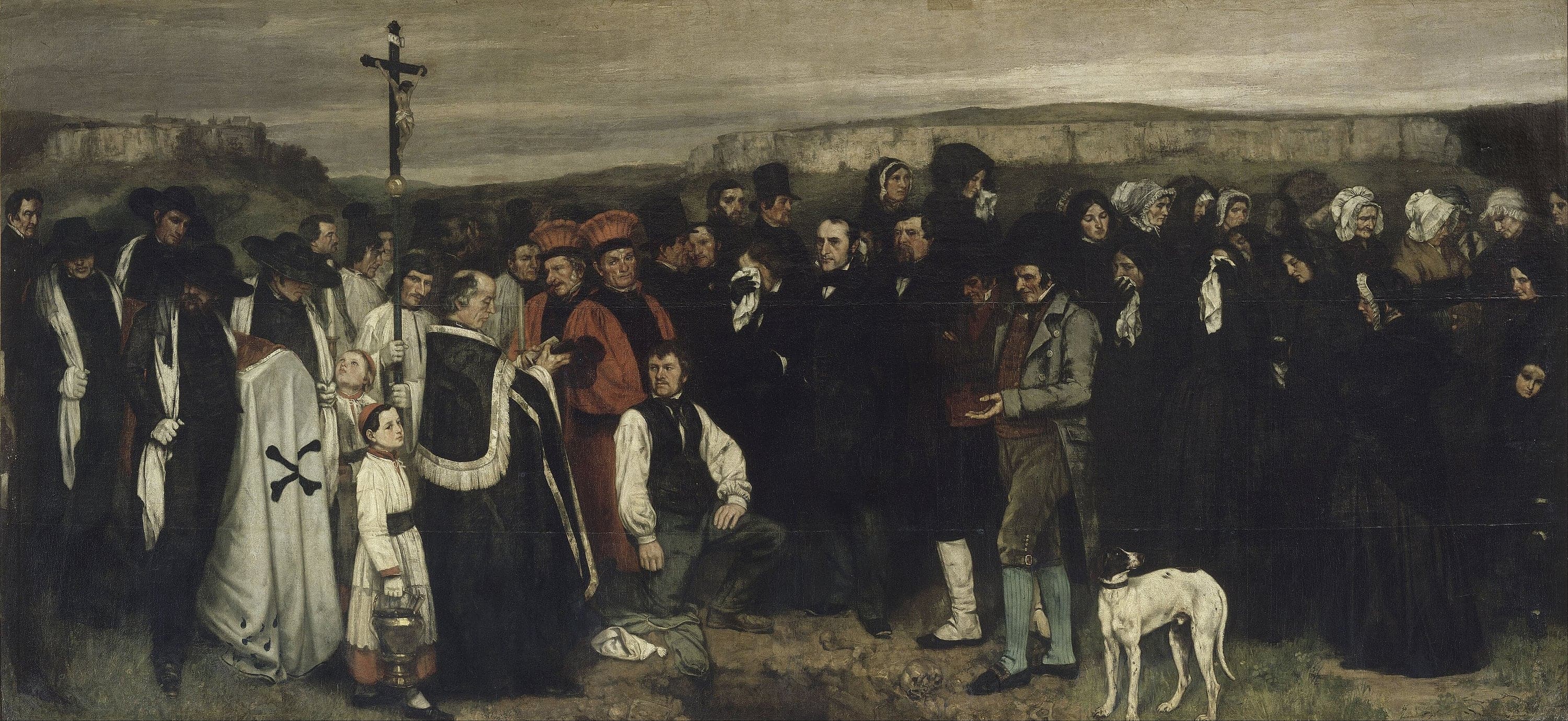
Gustave Courbet painted stone-breakers and village funerals on canvases the size the Salon kept for battles and saints, and said plainly that this was the point. Realism, as he practised it, was an argument about who deserved to be looked at, and he took the argument outside the official system, showing in his own pavilion in 1855 when the Exposition Universelle would not have him.
Both halves of that mattered to Camille Pissarro, who reached Paris the same year: the subjects, and the refusal to wait for the Salon's permission. Courbet's politics ran to the Paris Commune, after which he was imprisoned and then billed for the reconstruction of the Vendome Column. He died in exile in Switzerland.
Courbet supplied two things Pissarro kept: ordinary working people as a subject worth the largest canvas, and the example of showing outside the Salon when the Salon would not have you.
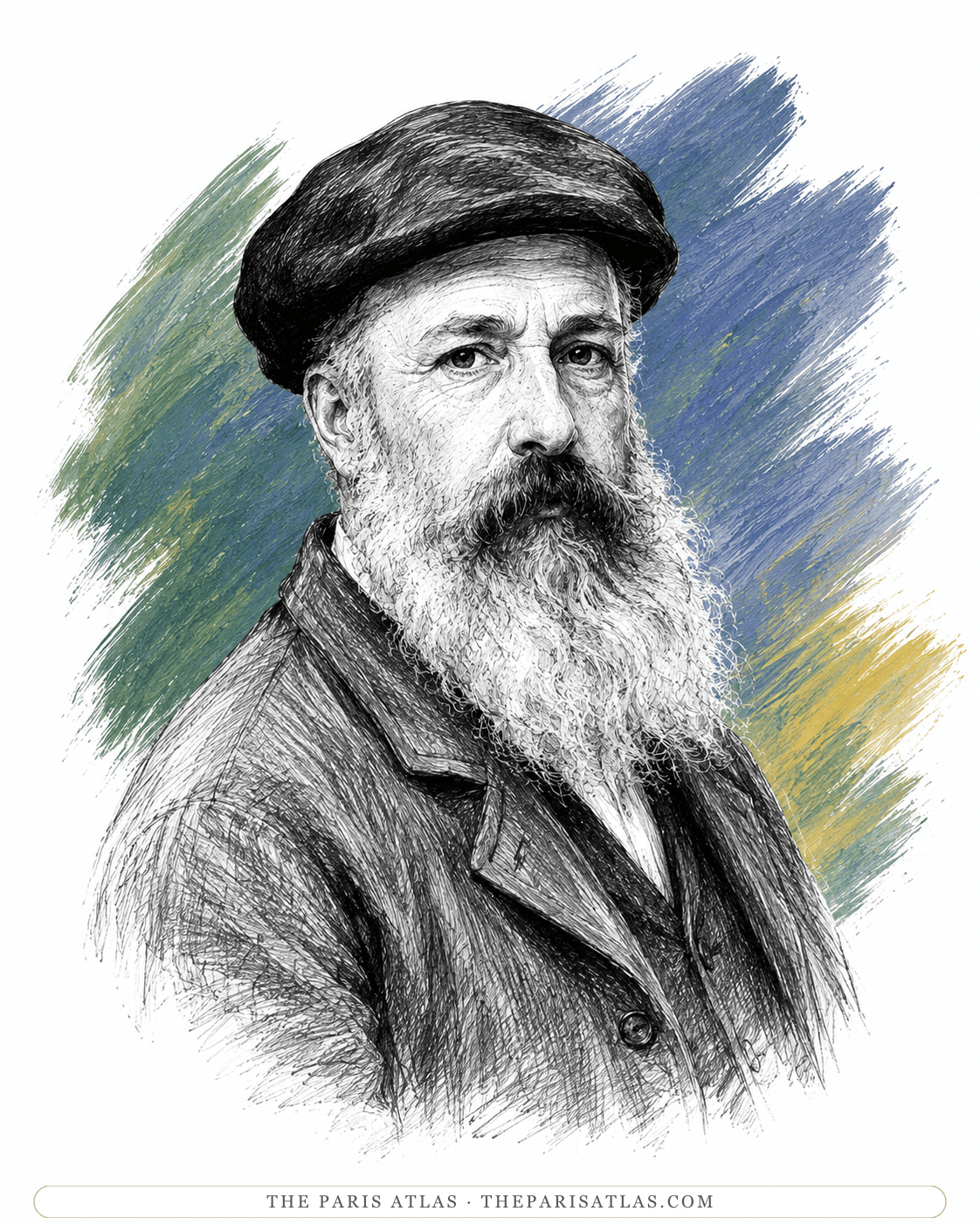
Courbet knew the young Monet in the 1860s and encouraged him, and the scale and frankness of the Realist canvases are behind Monet's early figure paintings.
Influenced
Courbet supplied two things Pissarro kept: ordinary working people as a subject worth the largest canvas, and the example of showing outside the Salon when the Salon would not have you.
Influenced
Courbet knew the young Monet in the 1860s and encouraged him, and the scale and frankness of the Realist canvases are behind Monet's early figure paintings.