The Paris AtlasCharting the artists, works, and places worth returning to.
  • Painter
  • Printmaker
· American · 1834–1903

James McNeill Whistler

The American painter who sailed for Paris in 1855 to live the bohemian life he had read about in novels, had his painting thrown out of the official Salon exhibition in 1863 and hung instead at the Salon des Refusés — the show of rejected pictures — beside the painter Édouard Manet, and lived to see the French state buy his portrait of his mother for the nation in 1891. The picture is in the Musée d'Orsay.

Details

Lived
1834–1903
Born
1834
Birthplace
Lowell, Massachusetts
Died
17 July 1903
Place of death
London
Nationality
American
Profession
Painter and etcher
Major works
Arrangement in Grey and Black No. 1 (Whistler's Mother), Symphony in White No. 1, the Peacock Room
Married
Beatrice Philip · 1888–1896
Roles
PainterPrintmaker

About James McNeill Whistler

James McNeill Whistler was born in Massachusetts in 1834, raised partly in Russia, expelled from the West Point military academy, and gone from America for good at twenty-one. He arrived in Paris in 1855 to become a painter and set about it in the most literal way available: he moved into the student quarter and lived the life described in Henri Murger's Scènes de la vie de bohème (Scenes of Bohemian Life) — the 1851 book that invented the modern idea of the penniless, brilliant, disreputable artist — with a thoroughness his friends found funny and his creditors did not.

The Paris years gave him the two things he built a career on: a circle, and a scandal. Through the painter Henri Fantin-Latour he entered the orbit of Gustave Courbet, the leader of the Realists; through the same circle he knew the painter Édouard Manet, with whom he posed for Fantin's group portrait in 1864. And in 1863 the official Salon rejected his picture of a woman in white, which then hung at the Salon des Refusés — the overflow exhibition Emperor Napoleon III ordered for the rejected pictures — and became, alongside Manet's Déjeuner sur l'herbe (Luncheon on the Grass), one of the two scandals of that room. Whistler settled in London and made his name there, but the ending is French: on 30 November 1891 the government of France bought his portrait of his mother for the nation, and the painting has been in a French national museum ever since.

West Point, and out

Whistler was born in Lowell, Massachusetts, in 1834, and spent his boyhood in Russia, where his father, a railway engineer, had been hired by the Tsar to build the line from St Petersburg to Moscow. He took drawing lessons at the Imperial Academy of Arts there between 1843 and 1848 — an unusual training for an American child, and the beginning of a lifelong habit of belonging nowhere in particular. Back in the United States he entered the military academy at West Point in 1851 and was expelled in 1854, having failed chemistry and accumulated a formidable record of demerits. A brief job engraving maps for the US Coast and Geodetic Survey taught him to etch — to draw pictures into metal plates for printing — which turned out to matter more than anything else he learned in America.

"In 1855 he sailed for Europe to study art," the University of Glasgow's catalogue of his paintings records, and he never went home again. He was twenty-one.

Living the book

In Paris he enrolled at the École Impériale et Spéciale de Dessin — the state drawing school — and worked for a time in the studio of Charles Gleyre, the Swiss painter whose teaching atelier would later take in the painters Claude Monet, Auguste Renoir and Alfred Sisley. But the studio was the smaller half of his education. Whistler had read Murger's Scènes de la vie de bohème, the collection of Latin Quarter sketches that had become a stage hit in 1849 and a book in 1851, and he proceeded to live it: rooms he could not pay for, a grisette — a working-class Parisian sweetheart — on his arm, debts, wit, and a costume — the long coat, the wide black hat, the monocle — assembled with the care of a man designing a public character. It was a pose, and it was also a serious argument about what an artist was for. He kept it up for the rest of his life.

The friendships were the real capital. He met the painters Alphonse Legros and Henri Fantin-Latour, and "through Fantin, he entered the circle of Gustave Courbet, leader of the Realists" — the movement that insisted painting should show ordinary contemporary life at full size instead of gods and battles. In 1864 Whistler posed alongside Édouard Manet and the poet Charles Baudelaire for Fantin's Hommage à Delacroix, the group portrait that functions as a photograph of the French avant-garde before it had a name; Manet later introduced him to the critic Théodore Duret, who would matter to him thirty years on.

The white girl and the room of the rejected

In the winter of 1861–62, in a studio on the boulevard des Batignolles, Whistler painted a young Irishwoman named Joanna Hiffernan standing full-length in a white dress against a white curtain. He had met her in London in 1860, and she was his model and companion for six years; in 1866, when he sailed for Valparaiso, in Chile, he gave her power of attorney over his affairs, which says something about both of them. The picture was eventually titled Symphony in White, No. 1: The White Girl, and it does almost nothing a Victorian narrative painting was supposed to do. It tells no story. It is a study of one colour against itself.

London's Royal Academy rejected it. Then, in 1863, so did the Paris Salon, the official annual state exhibition whose jury effectively decided which French painters existed. That year the rejections were so numerous and so loud that Emperor Napoleon III ordered a second exhibition of the refused pictures — the Salon des Refusés — and the crowds came to laugh. They found two things worth laughing at. "Rejected also by the Paris Salon in 1863," the Glasgow catalogue records, "it was, with Manet's Déjeuner sur l'herbe, the succès de scandale of the Salon des Refusés" — a scandalous success, the kind of failure that makes a career. Whistler was twenty-nine, and permanently interesting.

London, peacocks, and a libel suit

He based himself in London from the 1860s, etched the Thames and its dockworkers in a set of plates published in 1871, and began giving his pictures musical titles — nocturnes, symphonies, arrangements — to insist that a painting was an arrangement of tones rather than an anecdote. In 1876–77 he decorated the dining room of the shipowner Frederick Leyland's London house in blue and gold peacocks, going far beyond his brief, quarrelling spectacularly with his patron about the fee, and producing the single most extravagant interior of the movement later called Aestheticism — art made for beauty's sake alone. The room was bought whole in 1904 by the Detroit industrialist Charles Lang Freer and shipped to Washington, where it is installed in the Freer Gallery.

In 1878 he sued the critic John Ruskin, the most powerful voice in British art, who had written that he "never expected to hear a coxcomb ask two hundred guineas for flinging a pot of paint" at the public. Whistler won — and was awarded a farthing, the smallest coin in circulation, in damages. The costs bankrupted him in May 1879. He went to Venice, came back with etchings and pastels that restored his reputation, and in 1885 delivered the 'Ten O'Clock' lecture, his manifesto that art owes nothing to morality, storytelling or the public. The poet Stéphane Mallarmé translated it into French and brought Whistler into the Symbolist circle in Paris — the poets and painters of mood and suggestion — which is how an American painter in London acquired a French literary constituency.

The mother, bought by France

Arrangement in Grey and Black No. 1 — a small, upright, black-clothed woman in profile against a grey wall, painted in London in 1871 — is his mother, Anna McNeill Whistler, and the title tells you what he wanted looked at. The Royal Academy nearly refused it in 1872; it was hung only because the elderly Academician Sir William Boxall threatened to resign from the Council if it was not. In the lean years the canvas did duty as collateral: in September 1878 it was deposited with a firm of print dealers as security for a loan.

Then France bought it. Whistler campaigned for the sale together with Mallarmé and the critic Théodore Duret, and on 30 November 1891 the French state purchased "le Portrait de ma mère" — the portrait of my mother — for 4,000 francs. It entered the Musée du Luxembourg — the national museum of living artists, the antechamber to the Louvre — on 14 December 1891, moved to the Jeu de Paume in 1922, and passed to the Musée du Louvre in 1926; since 1986 it has hung in the Musée d'Orsay. Twenty-eight years separate the room of rejected pictures from the French national collection, and the same man walked between them.

He married Beatrice Philip, the widow of the architect E. W. Godwin, in 1888, and the marriage was the happiest stretch of his life; some of his finest lithographs show her at home at 110 rue du Bac in Paris, where the couple lived in the 1890s. She died of cancer in 1896. Whistler died in London on 17 July 1903, an American who had spent forty-eight years abroad, and whose most famous painting had by then been the property of the French Republic for twelve of them.

Life events

  1. 1834

    Born in Lowell, Massachusetts.

    Whistler biography — The Paintings of James McNeill Whistler

  2. 1843–1848

    Boyhood in St Petersburg, where his father is engineering a railway for the Tsar; he takes lessons at the Imperial Academy of Arts.

    Whistler biography — The Paintings of James McNeill Whistler

  3. 1851

    Enters the United States Military Academy at West Point; expelled in 1854.

    Whistler biography — The Paintings of James McNeill Whistler

  4. 1855

    Sails for Europe to study art, settling in Paris — where he sets out to live the bohemian life of Murger's Scènes de la vie de bohème, and works for a time under Charles Gleyre.

    Whistler biography — The Paintings of James McNeill Whistler; Daniel E. Sutherland, Whistler: A Life for Art's Sake (2014)

  5. 1860–62

    Meets Joanna Hiffernan, his model and companion for six years, at a London studio; in the winter of 1861–62 she sits in a boulevard des Batignolles studio in Paris for the picture later called Symphony in White, No. 1: The White Girl.

    Joanna Hiffernan, biography — The Correspondence of James McNeill Whistler

  6. 1863

    Rejected by the Paris Salon, The White Girl hangs at the Salon des Refusés and becomes, with Manet's Déjeuner sur l'herbe, the scandal of the exhibition.

    Whistler biography — The Paintings of James McNeill Whistler

  7. 1864–65

    Poses with Édouard Manet and Charles Baudelaire for Fantin-Latour's group portrait Hommage à Delacroix, then paints alongside Gustave Courbet at Trouville on the Normandy coast.

    Whistler biography — The Paintings of James McNeill Whistler

  8. 1871

    Paints Arrangement in Grey and Black No. 1 — his mother — in London. The Royal Academy hangs it in 1872 only after an Academician threatens to resign over it.

    YMSM 101, Arrangement in Grey and Black: Portrait of the Painter's Mother — exhibition and ownership history

  9. 1876–77

    Decorates Frederick Leyland's dining room in London as the Peacock Room, and quarrels with his patron over the bill.

    Whistler biography — The Paintings of James McNeill Whistler

  10. 1878

    Sues John Ruskin for libel over the "pot of paint" review, wins a farthing in damages, and is declared bankrupt in May 1879.

    Whistler biography — The Paintings of James McNeill Whistler

  11. 1885

    Delivers the 'Ten O'Clock' lecture in London; Stéphane Mallarmé translates it into French and introduces him to the Symbolist circle in Paris.

    Whistler biography — The Paintings of James McNeill Whistler

  12. 1888

    Marries Beatrice Philip, widow of the architect E. W. Godwin. The couple later keep a flat at 110 rue du Bac in Paris, where his finest lithographs show her at home.

    Whistler biography — The Paintings of James McNeill Whistler

  13. 1891

    On 30 November the French state buys the portrait of his mother for 4,000 francs; it enters the Musée du Luxembourg on 14 December, passes to the Jeu de Paume in 1922 and the Louvre in 1926, and has hung in the Musée d'Orsay since 1986.

    YMSM 101, Arrangement in Grey and Black: Portrait of the Painter's Mother — exhibition and ownership history

  14. 1903

    Dies in London on 17 July.

    Whistler biography — The Paintings of James McNeill Whistler

People they knew

Documented connections — every one carries its source.

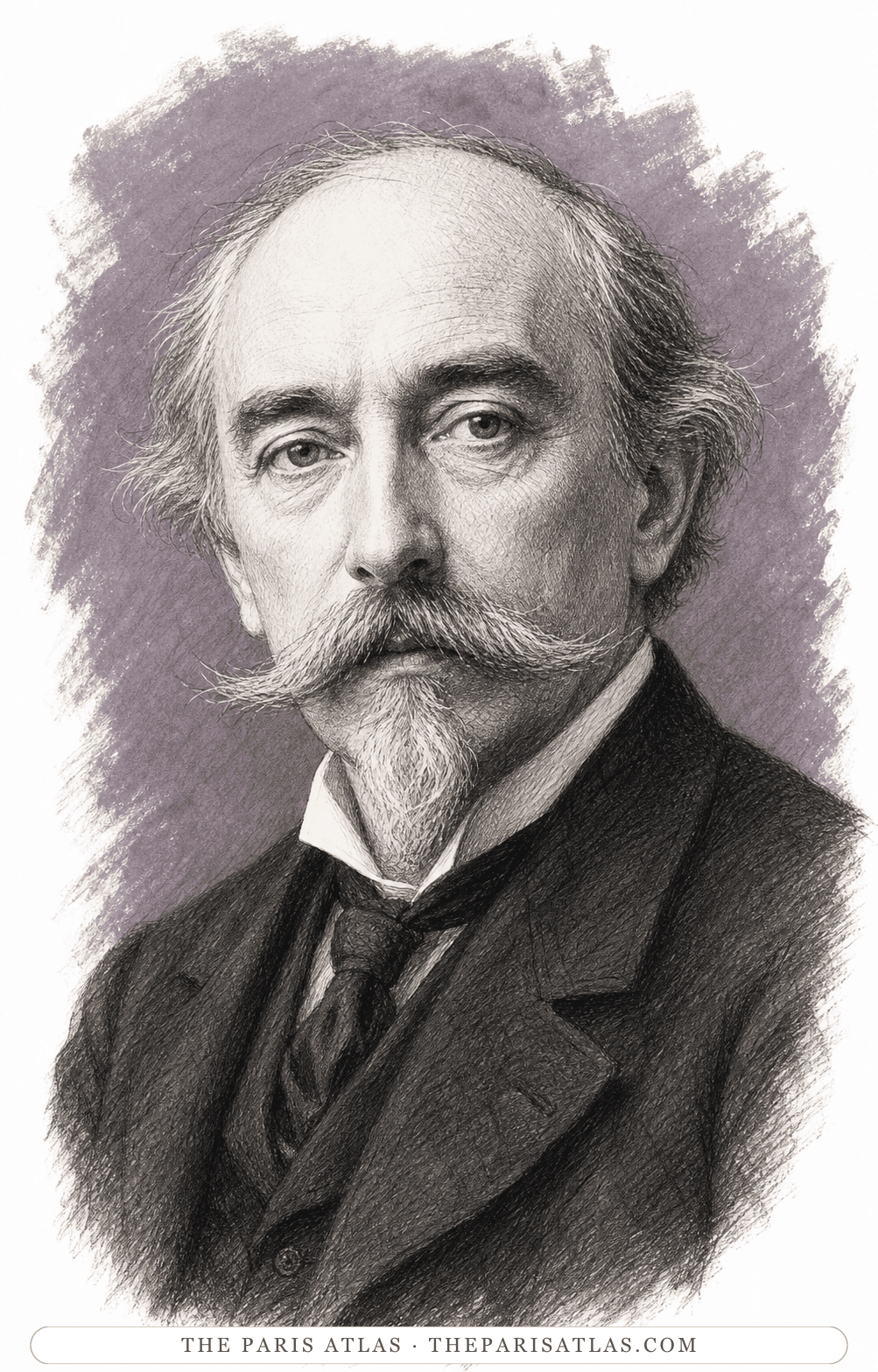
Illustrated portrait of Stéphane Mallarmé

Stéphane Mallarmé

  • Poet

Collaborated with · 1888–1891

Mallarmé translated Whistler's 'Ten O'Clock' lecture — his argument that art owes nothing to morality or storytelling — into French, and introduced him to the Symbolist writers of Paris. The two then campaigned together to have the French state buy Whistler's portrait of his mother, which it did on 30 November 1891 for 4,000 francs.
Whistler biography — The Paintings of James McNeill Whistler; YMSM 101, Arrangement in Grey and Black: Portrait of the Painter's Mother — exhibition and ownership history

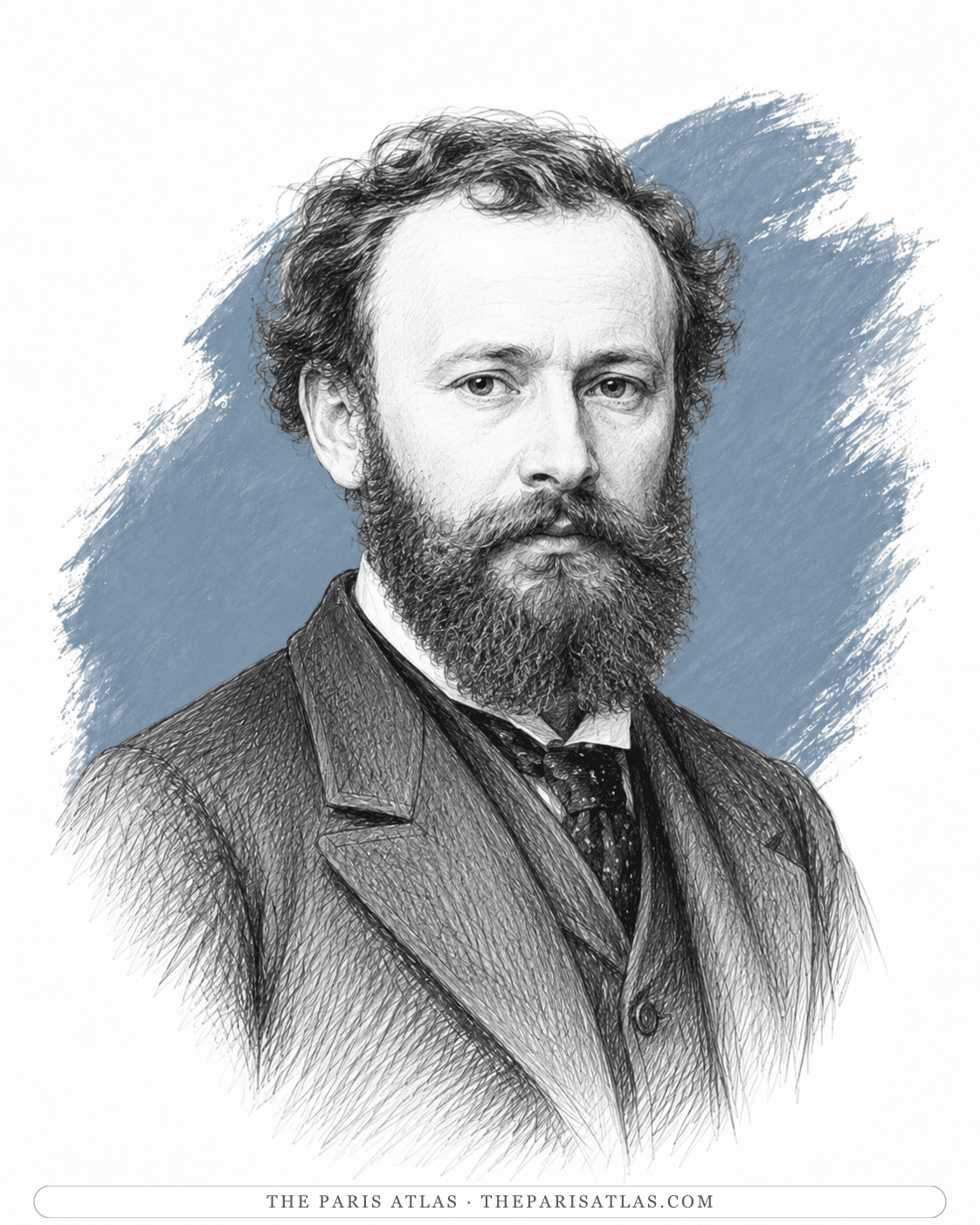
Illustrated portrait of Édouard Manet

Édouard Manet

  • Painter

Met · 1863–1864

Their pictures were the twin scandals of the 1863 Salon des Refusés — Whistler's White Girl and Manet's Déjeuner sur l'herbe. The following year the two posed together, with Charles Baudelaire, for Fantin-Latour's group portrait Hommage à Delacroix; Manet later introduced Whistler to the critic Théodore Duret, who helped sell his mother's portrait to France in 1891.

Whistler biography — The Paintings of James McNeill Whistler

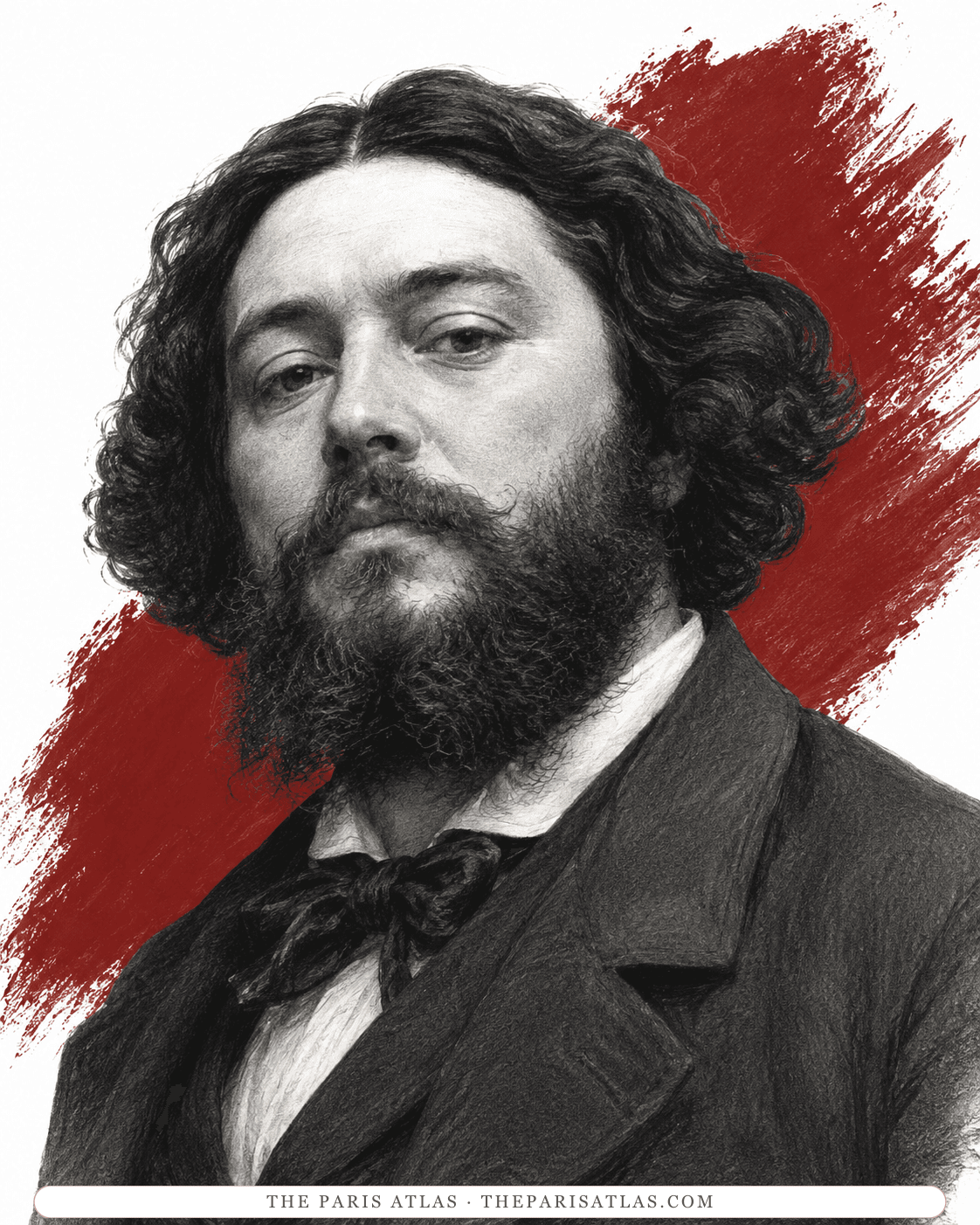
Illustrated portrait of Gustave Courbet

Gustave Courbet

  • Painter

Met · 1859–1865

The painter Henri Fantin-Latour brought Whistler into the circle of Courbet, the leader of the Realists — the movement that insisted painting show ordinary contemporary life at the scale once reserved for history. In 1865 the two worked side by side at Trouville on the Normandy coast.

Whistler biography — The Paintings of James McNeill Whistler

Questions about James McNeill Whistler

Who was James McNeill Whistler?

An American painter and etcher, born in Massachusetts in 1834 and dead in London in 1903, who left the United States at twenty-one and never returned. He trained in Paris, made his career in London, and argued all his life that a painting is an arrangement of colours and tones rather than a story — which is why his pictures are called nocturnes, symphonies and arrangements. His portrait of his mother is one of the most reproduced paintings in the world.

Why did Whistler go to Paris?

To become a painter, in 1855, at twenty-one. He enrolled at the state drawing school and worked in Charles Gleyre's studio, but the larger reason was the life: he had read Henri Murger's Scènes de la vie de bohème, the book that invented the romance of the poor young artist in the Latin Quarter, and he set out to live it in detail — the debts, the costume, the wit. The friendships he made there, with Fantin-Latour, Courbet's circle and Manet, shaped everything that followed.

What was the Salon des Refusés, and what did Whistler show there?

In 1863 the jury of the Paris Salon — the official state exhibition that effectively decided which artists existed — rejected so many pictures that Emperor Napoleon III ordered a separate exhibition of the refused ones. Whistler showed The White Girl, his full-length portrait of Joanna Hiffernan in white against white, which had already been turned down in London. Crowds came to mock, and the two pictures they mocked hardest were his and Édouard Manet's Déjeuner sur l'herbe. Both painters left the exhibition famous.

Where is Whistler's Mother, and how did France come to own it?

In the Musée d'Orsay in Paris. Whistler painted it in London in 1871; twenty years later, campaigning alongside the poet Stéphane Mallarmé and the critic Théodore Duret, he persuaded the French government to buy it. The purchase went through on 30 November 1891 for 4,000 francs, and the picture entered the Musée du Luxembourg — the state museum for living artists — that December. It moved to the Jeu de Paume in 1922, the Louvre in 1926, and the Musée d'Orsay in 1986. It is the most famous American painting in a French collection.

Who was Joanna Hiffernan?

An Irishwoman, born around 1843, who was Whistler's model and companion for six years after they met in London in 1860. She sat in Paris in the winter of 1861–62 for The White Girl, the picture that made his name at the Salon des Refusés, and for other major works. She was also trusted with his business: in 1866, when Whistler sailed for Valparaiso, in Chile, he gave her power of attorney over his affairs. She later raised his son Charles, born in 1870 to another woman.

What was the Whistler–Ruskin trial?

In 1877 the critic John Ruskin, the most influential writer on art in Britain, said of one of Whistler's night pictures that he "never expected to hear a coxcomb ask two hundred guineas for flinging a pot of paint" at the public. Whistler sued for libel in 1878 and won — and the jury awarded him a farthing, the smallest coin in circulation. The legal costs bankrupted him in May 1879. He rebuilt his career with etchings made in Venice.

What is the Peacock Room?

A dining room Whistler decorated in 1876–77 for the shipowner Frederick Leyland in London, covered in blue and gold peacocks. He vastly exceeded what he had been asked to do, fell out with Leyland over payment, and painted two fighting peacocks on the wall as a portrait of the argument. The whole room was bought in 1904 by the American collector Charles Lang Freer and reinstalled in Washington, where it is on view at the Freer Gallery of Art.

Sourced claims

Every connection the graph holds for James, with the evidence behind it.

Collaborated with · 1888–1891

Stéphane Mallarmé

Mallarmé translated Whistler's 'Ten O'Clock' lecture — his argument that art owes nothing to morality or storytelling — into French, and introduced him to the Symbolist writers of Paris. The two then campaigned together to have the French state buy Whistler's portrait of his mother, which it did on 30 November 1891 for 4,000 francs.

Whistler biography — The Paintings of James McNeill Whistler; YMSM 101, Arrangement in Grey and Black: Portrait of the Painter's Mother — exhibition and ownership history

Met · 1863–1864

Édouard Manet

Their pictures were the twin scandals of the 1863 Salon des Refusés — Whistler's White Girl and Manet's Déjeuner sur l'herbe. The following year the two posed together, with Charles Baudelaire, for Fantin-Latour's group portrait Hommage à Delacroix; Manet later introduced Whistler to the critic Théodore Duret, who helped sell his mother's portrait to France in 1891.

Whistler biography — The Paintings of James McNeill Whistler

Met · 1859–1865

Gustave Courbet

The painter Henri Fantin-Latour brought Whistler into the circle of Courbet, the leader of the Realists — the movement that insisted painting show ordinary contemporary life at the scale once reserved for history. In 1865 the two worked side by side at Trouville on the Normandy coast.

Whistler biography — The Paintings of James McNeill Whistler

References

References

The sources below include biographies, scholarly essays, interviews, and primary materials that informed this page. They reflect both the historical record and ongoing critical conversations about James McNeill Whistler and their work.

  1. 1Whistler biography — The Paintings of James McNeill Whistler

    University of Glasgow

    The scholarly biography attached to the University of Glasgow's catalogue raisonné of Whistler's paintings.

    View source
  2. 2YMSM 101, Arrangement in Grey and Black: Portrait of the Painter's Mother — exhibition and ownership history

    The Paintings of James McNeill Whistler, University of Glasgow

    Exhibition and ownership history of the mother portrait, including the 1891 French purchase.

    View source
  1. 3Joanna Hiffernan, biography — The Correspondence of James McNeill Whistler

    Centre for Whistler Studies, University of Glasgow

    Biography of Joanna Hiffernan from the Whistler correspondence project.

    View source
  2. 4Whistler: A Life for Art's Sake

    Yale University Press, 2014

    Standard modern biography.

i
Why these sources are here

These references anchor the page in the documented record and in the scholarly conversations around James McNeill Whistler. Every claim on this page traces back to one or more of the works listed here.

Explore more resources