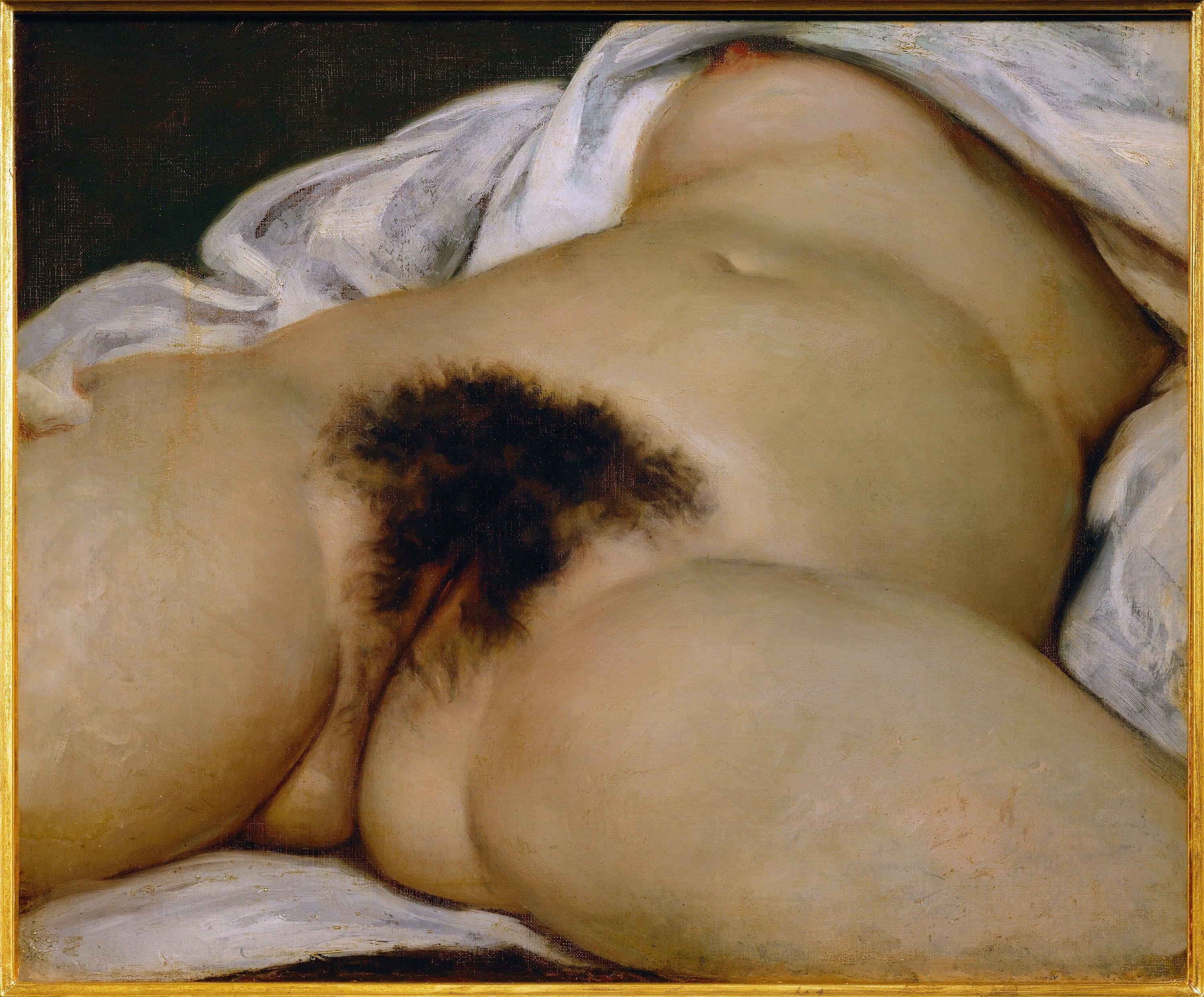
The Origin of the World
A close view of a woman's torso and genitals, cropped at the thighs and below the shoulders, lying on a white sheet. Gustave Courbet painted it in 1866 for a private client and it stayed in private hands for well over a century. It reached the Musée d'Orsay in 1995, from the estate of the psychoanalyst Jacques Lacan, and is a small canvas: 46.3 by 55.4 centimetres.
- 1866
- Oil on canvas
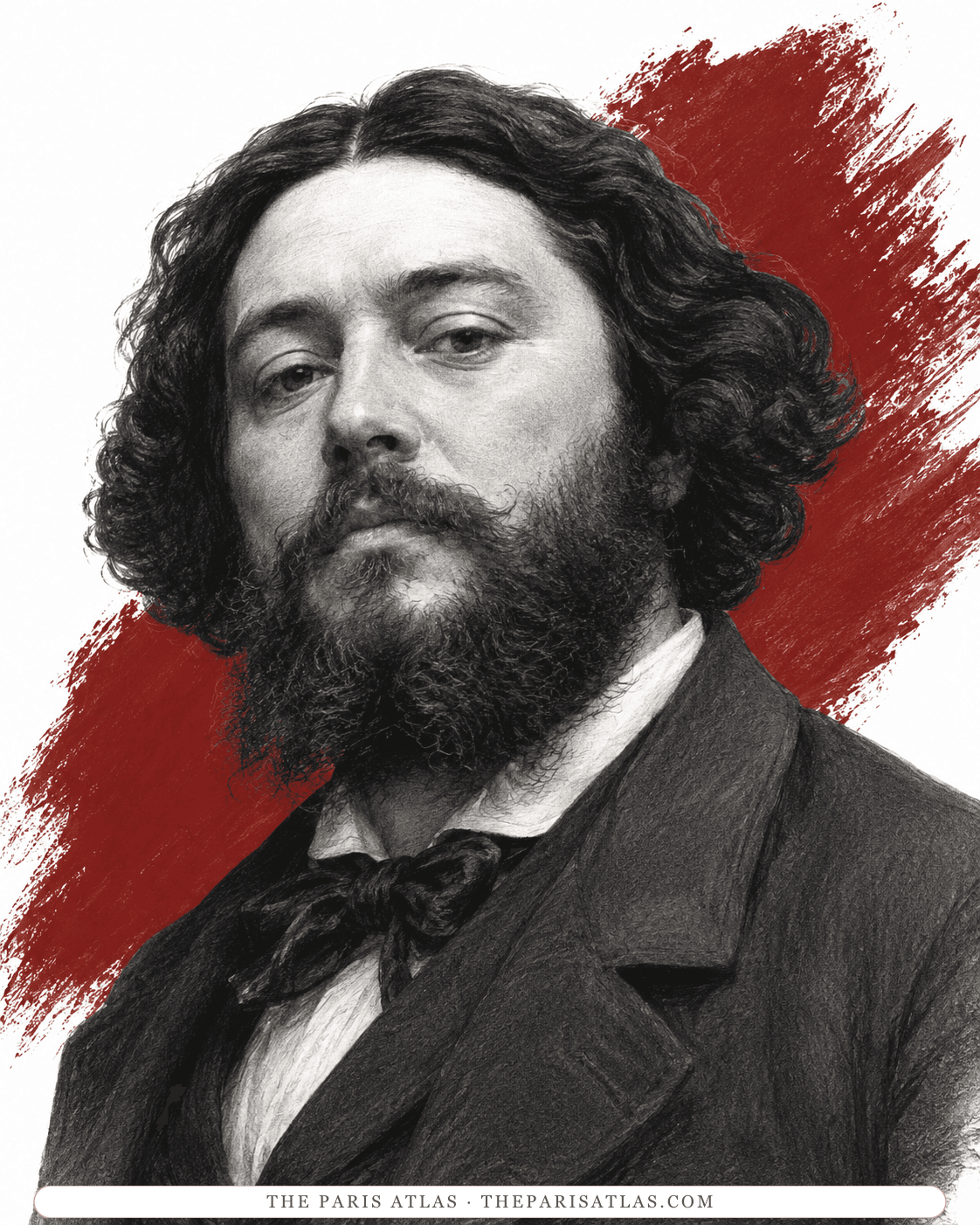
About Gustave Courbet
What the painting shows
The canvas is framed tightly on a woman's body, cutting through the chest at the top and the thighs at the bottom. Her legs are apart and her genitals are near the centre of the picture. A white sheet is pushed back across her chest, leaving one breast uncovered and cropped by the upper edge. The head, arms and lower legs are all outside the frame.
The handling is the ordinary handling of Courbet's other flesh painting — warm, solid, closely observed. What is unusual is the framing. Nineteenth-century nudes gave the viewer a face, a pose and usually a mythological pretext. This one removes all three and keeps the body.
Painted for Khalil-Bey
The first owner was Khalil-Bey, a Turkish-Egyptian diplomat who was a conspicuous figure in Paris society in the 1860s and who put together a collection devoted to the female body. He commissioned the picture and kept it privately. It was not exhibited.
Khalil-Bey's collection was broken up and sold when his finances collapsed at the end of the 1860s, and the painting passed through a series of private owners.
Lacan, and the Orsay
By the middle of the twentieth century it belonged to the psychoanalyst Jacques Lacan, who kept it at his country house behind a sliding panel with another painting mounted over it.
It entered the Musée d'Orsay in 1995 by dation — the French arrangement that lets an estate settle inheritance tax with works of art instead of money. Its accession number is RF 1995 10. It had been painted 129 years earlier and had never hung in a public museum.
Close reading
Reading the work, detail by detail
The canvas is small, forty-six by fifty-five centimetres, and it holds one part of a body at close range. Gustave Courbet paints the torso and thighs of a woman lying on a white sheet, with her head, arms and lower legs outside the frame. Close view shows flesh handled with the same solid, warm modelling he gave to rock and water.
1.The upper edge cuts through the chest
One breast rises out of the sheet at the top of the canvas, and the upper edge crops it so that the pink nipple sits just inside the picture. The other breast is under the cloth drawn across the chest. The framing cuts through the ribs rather than below them.
2.The whole setting is a sheet and a shadow
Sheet folds occupy the upper left, painted in cool greys and whites against a ground so dark it reads as unbroken brown-black. There is no room, no furniture and no window. Cloth and shadow are the entire setting Courbet gives the figure.
3.The belly is modelled without a visible edge
The navel is a small shadowed dimple near the middle of a broad, smoothly modelled belly. Courbet moves from cream through ochre to a warm grey at the flank without a hard edge anywhere. The paint is thin and level, and the canvas weave shows through it in places.
4.The hair is the one passage painted loose
The pubic hair is a dark brown mass near the centre of the canvas, painted in dry broken strokes that stay separate from one another. Reddish and olive notes come up through the brown. Everywhere else the handling is blended, and here Courbet lets the marks read as marks.
5.The vulva sits near the centre of the composition
The labia are painted in reddish brown where the thighs meet, a little below and left of the canvas's centre. The groin fold runs down from them as one long shadow. The modelling is as blended and unhurried here as on the belly above.
6.The near thigh fills the lower right
The near thigh is a single rounded mass running down to the bottom right corner. Its outer contour is the longest unbroken line in the picture. Courbet keeps the light even across it, so the form is carried by modelling rather than by any strong shadow.
7.The far thigh is cooler and set back
The far thigh occupies the left of the canvas, turned away and lit less directly. Its flesh is cooler and greyer than the near thigh, which is how Courbet sets it back in space. White sheet runs along beneath it to the bottom edge.
Timeline
1866
Painted for Khalil-Bey, a Turkish-Egyptian diplomat in Paris who was assembling a collection devoted to the female body.
late 1860s
Khalil-Bey's collection is dispersed when his finances fail; the painting passes into other private hands.
20th century
Owned by the psychoanalyst Jacques Lacan, who keeps it concealed behind a sliding panel at his country house.
1995
Accepted by the French State by dation and assigned to the Musée d'Orsay as RF 1995 10 — its first public display.
Where to see it
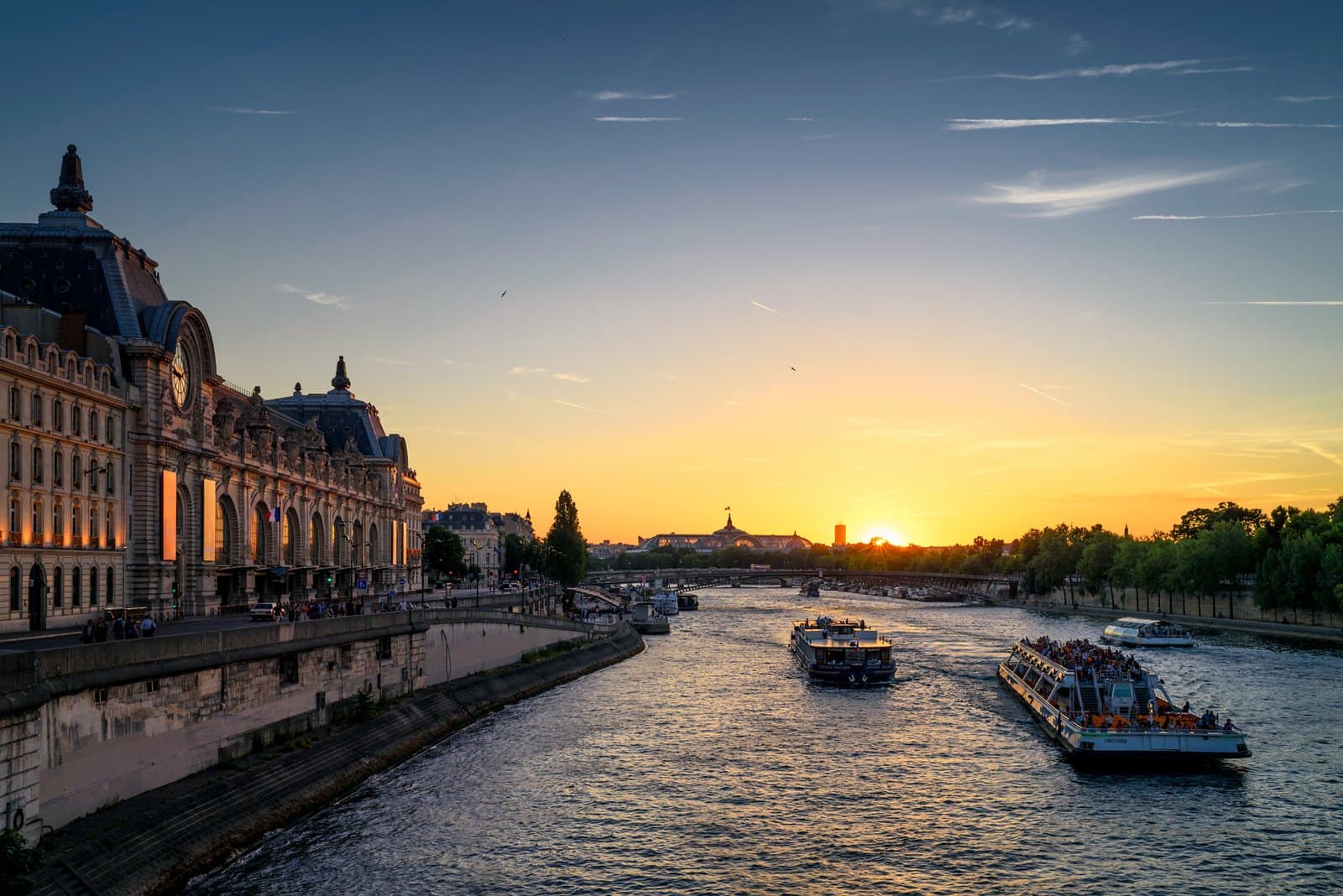
Musée d'Orsay
Esplanade Valéry Giscard d’Estaing, 75007 Paris, France
Displays and loans can change. Check whether this work is on view before making a special trip.
Plan your visitFrequently asked questions
Where is The Origin of the World?
The Musée d'Orsay in Paris, accession number RF 1995 10. It entered the collection in 1995 and had never been shown in a public museum before that.
Who commissioned The Origin of the World?
Khalil-Bey, a Turkish-Egyptian diplomat prominent in Paris society in the 1860s, who was building a collection devoted to the female body. He kept the painting privately and it was not exhibited.
How did the Musée d'Orsay acquire The Origin of the World?
By dation in 1995 — the French arrangement under which an estate can settle inheritance tax with works of art rather than cash. It came from the estate of the psychoanalyst Jacques Lacan, who had owned it and kept it hidden behind a sliding panel at his country house.
How big is The Origin of the World?
46.3 by 55.4 centimetres — small, roughly eighteen by twenty-two inches. With its frame it measures 84.5 by 99.5 centimetres.
Who was the model for The Origin of the World?
Not established. Courbet's model Joanna Hiffernan has often been proposed, and other names have been put forward since, but the sitter is not identified in the museum's record and the painting shows no face.
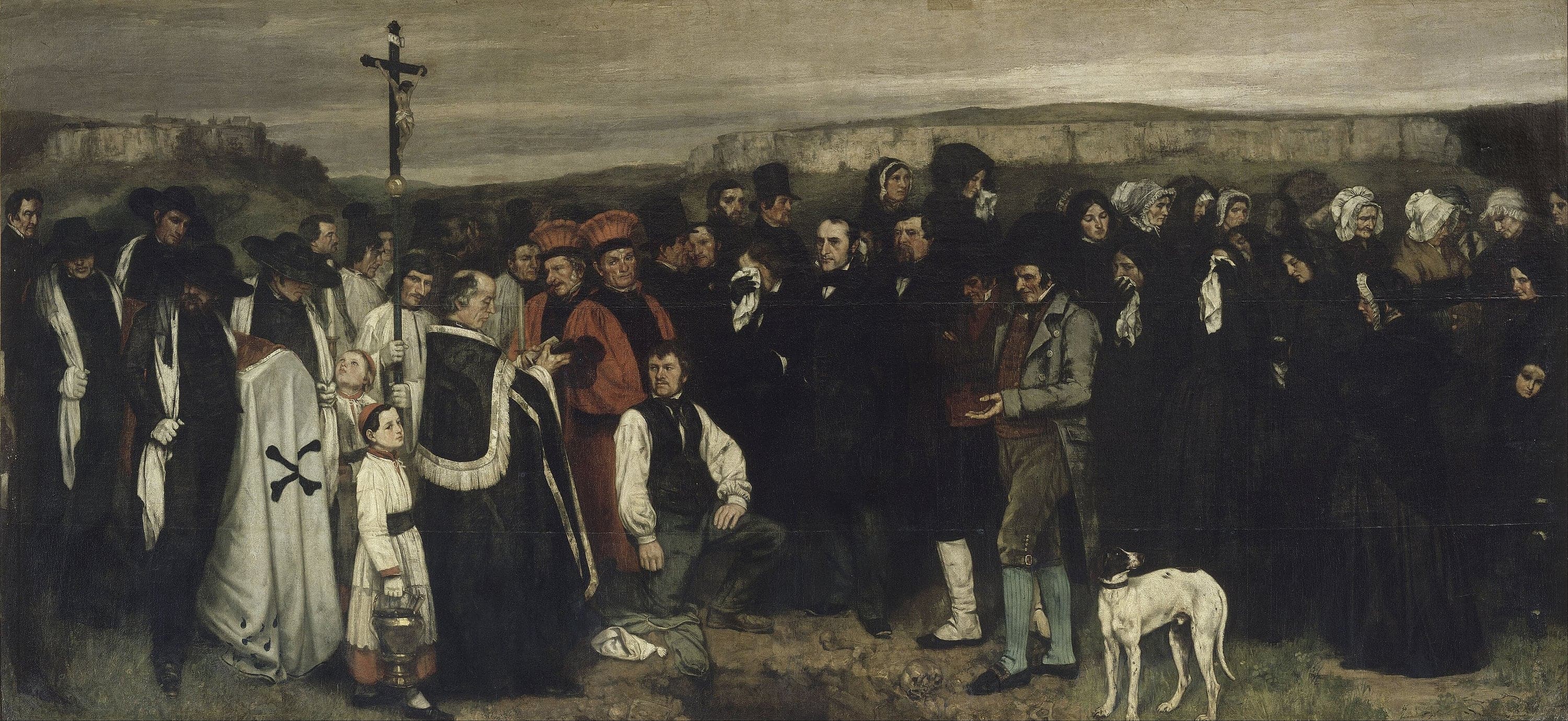
More by Gustave Courbet
If you like Gustave Courbet
Explore painters from the same movements and circles.
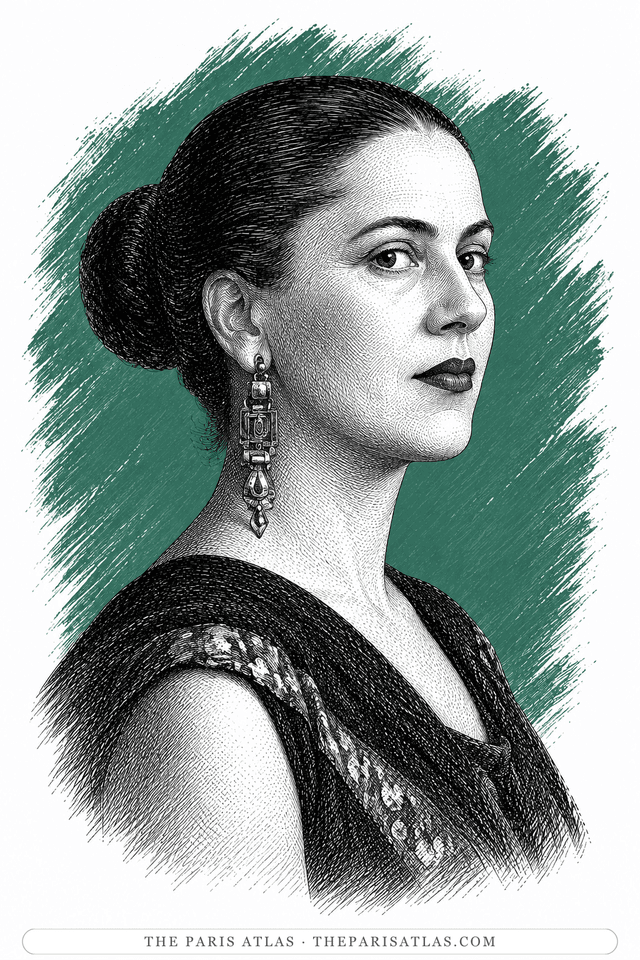
Tarsila do Amaral
Brazilian painter who spent the 1920s moving between São Paulo and Paris, studied Cubism under André Lhote, Albert Gleizes and Fernand Léger, and used what she learned to paint Brazilian towns, railways, plants and bodies. Her 1928 painting Abaporu prompted the manifesto that gave the Anthropophagic movement its name.
View artist
Arman
French-American artist, lifelong friend of Yves Klein, and a founder of New Realism.
View artist
Jean Arp
Strasbourg-born sculptor and poet — Hans in German, Jean in French, both all his life — who co-founded Dada at the Cabaret Voltaire in 1916, composed collages by dropping torn paper 'according to the laws of chance', and settled at Meudon outside Paris in a house his wife Sophie Taeuber-Arp designed.
View artist
References
The sources below include collection records, catalogues, scholarly research, and primary materials that informed this page. They document The Origin of the World, its making, and its place in cultural history.


1L'Origine du monde, Gustave Courbet (RF 1995 10)
Official recordMusée d'OrsayUsed forOfficial record used to verify names, dates, institutional details, or other factual information on this page.

2Biographie de Gustave Courbet — Institut Gustave Courbet
WebsiteInstitut Gustave Courbet, OrnansUsed forWeb source consulted for documented facts and historical context presented on the The Origin of the World page.
3Gustave Courbet
WebsiteEncyclopaedia BritannicaUsed forWeb source consulted for documented facts and historical context presented on the The Origin of the World page.
4Gustave Courbet, Un enterrement à Ornans — collection record
WebsiteMusée d'OrsayUsed forWeb source consulted for documented facts and historical context presented on the The Origin of the World page.
These references provide the documented foundation for this work's history and interpretation. Claim-level citations remain attached to the specific claims they support.
 Explore more resources