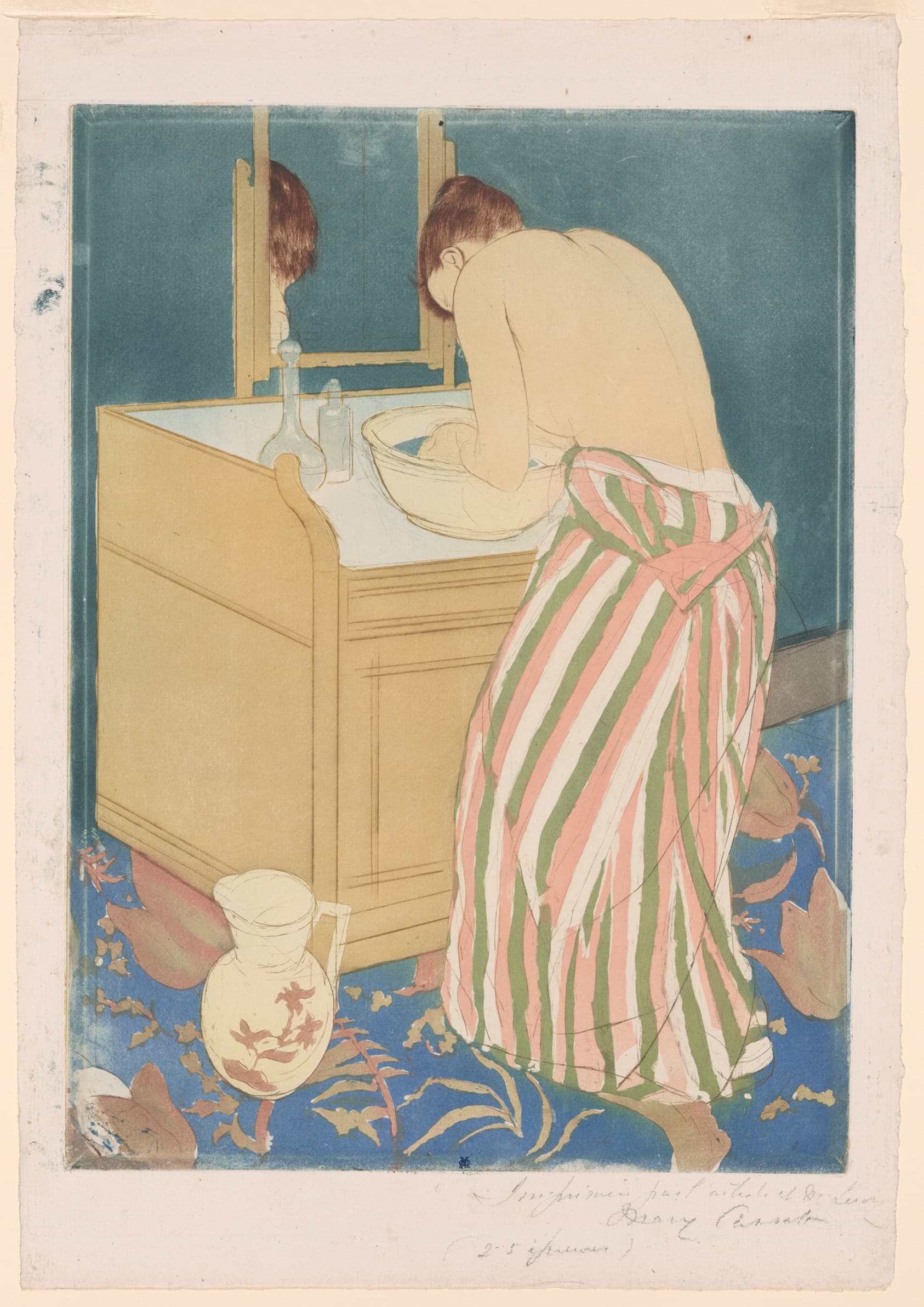
Woman Bathing
by Mary Cassatt
A woman stands half-undressed over a wash basin, seen from behind, her striped gown fallen to her hips and a mirror catching part of her face. Mary Cassatt made it in 1890–91 as one of a suite of ten color prints, working at the press with the printer Leroy, after an exhibition of Japanese woodblock prints in Paris changed what she thought printmaking could do.
- 1890–91
- Color aquatint and drypoint on off-white laid paper
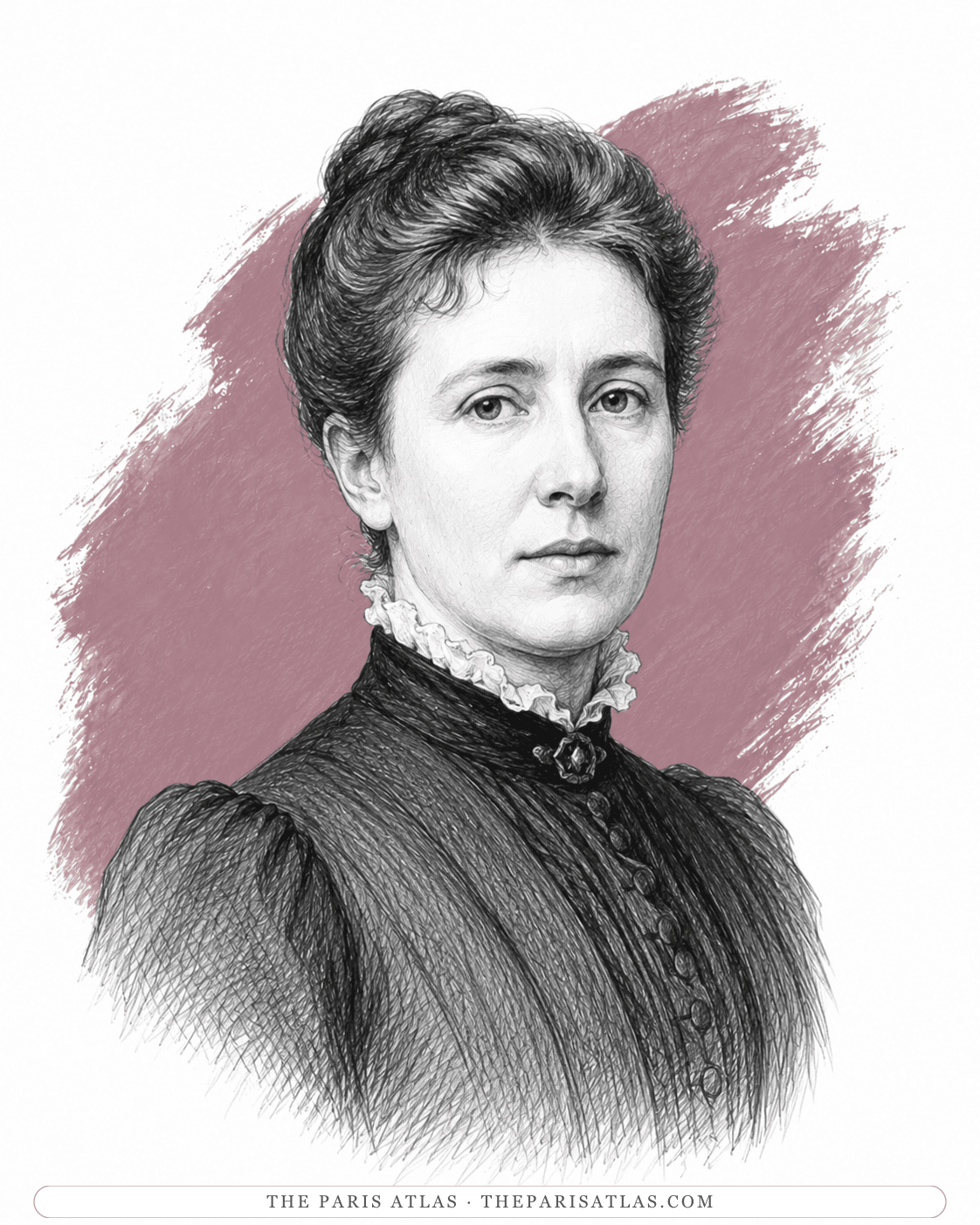
About Mary Cassatt
Stripes, leaves and a curved back
The subject is a private moment of washing, handled without drama. What carries the image is pattern: green and pink stripes in the gown, yellow and brown leaves on the blue carpet, the same leaves again on the water jug, all set against a blue-green wall. The curve of the woman's bare back runs through the middle of it, and the perspective is tipped slightly off-kilter so that the floor rises toward the viewer.
The Art Institute of Chicago names Utagawa Hiroshige among the Japanese printmakers whose choices of color, composition and shape lie behind it.
The set of ten
In April 1890 the École des Beaux-Arts in Paris showed a large exhibition of Japanese color woodblock prints. Cassatt wrote to Berthe Morisot telling her not to miss it: "You who wants to make colour prints couldn't dream of anything more beautiful. I dream of it and don't think of anything else but colour on copper."
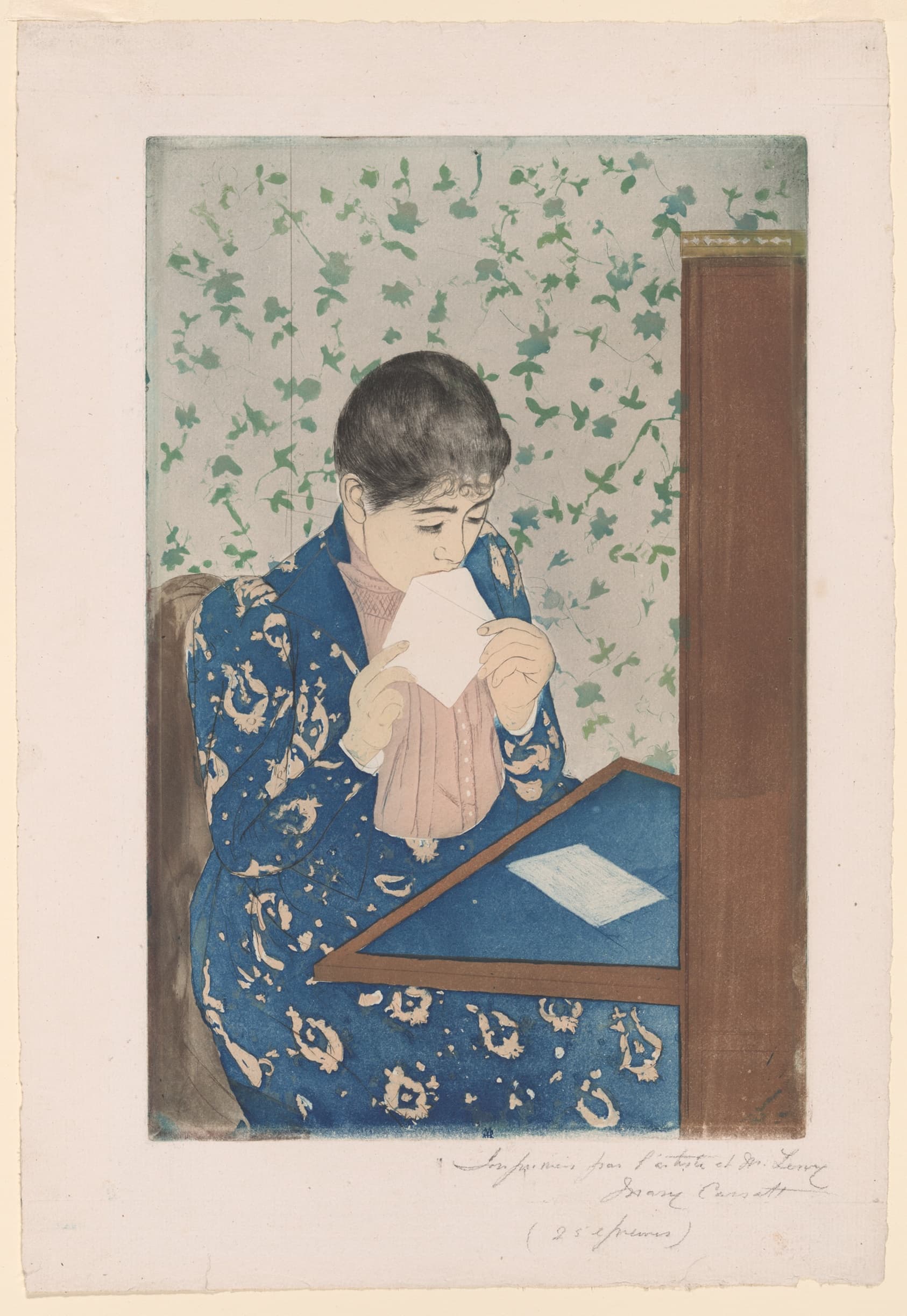
She then spent months at the press making ten prints of ordinary moments in the lives of modern women — dressing, writing a letter, riding the omnibus, taking tea, bathing a child. Woman Bathing is the tenth in the standard catalogue order. The technique is drypoint combined with aquatint, printed in color from multiple plates, and Cassatt worked on the inking herself, so no two impressions are quite identical.
She shared the credit in writing. The inscription in graphite at the lower right of this sheet reads "Imprimée par l'artiste et M. Leroy / Mary Cassatt / (25 épreuves)" — printed by the artist and M. Leroy, twenty-five proofs.
April 1891, in the small rooms
The prints were first shown at Galerie Durand-Ruel in Paris in April 1891, in what became Cassatt's first solo exhibition. She had not planned it that way. She and Camille Pissarro had been founding members of the Société des Peintres-Graveurs Français, but the society decided to admit only French citizens, which excluded Pissarro, born in the Danish West Indies, and Cassatt, an American. The two of them showed their prints in small rooms adjoining the main gallery where the society hung its own exhibition.
Pissarro had seen the prints the day before the opening and wrote to his son Lucien about them on 3 April 1891: "the tone even, subtle, delicate, without stains on seams: adorable blues, fresh rose, etc. … But the result is admirable, as beautiful as Japanese work, and it's done with printer's ink!"
This impression
The Art Institute of Chicago's copy passed from Cassatt to Durand-Ruel, then to the Chicago dealer Albert Roullier, and was given to the museum in 1932 by Martin A. Ryerson and his wife, whose collection also brought Chicago a complete set of the ten prints. Its accession number is 1932.1281 and it hangs in Gallery 184. Other impressions are at the Metropolitan Museum of Art, the National Gallery of Art, and the Van Gogh Museum in Amsterdam, which bought one in 2022.
Close reading
Reading the work, detail by detail
Fine outlines and flat color describe a woman bending over a washstand. These details follow the quiet action, its partial reflection, and the surrounding fields of pattern.
1.The bent back
A few fine lines establish the shoulders and spine. The broad, nearly unshaded area makes the body's bend legible through contour.
2.Hands in the basin
The arms close around the basin and keep the action compact. Overlapping curves connect the body to the vessel without dramatic movement.
3.The fragment in the mirror
The reflection offers only a fragment of what the main view conceals. This partial repetition gives depth to the room while preserving the privacy of the turned figure.
4.Stripes and sash
The stripes shift direction as the fabric bunches and falls. They describe folds through pattern while retaining the flatness of the printed color.
5.The washstand corner
The sharp corner provides a firm geometric structure beside the curved body. Its large quiet surfaces give the eye a rest from the patterned skirt and floor.
6.The floor pitcher
The outlined vessel remains distinct among large floral forms. Its rounded shape repeats the basin above and draws the washing scene down toward the foreground.
Woman Bathing quotes
You who wants to make colour prints couldn't dream of anything more beautiful. I dream of it and don't think of anything else but colour on copper.
the tone even, subtle, delicate, without stains on seams: adorable blues, fresh rose, etc. … But the result is admirable, as beautiful as Japanese work, and it's done with printer's ink!
Timeline
1890
The École des Beaux-Arts in Paris shows Japanese color woodblock prints in April; Cassatt urges Berthe Morisot to see it and begins work on a set of ten color prints.
1890–91
Cassatt makes the ten prints in drypoint and aquatint with the printer Leroy, in an edition of twenty-five.
1891
Excluded from the Société des Peintres-Graveurs Français as a foreigner, Cassatt shows the set in adjoining rooms at Galerie Durand-Ruel in April — her first solo exhibition. Camille Pissarro, excluded on the same grounds, shows alongside her.
1932
Martin A. Ryerson and his wife give this impression to the Art Institute of Chicago — accession 1932.1281.
1989–90
Included in Mary Cassatt: The Color Prints at the Williams College Museum of Art.
Where to see it
Art Institute of Chicago
111 South Michigan Avenue, Chicago, IL 60603, United States
Displays and loans can change. Check whether this work is on view before making a special trip.
Plan your visit on the museum’s official website (opens in a new tab)Frequently asked questions
Where is Woman Bathing?
Impressions are in several museums, because the print exists in an edition of twenty-five. The Art Institute of Chicago's impression is accession 1932.1281, on view in Gallery 184. The Metropolitan Museum of Art, the National Gallery of Art and the Van Gogh Museum also hold impressions.
How was Woman Bathing made?
Drypoint combined with aquatint, printed in color from more than one copper plate. Cassatt inked the plates by hand, so impressions differ slightly from one another, and she worked with the professional printer Leroy.
How many prints are in the set?
Ten. Alongside Woman Bathing they are The Bath, The Lamp, In the Omnibus, The Letter, The Fitting, Mother's Kiss, Maternal Caress, Afternoon Tea Party and The Coiffure. Titles vary between museums.
Why did Cassatt make color prints in 1890?
She saw a large exhibition of Japanese color woodblock prints at the École des Beaux-Arts in Paris in April 1890 and wrote to Berthe Morisot that she could think of nothing but color on copper. The flat color, firm outlines and everyday subjects of the Japanese prints are what she set out to work into her own medium.
Is Woman Bathing the same as La Toilette?
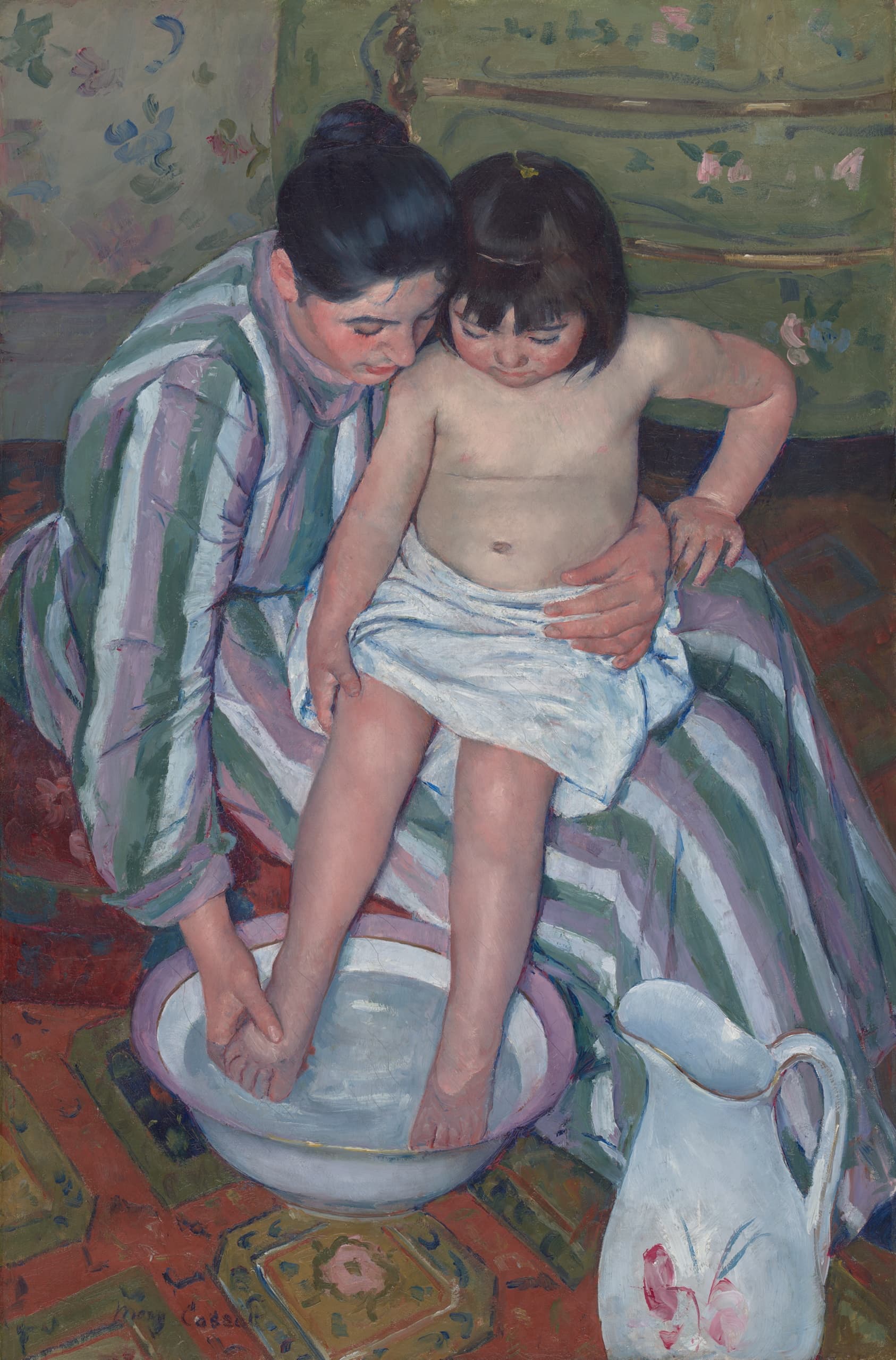
Yes — the print is catalogued under both titles, and the Metropolitan Museum of Art files its impression as Woman Bathing (La Toilette). It is a different work from Cassatt's 1893 oil painting The Child's Bath, which came out of the same period of study.
What did other artists think of the prints?
Camille Pissarro saw them the day before the 1891 opening and wrote to his son Lucien that the result was admirable, as beautiful as Japanese work, and done with printer's ink.
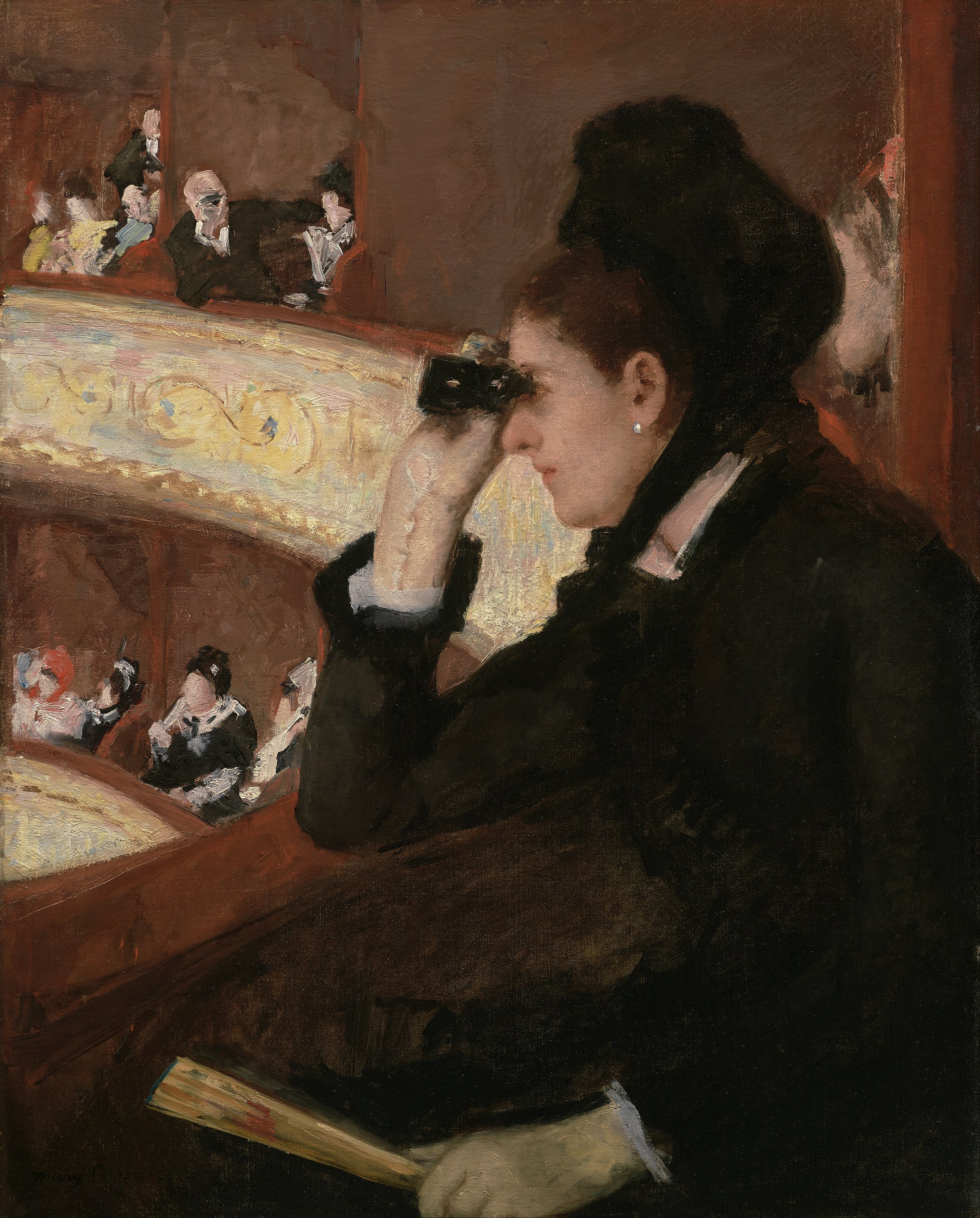
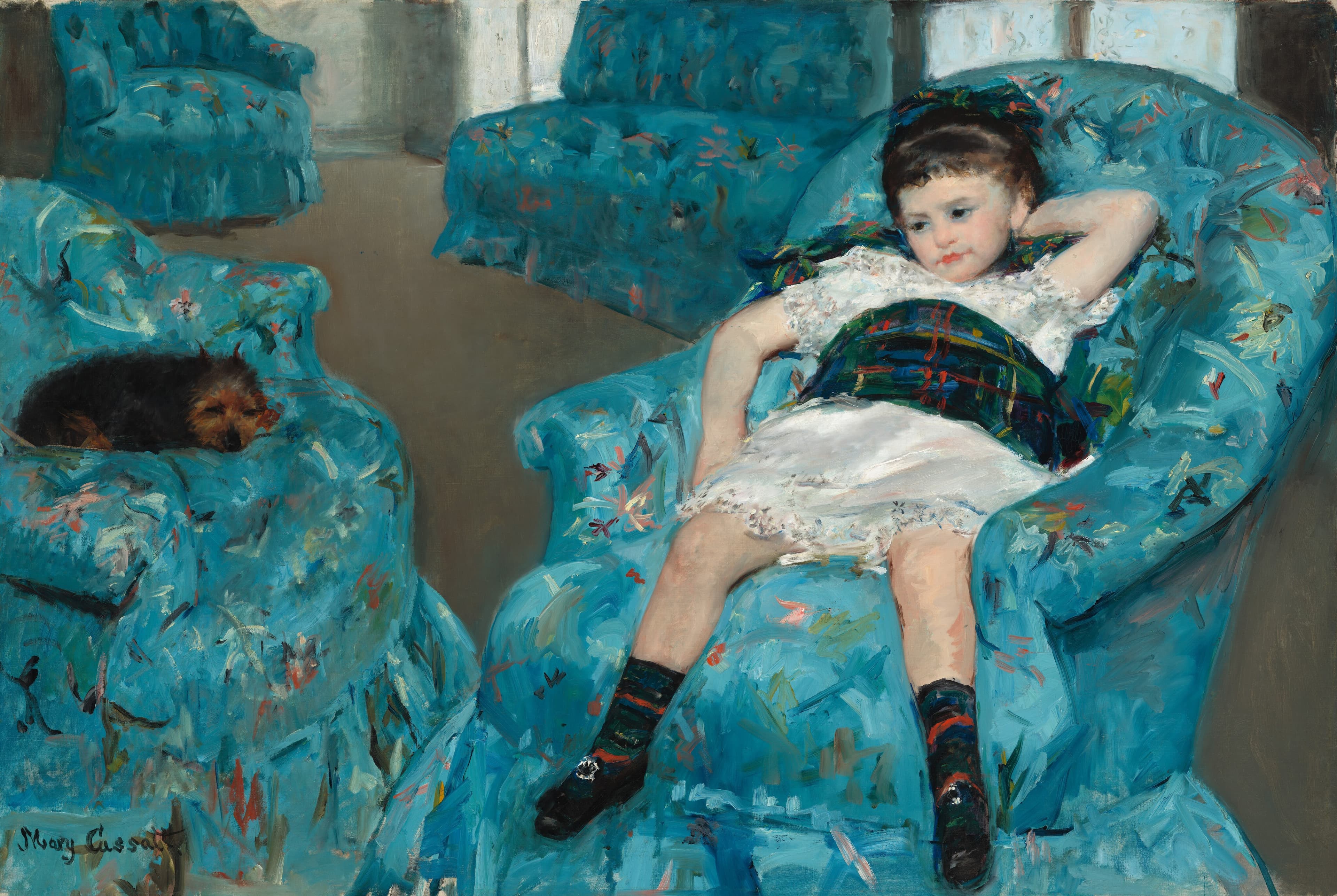
More by Mary Cassatt
If you like Mary Cassatt
Explore painters from the same movements and circles.
Gustave Caillebotte
Painter of Haussmann's geometry and the group's organizer-financier; his bequest of Impressionist paintings forced the French state to take the movement in.
View artist
Paul Cézanne
Painter between Impressionism and everything after — shown in the independents' exhibitions, emulated by the Cubists, and present at the Orangerie through 15 works in the Walter-Guillaume collection.
View artist
Edgar Degas
Painter of dancers, racecourses, and café interiors — among the founders of the independent exhibitions that became Impressionism, though he preferred the word 'independent' himself.
View artist
References
The sources below include collection records, catalogues, scholarly research, and primary materials that informed this page. They document Woman Bathing, its making, and its place in cultural history.

1Woman Bathing (Mary Cassatt, 1890–91) — Art Institute of Chicago
WebsiteArt Institute of ChicagoUsed forWeb source consulted for documented facts and historical context presented on the Woman Bathing page.
2Van Gogh Museum acquires four remarkable prints by Mary Cassatt
WebsiteVan Gogh Museum, 2022Used forQuotes Cassatt's 1890 letter to Berthe Morisot and documents her months of work with the printer Leroy.
3Camille Pissarro: Letters to His Son Lucien
LettersPantheon Books, 1943Used forPissarro's account of the prints and of the two small rooms he and Cassatt were given at Durand-Ruel.
4The Letter (Mary Cassatt, 1890–91) — Philadelphia Museum of Art
WebsitePhiladelphia Museum of ArtUsed forDescribes the set of ten and Cassatt's credit to the printer Leroy in the inscription.
5Mary Stevenson Cassatt (1844–1926) — Heilbrunn Timeline of Art History
WebsiteThe Metropolitan Museum of ArtUsed forWeb source consulted for documented facts and historical context presented on the Woman Bathing page.
These references provide the documented foundation for this work's history and interpretation. Claim-level citations remain attached to the specific claims they support.
 Explore more resources